This guide is independent and contains no paid placement. If affiliate links are added later, they will be clearly marked and will not change our editorial checks.
Keep a puppy's first holiday short, close to home and deliberately boring: wait until vaccinations are complete, choose a quiet self-contained stay with an enclosed garden, practise short car trips in advance, pack familiar bedding and food, and protect sleep and toilet routines. If in doubt, check the latest official guidance before you travel.
When is a puppy ready for a first holiday?
The honest answer is that readiness is about health and confidence, not just age. A puppy that has finished its primary vaccination course, is eating and toileting predictably, can settle in a crate or pen, and has experienced a few short car journeys is far better placed than a puppy that is technically old enough but has barely left the house. If any of those foundations are missing, a night or two with a trusted family member nearby, or a short stay in a familiar type of home, is a better first step than a long touring trip.
Vaccinations are the first gate. Puppies in the UK usually receive a primary course over their first weeks, with boosters and waiting periods advised by the vet before they walk freely in public places where other dogs have been. Exact timings vary by vaccine and by individual circumstances, so do not work from a generic age taken from social media. Ask your vet to confirm in plain terms: is this puppy cleared to walk on pavements, beaches and countryside paths, to meet unknown dogs, and to stay overnight away from home? Get that answer before you pay a non-refundable deposit, and check the latest official guidance before you travel if guidance changes between booking and departure.
Other health checks matter too. Flea and worm prevention should be up to date, the microchip details should show your current mobile number, and any medication routine should be easy to continue away from home. Confidence is the second gate. A puppy that panics at household noises, new people or being handled will find a holiday park, a ferry terminal or a busy market town overwhelming rather than enriching. Short, positive exposures at home — visitors arriving calmly, different floor surfaces, gentle handling, brief separations that end well — build more holiday readiness than one big day out. Finally, be realistic about sleep. Young puppies need a great deal of rest, often far more than owners expect, and a holiday that removes every nap opportunity will produce a wired, mouthy, unhappy puppy by evening, however lovely the destination looks.
Choose the first destination and stay
For a first holiday, proximity beats scenery. Choose somewhere within about an hour or ninety minutes of home, so the drive itself is not the main event and you can return easily if the puppy is sick, frightened or unwell. One base for the whole trip is better than moving every night: puppies settle through repetition, and a new room every evening restarts the hardest part. Two or three nights is plenty. It gives you two full days to practise the routine without the pressure of making a long booking worthwhile.
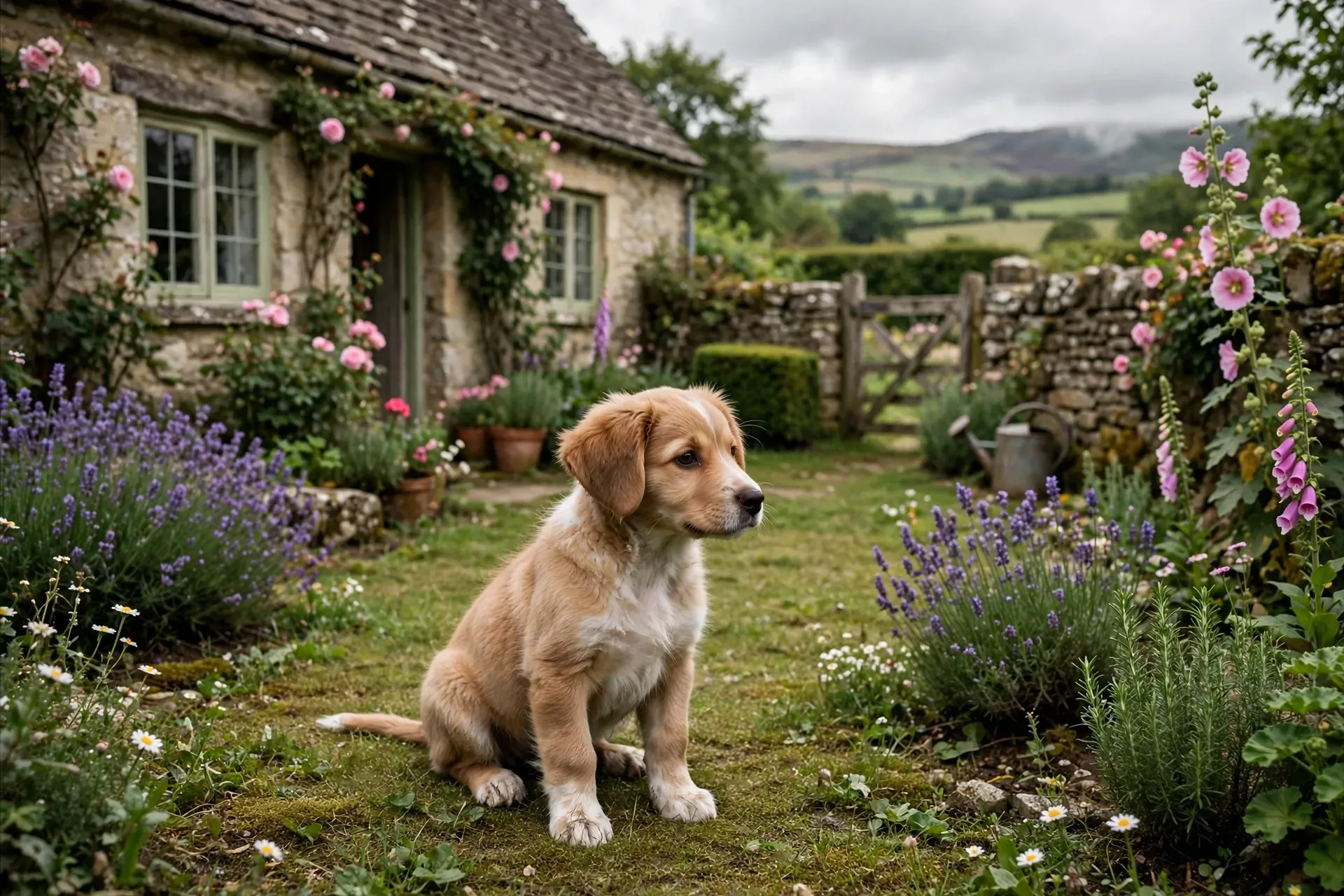
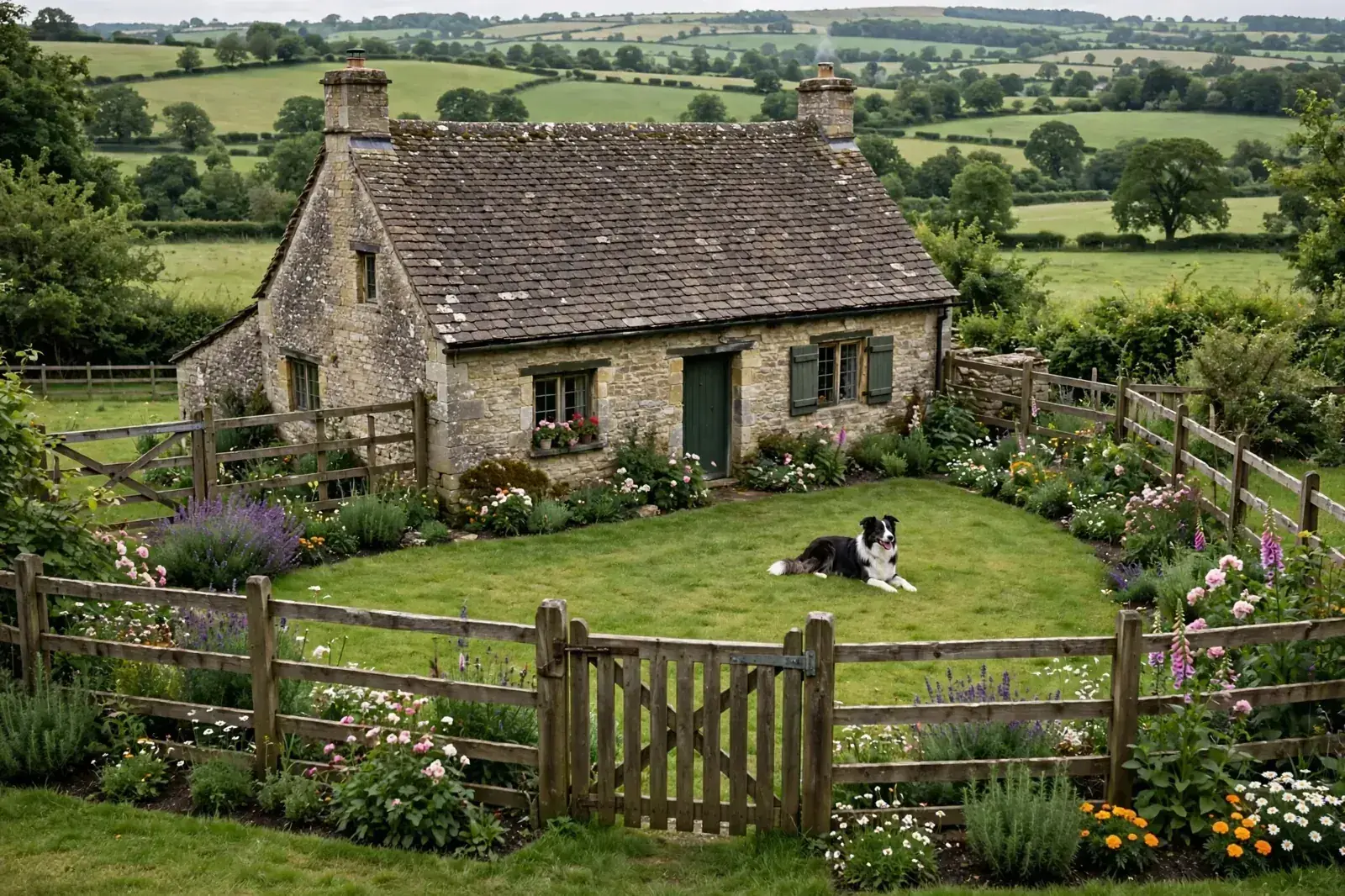
The type of stay matters more than the star rating. A quiet, self-contained cottage, lodge or apartment with its own entrance, hard floors in at least one room, and direct access to an outside toilet area will be easier than a hotel room on a corridor, however dog-friendly the hotel claims to be. An enclosed garden removes the single biggest source of stress on a puppy break — the midnight toilet trip on a lead in an unfamiliar place. Our guide to self-catering stays with a secure garden explains how to check fence height, gate latches and gaps properly before you book, and those checks apply just as much to a puppy, which can slip through spaces an adult dog cannot.
Ask the host direct questions before booking. Are puppies specifically welcome, or only adult dogs? Is there a minimum age? Are there stairs, balconies or decking gaps? Where is the nearest patch of grass you may use at night, and is it lit? What are the rules on dogs on furniture and in bedrooms — not because you plan to break them, but because a puppy will not understand them on day one, and you need throws, barriers and a pen plan if sofas are strictly off limits. Avoid busy holiday parks, festival weekends and town-centre stays for the first trip unless your puppy is unusually settled; our overview of dog-friendly holiday parks in the UK shows how much busier those sites can be in peak season. A quiet weekday break in term time, with fewer dogs, fewer children running past the fence and shorter queues everywhere, is a far kinder introduction.
Practise car travel first
Do not let the holiday drive be your puppy's first proper car journey. Travel sickness, drooling, whining and panic are common in young puppies, and a two-hour drive is the worst place to discover them. Build up over at least one to two weeks if you can. Start with sitting in the stationary car with a chew, then a two-minute drive around the block, then ten minutes to somewhere pleasant for a sniff and a play. Keep sessions short, cool and calm, and end before the puppy shows stress rather than after. If a stage goes badly, repeat the previous easier stage the next day instead of pushing on.
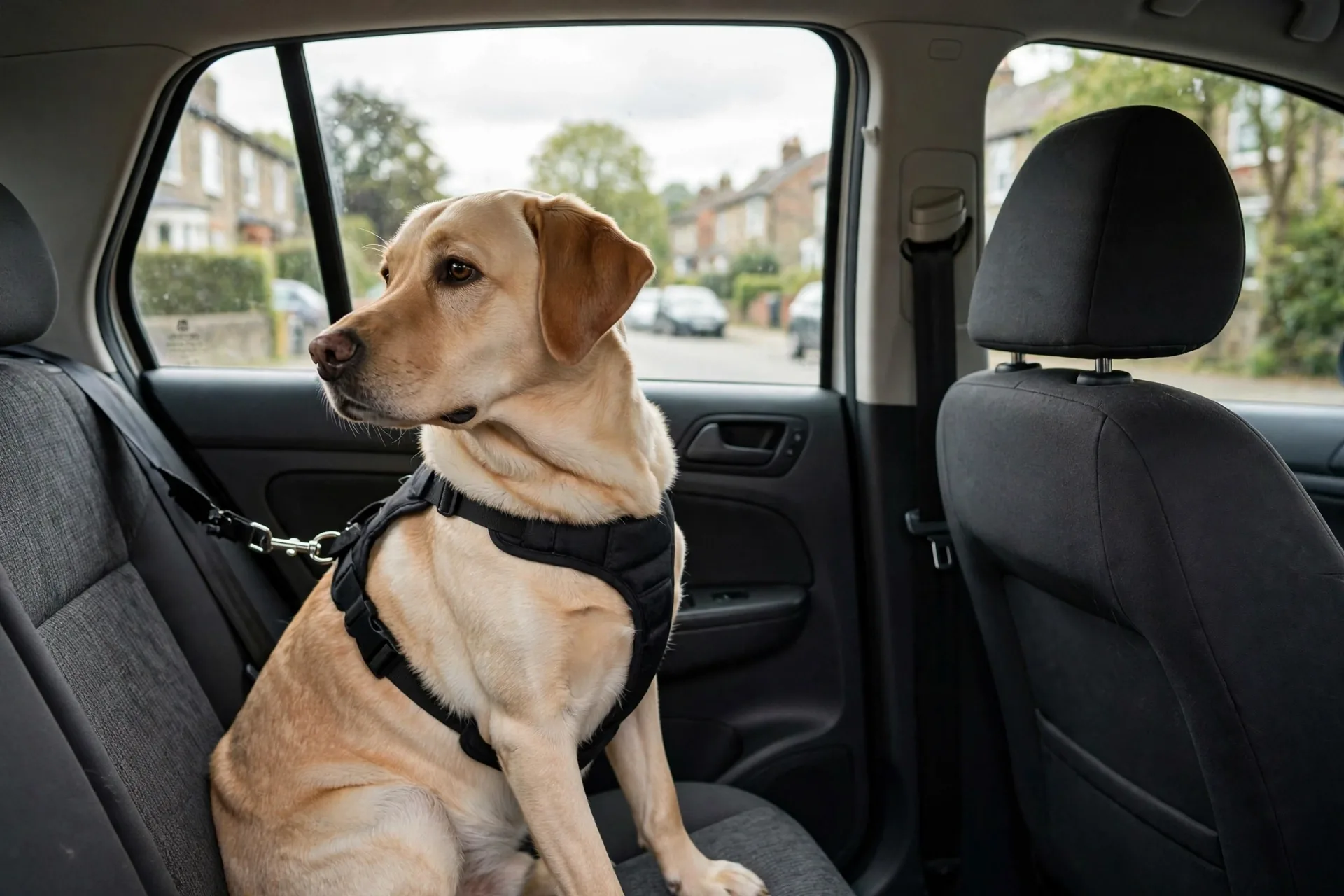
How the puppy travels matters for safety and for the law. Puppies should be restrained so they cannot distract the driver or become a projectile in a sudden stop — a secured crate, a crash-tested harness attached to a seat belt, or a properly fitted boot guard arrangement are the usual options. Our guide to driving with a dog and UK law covers the Highway Code expectations and restraint choices in detail. Practise with the exact set-up you will use on holiday, not a loose blanket on the back seat that you intend to replace later. Feed the main meal well before travel or after arrival rather than immediately before departure, unless your vet advises otherwise, keep fresh air flowing, and plan a stop at least every hour for a very young puppy — for a toilet opportunity on a lead, a drink and a leg stretch on a quiet verge away from fast traffic.
Pack the car for accidents without drama: puppy pads or an old towel under the bedding, spare bedding, kitchen roll, poo bags, water and a bowl in the cabin, and cleaning spray in a sealed bag. If sickness is persistent, excessive or accompanied by distress on even very short trips, speak to your vet before the holiday. There may be a medical cause or a management approach that helps, and check the latest official guidance before you travel if you are considering any medication — never give a puppy human travel-sickness medicine.
Packing checklist for a puppy
Puppies travel best with boring familiarity. Pack the exact food the puppy is already eating, in measured portions plus at least two extra days' supply, because a sudden food change in a new place is a reliable route to an upset stomach. Bring familiar bedding that smells of home, the usual crate or pen if you use one, and one or two known toys and chews rather than a bag of exciting new ones. Familiar scent is a settling tool, not clutter.
- Food and water: usual food, treats used for training, a portable water bowl, and a bottle of water for the car and arrival.
- Sleep and containment: crate or pen, familiar blanket, throws for protecting sofas and carpets, and a baby gate if the layout needs one.
- Walking kit: well-fitting collar with an ID tag showing your mobile number, a harness if you use one, a standard lead — not a retractable lead in busy places — and a long line only for safe, enclosed practice.
- Cleaning kit: poo bags in every pocket and bag, enzyme cleaner for indoor accidents, old towels, and spare bedding.
- Health and documents: vaccination record, microchip number, your vet's number, any medication, and pet insurance details if you have them.
- Comfort and training: lick mat or stuffable chew toy for settling, training treats, and a worn item of your clothing for the bed.
Check the ID tag before you leave. In the UK, dogs in public places are generally required to wear identification with the owner's name and address, and a mobile number is the detail that actually reunites a lost puppy quickly — check the latest official guidance before you travel for the current requirements. Confirm the microchip database holds your current number, not a breeder's or a previous owner's. Take a clear, recent photograph of your puppy on your phone on departure day; puppies change fast, and a current photo is invaluable if you ever need help finding one.
Settling in on arrival
Make the first hour deliberately dull. Before you unload the car or explore the village, take the puppy on a lead to the designated toilet area, let them sniff and toilet, then go inside together. Walk the property at puppy height: check for trailing cables, open cleaning cupboards, small objects, gaps under gates and decking, and anything chewable within reach. Set up the crate or pen and bedding in a quiet corner straight away, put water down, and let the puppy investigate one room at a time rather than giving a full tour at full speed.
Keep the first evening close to the home routine. Feed at the usual time, play gently, enforce a nap if the puppy becomes frantic rather than assuming excitement means happiness, and do the last toilet trip at the usual hour. Expect the first night to be disturbed. A puppy that sleeps through at home may wake, cry or need an extra toilet trip in a strange room; sleeping nearby for the first night, or having the crate beside the bed, is a practical compromise that helps most puppies settle without creating a battle you then have to undo on night two. Note what the property asks about noise and neighbours, and be a good guest: a crying puppy is understandable for a short while, but leaving a puppy to cry alone for hours is not fair on the puppy or the next-door unit.
Avoid stacking novelties. Do not plan a pub dinner, a beach trip and visitors on arrival day. One gentle local walk, one new room and one new garden is enough novelty for a young puppy. If friends are staying nearby, introductions can wait until day two, when the puppy has slept, eaten and toileted in the new place and has a secure base to retreat to.
Keep the toilet routine
Toilet training is the routine most likely to wobble on holiday, and planning for that prevents most accidents. New smells, new surfaces, excitement and a different garden layout can all make a puppy that is reliable at home forget where toileting is supposed to happen. Treat the first two days as a refresher of early training: take the puppy out on waking, after meals, after play, after naps and at least every hour while awake, to the same spot each time, and praise and reward toileting outside as you did in the first weeks at home.
Choose the toilet spot on arrival and stick to it. A small, boring patch of grass near the door is better than a long walk to a scenic field, especially at night and in rain. Keep a lead, torch, poo bags and a coat by the door so night trips are quick and calm. If the garden is enclosed and safe, still supervise: puppies eat things, dig under fences and find the one gap you missed, and an unsupervised puppy in a new garden is also a puppy practising toileting wherever it likes, unrewarded and uncorrected.
Accidents will happen in some stays. Clean them immediately with an appropriate enzyme cleaner, do not punish the puppy — punishment in a new place creates anxiety, not understanding — and increase the frequency of trips outside for the next day. Tell the host honestly if there is any damage; most puppy-welcoming hosts far prefer a prompt, paid-for clean or repair to a surprise found at changeover. If accidents are constant, or the puppy has diarrhoea, is straining, or seems unwell, contact a vet rather than treating it as a training problem.
What to avoid and vet preparation
Most first-holiday problems come from doing too much. Avoid long walks: a common rule of thumb discussed by vets and trainers is short, age-appropriate exercise rather than adult-length hikes, because growing joints and tired puppies suffer on over-long outings — ask your vet what suits your puppy's breed and stage, and carry the puppy or use rest stops rather than dragging a tired puppy to a viewpoint. Avoid midday heat, hot pavements and cars that warm up quickly; never leave a puppy alone in a car, even briefly, on a mild day. Avoid leaving the puppy alone in the accommodation to cry, avoiding retractable leads near roads and livestock, and avoid swimming in unknown water, algae-covered ponds and the sea on a first trip — paddling at the edge in calm, clean conditions, on a lead, is enough.
Vet preparation is simple and should happen before you leave. Save three numbers in your phone: your own vet, the nearest vet to the accommodation, and the nearest out-of-hours or emergency provider, which may be in a different town. Check opening hours, because rural practices can close early and cover large areas. Pack medication with a spare day or two of supply, keep the vaccination record accessible, and note any allergies or conditions in your phone in case someone else has to speak to a vet. If the worst happens and a puppy slips a lead or a gate, act immediately rather than waiting to see if they return — our step-by-step guide on what to do if your dog is lost on holiday sets out the first hour in order, and reading it before you travel is far easier than searching for it in a panic.
Finally, give yourself permission to cut the trip short or to do less than planned. A first holiday that consists of garden play, two short walks, a café where the puppy slept under the table and three settled nights is a complete success, even if you never reached the famous beach in the listing photos. The goal of the first holiday is not sightseeing; it is teaching a young puppy that travelling with you is safe, predictable and restful. Every later holiday — longer drives, busier places, new countries one day — is built on that foundation. Keep it small, keep it kind, and check the latest official guidance before you travel whenever rules, vaccination advice or local restrictions may have changed.
Practical questions
Before you go
When can a puppy go on holiday after vaccinations?
Wait until your vet confirms the primary vaccination course is complete and the advised waiting period has passed before letting your puppy walk in public places. Until then, a carried outing or a private enclosed garden is safer than a public walk. Always check the latest official guidance before you travel and follow your own vet's advice for your puppy.
How long should a puppy's first holiday be?
Two to three nights close to home is a sensible first length. It is long enough to practise the routine without exhausting the puppy, and short enough that you can return home easily if the puppy is overwhelmed, unwell or not settling at night.
Can I leave my puppy alone in holiday accommodation?
Plan not to. Many properties prohibit unattended dogs, and a puppy left alone in an unfamiliar place can become distressed, bark, toilet indoors or chew. Choose accommodation and eating plans where the puppy can stay with you, and build alone-time gradually at home first.
What should I do if my puppy is travel sick in the car?
Stop the build-up and return to very short, calm trips that end somewhere pleasant. Travel on a relatively empty stomach unless your vet advises otherwise, keep the car cool and ventilated, restrain the puppy securely, and stop frequently. If sickness continues, speak to your vet before the holiday rather than hoping it resolves on a long drive.
What should I do if my puppy becomes ill or gets lost on holiday?
Save the nearest local and emergency vet numbers before you arrive, keep your puppy's microchip and ID tag details up to date, and photograph your puppy on the day you travel. If a puppy goes missing, act immediately: stay near the point last seen, inform the local vet, warden and property host, and follow a calm, step-by-step search plan.
Socialisation, safely
A holiday offers wonderful socialisation material — new surfaces, gentle sounds, different people at a distance, farm and coastal smells — but socialisation does not mean meeting every dog and person head-on. For a puppy, watching the world calmly from a safe distance is often more valuable than close contact. Sit on a bench away from the main flow of a promenade or market, reward calm looking, and leave before the puppy becomes over-aroused. Short and successful beats long and overwhelming every time.
Be selective about dog-to-dog contact. Only let your puppy greet dogs that are known to be calm and vaccinated, on loose leads, for a few seconds, and only if both dogs look relaxed. Avoid dog exercise areas, crowded beaches at peak times and nose-to-nose greetings with unknown dogs on narrow paths; step aside, create space and be politely brief with other owners. A puppy that is showing avoidance — hiding, pulling away, yawning, lip-licking or freezing — is not being shy in a cute way; it is asking for distance, and honouring that builds confidence. Puppies that are nervous or easily overwhelmed benefit from the same low-pressure principles covered in our guide to holidays with a reactive or anxious dog: distance, choice and an easy exit.
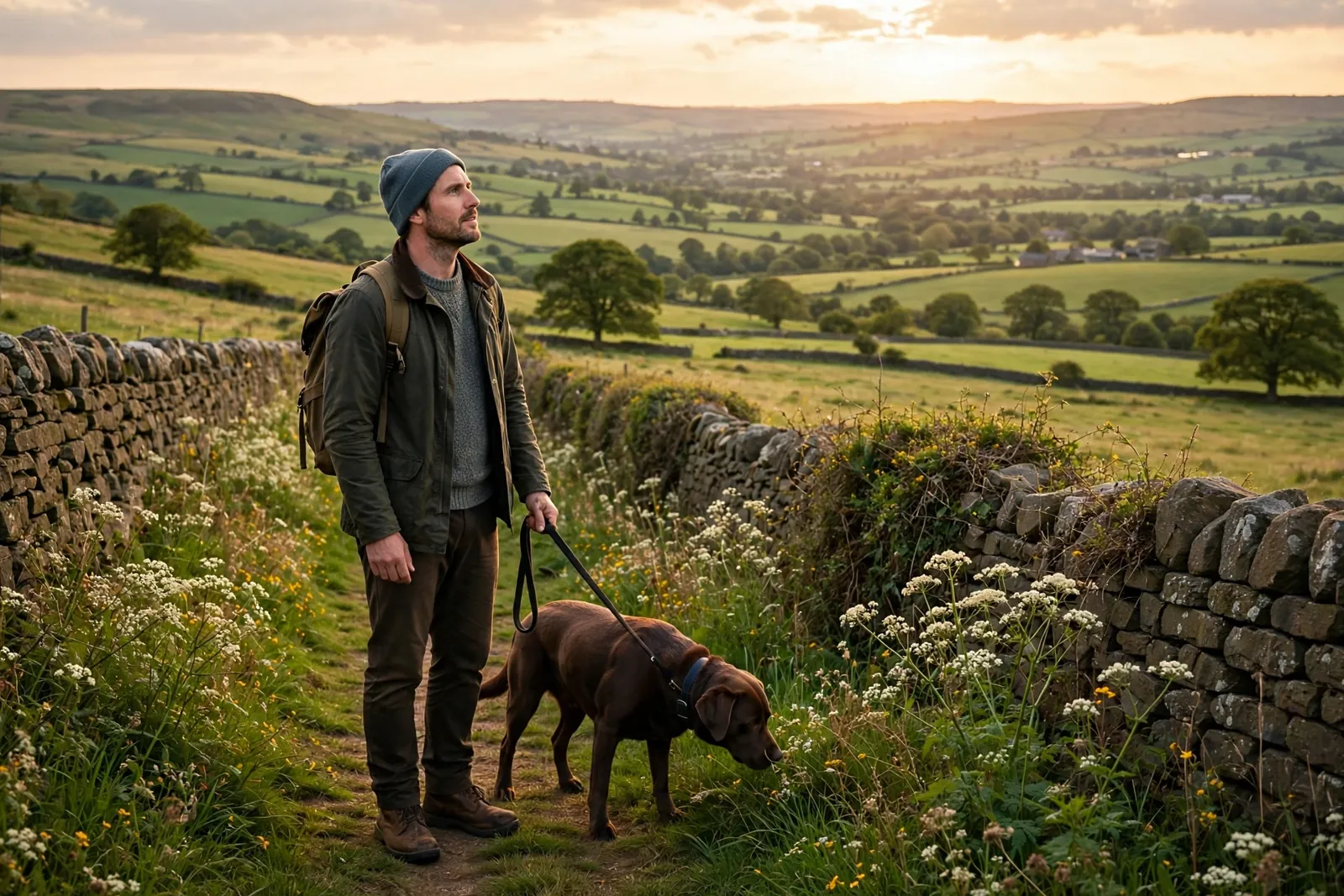
Protect against the countryside hazards a puppy has not learned yet. Keep puppies on a lead around livestock — it is both safer and a legal expectation in many situations — and away from cliffs, fast rivers, mudflats and harbour edges, however good the photo would be. Watch for scavenging: cooked bones, discarded food, dead fish and litter are all more interesting to a puppy than to you, and several common holiday foods and plants are harmful to dogs. If you are unsure whether something your puppy has eaten or somewhere you plan to walk is safe, check the latest official guidance before you travel or ask a vet, rather than relying on a forum thread.