This guide is independent and contains no paid placement. Castle policies change by site and by season, so check the official guidance before you travel.
At most English castles, dogs are welcome in the grounds, gardens and outer courtyards on a lead, and not welcome in furnished interiors, exhibitions and shops. Choose a castle for its outdoor space, not its state rooms, and check the official guidance before you travel.
The one divide that explains almost everything
Ask whether dogs are allowed at an English castle and the honest answer is almost always two answers at once: yes outside, no inside. The grounds, the moat path, the garden and the outer courtyard are frequently open to dogs on leads, while furnished rooms, exhibitions, chapels used for services, gift shops and cafes are frequently closed to them. That split is not a quirk of one operator. It reflects what castles are: working heritage sites where the outdoor space is robust and the indoor space holds fragile furniture, textiles, arms and armour, narrow staircases and quiet rooms where a barking dog changes the visit for everyone. Once you expect the divide, castle days stop being disappointing and start being easy to plan.
The practical consequence is that the dog's day and the human sightseeing day are overlapping but not identical. The dog gets the walk around the walls, the sniff along the moat, the lawn, the woodland edge and the picnic spot. The humans get the great hall, the exhibition and the tower view, either by taking turns or by accepting a shorter interior visit. Families often handle this well without drama: one adult stays outside with the dog while the other goes in, then they swap, and nobody pretends the dog enjoyed the tapestry gallery. Solo visitors need a different plan, because leaving a dog alone in a car or tied up outside a castle is not a safe or acceptable fallback. For a solo trip, choose a castle whose grounds alone justify the journey, or pair a brief interior visit with a dog-friendly stop nearby rather than stretching the dog's patience.
There are exceptions in both directions, which is why the general rule must never replace a site check. A small number of sites welcome dogs more widely, and a small number restrict dogs even in parts of the grounds, for example where formal gardens are kept pristine, where livestock grazes, where ground-nesting birds are protected in spring, or where an event fills the site. Assistance dogs are treated separately from pet dogs and are generally admitted to areas where pet dogs are not, but even here it is worth confirming arrangements in advance so staff can help smoothly. The habit to build is simple: read the dog page for the specific castle and the specific date, not a summary of the operator, and check the official guidance before you travel.
Ruined castles: the most dog-shaped days
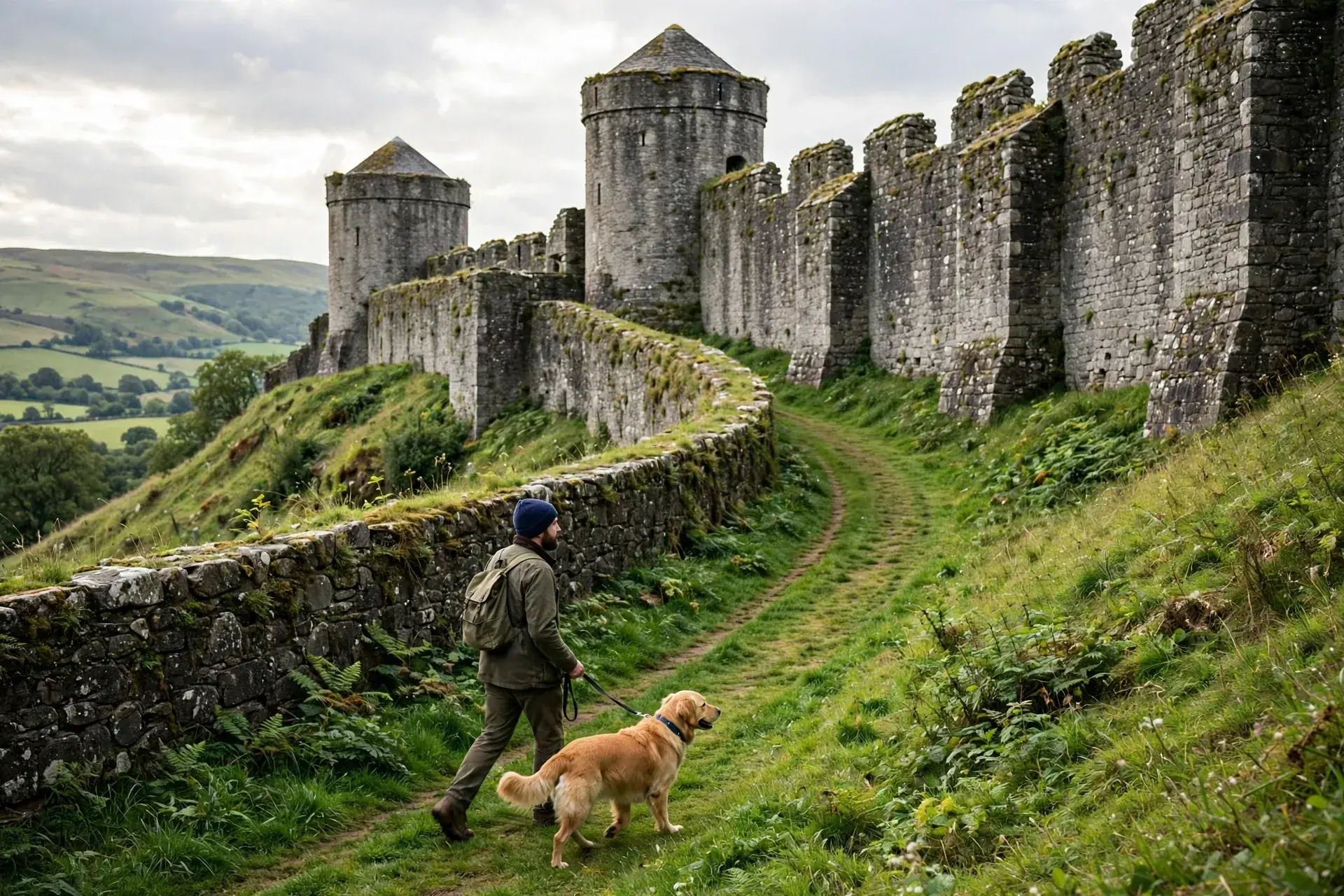
If your dog could choose a castle, it would probably choose a ruin. Ruined castles in England are often the most generous to dogs precisely because there is less interior to protect. The visit is the outdoors: broken walls to walk between, grassy baileys to cross, a ditch or moat to follow, and views that do not require climbing a spiral staircase. A ruined castle on a hill, a coastal headland or a river bend can give a dog a genuinely good walk, not just a tolerated presence while humans look at things. For energetic dogs, this is the category where the dog's experience is closest to the humans' experience.
Ruins still need care, and the hazards are different from those of a furnished castle. Stone can be uneven, slippery when wet and sharp at broken edges, so dogs that charge ahead on a long lead can hurt paws or slide on worn steps. Drops are a real risk at wall tops and cliff edges, and a short lead matters more here than on a flat lawn. Some ruins sit within farmland or nature reserves, so sheep, cattle and ground-nesting birds may be nearby, and seasonal restrictions can apply to protect wildlife. Water is another consideration: moats, rivers and castle ponds look inviting to a swimming dog but may be deep, muddy or off-limits, so keep the dog out unless access is clearly allowed.
Planning a ruin visit is mostly about weather, footing and facilities. Ruins offer little shelter, so rain, wind and strong sun all land directly on the visit, and there may be no cafe, no toilets and no water tap. Pack water and a bowl, a towel for wet paws, and a plan for shade on a hot day, because a grassy bailey offers no more shelter than a field. Parking can also be a walk away from the site itself, which is a bonus for a dog that needs a walk and a problem for a dog that struggles with distance. Check the approach path, the surface and the distance from the car park before promising an older dog a ruin on a hilltop. Done well, though, a ruin is the simplest castle day in England: arrive, walk the walls, picnic on the grass, and leave with a tired, happy dog.
Lived-in castles: grand grounds, guarded interiors
Lived-in castles, where families still reside or where the house remains furnished as a home, offer the grandest grounds and the strictest indoor line. The gardens, parkland, woodland walks and lakeside paths are often extensive, and many such estates actively welcome dogs in these outdoor areas because the landscape is designed for walking. The house itself, however, is a home and a museum at once: carpets, curtains, paintings, porcelain and family rooms cannot absorb muddy paws, excited barking or a wagging tail at vase height. Expect dogs to be excluded from the house even when they are warmly welcomed in the grounds, and treat any wider access as a pleasant surprise rather than a right.
These estates reward a slower kind of day. The grounds alone may include a walled garden, a maze, a riverside walk and a cafe terrace, and a dog that gets a proper walk before the humans split for the house visit will settle far better afterwards. Some estates provide dog-friendly cafe seating outdoors, water bowls and waste bins, while others keep cafes strictly indoors, which changes where lunch happens. Gardens sometimes have their own restrictions: dogs may be welcome in parkland but not in a formal rose garden, or allowed on paths but not on lawns, and these distinctions are usually signposted rather than obvious. Read the signs at each boundary rather than assuming the whole estate follows one rule.
Cost and timing also work differently at lived-in castles. Admission often covers house and gardens together, so a dog-owning visitor pays the same price for a grounds-only experience, which can feel poor value unless the grounds genuinely fill the day. Weigh that honestly: if the estate's parkland walk is two hours long and the gardens are large, the ticket is fair value; if the grounds are a short loop and the house is the main event, a different castle may suit the dog better. Events at lived-in castles, from concerts to country fairs, can also change the dog rules for the day, sometimes welcoming dogs to the event field and sometimes not. As ever, check the official guidance before you travel, and choose the estate for its outdoor offering first.
English Heritage sites: check the site, not the brand
English Heritage cares for a large number of castles across England, from great medieval fortresses to small coastal ruins, and its sites are often the first stop for visitors planning a castle day. The useful fact is also the confusing one: there is no single English Heritage dog rule that covers every castle. Many English Heritage castle grounds welcome dogs on leads, while interiors, exhibitions and shops commonly do not, but individual sites vary with their layout, their wildlife, their events and their facilities. Treating the brand as a promise leads to disappointment; treating each site page as the authority leads to good days.
The variation makes sense once you picture the portfolio. A windswept coastal ruin with open grassland is a different proposition from a compact urban castle with a small courtyard and a busy shop, and a castle that hosts school groups, weddings or reenactments must manage dogs differently on event days. Some sites have dog-friendly cafe seating or a designated dog area, while others have no shade, no water point and no suitable waiting area for a dog during an interior visit. The site page usually states the position plainly, including whether dogs are welcome in the grounds, whether they must stay on leads, and whether any area is excluded. If the page is silent or unclear, contact the site before travelling rather than guessing on arrival.
The same site-by-site habit applies to every other operator, from the National Trust to independent castles and local councils. A castle run by one body may welcome dogs in the grounds while a similar-looking castle a few miles away does not, because of livestock, conservation work or simply the size of the site. Regional guides can help with ideas, and our guide to dog-friendly castles in Wales shows how the same zone-by-zone thinking works across the border, but the policy for an English castle is found on that castle's own page. Build a shortlist of three or four English sites, check each one for your date, and let the clearest dog policy win rather than the most famous name.
Leads, livestock and other visitors
Lead rules at castles are rarely complicated, but they are worth taking seriously. The default is a lead everywhere, and the exceptions are specific signed areas rather than a general freedom. A short lead is the right tool in courtyards, on narrow paths, near cafes and anywhere children, other dogs and costumed performers mix. A longer lead can work on an open lawn or a wide moat path, provided the dog recalls reliably and the lead cannot tangle around other visitors or wrap a stone bollard. Retractable leads are a poor choice at castles: they give a false sense of freedom while creating a trip hazard on steps and a long cord across a busy path.
Livestock and wildlife are the other reason leads matter. Castle grounds often border farmland, and sheep or cattle may graze within the site or just beyond a fence that a determined dog could slip through. Ground-nesting birds, deer in parkland and waterfowl near moats all deserve distance, and a dog that chases is a conservation problem as well as a safety risk. Keep the dog close in spring and early summer, when young animals are vulnerable, and respect any temporary fencing or seasonal path closures. If your dog has a strong chase instinct, choose open, livestock-free ruins and parkland over estates where deer roam freely, and keep the visit shorter and calmer.
Other visitors shape the day as much as the rules do. Castles attract families with small children, school groups, photographers and wedding parties, and a dog that jumps up, barks at costumes or pulls towards picnics will draw complaints quickly. Train the basics before a castle visit: a calm settle on a mat, a reliable recall, and polite passing of other dogs on a path. Bring a mat or blanket so the dog has a defined place during a cafe stop or a picnic, and use it consistently so the dog learns that the mat means rest. A dog that can settle for twenty minutes turns a castle day from a management exercise into a genuinely pleasant outing for everyone.
Seasonal events: the best and trickiest days
Castle events divide neatly into two kinds for dog owners: outdoor spectacles that dogs can enjoy from a distance, and crowded, noisy occasions that are better avoided. Medieval weekends, falconry displays and outdoor theatre can be wonderful with a settled dog that is used to crowds, because the action happens in the open air and the dog can watch from a blanket at the edge. Jousting tournaments, battle reenactments and firework evenings are harder: horses, loud bangs, drums, smoke and surging crowds can frighten even confident dogs, and the noise carries across a site with nowhere quiet to retreat. The event page, not the general dog policy, is the document that matters here, because events can override the usual rules in either direction.
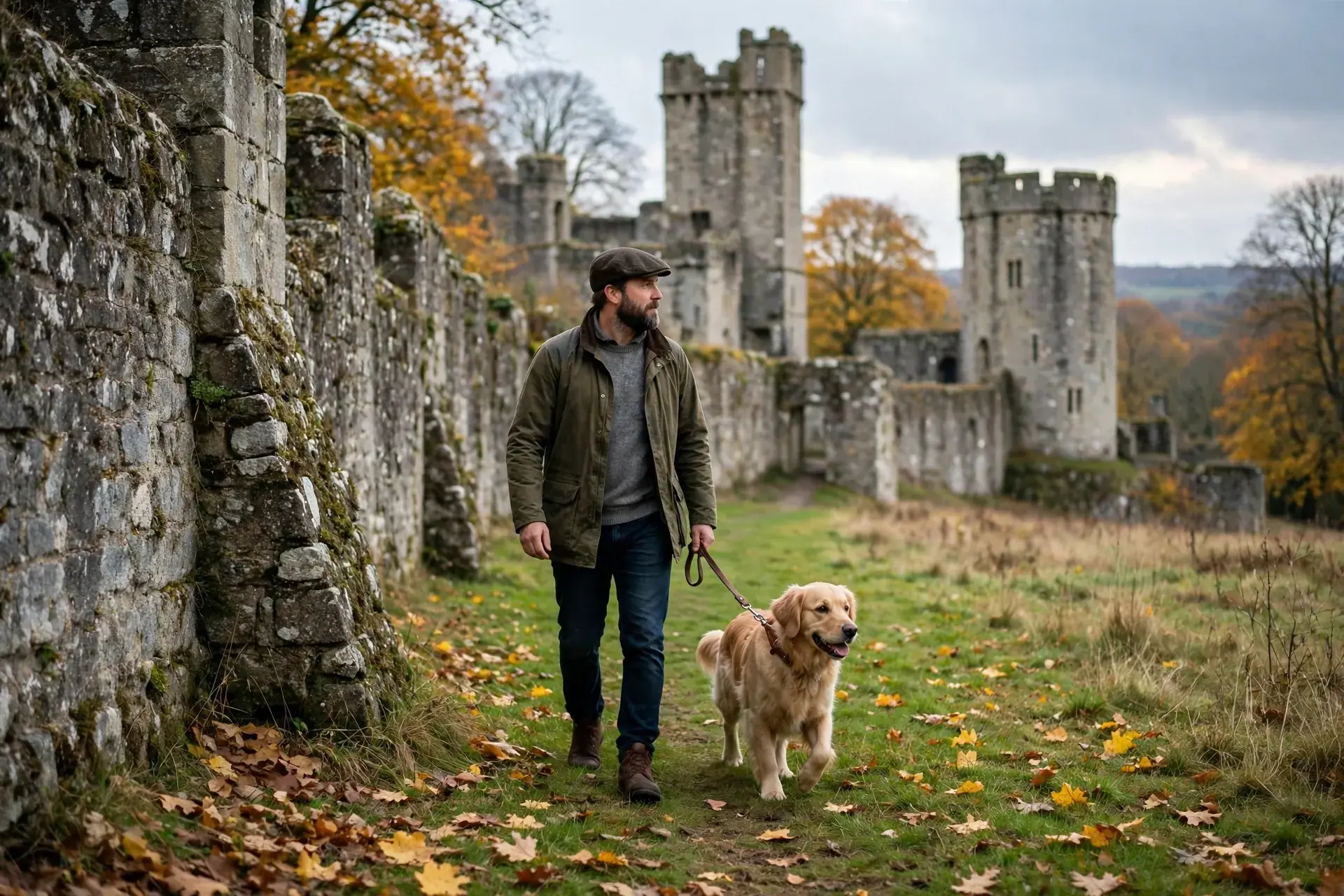
Season also changes the ordinary castle visit. Spring brings lambs, nesting birds and muddy paths; summer brings heat on exposed stone, busy car parks and school-holiday crowds; autumn brings quieter sites, softer light and slippery leaves on steps; winter brings short opening hours, closed facilities and the possibility that a site is open only at weekends. Each season favours a different kind of castle. Summer suits shaded parkland and lakeside estates with water and trees, while a crisp autumn day suits a coastal ruin where the dog can run and the crowds have gone. Winter suits a short, local castle visit paired with a warm pub stop rather than a long day at a remote site with no shelter.
Booking and timing repay a little thought at every season. Popular castles can be very busy at weekends and in school holidays, and a crowded courtyard is stressful for a reactive dog even when dogs are officially welcome. Arriving early, visiting on a weekday, or choosing a lesser-known castle over a famous one often gives the dog a better day than arriving at midday in August. Check whether the site uses timed entry, whether dogs need to be declared at booking, and whether any part of the site closes early in winter. A calm Tuesday at a quiet ruin beats a frantic Saturday at a famous fortress, for the dog and for the humans.
Rainy days and wet-weather backups
Rain is the normal weather for an English castle day, not an exception, so a good plan treats it as the default. The first thing rain changes is the dog's comfort: wet stone is slippery, grassy slopes turn muddy, and a dog that has run through puddles will be cold if the wind picks up. A drying coat, a large towel and a waterproof blanket for the car cover most of it, and a short, surfaced route beats a long, exposed wall walk when the rain is heavy. The second thing rain changes is the humans' plan, because the interiors and cafes that offer shelter are usually the parts dogs cannot enter. That mismatch is the real rainy-day problem, and it needs a backup that is not simply hoping the rain stops.
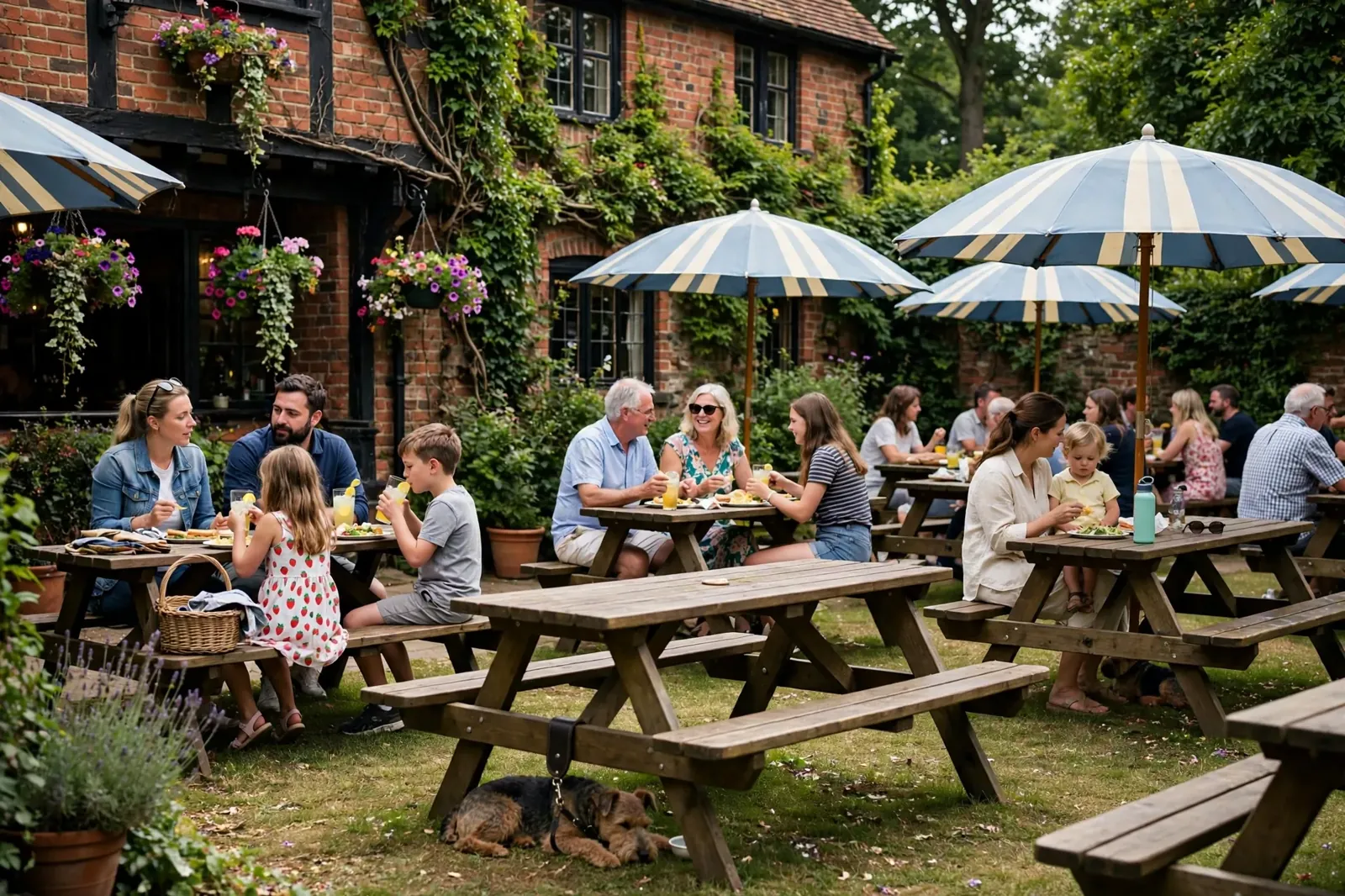
The best rainy-day backup is a second dog-friendly stop, not a longer castle visit. A nearby town with a covered market, a dog-friendly pub with a real fire, or a woodland walk under tree cover can rescue a day that a castle alone cannot. Our guide to dogs in pub gardens is written for summer, but its lessons about leads, settling and water bowls apply just as well to a rainy pub interior where dogs are welcome. Coastal castle days pair naturally with a beach walk if the weather clears, and the rules for that second stop matter too, so check our guide to dog-friendly beaches in the UK before combining a castle morning with a beach afternoon. The principle is the same in every case: the backup should be a place the dog is genuinely welcome, not a place where the dog waits in the car.
Wet ground also affects safety in ways that are easy to overlook. Worn stone steps become treacherous, wooden bridges and decking turn slick, and grass banks above moats can slide underfoot. Keep the dog on a short lead on steps and bridges, wipe paws before getting into the car, and check for cuts from sharp stones after a ruin walk. If thunder or high winds arrive, leave exposed hilltops and coastal walls promptly: a castle ruin offers no shelter from lightning, and gusts on a wall walk are dangerous for dogs and owners alike. A shortened visit with a dry, warm finish is a better day than a heroic one that ends with a shivering dog and a muddy car.
Tickets, queues and taking turns
Castle admission is straightforward until a dog is added to the party, and then the details matter. Some sites ask visitors to declare dogs at booking, some charge for dogs and some do not, and some limit the number of dogs per group. None of this is usually prominent on the main booking page, so look for the dog information before paying rather than discovering a restriction at the gate. If tickets are timed, allow extra time for the dog's toilet walk before entry, because a dog that has not had a proper walk will not settle in a queue. If the site is free to enter, the same preparation still applies: a calm dog at the gate sets the tone for the whole visit.
Queues deserve their own plan. A long, slow-moving queue in sun or rain, surrounded by other dogs and excited children, is one of the hardest parts of a castle day for many dogs. One adult can queue while the other walks the dog nearby, joining the line near the front if the site allows it, or the group can choose a quieter arrival time. Inside the site, taking turns for interiors works best when it is agreed in advance: decide who goes first, where the waiting adult and dog will sit, and how long the interior visit should take. A twenty-minute turn with a settled dog on a shaded bench is reasonable; an hour in a hot courtyard is not.
Facilities for dogs vary more than visitors expect, so ask rather than assume. Some sites provide water bowls, waste bins and a dog exercise area, while others provide nothing beyond permission to enter the grounds. Toilets for humans are not always near the dog-friendly areas, and baby-changing or accessible facilities may be inside the dog-free zone. Pack as if the site provides nothing: water, a bowl, bags, a towel, a mat and a chew or enrichment toy for waiting time. Self-sufficiency is what turns a site with minimal facilities into a good day, and it costs almost nothing to prepare.
Older dogs, stairs and wall walks
Wall walks and tower climbs are the parts of a castle visit that most often exclude dogs, and often they should exclude the humans' ambitions too. Spiral staircases are steep, narrow, uneven and sometimes slippery, with no room to pass and no resting places. A dog that is carried up a tower still has to come down, and a dog that is frightened halfway up cannot easily turn around. Many sites prohibit dogs on wall walks and tower stairs outright, and the prohibition is worth respecting even where it is not enforced, because the risk is to the dog's joints, paws and confidence as well as to other visitors.
Older dogs, small dogs and dogs recovering from injury need a ground-level plan, and England's castles offer plenty of them. A ruined castle with a level bailey, a parkland estate with surfaced paths, or a moated castle with a flat circuit can fill a day without a single staircase. Check surfaces as well as distance: gravel, cobbles and grass all feel different to an arthritic dog, and a short walk on smooth paths is better than a long walk on rough stone. Bring a ramp only if the site allows it and the ground is firm, and consider a dog pushchair for a very old dog at a large estate, checking in advance whether wheels are permitted on paths and in gardens.
Heat, cold and stamina deserve the same attention as steps. Stone courtyards radiate heat in summer and offer no shade, while exposed ruins are bitterly cold in a winter wind. An older dog tires faster than the humans expect, especially on a site with no seating, so plan rest stops, carry water even in cool weather, and watch for slowing, lagging or reluctance to continue. Ending the visit while the dog is still happy is better than pushing on to the last viewpoint. The castle will still be there another day; the dog's good memory of the visit matters more than ticking off every tower.
Packing and building a castle day
A castle day packs like a country walk with a heritage stop attached, and the kit list is short but specific. Water and a collapsible bowl come first, because castle sites do not always have a tap the public can use. Waste bags, a towel, a drying coat in wet or cold weather, and a mat for settling cover the basics. Add a short lead for courtyards and a longer lead for open lawns, a chew or stuffed toy for waiting time, and any medication the dog needs, kept accessible rather than buried in the car. A basic first-aid kit for paws, including a bandage and antiseptic wipes, is sensible for ruin walks over rough stone.
Building the day itself works best backwards from the dog's needs. Start with the dog's morning walk and toilet break before arrival, then the castle grounds while energy is high, then a rest and a drink, then the humans' turn for interiors, then lunch at a dog-friendly stop, then a gentle second walk or the journey home. Avoid stacking a castle, a long drive and a second attraction into one day with a dog that has already had a full morning. Two good hours at a castle beat five tiring hours across two sites, and a dog that travels home settled is the sign the day was pitched right.
Finally, keep a record of what worked. Note which castles welcomed your dog warmly, which grounds had the best walks, which cafes had water bowls and shade, and which sites to avoid with a reactive or older dog. England has far more castles than any single guide can cover, and your own list, built from real visits and checked against official pages before each return trip, becomes the most useful castle guide you own. Check the official guidance before you travel on every visit, because policies, opening hours and event rules change, and a site that was perfect last autumn may have new restrictions this spring. Planned around the outdoor divide, castle days in England are among the easiest heritage days to get right: pick the grounds first, respect the indoor line, and let the dog enjoy the walls, the grass and the walk.
Practical questions
Before you go
Are dogs allowed inside English castles?
Usually not in furnished rooms, exhibitions and shops, even at sites where dogs are welcome in the grounds. The common pattern is dogs outside and people inside, so plan for one adult to stay with the dog or for a shorter visit that skips the interior. Assistance dogs are an exception and are generally admitted where pet dogs are not, but check the official guidance before you travel.
Do castle grounds in England always welcome dogs?
No. Many castle grounds, gardens and outer courtyards do welcome dogs on leads, but some sites restrict dogs during events, in formal gardens or in areas with livestock and wildlife. A site can also change its rules for a single weekend. Always check the official page for the date you plan to visit rather than relying on a general reputation.
Should my dog stay on a lead at a castle?
Yes, keep your dog on a lead at castle sites unless a sign clearly says an area is off-lead. Castle grounds combine other visitors, children, livestock, steep drops and fragile stonework, and a loose dog can cause a problem in seconds. A short lead is the safer choice in courtyards, on walls and near cafes, even where a longer lead is fine on an open lawn.
What happens if it rains during a castle visit with a dog?
Rain usually shrinks a castle day rather than cancelling it. Dogs can still enjoy grounds, moat paths and town walls in light rain, while interiors and cafes are often the parts dogs cannot enter. Pack a drying coat and towel, choose a site with a covered courtyard or a nearby dog-friendly pub garden, and keep a shorter route in reserve for heavy rain.
Can I visit a castle with a dog that cannot climb stairs?
Yes, if you choose the right kind of site. Ruined castles and garden grounds often give a full day at ground level, while tower climbs and wall walks are steep, narrow and unsuitable for many dogs and some owners. Check step counts, surfaces and whether the best views need a climb before you book, and treat the grounds as the main event rather than a consolation prize.
Are dogs allowed at castle events such as jousting and reenactments?
Sometimes, but events change the rules. Crowds, loud noises, horses and costumed performers can unsettle dogs, and some events restrict dogs to certain areas or exclude them altogether. Check the event page specifically, not just the general dog policy, and have a quiet exit plan if your dog becomes stressed.