This guide is independent and contains no paid placement. Castle dog policies change, so check the official guidance before you travel for the site you plan to visit.
Most Welsh castles are best understood as partly dog-friendly: grounds, courtyards and gardens are often open to dogs on leads, while indoor rooms and tower stairs are frequently restricted. Choose the castle by its grounds and its town walk, check the official guidance before you travel, and plan a split visit for any dog-free rooms.
Which Welsh castles really welcome dogs
Wales has more castles per square mile than almost anywhere else in Europe, and that density is a gift for dog owners: if one castle does not suit your dog on a given day, another is rarely far away. The phrase to watch for is not simply "dog-friendly" but what sits behind it. A castle can be genuinely welcoming to dogs in its grounds while still barring them from its exhibition rooms, its chapel, its shop and its cafe. That is not a contradiction, and it is not a trick. It is how historic buildings balance conservation, safety and visitor flow, and once you understand the pattern you can plan around it instead of discovering it at the ticket desk.
The most useful starting question is therefore a practical one: where will the dog actually spend the visit? A castle with generous outer grounds, a moat walk, a garden or a riverside path gives a dog a real outing even before anyone climbs a tower. A compact hilltop castle with a single small courtyard and a long flight of steps gives a dog very little, however beautiful the view. Both can be worth visiting, but they are different kinds of day, and the dog will notice the difference far more than the humans will. Judge a castle first by its outdoor space, its shade, its water points and its nearby walk, and only second by its interior.
Geography helps narrow the choice. North Wales holds the great Edwardian ring of castles around Conwy, Caernarfon, Harlech and Beaumaris, each sitting in or beside a town with its own walks, harbours and beaches. South Wales offers Cardiff Castle in the middle of a city park system, plus a string of smaller castles and ruins scattered through valleys and along the coast. Mid Wales and the borders add quieter, rougher sites where a dog may have open ground to explore but fewer facilities, less shade and no cafe to retreat to. None of these regions is automatically better; the right choice depends on your dog, your transport and the weather on the day.
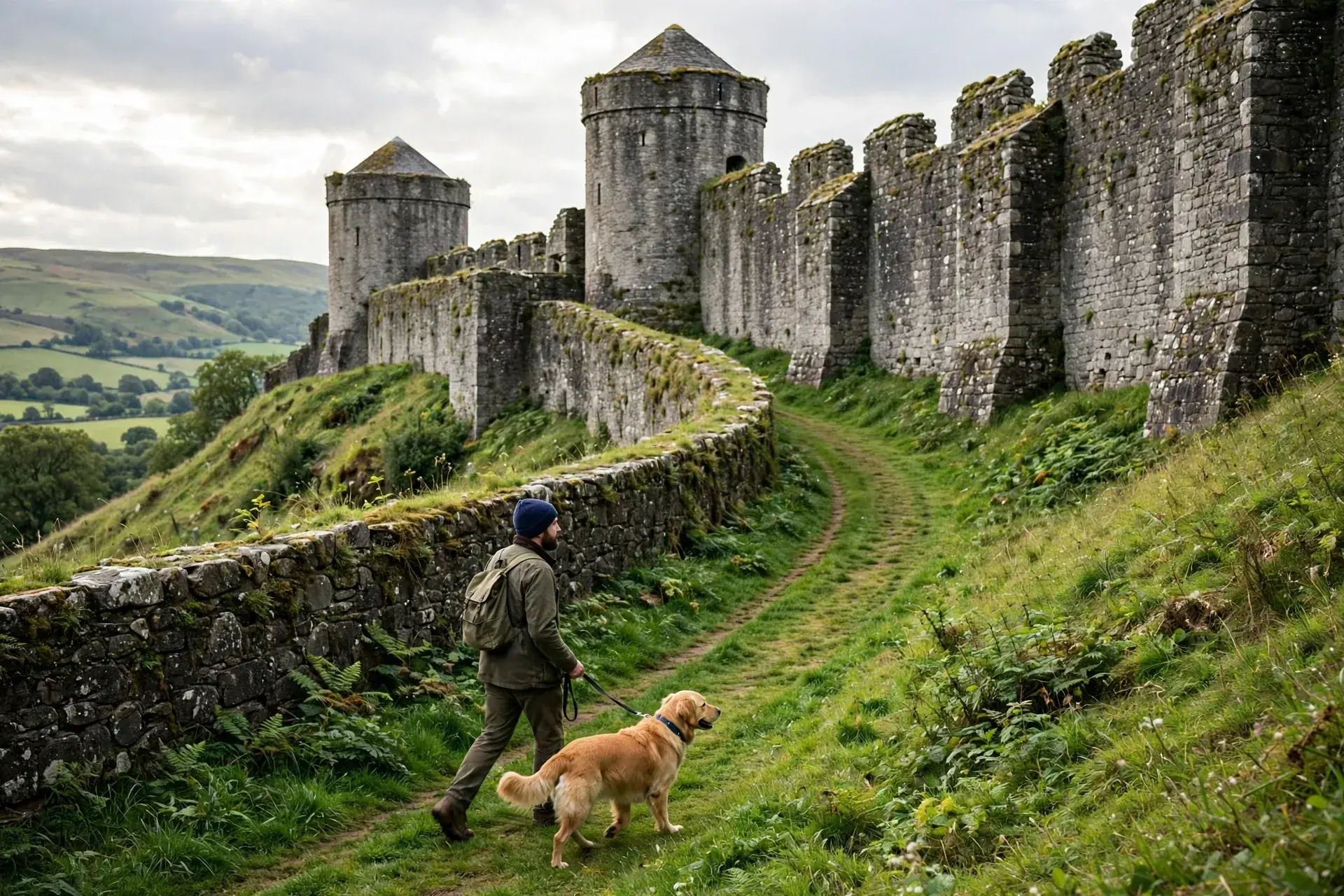
Ruins deserve special attention. A ruined castle often sounds ideal for a dog because there are no furnished rooms to protect, yet ruins bring their own hazards: unguarded drops, loose masonry, steep grass banks, rabbit holes, grazing sheep on neighbouring land and stone that stays slick after rain. A well-managed ruin with clear paths and fenced drops can be excellent, while an unmanaged one can be stressful for an owner who spends the whole visit calling a dog back from edges. Look for visitor information about paths, fencing and livestock before you set out, and keep the lead on until you can see exactly what the ground does.
Coastal castles add another layer. A castle beside a beach or an estuary walk can turn a short visit into a full morning, but the beach itself may carry its own seasonal dog rules, and the walk between castle and shore may cross roads, slipways or bird-nesting areas where dogs must stay on a lead. Our guide to dog-friendly beaches in the UK explains how seasonal bans and local orders work, and it is worth reading before you pair a castle with a beach in the same day. The castle may welcome your dog while the beach next door does not, or the other way round, and the order in which you visit them matters.
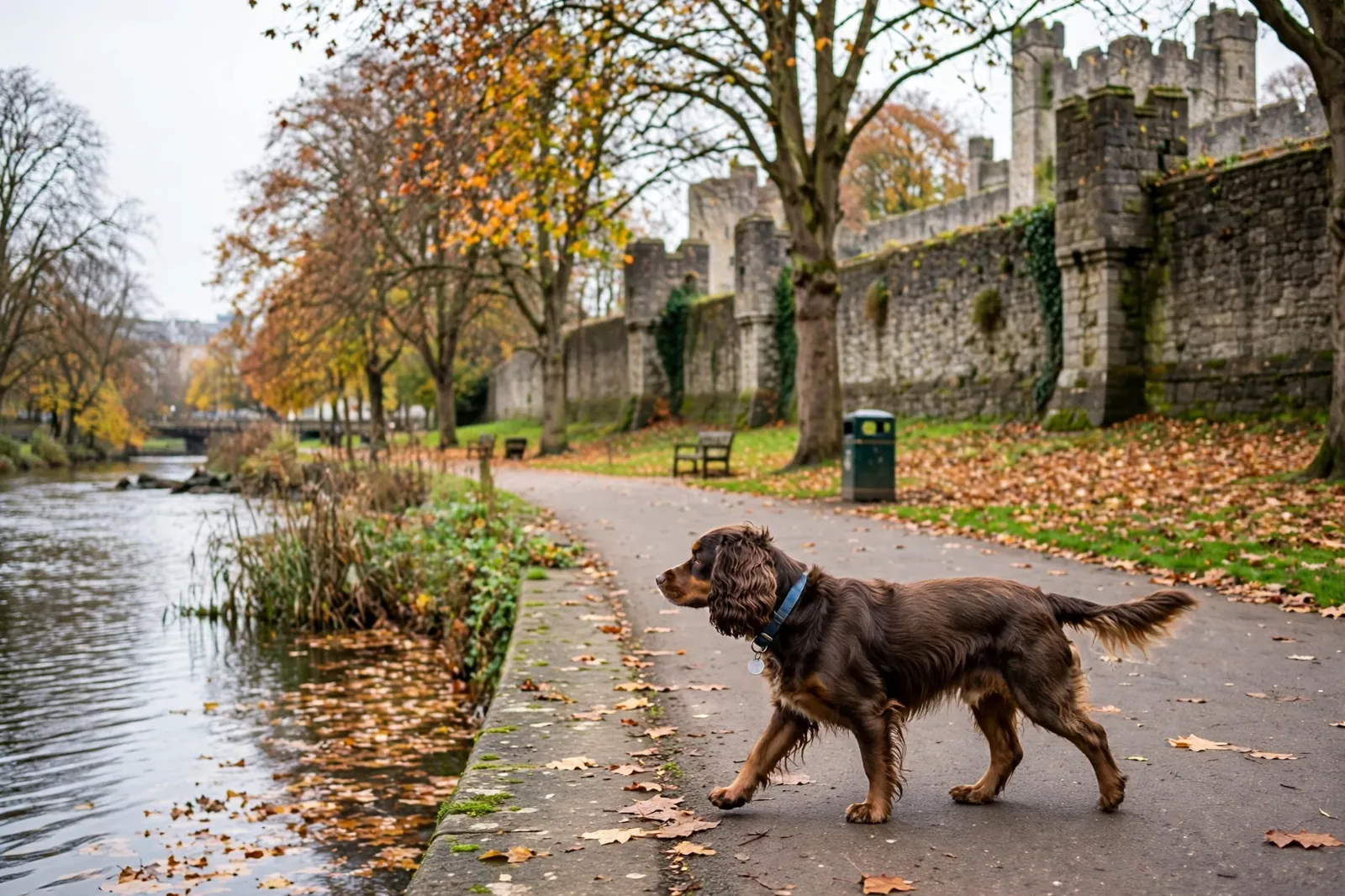
City castles are a different proposition again. Cardiff Castle, for example, sits within easy reach of Bute Park and the River Taff trails, which means the dog gets a proper walk before or after the castle itself. Our Cardiff with a dog guide sets out those riverside routes and the city walks that pair naturally with a castle visit. A city castle also means cafes, water fountains, vets and shaded parks within a short walk, which is a real advantage on a hot day or with an older dog. The trade-off is crowds, traffic and the need for a short lead through busy streets, so arrive early if your dog is unsettled by noise.
Finally, treat review sites and social media photographs with care. A photograph of a dog inside a castle proves only that one dog was in one room on one day, perhaps as an assistance dog, perhaps during a special event, perhaps before a policy changed. Policies are revised, rooms close for conservation work, and a site that welcomed dogs last summer may restrict them this winter. The only reliable check is the site's own current page or a call to its visitor team, made close to the day of travel. That habit, repeated for every castle, will save more disappointment than any list.
Why the owner changes the rules
Welsh castles are not run by a single organisation, and that is the main reason their dog rules look inconsistent. Cadw, the Welsh Government's historic environment service, looks after many of the best-known castles. The National Trust cares for castles that come with houses, gardens and parkland, such as Powis and Penrhyn, where the dog policy is shaped as much by the garden and the house as by the castle walls. Private owners, local councils, community trusts and heritage charities run many others, each setting its own terms. Two castles ten miles apart can therefore have entirely different rules, and neither is wrong.
Cadw sites tend to share a recognisable pattern: dogs on leads are often welcome in outdoor areas, while indoor spaces may be restricted for conservation and safety reasons. Even within that pattern there are exceptions, and the details matter. A site with a small museum room, a narrow spiral staircase and a chapel used for events will restrict dogs more tightly than a largely open-air ruin with a visitor centre set apart from the walls. Always read the specific page for the specific castle, not a general statement about Cadw sites as a whole, and check the official guidance before you travel.
National Trust properties work differently because the visit is usually a package: house, garden, parkland, cafe and shop together. Dogs are commonly welcome in gardens and parkland on leads, while houses are generally closed to pet dogs, with assistance dogs excepted. That structure actually suits many dog owners well, because the garden and the parkland walk can be the main event, and the house can be visited in turns. The complication is that garden rules vary by season: bulb displays, lambing fields, nesting birds and fragile planting can all bring temporary restrictions, and a garden that welcomes dogs in November may ask for leads and restricted routes in spring. Read the property page for the week of your visit, not for the month you first looked.
Privately owned castles and smaller attractions are the most varied group. Some are run as wedding venues, hotels or family attractions, and their dog policy may change between a quiet weekday and a wedding weekend. Others are essentially open ruins with an honesty box or a small kiosk, where the rules are light but the facilities are minimal. A private castle may welcome dogs in its tearoom and bar while a grander public site does not, or it may ban dogs from its gardens because of peacocks, wedding parties or livestock. There is no shortcut here: the owner's own website or a direct message is the source, and a policy found on a booking platform is not a substitute.
Local authority and community-run sites add one more variation. A castle in a public park may be governed partly by the park's own byelaws, which can include dog control orders, seasonal restrictions and rules about fouling and leads that apply to the whole park, not just the castle. A castle ruin on common land may have grazing animals and open access rights that shape how dogs must be managed. In both cases the castle's own page may not tell the whole story, so check the park or council page too, and look for signs on arrival, which are the final word on the day.
Events change everything, temporarily. Medieval re-enactments, concerts, food festivals, filming days and school holiday activities can bring crowds, loud noises, fireworks, birds of prey displays and food stalls that make a site harder for dogs, even when the normal policy is generous. Some events welcome dogs, some restrict them to certain areas, and some ask owners to leave dogs at home for that day. If you are travelling for an event, check its specific page as well as the castle's general page, and have a fallback walk ready in case the atmosphere on arrival is too much for your dog. A good castle day has a plan B built in.
Membership and admission are worth checking alongside the dog rules. If you hold membership of one heritage organisation, it may not cover a castle run by another, and a dog policy that applies to day visitors may be described differently for members. Admission prices, family tickets and parking charges also vary, and a castle that looks expensive for a short dog-restricted visit may be good value when paired with a long town walk and a picnic. Work out the whole day's cost, not just the ticket, before you decide.
Reading a castle in zones
The most practical way to plan a castle visit is to divide the site into zones in your head before you arrive: the approach and car park, the outer grounds and gardens, the courtyard, the wall walk, the towers and stairs, the indoor exhibition rooms, and the cafe, shop and toilets. Dogs are rarely treated the same in every zone, and a visit that works is one where the dog's zones are good enough on their own, without needing access to the restricted ones.
The approach and car park set the tone. A castle with a long walk from the car park across a busy road is a different start from one with parking beside the gate and a shaded path in. On a warm day, check whether the car park has shade and whether you can unload the dog safely away from traffic. Never leave a dog in a parked car while you queue for tickets, and if the queue is long, send one person ahead while the other waits with the dog in the shade. A calm arrival is worth ten minutes of queue management.
Outer grounds and gardens are usually the dog's best zone. Lawns, wooded paths, moat walks and walled gardens give space to sniff, shade to rest in and room to move without the pressure of narrow passages. This is where a long sniffing walk pays off: let the dog work through the smells of the grounds before you head for the busier courtyard, and you will have a calmer dog for the rest of the visit. Look for water points, bins and shaded benches when you arrive, and note where the nearest exit is if the dog needs a break.
Courtyards are the social heart of a castle and the zone where dogs meet the most people, children, pushchairs and other dogs in a confined space. A short lead, a calm pace and a willingness to step aside into a quiet corner make courtyards work. Avoid feeding the dog in a busy courtyard, keep treats out of sight of other dogs, and watch for dropped food, especially during events. If your dog is reactive, time the courtyard for a quieter hour and use the grounds first, so the courtyard is a brief passage rather than a long wait.
Wall walks are the zone most owners overestimate. The views are superb, but the walks are often narrow, exposed, uneven and busy in both directions, with low parapets, steep steps at each end and no easy way to turn back. A dog that is confident on a country path may still struggle with a wall walk in wind, with people passing on both sides and a long drop beside the path. There is no shame in skipping the wall walk: the grounds below often give the better photographs and the calmer dog. If you do go up, use a short lead, keep the dog on the inside away from the parapet, and check first whether dogs are permitted on that particular walk at all.
Towers, stairs and indoor rooms are the zones most likely to be closed to pet dogs. Spiral staircases are narrow, dark and hard to pass in, and a dog meeting another dog on a spiral stair has nowhere to go. Exhibition rooms contain objects at dog-nose height, low barriers and quiet atmospheres where barking carries. Chapels and furnished rooms add conservation concerns. When these zones are closed to dogs, the split-visit approach works well: one adult explores while the other walks the dog, then you swap and compare notes. Agree the swap before you enter, so nobody feels rushed.
Cafes, shops and toilets are the final zone, and the one where policies differ most visibly. Some castle cafes welcome dogs inside, some allow them only on a terrace, and some ask dogs to wait outside. A terrace is often the best compromise on a mild day, but on a wet or cold day it can leave one person eating in the rain while the other holds the lead. Check the cafe policy before you promise anyone lunch at the castle, and carry a backup plan: a dog-friendly cafe in the town, a picnic in the grounds, or a flask and sandwiches eaten on a bench. The town cafes around Welsh castles are often more relaxed about dogs than the castle cafe itself, which is another reason to plan the town walk as part of the day.
Signs on the day override everything you read beforehand. A room closed for conservation work, a garden path closed after heavy rain, a tower closed in high wind: these are normal, temporary and not a reason to argue. Read the signs at the entrance, ask staff which zones are open to dogs that day, and adjust the plan without fuss. Staff who see a calm, well-managed dog are also more likely to be helpful about shade, water and quiet routes, so the first conversation at the ticket desk is worth having properly.
Large dogs, leads and narrow stairs
Large dogs are welcome at many Welsh castles, but they meet a different set of physical problems from small dogs, and planning for them is worth doing explicitly. A large dog on a wall walk takes up more of the path, is harder to hold if startled, and may struggle to turn on a narrow landing. A large dog in a small exhibition room, even one that permits dogs, can block the route for everyone else. None of this means large dogs should stay home; it means the grounds and gardens should be the core of the visit, and the towers should be treated as optional extras to be skipped without regret.
Lead choice matters more at castles than on an open beach. A short, sturdy lead with a comfortable handle gives control in courtyards, on steps and at gates, while a retractable lead is a hazard in busy, narrow spaces: it lets a dog wander into another dog's space, wrap around legs and pushchairs, and reach a parapet edge before the owner can react. A long line has its place on an open moat walk or a quiet garden path, but it should be shortened before courtyards, gates and wall walks. A harness that distributes pressure is kinder than a collar for a strong dog that pulls towards other dogs, and a second point of contact, such as a double-ended lead, can help on steep steps.
Stairs deserve a frank assessment before you travel. Many castles have stone steps that are steep, worn, uneven and wet, with no handrail on the dog's side. Spiral stairs add a turning problem: a dog climbing a spiral meets descending visitors head-on, with no passing place. Dogs with arthritis, hip problems, poor eyesight or a fear of open-tread steps may find castle stairs painful or frightening, and a dog carried up a tower is a risk to both dog and carrier. Check whether the castle publishes step counts or accessibility information, and if it does not, assume the towers are not suitable and plan the visit around the ground level.
Small dogs face the opposite problem: they are easy to carry, but that does not make every zone suitable. A small dog in a bag or a carrier may still count as a dog for the purposes of a room ban, and a carried dog at face height can be nose-to-nose with children and other dogs in a way that provokes barking. A small dog on the ground in a busy courtyard can be stepped on or overwhelmed by larger dogs. The safest approach for a small dog is the same as for a large one: a short lead, a calm pace, and a willingness to leave the busiest zones to the humans.
Reactive dogs need a castle plan of their own. Arrive early, use the grounds first, avoid the courtyard at peak times, and keep moving rather than standing in queues with the dog. A visual barrier, such as standing behind a wall or a hedge while other dogs pass, can prevent a reaction that a head-on meeting in a narrow passage would cause. If your dog reacts to children, avoid school holiday peaks and event days, and choose a quieter ruin over a busy showpiece castle. A successful castle visit for a reactive dog is a quiet one, and a quiet castle is a genuine pleasure in its own right.
Puppies and young dogs bring energy and curiosity that castles reward and punish in equal measure. A puppy will love the smells of a castle garden, but will also chew low stonework, chase pigeons, jump at low walls and tire quickly on steps. Keep puppy visits short, build in rest and water breaks, and do not expect a puppy to manage a full castle, a town walk and a beach in one day. Older dogs, by contrast, may love the level grounds and the shade but need shorter walks, more water, a padded mat for resting on stone, and a car parked close by for an early finish. Plan the visit around the dog's age, not the guidebook's suggested route.
Finally, think about the dog's toilet needs, because castles are not parks with a dog toilet area at every corner. Ask where dogs may relieve themselves, carry bags, and clean up immediately, especially in gardens and courtyards where other visitors walk. A dog that has had a proper toilet walk before entering the castle will be calmer inside, so build that walk into the approach: a riverside path, a park loop or a quiet lane before the ticket desk, not after. Small courtesies like this are what keep castles welcoming to dogs in the long run.
Seasons, events and crowds
Spring is a beautiful but complicated season for castle dogs. Gardens come alive, lambs appear in neighbouring fields, nesting birds claim the walls, and Easter and May bank holidays bring the first big crowds of the year. A dog on a lead in a garden during nesting season must stay on paths and away from hedges and water where birds nest, and a walk through lambing fields needs a short lead and a wide berth. The reward is quieter weekdays between the holidays, when gardens are at their best and the castle grounds feel spacious. If you can choose a weekday in late spring, take it.
Summer brings the longest days, the biggest crowds and the hardest conditions for dogs. Stone courtyards radiate heat, shade becomes precious, and water bowls empty fast. School holiday weeks can double the number of visitors, which means longer queues, busier courtyards and more children at dog height. Arrive at opening time, do the castle first, and save the town walk for the cooler late afternoon. Check whether the castle has shaded rest areas and water points, and carry water for the dog rather than assuming a fountain will be working. On very hot days, a hilltop castle with no shade is a poor choice, however good the view.
Autumn is often the best season for castle dogs in Wales. The crowds thin after the summer holidays, the light softens, gardens turn colour, and the air cools enough for a long walk without heat stress. The trade-offs are shorter opening hours at some sites, wetter ground and the start of the fireworks season, which can unsettle noise-sensitive dogs at evening events. Check opening times for the specific week, because autumn hours can change at short notice, and confirm that the cafe and toilets you are relying on are still open on the day.
Winter castle visits can be magical and very quiet, but they need the most checking. Some castles close entirely in winter, some open only at weekends, and some keep their grounds open while the indoor rooms close. A winter visit means cold stone, wet steps, early darkness and fewer staff on site, so a torch, a warm coat for the dog if needed, and a firm plan for lunch matter more. The advantage is space: a castle almost to yourselves, with room for a calm dog to explore without the pressure of crowds. If your dog is nervous in busy places, winter is your season, provided you check the opening details first.
Events deserve their own paragraph in any seasonal plan. A re-enactment weekend can be wonderful for humans and overwhelming for dogs: cannon fire, drums, horses, costumed crowds, birds of prey and food stalls all in a confined courtyard. Some dogs cope well with this kind of noise and movement, and some do not, and there is no way to know until you try it in a controlled way. If you want to try an event, arrive early, watch from the edge, keep the visit short, and leave before the dog's stress signs build. A dog that is panting, pacing, yawning repeatedly or trying to leave is telling you the event is too much, and the kindest response is to walk away to the quieter grounds.
Crowd management is a skill worth practising before a busy castle day. Teach or refresh a simple "wait" at gates, a "leave it" for dropped food, and a calm settle on a mat, because these three behaviours solve most castle problems. A mat gives the dog a defined place in a courtyard cafe, a "wait" keeps gates safe, and a "leave it" protects against picnic scraps, fallen sweets and, in gardens, toxic plants. None of these needs to be perfect, but each one makes the day smoother, and a smoother day is a longer day for the dog.
Rain, mud and wet stone
Welsh weather is part of the castle experience, and a dog owner who plans for rain will enjoy castles far more than one who hopes for sun. Stone steps, courtyards and wall walks stay wet long after the rain stops, and wet stone is slippery for paws and boots alike. Grass banks become mud, moat paths puddle, and garden paths on clay soil can turn into a slide. The right response is not to cancel but to choose the right castle for the conditions: a low, level site with surfaced paths and a town cafe beats a steep hilltop ruin on a wet day, however dramatic the ruin looks in photographs.
Kit for a wet castle day is simple but specific. A drying coat or a large microfibre towel, a spare towel for the car, a waterproof mat for the boot, a spare lead in case the first one gets soaked and muddy, and a bag for wet items will cover most situations. A dog that has been towelled down and put into a drying coat can happily continue a town walk, while a dog left wet in a cold wind will shiver and want to go home. If the dog wears boots, practise with them before the trip, because a dog trying to shake off unfamiliar boots on wet castle steps is a hazard to itself and everyone around it.
Wet weather also changes what is open. Towers and wall walks may close in high wind or after heavy rain, garden paths may be roped off to protect waterlogged lawns, and outdoor events may be cancelled or moved indoors, which can change the dog policy for the day. Check the site's social media or call ahead on a wet morning, and have a backup castle in mind: a second site in the same area, a town walk with covered arcades or a dog-friendly cafe, or a shorter visit followed by a longer drive home. A backup plan turns a washed-out day into a different kind of good day.
Mud management continues after the castle. A castle town with a dog-friendly cafe that welcomes muddy paws is worth more than a pristine cafe that asks you to leave the dog outside. Carry a small towel in a bag for cafe visits, wipe paws at the door, and choose a table near the entrance where a shake will not reach other customers. In the car, a waterproof boot liner, a towel on the seat and a spare blanket for the dog will protect both the car and the dog's comfort on the drive home. These small habits are what make wet-weather castle trips repeatable rather than regrettable.
Finally, remember that rain affects the dog's paws and coat, not just its comfort. Wet stone can cut pads, mud can hide sharp objects, and a long wet coat can chill a small or older dog quickly. Check paws after a wet castle visit, dry between the toes, and watch for limping on the drive home. A dog that has had a good wet day will sleep soundly; a dog that has been cold and wet for hours will tell you about it the next day. Keep wet visits shorter than dry ones, and build in a warm, dry rest at the end.
Castle towns and their walks
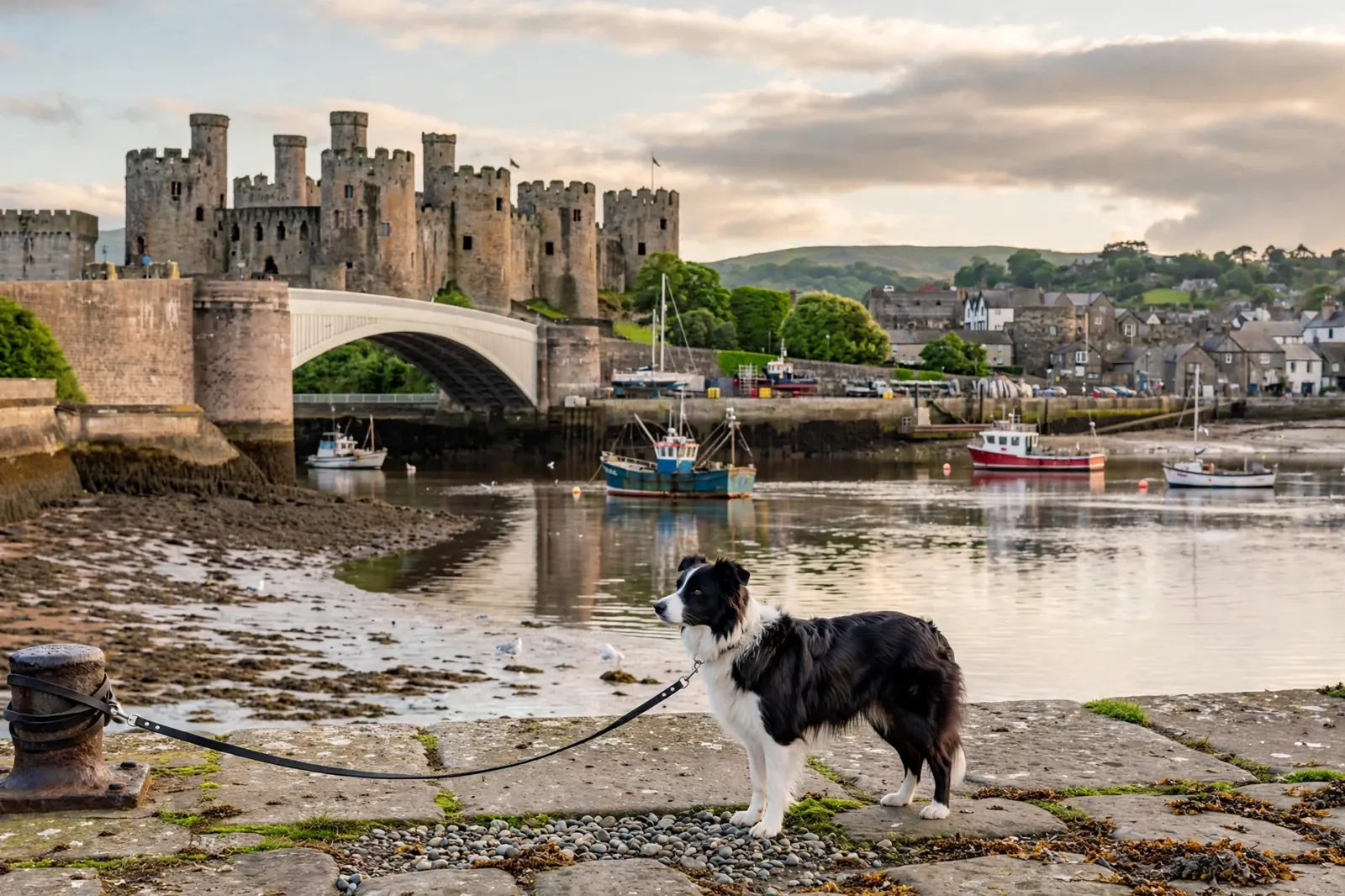
The best castle days in Wales are rarely just about the castle. The town around it, its walls, its harbour, its river and its park, is what turns a one-hour visit into a full day that suits a dog. Conwy is the classic example: the castle, the town walls, the quay, the harbour and the nearby beach and woodland walks can fill a day without ever needing a car, and our Conwy with a dog guide sets out those routes, the wall walk, the quay and the practical details in full. A town like Conwy rewards a slow pace: castle in the morning, quay walk at lunch, town walls or a woodland loop in the afternoon, and a cafe stop when the dog needs a rest.
Cardiff works the same way at city scale. The castle sits beside Bute Park and the River Taff, with Roath Park, the Bay barrage and a network of dog-friendly cafes within reach. A city castle day can therefore be built as a walk with a castle in the middle, rather than a castle visit with a walk bolted on. That structure suits dogs well, because the walk comes first, the dog arrives at the castle already exercised, and the afternoon walk gives a second outing after the castle. See our Cardiff guide for the riverside routes that make this work.
Smaller castle towns offer a quieter version of the same pattern. A castle above a market town, a riverside path below it, a churchyard or a park for a sniffing loop, and a cafe with a water bowl outside can be enough for a perfect half day. The advantage of a small town is space and calm: fewer crowds, easier parking, shorter queues and a dog that can relax. The disadvantage is fewer facilities, so check cafe opening hours, toilet locations and vet details before you rely on them, especially on Sundays and in winter.
Coastal castle towns add beaches, harbours and cliff paths to the mix, but they also add seasonal rules. A harbour walk may be dog-friendly all year while the beach beside it is restricted in summer, or the cliff path may cross farmland where dogs must stay on leads near livestock. Read the beach rules for the specific beach, not just the town, and plan the order of the day so the dog gets its best walk at the best time. A morning beach walk, a midday castle visit and an afternoon harbour stroll is a classic Welsh day for a reason: it matches the dog's energy, the tide and the crowds.
Walking between castles is possible in some areas, but it needs honest distance planning. Two castles that look close on a map may be separated by a busy road, a river without a dog-friendly crossing, or a long stretch with no shade or water. Check the actual walking route, not just the straight-line distance, and carry water, a map and a phone with charge. A walk that is too long for the dog will spoil both castles, while a walk that is just right will be the part of the day everyone remembers.
Where to stay matters for castle touring. A base with a secure garden, a nearby evening walk and a dog-friendly pub or cafe within walking distance will make a multi-castle trip far easier than a base that requires a drive for every toilet walk. Our guide to dog-friendly holiday parks in Wales covers coastal and countryside bases, their boundaries and their booking checks, and it is a useful companion when you are choosing where to stay for a castle tour. A good base turns a castle trip from a series of day visits into a proper holiday.
Planning a castle day with a dog
A good castle day starts the night before, not at the castle gate. Check the official guidance before you travel for the castle you have chosen, confirm opening times and dog zones, check the weather and the tide if a beach is involved, and pack the car the evening before so the morning is calm. A calm morning makes a calm dog, and a calm dog makes a calm castle visit. Pack water, a bowl, bags, towels, a spare lead, treats, a mat, a first-aid kit and the dog's regular food if the day will run long, because a hungry dog at a castle cafe is a dog begging from strangers.
On the day, aim to arrive at or near opening time. Early arrival means easier parking, shorter queues, quieter courtyards and cooler stone in summer. Start with a toilet walk and a sniffing loop in the grounds or a nearby park, then visit the castle zones that suit the dog, then take a break: water, shade, a rest on the mat, and a chance to settle. A dog that has had a break mid-visit will manage the second half far better than a dog pushed from zone to zone without pause. Build the break in deliberately, not as an afterthought.
The split visit is the key technique for dog-restricted rooms. Agree before you enter who goes first, where the other person and the dog will wait, and how long the first visit will take. The waiting party should have a pleasant place to be: a garden bench in the shade, a town walk, a cafe terrace, not a car park in the sun. Swap, compare notes, and then do something together: a town walk, a harbour loop, a picnic. A castle day that ends with a shared walk feels complete in a way that a day of taking turns does not, so always plan the shared ending.
Lunch planning deserves the same care as the castle itself. If the castle cafe welcomes dogs, check whether that means inside, on a terrace, or only in a specific area, and whether it is busy at lunchtime. If it does not welcome dogs, find a dog-friendly cafe or pub in the town in advance, and check its opening hours and whether it needs booking. A picnic is often the simplest solution: castle grounds, town parks and harbour benches all make good picnic spots, provided you take litter home and keep food away from other dogs. A flask, sandwiches and a water bowl can beat a long queue for a table.
Transport between castles needs thought, especially in summer. A car parked in full sun heats fast, and a dog should never be left in it while the humans visit a dog-free room. If you are touring by car, plan the day so the dog is always with someone, or choose castles where the dog can join the whole visit. Public transport adds another check: bus and train dog policies in Wales vary, and a castle reached by a rural bus may have no return service for hours. Check timetables and dog rules before you rely on public transport, and carry a backup taxi number for the area.
End the day with the dog's needs, not the itinerary's. A tired, wet or overstimulated dog needs a short final walk, water, food at the usual time, and a quiet evening, not a third castle squeezed in because it was on the list. The best castle tours leave one castle unvisited, because that gives a reason to return. Wales has enough castles for many returns, and a dog that has enjoyed the first tour will enjoy the second even more, because it will know the rhythms: car, walk, castle, rest, walk, home. That rhythm is the real souvenir of a castle holiday with a dog.
Finally, keep a simple record of what worked. Note which castles welcomed your dog in the grounds, which town walks suited its pace, which cafes had water bowls and shade, and which zones you skipped without missing them. That record becomes your personal castle guide, far more useful than any general list, because it is written for your dog. Share it with other dog owners if you wish, but keep the official check as part of the habit: policies change, and the castle that was perfect last year deserves a fresh check before the next visit. Check the official guidance before you travel, every time, and the castles of Wales will keep welcoming your dog well.
Practical questions
Before you go
Are dogs allowed inside Welsh castles?
It depends on the site and the room. Many Welsh castles welcome dogs in outdoor areas such as courtyards and grounds, while indoor exhibition rooms, towers and chapels are often dog-free. Assistance dogs are treated separately. Check the official guidance before you travel for the exact rooms at the castle you plan to visit.
Do dogs have to stay on a lead at Welsh castles?
In most castle grounds, yes. Leads keep dogs clear of other visitors, uneven steps, low walls and wildlife, and they are usually a condition of entry. A short lead works better than a long line on narrow wall walks and in busy courtyards.
Which Welsh castles are best for a first visit with a dog?
Start with a castle that has level grounds, a town walk nearby and a clear dog policy, rather than the most dramatic hilltop ruin. A site with gardens, a riverside path or a harbour walk gives the dog a proper outing even if some indoor rooms are closed to dogs.
Can large dogs visit Welsh castles?
Large dogs are welcome at many outdoor castle sites, but narrow spiral stairs, steep wall walks and small doorways can be a problem. Check step counts, stair widths and whether there is a ground-level route before you go, and plan to skip the towers if they do not suit your dog.
What should I do if part of a castle is closed to dogs?
Split the visit. One person can explore the dog-free rooms while the other walks the dog in the grounds or the town, then swap. Never leave a dog alone in a car at a castle car park, especially in warm weather, and check whether the site offers any shaded waiting area or dog-friendly cafe first.
Are Welsh castles good in wet weather with a dog?
They can be, with the right kit. Stone courtyards drain unevenly, grass gets slippery and tower steps stay wet long after rain. Pack a drying coat, a towel, a waterproof mat for the car and a spare lead, and choose a castle town with a covered cafe or a sheltered walk for the worst of a downpour.