This guide is independent and contains no paid placement. If affiliate links are added later, they will be clearly marked and will not change our editorial checks.
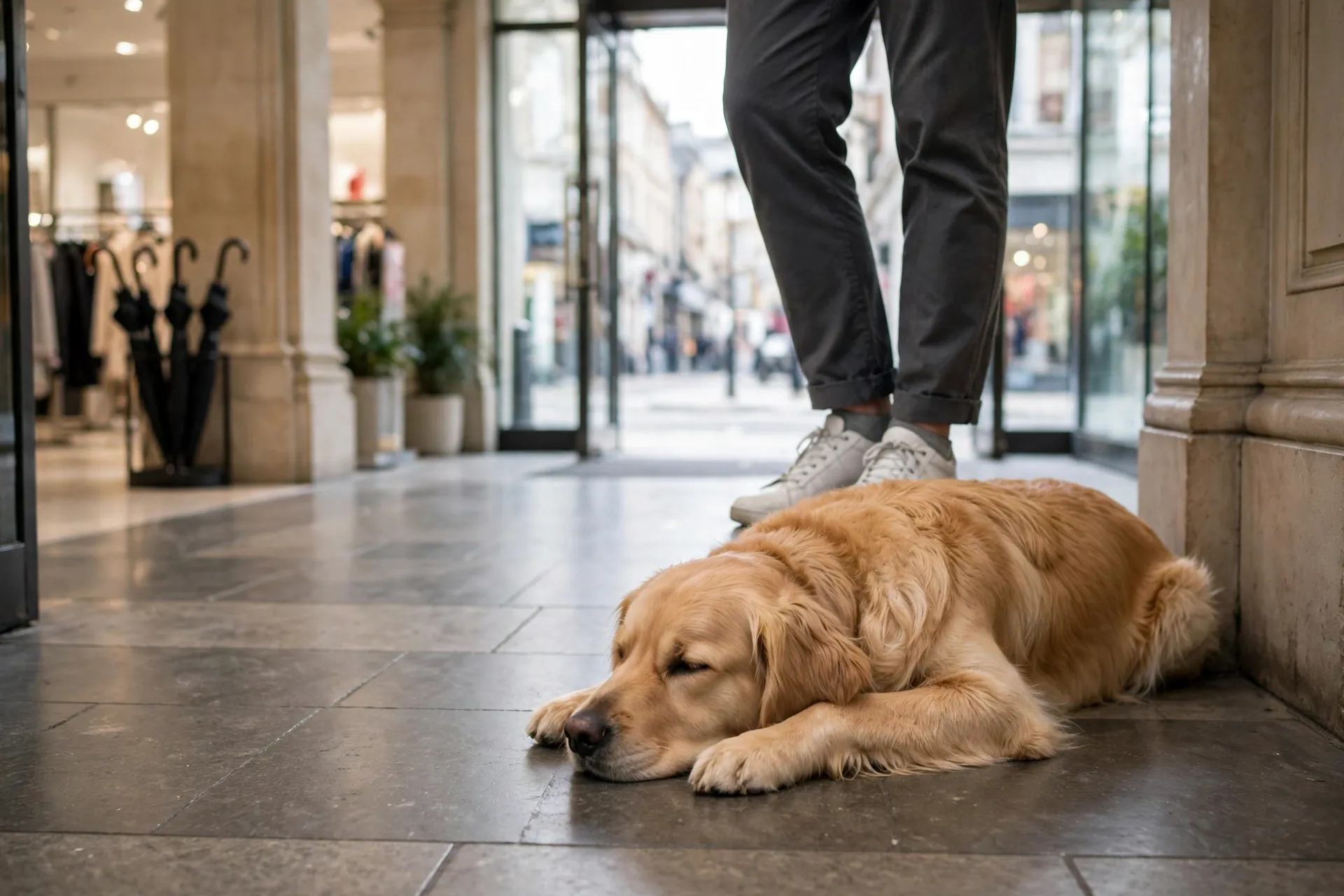
Many TK Maxx stores in the UK do welcome well-behaved dogs, but there is no single published national policy that guarantees entry at every branch, and the decision can rest with the store. Check with your branch before you travel, keep your dog on a short lead, and have a plan for the day the answer is no.
The short answer: it depends on the branch
The most honest answer to the TK Maxx question is also the least satisfying: it depends on the branch. TK Maxx does not publish a single, clear national dog policy that applies identically in every UK store, and shoppers report different experiences in different towns. Some branches are famously relaxed, with staff greeting dogs and water bowls by the door; others are stricter, particularly at busy times or where the layout makes dogs impractical. The variation is not a contradiction: it reflects the fact that individual stores have discretion over their own shop floor, and that discretion can change with the manager, the season or a recent incident.
That means the work is on you, the shopper, and it is simple work. Before you travel to a specific branch, check with that branch directly: a phone call is best, because it gives you a named answer rather than a guess from a website. Ask the exact question, "Do you allow well-behaved dogs on a lead in store today?" rather than a vague "Are you dog-friendly?", because the second question invites a marketing answer while the first invites a practical one. Note who you spoke to and when, in case the answer differs at the door. If you cannot reach the branch, check the official guidance before you travel and plan as if the answer might be no.
There is also a difference between being allowed in and being comfortable in. A store that permits dogs is not automatically a good place for your dog. TK Maxx stores are often busy, loud and crowded, with music, announcements, trolleys and many other shoppers. A dog that is fine in a quiet park may find a Saturday afternoon in TK Maxx overwhelming. The policy question and the welfare question are separate, and both need a yes before you take a dog inside.
Know the shop floor before you go in
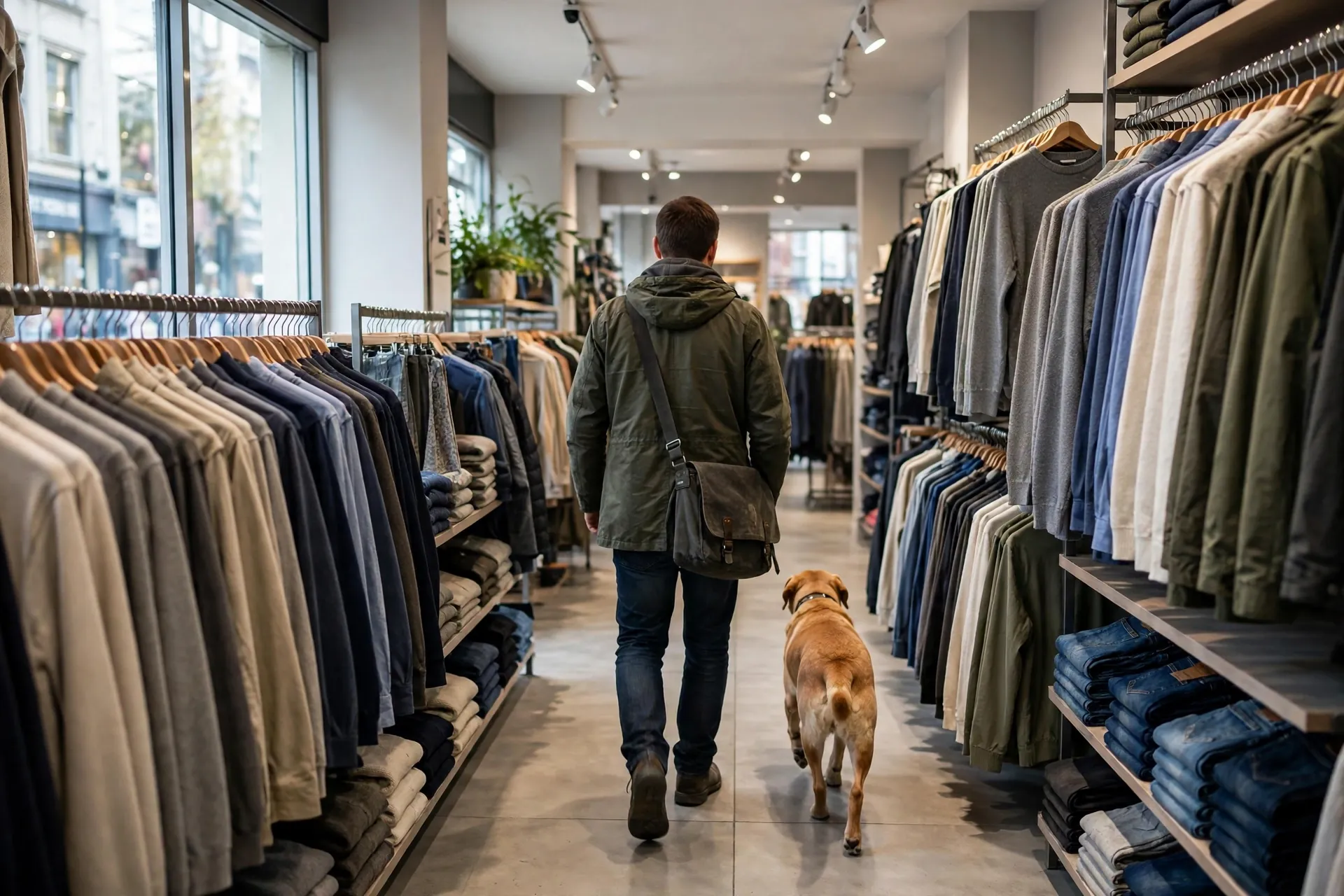
TK Maxx is not laid out like a department store. It is a discount store built around a treasure hunt: stock changes constantly, departments are packed tightly, and the layout varies from branch to branch. The typical floor mixes womenswear, menswear, childrenswear, footwear, accessories, beauty, luggage and homeware, often with a clearance section where stock is densest and aisles narrowest. For a dog, the challenges are the density of the rails, the number of people in a small space, and the sheer volume of smells from clothing, leather goods and beauty products.
Before you go in, decide what you are actually shopping for and where it lives. A focused trip — in for a coat, out in twenty minutes — is far kinder to a dog than an open-ended browse of the whole store. If you are shopping for homeware, expect the most breakable stock and the tightest turns; if you are shopping for clothing, expect long rails at dog-nose height and other shoppers reaching across your dog to get to a rail. Either way, a short lead is essential: a long lead in a TK Maxx aisle is a trip hazard for everyone, including your dog.
Think about the route, not just the destination. Enter through the main entrance where staff can see you and you can ask about the rules, rather than slipping in through a side door. Keep to the wider main aisles where possible, avoid the narrowest clearance sections if your dog is large or easily startled, and plan an exit route so you can leave quickly if your dog becomes stressed. If the store is busy when you arrive, consider a shorter visit or coming back at a quieter time rather than pushing a reluctant dog through a crowd.
Trolley or lead: which works for your dog
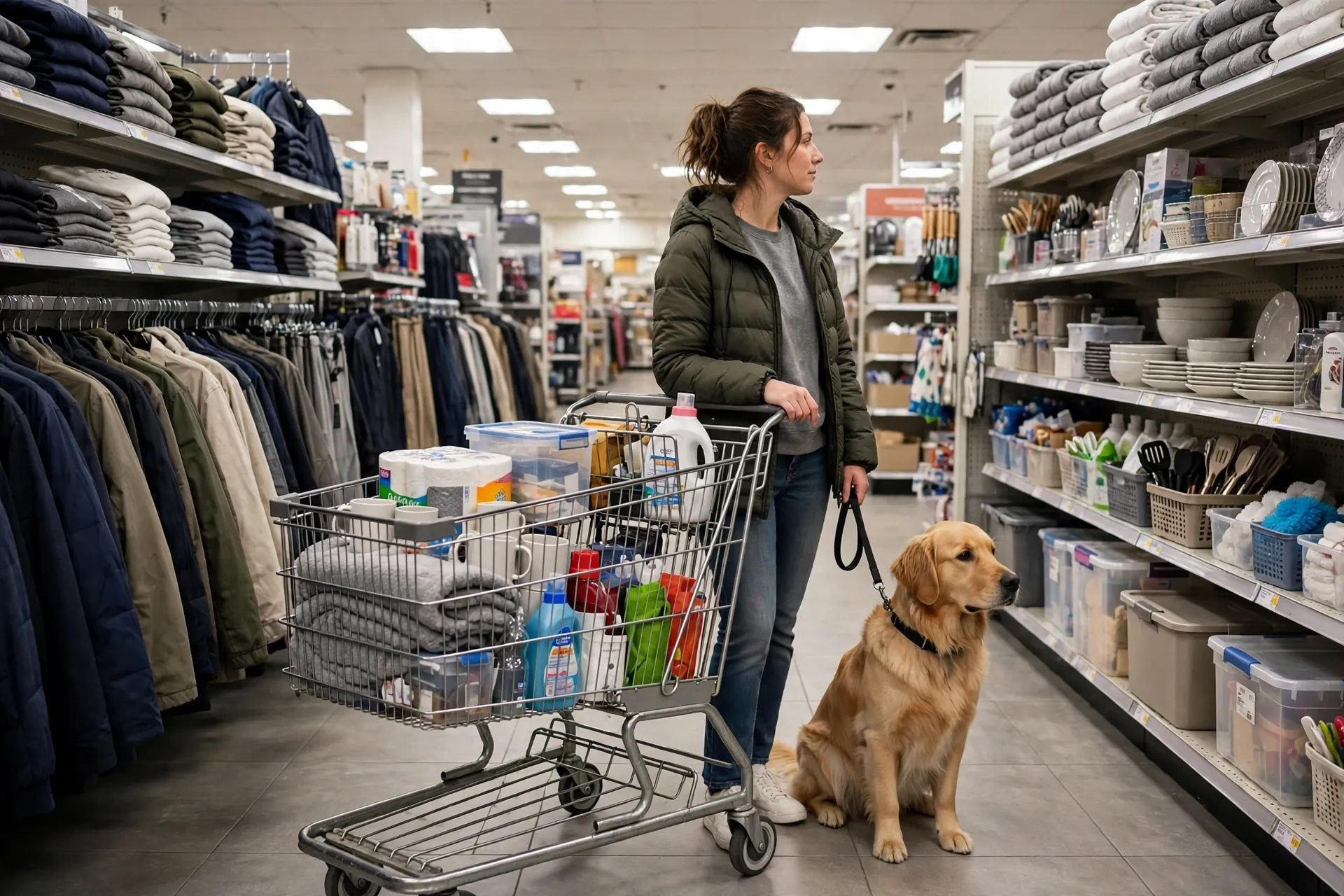
The trolley question comes up constantly with TK Maxx, because shoppers have seen small dogs riding in trolleys and want to know if it is allowed. The honest answer is the same as the entry question: it depends on the branch. Some stores allow small dogs in a trolley, and some shoppers do it routinely; other stores prefer dogs on the floor on a lead, and some may object to a dog in a trolley for hygiene reasons. There is no published national trolley rule to rely on, so ask at the door and follow the answer you are given on the day.
Practically, a trolley suits some dogs and not others. A small, calm dog that settles in a trolley on a blanket is contained, off the floor and away from feet and rails, which can be safer in a crowded store. But a dog that wriggles, barks or tries to climb out is a hazard, and a large dog does not belong in a trolley at all. Never put a dog in a trolley that is also carrying heavy items that could fall on them, and never leave a dog unattended in a trolley while you browse a nearby rail. If you are unsure, the lead on the floor is the safer default: it is accepted everywhere dogs are allowed, and it keeps you in control.
Whichever you choose, keep the lead short and the dog close. In a TK Maxx aisle, a dog on a long lead can wrap around a rail, trip another shopper or reach a low shelf of breakables before you can react. A short lead, a harness rather than a collar for a dog that pulls, and a dog that walks beside you rather than ahead of you make the whole shop easier. If your dog pulls strongly or lunges at other dogs, TK Maxx is probably not the right first shop: practise in quieter stores first, and build up to a busy discount store gradually.
What to ask at the door
A short, polite conversation at the door prevents most problems. When you arrive, ask a member of staff: "Do you allow dogs in store today, and is there anywhere you would prefer we avoid?" That second half of the question matters, because it invites staff to tell you about a busy department, a fitting room rule or a clearance area they would rather you skipped, and it shows you are taking their shop seriously. Listen to the answer, thank them, and follow it even if it differs from what another branch told you.
If staff say yes, confirm the practical details: should the dog stay on a lead, is a trolley acceptable for a small dog, and are there any departments that are off limits? If staff say no, accept it gracefully. Stores have the right to set their own rules, and arguing at the door helps nobody and embarrasses the dog. The same applies if staff ask you to leave partway through a visit: it may be because the store has become too busy, or because another shopper has complained, or because your dog has had an accident. Leave calmly, thank staff, and sort out the rest of the shopping another way.
One habit that helps in every shop: carry poo bags and a way to clean up, even indoors. Accidents happen, especially with puppies and nervous dogs, and a shopper who cleans up quickly and apologises is remembered very differently from one who leaves a mess. The same applies to shedding: a quick brush before you go in reduces the hair left on clothing rails, and staff notice the effort.
Fitting rooms, lifts and escalators
Fitting rooms are the greyest area of TK Maxx dog policy, because they vary most between branches. Some stores are relaxed about a calm dog waiting with you while you try clothes on, especially if the dog lies quietly on a mat. Others ask dogs to stay outside the fitting room area, for reasons of space, hygiene and other customers' comfort. Ask before you go in, and if you are shopping alone with a dog that cannot wait quietly, plan around it: try clothes at home and return what does not fit, or bring another adult who can wait with the dog.
Lifts and escalators need a separate thought. Many larger TK Maxx stores are on more than one floor, and the route between floors may involve an escalator. Some dogs cope fine with escalators; others panic, and a dog's claws or a long lead can get caught in the mechanism. If your dog is not confident on escalators, use the lift, and if the lift is small and crowded, wait for the next one rather than squeezing a nervous dog into a packed car. Keep the lead short on both, and never let a dog stand on an escalator step unsupervised.
Queues are the other pinch point. The checkout queue in TK Maxx can be long, especially at sale times, and a dog that has been patient for twenty minutes of shopping may lose patience in a ten-minute queue. Keep the dog close, give them something to settle with if you use a chew or a mat, and be ready to step out of the queue if the dog becomes distressed. A short queue is a good reason to choose a quieter time of day for the whole visit.
Breakables, homeware and the clearance rail
TK Maxx homeware is where a dog's tail becomes a liability. Vases, ceramics, glassware and ornaments are often displayed at tail height on open shelves, and a happy wag can clear a shelf in seconds. The clearance section is the worst for this: stock is dense, shelves are crowded, and the aisles are narrow. If you are shopping for homeware with a dog, keep the dog on your far side from the shelves, walk slowly, and avoid the tightest sections altogether if your dog is large or excitable.
The same care applies to beauty and fragrance, where strong smells can overwhelm a dog's nose, and to the food-adjacent sections some branches carry, where dropped items and packaging tempt scavengers. Keep your dog's nose away from low shelves, and do not let them lick or mouth stock. If your dog does knock something over, tell staff immediately and offer to pay: honesty and a quick apology preserve the welcome for the next dog owner far better than a quiet exit.
Children's departments deserve a mention too. Children in TK Maxx are often excited, noisy and at dog height, and they may run up to a dog without asking. If your dog is nervous around children, steer clear of the children's section, and be ready to step aside when a family approaches. A dog that is fine with calm adults can still be overwhelmed by a group of excited children in a narrow aisle, and it is your job to manage that distance before the dog has to.
Busy times, sale events and crowds
TK Maxx is at its busiest on Saturdays, during school holidays and during sale events, when queues form and the aisles fill. These are the worst times to bring a dog, even a confident one, because the density of people, trolleys and noise rises sharply. If you can choose, shop on a weekday morning, when the store is quieter, staff have more time, and your dog can move without constant close encounters. The difference between a Tuesday morning and a Saturday afternoon in the same store is enormous.
Sale events add another factor: shoppers in a hurry, trolleys moving fast, and clearance sections picked over and messy. A dog in that environment is at risk of being stepped on, having a trolley run into them, or becoming frightened by a sudden crowd movement. If you want sale stock, consider shopping without the dog and returning another day for a browse with them, or shopping online and collecting in a way that suits your dog. The bargain is not worth a frightened dog.
Weather affects the store too. On a rainy day, TK Maxx fills with people sheltering from the weather, and wet dogs, wet floors and crowded aisles combine badly. A wet dog in a busy shop is also a dog that will shake water over stock and other shoppers. If you arrive wet from a walk, dry the dog before you go in, or postpone the shopping until the dog is dry. A drying coat in the car is a simple solution that makes the whole visit more comfortable for everyone.
If the store says no
A no is not the end of the shopping trip, but it does need a plan. The best option is to shop with another adult: one person shops while the other waits with the dog, then swap if needed. If you are alone, the options are to visit a different branch that welcomes dogs, to shop online instead, or to come back another day with a companion. What you must not do is leave the dog alone in a car or tied up outside the shop. Cars heat up fast in sun and cool down fast in winter, and a dog tied outside a shop is at risk of theft, escape or distress, however quick the errand feels.
It is worth keeping a mental list of branches that have welcomed your dog before, because consistency helps: a branch that said yes last month is more likely to say yes again, though it is never guaranteed. If you travel to a new town, check the branch before you go rather than assuming the policy travels with the brand. And if a branch that used to welcome dogs changes its policy, accept the change gracefully: policies change for reasons that are not always visible to shoppers, and a polite response keeps the door open for a future change back.
For comparison, other large UK retailers vary in the same way. Our guide to dogs in John Lewis covers a department store where food halls and cafes complicate the picture, and the dogs in Marks and Spencer guide explains how food and clothing areas differ there. The pattern is the same everywhere: check the branch, ask at the door, and have a backup plan.
Assistance dogs: the legal position
Assistance dogs are in a different category from pet dogs, and this matters at TK Maxx as everywhere. Under the Equality Act 2010, assistance dogs must be allowed into shops, including branches that do not normally admit pets, and a refusal can be unlawful discrimination. This applies to guide dogs, hearing dogs and other recognised assistance dogs, and it is not at the discretion of the individual store. If you have an assistance dog, you do not need to ask permission in the way a pet owner does, though telling staff on arrival still helps them help you.
For pet owners, the legal position is simpler and less generous: a shop is private property, and the owner can set its own rules about pets. There is no general right to take a pet dog into a shop, and a store that says no is exercising a lawful choice. That is why the tone of the whole visit matters: a polite, prepared pet owner who asks, listens and cleans up is the reason stores stay welcoming, while a demanding owner who argues at the door is the reason they stop.
If you believe an assistance dog has been refused entry, note the details — the branch, the date and time, who you spoke to — and raise it with the store's customer service and, if needed, an equality advice service. For pet dogs, the remedy for a refusal is simpler: shop elsewhere, or shop another day. Keeping the two categories clear helps everyone, and it avoids the situation where a genuine assistance dog handler faces scepticism because pet owners have blurred the line.
Packing for a TK Maxx trip
A TK Maxx trip with a dog needs a small, specific kit. Start with a short lead and a harness, poo bags and a cleaning kit, water and a portable bowl, and a mat or blanket for the dog to settle on if you stop. Add a chew or a toy for queue waits, a towel if the weather is wet, and a spare lead in case one gets tangled in a rail. Keep the bag small: you will be carrying shopping as well, and a large bag in a narrow aisle is another obstacle.
Before you go in, give the dog a toilet walk and a few minutes to settle, so they enter the store calm rather than bursting. After the visit, give them another toilet walk and a drink, and check paws for anything picked up from the shop floor. A TK Maxx trip is a short, focused outing, not a day out: plan it that way, keep it under an hour if you can, and your dog will enjoy the novelty rather than enduring the crowd. The bargain you find is a bonus; the calm dog at the end of the trip is the real success.
Practical questions
Before you go
Are dogs allowed in every TK Maxx store in the UK?
No, there is no single published national rule that guarantees dogs in every branch. Many TK Maxx stores do welcome well-behaved dogs, but the decision can vary by store and by manager, so always check with the specific branch before you travel, and follow the instructions of staff on the day.
Can my dog ride in the trolley at TK Maxx?
Some stores allow small dogs in a trolley, but this is not a guaranteed rule and it depends on the branch and the size of the dog. Ask staff at the door, keep the dog settled and contained, and use a lead on the floor instead if you are unsure. Never put a dog in a trolley that is also carrying food or heavy items that could fall on them.
Can I take my dog into the TK Maxx fitting rooms?
Fitting room rules vary by store. Some branches are relaxed about a calm dog waiting with you, while others ask dogs to stay outside the fitting area. Ask staff before you go in, keep the visit short, and bring someone with you if your dog cannot wait quietly while you try clothes on.
What should I do if a TK Maxx store says no to my dog?
Accept the decision politely and do not argue with staff, because the store has the right to set its own rules. Options include shopping with another adult who can wait with the dog, visiting a different branch, or shopping online instead. Never leave a dog alone in a car or tied up outside a shop while you go in.
Are assistance dogs allowed in TK Maxx?
Yes. Assistance dogs are protected by law and must be allowed into shops, including TK Maxx, under the Equality Act 2010. This is separate from the discretionary welcome given to pet dogs, and it applies even in branches that do not normally admit pets.
Is TK Maxx a good shop for a nervous dog?
Not usually. TK Maxx stores can be busy, noisy and crowded, with narrow aisles, music, trolleys and many smells. A nervous dog is better taken to a quieter shop first, or visited at TK Maxx during a quiet weekday morning for a short trip only, with a quick exit route planned in advance.