This guide is independent and contains no paid placement. Store practice can change, so check the official guidance before you travel and confirm the position with the individual store.
Do not assume a blanket yes or a blanket no for Wilko. Entry for pet dogs can depend on the branch, the manager on duty and the department, so phone the store, look for signage at the door, keep your dog on a short lead, and have a backup plan ready before you travel.
The short answer, and why it varies
Can you take your dog into Wilko? The honest answer is that it depends on the store you walk into. That is frustrating when you are planning a quick errand, and it is especially awkward when you have already parked, unloaded a dog and reached the entrance, only to be told something different from what a friend experienced at another branch. The variation is the point of this guide, not a footnote to it. If you treat Wilko as a chain with one settled national rule for pet dogs, you will be caught out sooner or later, because individual stores have applied different approaches at different times, and the person in charge on the day can matter as much as any general company position.
There are several sensible reasons for that variation. A high-street Wilko and a larger retail-park Wilko are not the same shopping environment. One may have wide aisles, a separate garden area and a quiet weekday trade, while another may be compact, busy at lunchtime, close to a food aisle or a cafe area, and staffed by a small team trying to keep displays tidy and safe. A manager may also be responding to a recent incident, such as a dog having an accident, a display being knocked over, a customer complaint, or a near miss with a trolley. None of that makes a refusal personal, but it does mean that a positive experience reported online from one town is not a promise for your town. Wilko store policies have changed over time, and older forum posts, social media comments and third-party listings can easily be out of date. That is why this guide avoids stating a single blanket rule as settled fact, and why you should check the official guidance before you travel and confirm the position with the individual store.
The distinction between a company-wide policy and a local decision matters for how you plan. A company may say, in general terms, that well-behaved dogs are welcome, while still leaving individual managers discretion over busy periods, particular departments or dogs that are clearly unsettled. Conversely, a store that says no today may not be applying the same approach next month, after a refit, a change of manager or a change in local circumstances. The practical lesson is simple: the only answer that counts is the answer for your store, on your day, for your dog. Everything else is background. If the trip only works when the dog comes inside, that answer needs to be confirmed before you leave home, not discovered at the door.
It also helps to be clear about what kind of dog visit you are planning. A quick ten-minute trip for light bulbs, with a calm adult dog that settles beside you, is a very different proposition from a long browsing visit with a young, excitable dog, a reactive dog, or two large dogs in a crowded store. Shops are entitled to think about safety, hygiene, other customers and their staff, and a dog that is lunging, barking, toileting indoors or pulling its owner into displays is likely to shorten the welcome for everyone. That does not mean only perfect dogs should ever enter a shop. It means your planning should match the dog you actually have, not the dog you wish you had. A nervous rescue, a puppy still learning to settle, or a dog that struggles with slippery floors, loud announcements and narrow aisles may be happier waiting with another adult outside, even if entry is permitted.
Finally, remember that a shop is not a park, a cafe terrace or a dog-friendly pub. There is no expectation that your dog will be entertained, given water, or allowed to wander. The visit should be short, purposeful and controlled. If you go in with that mindset, you are far more likely to have a smooth visit, and far less likely to be disappointed if a member of staff asks you to keep the dog closer, avoid a department, or leave. The rest of this guide turns that mindset into a practical routine: how to check, what to do at the door, how to behave in homeware aisles, what assistance-dog rules mean, and what to do when the answer is no.
How to check before you go
The most reliable check is also the quickest: phone the store you plan to visit. Search for the branch, call during a quieter period if you can, and ask a direct question rather than a vague one. Try: "Do you allow well-behaved pet dogs on a lead in your store today, and are there any departments where dogs are not allowed?" That wording does three useful things. It identifies your dog as a pet, not an assistance dog. It signals that the dog will be on a lead and under control. And it invites the store to mention any partial restriction, rather than forcing a simple yes or no that might not reflect the real position.
Listen for the detail in the reply, not just the headline. A useful answer names the conditions: dogs on a lead only, dogs welcome except in a particular area, small dogs only, or dogs welcome at the manager's discretion. A vague answer such as "I think so" is worth a follow-up question: "Is that the rule for today, and is there a manager I could confirm with?" If you are given a name, note it, together with the time of the call. You do not need to use the name as a weapon at the door, but it helps if a different member of staff gives a different answer later. Keep the tone friendly throughout. You are asking for a favour in someone else's shop, and a polite caller is more likely to get a clear and helpful answer.
Do not rely on a single source. Official guidance, the store's own website or social media page, and a phone call can all help, but they can also disagree, especially if a page has not been updated. Treat older online reports with particular caution. A blog post from two years ago, a comment saying "we took our dog in last summer", or a crowd-sourced dog-friendly listing may reflect a store, a manager or a company position that has since changed. If two sources disagree, the current store team wins. The same caution applies in reverse: a single negative report does not prove that every Wilko store refuses dogs. It proves that one store, on one day, did.
When you arrive, check the signage at the door before you walk in. Many shops display a dog symbol, a "dogs welcome" notice, or a "no dogs except assistance dogs" sign. If there is no sign, that does not automatically mean dogs are welcome, and if there is a sign, it does not necessarily settle every department. Read it, then follow it. If the sign is unclear, ask a member of staff at the entrance rather than assuming. A thirty-second question at the door is far better than a difficult conversation halfway down an aisle, with a trolley full of paint and a dog that has already decided the shop is exciting.
Build the check into your journey, not just your shopping list. If you are combining Wilko with other errands, check each stop separately. A garden centre, a supermarket, a cafe and a homeware store on the same high street can all have different rules, and a dog that is welcome in one may not be welcome in the next. If the Wilko visit is the one that matters most, check it first and plan the rest of the trip around its answer. If you are travelling with children, shopping bags or a tight timetable, the check becomes even more important, because you will have fewer options if you are refused at the door.
One more check is worth making before you leave: your dog's readiness. Has the dog had a toilet break? Has it had a short walk or a chance to sniff and settle? Is it wearing a secure collar or harness and a lead you can shorten quickly? Do you have poo bags, a small towel, and water if the trip will be long or warm? A dog that arrives calm, empty and comfortable is much easier to manage in a shop than a dog that arrives bursting with energy and needing the toilet. The phone call checks the store; the pre-shop walk checks the dog. Both matter.
In-store etiquette for a homeware shop
Homeware shops reward a particular kind of dog behaviour: calm, close and unobtrusive. Your dog does not need to heel perfectly for half an hour, but it does need to stay near you, walk at your pace, and ignore most of what it passes. The best way to achieve that is to keep the visit short and structured. Know what you need before you enter, go to those departments first, and resist the temptation to browse every aisle with a dog that is getting progressively more stimulated. A focused ten-minute shop is kinder to the dog, easier for staff, and less risky for displays than a wandering forty-minute browse.
Keep the lead short, but not painfully tight. A short lead gives you control without constant pulling, and it stops the lead from trailing across shelves, wrapping around display stands, or tripping other shoppers. Hold the lead in the hand nearest the dog, and keep the dog on the side away from the shelves where possible. That small positioning choice prevents a surprising number of accidents: a tail wagging against a display of glasses, a nose investigating a low shelf of candles, or a sudden lunge towards another dog coming around a corner. If your dog is large, leave extra space at aisle ends and corners, and pause before turning into a new aisle so you can see what is coming.
Watch the floor as well as the dog. Homeware stores often have smooth, polished floors that can be slippery for dogs, especially older dogs, dogs with long nails, or dogs that are already anxious. Rugs, mats and display plinths can also be tripping hazards or tempting chew targets. If your dog slips, slows down, or starts panting heavily, that is information, not disobedience. Slow down, find a quieter spot, and consider whether the visit should end. A dog that is stressed by the environment will not suddenly settle because you are nearly finished; it will usually get worse, and the last aisle is often where the accident happens.
Be considerate of other shoppers in a way that is visible. Step aside to let people pass in narrow aisles, move your dog close to you when someone with a pushchair, wheelchair or trolley needs space, and do not let your dog approach other people or dogs without invitation. Many people love dogs, but a shop is not the place to assume that. Children in particular may run towards a dog, and a dog that is startled in a confined aisle can snap or jump even if it is friendly at home. Keep greetings brief, keep the dog behind you if a child approaches unexpectedly, and thank people who ask before stroking. Your courtesy is part of what keeps shops willing to welcome dogs at all.
Finally, take responsibility for mess without being asked. Carry poo bags even for a short indoor visit, and carry a small towel or wipes for muddy paws. If your dog has an accident, tell a member of staff straight away, apologise, and help clean up if you are offered the means to do so. Do not try to hide it, and do not leave it for someone else to discover. Staff remember dog owners who handle accidents well, and they also remember those who do not. One honest, well-handled accident is unlikely to change a store's policy; a pattern of ignored mess almost certainly will.
Aisles, trolleys and tricky departments
Wilko-style homeware stores are full of low, tempting displays. Kitchenware, candles, soft furnishings, pet products, toys and seasonal goods are often stacked at nose and tail height, and the temptation for a dog is obvious. The safest approach is to treat every low display as a no-sniff zone. Keep your dog's head away from open shelving, do not let it mouth packaging, and steer around end-of-aisle displays rather than squeezing past them with a dog on a long lead. If you need to examine something closely, park the dog beside you, shorten the lead, and use your body to block the display. That sounds fussy, but it prevents the classic homeware accident: a dog turning, a tail sweeping, and a row of glasses or ornaments falling.
Trolleys deserve their own plan. A large trolley plus a dog on a lead is a lot to manage in a narrow aisle, especially when you are also comparing paint colours, reading labels or reaching for a high shelf. If you need a trolley, consider whether you really need the dog inside at the same time. If another adult is with you, one person can manage the trolley while the other manages the dog. If you are alone, use a basket for a small shop, or keep the trolley close and the lead short so the dog cannot wander behind you and get caught by the wheels. Never tie a lead to a trolley and walk away, and never leave a dog tied to a display while you browse another aisle. A tied dog in a busy shop is a stressed dog, and a stressed dog is a risk to itself and to passers-by.
Some owners ask whether a small dog can ride in a trolley. The answer is: only if the store says so, and only with care. A trolley is not a dog bed. It moves, it tips, it is pushed into other trolleys, and it may have sharp edges or residues from previous loads. If permission is given, put a blanket or mat in the base, keep the dog on a lead held by you, keep the load light and stable, and never put the dog in a trolley that is also carrying paint, cleaning products, sharp tools or food. Larger dogs should stay on the floor. If the store says no to trolley riding, accept it without argument; walking on a lead is the normal expectation, and it is usually more comfortable for the dog anyway.
Busy times change the calculation. Saturday mornings, school holidays, seasonal sales and the run-up to Christmas can turn a calm store into a crowded one, with queues, narrow gaps and children at dog height. If you have a choice, shop at a quieter time, such as a weekday morning, and avoid the busiest hour if your dog is reactive, nervous or easily overstimulated. If you arrive and find the store much busier than expected, it is perfectly reasonable to cut the visit short, buy only the essentials, and return another day. A short successful visit builds a dog's confidence for shops; a long overwhelming visit can undo weeks of careful socialisation.
Think about the exit as well as the entrance. The checkout area is often the most crowded part of a homeware store, with queues, impulse displays, and people manoeuvring trolleys in a small space. Move your dog to the side away from the conveyor or counter, keep the lead short while you pay, and do not let the dog investigate bags, baskets or other shoppers' purchases. If there is a long queue and your dog is getting restless, consider using a quieter till, asking staff whether there is a less crowded option, or stepping aside for a moment to let the dog settle. Paying quickly and calmly is the last impression you leave, and it matters.
Paint, garden and chemical areas
Paint, decorating supplies, cleaning products and garden chemicals are the departments where a homeware shop stops being an ordinary shopping trip for a dog. Paint tins, solvents, adhesives, pesticides, fertilisers and cleaning sprays can be harmful if licked, chewed or spilled, and some products have strong smells that unsettle dogs. The rule here is simple: keep your dog close, keep the lead very short, and do not linger. If you need to compare paint colours or read a label, do it with the dog tucked beside you, facing away from the shelves, rather than allowing it to investigate the display while you are distracted.
Garden sections need similar care, even when they feel more open and dog-friendly. Plants can be toxic, compost and fertiliser bags can leak, sharp tools are often displayed at accessible heights, and hoses, netting and garden furniture can tangle a lead in seconds. Outdoor garden areas may also have uneven ground, wet surfaces and gates that do not close securely. If the garden area is busy, or if your dog is a keen chewer or scavenger, consider leaving that department for a visit without the dog, or asking staff whether there is a safer route through. A dog that eats a fallen plant leaf, licks spilled fertiliser or chews a treated wooden stake can need veterinary attention, and that risk is not worth a browsing visit.
Small items are a quieter hazard throughout a homeware store. Screws, batteries, buttons, beads, small toys, elastic bands and pieces of packaging can all be swallowed, and a dog that is allowed to sniff low shelves at leisure will find them. Puppies and scavenging breeds are most at risk, but any dog can pick something up in a second of inattention. If your dog does pick something up, do not chase it around the store; calmly trade for a treat if you can, and ask staff for help if the item is sharp, toxic or stuck. After the visit, watch for vomiting, drooling, lethargy or loss of appetite, and contact a vet promptly if you are concerned. Prevention, however, is far better than a trade: a short lead and a dog that is not allowed to forage in shops.
Seasonal displays add another layer. Christmas decorations, Halloween items, Easter goods and summer garden ranges often include small parts, tinsel, string, scented candles and artificial plants that are attractive to dogs and dangerous if chewed. Scented products in particular can be overwhelming for a dog's nose, and some fragrances irritate airways. If a seasonal aisle smells strongly, or if your dog starts sneezing, pawing at its face or pulling away, move on. You do not need to complete every aisle to complete a successful shop.
Staff can help here, and asking is a sign of a responsible owner, not a nuisance. If you are unsure whether a product is stored safely, whether a department is suitable for dogs, or whether there is a less crowded route, ask. Staff know which displays are fragile, which areas get congested, and whether a delivery is about to block an aisle. A brief conversation at the start of your visit can save a difficult moment later, and it shows that you are thinking about the store as well as your own shopping list.
Assistance dogs versus pet dogs
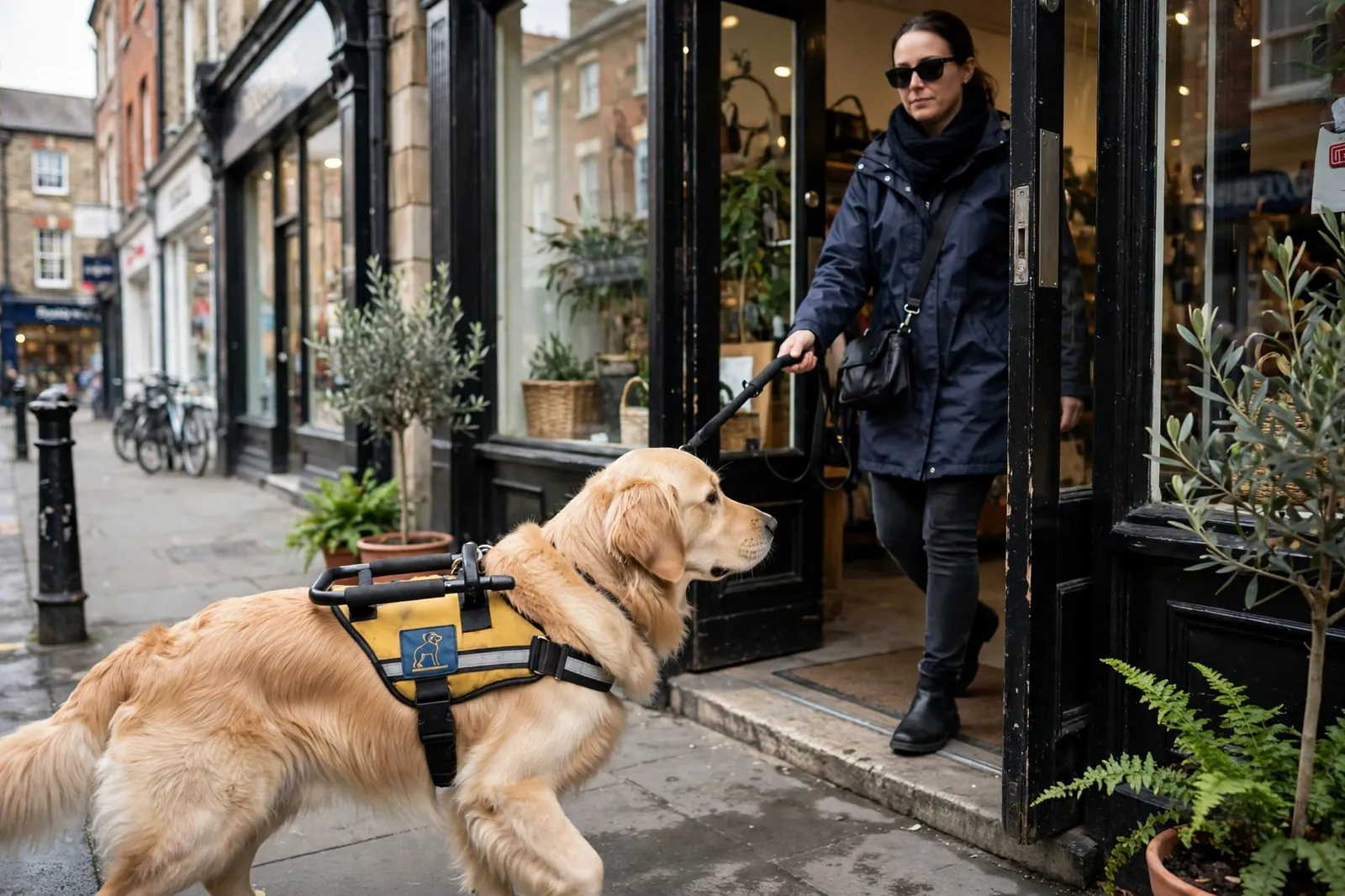
Assistance dogs and pet dogs are treated differently in law, and confusing the two is one of the most common misunderstandings in shop visits. An assistance dog is a dog that has been specifically trained to help a disabled person, for example a guide dog, a hearing dog, or a dog trained to assist with mobility, medical alert or psychiatric support tasks. Under equality law in Britain, service providers, including shops open to the public, generally must not refuse entry to a person because they are accompanied by their assistance dog, unless there is a lawful reason that applies in the specific circumstances. A general preference for a dog-free shop is not, on its own, such a reason. For a full explanation of the legal position, identification and what to do if you are refused, see our assistance dog access rights guide.
Pet dogs, however well behaved, do not have the same legal right of entry. A shop can allow them as a matter of choice, set conditions, or refuse them, and that choice can vary by branch. That is why a pet owner cannot rely on assistance-dog law to argue entry, and why a shop's welcome to pet dogs is best understood as a courtesy that depends on good behaviour and local policy. Mixing the two categories helps nobody: it creates awkward conversations at the door, and it can make life harder for assistance-dog handlers who are exercising a legal right, not asking for a favour.
If you are an assistance-dog handler, the practical advice is still to be prepared, even though the law is on your side. Carry any identification, documentation or harness that helps staff recognise the dog's role, and be ready to explain calmly what the dog does if asked. Most staff will be helpful, but some may be unsure, especially if they are new or if they have recently dealt with a pet dog being passed off as an assistance dog. A calm, factual explanation usually resolves the matter faster than a confrontation. If you are refused, note the date, time, branch and the name of the person you spoke to, and follow up through the store's formal route or the advice in our assistance-dog guide, rather than trying to settle a legal question in a busy aisle.
If you are a pet-dog owner, do not claim assistance status that your dog does not have. Apart from being dishonest, it undermines trust for genuine handlers and can lead to a difficult situation if staff ask for evidence. It is far better to be upfront: "This is my pet dog, on a lead, and I understand if you have restrictions today." Honesty also protects you if something goes wrong. If your dog is refused as a pet, you still have the backup options described below, and you have not created a dispute that could affect future visits.
There is one more distinction worth noting: emotional support animals, therapy dogs that visit hospitals or schools, and dogs in training are not all treated the same way as fully trained assistance dogs. A dog in training for an assistance role may be welcomed by some shops, but that is again a matter of the shop's choice unless a specific legal provision applies. If your dog falls into one of these categories, check the position for your store in advance, and do not assume that a jacket, vest or lead sleeve settles the question. The training, the handler's needs and the shop's policy all matter, and a phone call before you travel will clarify far more than a debate at the door.
What to do if you are refused
Being refused at the door is disappointing, especially if you have checked in advance or if another branch welcomed your dog. The best response on the day is a calm one. Thank the member of staff, ask a clarifying question if it helps, and leave without an argument. Useful questions include: "Is this for the whole store, or only certain departments?" "Is this a rule for today, or a general rule for this branch?" and "Would another time, or a different entrance, make a difference?" You may learn that only the garden section is restricted, that a delivery has temporarily narrowed the aisles, or that the manager on duty has made a short-term decision. You may also learn that the branch simply does not allow pet dogs, which is useful information for future planning.
Do not try to win the argument by citing another branch, an online post or a general company statement. The staff member at the door is applying the rule they have been given for that store, and they are unlikely to be able to override it on the spot. A polite conversation may lead to a helpful suggestion, such as a quieter time to return, a click-and-collect option, or a nearby store with a different policy. A heated conversation rarely does, and it can make staff less willing to be flexible with the next dog owner. Remember that the person you are speaking to may be following instructions they did not write, and that your complaint, if you have one, is better made later, in writing, to the store or company, when you can set out the facts calmly.
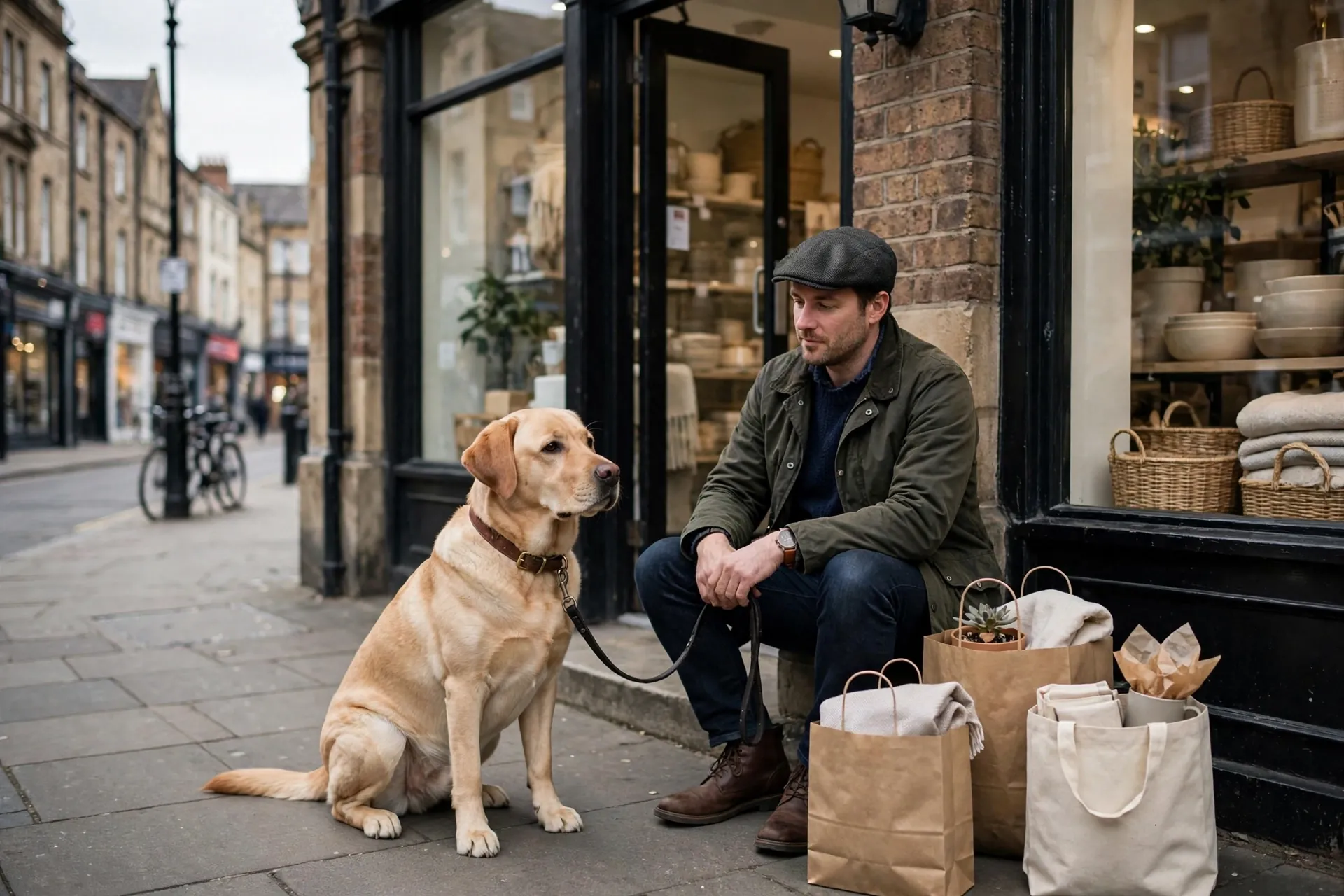
Have a backup plan ready before you need it, because a refusal is much easier to absorb when it does not ruin the whole trip. If you are travelling with another adult, one person can shop while the other waits with the dog, preferably in shade, with water, and away from traffic. If you are alone, consider whether the shopping can wait, whether you can order online for delivery or collection, or whether a nearby dog-friendly shop stocks what you need. What you must not do is leave a dog unattended in a car, even for a short shop. Cars heat up quickly, even on mild days, and a dog left alone can panic, overheat or be stolen. A refused entry is an inconvenience; a dog in a hot car is an emergency.
If you believe a refusal was wrong, particularly in the case of an assistance dog, keep a clear record and follow up afterwards. Note the branch, date and time, the wording of any sign, and the name or description of the person you spoke to. Keep any receipt, photo of signage or written reply from an earlier phone call. Then contact the store or company through its formal complaints route, setting out what happened, what you had checked in advance, and what outcome you are seeking, whether that is clarification, an apology or a change in how staff explain the policy. A written, factual complaint is far more likely to lead to a useful response than a social media post written in the heat of the moment.
It is also worth reflecting, after a refusal, on whether the visit was the right one for your dog. If your dog was barking, pulling or highly aroused before you reached the door, the refusal may have been about behaviour on the day rather than a blanket policy. That is not a criticism; it is useful feedback. A dog that struggles in shops may need shorter, quieter practice visits, training for settling in busy places, or a different routine altogether. Shops are one of many environments, and a dog does not need to be welcome everywhere to have a good life. The goal is a calm, safe outing, not a tick on a list of dog-friendly chains.
Planning a shopping trip with a dog
A successful shopping trip with a dog starts before you leave home. Give the dog a toilet break and a short, sniffy walk, so it arrives settled rather than desperate. Feed at the usual time, not immediately before a car journey if travel sickness is an issue, and bring water, a collapsible bowl, poo bags, a towel and a treat pouch. Check the weather and the car: shade, ventilation and a safe restraint for the journey matter as much as the shop itself. If the trip involves several stops, plan the order so the dog is not left waiting for long periods, and so the most dog-sensitive stop comes when the dog is at its calmest.
Think about the whole day, not just the Wilko visit. A shopping trip that includes a park walk before or after the shop is often much easier than a trip that is all errands. The walk gives the dog exercise, toileting opportunities and mental stimulation, which makes a short, calm shop far more achievable. If you are combining shopping with a longer day out, our guide to dog-friendly beach rules is a useful reminder that every destination has its own checks, seasonal restrictions and local rules, just as every shop does. The habit is the same: check the specific place, check the specific day, and have a backup.
Pack for the shop as you would for a walk. A secure harness or collar, a short lead, and a familiar mat can all help a dog settle in a new environment. Some dogs benefit from a calming aid recommended by their vet, but no product replaces training and a realistic plan. If your dog is still learning to settle in shops, start with very short visits to quiet shops, reward calm behaviour, and leave before the dog becomes overwhelmed. Gradually building up is slower than a single ambitious shopping trip, but it produces a dog that genuinely enjoys outings, rather than one that merely endures them.
Consider who is travelling with you. Two adults make a dog shopping trip far easier: one shops, one waits or walks the dog, and you can swap roles if the shop is busier than expected. If you are travelling alone with a dog and a long shopping list, split the list. Buy the essentials in store, order bulky or heavy items online, and avoid carrying a large load while also managing a lead. Heavy bags, a trolley and a dog are a difficult combination, especially in a car park with traffic. A lighter load is safer for you, for the dog and for other shoppers.
Finally, plan for the journey home. Dogs that have been calm in a shop can still be tired, thirsty or overstimulated afterwards. Offer water, allow a toilet break before the drive, and secure the dog safely for the journey. If you have bought paint, cleaning products or garden chemicals, store them where the dog cannot reach them, in a separate compartment if possible, and check for leaks before loading. A shopping trip ends well when the dog arrives home relaxed, not when the last item is paid for.
Alternatives if dogs are not welcome
If your local Wilko does not welcome pet dogs, or if the answer is uncertain and you cannot risk a wasted journey, you still have good options. The simplest is to shop without the dog: leave the dog at home with a comfortable routine, or with a trusted person, and enjoy a browsing visit at your own pace. This is often the kindest option for a dog that finds shops stressful, and it removes the risk of a refusal entirely. A dog that stays home with a chew, a walk beforehand and a settled routine is not missing out; it is having a better day than a dog dragged through a crowded store.
Click-and-collect and home delivery are useful middle options. You can order online, collect at a time that suits you, and keep the dog's involvement to a short wait in the car park with another adult, or a brief walk nearby. Check the collection arrangements for your branch, because collection points, parking and waiting areas vary. If you are collecting bulky homeware, think about loading: a dog loose in a car full of paint tins and flat-pack boxes is not safe, so secure the dog first, load second, and check that nothing can slide or spill onto the dog during the journey.
Other shops may welcome dogs, and it is worth checking them with the same care you would apply to Wilko. Garden centres, pet shops, some department stores and many independent homeware shops have their own policies, and a shop that welcomes dogs in one town may not do so in another. The same rule applies: phone ahead, check signage, keep the lead short, and do not assume that a welcome in one branch guarantees a welcome elsewhere. Building a small list of reliably dog-friendly shops near you, confirmed by your own calls, is more useful than relying on a generic online list that may be out of date.
You can also turn a shopping trip into a broader day out. If the dog cannot come into Wilko, plan a walk, a cafe stop or a visit to a dog-friendly attraction nearby, and fit the shopping around it. A relaxed day, with the dog's needs met first, makes a short solo shop feel like a minor detour rather than a disappointment. If you are planning a treat after the errands, our guide to dog-friendly afternoon tea shows how a different kind of venue needs its own booking checks, table etiquette and food safety awareness. The principle is consistent across shops, cafes and days out: the venue's rules, the dog's temperament and a backup plan decide whether the outing works.
Whatever alternative you choose, keep the tone positive for the dog. A refused entry, a changed plan or a shorter visit is not a failure. Dogs read your frustration, and a tense owner makes a tense dog. If the plan changes, change it cheerfully, give the dog a walk or a treat, and try again another day. The shops will still be there, and a dog that learns that outings are flexible and calm is a dog that will enjoy many more of them in the future. Check the official guidance before you travel, confirm with the individual store, and let that confirmed answer, not an old online claim, decide your plan.
Practical questions
Before you go
Are dogs allowed in Wilko stores in the UK?
It depends on the individual store. Wilko store policies have changed over time and practice can differ by branch and by the manager on duty, so do not rely on a single blanket answer. Check the official guidance before you travel and confirm with the specific store you plan to visit, especially if the trip depends on the dog coming in.
Do I need to phone the store before visiting Wilko with my dog?
It is strongly advised. A short call lets you confirm whether pet dogs are welcome that day, whether any departments are restricted, and whether a lead is required. It also gives you a name and a clear answer to rely on, rather than a guess made in the car park.
Are assistance dogs allowed in Wilko?
Assistance dogs are in a different legal position from pet dogs. A trained assistance dog accompanying its handler should be allowed into shops that are open to the public, and a refusal needs a lawful reason rather than a general no-dogs preference. Keep any assistance dog identification or documentation ready, and stay calm and factual if you need to explain the position.
What should I do if a Wilko store says my pet dog cannot come in?
Accept the decision politely on the day, even if it is disappointing. Ask whether the restriction applies to the whole store or only certain areas, and whether another time would be different. Then use your backup plan: one person shops while the other waits with the dog, shop another day, or choose a dog-friendly alternative nearby. Do not leave a dog unattended in a car.
Can my dog ride in a trolley at Wilko?
Do not assume so. Many homeware stores prefer dogs to walk on a lead on the floor, and a trolley can be awkward in narrow aisles, near paint displays and around other shoppers. Ask the store first, keep a small dog on a blanket if permission is given, and never put a dog in a trolley that is also carrying food, chemicals or heavy items.
Which Wilko departments need extra care with a dog?
Paint, cleaning products, garden chemicals, sharp tools and small homeware items need the most care. Keep your dog close, avoid letting a lead trail across shelves, and steer clear of open displays at nose height. If your dog is a keen sniffer or a food scavenger, shorten the lead before entering those departments.