This guide is independent and contains no paid placement. If affiliate links are added later, they will be clearly marked and will not change our editorial checks.
Book the dog's sleeping arrangement first, then the sailing. Pet cabins suit nervous dogs on overnight routes, on-deck kennels suit calm dogs on day crossings, and staying in the car suits only short crossings where the operator allows it. Check the official guidance before you travel, because cabin and kennel numbers are limited and sell out early.
Decide where the dog sleeps before you book
Most people book the sailing first and think about the dog second, and that order causes most of the trouble on Brittany Ferries. The company runs several ships, and the dog arrangements differ from one vessel to another, so the crossing you want may not offer the arrangement your dog needs. A pet cabin on an overnight sailing to Spain is a different product from a kennel on a daytime crossing to France, and neither can be added later if the allocation is full. Start by picturing your dog on the crossing, then choose the sailing that fits that picture.
The three options are easy to describe and hard to swap between. A pet cabin is a cabin where the dog stays with you, usually with a bed, water bowl and easy access to an exercise area. An on-deck kennel is a ventilated kennel on the vehicle deck that you visit at set times during the crossing. Staying in the car means the dog remains in your vehicle on the car deck for the whole crossing, which is allowed on some shorter routes and not on others. Each option suits a different kind of dog, and each has its own booking rules, so treat the choice as the first decision, not an afterthought.
Think about how your dog copes with separation, noise and new smells. A dog that panics when left alone in a strange place will struggle in a kennel below deck, however good the kennel is. A dog that barks at every footstep will not enjoy a busy passenger deck, and may be happier in a quiet cabin. A dog that settles quickly in the car at home may still find a hot car deck stressful, because the air is still, the engine noise is constant and the temperature can climb. Be honest about the dog you actually have, not the dog you wish you had, and let that honesty choose the option.
Length of crossing matters as much as temperament. A two-hour hop to Normandy asks very little of any dog, and the simplest arrangement is usually the best one. An overnight sailing of twenty hours or more is a different undertaking, and the dog needs somewhere genuinely comfortable, with access to water, a toilet break and fresh air. If you are sailing to Spain, the cabin is not a luxury, it is the practical answer. If you are crossing to France for a long weekend, a kennel or a car stay may be perfectly sensible. Match the arrangement to the hours, not to the price alone.
Finally, check availability before you fall in love with a date. Pet cabins are few in number on any ship, and kennels are allocated per sailing, so both can sell out weeks ahead on popular summer dates. If the arrangement you need is gone, changing the sailing time or the day is usually easier than changing the dog. Check the official guidance before you travel, and confirm the exact arrangement in writing with your booking, because the rules can differ between ships on the same route.
The cabins of Pont-Aven: sleeping beside the dog
Pont-Aven is the ship Brittany Ferries built for the long crossing, and the pet cabins on board are the reason many owners choose it. The cabins are small, with a wipe-clean floor, a dog bed and a water bowl, and they sit a short walk from the open deck, where the dog can stretch its legs. The animal sleeps beside you, hears you breathe, and wakes up in France. For a dog that frets when left alone, that closeness turns a night at sea into an ordinary night. The cabins are few, and they disappear first in summer, so book the moment dates open.
A cabin changes the whole shape of the crossing. Board in the afternoon, find the room, settle the dog with its bed and water, and learn the way to the exercise deck before dark. Eat at the usual hour, take a last walk on deck, and settle in with a book. The ship has restaurants and a cinema, but the dog's evening should be quiet, because the cabin is the reason the night boat was chosen. Keep the lights low and the room calm, and the dog will sleep.
Size matters, and honesty matters more. A large dog needs a large cabin, and large cabins are scarce. A dog that cannot stretch out and turn around will not rest, and a restless dog in a small room can work itself into a state that lasts beyond arrival. Ask the operator for the cabin dimensions, measure the dog lying down, and compare the two numbers before paying. Two people, a large dog and a week's luggage will feel the squeeze, so pack light.
Kennels on the day boats: a box with a view
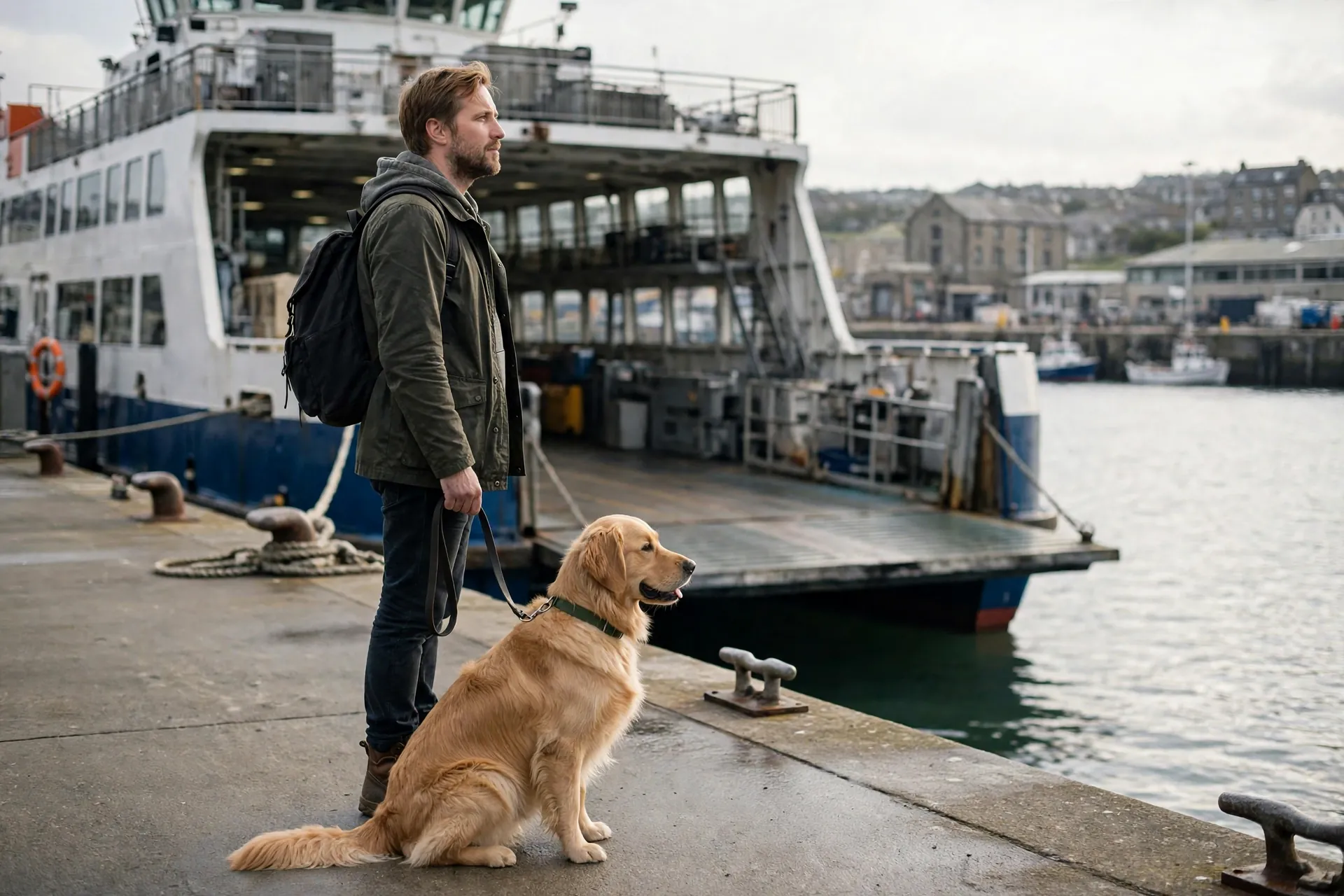
On the day boats from Portsmouth and Plymouth, the dog's place is a kennel: a solid, ventilated box on the vehicle deck, with bedding and water, checked by the crew and visited at the times they announce. The crossing takes a few hours, and the kennel is the ship's answer to that length: long enough that the dog needs a place of its own, short enough that a box will do. A dog that naps in a crate at home will nap in one at sea. A dog that has never been left alone will not learn how on a ferry.
Bring the dog's own blanket, because the smell of home does more than any amount of reassurance. Leave water in a bowl that will not tip, and take anything chewable out of reach. The car deck is noisy, full of unfamiliar smells, and the dog will take its cue from you. Go at the announced times, keep the visit brief, and let the dog sleep in between. A calm owner means a calm dog, and a hurried owner means a restless one.
The kennel is not the only option on the day boats. Some ships have pet lounges, rooms with other dogs, under crew supervision, and a bed to lie on. Ask when booking what your exact ship offers, because the facilities change from vessel to vessel. The lounge, where available, is a better option for a dog that frets alone, and it costs little more than the kennel. Choose the arrangement that fits the dog, not the one that is cheapest.
Staying in the car: when it is allowed
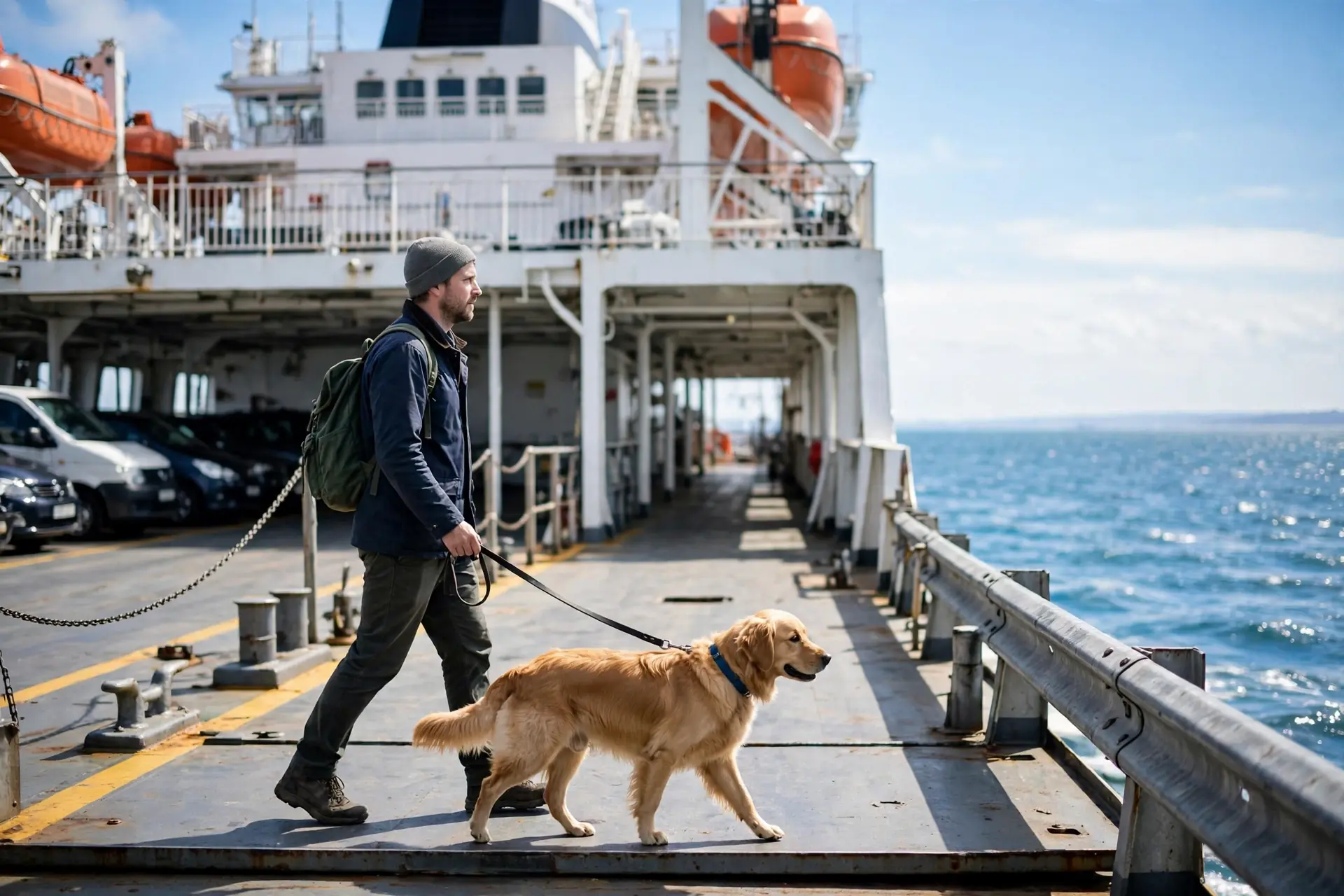
Some Brittany Ferries crossings allow dogs to stay in the car on the vehicle deck, and for the right dog on the right crossing this is the simplest option of all. The dog stays in familiar surroundings, with familiar smells and its own bed, and there is no kennel to book and no cabin to pay for. Dogs that travel happily in the car, that settle quickly and sleep on long drives, often handle a short sea crossing in the car without any trouble at all.
The key word is some. Staying in the car is not allowed on every route, and it is not allowed on every ship. Longer crossings, overnight sailings and routes where the car deck is closed during the voyage generally require a cabin or a kennel instead. The rule exists because the car deck can be hot, noisy and hard to reach once the ship is under way, and the crew cannot check on every car. Before you plan around the car, confirm that your specific sailing allows it, and get that confirmation in writing. Check the official guidance before you travel, because the rule can change with the ship and the season.
Even where it is allowed, the car option needs preparation. Park with ventilation in mind, leave a window cracked if the ship's rules allow it, and make sure the dog has water that will not spill on the first roll of the ship. A non-spill bowl or a small amount of water in a heavy bowl works better than a full bowl that ends up on the floor. Leave the dog with a familiar blanket and something safe to chew, and remove anything the dog could chew into a hazard, such as loose cables or plastic packaging.
Temperature is the real risk, and it is easy to underestimate. A car on a sheltered deck can warm up quickly in summer sun, even with the ship moving, and a dog cannot tell you it is too hot. Travel in the cooler part of the day when you can, and think twice about the car option on a hot afternoon sailing. In winter, the deck can be cold and draughty, so extra bedding matters. If the forecast is extreme in either direction, choose a kennel or a cabin instead, and treat the car as a fair-weather option only.
Finally, accept that you will not be able to visit the dog during the crossing on most sailings where the car deck is closed. That is fine for a dog that sleeps in the car, and it is a problem for a dog that needs reassurance every hour. If you are the sort of owner who will worry for the whole crossing, the worry itself is information: choose an option where you can see the dog, and enjoy the crossing instead of enduring it.
Portsmouth to St Malo: the overnight classic
The Portsmouth to St Malo route is the classic overnight Brittany Ferries crossing for dog owners heading to Brittany, and it is the route where the pet cabin earns its keep. The sailing is long enough that the dog needs a proper place to sleep, and short enough that a well-planned evening routine carries most dogs through to morning. Book a pet cabin if you can, settle the dog early, and treat the evening like a night in a small hotel rather than a night on a ship.
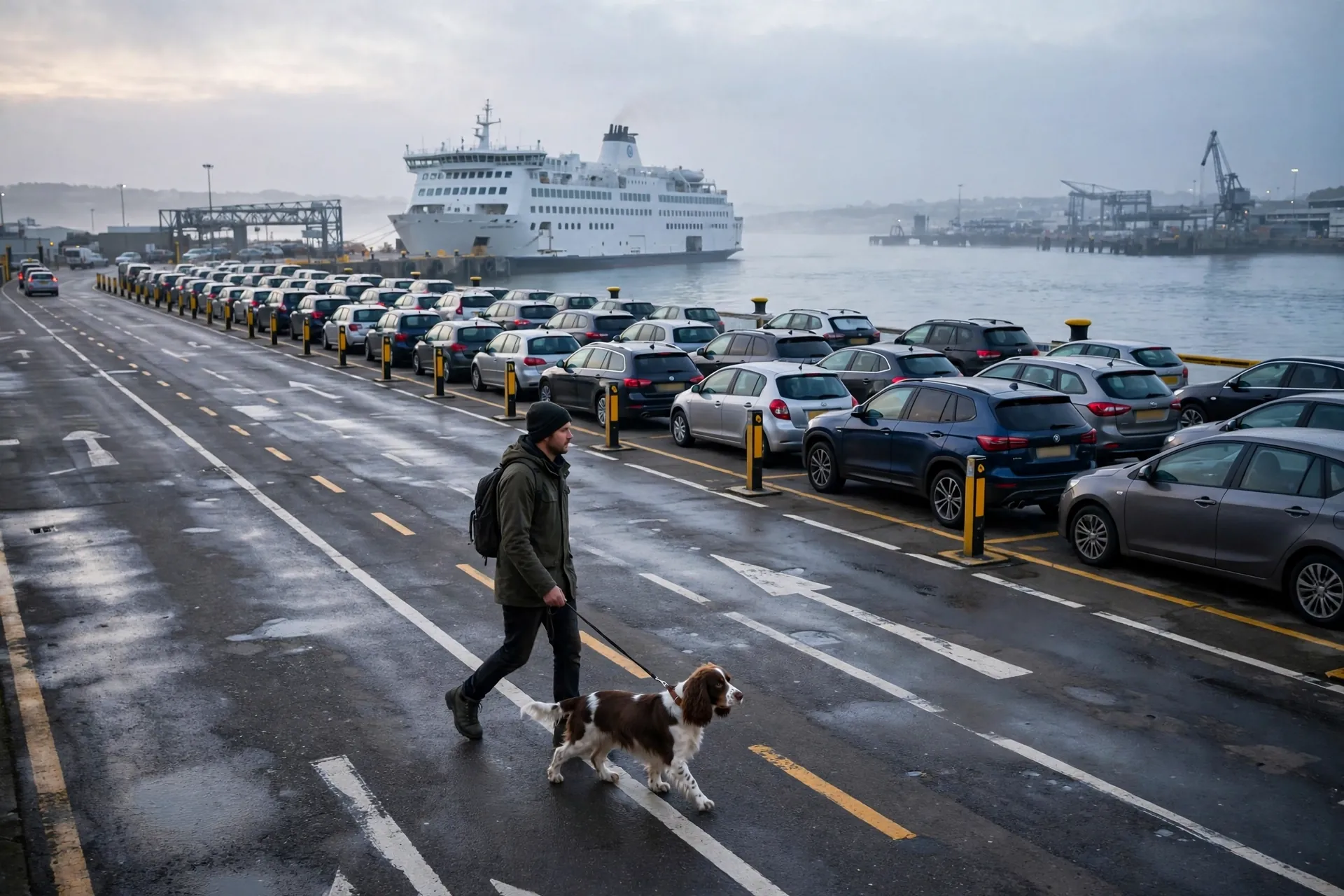
Boarding sets the tone for the whole crossing. Arrive with time to spare, walk the dog before check-in, and let the animal empty itself on land rather than on the ship. The terminal area has limited green space, so use the time well and keep the walk calm rather than exciting. Once on board, find the cabin first, settle the dog with its bed and water, and then find the exercise deck, so you know the route before you need it in the dark.
The evening routine matters more than any single facility. Feed at the usual time, take a last walk on deck, and keep the cabin quiet. Dogs that have a familiar bedtime pattern at home usually settle quickly if the pattern is repeated, even in a new place. Avoid the temptation to explore the ship with the dog in tow, because every new corridor and every new smell adds stimulation that makes sleep harder. The ship will still be there in the morning, and the dog will be calmer for a boring evening.
Morning arrival in St Malo is gentle if the night went well. Collect your things, walk the dog on deck if the crew allow it before disembarkation, and drive off with a plan for the first stop. The roads out of St Malo are easy, and a short walk within the first hour of landing helps the dog shake off the crossing. Have water ready in the car, and do not rush into a long drive. A calm first hour in France is worth more than an early arrival at the final destination.
Summer sailings on this route book up early, and pet cabins are the first to go. If you are travelling in July or August, book as soon as dates open, and be flexible about the day of the week if the cabin you need is gone. Check the official guidance before you travel for the current timetable and pet arrangements, because the ship and the schedule can change between seasons.
Plymouth to Roscoff: the shorter hop west
Plymouth to Roscoff is the shorter western crossing, and it suits dogs that travel better on a daytime sailing. The crossing is long enough to need a plan, but short enough that a kennel or a car stay is a reasonable choice for most dogs. The route lands you in Brittany with the whole afternoon ahead, which makes it a good option for a first trip, because the dog has time to recover before the next leg of the journey.
The Plymouth terminal is smaller and calmer than Portsmouth, which helps nervous dogs. Arrive early, walk the dog in the area around the terminal, and keep the pre-boarding routine slow. Dogs pick up on their owners' stress, and a rushed check-in with a tense owner is a poor start to any crossing. Give yourself an extra half hour beyond the recommended arrival time, and use it for a calm walk rather than a last-minute dash.
On board, the routine is the same as on any day crossing: settle the dog, find the exercise area, and then leave the animal to rest. The temptation to visit the kennel every twenty minutes is strong, but frequent visits can unsettle a dog that was just beginning to doze. Follow the crew's visiting times, and trust the arrangement you chose. If you booked a cabin, the same advice applies in reverse: stay with the dog, keep the cabin quiet, and let the crossing pass.
Roscoff is a small port, and arrival is usually quick and calm. The drive out of the port is straightforward, and there are places to stop for a walk within a short distance. Plan the first stop before you sail, so you are not searching for somewhere suitable while the dog is restless in the car. A twenty-minute walk and a drink of water after landing will reset most dogs, and the rest of the journey will feel easier for it.
This route also works well as the return leg of a longer trip, because the timing suits an afternoon departure after a morning in Brittany. If you are planning a circular tour, consider sailing out from Portsmouth and back through Plymouth, or the reverse, so the dog gets a different crossing each way and you see two stretches of coast. Check the official guidance before you travel for the current timetable, because the frequency of sailings varies by season.
Portsmouth to Caen: the fast daytime option
Portsmouth to Caen is the workhorse daytime crossing for dog owners heading to Normandy, and its main advantage is speed. The crossing is short enough that the dog's time on board is limited, which makes the kennel or car option practical for most animals. If your dog dislikes ships, a shorter crossing is kinder than a longer one, and Caen puts you within easy reach of the Normandy beaches and countryside.
The short crossing changes the preparation, not the care. You still need to walk the dog before boarding, settle the animal properly, and have water ready. The difference is that the dog has less time to become unsettled, and the routine is simpler. Do not skip the pre-boarding walk just because the crossing is short, because a dog that boards full of energy and a full bladder will have a worse crossing than one that boards tired and empty.
Daytime sailings are busier, especially in summer, and the passenger areas can be crowded. If your dog is with you in a pet cabin, the cabin is a refuge from the crowds. If your dog is in a kennel, the crowds do not matter, because the kennel area is separate. If your dog is staying in the car, the crowds matter even less. Choose the arrangement with the crowds in mind, and remember that a busy ship is noisier and more stimulating for every dog on board.
Caen is a large port with good road connections, and the drive out is easy. Normandy has plenty of dog-friendly beaches outside the summer restrictions, and the countryside is gentle, which makes it a forgiving first destination for a dog that has just crossed the Channel. Plan a walk soon after landing, and keep the first day short. A dog that has a good first day in France is a dog that will enjoy the rest of the trip.
Book early in summer, when this route is at its busiest, and be ready to be flexible about the sailing time. Early morning and late evening sailings are often calmer, and a calm ship is a kinder ship for a nervous dog. Check the official guidance before you travel for the current timetable and pet rules, because both can change.
Booking Brittany: the ship is the destination
Booking Brittany Ferries starts with the ship, because the ship is the destination for a night. Pont-Aven, Mont St Michel, Armorique, Bretagne: each one is a different vessel, with different cabins, different kennels, and different facilities for dogs. Open the timetable, find the ship's name, and check what that vessel offers before you look at the price. A cheap fare on a ship without a pet cabin is not a bargain, it is a problem, and the problem will surface at check-in.
Once the ship is right, add the dog at the first step of the search. The booking system only shows pet cabins and kennel spaces when the animal is declared, and a search made without a dog will show a cheaper fare and a standard cabin that cannot take one. Say how many dogs there are, honestly, because two dogs may need a bigger cabin. If the cabin you need has gone, change the night. A Tuesday with a cabin is a better trip than a Saturday without one.
Before paying, read every line of the confirmation. The ship's name, the date, the time, the car registration, the dog arrangement, the total price: each one matters, and each one is easier to fix now than at the port. Keep the confirmation on your phone and on paper. Ask for the pet charge to be itemised, so the dog's cost and the cabin's cost are separate, and book the vet appointment in the same week, because the animal health certificate only lives for a limited time.
A day on a Brittany ship: the hours at sea
A day on a Brittany ship has a rhythm of its own, and the dogs that cope best are the ones whose owners follow it. Board, find the cabin or the kennel, settle the dog, and learn the way to the exercise deck. Then go up to the lounge, find a seat with a view, and settle in for the crossing. The sea will pass, the dog will sleep, and France will arrive sooner than expected. The ship has restaurants and a cinema, but the dog's day should be quiet, because the crossing is long enough without excitement.
The exercise deck is a small, fenced patch, often with artificial grass, and it is the dog's only outdoor space for the crossing. Go there early, so you know the way, and keep each visit brief. Five minutes, lead on, clean up, and back inside. Other dogs will use the same patch, so do not let yours rush another animal, and do not linger. The deck is a toilet, not a park, and treating it as one is how trouble starts. A short, calm visit is enough.
Meals follow the dog's clock, not the ship's. Feed at the normal hour, in the normal amount, and resist the urge to offer extra food because the dog looks bored. A full stomach on a rolling ship is a bad idea, and the cleaning up will be yours. Water is the opposite: offer it often, in small sips, and keep the bowl topped up. A well-watered dog settles faster, and a settled dog is the goal of every crossing.
France by dog: the first day in Brittany
France by dog begins at the port, and the first hour is the one that sets the tone. Drive off the ship, find a beach or a coastal path, and give the dog twenty minutes to stretch, drink and empty itself. The dog has spent a night or a day at sea, and the first walk ashore is the reset button for the whole holiday. Brittany's coast is made for dogs: long beaches, cliff paths, and villages where the cafes put out water bowls without being asked.
The region opens up from there. Saint-Malo has ramparts to walk and a beach at the foot of the walls. The Emerald Coast has beaches that stretch for miles. The forests of Brocéliande have waymarked routes where dogs can run. The food is simple, the coffee is good, and the dog will be offered water without being asked. Keep the first day short, and let the dog discover Brittany at its own pace.
Staying over is easy, because Brittany is used to dogs. Gîtes, hotels and campsites welcome them, often with a small charge, and the restaurants with terraces welcome them too. Book early in summer, because the dog-friendly rooms go first, and confirm the policy in writing, because the details vary. The region is large, so no drive is long, and the dog can have a different walk every day without ever repeating one.
A week on the Brittany coast with a dog
Brittany rewards a slow week, because the coast changes every few miles. Start in Saint-Malo, with its ramparts and its beach, and walk the walls at low tide, when the sand stretches out to the fort. Move west to the Emerald Coast, where the beaches are long and the cliffs are high, and the dog can run off the lead on the sand. Move south to the Gulf of Morbihan, where the water is calm and the islands are close, and the dog can swim in the shallows.
The middle of the week is for the interior. The forest of Brocéliande has waymarked routes, with legends on the signposts and dogs on the paths. The canals of the Vilaine have towpaths, flat and easy, with boats passing slowly and herons standing in the shallows. The villages have markets, with cheese and bread and cider, and the dog will be offered a biscuit at every stall. Brittany is a region that likes dogs, and it shows.
The last days are for the west, where the coast is wild. The Crozon peninsula has beaches that face the Atlantic, and the wind is strong, and the dog will love it. The Pointe du Raz has cliffs that drop to the sea, and the path is waymarked and safe. The lighthouses stand on the rocks, and the sunsets are long. A week in Brittany is not enough, but it is a good start, and the dog will remember the beaches long after the owner has forgotten them.
If you are still choosing between operators, our guide to dogs at UK ferry terminals covers check-in timing and the walk before boarding, and our dog travel documents checklist lists every paper to carry on a trip to France.
Practical questions
Before you go
Do dogs need a ticket on Brittany Ferries?
Yes. The ticket covers the dog's place, whether that is a pet cabin on the night boats, a kennel on the day boats, or a car stay where the ship allows it. The price changes with the route and the ship, so search with the dog included and check that the confirmation names the arrangement.
Can my dog sleep in the cabin on Brittany Ferries?
On the night boats, yes, where the ship offers pet cabins. Pont-Aven and the other long-distance vessels carry a handful of cabins for dogs. Book early, because they sell out in summer, and check the cabin dimensions against the dog's size before paying.
How long is the crossing from Portsmouth to Saint-Malo?
The night crossing takes about nine hours, boarding in the evening and arriving the next morning. The day crossings take longer, with the ship arriving in the afternoon. The dog sleeps in a pet cabin on the night boat, or in a kennel on the day boat.
What documents does my dog need to travel to France with Brittany Ferries?
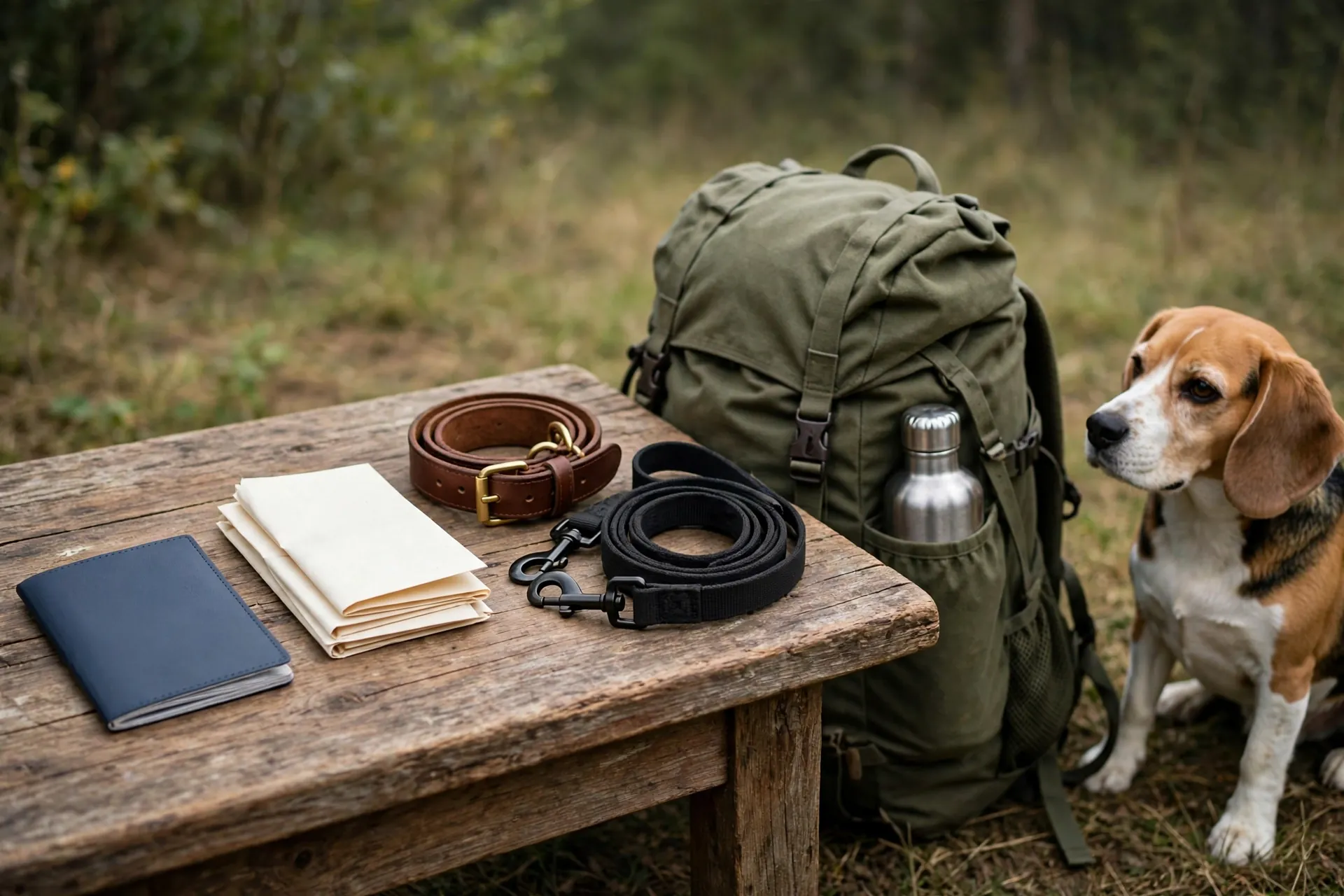
A microchip, a rabies vaccination in date, and an animal health certificate, or a valid EU pet passport. The certificate only lives for a limited time, so the vet appointment must be timed with the sailing. Verify the current rules before you travel.
Can I visit my dog in the kennel during the crossing?
At the times the crew announce, usually once or twice on a longer sailing. Between visits the dog is alone, and that is by design. Go at the announced times, keep the visit brief, and let the dog sleep in between.
Does my dog need a vet visit before returning to Britain?
Yes. A vet in France must give the tapeworm treatment inside a strict window before the return sailing, and write it into the certificate. Book the vet on the first day of the trip, because practices in Brittany need notice and the window does not bend.