This guide is independent and contains no paid placement. If affiliate links are added later, they will be clearly marked and will not change our editorial checks.
Dogs travel free on CalMac and are welcome in the pet lounges and on deck, but cars must be booked and popular island routes fill up in summer. Plan the islands in order, allow a spare day for weather, and check the official guidance before you travel, because timetables and disruption rules change by season.
How CalMac works for dog owners
Caledonian MacBrayne, known to everyone as CalMac, runs the ferries that connect the Scottish mainland with the Hebrides and the Clyde islands. These are working ferries, not cruise ships: they carry islanders to the shops, children to school, and lorries to the shops and building sites. Dogs are part of that daily traffic, and the crew are used to them. A dog on a CalMac ferry is unremarkable, which is exactly what you want.
The most useful fact for planning is that dogs themselves usually travel free, while the car does not. Foot passengers with dogs can often turn up and travel, subject to space, while cars must be booked, especially in summer. That difference shapes the whole trip: if you are on foot, you have flexibility; if you are in a car, you need a booking, and the booking is the anchor around which everything else is arranged. Check the official guidance before you travel for the current fares and booking rules, because they change between seasons.
Crossings vary enormously in length. Some are ten minutes across a narrow sound, others are two or three hours across open sea to the Outer Hebrides. Short crossings need almost no planning beyond turning up on time. Long crossings need a plan for the dog: water, a toilet break, something to settle on, and a decision about whether the dog stays in the car or comes up to the passenger areas. Match the plan to the crossing, and a long sail becomes a pleasant part of the holiday rather than a chore to endure.
The ships are practical rather than luxurious, and that suits most dogs. Passenger lounges are warm and dry, the decks are open to the air, and the pet areas are designed for animals rather than for show. Do not expect a cruise; expect a reliable boat with a kettle, a view, and a crew who will tell you plainly if a sailing is going to be rough. That plainness is a virtue, and it is one of the reasons dog owners return to the islands year after year.
Finally, remember that CalMac is a lifeline service first and a tourist service second. Islanders have priority in disruption, timetables serve the islands' needs, and the summer schedule is busy because everyone is travelling at once. Plan with that in mind, allow spare time, and treat the ferry as part of the holiday rather than an obstacle to it. The islands reward patience, and the dogs that enjoy them most are the ones whose owners planned for the sea as well as the land.
Inner Hebrides: Mull, Islay and Jura
The Inner Hebrides are the easiest island group to reach with a dog, and the best place to start a first island trip. Oban is the main gateway, with sailings to Mull, Coll, Tiree and the smaller islands, while Kennacraig serves Islay and Jura. The crossings are mostly one to two hours, the islands are close enough to combine, and the walking is generous. A dog that has never been on a ferry will find these crossings a gentle introduction.
Mull is the largest and most varied of the Inner Hebrides, and it rewards a stay of several days. The ferry from Oban to Craignure takes under an hour, and the island opens up from there: beaches, forests, single-track roads and wildlife. Dogs are welcome on most of Mull's beaches and walks, though livestock is common, so a lead is essential in many places. The island's size means you need a car to see it properly, and the car must be booked on the ferry, so reserve early in summer.
Islay is a different kind of island, quieter and flatter, famous for whisky and for its long sandy beaches. The ferry from Kennacraig takes about two hours, and the island suits dogs that like open space and long beach walks. Jura, across the water from Islay, is wilder still, with one road, one village and a great deal of empty land. The small ferry to Jura is short, and the island is best visited as a day trip from Islay, with the dog on a lead and a plan for the weather, which can change quickly.
The practical point for the Inner Hebrides is that the islands connect to each other as well as to the mainland, so a circular trip is possible. Sail from Oban to Mull, cross Mull to the ferry for the mainland, or continue to the Outer Hebrides from the north of the island group. Each connection needs its own booking for the car, and the timetables do not always line up neatly, so allow a night between islands rather than trying to chain ferries in a single day. Check the official guidance before you travel for the current timetables, because the connections change by season.
Wildlife is part of the appeal and part of the responsibility. Mull has eagles, Islay has geese in their thousands in winter, and the beaches have seals. Keep the dog on a lead near wildlife and livestock, and remember that a dog chasing a sheep on an island is a serious matter for the farmer. The islands are generous to dogs, and the return favour is a dog under control.
Outer Hebrides: Barra, Harris and Lewis
The Outer Hebrides are further, wilder and more rewarding, and the crossings are longer. Ullapool to Stornoway is the main route to Lewis, Uig on Skye serves Harris and North Uist, and Oban serves Barra and South Uist. These are two-to-three-hour crossings across open Atlantic water, and the sea can be rough. Dogs that travel well in the car usually travel well on these ferries, but the crossing deserves respect, and the dog needs a plan for the hours on board.
Lewis and Harris are one island with two names, and they offer the most variety in the Outer Hebrides. Lewis has the Callanish stones, wide beaches and the town of Stornoway. Harris has the mountains, the famous beaches at Luskentyre and Seilebost, and the road through the hills that is one of the great drives in Britain. Dogs are welcome on the beaches, and the space is so generous that a dog can run for a long time without meeting anyone. Livestock is everywhere, so the lead stays on whenever animals are near.
Barra is small, quiet and unlike anywhere else in Britain, with a beach that doubles as an airport runway. The ferry from Oban takes several hours, and the island is best visited as a slow stop rather than a rushed one. North and South Uist are flat, open and full of lochs, with long beaches that suit dogs that like to run. The causeways between the islands make it possible to drive from one to the next, which means a single ferry can open up several islands in one trip.
The key to the Outer Hebrides is time. Do not try to see them in a weekend. Allow a night on each island, or at least a night between ferries, and keep a spare day in the plan for weather. The wind can cancel a sailing, and a cancelled sailing can strand a car for a day. Build the slack into the plan before you travel, and the weather becomes an extra day on a beautiful island rather than a ruined itinerary. Check the official guidance before you travel for the current timetables and the disruption policy.
Supplies matter more here than on the mainland. Shops are small and far apart, vet practices are few, and the nearest emergency vet may be a ferry ride away. Carry the dog's food, any medication, and a basic first-aid kit, and know where the nearest vet is before you need one. The islands are safe and welcoming, but they are remote, and a prepared owner is a relaxed owner.
Clyde islands: Arran, Bute and Cumbrae
The Clyde islands are the easiest of all to reach, and the best choice for a first island trip with a nervous dog. Arran is reached from Ardrossan in under an hour, Bute from Wemyss Bay in about half an hour, and Great Cumbrae from Largs in ten minutes. These are short, sheltered crossings on busy routes, and the dogs that use them are mostly locals going about their day. If your dog has never been on a ferry, start here.
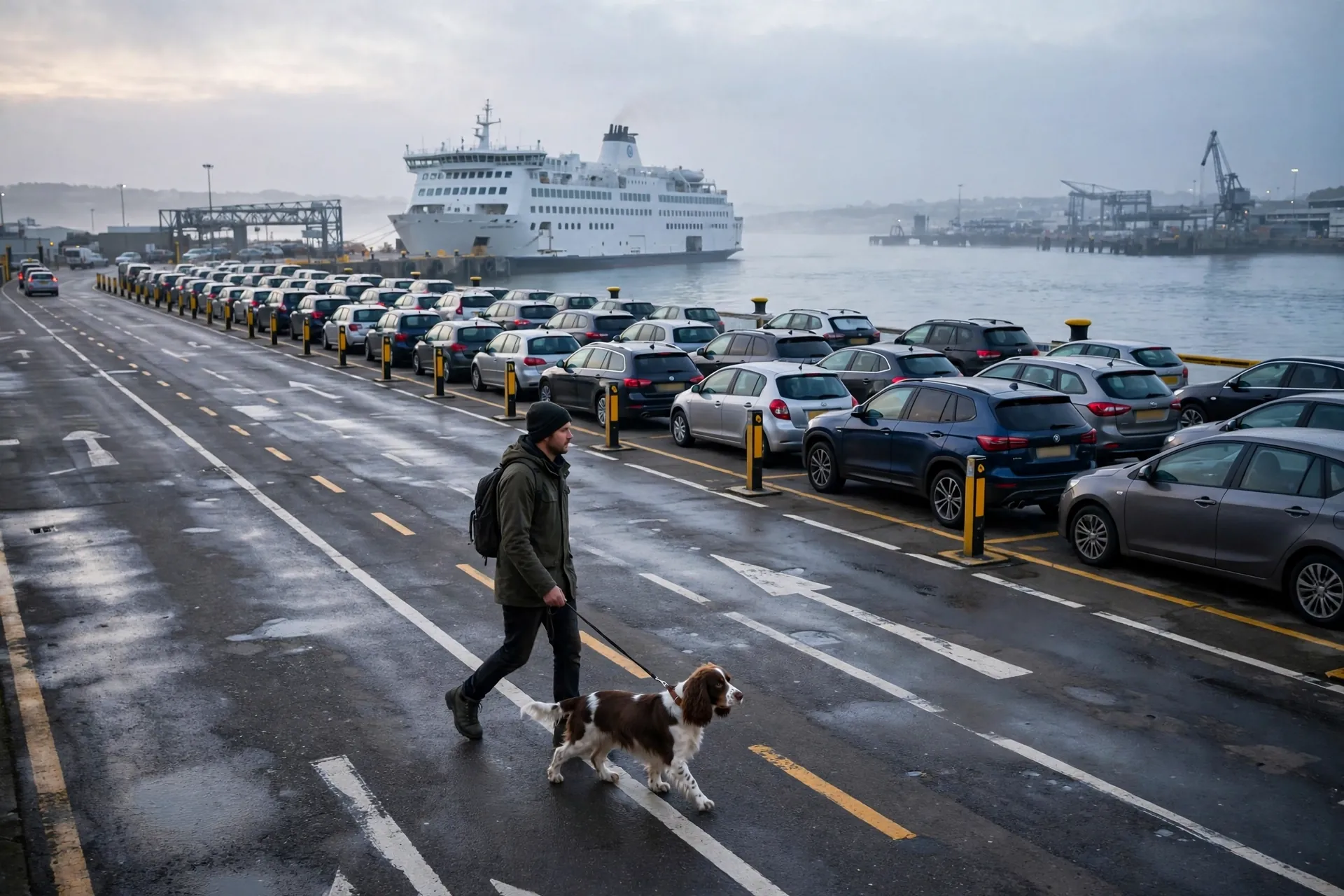
Arran is often called Scotland in miniature, and it earns the name. The island has mountains in the north, gentle farmland in the south, beaches all around, and a distillery and a castle for the humans. Dogs are welcome on the beaches and on most of the walks, and the island's size means a weekend is enough to get a feel for it. The ferry from Ardrossan is the busiest Clyde route, so book the car early in summer, and expect queues at peak times.
Bute is smaller and quieter, with a grand house, gardens and a long sandy beach at Ettrick Bay. The crossing from Wemyss Bay is short and calm, and the island suits a slow day rather than a packed itinerary. Cumbrae is smaller still, and the ten-minute ferry from Largs makes it a perfect day trip: cycle or walk around the island, let the dog swim, and be home for tea. Dogs travel free on these short crossings, and foot passengers can usually turn up without a booking.
The Clyde islands are also the most forgiving when things go wrong. If a sailing is cancelled, the next one is usually soon, and the mainland is close. That makes them a good training ground: try a short crossing, see how the dog copes, and then decide whether a longer Hebridean sailing is the right next step. Many dog owners start with Cumbrae and end up, a year later, on a ferry to Barra, and the Clyde is where the confidence is built.
One practical note: the Clyde routes are commuter routes as well as tourist routes, so the morning and evening sailings are busy with islanders going to work and school. Travel mid-morning or mid-afternoon if you can, when the boats are quieter and the dog has more space. Check the official guidance before you travel for the current timetables, because the frequency changes between summer and winter.
The lounge on a CalMac ship: the dog's own room
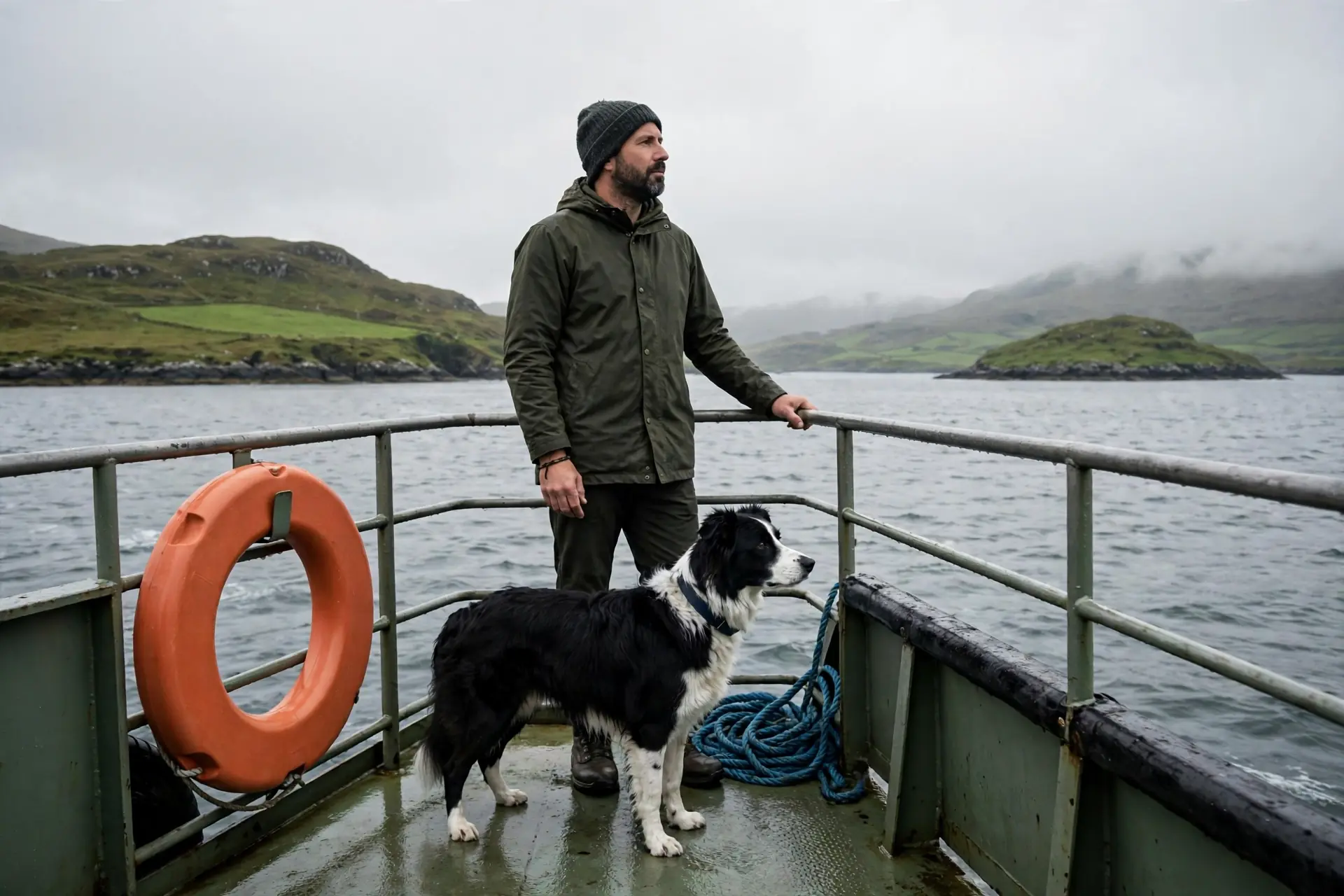
CalMac's pet lounges are the most civilised place a dog can travel in Scotland, and they are the reason many owners choose the ferry over the bridge. The lounge is a room on the passenger deck, with seating, a water bowl, and space for the dog to lie down, and it is the one place on a CalMac ship where the dog can be with you for the whole crossing. The crossings to the Hebrides take an hour or two, and the lounge turns that time into a shared one. Book it when you book, because the lounge has limited seats, and it fills up in summer.
The lounge is not a kennel. There is no box, no door, no separation: the dog sits beside you, on a lead, on the floor or on a blanket you bring. Other dogs will be there, so the animal needs to be comfortable around strangers, and the owner needs to keep the lead short. A nervous dog will be calmer in the car, where it has its own space, and an honest owner will choose the car. A sociable dog will love the lounge, and the owner will love watching it settle.
Bring what the dog needs: a blanket, a water bowl, a chew, and a bag for cleaning up. The lounge has water, but the dog's own bowl is familiar, and familiarity is the point. Keep the visit simple: settle in, sit still, and let the dog sleep. The sea will pass, the island will appear, and the crossing will be over before the dog has noticed it. The view from the lounge is the best on the ship, because the dog can see the water too.
Booking CalMac: the ferry is the easy part
Booking CalMac is the easy part of a Hebridean holiday, because the crossings run often and the dog is welcome on all of them. Oban to Mull takes about 45 minutes, Mallaig to Skye takes about 30, and the price changes with the time, not with the dog. Open the timetable, choose the sailing that fits your day, and book the one that fits the drive. The dog travels for a small charge or free, depending on the ticket, and the car needs its registration, so have it ready.
Add the dog when you book, and say whether it will be in the car or in the pet lounge. The lounge has limited seats, so book early in summer, and the car needs its registration, so have it ready. The confirmation should name the route, the time, the car, and the dog, and each one is easier to fix now than at the port. Keep the confirmation on your phone and on paper, because a dead battery at Oban is a poor start to a holiday.
The flexible fare is worth a look, because the Hebrides are a place where plans change. The weather can cancel a sailing, the dog can be ill, and the road can be closed. A fare that can be moved costs more up front and less in regret, and the dog is the most likely reason a trip will change. Travel insurance that covers the dog is worth a look for longer trips, and the policy should cover vet treatment on the islands, not just cancellation.
Weather, cancellations and the spare day
Weather is the one thing you cannot control on a Scottish island trip, and it is the reason experienced travellers build a spare day into every plan. Wind is the usual cause of disruption, and it can cancel a sailing with little notice. The sea in the Hebrides is open to the Atlantic, and a forecast that looks fine on the mainland can be very different at the ferry port. Check the forecast, check the service status, and have a plan for a cancelled sailing before you need one.
The service status page is the most useful tool you have. Check it the night before, the morning of the sailing, and again before you leave for the port. If a sailing is disrupted, the page will say so, and the port staff will be able to tell you the next available option. Do not drive to the port in bad weather without checking first, because the roads to the Hebridean ports are long and exposed, and a wasted journey is worse than a delayed one.
If a sailing is cancelled, stay calm and ask the staff what happens next. Cars are usually rebooked on the next available sailing, and foot passengers can often travel on the first boat with space. Accommodation on the island side may need to be changed, so keep your host's number handy, and let them know as soon as you know the ferry is cancelled. Most island hosts are used to weather disruption and will move a booking without fuss, especially if you tell them early.
The spare day is not wasted time; it is the best day of the trip. Use it for a walk near the port, a visit to a town you would otherwise have rushed past, or a slow morning with the dog. The islands are full of places that reward an unplanned day, and the dog will not mind at all. Plan the spare day as a real day, not as an empty gap, and the weather becomes a gift rather than a problem.
Seasickness is worth thinking about on the longer crossings, especially to the Outer Hebrides. Some dogs are sick on rough seas, and the signs are drooling, restlessness and vomiting. Ask your vet about medication before the trip if your dog is prone to travel sickness, and bring cleaning supplies and spare bedding. Do not feed a large meal just before a long crossing, and keep the dog calm and settled on board. Check the official guidance before you travel for the current disruption policy, because the compensation and rebooking rules can change.
Car or foot: how the dog reaches the islands
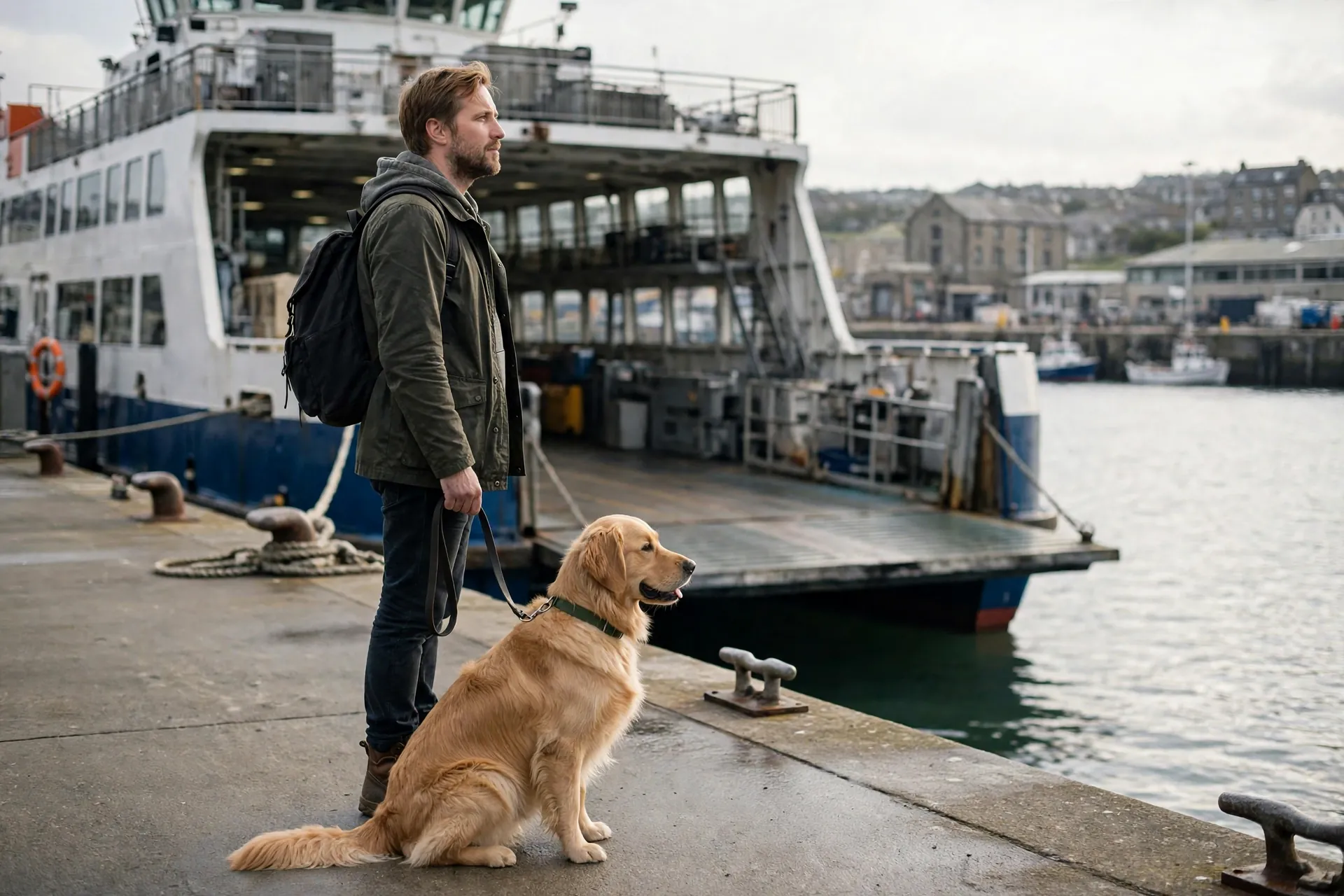
The choice on CalMac is between car and foot, and the dog's day depends on it. A foot passenger walks on with the dog on a lead, sits in the lounge or on the open deck, and walks off at the other end. A car passenger drives on, leaves the dog in the car, and sits in the lounge or the car. The crossings are short, so the car is fine, but the foot passenger's dog gets the whole crossing with its owner, and that is a better day for the animal.
Foot passengers have the easier arrival. Walk off the ship, and the island is there: Tobermory's harbour, Portree's waterfront, or Stornoway's quay. The bus takes dogs, and the islands are small enough to walk, though the distances are long. Car passengers have the easier holiday, because the car carries the luggage, the food, and the dog's bed, and the islands are big enough that a car is a necessity, not a luxury.
The car deck is the place to leave a nervous dog. The car is familiar, the smells are known, and the dog can sleep through the crossing. Leave water in a bowl that will not tip, crack a window if the ship's rules allow, and take anything chewable out of reach. The crossing is short, so the dog will not be alone for long, and the owner can visit at any time. The car is the simplest option, and simplicity is its only virtue.
First steps on island ground
The first walk on an island should be short, close to the ferry, and chosen before you sail, because the dog has just spent hours in a car and on a boat, and the animal needs grass, water and a toilet break before anything else. Every CalMac port has somewhere suitable within a few minutes: a beach near Craignure, a track near Stornoway, a green near Brodick. Find it on the map before you travel, and head straight there. The island will still be there in an hour, and the dog will enjoy it more after a proper stretch.
Island vets are few and far between, and knowing where they are is part of the planning, not an afterthought. Mull has a practice, Lewis has one in Stornoway, and the smaller islands rely on the mainland or a visiting vet. Save the number before you need it, carry the dog's medication, and bring a first-aid kit that includes a tick remover, bandages and any regular medicine. If the dog has a condition that could need urgent care, think hard about how far from a vet you are willing to be, and choose the island accordingly.
Food and supplies are the other thing to plan, because island shops are small and the shelves are limited. Bring the dog's food for the whole trip, plus a spare day, and do not assume the island shop stocks the brand your dog eats. The same goes for treats, poo bags and any special diet. The car should carry water, a blanket and a spare lead, because the islands are not a place to rely on shops, and a prepared car is a calm car.
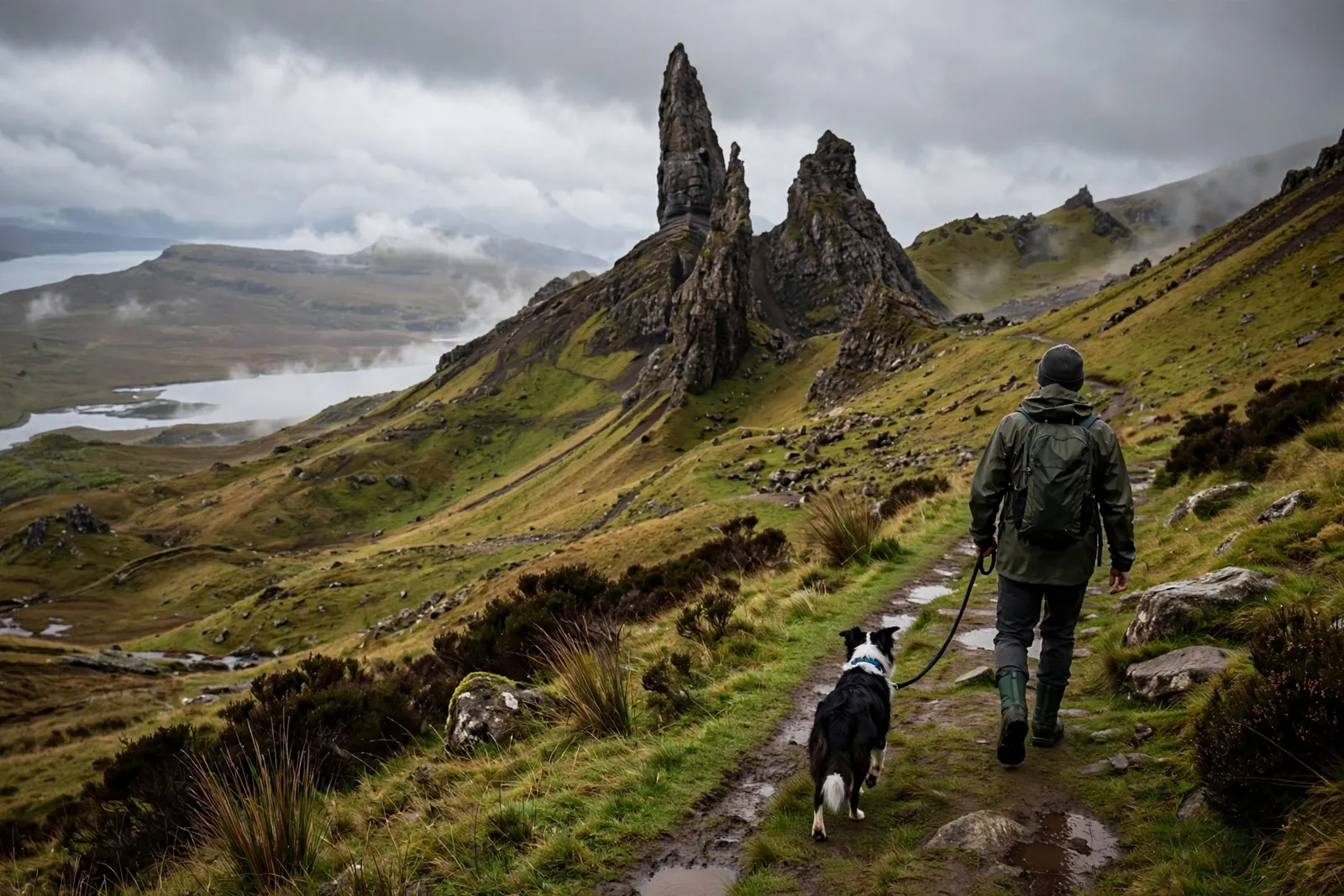
Livestock is the rule on the islands, not the exception. Sheep graze the hills, cattle wander the lanes, and ground-nesting birds use the machair in spring. Keep the dog on a lead near animals, and under close control everywhere else. A dog that chases sheep on an island can cause serious harm, and the farmer will not be forgiving. The islands welcome dogs, and the welcome depends on owners keeping their animals under control, every time, without exception.
Island time is slower than mainland time, and the first day should respect it. Shops close early, the weather changes the plan, and the best days are often the unplanned ones. Let the dog set the pace on the first walk, let the evening be quiet, and let the island introduce itself. A calm first day is worth more than a packed itinerary, and the dog will tell you when it is ready for more.
Planning a multi-island trip with a dog
A multi-island trip is the best way to see the Hebrides, and it needs more planning than a single-island stay. Start with the map, not the timetable: choose the islands you want to visit, then find the ferries that connect them, and then check whether the connections work in the order you want. Some islands connect directly, others require a return to the mainland, and the timetable may force a night on an island you had not planned to visit. That night is often the best part of the trip.
Allow a night between islands, and a spare day in the whole trip. Ferries do not always connect on the same day, and a missed connection can cost a day. A night on a small island between two larger ones is a pleasure, not a delay, and the dog will enjoy the extra beach. Plan the nights first, then fit the ferries around them, rather than the other way round.
Book accommodation that welcomes dogs, and confirm it in writing. Island accommodation is often small and family-run, and the dog policy may be more personal than a hotel chain's: a maximum number of dogs, a charge per night, or a request to keep the dog out of certain rooms. Ask before you book, and be honest about the dog's size and behaviour. A good host will tell you plainly what works, and the answer is worth more than any website description.
Pack for the islands, not for the mainland. The weather changes quickly, the wind is constant, and the rain can arrive in minutes. Bring waterproofs for the humans and a drying coat for the dog, plus extra towels and a spare lead. The car should carry water, food, and a blanket, because the islands are not a place to rely on shops. A well-packed car is a calm car, and a calm car is a calm dog.
Finally, leave room for the unexpected. The best island days are often the ones that were not planned: a beach found by chance, a seal watched from a harbour wall, a walk that went on longer than intended because the light was too good to leave. The ferry timetable is a framework, not a prison, and the dog will not mind if the plan changes. Check the official guidance before you travel, and then let the islands do the rest.
If you are combining islands with the mainland, our guide to dogs on the Isle of Man ferry covers another island crossing, and our dogs at UK ferry terminals guide explains check-in and the walk before boarding.
Practical questions
Before you go
Do dogs need a ticket on CalMac ferries?
Yes, a small charge, or free depending on the ticket. The dog can travel in the car, in the pet lounge, or on foot with its owner. Book the lounge early in summer, because the seats are limited.
Can my dog travel in the pet lounge on CalMac?
Yes, where the ship offers one. The lounge is a room on the passenger deck, with seating and water, and the dog sits beside you on a lead. A sociable dog will love it, and a nervous dog will be calmer in the car. Choose the arrangement that fits the dog.
How long is the CalMac crossing to the Isle of Skye?
Mallaig to Armadale takes about 30 minutes, and the dog can be in the car, the lounge, or on foot. The crossing is short, so the dog will barely have settled before the island appears.
Can I take my dog on foot on CalMac?
Yes. Foot passengers walk on with the dog on a lead, sit in the lounge or on the open deck, and walk off at the other end. The bus on the islands takes dogs, though the distances are long and a car is a help.
Which CalMac route is best with a dog?
Oban to Mull is the most popular, with the pet lounge and a 45-minute crossing. Mallaig to Skye is quickest, and the island is minutes from the pier. The best route is the one that fits the drive and the dog.
Do dogs need documents to travel to the Hebrides?
No. The Hebrides are part of Scotland, so no passport, certificate or vet treatment is needed. The dog needs a collar, a lead, and a microchip, as at home. Check the ferry's own rules before you travel, because they change from time to time.