This guide is independent and contains no paid placement. If affiliate links are added later, they will be clearly marked and will not change our editorial checks.
Skye suits a dog that travels calmly in a car, walks happily on a lead and settles in new places. Drive over the Skye Bridge, take single-track roads slowly, keep the lead short at the Fairy Pools, the Old Man of Storr and the Quiraing, watch for sheep and cattle at every bend, plan for midges from June to August, and book a genuinely dog-friendly stay far ahead — good ones go first.
Driving Skye: single-track patience
Most of what makes Skye special sits at the end of a slow road. Away from the main routes between Kyleakin, Broadford, Portree and the north, many roads narrow to a single track with passing places. They are not difficult, but they are unforgiving of hurry: you pull into a passing place on your side, let the other vehicle through, acknowledge the driver, and carry on. With a dog in the car, that stop-start rhythm matters. A dog that frets at every pause, barks at passing cars at close quarters, or gets travel-sick on repeated braking will have a harder week here than on a mainland motorway run.
Build journey times from the map, not from hope. Distances that look short can take far longer than the mileage suggests, especially in summer when campervans, tour traffic and sheep all share the same tarmac. Plan one main destination a day rather than three, and add a buffer before any timed booking such as a restaurant table or a ferry. If your dog needs a toilet stop, use a proper lay-by or car park rather than a passing place — passing places are for traffic, and blocking one on a blind stretch helps nobody. Our guide to driving with a dog and UK law covers restraint, breaks and the legal basics worth sorting before a long Highland drive.
Fuel, signal and supplies all need a little forethought. Fill up in the larger settlements rather than assuming a pump at the end of every peninsula, download offline maps because mobile signal drops in the glens, and keep water, a bowl, a towel and waste bags reachable in the car rather than buried under luggage. In winter, daylight is short and weather can close in quickly, so check road and weather conditions before setting out and check the official latest guidance before you travel. A calm, early start beats an ambitious itinerary every time on Skye.
Skye Bridge or the Mallaig ferry
The simplest arrival is by road. The Skye Bridge connects Kyle of Lochalsh on the mainland with Kyleakin at the south end of the island, so you drive straight across with the dog secured in the car as usual — no sailing, no waiting room, no separate crossing routine to rehearse. For a nervous traveller, or a dog that dislikes crowds and queues, that predictability is a genuine advantage. Once across, Broadford is the first useful stop for fuel, food shopping and a leg-stretch before the slower roads begin.
The alternative is the ferry from Mallaig to Armadale, in the south of Skye. It turns the journey into part of the trip and can suit a route that comes up through Fort William and along the Road to the Isles. The trade-offs are real, though: sailings depend on weather and timetable, vehicle spaces in busy months need booking ahead, and you need to know the operator's current dog rules — where dogs may travel, whether they stay in the vehicle or use a designated pet area, and what it costs. Our guide to dogs on UK ferries explains how to read operator rules and prepare a dog for a crossing. Whichever operator and route you choose, check the official latest guidance before you travel, because timetables and pet policies change.
Think about the return journey at the same time as the outward one. A plan that arrives by ferry and leaves by bridge — or the other way round — gives you a fallback if weather disrupts sailings, and it avoids retracing the same single-track miles twice. What matters most is not which route is more scenic, but which one your dog copes with calmly and which one still works if the weather turns on the day.
Sheep and cattle on unfenced roads
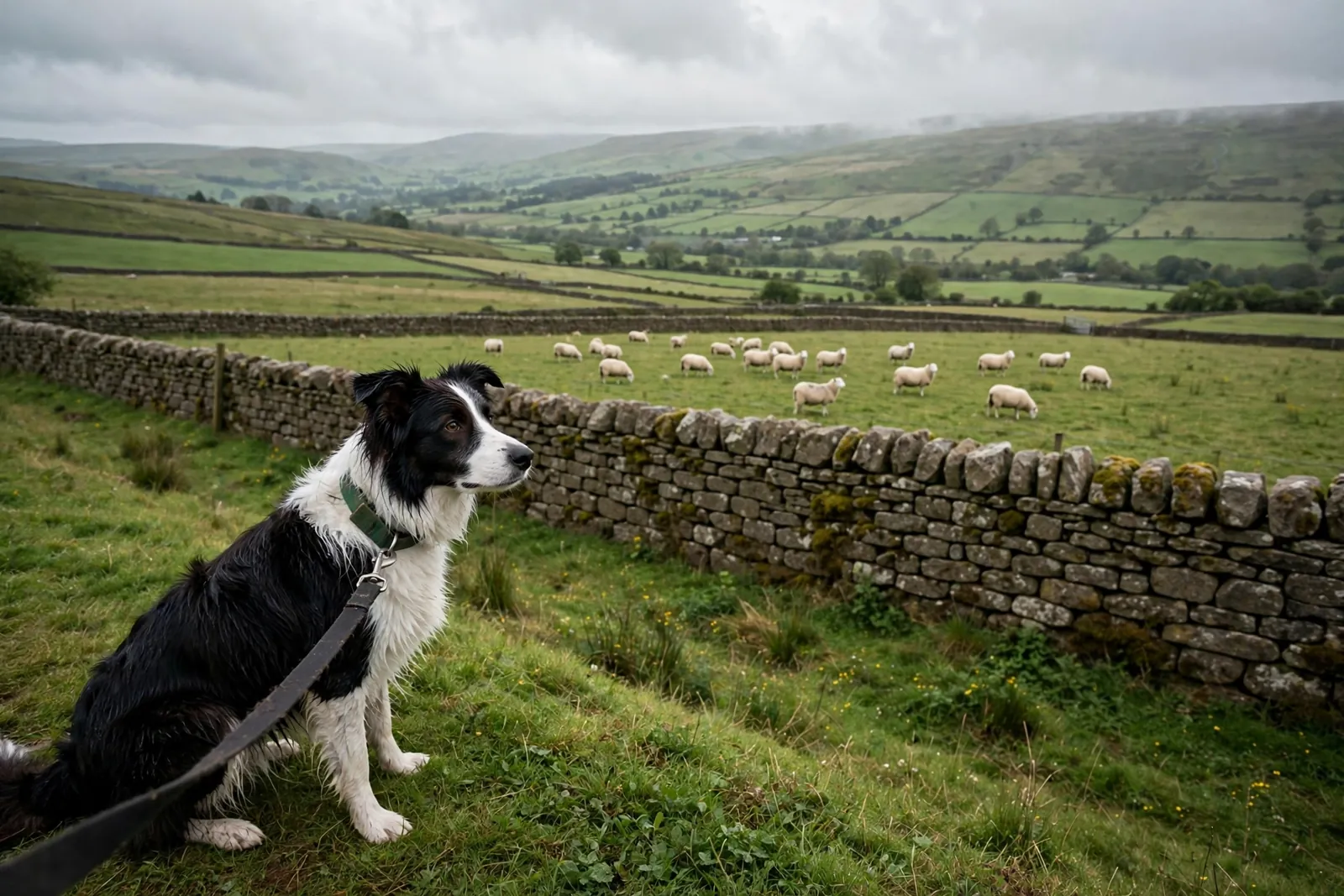
Much of Skye is open, unfenced grazing land, and the livestock use the road as readily as the hillside. Sheep wander onto warm tarmac, lambs in spring can be unpredictable, and cattle — including Highland cattle with calves — may stand in the middle of a single-track stretch with no intention of moving quickly. The correct response is dull and effective: slow down early, keep a generous gap, stop if you need to, and let the animals drift clear in their own time. Do not drive at them, edge through a tight gap beside them, or sound the horn; a startled animal can move in any direction, including towards your car.
The same awareness applies the moment you open the car door. Check the verge before you let a dog out, even for a quick toilet stop, because a sheep on the blind side of a parked car is easy to miss. Keep the lead on until you can see the ground around you properly. On foot, the legal and welfare stakes are higher than many visitors realise: a dog that chases or worries livestock can cause serious injury, and farmers have strong legal rights in response. Read our explainer on the livestock worrying law before you go, so the rules on leads, close control and lambing season are clear rather than guessed at a gate.
Lambing and calving periods deserve extra care. Ewes with young lambs and cows with calves are protective, fields and hillsides that felt empty in autumn may be busy in spring, and temporary signs asking for leads or a different route should always be followed. If cattle move towards you on a path, the standard advice is to let the dog go — a dog can run to safety faster without you — and move calmly away yourself. Check the official latest guidance before you travel, and follow any local signs on the day over anything written here.
Storr, Fairy Pools and Quiraing on a lead
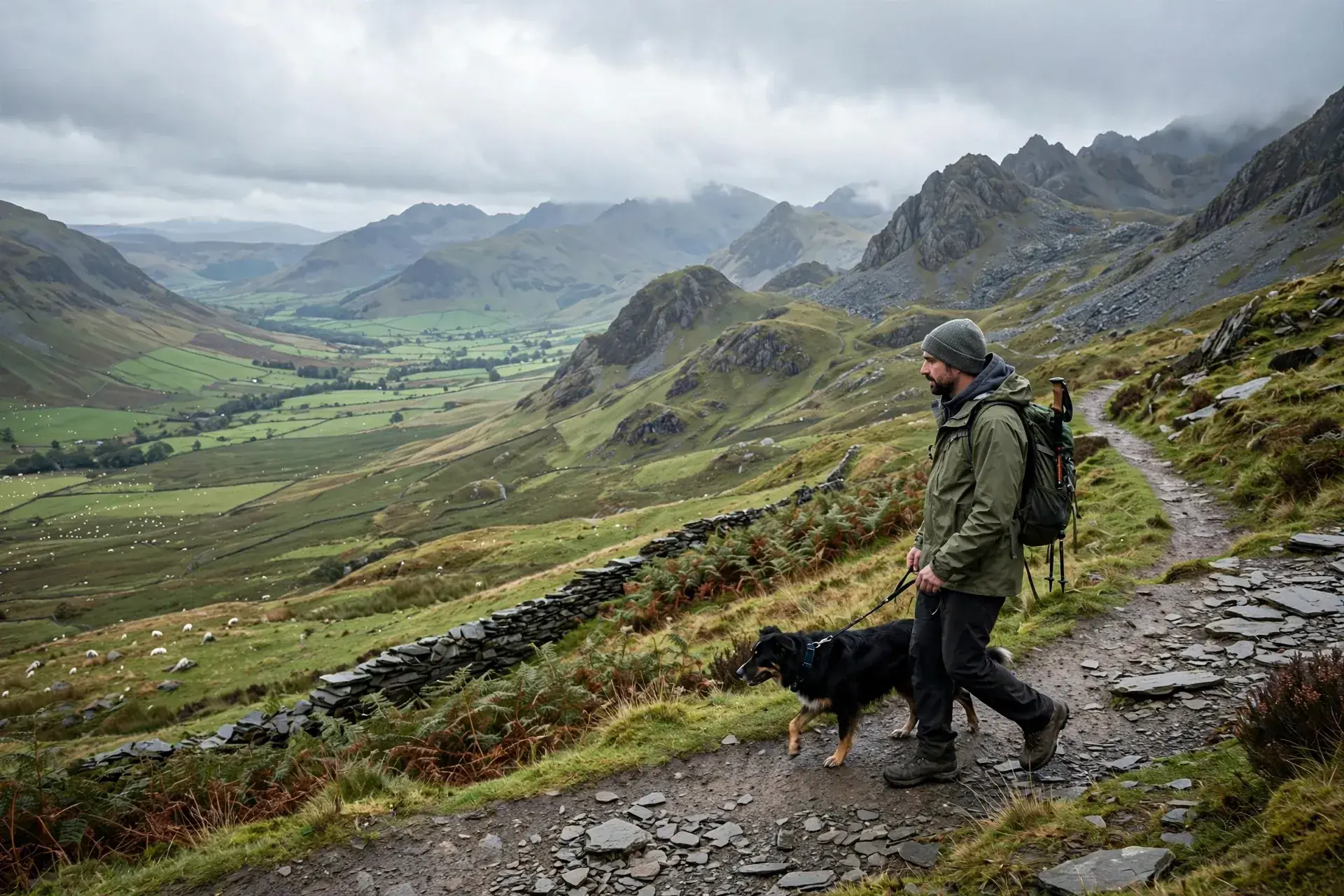
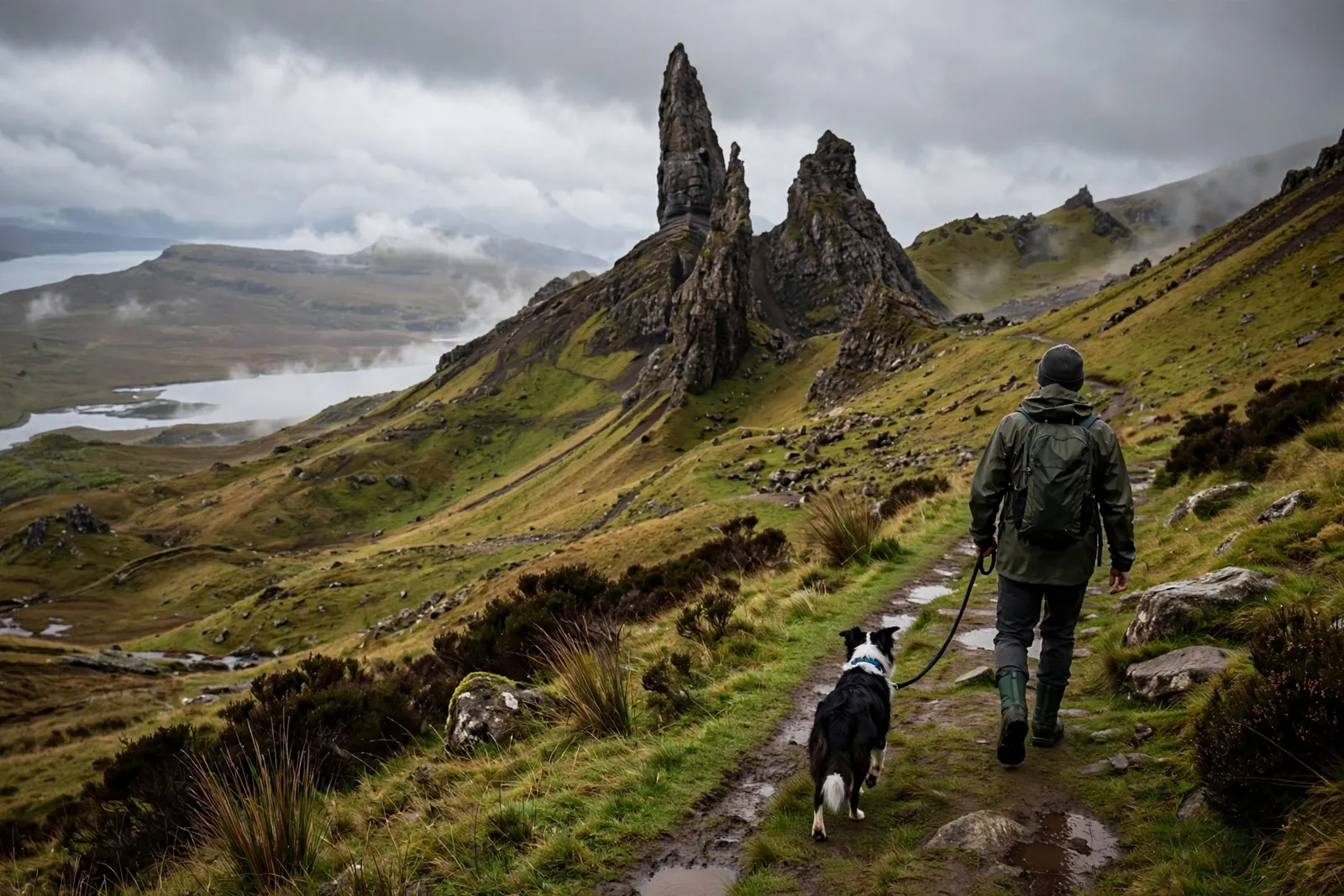
Skye's three most famous walks are all manageable with a dog, and all three ask the same thing of you: a short lead, sensible footwear and a willingness to turn back. At the Old Man of Storr, the path climbs steadily to the pinnacles, the ground is rough in places, and the crowds concentrate on the same viewpoints. A short lead keeps your dog on the path, away from steep edges and out of other walkers' photographs and sandwiches alike. Go early or late in the day if your dog struggles with busy paths, and expect the car park to fill quickly in season — having a second, quieter walk planned for the same day is not pessimism, it is Skye craft.
The Fairy Pools, in Glen Brittle, add water to the equation. The pools and waterfalls are beautiful and genuinely tempting for a water-loving dog, but the burns run fast and cold, the rocks are slippery, and a dog hauling on a long line at the edge is a risk to itself and to you. Keep the lead short, keep your dog out of the strongest flows, and be honest about swimming: cold water, sudden depth and strong currents after rain make this a place to paddle at the margins at most, and only where it is clearly calm and shallow. After heavy rain, the river crossing and paths can become difficult — check conditions locally and check the official latest guidance before you travel.
The Quiraing, in the far north, is the most dramatic of the three and the most exposed. The landslip scenery comes with narrow paths, steep drops, loose scree and sheep grazing throughout. A dog needs to be on a short lead, comfortable walking close beside you on a narrow line, and fit enough for uneven ground and changeable weather at height. Wind that feels fresh in Portree can be serious up here. For all three walks, carry water for your dog as well as yourself — hill burns are not a guaranteed or always suitable supply — plus a layer, a charged phone and a lead you trust. None of these walks rewards a flexi-lead; a standard short lead and a well-fitted harness give you control without a fight.
Midges, wind and wet weather
From roughly June to August, Skye's midges are part of the deal. They are worst on still, damp mornings and evenings, in sheltered glens and beside water — which, unhelpfully, describes several of the island's best walks at their quietest times. The practical counter-moves are timing and breeze: walk in the middle of the day, choose exposed coastal or higher routes on calm days, and keep stops short in long grass at dawn and dusk. Dogs are bitten too, particularly on thinner-coated areas such as the belly and ears, and a dog that is miserable and scratching settles poorly in the evening. Ask your vet before the trip what protection, if any, is suitable for your dog, and never apply a human repellent to a dog unless a vet has confirmed it is safe for that animal.
Wind and rain deserve equal billing. Skye weather is Atlantic weather: a bright breakfast can become a horizontal-rain afternoon, and forecasts for the island can differ sharply between the sheltered east and the exposed north-west. Pack a proper dog towel and a spare, a drying routine for the car and the cottage, and waterproofs you will actually wear for the last walk of the day. Wet dogs and small island cottages are a workable combination only if you plan the drying space in advance — ask your host where a wet dog is expected to go, rather than discovering the cream carpet policy on arrival.
Ticks are a further summer consideration in long grass and bracken, especially where sheep and deer graze. Check your dog after walks, carry a tick remover, and know how to use it. If your dog seems unwell after a bite or a walk — lethargic, off food, limping on shifting legs — contact a vet promptly rather than waiting until you get home, and save the number of an island or mainland practice before you travel.
Booking dog-friendly stays far ahead
Skye accommodation is limited, dog-friendly Skye accommodation is more limited still, and the places that combine a good location, a workable garden and a sensible pet policy are booked first — often many months ahead for summer, Easter and school holidays. Treat the stay as the first thing you fix, not the last. When you enquire, go beyond the “dogs welcome” label: how many dogs, what is the pet fee per dog per stay or per night, is the garden enclosed and to what height, are dogs allowed throughout the property or kept out of bedrooms, and is there a safe place to wash and dry a wet dog after a hill day?
Location matters more on Skye than on most trips, because every outing starts with a slow drive. A cottage that looks central on the map may still mean forty minutes of single-track road before breakfast. Choose a base that matches your plans: the south, around Broadford and Armadale, for an easier arrival and the ferry; Portree for facilities, eating out and access north; or a quieter peninsula if your dog is happier away from bustle and you accept longer drives as the price. If eating out together matters, check which pubs and cafés near your base welcome dogs inside rather than only on a terrace — our guide to dog-friendly cafés in the UK explains the questions that separate genuine welcomes from grudging ones, and the same checks apply to island inns.
Get the answers in writing and keep them with your booking confirmation. Verbal friendliness at enquiry stage is not the same as a policy when a muddy dog meets a white sofa. Also ask the unglamorous questions early: where do waste bags go, is there an outside tap or hose, what is the nearest vet, and what happens if you need to leave early because of weather or a sick dog. Hosts on Skye are used to dogs and weather; a guest who asks practical questions in advance is rarely a problem guest on the day.
Wet-weather backups that still work
Every Skye itinerary needs a second drawer: things that still work when the cloud is on the tops and the famous walks are off the table. Lower-level coastal paths, harbour towns and shorter woodland or shoreline walks can all deliver a proper dog walk without altitude or exposure, provided you check tides and local conditions and keep the lead rules around livestock exactly as strict as on the big hills. Portree makes a natural wet-day base, with a harbour to wander, shops to browse where dogs are allowed, and cafés to sit out a shower in — check individual dog policies before you rely on one, as they vary and change.
Build the backup into the day rather than treating it as failure. A pattern that works well is an early decision: look at the morning forecast over breakfast, choose the hill day or the low day by nine o'clock, and commit. Dogs do not know the Quiraing was the plan; they know whether the walk was interesting, whether they got properly dry afterwards, and whether the evening was calm. A sniff-rich hour along a shore path, followed by a warm cottage and a familiar bed, beats a miserable, wind-blasted summit attempt for almost every dog.
Keep one more reserve in hand: a genuine rest day. Skye trips tempt people to stack big walks back to back, but dogs — especially older dogs, puppies and dogs unused to hill ground — need recovery time just as people do. Shorter toilet walks, garden time where the boundary allows, and a quiet day around your base will keep a dog sound and willing for the whole week rather than sore by Wednesday. Watch paws on rough and stony ground, rinse grit and salt water off after coastal walks, and check pads each evening as part of the drying routine.
A realistic Skye routine with a dog
A good Skye day has a simple shape. Start with a proper morning walk from or near your base, before the famous car parks fill and before midges or heat become a factor. Do your one main outing — a big walk, a peninsula drive, a harbour town — in the middle of the day, with water, a bowl, waste bags, a towel and a spare lead in the car as standard. Return with time in hand, because the same road that took forty minutes at nine in the morning can take considerably longer behind a slow convoy at five. Finish with a familiar evening routine: food at the usual time, a last short walk somewhere you have already been in daylight, and a bed set up exactly as it was the night before.
Across a week, alternate effort. Pair a demanding day at the Storr or the Quiraing with a gentler day of coastal paths and villages, and do not schedule your longest drive on your last day, when you also face the journey off the island. Leave margin for the things Skye does best and itineraries capture worst: a beach found by accident, a sea eagle argument you will lose from the lay-by, an extra hour in a café while rain passes over. Your dog measures the trip in walks, smells and your mood, not in sights ticked off.
Finally, pack for the island you might get, not the one in the brochure. The kit list that earns its space is short: two leads, a harness that fits under a wet coat, more waste bags than you think, towels in quantity, food for the whole trip plus a spare day (island shops are good but specialist food may not be stocked), any medication with margin, a tick remover, a basic first-aid kit, and your vet's number plus a local practice saved in your phone. With that in the car and a stay booked well ahead, Skye stops being a logistical puzzle and becomes what it should be: one of the finest places in Britain to walk with a dog.
Practical questions
Before you go
Can I drive to Skye with a dog, or do I need a ferry?
You can drive. The Skye Bridge links Kyle of Lochalsh on the mainland with Kyleakin on Skye, so most visitors arrive by road with the dog in the car and no separate booking for the crossing. The ferry from Mallaig to Armadale is an alternative scenic route, but sailings are weather-dependent and should be booked ahead in busy months. Check the official latest guidance before you travel.
Should my dog be on a lead at the Fairy Pools, the Old Man of Storr and the Quiraing?
Plan on a short lead at all three. The paths are busy, the ground is uneven and unfenced, and sheep graze freely in these areas. A short lead keeps your dog out of fast-moving water at the Fairy Pools, away from steep drops and loose scree at the Storr and the Quiraing, and under close control around livestock at all times.
When are midges worst on Skye, and how do I protect my dog?
Midges are usually worst from June to August, especially at dawn, at dusk and on still, damp days. Walk in the middle of the day and in a breeze where you can, keep your dog moving rather than sitting in long grass, and ask your vet before the trip about suitable protection. Never apply a human insect repellent to a dog unless a vet says it is safe for that dog.
How far ahead should I book a dog-friendly stay on Skye?
As early as you can. Dog-friendly cottages, pods and rooms are a small share of Skye accommodation and the best-located ones for summer, Easter and school holidays can book up many months ahead. Confirm in writing that your specific unit accepts dogs, how many, and what the pet fee and garden or boundary arrangements are before you pay a deposit.
What should I do if sheep or cattle are on the road or the path?
On the road, slow down early, stop if needed and let animals clear the road in their own time rather than driving at them or sounding the horn. On a path, keep your dog on a short lead, give livestock a wide berth and never walk between a cow and her calf. If cattle move towards you, let the dog go and move calmly to safety. Check the official latest guidance before you travel.