This guide is independent and contains no paid placement. If affiliate links are added later, they will be clearly marked and will not change our editorial checks.
Irish Ferries crossings differ by ship: fast ferries are short and car-based, cruise ferries offer cabins and kennels for longer sailings. Dogs need a microchip, rabies vaccination and an animal health certificate to enter Ireland. Check the official guidance before you travel, because ship allocations and document rules change.
Two kinds of ship, two sets of rules
The first thing to understand about Irish Ferries is that the company does not run one kind of ship. It runs fast ferries and cruise ferries, and the experience for a dog is completely different on each. A fast ferry is a quick, businesslike crossing where the dog usually stays in the car. A cruise ferry is a longer, slower sailing with cabins, kennels, restaurants and time to settle. Both get you to Ireland, but they ask different things of the dog, and the booking needs to match the ship.
The difference starts with time. A fast ferry crossing can be around two hours, which is short enough that most dogs can stay in the car without any trouble. A cruise ferry crossing can be three or four hours, or an overnight sailing, which is long enough that the dog needs a proper place to rest. The mistake is to book the cheapest sailing without checking which ship it is, and then to discover on the day that the arrangement you assumed does not exist on that vessel.
Facilities follow the ship, not the company. Cruise ferries usually have pet cabins and kennels, plus an exercise area and a lounge where dogs are welcome. Fast ferries usually have none of these, because the crossing is too short to need them, and the dog stays in the vehicle. Neither arrangement is better in itself; each suits a different kind of trip. A day trip to Dublin suits a fast ferry. A slow journey to the west of Ireland suits a cruise ferry with a cabin.
Price follows the same pattern. Fast ferries are often cheaper, especially for a car and passengers, while cruise ferries cost more and the cabin is an extra charge on top. The saving on a fast ferry is real, but it is only a saving if the dog copes with the arrangement. A nervous dog that spends two hours stressed in a car has not saved anything, and an owner who worries for the whole crossing has not enjoyed the saving either. Judge the fare by the dog, not by the number alone.
Before you book, find out which ship serves the sailing you want. The timetable will name the vessel, and the company's pet guidance will say what that vessel offers. If the information is unclear, contact the operator and ask directly, because the answer determines everything else: the booking, the packing, and the dog's day. Check the official guidance before you travel, because ships can be swapped between routes.
The fast boat: a different kind of crossing
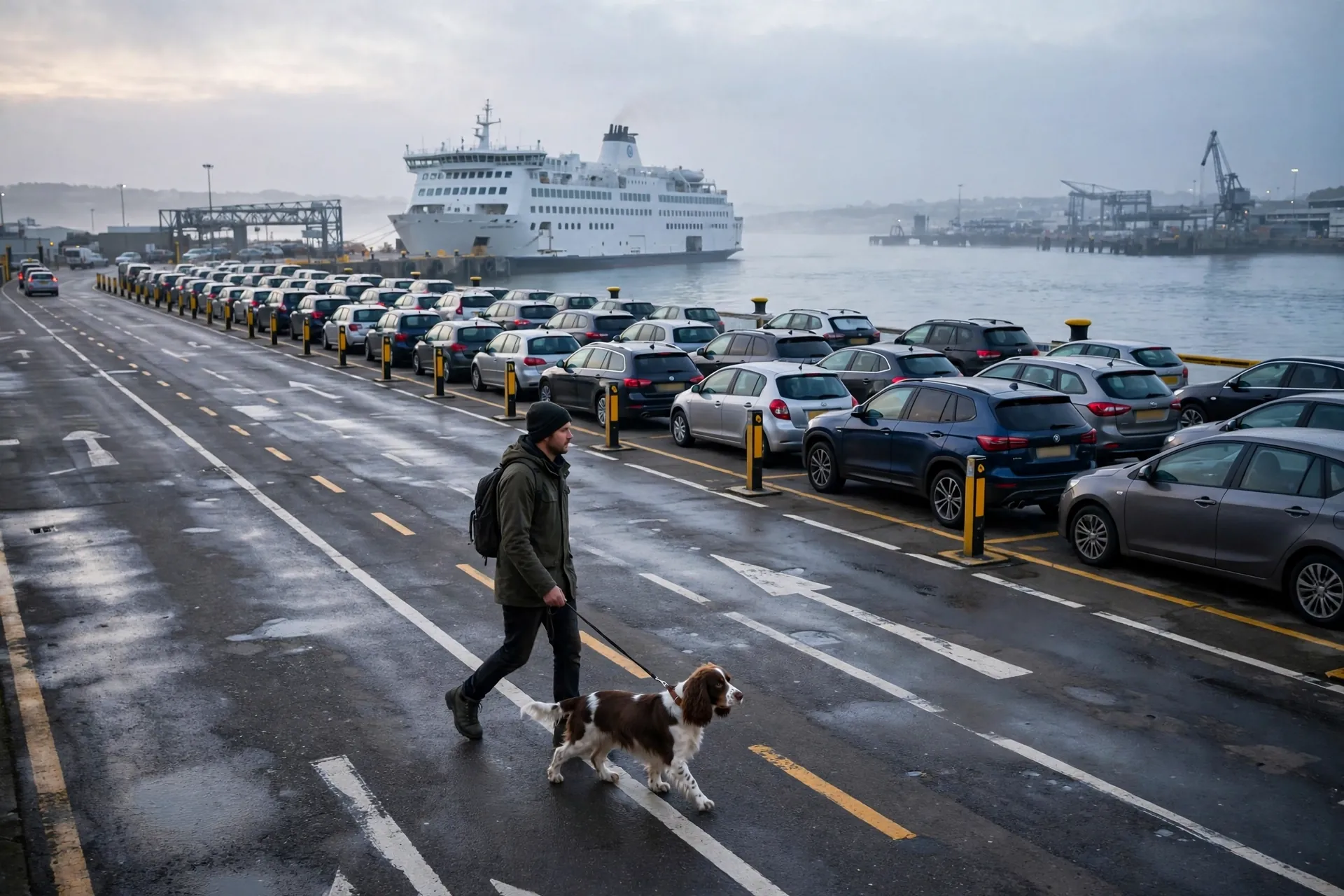
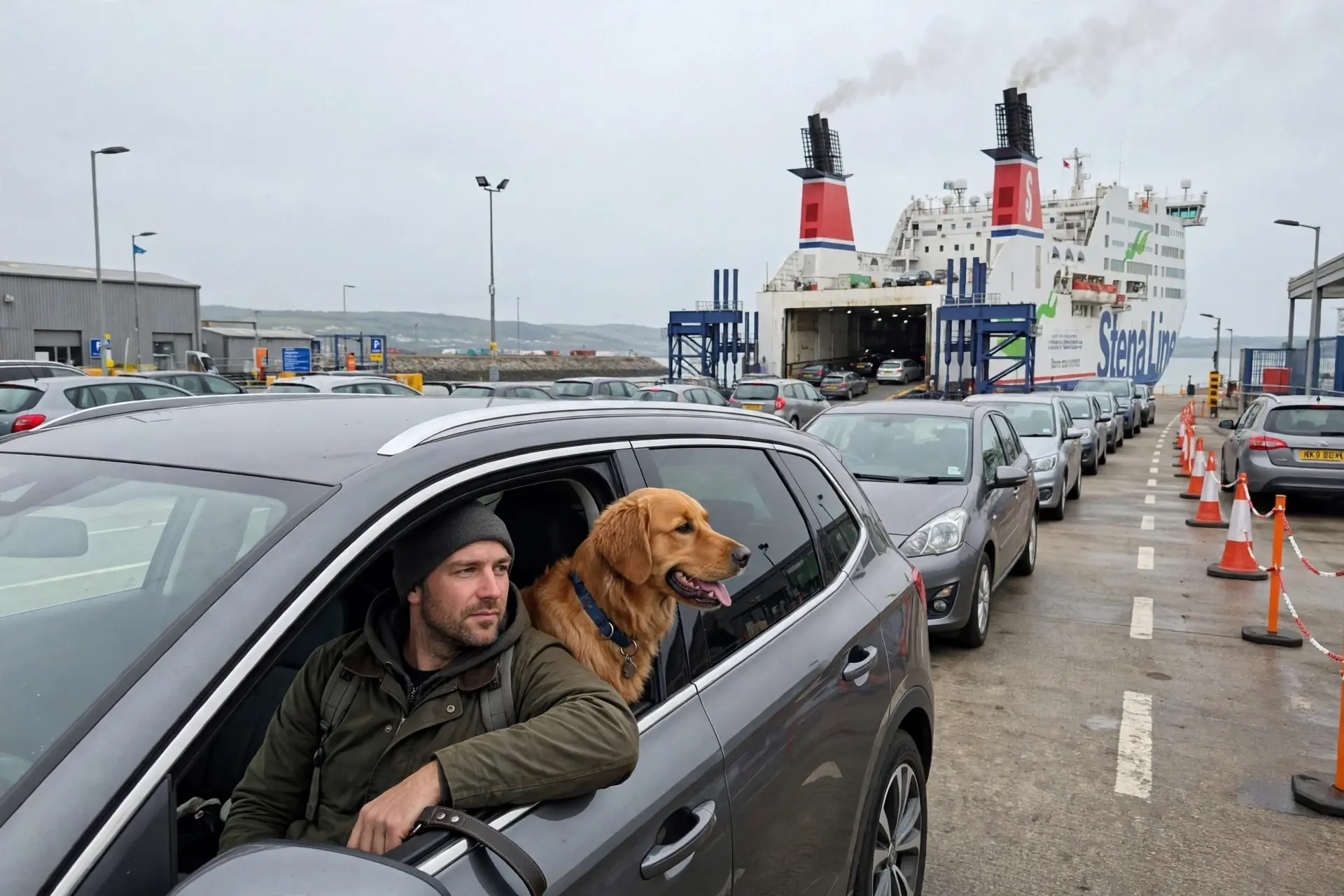
The fast boat from Holyhead to Dublin is the quickest way across the Irish Sea, and the dog's day on it is short enough to be simple. The crossing takes about two hours, and the animal stays in the car for the whole trip, in the vehicle it knows, with its own bed and smells. There is no kennel to book and no cabin to find: the car is the arrangement, and it is the same for every vehicle. Walk the dog before boarding, settle it in the car with water and its own blanket, and then walk away. The fast boat does not invite passengers to wander the decks, and the dog will be asleep by the time the ship leaves the harbour.
Speed changes the weather question. A fast boat feels the sea more than a slow cruise ship, and a rough crossing on a fast craft is a livelier ride. Feed the dog at the normal hour, but keep the meal light before a fast crossing, and resist the urge to offer extra food because the animal looks bored. A full stomach on a rolling ship is a bad idea, and the cleaning up will be yours. Water is the opposite: leave a bowl that will not tip, and keep it topped up. A thirsty dog will drink when it needs to.
Disembarkation is the fast boat's advantage. The ship docks in Dublin, the car deck empties quickly, and the drive off takes minutes. Do not let the dog out of the car in the lanes, and do not stop in the port. Dublin's centre is a short drive away, and a proper walk can begin in a park within half an hour of landing. The fast boat's whole point is time saved, and the dog's whole point is a walk that is not rushed.
The slow boat: a floating hotel for four hours
The cruise ferry is the opposite of the fast boat, and the dog's day on it is the opposite too. The crossing from Holyhead to Dublin takes about three and a half hours, and the ship is a small floating hotel, with restaurants, a cinema, a lounge and an open deck. The dog stays in the car, as on the fast boat, but the trip is long enough that the owner will want to go and see it. The crew announce visiting times, usually once or twice, and the dog's day should be built around them.
Visiting the dog is a ritual. Walk down to the car deck at the announced time, open the car door, offer water, let the dog stretch, and then leave again. Keep the visit short, five minutes, and keep it calm. The car deck is noisy, full of unfamiliar smells, and the dog will take its cue from you. A calm owner means a calm dog, and a hurried owner means a restless one. Go back to the lounge, read a book, and wait for the next visit.
The ship's pet facilities are improving, and the newer vessels have pet lounges and kennels for dogs whose owners want more than a car stay. Ask when booking what your exact ship offers, because the facilities change from vessel to vessel, and a lounge that exists on one sailing may not exist on another. The lounge, where available, gives the dog a room with other dogs, under crew supervision, and a bed to lie on. It is a better option for a dog that frets alone, and it costs little more than the car stay.
Meals on the cruise ferry follow the dog's clock. Feed at the normal hour, in the normal amount, and resist the urge to offer extra food because the ship's restaurants look tempting. Water is the opposite: offer it often, in small sips, and keep the bowl topped up. A well-watered dog settles faster, and a settled dog is the goal of every crossing.
Holyhead to Dublin: the crossing most travellers make
Holyhead to Dublin is the crossing most British travellers make, and it is the one with the most choice: a fast boat, a cruise ferry, several sailings a day, and a port that is used to dogs. Holyhead is a working town on the island of Anglesey, with a beach and a breakwater, and the port is compact, easy to navigate, and full of other dogs on busy days. Arrive early, because the queues build up, and the lanes fill quickly on a summer morning.
The drive to Holyhead is part of the trip. The A55 runs the length of the North Wales coast, and there are service areas and beaches along the way. Stop once, at a place with grass, and give the dog twenty minutes to stretch, drink and empty itself. The dog has a long day ahead, and the first walk is the reset button for the whole journey. A short stop now makes the rest of the drive easier.
Dublin, at the other end, is a city that welcomes dogs. The port is close to the centre, and the city has parks, beaches and canals within a short drive. The first walk can be in St Stephen's Green, or on the beach at Sandymount, and the first evening can be spent on a terrace, with the dog asleep under the table. Ireland is famous for its welcome, and the dog will feel it.
Pembroke to Rosslare: the quieter crossing
Pembroke to Rosslare is the quieter crossing, and the dogs that use it are usually the ones whose owners know the route. The ferry leaves from Pembroke Dock, a small port in west Wales, and arrives in Rosslare, a small harbour in the south-east of Ireland. The crossing takes about four hours, and the ship is a cruise ferry, with a car deck, a lounge and an open deck. The dog stays in the car, and the crew announce visiting times.
Pembroke Dock is a working port, with a town behind it, and the approach is simple. The roads are quiet, the queues are short, and the port is easy to navigate. Arrive an hour before departure, walk the dog on the quay, and settle it in the car with water and its own blanket. The town has a beach and a castle, and a morning spent there is a good start to the crossing.
Rosslare, at the other end, is a village with a beach, and the first walk can be on the sand within minutes of landing. The beach is long and flat, and the dog can run off the lead. From there, the south-east of Ireland opens up: Wexford, Waterford, and the coast that runs south. The crossing is slower than Holyhead, but the landing is gentler, and the dog will notice the difference.
The papers for Ireland: chip, jab and certificate
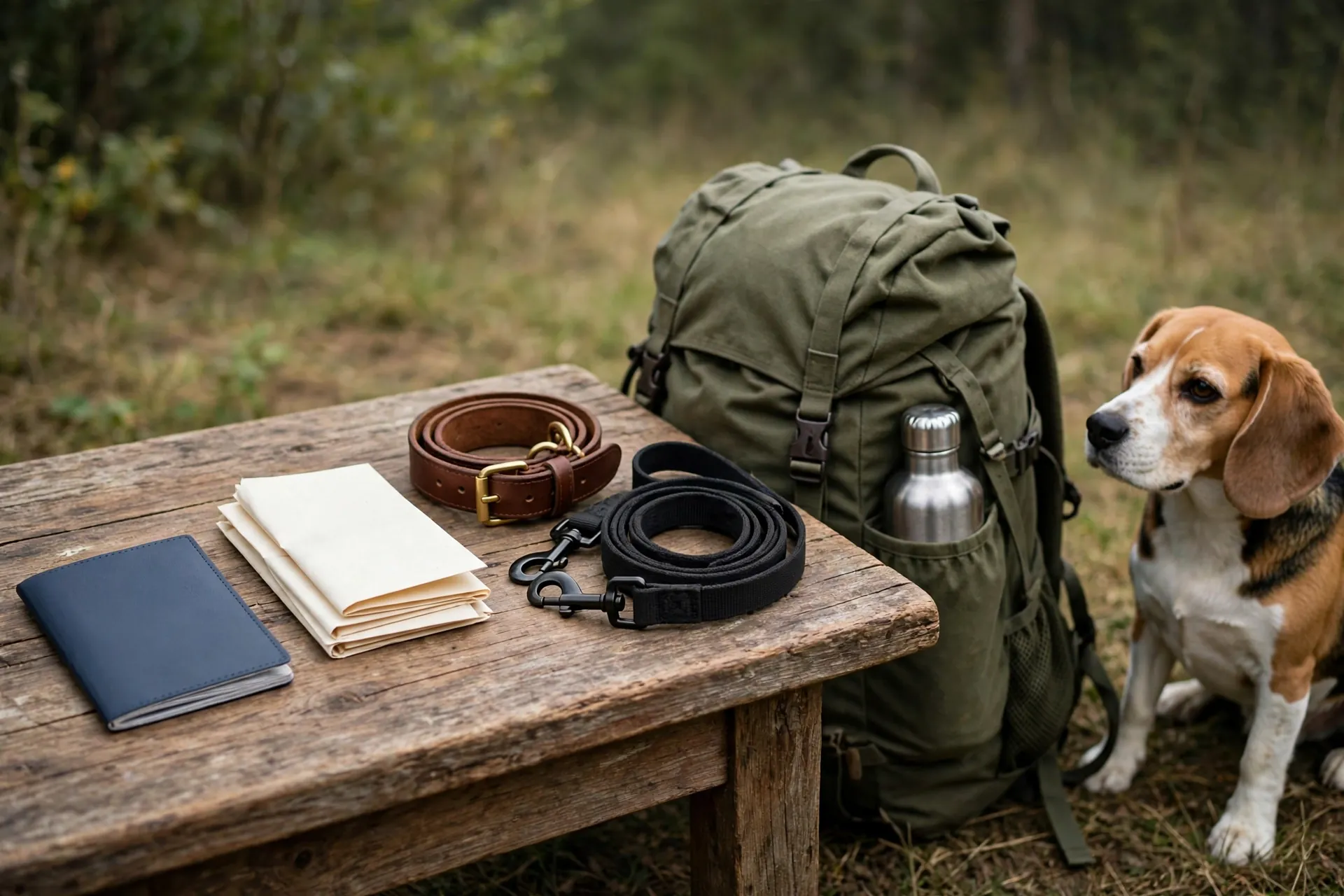
Ireland is in the EU, and the dog needs the same papers as a trip to France: a microchip, a rabies vaccination in date, and an animal health certificate from an official vet, or a valid EU pet passport. The rules are enforced at the Irish port, and the check is real. Work backwards from the sailing date, and book the vet appointment to fit the window, not the other way round. A certificate issued too early is as useless as one issued too late.
The chip gets scanned, and the number gets compared. An official will run a reader over the dog, read the number, and check it against the certificate and the vaccination record. If the chip has moved, or the reader cannot find it, the papers mean nothing. Ask the vet to scan the chip at the same appointment as the certificate, and keep the number in your phone as well as on paper. It is a two-minute check that saves a ruined holiday.
The rabies jab must have come after the chip was fitted, and there is a waiting period after a first vaccination. Ask the vet to write out the full history, with dates, and check it before you travel. Carry the folder in the car, where you can reach it, not in a suitcase in the boot: certificate, vaccination records, chip number, vet's phone number, insurance, all together, in one place. Photograph every page as a backup.
Booking Irish Ferries: the ship matters more than the time
The ship matters more than the time on Irish Ferries, because the fast boat and the cruise ferry are different products. The fast boat is quick, the cruise ferry is slow, and the dog's arrangements are different on each. Open the timetable, find the ship's name, and check what that vessel offers for dogs before you look at the price. A cheap fare on the wrong ship is not a bargain, it is a problem, and the problem will surface at check-in, when it is too late to fix.
Once the ship is right, add the dog at the first step of the search. The booking system only shows kennel spaces and pet lounges when the animal is declared, and a search made without a dog will show a cheaper fare that cannot take one. Say how many dogs there are, and say it honestly, because two dogs may need a bigger space. If the arrangement you need has gone, change the day. A Tuesday with a lounge is a better trip than a Saturday without one.
Before paying, read every line of the confirmation. The ship's name, the date, the time, the car registration, the dog arrangement, the total price: each one matters, and each one is easier to fix now than at the port. Keep the confirmation on your phone and on paper, because a dead battery at Holyhead is a poor start to a holiday. Ask for the pet charge to be itemised, so you know what the dog costs and what the crossing costs, separately.
Life on board: the Irish Sea by the hour
Life on board an Irish Ferries cruise ship has a rhythm of its own, and the dogs that cope best are the ones whose owners follow it. Board, find the car, settle the dog, and learn the way back to the vehicle deck. Then go up to the lounge, find a seat with a view, and settle in for the crossing. The sea will pass, the dog will sleep, and the arrival will come sooner than expected.
The visiting times are the anchor of the crossing. Go at the announced times, keep the visit brief, and let the dog sleep in between. Five minutes, lead on, clean up, and back upstairs. The car deck is noisy, full of unfamiliar smells, and the dog will take its cue from you. A calm owner means a calm dog, and a hurried owner means a restless one. Between visits, the dog is alone, and that is by design.
The open deck is the ship's best feature, and it is the place to go when the weather allows. The wind is strong, the view is wide, and the dog is not allowed there, so enjoy it alone, and then go back to the lounge. The restaurants and bars are tempting, but the dog's day should be quiet, because the crossing is long enough without excitement. Sit still, read a book, and let the sea do its work.
Dublin by dog: the first day
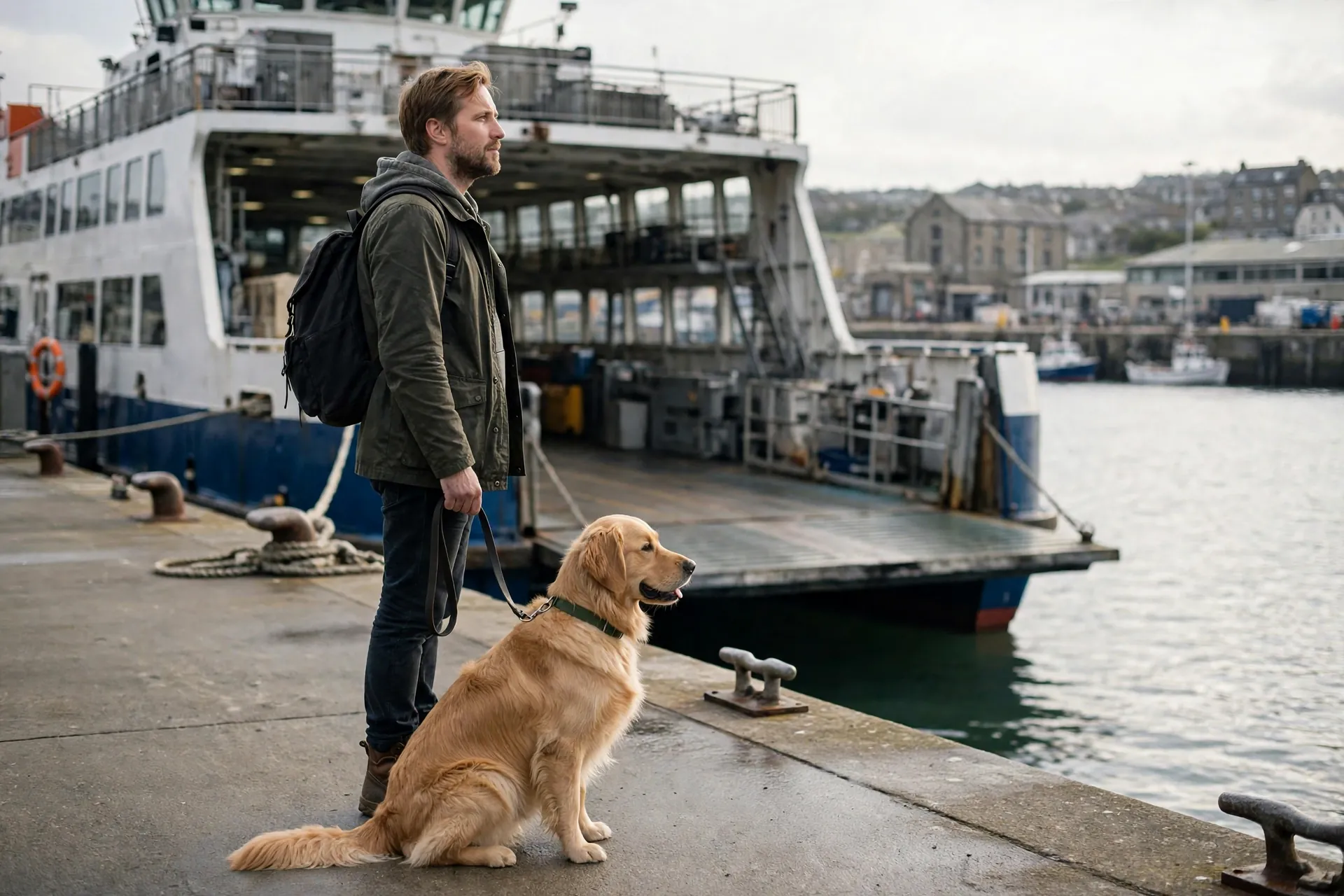
Dublin by dog begins at the port, and the first hour is the one that sets the tone. Drive off the ship, find a park or a beach, and give the dog twenty minutes to stretch, drink and empty itself. The dog has spent four hours on a ship, and the first walk ashore is the reset button for the whole holiday. St Stephen's Green is the obvious choice, a walled garden in the centre of the city, with lawns, ponds and paths, and dogs are welcome on leads.
The city opens up from there. The canals have paths, the beaches at Sandymount and Dollymount are long and flat, and the parks are full of dogs. The cafes with terraces welcome them without being asked, and the pubs with gardens welcome them too. Ireland is famous for its welcome, and the dog will feel it. Keep the first day short, and let the dog discover the city at its own pace.
Staying over is easy, because Dublin is used to dogs. Hotels, apartments and guesthouses welcome them, often with a small charge, and the restaurants with terraces welcome them too. Book early in summer, because the dog-friendly rooms go first, and confirm the policy in writing, because the details vary. The city is compact, so no walk is long, and the dog can have a different walk every day without ever repeating one.
The way home: the Irish vet
The journey home starts with a vet in Ireland, and the appointment should be made on the first day of the trip, not the last. The tapeworm treatment must fall inside a strict window before the return sailing, and the window does not bend. Too early, and it does not count. Too late, and the dog cannot sail. Ask your host for a recommendation, or look for a practice near your route, and call early. Irish vets know the treatment, but their booking systems differ, so allow time.
The vet will examine the dog, give the treatment, and write it into the certificate with the date, time, product and signature. Ask for clear handwriting, because the border official at Holyhead will read the entry, and a smudged date is a problem. Keep the certificate where you can reach it, and photograph the entry as a backup. A clear record means a quick check, and a quick check means the journey home begins without delay.
The crossing home is usually the easier one, because the dog has done it before. The routine is the same: a walk before boarding, a settled dog, a quiet crossing. If the outward trip was hard, change something for the return, a lounge instead of a car stay, or a quieter sailing. The dog has earned the easier option, and the owner has earned a calmer crossing. Once home, give the dog a quiet day: a familiar walk, a normal feed, and a long sleep.
Before you book, read our guide to dogs at UK ferry terminals for check-in timing and the walk before boarding, and our dog travel documents checklist for every paper to carry on a trip to Ireland.
Practical questions
Before you go
Do dogs need a ticket on Irish Ferries?
Yes. The ticket covers the dog's place, whether that is a car stay, a kennel, or a pet lounge where the ship offers one. The price changes with the route and the ship, so search with the dog included and check that the confirmation names the arrangement.
Can my dog stay in the car on Irish Ferries?
Yes, on most sailings, and the car is the usual arrangement on the fast boat and the cruise ferry. The crew announce visiting times on the longer crossings. Check the rules for your exact ship, because the facilities change from vessel to vessel.
What is the difference between the fast ferry and the cruise ferry?
The fast boat crosses Holyhead to Dublin in about two hours, and the dog stays in the car for the whole trip. The cruise ferry takes about three and a half hours, with more space, more facilities, and visiting times for the car deck. The fast boat saves time, the cruise ferry saves fuss.
What documents does my dog need to travel to Ireland?
A microchip, a rabies vaccination in date, and an animal health certificate, or a valid EU pet passport. The certificate only lives for a limited time, so the vet appointment must be timed with the sailing. Verify the current rules before you travel.
Does my dog need a vet visit before returning from Ireland?
Yes. A vet in Ireland must give the tapeworm treatment inside a strict window before the return sailing, and write it into the certificate. Book the vet on the first day of the trip, because practices need notice and the window does not bend.
Which Irish Ferries route is best with a dog?
Holyhead to Dublin has the most sailings and the most choice, with a fast boat and a cruise ferry. Pembroke to Rosslare is quieter, with a gentler landing and a beach within minutes. The best route is the one that fits the dog's temperament and the owner's timetable.