This guide is independent and contains no paid placement. If affiliate links are added later, they will be clearly marked and will not change our editorial checks.
On LeShuttle, dogs stay in the car for the entire 35-minute crossing, so there are no kennels or cabins to book. You need a microchip, rabies vaccination and an animal health certificate, and the car must be booked with the dog declared. Check the official guidance before you travel, because document rules and pet charges change.
Why LeShuttle suits dogs: the dog never leaves the car
The single fact that defines LeShuttle for dog owners is that the dog never leaves the car. There is no kennel, no cabin, no exercise deck and no separation. The dog travels in the vehicle it knows, with the people it knows, for 35 minutes, and then the journey continues. For a nervous dog, a rescue that panics when left alone, or a puppy on its first trip abroad, that continuity is worth more than any other feature of any crossing.
The crossing is also short and predictable. Thirty-five minutes underground, at a fixed speed, with no weather, no waves and no seasickness. Dogs that are sick on ferries are almost never sick on LeShuttle, because there is no motion to be sick from. The timetable runs around the clock, with departures every hour or so, which means a missed shuttle is a delay of an hour, not a ruined day. That reliability changes the whole shape of the trip.
The trade-off is that the dog is in the car, and the car is the dog's whole world for the crossing. The dog needs water, ventilation and a comfortable place to lie, and the owner needs to be in the car with it. That is easy for most owners, because the alternative is a ferry where the dog is somewhere else entirely. The car is familiar, the smells are familiar, and the duration is short enough that most dogs simply sleep through it.
LeShuttle also suits the practicalities of a driving holiday. The car is already packed, the dog's bed and food are already in the boot, and the crossing is just another leg of the drive. There is no unpacking, no repacking, and no separate booking for the dog's sleeping arrangements. The simplicity is the point, and it is why so many dog owners choose the tunnel for their first trip to France.
None of this removes the need for preparation. The documents are the same as for a ferry, the car must be booked with the dog declared, and the check-in has its own rhythm. The crossing is simple, but the preparation is not optional. Check the official guidance before you travel, and treat the tunnel as a well-organised system that rewards owners who arrive ready.
Before you book: the shuttle is a train, not a boat
Before you book LeShuttle, remember what it is: a train, not a boat, and the dog's day on it is the simplest of any Channel crossing. The shuttle runs from Folkestone to Calais in about 35 minutes, and the dog stays in the car for the whole trip, in the vehicle it knows, with its own bed and smells. There is no kennel to book, no cabin to find, and no deck to walk: the car is the arrangement, and it is the same for every vehicle. Drive on, switch off, and drive off.
The simplicity is the point. The dog does not need to be settled, because it never leaves the car. The owner does not need to learn the way to the exercise deck, because there is none. The crossing is short enough that the dog will barely have noticed it, and the owner can use the time to check the route, the satnav, and the first stop in France. A short crossing is a kind crossing, and the shuttle is the shortest of all.
The price changes with the time, not with the dog, and the dog travels free on most tickets. Book the time that fits your drive, and the flexible fare is worth a look, because the shuttle is a place where plans change. A fare that can be moved costs more up front and less in regret, and the dog is the most likely reason a trip will change. Travel insurance that covers the dog is worth a look for longer trips.
Folkestone: the last stop in England
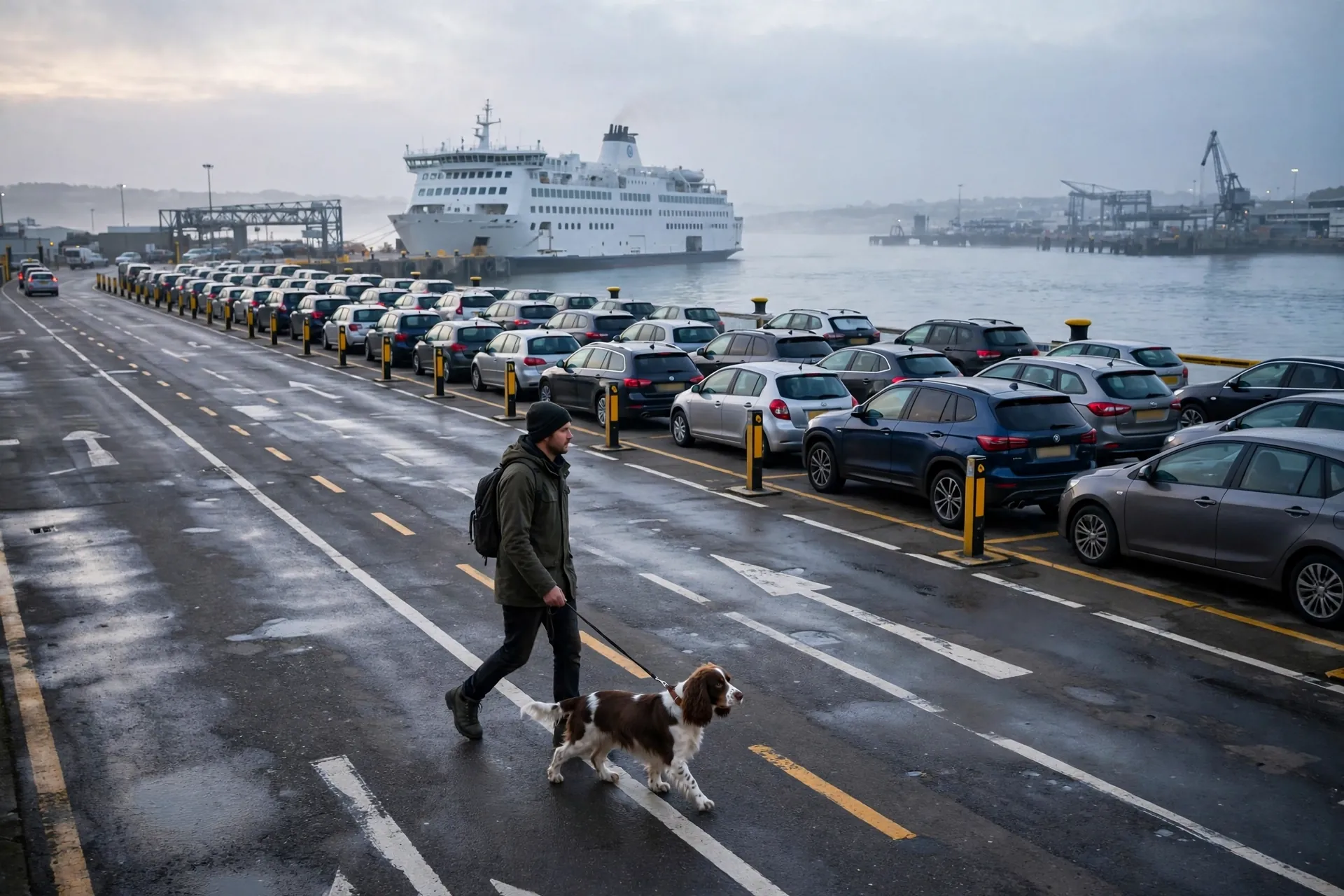
Folkestone is the last stop in England, and it is a good place to start. The town has a harbour, a beach, and a cliff-top walk, and the dog can stretch its legs before the tunnel. The terminal is a few minutes from the motorway, and the approach is simple: follow the signs, join the queue, and wait for the check-in. Arrive early, because the queues build up, and the lanes fill quickly on a summer morning.
Walk the dog before you check in, because the car will be the dog's home for the next hour. The terminal has a pet exercise area, with grass and a fence, and the dog can stretch, drink and empty itself before the crossing. Use it, because the next chance will be in France, an hour later. A short stop now makes the rest of the drive easier, and the dog will be calmer for it.
The town itself is worth an hour, if the timetable allows. The harbour has a lighthouse and a beach, the cliff-top walk has views across the Channel, and the cafes put out water bowls without being asked. Folkestone is a town that likes dogs, and it shows. A morning spent there is a good start to the crossing, and the dog will remember the beach long after the owner has forgotten it.
Check-in: the papers, the chip and the car
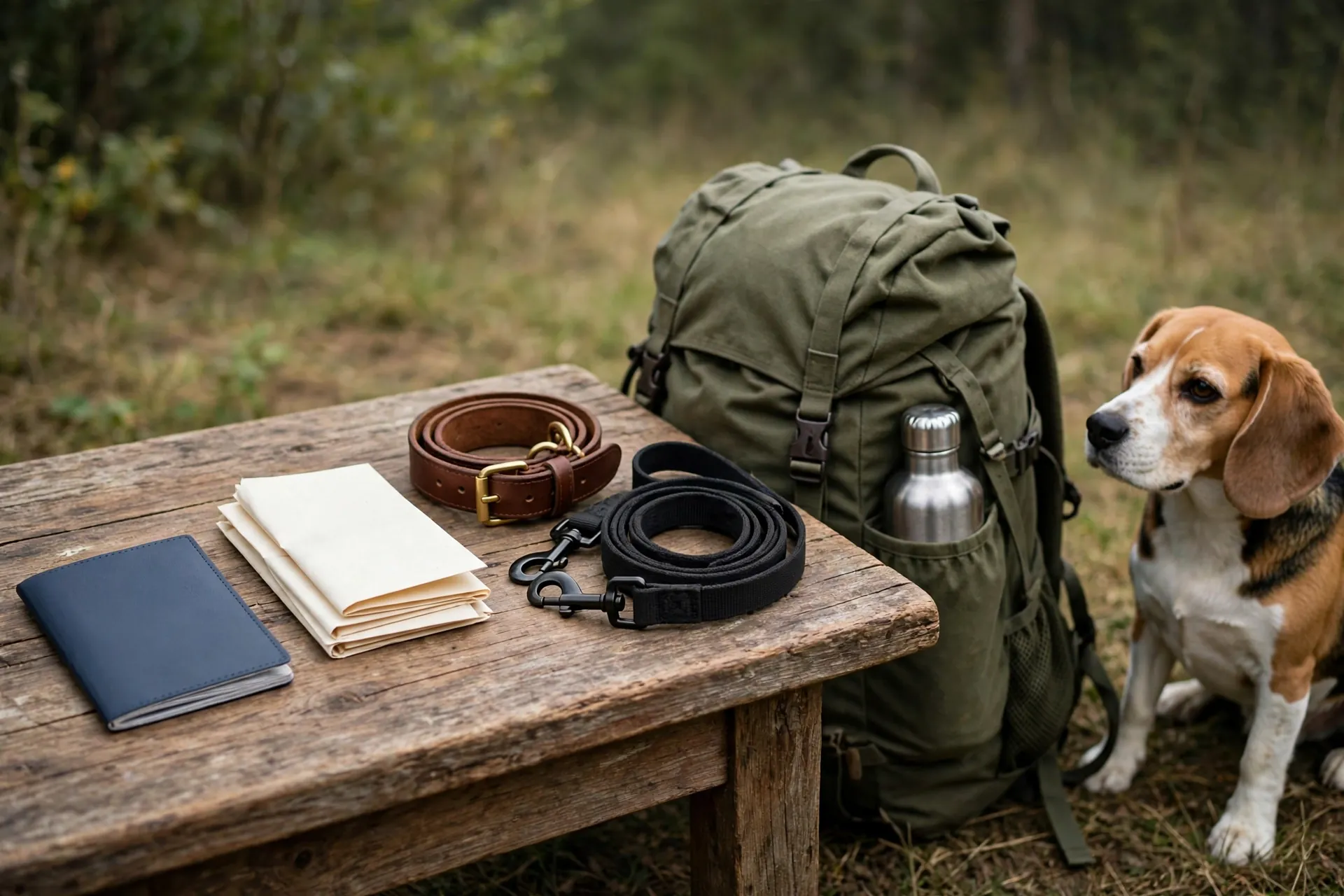
Check-in at Folkestone is the moment the papers matter, because the border is at the terminal, not at the other end. The dog needs a microchip, a rabies vaccination in date, and an animal health certificate from an official vet, or a valid EU pet passport. The official will run a reader over the dog, read the number, and compare it with the certificate and the vaccination record. If the chip has moved, or the reader cannot find it, the papers mean nothing.
Ask the vet to scan the chip at the same appointment as the certificate, and keep the number in your phone as well as on paper. The rabies jab must have come after the chip was fitted, and there is a waiting period after a first vaccination. Ask the vet to write out the full history, with dates, and check it before you travel. Carry the folder in the car, where you can reach it, not in a suitcase in the boot: certificate, vaccination records, chip number, vet's phone number, insurance, all together, in one place. Photograph every page as a backup.
The car is checked too, and the dog should be in it, calm and settled. Do not let the dog out of the car in the lanes, and do not stop in the terminal. The queues are long, the vehicles are moving, and the dog has waited all morning for a proper walk. Give it one at the pet exercise area before check-in, and the crossing will be a calm one. A prepared owner is a relaxed owner, and the border is the place to prove it.
Boarding the shuttle: drive on, switch off, wait
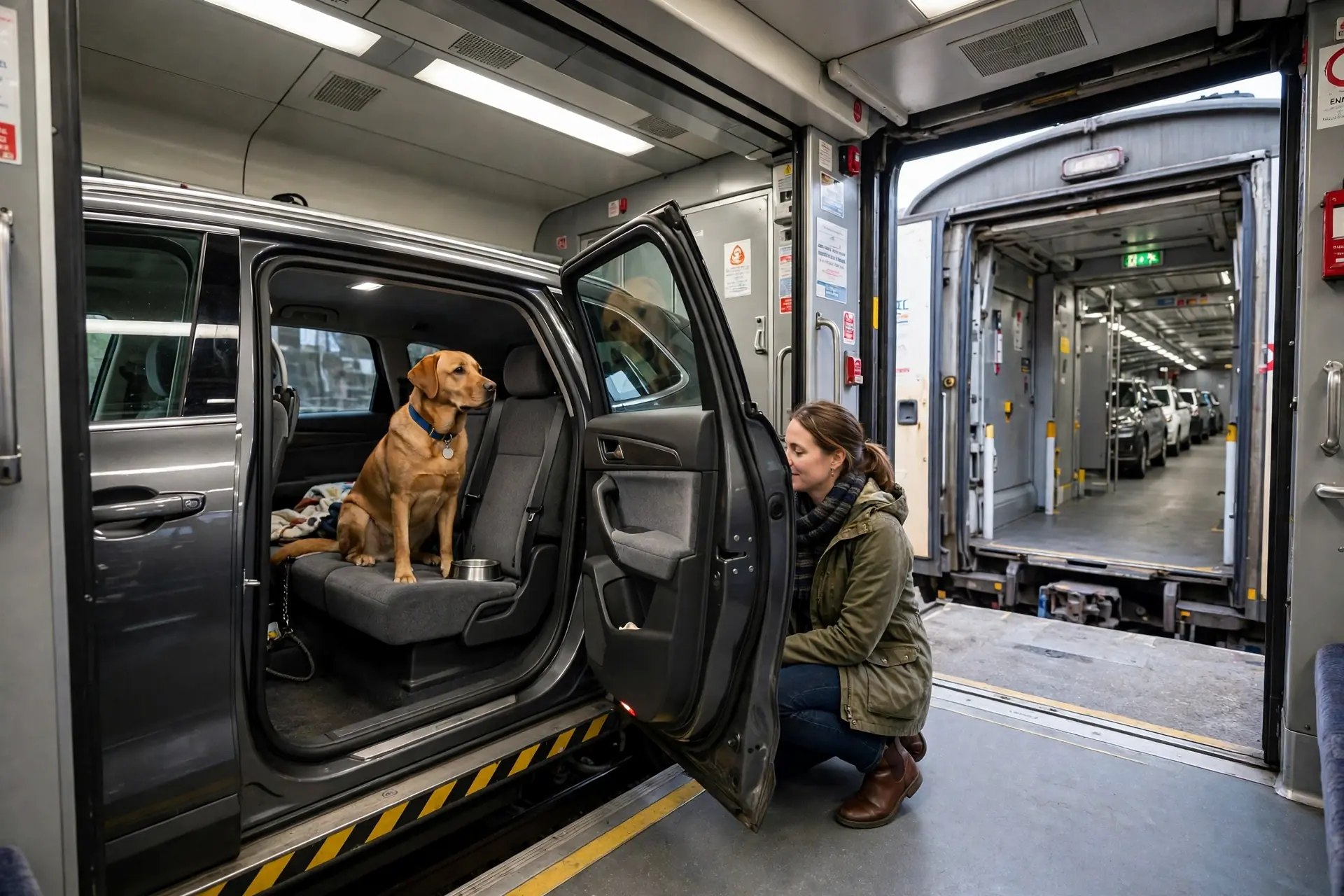
Boarding the shuttle is the simplest part of the crossing, because the train is a car park on rails. Follow the signs, drive onto the carriage, switch off the engine, and wait. The carriage is enclosed, the lights are bright, and the dog will be in the car, with its own bed and smells, for 35 minutes. There is nothing to do, and that is the point. Sit still, let the dog sleep, and arrive in France.
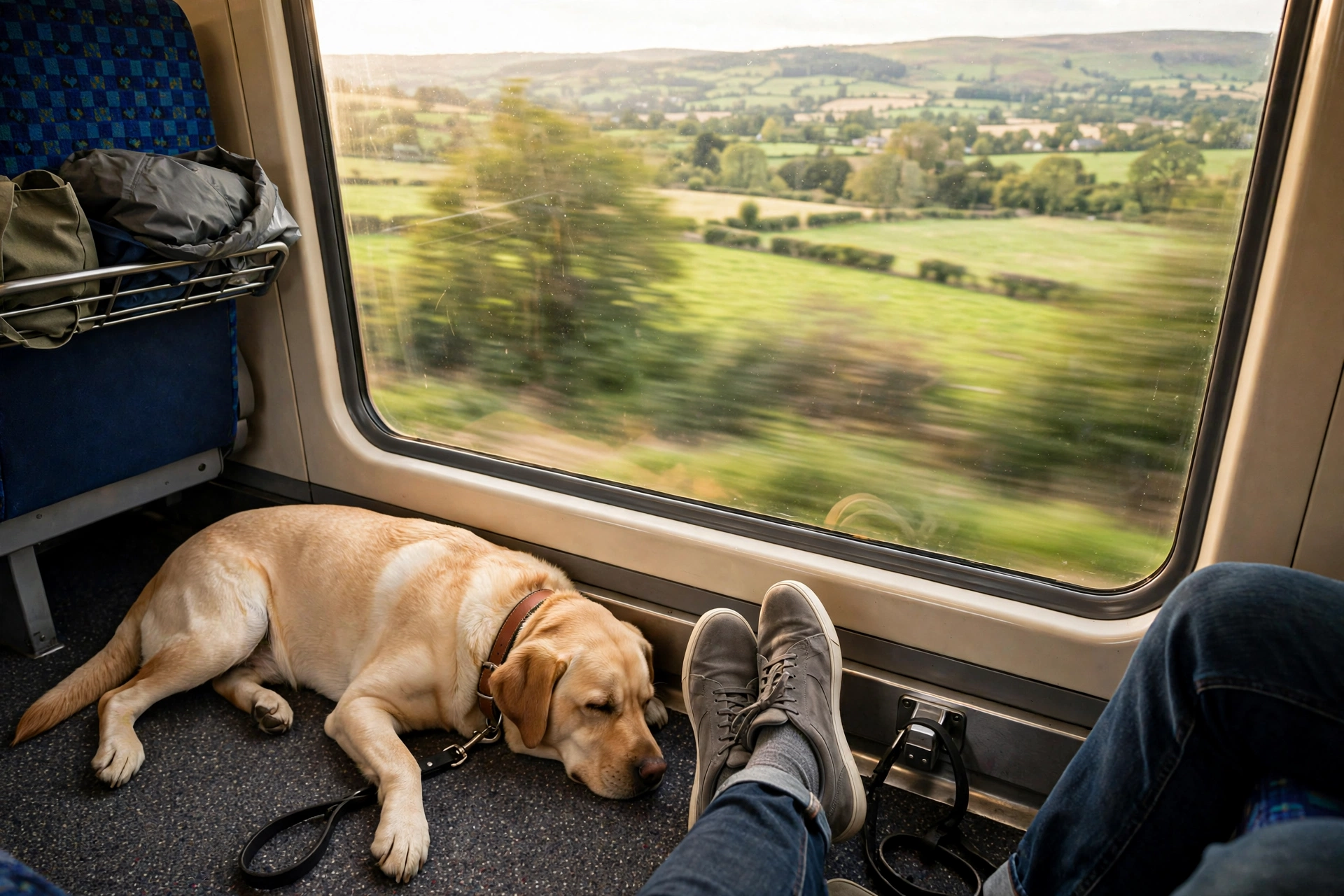
The train moves smoothly, and the dog will barely notice it. The noise is low, the vibration is gentle, and the car is familiar. A nervous dog will be calmer in the car than on a ferry, because the car is the one place the dog knows. Leave water in a bowl that will not tip, and take anything chewable out of reach. The crossing is short, so the dog will not be alone for long, and the owner is sitting beside it. The shuttle is the kindest crossing for a nervous dog, and the owner will notice the difference.
Disembarkation is the easy part. The train stops, the doors open, and the drive off takes minutes. Do not let the dog out of the car in the terminal, and do not stop in Calais. The motorways are close, and a proper walk can begin within half an hour of landing, on the Opal Coast or in a service area with grass. The shuttle's whole point is time saved, and the dog's whole point is a walk that is not rushed.
The 35 minutes underground
The crossing itself is the least eventful part of the trip, and that is the point. The shuttle moves smoothly, the lights are steady, and the only sound is a low hum. The dog will feel the movement at first, a gentle acceleration and then a constant speed, and then nothing. Most dogs settle within minutes, and many sleep through the whole crossing. The tunnel is dark outside the windows, so there is nothing for the dog to watch, and the lack of stimulation is a blessing.
Use the 35 minutes well. Check the route from Calais, confirm the first stop, and make sure the dog's water is still available. Do not try to feed the dog during the crossing, because the animal is unlikely to be hungry and the motion, gentle as it is, does not suit eating. A small chew can help a restless dog, but keep it quiet and safe. The goal is a calm, boring crossing, and boredom is the best outcome.
If the dog is restless, stay calm and stay in the car. Talk quietly, offer a familiar blanket, and let the animal settle in its own time. Do not open the car door, do not try to walk the dog in the carriage, and do not make a fuss. The crossing is 35 minutes, and the dog will be out of the car soon enough. Patience is the only tool you need, and it works better than any distraction.
Some dogs are sensitive to the pressure change in the tunnel, and a few may yawn, swallow or shake their heads. This is normal and passes quickly. If your dog has ear problems, ask your vet before the trip, but for most dogs the pressure change is barely noticeable. The tunnel is used by millions of people and their pets every year, and the system is designed to be comfortable.
When the shuttle slows for Calais, the lights change and the crew announce the arrival. Stay in the car until directed to drive off, and follow the crew's signals. The drive off is as orderly as the boarding, and the dog will be out of the tunnel and into the French daylight within minutes. The crossing is over, and the holiday has begun.
Calais: driving off and the first stop
Driving off at Calais is quick and straightforward. Follow the crew's directions, drive slowly out of the carriage, and join the flow of traffic leaving the terminal. The border control on the French side is usually a formality, with the dog's documents checked if the officers ask. Have the folder ready, and keep the dog in the car during the process. The whole arrival takes only a few minutes, and then you are on the road in France.
The first stop is the most important part of the arrival. Plan it before you sail, and make it close to the terminal. The dog has been in the car for the crossing and the drive to Folkestone, and it needs a walk, water and a toilet break. The area around Calais has service areas and quiet lanes, and a twenty-minute walk will reset the dog. Do not rush into a long drive to the final destination; the first hour in France should be gentle.
Driving in France is on the right, and the first few minutes can feel strange for a British driver. Take it slowly, follow the signs, and let the dog settle. The motorways are good, the service areas are frequent, and the driving is generally calmer than in Britain. Keep the dog secure in the car, with a harness or a crate, and stop every two hours for a walk and water. The French motorway service areas have grass areas and bins, and they are good for dogs.
Fuel, food and water are easy to find in France, but the first day should be planned rather than improvised. Know where you are staying on the first night, know the route, and know where the nearest vet is. A dog that has a good first day in France will enjoy the rest of the trip, and the owner who plans the first day will enjoy it too. Keep the walks short, the routine familiar, and the expectations modest.
Finally, enjoy the arrival. France is generous to travelling dogs, with beaches, forests and villages that welcome them, especially outside the high summer season. The tunnel has done its job, the dog is in France, and the holiday is under way. A good crossing deserves a good first day, and a good first day sets the tone for the whole trip.
Shuttle or ferry: which crossing suits the dog?
Shuttle or ferry is the question every dog owner asks, and the answer depends on the dog. The shuttle takes 35 minutes, the dog stays in the car, and the crossing is smooth and quiet. The ferry takes 90 minutes or more, the dog stays in a kennel or a cabin, and the crossing is longer and livelier. A nervous dog will be calmer on the shuttle, because the car is familiar. A dog that frets in the car will be calmer on a ferry, because the kennel is a place of its own.
The price changes with the time, not with the dog, and the shuttle is often dearer than the ferry, especially at peak times. The ferry is cheaper, and the crossing is longer, and the dog will have more time to settle. The shuttle is quicker, and the crossing is shorter, and the dog will have less time to worry. The choice is between time and money, and the dog's temperament should make it. A calm dog will cope with either, and a nervous dog will cope better with the shuttle.
The documents are the same for both, because the border is the same. The dog needs a microchip, a rabies vaccination in date, and an animal health certificate, or a valid EU pet passport, and the tapeworm treatment on the way home. The rules do not change with the crossing, and the check is the same at Folkestone and Dover. Choose the crossing that fits the dog, and the papers will follow.
Delays: when the shuttle stops, the dog waits
Delays happen on the shuttle, and the dog waits in the car when they do. The tunnel can close, the trains can stop, and the queues can build up, and the owner can do nothing but wait. The car is the dog's home, and the dog will sleep through most of it, but the owner should be prepared. Carry water, food, and a bag for cleaning up, and keep the phone charged, because the updates come by text and the queues move slowly.
The terminal has a pet exercise area, with grass and a fence, and the dog can stretch, drink and empty itself while waiting. Use it, because the next chance will be in France, hours later. A short stop now makes the rest of the wait easier, and the dog will be calmer for it. Do not let the dog out of the car in the lanes, and do not stop in the terminal. The queues are long, the vehicles are moving, and the dog has waited all day for a proper walk.
The flexible fare is worth it on the shuttle, because the delays are the reason it exists. A fare that can be moved costs more up front and less in regret, and the dog is the most likely reason a trip will change. Travel insurance that covers the dog is worth a look for longer trips, and the policy should cover vet treatment in France, not just cancellation. The dog is the most likely reason a trip will change, so insure for the dog, not just the humans.
The way home: the vet in Calais and the tunnel back
The way home starts with a vet in France, and the appointment should be made on the first day of the trip, not the last. The tapeworm treatment must fall inside a strict window before the return crossing, and the window does not bend. Too early, and it does not count. Too late, and the dog cannot travel. Ask your host for a recommendation, or look for a practice near your route, and call early. French vets know the treatment, but their booking systems differ, so allow time.
The vet will examine the dog, give the treatment, and write it into the certificate with the date, time, product and signature. Ask for clear handwriting, because the border official at Folkestone will read the entry, and a smudged date is a problem. Keep the certificate where you can reach it, and photograph the entry as a backup. A clear record means a quick check, and a quick check means the journey home begins without delay.
The crossing home is usually the easier one, because the dog has done it before. The routine is the same: a walk before boarding, a settled dog, a quiet crossing. If the outward trip was hard, change something for the return, a different time, or a quieter sailing. The dog has earned the easier option, and the owner has earned a calmer crossing. Once home, give the dog a quiet day: a familiar walk, a normal feed, and a long sleep. The holiday ends the way it began, with the dog's needs first.
If you are still deciding between the tunnel and a boat, our guide to dogs at UK ferry terminals explains the ferry check-in routine, and our taking a dog on UK trains guide covers the rail journey to Folkestone.
Practical questions
Before you go
Do dogs need a ticket on LeShuttle?
No, the dog travels free on most tickets, staying in the car for the whole 35-minute crossing. The price is for the car, not the animal, and the dog needs no separate booking. Check the operator's rules before you travel, because they change from time to time.
Can my dog leave the car on LeShuttle?
No. The dog stays in the car for the whole crossing, from boarding at Folkestone to driving off at Calais. There is no kennel, no cabin, and no exercise deck. The crossing is short, so the dog will barely have noticed it.
How long is the LeShuttle crossing with a dog?
About 35 minutes from Folkestone to Calais, and the dog stays in the car for the whole trip. The total journey, from check-in to driving off, takes about an hour. The shuttle is the quickest way across the Channel with a dog.
What documents does my dog need for LeShuttle?
A microchip, a rabies vaccination in date, and an animal health certificate, or a valid EU pet passport. The check happens at Folkestone, before boarding, so have the folder ready in the car. Verify the current rules before you travel.
Is LeShuttle better than the ferry for a nervous dog?
Usually yes, because the dog stays in the car it knows, the crossing is short, and the train is smooth and quiet. A dog that frets in the car will be calmer on a ferry, where the kennel is a place of its own. The choice depends on the dog's temperament.
Does my dog need a vet visit before returning on LeShuttle?
Yes. A vet in France must give the tapeworm treatment inside a strict window before the return crossing, and write it into the certificate. Book the vet on the first day of the trip, because practices in France need notice and the window does not bend.