This guide is independent and contains no paid placement. If affiliate links are added later, they will be clearly marked and will not change our editorial checks.
Stena Line sails from Holyhead, Fishguard, Cairnryan, Liverpool and Harwich, and dogs travel in pet cabins, kennels or the car depending on the route. Book the dog's arrangement first, then the sailing. Check the official guidance before you travel, because cabin and kennel rules differ between ships.
Stena Line in one page
Stena Line runs ferries across the Irish Sea and the North Sea, and the Irish Sea routes are the ones most dog owners will use. The company sails from Holyhead to Dublin, Fishguard to Rosslare, Cairnryan to Belfast, Liverpool to Belfast, and Harwich to the Hook of Holland. Each route is a different length, a different ship, and a different day for the dog, so the choice of port matters as much as the choice of operator.
The most useful fact for planning is that Stena's dog rules are broadly consistent across the Irish Sea, while the crossings themselves vary enormously. A two-hour sailing from Holyhead asks very little of a dog, while an overnight sailing from Liverpool asks for a proper cabin and a full night's routine. The same company, the same booking system, and a very different trip. Match the arrangement to the hours, not to the brand.
Dogs on Stena Line travel in one of three ways: a pet cabin, where the dog stays with you; a kennel, where the dog has its own ventilated space on the vehicle deck; or the car, where the dog stays in the vehicle for the whole crossing. The options available depend on the ship, and not every ship offers all three. Before you book, find out which vessel serves your sailing and what it offers for dogs. Check the official guidance before you travel, because the allocation can change with the season.
The ships are large, modern and well equipped, with pet lounges, exercise areas and restaurants. The crew are used to dogs, and the check-in is straightforward. Do not expect a cruise; expect a reliable ferry with a practical approach to animals. That practicality is a virtue, and it is one of the reasons dog owners return to Stena year after year.
Finally, remember that Stena is a working ferry service, and the timetable serves freight and passengers as well as tourists. The Holyhead route is the busiest, the Liverpool route is overnight, and the Fishguard route is quieter. Plan with that in mind, allow spare time, and treat the ferry as part of the holiday rather than an obstacle to it. The crossing is the gateway, not the destination.
Holyhead to Dublin with Stena: the flagship route
Holyhead to Dublin is the route Stena runs most often, and it is the one with the most to choose from: a fast craft, a cruise ship, several sailings a day, and a port that is used to dogs. The fast craft, Stena Adventurer's smaller sister on the route, crosses in about two hours, and the dog stays in the car for the whole trip. The cruise ship, Stena Adventurer, takes about three and a half hours, with restaurants, a lounge, a cinema and an open deck. The choice is between time and space, and the dog's temperament should make it.
The drive to Holyhead is part of the trip. The A55 runs the length of the North Wales coast, and there are service areas and beaches along the way. Stop once, at a place with grass, and give the dog twenty minutes to stretch, drink and empty itself. The dog has a long day ahead, and the first walk is the reset button for the whole journey. A short stop now makes the rest of the drive easier, and the dog will be calmer for it.
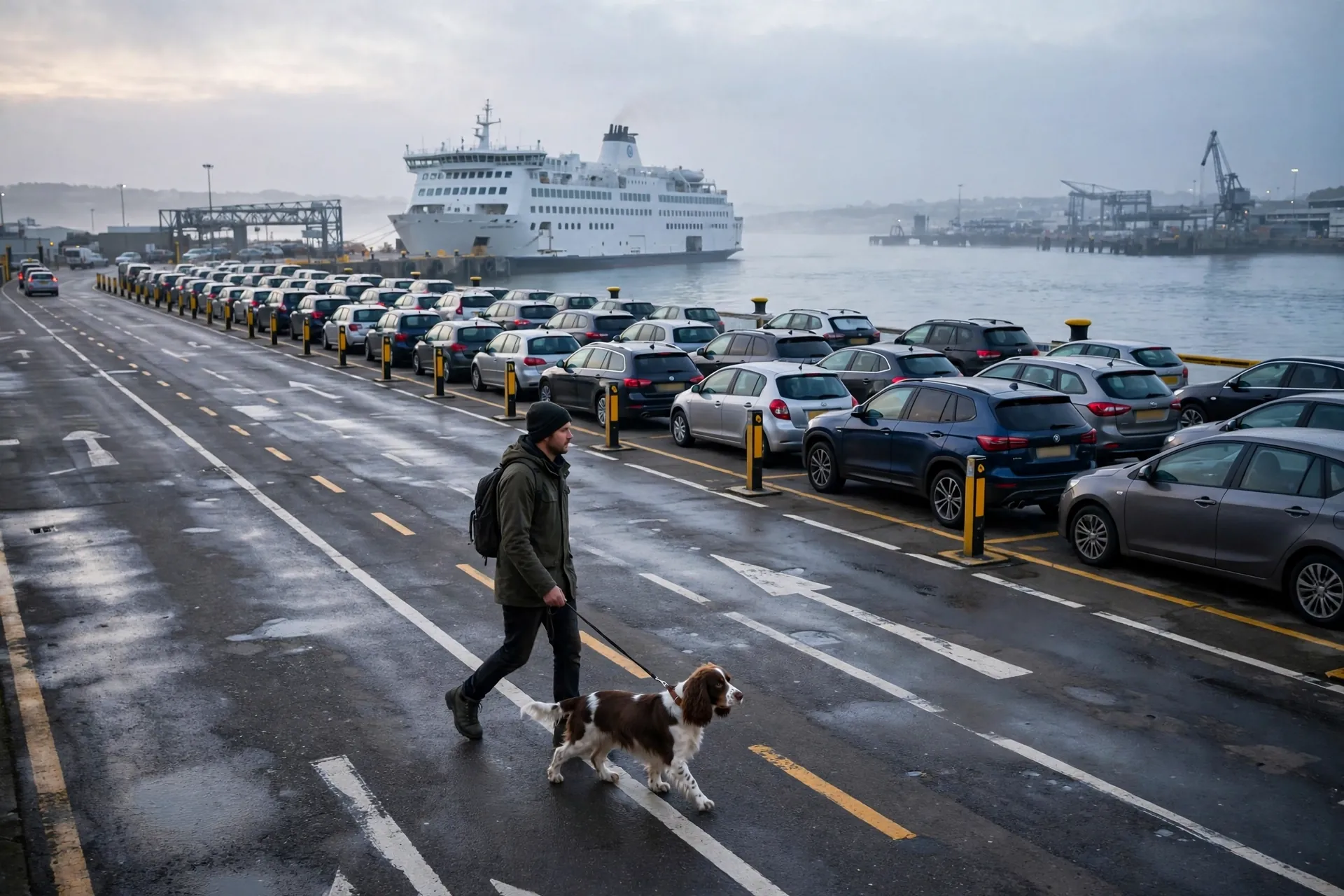
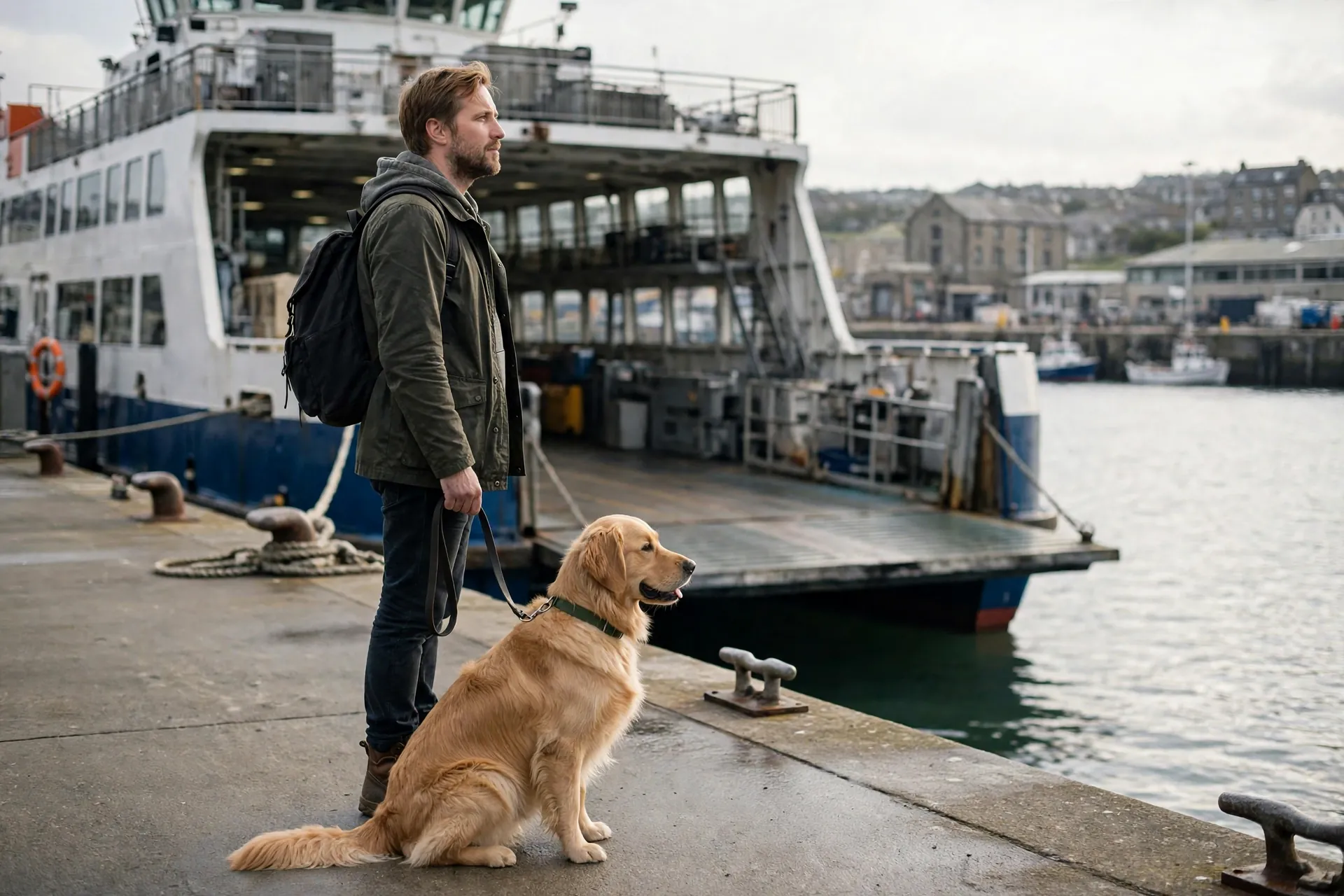
Holyhead itself is a working town on Anglesey, with a beach and a breakwater, and the port is compact and easy to navigate. Arrive early, because the queues build up, and the lanes fill quickly on a summer morning. Walk the dog on the quay before boarding, and settle it in the car with water and its own blanket. Dublin, at the other end, is a short drive from the port, and the first walk can be in a park within half an hour of landing.
Fishguard to Rosslare: the southern crossing
Fishguard to Rosslare is the southern crossing, and it is the one most travellers from the south of England and Wales choose. The ferry leaves from Fishguard Harbour, a small port on the Pembrokeshire coast, and arrives in Rosslare, a small harbour in the south-east of Ireland. The crossing takes about three and a half hours, and the ship is a cruise ferry, with a car deck, a lounge, a restaurant and an open deck.
Fishguard is a quiet port, and the approach is simple. The roads are empty, the queues are short, and the port is easy to navigate. Arrive an hour before departure, walk the dog on the quay, and settle it in the car with water and its own blanket. The town has a beach and a harbour, and a morning spent there is a good start to the crossing. The dog will have the sea air in its nose before the ship leaves.
Rosslare, at the other end, is a village with a beach, and the first walk can be on the sand within minutes of landing. The beach is long and flat, and the dog can run off the lead. From there, the south-east of Ireland opens up: Wexford, Waterford, and the coast that runs south. The crossing is slower than Holyhead, but the landing is gentler, and the dog will notice the difference.
Cairnryan to Belfast: the shortest sea crossing
Cairnryan to Belfast is the shortest sea crossing on the Irish Sea, about two and a half hours, and it is the one most travellers from Scotland choose. The ferry leaves from Cairnryan, a small port on the Galloway coast, and arrives in Belfast, a city that has changed beyond recognition in recent years. The ship is a cruise ferry, with a car deck, a lounge, a restaurant and an open deck, and the dog stays in the car, with visiting times announced by the crew.
Cairnryan is a working port, and the approach is simple. The roads are quiet, the queues are short, and the port is easy to navigate. Arrive an hour before departure, walk the dog on the quay, and settle it in the car with water and its own blanket. The town of Stranraer is nearby, with a loch and a park, and a morning spent there is a good start to the crossing.
Belfast, at the other end, is a city that welcomes dogs. The port is close to the centre, and the city has parks, a river, and the Titanic Quarter, with wide open spaces. The first walk can be in the Botanic Gardens, or on the beach at Helen's Bay, a short drive away. Northern Ireland's coast is dramatic, and the dog will have plenty to sniff, but the first hour should be gentle. A calm arrival is worth more than an early start.
Liverpool to Belfast: the overnight option
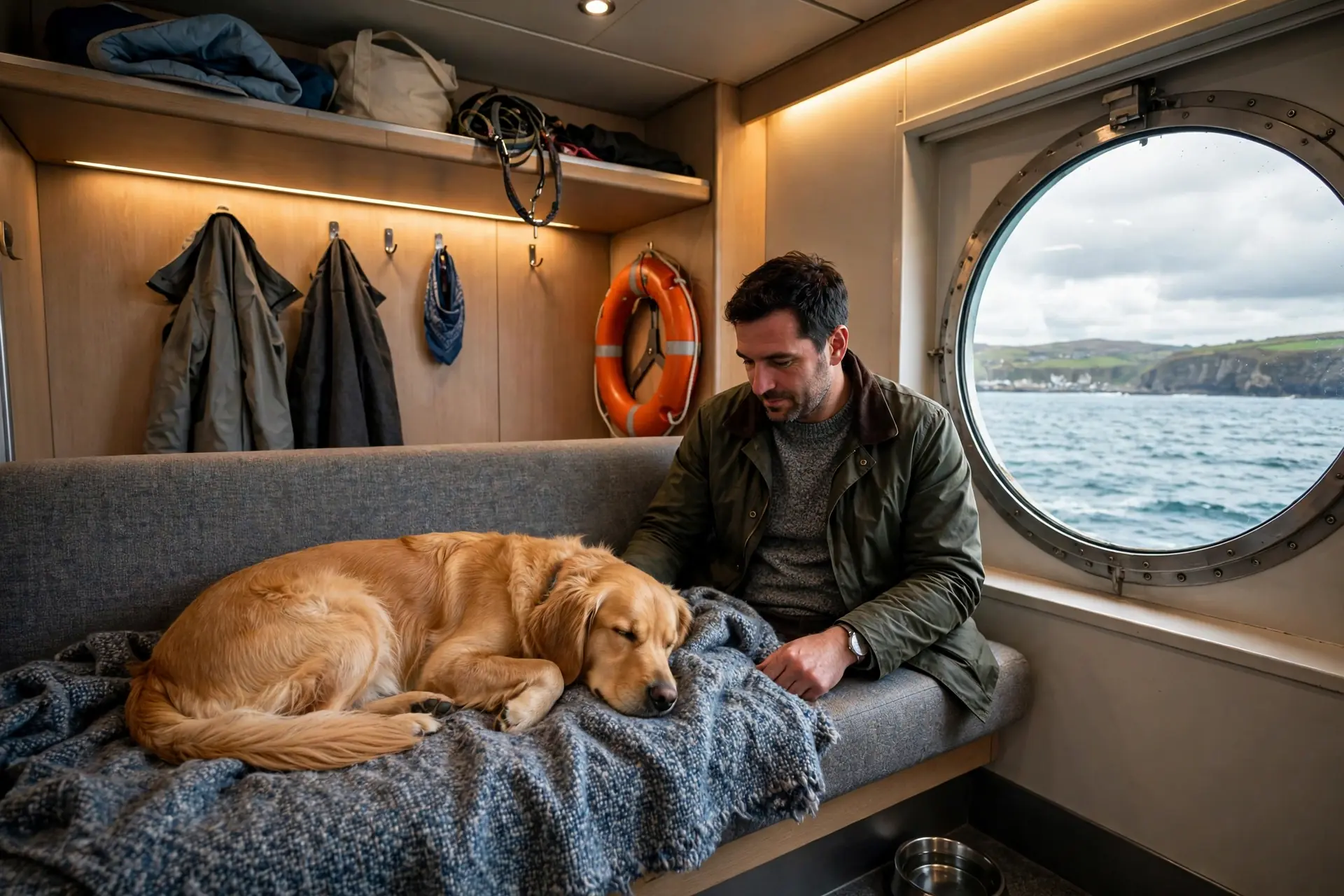
Liverpool to Belfast is the overnight option, and it is the one for travellers who want to sleep on the ship and wake up in Northern Ireland. The ferry leaves Birkenhead in the evening, sails through the night, and arrives in Belfast in the morning. The crossing takes about eight hours, and the dog sleeps in a pet cabin, a small room with a wipe-clean floor, a dog bed and a water bowl, a short walk from the open deck.
The cabin is the whole reason to choose this route. The dog sleeps beside you, hears you breathe, and wakes up in Belfast. For a dog that frets when left alone, that closeness is the difference between a night of sleep and a night of worry. Book the cabin the moment dates open, because the handful on each ship disappears first in summer. Bring the dog's own blanket, because the smell of home does more than any amount of reassurance.
Liverpool is a city worth a day on its own, and the port at Birkenhead is easy to reach. Arrive in the afternoon, walk the dog on the waterfront, and board in the evening. The ship has restaurants and bars, but the dog's evening should be quiet, because the cabin is the reason the night boat was chosen. Eat early, take a last walk on deck, and settle in the cabin with a book. Keep the lights low, the room calm, and the routine familiar, and the dog will sleep.
Cabins, lounges and kennels on Stena
Stena offers three places for a dog, and the right one depends on the route. On the overnight Liverpool to Belfast sailing, the dog sleeps in a pet cabin, a small room with a wipe-clean floor, a dog bed and a water bowl. On the day boats, the dog usually stays in the car, with visiting times announced by the crew. On some ships, there is a pet lounge, a room with other dogs, under crew supervision, and a bed to lie on. Ask when booking what your exact ship offers, because the facilities change from vessel to vessel.
The cabin is the best option for a dog that frets when left alone, and for any overnight sailing. The animal sleeps beside you, hears you, and wakes up in the destination. For a day boat, the car is the usual arrangement, and it is the same for every vehicle. Walk the dog before boarding, settle it in the car with water and its own blanket, and then walk away. The dog will be asleep by the time the ship leaves the harbour.
The lounge, where available, is a middle ground. The dog has company, a bed, and a crew member watching, and the owner can visit. It is a better option for a dog that frets alone, and it costs little more than the car stay. Measure before you book, because size decides the space: a large dog needs a large kennel, and large kennels are scarce. A dog that cannot stretch out and turn around will not rest.
Booking Stena: the route decides the dog's place
The route decides the dog's place on Stena, because the four routes are different products. Holyhead to Dublin has a fast craft and a cruise ship. Fishguard to Rosslare has a cruise ferry. Cairnryan to Belfast has a cruise ferry. Liverpool to Belfast has a night boat with pet cabins. Open the timetable, find the ship's name, and check what that vessel offers for dogs before you look at the price. A cheap fare on the wrong ship is not a bargain, it is a problem.
Once the ship is right, add the dog at the first step of the search. The booking system only shows pet cabins, kennel spaces and pet lounges when the animal is declared, and a search made without a dog will show a cheaper fare that cannot take one. Say how many dogs there are, and say it honestly, because two dogs may need a bigger cabin or a different space. If the arrangement you need has gone, change the day.
Before paying, read every line of the confirmation. The ship's name, the date, the time, the car registration, the dog arrangement, the total price: each one matters, and each one is easier to fix now than at the port. Keep the confirmation on your phone and on paper, because a dead battery at the port is a poor start to a holiday. Ask for the pet charge to be itemised, so you know what the dog costs and what the crossing costs, separately.
A day on a Stena ship: what the hours feel like
A day on a Stena ship has a shape of its own, and the dogs that cope best are the ones whose owners follow it. Board, find the car, settle the dog, and learn the way back to the vehicle deck. Then go up to the lounge, find a seat with a view, and settle in for the crossing. The sea will pass, the dog will sleep, and the arrival will come sooner than expected. The ship has restaurants and bars, but the dog's day should be quiet, because the crossing is long enough without excitement.
The visiting times are the anchor of the crossing. Go at the announced times, keep the visit brief, and let the dog sleep in between. Five minutes, lead on, clean up, and back upstairs. The car deck is noisy, full of unfamiliar smells, and the dog will take its cue from you. A calm owner means a calm dog, and a hurried owner means a restless one. Between visits, the dog is alone, and that is by design.
The open deck is the ship's best feature, and it is the place to go when the weather allows. The wind is strong, the view is wide, and the dog is not allowed there, so enjoy it alone, and then go back to the lounge. Meals follow the dog's clock: feed at the normal hour, in the normal amount, and resist the urge to offer extra food because the ship's restaurants look tempting. Water is the opposite: offer it often, in small sips.
On the overnight Liverpool sailing, the evening is different. Eat early, take a last walk on deck, and settle in the cabin with a book. Keep the lights low, the room calm, and the routine familiar, and the dog will sleep. Morning on the night boat is the mirror of the evening: a walk on deck, water, a short wait, and then the drive off. Do not rush the disembarkation, and do not let the dog out of the car in the lanes.
The papers for the Irish Sea: two destinations, two rulebooks
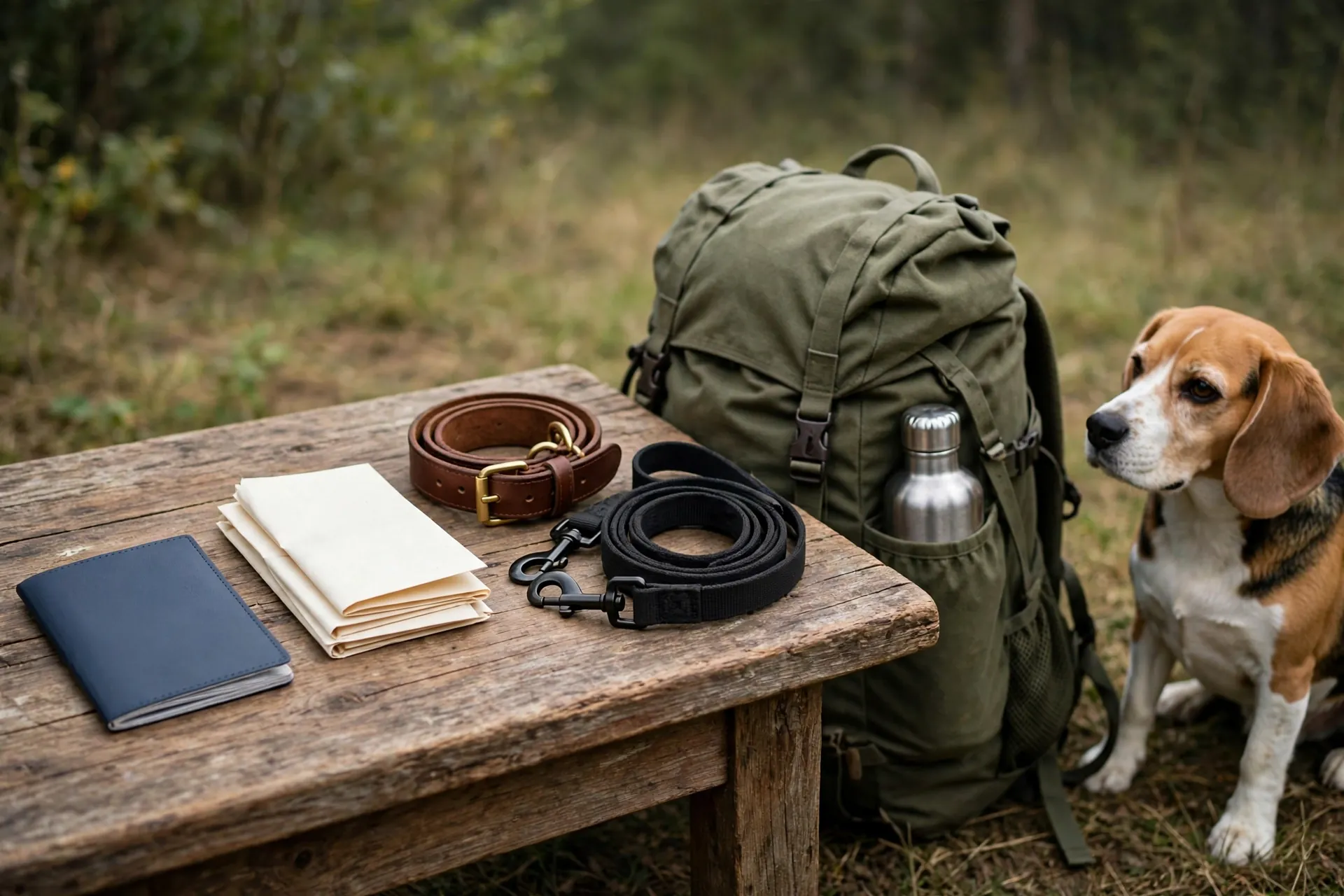
The paperwork depends on where the ship lands, and Stena sails to two kinds of destination. The Republic of Ireland is in the EU, and the dog needs a microchip, a rabies vaccination in date, and an animal health certificate from an official vet, or a valid EU pet passport. Northern Ireland is part of the UK, and the rules there are different and simpler, though they have changed in recent years and should be verified before travel. The first question is always: where are we landing? The answer decides the folder.
For the Republic, the dates matter more than the documents themselves. The certificate is only valid for a limited time, the rabies jab must have come after the microchip was fitted, and there is a waiting period after a first vaccination. Work backwards from the sailing date, and book the vet appointment to fit the window, not the other way round. A certificate issued too early is as useless as one issued too late, and the border official will check the dates, not the intentions.
The microchip gets scanned, and the number gets compared. An official will run a reader over the dog, read the number, and check it against the certificate and the vaccination record. If the chip has moved, or the reader cannot find it, the papers mean nothing. Ask the vet to scan the chip at the same appointment as the certificate, and keep the number in your phone as well as on paper. Carry the folder in the car, where you can reach it, not in a suitcase in the boot.
Belfast by dog: the first day
Belfast by dog begins at the port, and the first hour is the one that sets the tone. Drive off the ship, find a park or a beach, and give the dog twenty minutes to stretch, drink and empty itself. The dog has spent hours on a ship, and the first walk ashore is the reset button for the whole holiday. The Botanic Gardens are the obvious choice, a walled garden in the south of the city, with lawns, a palm house and paths, and dogs are welcome on leads.
The city opens up from there. The River Lagan has a towpath, the Titanic Quarter has wide open spaces, and the coast at Helen's Bay is a short drive away. The cafes with terraces welcome dogs without being asked, and the pubs with gardens welcome them too. Northern Ireland is famous for its welcome, and the dog will feel it. Keep the first day short, and let the dog discover the city at its own pace.
Staying over is easy, because Belfast is used to dogs. Hotels, apartments and guesthouses welcome them, often with a small charge, and the restaurants with terraces welcome them too. Book early in summer, because the dog-friendly rooms go first, and confirm the policy in writing, because the details vary. The city is compact, so no walk is long, and the dog can have a different walk every day without ever repeating one. One practical note: the coast has ticks, especially in the forests and hills, and the dog should be checked after every walk.
If you are still choosing between operators, our guide to dogs at UK ferry terminals covers check-in timing and the walk before boarding, and our dog travel documents checklist lists every paper to carry on a trip to Ireland.
Practical questions
Before you go
Do dogs need a ticket on Stena Line?
Yes. The ticket covers the dog's place, whether that is a car stay on the day boats, a pet cabin on the overnight Liverpool sailing, or a pet lounge where the ship offers one. The price changes with the route and the ship, so search with the dog included and check that the confirmation names the arrangement.
Can my dog stay in the car on Stena Line?
Yes, on the day boats, and the car is the usual arrangement on Holyhead, Fishguard and Cairnryan. The crew announce visiting times on the longer crossings. On the overnight Liverpool sailing, the dog needs a pet cabin. Check the rules for your exact ship.
What is the difference between Stena Adventurer and the fast craft?
Stena Adventurer is a cruise ship, taking about three and a half hours from Holyhead to Dublin, with restaurants, a lounge and an open deck. The fast craft crosses in about two hours, and the dog stays in the car for the whole trip. The fast craft saves time, the cruise ship saves fuss.
Does my dog need a pet cabin on Stena Line?
Only on the overnight Liverpool to Belfast sailing, where the dog sleeps in a pet cabin with you. On the day boats, the car is the usual arrangement, and some ships offer a pet lounge. Book the cabin early, because there are only a handful on each ship.
What documents does my dog need to travel to Ireland with Stena?
For the Republic of Ireland: a microchip, a rabies vaccination in date, and an animal health certificate, or a valid EU pet passport. For Northern Ireland the rules are different and simpler. Verify the rules for your destination before you travel.
Does my dog need a vet visit before returning from Ireland?
For returns from the Republic, yes: a vet in Ireland must give the tapeworm treatment inside a strict window before the return sailing, and write it into the certificate. Book the vet on the first day of the trip. Returns from Northern Ireland do not need the same treatment.