This guide is independent and contains no paid placement. If affiliate links are added later, they will be clearly marked and will not change our editorial checks.
Dolgellau is one of the best dog bases in southern Snowdonia because it gives you three different days out without moving the car: the flat Mawddach Trail along the estuary, the lower slopes of Cadair Idris, and a compact old town with pubs that welcome walkers. Keep dogs on a lead near sheep, respect the tides on the estuary, and save the mountain summit for fit dogs on a clear day.
Three landscapes from one car park
Most dog-friendly towns give you one good walk and then expect you to drive. Dolgellau is different. This small market town in Gwynedd sits where the River Wnion meets the Mawddach estuary, at the foot of Cadair Idris, and the whole place is built on a human scale: stone houses, narrow streets, a market square, and a river that changes colour with the tide. Park once, and a flat estuary trail, a mountain path and a pub lunch are all within walking distance of each other.
That matters more than it sounds when you travel with a dog. A dog that has already had a proper morning walk settles happily in a cafe. A dog that has only had a ten-minute pavement loop does not. Dolgellau lets you front-load the exercise, then enjoy the town, because the Mawddach Trail starts at the edge of town and runs for miles along the estuary on a level, well-surfaced path. An older dog can manage an hour out and back; a young collie can go all the way towards Barmouth and still want more.
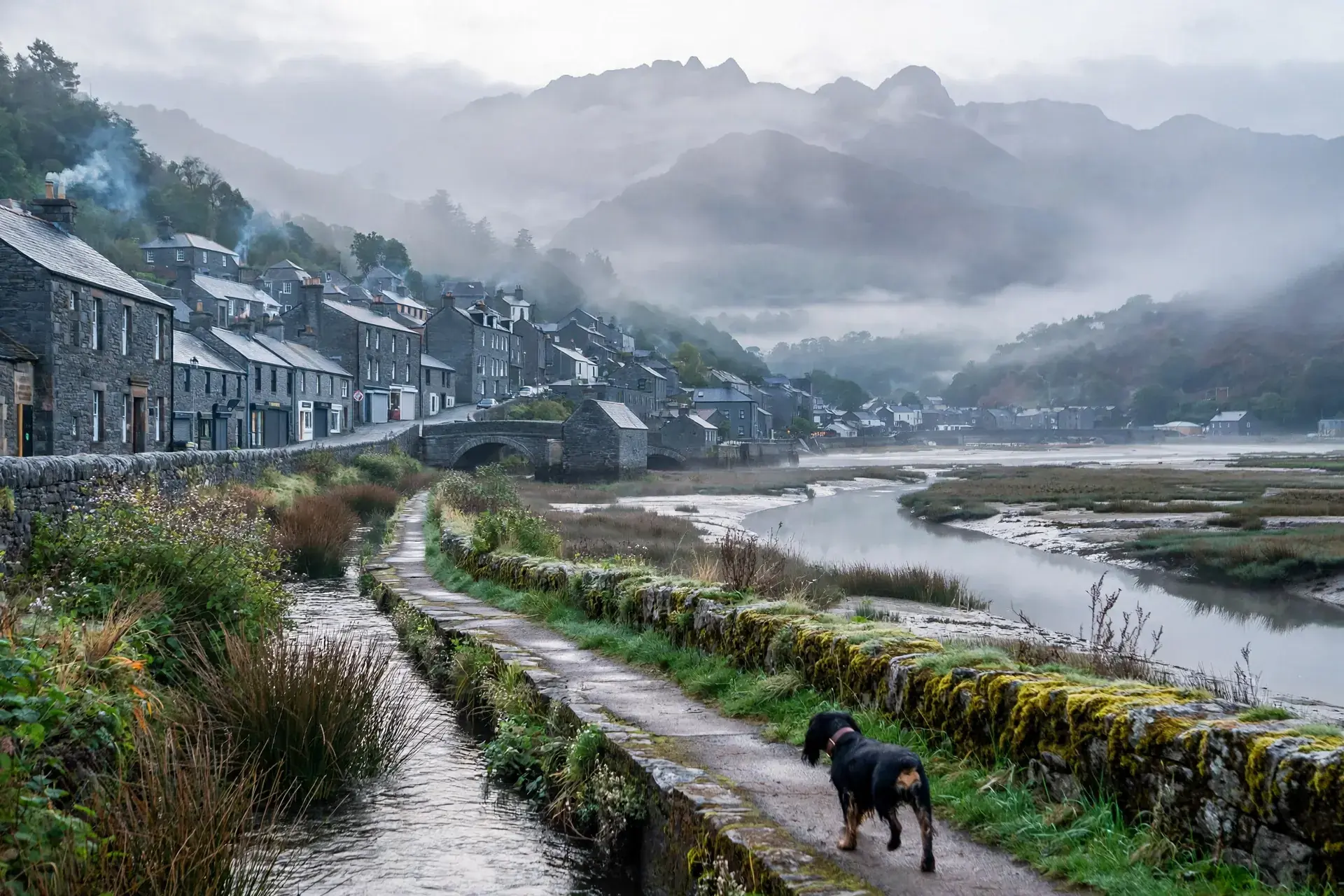
The town itself rewards slow walking. Dolgellau has more than two hundred listed buildings, many of them in grey local stone with slate roofs, and the streets twist in a way that keeps dogs interested: new smells around every corner, a bridge over the river, a market square to cross, and plenty of low walls to sniff. It is a working town rather than a resort, which is part of its charm — the shops sell outdoor kit, local food and everyday things, and the people you meet are as likely to be farmers and walkers as tourists.
Use this guide as a practical plan rather than a list of attractions. The sections below follow the order most visitors actually use the town: the rules that keep dogs and livestock safe, the estuary trail, the mountain foothills, the old town, water, wet weather, places to stay and eat, and finally a two-day itinerary that ties it together. If you are planning a wider trip around the national park, our Snowdonia guide covers the higher mountains, lead rules and parking across Eryri, while our North Wales road trip guide shows how Dolgellau fits into a longer loop through Conwy, the Llyn Peninsula and the coast.
Ground rules: livestock, leads and seasons
Before any walk around Dolgellau, get the livestock rules straight, because this is sheep country and the consequences of getting it wrong are serious. Sheep graze the fields beside the Mawddach Trail, the lower slopes of Cadair Idris and the farmland around the town. A dog chasing sheep can cause ewes to miscarry or die, and farmers are legally entitled to protect their livestock. Keep your dog on a lead whenever sheep are visible, whenever you are crossing farmland, and whenever you cannot see what is around the next bend.
The lead rule is not just about sheep. The Mawddach Trail is a shared path: walkers, cyclists, runners and horse riders all use it, and a dog darting across a cyclist's line can cause a nasty accident. A short lead through busy stretches and near junctions, and a long line on the open estuary sections, is the combination most experienced dog owners settle on. On the mountain paths, a lead also stops a dog scrambling onto scree or disappearing over a ridge while you are still reading the map.
Pick up after your dog everywhere, including on open moorland and farmland, and carry bags with you — there are bins in town, but not on the mountain. Dog waste left on grazing land can spread disease to livestock, so this is a farm-safety issue as well as a courtesy one. Take the bag with you rather than leaving it by the path to collect later, because later rarely happens and a forgotten bag is worse than none.
Seasons change the rules of the trip. Lambing season, roughly spring, is the most sensitive time of year: ewes with lambs are easily stressed, and some fields that feel open in autumn are effectively closed to loose dogs in spring. Summer brings midges on still evenings, especially near the estuary, and warm pavements in town at midday — walk early or late, carry water, and never leave a dog in a parked car. Autumn is often the sweet spot, with cooler air, quieter paths and the hills turning gold and russet, while winter demands respect: mountain weather on Cadair Idris can change in an hour, daylight is short, and the estuary path can be bitterly cold in an easterly wind. Whatever the season, check the official guidance before you travel for current access rules, tide times and weather warnings.
The Mawddach Trail, step by step
The Mawddach Trail is the walk most dogs in Dolgellau will remember. It follows the old railway line from Dolgellau to Barmouth, about nine miles along the southern shore of the Mawddach estuary, and because it was built for trains it is almost entirely flat, with a smooth, well-drained surface that suits paws, pushchairs and tired legs alike. The views do the work: wide tidal water, oak woods on the far bank, herons standing in the shallows, and Cadair Idris rising behind you as you walk west towards the sea.
Start at the trailhead near the town and walk as far as suits your dog. The first stretch out of Dolgellau runs beside the river through riverside meadows, and it is a good warm-up: flat, open, with plenty of sniffing and a clear view ahead. After a mile or so the path settles onto the old railway embankment above the estuary, and this is where the walk becomes special — water on one side, woodland on the other, and the mountains framing every view. Benches appear at intervals, which is useful if you are walking with an older dog that needs a rest, or with children who need a snack stop.
The full trail to Barmouth is a serious day out, around nine miles each way, and most dogs will do better with a section than the whole thing. A popular compromise is to walk out for an hour or ninety minutes and then turn back, which gives a solid three-hour walk with a built-in turnaround. Another option is to walk one way and arrange a lift or a bus back — check the official guidance before you travel, because bus times and dog policies vary, and the walk back along the same path is no hardship if the plan falls through. The railway bridge at Barmouth, which the trail crosses near the end, is a memorable finish: a long wooden viaduct over the estuary with the sea beyond.
Practical points for the trail: there is little shade on the embankment sections, so carry water for your dog on warm days and offer it at every stop. The surface is mostly fine gravel and tarmac, which is kind to paws, but check pads after a long walk, especially if your dog is not used to distance. Cyclists use the trail, so keep your dog to one side and your lead short when you hear a bell. Ticks are a real risk in the bracken and long grass beside the path from spring to autumn, so check your dog thoroughly after the walk and carry a tick remover. And remember the tide: the estuary at low water is a vast expanse of mud that looks walkable and is not — the mud is deep, the channels fill fast, and dogs should stay on the path, not on the foreshore.
If your dog is young, old, or new to long walks, the trail is forgiving in a way mountain paths are not. You can turn back at any point, the surface is even, and there are no stiles or scrambles. That makes it the right first walk for a Dolgellau trip: it tells you honestly how fit your dog is, how they cope with cyclists and other dogs, and whether they are ready for the hills the next day.
Cadair Idris foothills for dogs
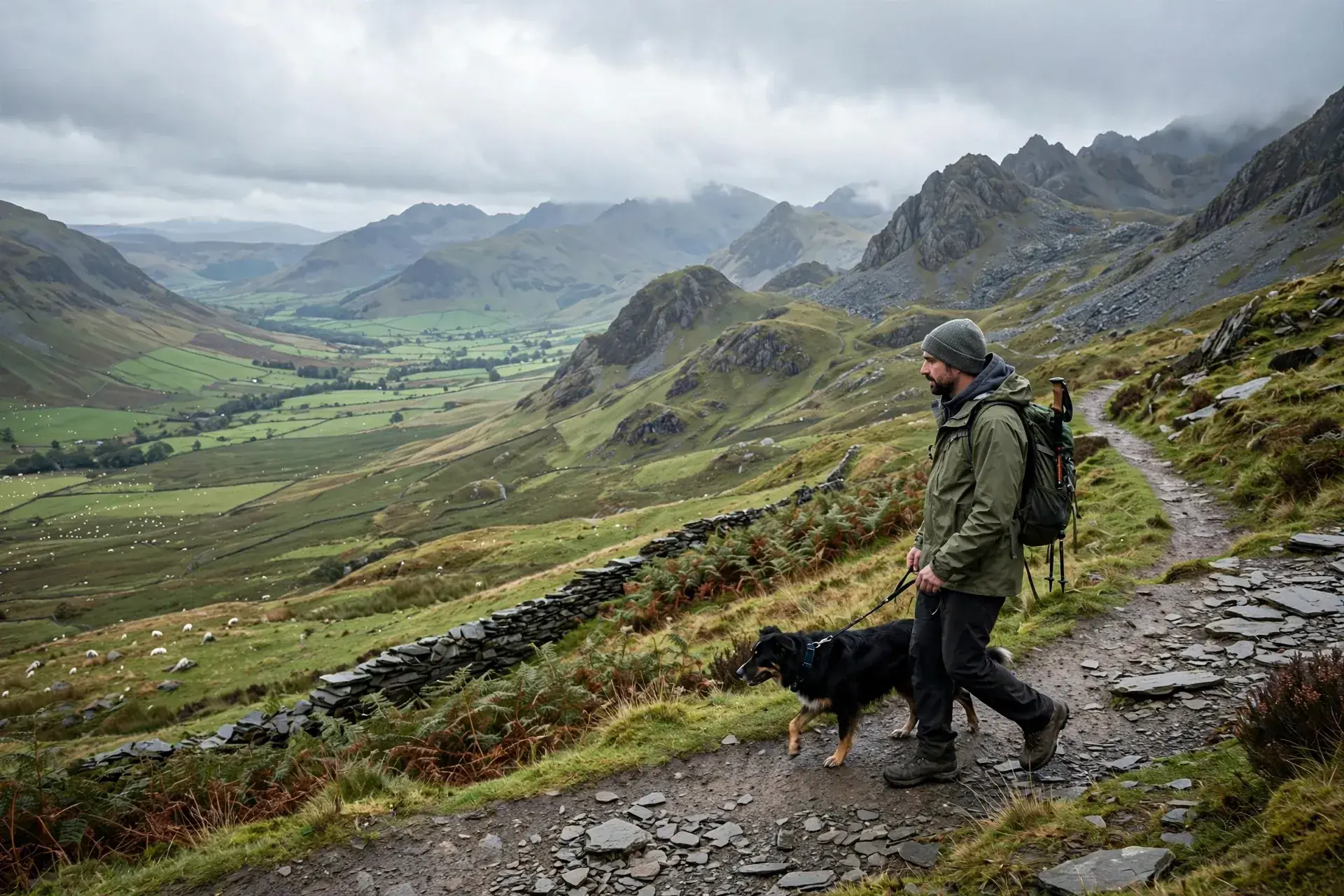
Cadair Idris dominates Dolgellau. The mountain rises to 893 metres just south of the town, and its long ridge is visible from almost every street. For dog owners the important distinction is between the summit and the foothills: the summit is a serious mountain day, while the lower paths offer most of the beauty with a fraction of the risk, and most dogs will enjoy the foothills more.
The two best-known ascents are the Minffordd Path and the Pony Path. Both climb steadily through woodland and open moorland before reaching rocky, exposed ground near the top, and both take several hours return. A fit, experienced mountain dog with good recall, strong paws and a owner who reads weather forecasts can enjoy either route on a clear, calm day. But the summit ridge is narrow in places, the scree is hard on paws, and there is no water on the upper mountain, so you must carry everything your dog needs. If there is wind, rain, low cloud or any doubt about the forecast, do not take a dog to the summit — turn back and enjoy the lower paths instead.
The foothill walks are where Dolgellau quietly excels. The paths around the lower slopes wind through oak woodland, past small waterfalls and along streams, with views back across the town and the estuary that get better with every hundred metres of height. The woodland is shady in summer, sheltered in wind, and full of smells that keep a dog happily occupied for hours. Shorter loops of one to two hours are possible from several starting points around the town, and you can build up to longer days as you learn how your dog copes with gradient. Check the official guidance before you travel for path conditions and any temporary closures, and take a proper map rather than relying on a phone signal that disappears in the valleys.
Mountain safety for dogs deserves a paragraph of its own. Carry at least a litre of water for the dog on a warm day, plus a collapsible bowl, food, a spare lead and a basic first-aid kit including a tick remover and a bandage. Watch for signs of overheating — heavy panting, drooling, reluctance to move — and for sore paws on rocky ground. Sheep and wild ponies graze the open moorland, so keep your dog on a lead until you are certain the ground ahead is clear. And have a turnaround rule agreed before you start: if the dog is struggling, if the weather turns, or if you reach a time limit, you turn back without argument. The mountain will still be there next year; a dog's confidence, once lost on a bad day, takes much longer to rebuild.
The old town on four paws
Dolgellau's old town is small enough to explore on foot in an hour and interesting enough to stretch into a morning. Start at the market square, where the streets narrow and the stone buildings press close together, and let the dog set the pace: this is a town built for sniffing. The listed buildings, more than two hundred of them, include old merchants' houses, chapels and shops with slate roofs and small-paned windows, and the whole centre has a grey-green harmony that photographs beautifully in morning light.
The Eldon Square area and the streets running down to the river are the heart of the walk. Cross the bridge over the Wnion and look back at the town from the far bank — it is one of the best views in Dolgellau, and a good place for a photograph with the dog sitting on the bridge wall, safely on a lead. From there, the streets climb gently back into town past cafes, bakeries and outdoor shops, and a dog that has already walked the estuary will usually settle under a table without fuss.
Shopping with a dog in Dolgellau is generally straightforward. Outdoor shops are used to muddy boots and wet dogs, and many smaller shops welcome dogs inside — ask at the door and respect a no if it comes. The weekly market, when it runs, is worth a look for local produce, but keep your dog close and on a short lead in a crowd, and avoid the busiest hour if your dog is nervous around people or other dogs. Street food and takeaway windows are a practical alternative to a sit-down lunch: you can eat on a bench by the river with the dog beside you, which suits many dogs better than a crowded cafe.
Two courtesies make the old town work for everyone. First, keep your dog on a lead on the pavements at all times — the streets are narrow, cars pass close, and a dog stepping into the road is a genuine risk. Second, remember that Dolgellau is a working town where people live and work, so keep barking down, pick up after your dog on every street, and do not let your dog jump up at passers-by. A well-behaved dog in Dolgellau will be welcomed back; a badly behaved one will be remembered for the wrong reasons.
Water: paddling, swimming and tides
Water is everywhere around Dolgellau, and dogs love it — but not all of it is safe. The Mawddach estuary is tidal, with strong currents, deep soft mud and fast-filling channels, and it is not a swimming spot. The same is true of the river near the railway bridge and the estuary mouth. Admire the water from the path, let your dog paddle at the edges of slow, shallow stretches, and keep swimming for safer places.
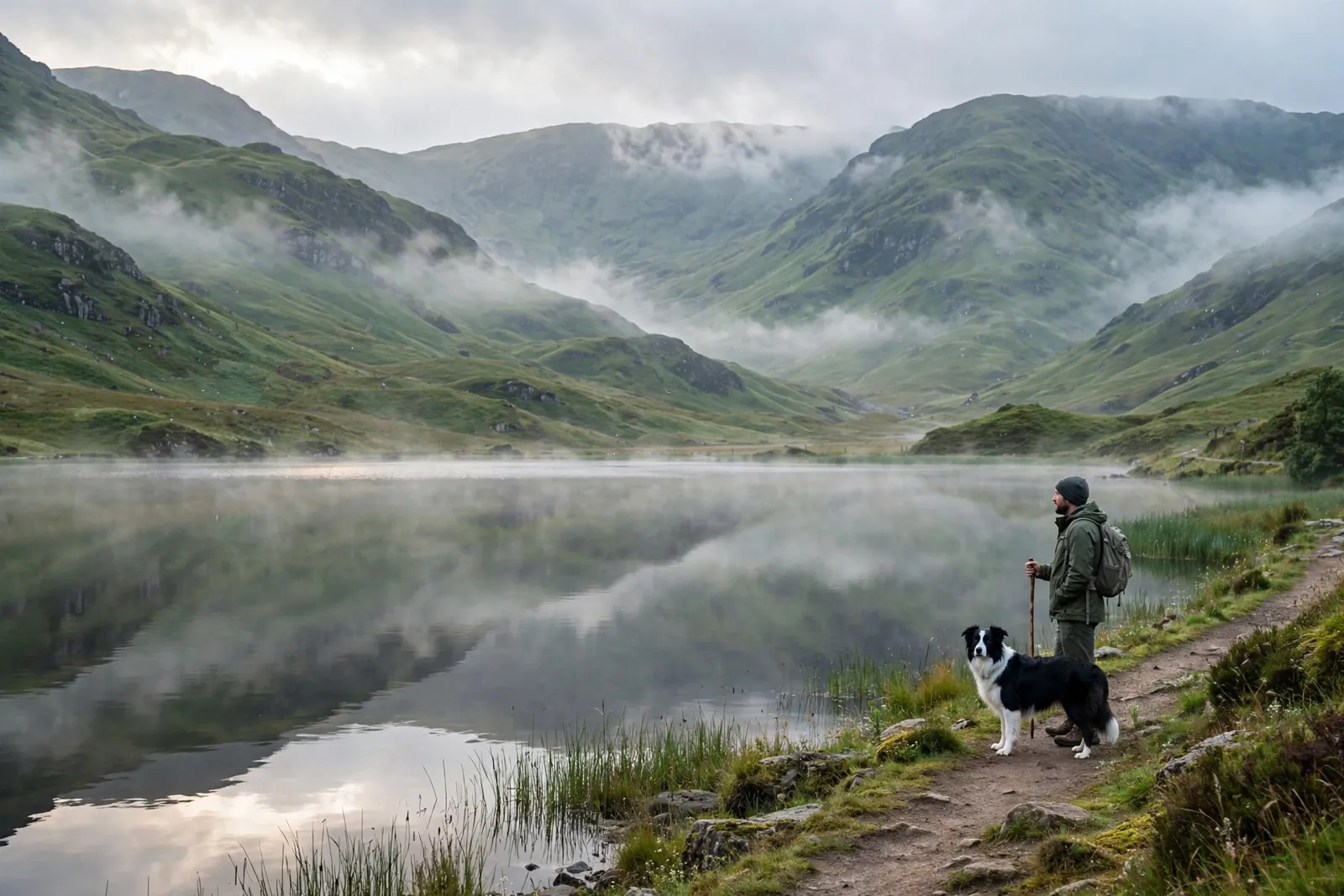
The best paddling is in the upper river, away from the tide. Slow, shallow stretches of the River Wnion and the smaller streams in the foothills offer clear water over gravel, where a dog can splash, drink and cool off safely. Look before you let them in: the water should be clear and moving slowly, with a gentle bank your dog can climb out on, and no sign of blue-green algae, which can be toxic. After heavy rain the rivers run fast and brown — skip the swim that day, because a strong current can sweep even a confident swimmer downstream.
A few water rules cover most situations. Never throw a ball into deep or fast water, and never let a dog chase a stick into a current. If your dog is not a strong swimmer, a buoyancy aid is sensible for river swimming. Rinse your dog with clean water after a swim, especially after estuary paddling, because salt and mud irritate skin and paws, and check between the toes for grit. And remember that river levels in Snowdonia can rise alarmingly fast after rain on the hills — a stream that was ankle-deep in the morning can be waist-deep by the afternoon, so check the official guidance before you travel and keep an eye on the sky.
The rainy-day plan
It rains in Dolgellau. Anyone who tells you otherwise has not spent much time in Gwynedd. The good news is that a wet day here is still a good dog day, as long as you plan for it rather than fighting it. The Mawddach Trail drains well and stays walkable in rain, the oak woods on the Cadair Idris foothills give real shelter, and the town's cafes and pubs are used to dripping dogs and wet coats.
Start with the gear. A waterproof coat for the dog is worth its weight on a wet week, especially for short-coated or older dogs that chill quickly. Bring two towels at least, plus a drying coat if you have one, and a waterproof mat for the car boot or the accommodation floor. Pack your own waterproofs too, because a miserable owner makes for a short walk, and a short walk makes for a restless dog. Gaiters or waterproof trousers keep the worst of the mud off, and a spare lead is useful when the first one is soaked through.
On a truly wet day, shorten the walk and lengthen the town time. A forty-minute estuary walk in the rain, followed by a long lazy lunch in a dog-friendly pub, followed by a short evening loop, gives most dogs a satisfying day without anyone getting cold or exhausted. Use the indoor time for training: a new trick, some scent games in the accommodation, or a chew that takes half an hour. Mental work tires a dog out almost as effectively as physical exercise, and it is much pleasanter than marching through a downpour for the sake of mileage.
Wet weather also means mud, and mud means preparation. The paths around Dolgellau are mostly well-drained, but field edges, woodland tracks and riverside meadows get churned up after rain. Check paws for cuts and thorns after every walk, wash mud off before it dries into a matted coat, and keep a towel by the door of your accommodation. If you are staying in a cottage or holiday park, ask where the dog-washing facilities are before you arrive — a wet, muddy dog and a cream carpet are a combination best avoided. Our guide to dog-friendly holiday parks in Wales covers drying space, boundaries and the booking questions that matter most when the weather turns.
Where to stay with a dog
Dolgellau works as a base for a night, a weekend or a week, and the right choice depends on your dog. The town itself has small hotels, guesthouses and bed-and-breakfasts, some of which welcome dogs — but policies vary room by room, so always confirm in writing that your specific room accepts your specific dog, and ask about any pet fee, size limit or rule about leaving the dog unattended. A guesthouse that welcomes a quiet older labrador may not welcome two young spaniels, and the only way to know is to ask.
Self-catering cottages are often the easiest option with a dog. Dolgellau and the villages around it have cottages of every size, from terraced town houses a minute from the trail to farm cottages up in the hills with enclosed gardens. An enclosed garden is worth paying extra for: it gives the dog a safe toilet area at night, a place to stretch after a car journey, and a secure spot while you unpack. Ask about the height and condition of the fence, whether the garden is genuinely private or shared, and whether there are livestock in neighbouring fields — a cottage that looks perfect in photographs can be a poor fit if the garden backs onto a sheep field with a low wall.
Holiday parks and campsites are another option, especially in the warmer months. Sites around southern Snowdonia offer pitches and lodges with varying dog rules, and the same checks apply: how many dogs, what fee, where the dog can walk at night, and whether the dog can be left alone in the unit. Campsites suit dogs that settle well outdoors, but a nervous dog in a busy site with neighbouring tents and unfamiliar smells may not sleep well — be honest about your dog when you book.
Wherever you stay, a few habits make the stay smoother. Bring the dog's own bed, so they have a familiar smell in a strange room. Feed at the usual times and keep the evening routine as close to home as possible. Photograph any existing damage when you arrive, and tell the owner about it straight away. And on the first evening, do a short familiarisation walk around the immediate area — the nearest toilet spot, the route to the car, the sound of the road at night — so the dog is not discovering everything in the dark at midnight.
Eating out with your dog
Dolgellau is a walkers' town, and its pubs and cafes are used to dogs — but "used to" is not the same as a guarantee, and policies change. Many pubs welcome dogs in the bar area and on outdoor terraces, and a few allow them in the dining room too, but always check the official guidance before you travel and ask at the door. A dog that has had a good walk, has a mat to lie on and a chew to work on will be welcome almost anywhere; a dog that is still full of energy, barking at every passer-by, will not.
Timing matters. Lunchtime on a sunny Saturday is the busiest time in town, and a nervous or reactive dog will find it hard. An early lunch, a late lunch or a weekday visit is calmer, and many pubs are quietest in the late afternoon, when walkers are heading home and the evening crowd has not yet arrived. If your dog struggles in busy rooms, takeaway is a perfectly good option: buy food from a cafe or bakery, find a bench by the river, and eat with the dog beside you.
Pack a small eating-out kit for the dog: a mat or blanket, a water bowl, a chew or a stuffed Kong, and a few treats for rewarding calm behaviour. Order your own food first, settle the dog, and only then relax — the first five minutes set the tone for the meal. If the dog cannot settle, do not force it: pay, take the food away, and try again another day. A short, successful pub visit builds confidence; a long, stressful one teaches the dog that pubs are places to dread.
Beyond the town, the wider area has plenty of dog-friendly eating options, from farm cafes to coastal pubs towards Barmouth. The same principles apply everywhere: check ahead, bring the mat, keep the dog on a lead indoors, and be ready to leave gracefully if it is not working. And if you are driving on to the coast or the Llyn Peninsula after Dolgellau, our North Wales road trip guide lists dog stops, base towns and drive times for the loop.
Practicalities: parking, vets and packing
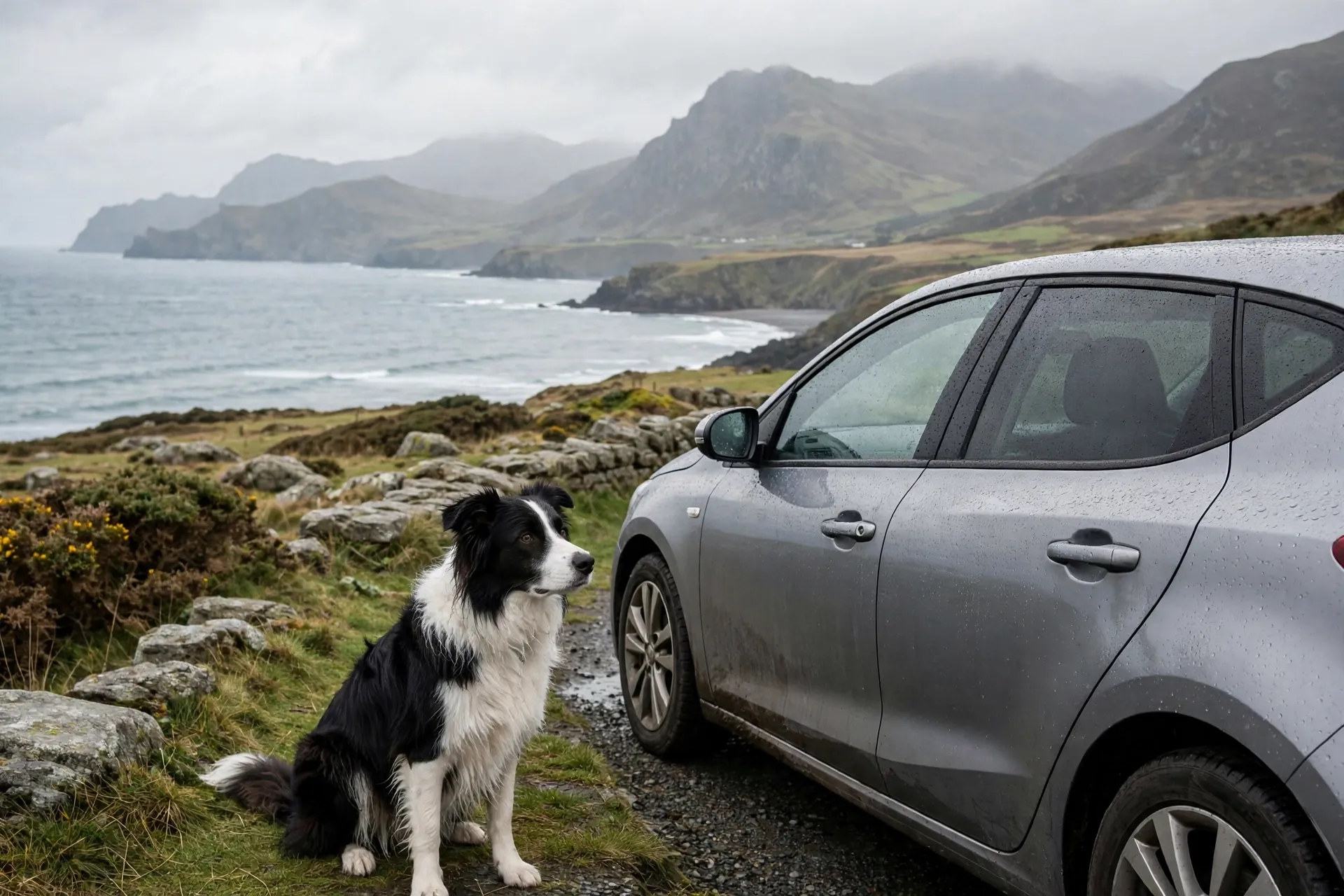
Parking in Dolgellau is straightforward but worth planning. The town has public car parks within a short walk of the trailhead, the river and the shops, and they fill up on summer weekends and bank holidays, so arrive early or be prepared for a short walk from the edge of town. Check the official guidance before you travel for current charges, time limits and payment methods, because machines and tariffs change. Never leave a dog in a parked car, even for a few minutes — a car in sun heats up fast, and a car in a Dolgellau car park is not a safe place for a dog at any time of year.
Know where the vet is before you need one. Dolgellau has veterinary services in and around the town, and the nearest out-of-hours cover may be in a neighbouring town, so save the number in your phone when you arrive and note the opening hours. Rural practices can be twenty minutes away and close early, and mountain walks take you further from help, so carry a basic first-aid kit and know how to use it. If your dog is on medication, bring more than you need for the trip, plus the prescription details, in case of delays.
Getting there is part of the plan. By car, Dolgellau is reached on the A470 and A487, and the drive through the hills is beautiful but winding — allow extra time if your dog gets carsick, and stop for a leg stretch on the way. By public transport, buses connect Dolgellau with Barmouth, Machynlleth and other towns, and the nearest railway stations are at Barmouth and Morfa Mawddach, with the Mawddach Trail itself linking the town to the railway. Dogs travel on buses and trains under operator-specific rules, so check the official guidance before you travel, and remember that a car makes the mountain trailheads and the remoter beaches much easier to reach.
The packing list for a Dolgellau trip is short but specific: a short lead and a long line, a harness your dog is comfortable in for steep ground, poo bags, a collapsible water bowl and at least a litre of water for mountain days, a tick remover, a towel and a drying coat, a waterproof for the dog, the dog's own bed, food measured out for the trip plus a day spare, and any medication. Add a map of the area — phone signal is patchy in the valleys — and a torch for dark winter evenings. Most of this fits in a small day pack, and having it ready means you can say yes to a walk whenever the weather clears.
A two-day Dolgellau plan
Day one is the estuary day. Arrive in the morning, park near the trailhead, and walk the Mawddach Trail for an hour or two, turning back when the dog tells you they have had enough. Return to town for a late lunch in a dog-friendly pub, with the dog settling on a mat under the table. Spend the afternoon wandering the old town slowly — the market square, the bridge over the Wnion, the shops — and finish with a short evening loop along the river before dinner. It is a gentle day that lets the dog learn the town without pressure.
Day two is the mountain day, if the weather allows. Start early, drive or walk to a foothill trailhead, and climb through the oak woods towards the lower slopes of Cadair Idris. Walk for two or three hours, with plenty of water stops and a long break at a viewpoint, then descend before the afternoon weather changes. If the forecast is bad, swap the mountain for a longer estuary walk or a drive to the coast at Barmouth, where the beach and the promenade offer a different kind of day out. Either way, finish in Dolgellau with an early dinner and an early night — mountain air is tiring, and a tired dog is a happy dog.
Staying longer? Add a third day for the coast: Barmouth beach, the harbour, and the walk back along the Mawddach Trail from the sea end, or a drive up the coast towards Harlech and its castle. A fourth day could take you north into the heart of Eryri, using our Snowdonia guide to choose a walk that suits your dog's fitness. The point of a Dolgellau base is that none of these days requires a long drive or a complicated plan — the town sits in the middle of it all, and the dog gets a different landscape every morning.
Practical questions
Before you go
Can dogs walk the Mawddach Trail off the lead?
Often, but not everywhere. The Mawddach Trail is a shared path used by walkers, cyclists and horse riders, and it crosses farmland where sheep graze near the path. Keep your dog on a lead through fields, near livestock and when passing other users, and only let them off where you have clear sightlines, a reliable recall and no animals nearby. A long line is a good compromise on the open estuary stretches.
Is Cadair Idris suitable for dogs?
For fit, sure-footed dogs, yes, on the right route. The Minffordd and Pony paths are the most commonly walked ascents, but both involve steep, rocky ground, scree and exposed ridges near the top. Short-legged, very young, elderly or unfit dogs should stick to the lower foothill paths around Dolgellau instead. Check the official guidance before you travel, carry water and food, and turn back early if your dog is struggling.
Where can my dog swim safely around Dolgellau?
The safest options are slow, shallow stretches of the River Wnion and the upper Mawddach away from the tidal estuary, where currents are strong and the mud is deep. Avoid fast water after rain, never let a dog swim near the railway bridge or the estuary mouth, and check the water for algae before letting them in. Always rinse your dog afterwards and check the official guidance before you travel.
Are dogs welcome in Dolgellau pubs and cafes?
Many are, especially in bar areas and on outdoor terraces, and Dolgellau has a long tradition of walkers with muddy dogs. Policies change and vary by venue, so check the official guidance before you travel and ask at the door rather than assuming. Bring a mat for your dog to settle on, keep them on a lead indoors, and avoid busy mealtimes if your dog is unsettled by crowds.
What is the best time of year to visit Dolgellau with a dog?
Late spring and early autumn are usually the best balance: long daylight, milder weather and quieter trails than the summer holidays. Summer brings warmer days but also midges, busy car parks and warm pavements. Winter can be wild and beautiful, but mountain weather changes fast and daylight is short, so plan shorter walks and check the forecast and the official guidance before you travel.
Is Dolgellau easy to reach without a car?
It is possible but takes planning. Dolgellau has bus services connecting it to Barmouth, Machynlleth and other towns, and the nearest railway stations are at Barmouth and Morfa Mawddach, linked by the Mawddach Trail. Buses and trains have their own rules for dogs, so check the official guidance before you travel, and note that a car makes the mountain trailheads much easier to reach.