This guide is independent and contains no paid placement. Prices in this guide are planning ranges, not live quotes: accommodation, transport and attraction prices change by date, demand and booking channel, so check the official guidance before you travel and confirm the all-in total before you pay.
For two nights, excluding long-distance travel, plan roughly £300 to £550 for a careful weekend, £550 to £900 for a comfortable weekend, and £900 or more for a premium weekend. Edinburgh rewards the lower tier unusually well, because its hills, parks, waterside paths and coastal walks are free, while its most expensive choices are the city-centre stay, festival dates and paid sights that a dog cannot enter.
Three weekend budgets at a glance
Edinburgh is a city where two visitors can have almost the same weekend for very different totals. One pair walks Arthur's Seat at dawn, eats soup and bread in a dog-friendly cafe, and sleeps in a simple self-catering flat a bus ride from Princes Street. Another pair books a central hotel, pays a nightly pet fee, takes taxis when the dog is tired, and buys tickets for every famous attraction on the list. Neither weekend is wrong, but only one of them was chosen deliberately. The purpose of this guide is to make that choice explicit before the money leaves the account.
The three tiers below assume two adults, one dog and two nights, and they exclude the long-distance journey to Edinburgh itself, because that cost depends so heavily on where you start. They include the stay, pet charges, local travel, food, one or two paid choices, and a small contingency. Treat them as planning ranges for a shoulder-season weekend. Festival weeks, Christmas markets and school holidays can push every tier higher, while a midweek break in January or February can pull the careful tier lower, at the cost of shorter daylight and colder walks.
The careful tier, roughly £300 to £550, works when the stay is self-catering or a simple guesthouse outside the immediate centre, the walks are free, food is mostly cafe lunches and one modest evening meal, and paid sights are limited to one genuinely wanted ticket or none at all. Local travel is by bus, on foot, or by a single taxi when the weather turns. This tier is not about hardship. It is about putting the free city first and treating paid extras as deliberate choices rather than default spending.
The comfortable tier, roughly £550 to £900, buys a better-located stay, a hotel or serviced apartment where the dog is genuinely welcome rather than merely tolerated, two evening meals out, and two or three paid sights or experiences chosen with the dog's rules in mind. It also leaves room for a taxi after a long hill walk, a wet-weather cafe stop that lasts an hour rather than ten minutes, and a small treat budget for the dog. Most first-time visitors who want a relaxed city weekend without constant arithmetic will land here.
The premium tier, roughly £900 or more, is a central hotel or apartment, a higher pet fee, restaurant meals, guided experiences, and the freedom to take a taxi whenever walking feels like a chore. It can be excellent value for a special occasion, for a group that needs step-free access and central convenience, or for a dog that copes badly with long bus journeys. It is poor value when the premium is spent on a room that the group barely uses because the dog keeps everyone outdoors all day. In Edinburgh, the outdoors is the attraction, so a premium room should be judged by its dog rules, its quiet hours and its nearby toilet walk, not only by its thread count.
Use the tiers as a decision tool, not a prediction. Write down your own version before you book, with one line for the stay, one for pet charges, one for local travel, one for food, one for paid sights, one for dog costs and one for contingency. If any line is blank, it is not free; it is unpriced. The most common Edinburgh surprise is not a single large bill. It is four small unpriced lines that arrive together: a pet fee, a taxi, a second coffee stop because the rain will not stop, and a ticket bought for a sight that the dog cannot enter.
How the season moves the price
Season is the single largest lever on an Edinburgh weekend budget, larger than the choice between a cafe lunch and a restaurant dinner, and larger than most pet fees. Edinburgh has a compressed peak: the summer festivals, the August Fringe, the Christmas markets and the New Year celebrations fill central stays and push prices up sharply, while the shoulder months and the quieter winter weeks leave the same streets calmer and the same rooms cheaper. The dog's experience moves with the price, but not always in the same direction. A quiet February street is easier for a nervous dog than a crowded August close, even though February is colder and darker.
Spring, from March to May, is often the best compromise. Daylight lengthens, gardens and parks come back to life, and stay prices are usually below the summer peak. Mud is still a factor on hill paths after rain, and a waterproof coat for the dog and a towel in the day bag are worth their weight. Late spring can already feel busy around the Royal Mile, but the crowds are manageable compared with festival season, and many dog-friendly cafes have outdoor seating again without the queues that define August.
Summer brings the longest days and the warmest walks, but also the highest prices and the hardest streets for dogs that dislike crowds, buskers, queues and heat. Festival season in August is a particular case: it can be thrilling for confident, social dogs and their owners, and exhausting for dogs that startle at noise, flashing lights or dense foot traffic. If the budget tier depends on a festival-week stay, check the total early, because the gap between a shoulder-season room and a festival-week room can exceed the entire food budget for the weekend. If the dog is the priority, a summer weekend outside festival dates usually buys a calmer city for less money.
Autumn, from September to early November, is the other strong shoulder season. The light over the city is superb, the hills are quieter, and stay prices soften after the summer peak. Rain becomes more likely, and the ground on Arthur's Seat and the Pentland Hills can be slippery after a wet spell, so footwear matters more than it does in July. Fireworks around early November deserve a specific check: a dog that is frightened by fireworks needs a quiet evening plan, a stay away from display sites, and a familiar indoor routine, and that planning cost is worth more than any saving on the room rate.
Winter, from late November to February, offers the lowest stay prices and the quietest walks, but it also shortens the day dramatically. A weekend built around daylight walks needs a tighter plan: an early hill walk, a late lunch indoors, and an evening that does not depend on a long outdoor stroll after dark. Christmas market season is the exception that proves the rule, because central stays and crowds spike again even though the weather is cold. For a dog that loves the cold and copes well with short days, winter can be the best-value Edinburgh weekend of the year. For a dog that needs long, slow sniffing walks to settle, winter requires more indoor enrichment and a stay with space to play, which may cost more than the room saving suggests.
Whichever season you choose, price the daylight, not just the room. A cheap winter stay that forces a rushed, muddy walk in the dark is not cheaper than a slightly dearer spring stay that allows a slow morning on the hills. Check sunset times, check the official guidance before you travel for seasonal access rules, and build the weekend around the light you actually have.
Choose the stay by tier, not by postcode
The stay is usually the largest single line in an Edinburgh weekend budget, and it is also the line where a dog owner can lose the most money by choosing on postcode alone. A central postcode guarantees a short walk to the Royal Mile, but it does not guarantee a quiet room, a nearby toilet walk, a lift that fits a large dog, or a breakfast room that welcomes dogs. A stay one or two bus stops out, in Stockbridge, Morningside, Leith or Bruntsfield, can offer a calmer street, a park within five minutes, and a meaningful saving, while still keeping the centre within easy reach. The right question is not how central the stay is, but how the dog's day works from its front door.
For the careful tier, self-catering flats and simple guesthouses are usually the best value, because they allow a supermarket breakfast, a packed lunch for a hill walk, and an evening meal cooked in rather than bought out. Check the pet rules with the same care as the price: some flats allow one dog, some charge per dog per night, some require the dog to be crated when left alone, and some prohibit dogs on furniture or in bedrooms. A low headline rate with a high pet fee, a cleaning surcharge and a damage deposit can cost more than a slightly dearer flat with a single transparent pet charge. Ask for the all-in total for the whole stay, in writing, before you pay a deposit.
For the comfortable tier, a dog-friendly hotel or serviced apartment with a clear dog policy is worth the extra money when it removes friction. Look for a ground-floor or lift-served room, a nearby green space for the first and last walks of the day, a breakfast area or terrace where the dog can sit with you, and staff who can tell you where the nearest vet and late-night toilet walk are without having to look them up. A hotel that welcomes dogs on paper but confines them to a single corridor and a car park is not a comfortable tier, whatever the price. Read recent dog-specific reviews and check the official guidance before you travel for any policy that has changed since the review was written.
For the premium tier, central convenience, space and quiet matter more than luxury branding. A larger apartment with a separate living area lets one person rest while the dog settles, and a quiet courtyard room beats a street-facing room above a late-night bar for a light-sleeping dog. If the group includes an older dog, a dog with joint problems, or a person with mobility needs, a step-free building, a lift, and a level walk to a park are worth paying for, because they determine whether the weekend is enjoyable or merely endured. Premium should buy ease, not just location.
Across all tiers, check the cancellation terms before you book. Edinburgh prices move with events, and a non-refundable rate that looks cheap in March can become expensive if the dog falls ill, the weather closes a route, or a family emergency changes the dates. A flexible rate that costs a little more is often the cheaper choice for a dog weekend, because dogs, like weather, do not respect non-refundable deadlines. Keep every confirmation email, including the pet-fee confirmation, until you are home.
Finally, consider the arrival hour. A stay with a late check-in, a long uphill walk from the bus stop, or a steep staircase can turn the first evening into a stressful one for a tired dog. Arriving in daylight, walking the immediate area before unloading everything, and locating the nearest green space on the first evening are small habits that protect both the budget and the dog's mood. A calm first night is worth more than a central postcode.
Build the weekend on free walks
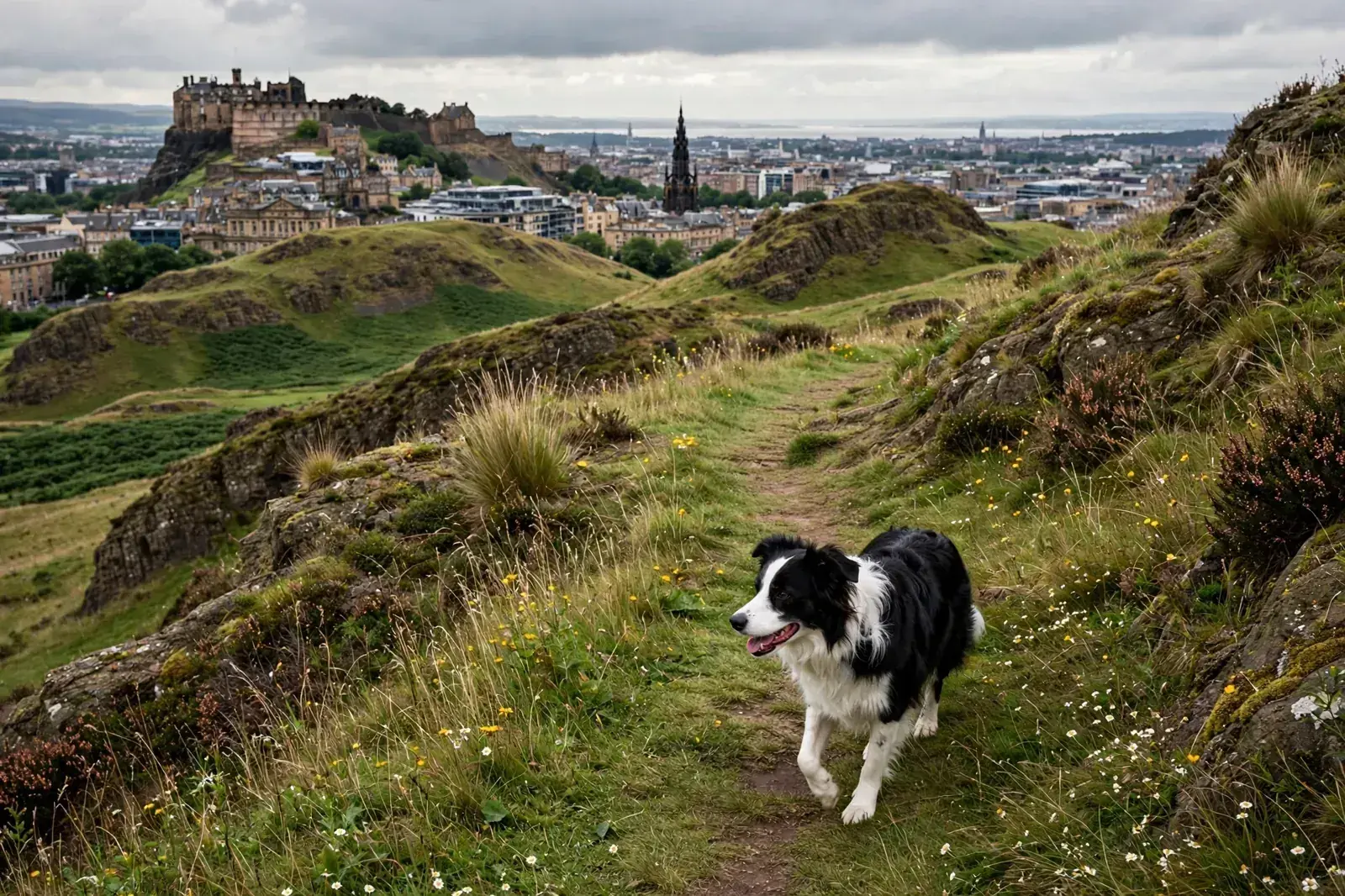
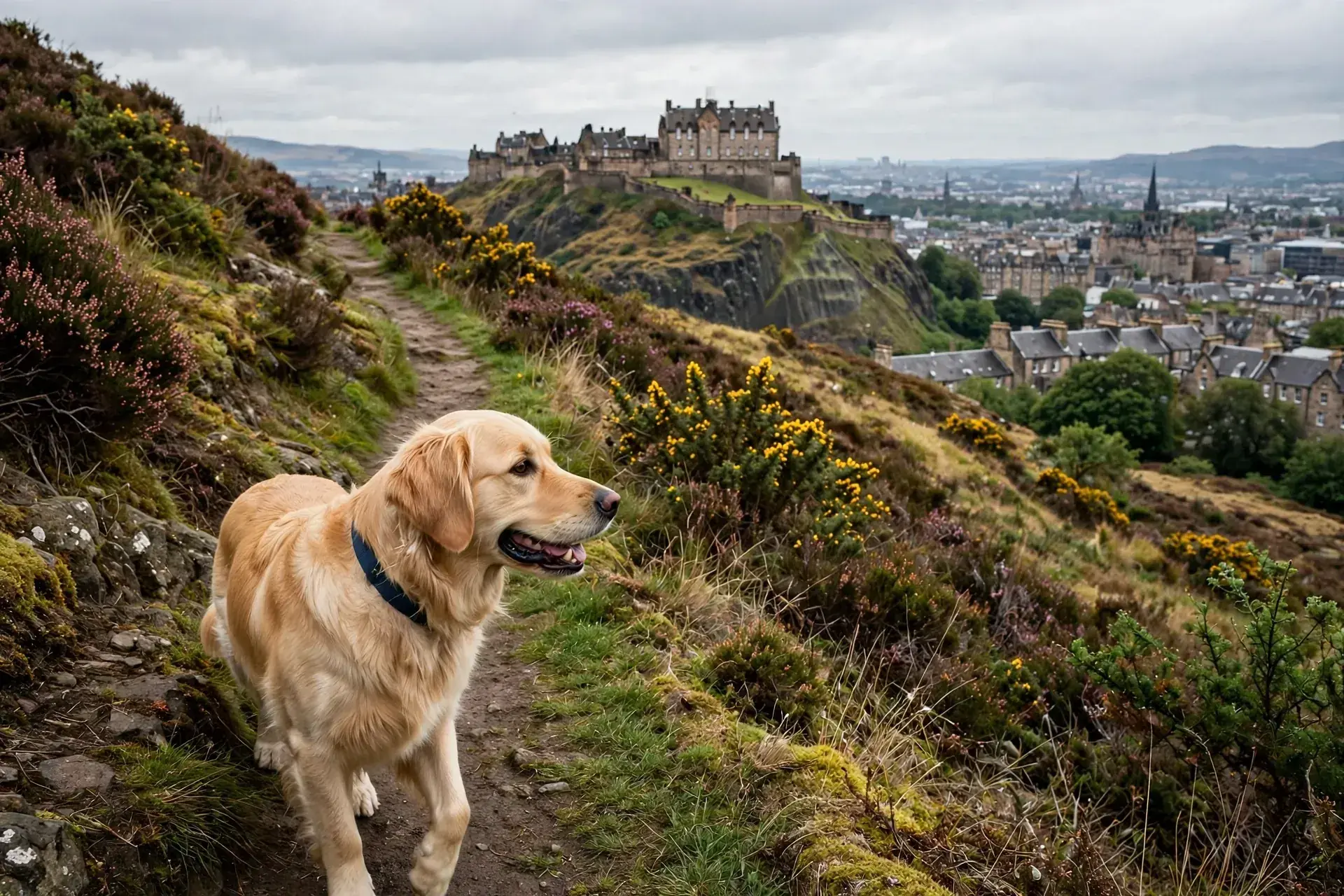
Edinburgh is unusually generous to the careful budget because its best outdoor experiences cost nothing to enter. Holyrood Park, with Arthur's Seat, Salisbury Crags and the surrounding grassland, offers a full morning of hill walking, city views and open running space, all within walking distance of the Old Town. The Water of Leith Walkway offers a gentler, greener alternative, following the river through woodland and residential streets, with cafes and benches along the way. The Meadows and Bruntsfield Links provide flat, open grass for a morning run and a picnic, while Portobello Beach and the Cramond causeway and promenade offer coastal air, sand and a longer, flatter walk for dogs that prefer the shore to the hills. These are the backbone of the weekend, not the filler between paid sights.
Plan the free walks by the dog, not by the postcard. Arthur's Seat is a proper hill, with steep sections, rocky steps and exposed wind, and it is a poor choice for a very old dog, a dog recovering from injury, or a brachycephalic breed on a warm day. The lower paths around Holyrood Park, the Radical Road viewpoints, and the flat stretches of the Water of Leith are better alternatives, and they still deliver the sense of a Scottish city walk without the climb. For a young, energetic dog, a longer route over the Seat and down through the park, followed by a rest in a cafe, is a satisfying morning. For a small dog, a shorter loop with frequent stops and a carrying option for the steepest sections is kinder and safer. Check the official guidance before you travel for path closures, livestock, and any seasonal rules about dogs on leads.
Use the free walks to set the rhythm of the day. A long morning walk tires the dog in the best way, which makes a quiet afternoon in a cafe or a museum visit by one member of the group far easier. A short evening walk after dinner, in a familiar park near the stay, settles the dog for the night far better than a second long walk in the dark. Dogs do not need a new walk every hour; they need one good walk, one familiar walk, and enough sniffing time to process the new smells of a city. Edinburgh's parks and waterside paths provide all three without a ticket.
Free does not mean unprepared. Carry water, a collapsible bowl, poo bags, a lead and a long line where the rules allow it, a towel for muddy paws, and a drying coat in wet weather. Edinburgh's weather can change within a single walk, especially on the hills, so a waterproof layer for the dog and a windproof layer for the owner are practical budget items: they prevent a taxi home, a ruined afternoon, or a cold, wet dog in a cafe. Sunscreen for pale-nosed dogs, shade breaks on warm days, and a check for ticks after woodland and grassland walks are part of the same preparation. Our Edinburgh with a dog guide covers hills, parks and a workable city plan in more detail, and it is worth reading alongside this budget guide before you choose which free walks to prioritise.
The financial point is simple: every free walk that genuinely satisfies the dog is a paid sight you do not need to buy. A weekend with two excellent free mornings and one carefully chosen paid experience usually feels richer than a weekend with four rushed paid sights and no time to enjoy the hills. Edinburgh's free city is not a consolation prize. It is the reason many dog owners return.
Choose paid sights like a dog owner
Paid sights are where an Edinburgh budget most often leaks, not because the sights are poor value, but because the dog's rules change the value of the ticket. Many of Edinburgh's most famous indoor attractions restrict dogs, admit only assistance dogs, or admit dogs only in certain areas. A ticket bought for a group that must then split, with one person waiting outside with the dog while the other goes in, is effectively a single-person ticket at a group price, plus the cost of the waiting time. Before buying any ticket, check the official guidance before you travel for current dog rules, and ask a blunt question: who actually gets to enjoy this, and for how long?
Edinburgh Castle is the clearest test case. It is a magnificent site, and for a visitor without a dog it can anchor a whole day. For a dog owner, the value depends entirely on the dog rules at the time of travel, the weather for the person waiting outside, and whether the group is happy to split. If the group has two adults who are content to take turns, and the dog is settled waiting in a quiet spot, the castle can still be worthwhile. If the group is a single adult with a dog, or a family that wants to stay together, the castle ticket is a poor use of the budget, and a free viewpoint from Calton Hill, the Castle Esplanade exterior, or the lower slopes of Arthur's Seat gives much of the visual reward without the ticket or the separation. This is not a judgement on the castle. It is arithmetic.
Apply the same test to every paid option. A bus tour that admits dogs can be good value for an older dog that enjoys watching the city from a seat, but poor value for a dog that barks at traffic or cannot settle in a moving vehicle. A whisky experience, a museum, a gallery or a historic house may admit dogs in some areas and not others, and the details matter more than the headline claim of being dog-friendly. A paid garden, a boat trip, or a guided walk that explicitly welcomes dogs can be better value than a famous indoor sight that merely tolerates them, because the dog is part of the experience rather than a problem to be managed outside it.
Set a paid-sights cap before you arrive, and let the dog's day enforce it. One paid sight per day is a sensible maximum for most dogs, and many weekends are better with one paid sight in total, chosen because the whole group wants it and the dog can genuinely take part or rest comfortably nearby. Spend the saving on a better stay, a longer cafe lunch, or a taxi home when the dog is tired. The memory of a relaxed afternoon on the Water of Leith lasts longer than the memory of a rushed ticket, and it costs nothing.
Booking timing also affects the price. Some attractions offer cheaper off-peak tickets, family tickets, or advance-booking discounts, while others charge the same price on the day. Check whether a ticket is timed, whether it can be changed, and whether a refund is possible if the dog is unwell or the weather closes an outdoor element. A non-refundable ticket bought months ahead is a gamble, not a saving, when the dog's health and Edinburgh's weather are both unpredictable. Keep the paid list short, book the one sight that matters, and leave the rest of the weekend open.
Getting there without paying twice
Local travel in Edinburgh is compact enough that the budget can stay small, but it is easy to pay twice: once for a car, and again for parking, or once for a bus pass that the group barely uses because every walk starts from the front door. Edinburgh's centre is walkable, its bus network is extensive, and its hills reward walking, so the cheapest local travel plan is usually a mix of walking and occasional bus journeys, with a taxi held in reserve for rain, tired legs, or a late evening. Price that reserve into the budget rather than pretending it will not be needed.
Buses are the workhorse of the careful and comfortable tiers. A day ticket or a capped fare can cover several journeys, including the trip to Portobello, Cramond or the Botanic Gardens, without the stress of city-centre parking. Check the official guidance before you travel for current dog rules on buses, because rules can differ by operator and by service, and a dog that travels well on one route may be refused on another. Travel outside peak hours when possible: a quiet bus is easier for a nervous dog, easier for the owner carrying a bag and a lead, and more pleasant for fellow passengers. Keep the dog close, on a short lead, and off the seats unless the operator explicitly allows it.
Taxis and ride-hailing services fill the gaps that buses and walking cannot: a wet evening after a long walk, a tired older dog, a stay that is uphill from the bus stop, or a journey to a vet. Not every driver accepts dogs, so allow extra time, confirm acceptance before the dog jumps in, and carry a blanket to protect the seat. A single taxi across the city is a modest cost; three taxis a day, every day, quietly becomes a second stay. Use taxis as a contingency, not as the default, and the budget will thank you.
Driving to Edinburgh raises a different set of costs: fuel, motorway services, city-centre parking charges, and the risk of a parking fine in an unfamiliar zone. A car is useful if the weekend extends into the Pentland Hills, the Fife coast, or a wider Scottish trip, but for a city-only weekend it is often an expensive way to transport a dog that would rather walk. If you do drive, choose a stay with parking included or nearby, check the parking rules for the streets around the stay, and plan to leave the car parked for the weekend rather than moving it between sights. A car that sits still is cheap; a car that circles for parking is not.
For visitors arriving by train, Edinburgh Waverley and Haymarket stations place the city within walking distance of many stays, and the train journey itself can be part of the dog's day if the dog travels well. Check the train operator's dog rules, book a seat where possible, and carry water and a familiar blanket for the journey. The saving is not only financial: arriving by train avoids parking costs and leaves the weekend car-free, which suits Edinburgh's compact centre. Our broader weekend breaks with dogs guide sets out a low-stress 48-hour plan that pairs well with this Edinburgh budget, especially for first-time city breaks.
Food that fits the tier
Food is the most flexible line in the budget, and therefore the easiest to control without spoiling the weekend. Edinburgh has dog-friendly cafes, pubs and restaurants across every price range, from soup and bread in a Stockbridge cafe to a full evening meal in the Old Town. The mistake is not choosing a cheap or expensive meal; it is drifting into expensive meals by default because no one planned lunch, the dog is tired, and the nearest restaurant happens to be the dearest one on the street.
For the careful tier, plan one cafe lunch and one cooked or supermarket evening meal per day, with a single modest restaurant meal as the weekend treat. Self-catering makes this easy: a supermarket shop on arrival, breakfast in the flat, a packed lunch for a hill walk, and a simple evening meal cooked together. Dog-friendly cafes are the social centre of this tier: they welcome the dog, they serve filling food at lunch prices, and they provide a warm, dry stop when the weather turns. Look for cafes with space under the table, water bowls, and staff who greet the dog rather than merely tolerating it.
For the comfortable tier, two evening meals out and one special lunch are realistic, provided the restaurants are chosen in advance and checked for dog rules. A restaurant that welcomes dogs in the bar but not the dining room, or only at lunchtime, can ruin an evening if the group discovers the rule at the door. Book ahead, confirm the dog policy when booking, and choose restaurants near the stay so that a tired dog does not face a long journey home after dinner. A restaurant meal that ends with a short, familiar walk home is worth more than a famous meal that ends with a taxi queue in the rain.
For the premium tier, food can be a central pleasure of the weekend, with tasting menus, afternoon tea, or a special-occasion dinner. Even here, the dog's rules matter: a long, formal meal is hard work for a young dog, and a restaurant that does not welcome dogs forces a split evening or a stay in the room. Premium food spending works best when the dog is settled, the meal is booked at a dog-friendly venue, and the evening ends early enough for a calm last walk. A single excellent meal, enjoyed together, beats two expensive meals that the dog endured.
Across all tiers, carry dog treats, water, and a small snack for the owner on every walk. A hungry owner and a hungry dog make poor budget decisions, and a planned cafe stop is cheaper than an unplanned restaurant meal chosen in a hurry. Edinburgh's bakeries, delis and markets also offer excellent picnic food for a hill or coastal walk, and a picnic on Calton Hill or Portobello Beach can be the most memorable meal of the weekend, at a fraction of a restaurant price.
The dog-specific lines in the budget
Dog-specific costs are small individually and significant together, which is why they deserve their own section rather than being absorbed into the stay or food lines. The largest is usually the pet fee, charged by hotels, guesthouses and self-catering providers. Fees vary widely: some stays charge a flat fee per stay, some charge per dog per night, and some charge a cleaning fee on top. Two dogs can double the charge, and a fee that looks modest per night can add £40 to £100 or more over two nights. Always ask for the all-in pet total, including any cleaning charge, damage deposit, or extra for a second dog, and compare stays on that total, not on the room rate alone.
Food, treats and waste bags for the weekend are minor costs if packed from home, but they become noticeable if bought at city-centre prices. Pack the dog's usual food in measured portions, plus a day's extra in case of delays, and bring familiar treats for training and settling in new places. A sudden change of food on a city weekend is a common cause of an upset stomach, which can turn a pleasant walk into a vet visit. Familiar food is both a health choice and a budget choice.
Equipment is a one-off cost that should be bought before the trip, not during it. A well-fitting harness, a lead and a long line, a waterproof coat, a drying towel or coat, a travel bed or blanket, and a collapsible bowl are the core kit for an Edinburgh weekend. Buying a replacement lead or coat in a city shop is possible, but it costs more and the fit may be wrong. Check the kit before departure: a harness that rubbed on the last walk will rub worse on Arthur's Seat, and a lead with a faulty clip is a safety risk on a busy street.
Health and contingency costs deserve a dedicated pot, not a vague hope. A small vet fund, enough to cover a consultation and basic treatment, is prudent for any dog weekend, especially for older dogs, dogs with ongoing conditions, or dogs that eat things they should not on walks. Locate the nearest vet and an emergency vet before arrival, save the numbers in a phone, and check the official guidance before you travel for any local risks, such as ticks, algae in water, or seasonal hazards on the walks you plan. Travel insurance that covers the dog, and pet insurance with third-party liability, are worth checking before a city weekend where the dog will meet strangers, children and other dogs daily.
Finally, budget for the dog's comfort, not only the dog's costs. A taxi home when the dog is tired, a cafe stop that lasts an hour because the dog needs to settle, or a quieter stay that costs a little more but lets the dog sleep properly, are all money well spent. A dog that sleeps well walks well, and a dog that walks well makes the whole weekend cheaper, because the group does not need to pay for taxis, rushed meals and replacement plans. The cheapest Edinburgh weekend is often the one where the dog was comfortable enough to enjoy the free city.
A weekend plan that spends where it counts
A budget is easier to keep when the weekend has a shape, so here is a plan that follows the tiers in this guide rather than a list of famous sights. It assumes arrival on Friday afternoon, two nights in a stay with a nearby park, and departure on Sunday afternoon. It can be scaled up or down: remove the paid sight for the careful tier, add a second evening meal for the comfortable tier, or upgrade the stay and the food for the premium tier, without changing the shape.
Friday afternoon is for arrival, not for sightseeing. Walk the immediate area around the stay, find the nearest green space, buy supermarket supplies if self-catering, and eat a simple evening meal. A calm first evening, with a familiar bed and a short last walk, sets up the whole weekend. Groups that try to fit in a castle, a museum and a restaurant on arrival evening usually pay for it in a restless dog and a tired group the next morning. Edinburgh will still be there on Saturday.
Saturday is the main day, and it should start with the best free walk. For a fit dog, that means Holyrood Park and Arthur's Seat in the morning, with a cafe lunch afterwards. For a less mobile dog, it means the Water of Leith, the Meadows, or a coastal walk at Portobello, with a picnic or a cafe stop. The afternoon is for the one paid sight, if any, or for a second gentle walk and a dog-friendly cafe. The evening is for a planned meal, booked in advance, followed by a short, familiar walk home. One excellent day, with rest built in, beats two frantic days.
Sunday is for a slow morning and a second free walk, not for a last-minute dash to another paid sight. A walk on Calton Hill, a stroll through Stockbridge, or a return to a favourite park gives the dog a satisfying final outing and the group a relaxed departure. Leave time for packing, for cleaning the stay to the standard the pet policy requires, and for a final check that nothing belonging to the dog has been left behind. A rushed Sunday departure, with a muddy dog in a clean car, is a budget cost in cleaning and stress that a slower morning avoids.
If the weekend extends to a third night, use the extra day for a wider Scottish gateway trip: a train or bus to the Fife coast, a walk in the Pentland Hills, or a day in a smaller Scottish town. Edinburgh works well as a gateway because its transport links, its range of stays, and its free walks make it a practical base, but the gateway day should be priced separately, with its own transport and food lines. A gateway trip that is added without a budget line is how a careful weekend becomes a comfortable one without anyone noticing.
Keep a running total during the weekend, not just before it. A simple note on a phone, with one line per spending category, takes a minute a day and prevents the end-of-weekend surprise. If the paid-sights line is already spent by Saturday lunchtime, the Sunday plan should be free walks and a picnic, not another ticket. If the food line is under budget, the saving can fund a taxi home in the rain, which is a better use of the money than a second dessert. Budgeting during the trip is not miserliness; it is how the weekend stays enjoyable.
Budget traps and a contingency pot
Every Edinburgh dog weekend has traps, and most of them are predictable once you know what to look for. The first trap is the headline room rate without the pet fee, the cleaning charge, the parking charge and the breakfast supplement. The second trap is the paid sight that the dog cannot enter, bought before the dog rules were checked. The third trap is the festival or market date that was not in the plan, which doubles the stay price and fills the streets with crowds that a nervous dog finds hard. The fourth trap is the weather: a weekend planned entirely outdoors, with no indoor backup, becomes a weekend of taxi fares and cafe bills when the rain arrives. The fifth trap is the tired dog: a dog that has walked too far, too fast, or too high needs a taxi, a rest day, or a vet visit, all of which cost more than a slower plan would have.
The antidote to all five traps is a contingency pot, held separately from the main budget lines. A pot of £50 to £100 for a careful weekend, £100 to £150 for a comfortable weekend, and £150 or more for a premium weekend covers a taxi, a wet-weather cafe stop, a replacement lead, extra drying time, or an unplanned vet consultation. If the pot is not spent, it is a saving, not a loss. If it is spent, it prevents a small problem from becoming a large bill. Keep the pot in cash or on a separate card if possible, so that it is visible and not silently absorbed into restaurant spending.
Other traps are smaller but just as common. A stay that requires the dog to be left alone in an unfamiliar room can lead to barking complaints, a cleaning charge, or a curtailed stay. A walk that starts too late in winter can end in darkness on a hill path. A restaurant that was assumed to welcome dogs can turn the group away at the door, forcing a last-minute takeaway at a higher price. A car parked in the wrong zone can earn a fine that exceeds the day's food budget. Each of these is avoidable with a single check before departure: the pet policy in writing, the sunset time, the restaurant dog rules, and the parking rules for the stay.
Finally, remember that the cheapest choice is not always the best-value choice for a dog. A stay that saves £30 but adds a 40-minute bus journey each way, a walk that saves a ticket but exhausts an older dog, or a meal that saves money but leaves the dog waiting outside in the rain, all cost more in wellbeing than they save in pounds. Edinburgh rewards dog owners who spend deliberately: on a stay that works from its front door, on free walks that genuinely satisfy the dog, on one paid sight that the whole group can enjoy, and on a contingency pot that turns surprises into inconveniences rather than crises. That is the real Edinburgh weekend break with dog cost, and it is a cost worth planning.
Check the official guidance before you travel for every rule that affects your dog, from park access and bus rules to attraction policies and seasonal closures. Prices, policies and access rules change, and a guide, however careful, cannot replace the official source on the day of travel. With the tiers in this guide, a free-walk backbone, and a contingency pot, an Edinburgh weekend with a dog can be both affordable and genuinely enjoyable, in any season.
Practical questions
Before you go
What is a realistic budget for an Edinburgh weekend with a dog?
A planning range for two nights, excluding long-distance travel, is roughly £300 to £550 for a careful weekend, £550 to £900 for a comfortable weekend, and £900 or more for a premium weekend. The biggest variables are the season, the stay, and how many paid sights you choose. Free walks keep the lower tier realistic, while pet fees, city-centre stays and festival dates push the total up.
Are Edinburgh's best dog walks free?
Many of the most rewarding walks cost nothing to enter, including Holyrood Park, the Water of Leith, the Meadows and the coastal paths at Portobello and Cramond. Check the official guidance before you travel for seasonal restrictions, livestock, nesting birds and any temporary closures, and keep to marked paths where the guidance asks you to.
How do pet fees change an Edinburgh weekend budget?
Pet fees are often charged per dog per night or per stay, and they can add a noticeable amount over two nights, especially for two dogs. Always ask for the all-in pet total in writing, including any cleaning charge or deposit, and compare that total with the room rate rather than treating the headline room price as the full cost.
Is Edinburgh cheaper with a dog in winter or in summer?
Winter and the shoulder months are usually cheaper for stays, but daylight is shorter, weather is less predictable, and some seasonal services run less often. Summer and festival dates bring the highest stay prices and the busiest streets, which can be hard work for a nervous dog. Spring and autumn often give the best balance of price, daylight and calmer streets.
Should we pay for Edinburgh Castle if our dog cannot go inside?
That depends on how your group handles a split visit and whether the castle experience is a priority for the non-dog members of the party. If only one person would go in while the other waits outside with the dog, the value drops sharply. Check the official guidance before you travel for current dog rules, then compare that single ticket against a free viewpoint, a dog-friendly museum or a longer waterside walk.
What budget mistakes do dog owners make most often in Edinburgh?
The common mistakes are booking a city-centre stay without checking the pet fee, underestimating hill and pavement walking time for an older dog, and filling the weekend with paid sights that do not admit dogs. A second mistake is leaving no contingency for taxis, a wet-weather cafe stop, extra drying time or an unplanned vet visit.