This guide is independent and contains no paid placement. If affiliate links are added later, they will be clearly marked and will not change our editorial checks.
Eyemouth works best when you plan around the working harbour rather than against it. Walk the beach early, use the quayside at slack times, keep dogs on a lead on the cliff path, and treat Gunsgreen House and the museum as split visits. Dogs are allowed on Eyemouth Beach all year, and the 6 km coastal walk to St Abbs is the headline day out.
Let the harbour set your timetable
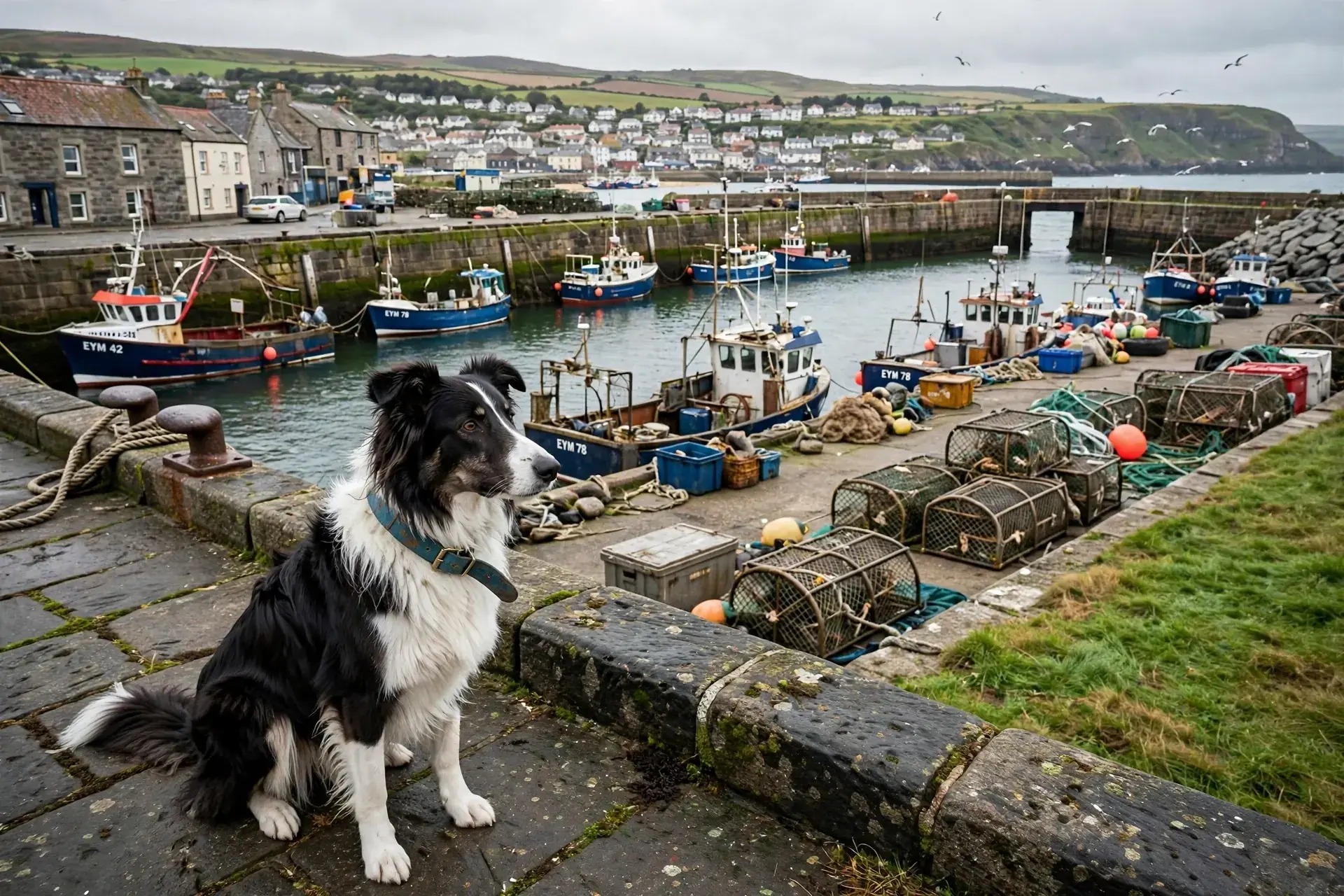
Eyemouth is not a resort that happens to have a harbour. It is a working fishing port, and the harbour still decides what the town feels like at any given hour. Boats come and go with the tide rather than with the tourist day, fish is landed and loaded, lorries reverse down to the quay, gulls argue over the catch, and the smell of diesel and salt hangs over the water. For a dog owner, that is not a drawback. It is the single most useful piece of planning information in this guide, because once you understand the harbour's rhythm you can fit a dog's day around it instead of colliding with it.
The practical point is simple. At low water the boats sit on the harbour bed or rest against the quay, the working areas are quieter, and the quayside is an easy, flat stroll for a dog on a lead. As the tide turns and boats start moving, the harbour becomes busier and noisier: engines, ropes, reversing vehicles and people carrying crates. A nervous dog will notice the difference immediately, and even a confident dog needs a shorter lead and closer attention when a forklift or a fish lorry is manoeuvring. None of this means avoiding the harbour. It means choosing your moment. An early-morning loop around the quays, before the day's work peaks, gives you the harbour at its calmest and the light at its best. A midday visit is better spent on the beach or up on the coastal path, and the quayside is best revisited in the late afternoon, when the working day winds down and the cafes fill with people rather than crates.
Watch the tide for a second reason too: it changes the beach. Eyemouth Beach is a small, shallow sandy bay of about 0.3 km, tucked beside the town, and at high tide the sand narrows considerably. At low tide it opens up into a broad, flat expanse that is ideal for a dog that likes to run, paddle and sniff along the waterline. The difference between a cramped high-tide walk and a generous low-tide run is the difference between a frustrated dog and a tired, happy one. Check the tide times the evening before you travel, and again on the morning of your visit. Plan the big beach session for the falling or low tide, and keep the high-tide hours for the town, the museum, lunch or the cliff walk, where the tide matters far less.
There are a few harbour manners worth teaching before you arrive. Keep dogs on a lead on the quayside at all times. The edge of a working quay is a genuine drop into deep water, and a dog chasing a gull or a fish smell can be over the edge before you have time to react. Do not let dogs drink from harbour puddles or scavenge fish offal, bait or discarded lines; hooks, monofilament and fish bones are all real hazards, and gulls will defend a scrap aggressively. Keep clear of mooring ropes and working gear, and never let a dog run underneath a boat being lifted or a crane in use. These are not fussy rules. They are the same common sense that keeps fishermen safe, applied to an animal that cannot read the signs.
Finally, remember that the harbour is also the town's front room. The bronze sculpture Widows and Bairns, by Jill Watson, stands on the promenade as a memorial to the 1881 Eyemouth disaster, when a hurricane devastated the fishing fleet and 189 lives were lost around this coast. It is a sombre, beautiful piece of public art, and dogs on a lead are fine beside it. It also explains something about the place: this is a community shaped by the sea, proud of its fishing past and present, and a visitor with a dog is welcome here as long as the dog behaves like a guest in a working place rather than a tourist attraction in its own right.
Eyemouth Beach: the rules and the routine
Eyemouth Beach is the reason many dog owners choose this town over its bigger neighbours. It is sandy, sheltered by the harbour wall, a short walk from parking and cafes, and, as far as the published information goes, dogs are allowed on it all year round. No council dog ban has been found for this beach, which puts it in the same generous category as most Scottish beaches: Scotland has no system of council dog orders like England's, and no on-the-spot fines for dog-free areas. Instead, the Scottish Outdoor Access Code applies, and it asks for something more useful than a ban: dogs under proper control, on a short lead or close at heel near other people, and kept close during the bird nesting season, usually April to July. Check the signs on the day, because local arrangements can change, but the year-round position is the one to plan around.
The beach itself is small and easy to read. A promenade runs along its back, with a car park, public toilets and a Co-op supermarket close by, so a beach morning needs very little logistics. The sand is clean and firm enough for a good run at low tide, with rock pools at the edges that reward a slow sniffing walk. The water is the cold North Sea, so most dogs will paddle rather than swim for long, and that is fine: a short paddle followed by a run on dry sand is a better workout than a long swim in cold water for most breeds. The bathing water is monitored, and bathing is not advised during or for one to two days after heavy rainfall, so after a storm it is sensible to keep a dog out of the water and stick to the sand.
What makes the beach work well for dogs is its shape. The harbour wall shelters it from the worst of the wind, so on a breezy day the beach can feel noticeably calmer than the cliff path above it. That matters for small dogs and for older dogs that chill quickly. The beach is also enclosed enough that a dog on a long line can range without vanishing over a dune system, and open enough that you can see other dogs coming from a long way off. That visibility is a gift for owners of reactive dogs: you can spot a loose dog early, recall yours, and move to the far end of the sand before the two meet.
There are still courtesies that keep the beach open and friendly. Pick up after your dog every time, including at the waterline where the tide will not reliably do the job for you. Keep dogs off the promenade seating and out of the way of families with small children, and recall your dog promptly if it approaches someone else's picnic. During the nesting season, keep dogs on a short lead near the shore and away from any roped-off or signed areas. The beach is popular with families in summer, so the early morning and the evening are the dog hours in practice, even though the rules allow dogs all day. Arrive before nine in July and August and you will have the sand largely to yourselves; arrive at midday and you will be sharing it, politely, with everyone else.
After the beach, the routine matters as much as the walk. Rinse sandy paws before the dog climbs into the car, especially if you are heading straight onto the coastal path, where grit in a paw can turn into a limp by the second hour. Towel the dog down on the promenade rather than in a cafe doorway, and carry a spare towel and a change of lead: a wet, sandy lead is unpleasant to hold for a whole afternoon. If your dog has been swimming, watch for the shivering that follows a cold dip, and walk the dog back to the car at a steady pace rather than standing around chatting in the wind. A drying coat is worth its weight on this coast, and in winter it is not optional.
The Berwickshire Coastal Path
The Berwickshire Coastal Path is the walk that justifies the trip. It runs for about 48 km (30 miles) from Cockburnspath in the Scottish Borders to Berwick-upon-Tweed in England, waymarked with bronze markers, and it passes through some of the most dramatic cliff scenery on the east coast. Eyemouth sits near the southern end of the route, and the stage that matters most for a dog owner is the one north from Eyemouth to St Abbs: about 6 km, roughly two hours of walking, with around 136 metres of ascent, passing Hairy Ness, Killiedraught Bay and Coldingham Bay on the way. It is the most popular stage of the whole path, and the shortest, which makes it the natural choice for a day walk with a dog.
Start at Eyemouth Harbour and follow the waymarkers north-west out of town. The first stretch climbs away from the harbour and onto the cliff tops, and from there the path keeps close to the edge, with long views back over the town and forward towards St Abbs Head. The walking is moderate rather than easy: there are steps, rough trodden paths, short steep climbs and descents, and sections where the path narrows. A fit adult dog will manage it comfortably. A puppy, a very small dog, an arthritic older dog or a dog that pulls hard on the lead will find it demanding, and the honest choice for those dogs is a shorter out-and-back from Eyemouth to the first viewpoint rather than the full stage.
Keep dogs on a lead on the cliff sections. This is not a suggestion to negotiate with your dog's recall. The drops are real, the wind can gust without warning, and a dog chasing a rabbit, a seabird or another dog can be over the edge in seconds. The path also crosses farmland and passes through fields with livestock, and the local guidance is clear: avoid taking dogs into enclosed fields with lambs, calves or foals, and keep dogs under close control around sheep and cattle at all times. Cows can perceive a dog as a threat, particularly when calves are present, and a loose dog in a field of cattle is a danger to the dog, the cattle and you. If you meet livestock on the path, put the dog on a short lead, walk calmly and steadily through, and do not let the dog run ahead or lag behind to investigate.
The halfway reward is Coldingham Bay, a broad sandy beach that sits below the village of Coldingham and makes a natural rest stop. The path drops down to the sand, and dogs can have a drink, a paddle and a run before the climb back up to the cliff top. There is a caravan park near the bay and a cafe in the village in season, but do not rely on either for water: carry enough for the dog for the whole walk, and carry a collapsible bowl. There is no reliable drinking water for dogs along the cliff sections, and a dog that has been climbing in the sun will need more than you expect. Two litres for a medium dog on a warm day is a sensible minimum, plus your own supply.
Seabirds are the other reason to keep a dog close on this stretch. Much of this coastline is protected as a Special Protection Area, and St Abbs Head is a national nature reserve owned by the National Trust for Scotland, famous for its seabird colonies. During the breeding season, roughly April to July, kittiwakes, guillemots, razorbills and puffins nest on the cliffs, and a dog running loose near the edge can disturb birds that have flown thousands of miles to breed here. Keep dogs on a lead near the colonies, keep them away from the cliff edge, and do not let them chase birds on the beach. Seals are also regularly seen from the path, particularly around St Abbs Head, and a dog that barks at seals from the cliff top is a nuisance to everyone on the path.
For the return, you have three sensible options. The fittest dogs can walk back the same way, making a full day of about 12 km and four to five hours including stops. A second option is to walk one way and take the bus back: St Abbs and Eyemouth are both served by bus, so check the timetable before you set off and keep the dog's energy in reserve for the return if the bus does not run when you need it. The third option, and the one most dog owners actually enjoy most, is to walk out to Coldingham Bay and back, which gives you the best cliff views and a beach stop in about three hours without the commitment of the full stage. All three are good walks. The mistake is to commit to the full out-and-back without checking the bus, the weather and your dog's legs first.
South of Eyemouth, the path continues towards Burnmouth and then Berwick-upon-Tweed, a much longer and harder stage of about 19 km. It is a fine walk for a strong walker with a fit dog and a full day, but it is not a casual add-on, and the cliff sections south of Eyemouth are exposed and demanding. If you want a shorter southern taste, the Burnmouth circular and the Eyemouth Fort walk, both described in the local paths booklet, give you the flavour without the distance. Check the official guidance before you travel for current path conditions, because cliff paths can be closed or diverted after storms and landslips, and a diversion that adds a mile matters a great deal more with a tired dog than without one.
Gunsgreen House and Eyemouth Museum
Eyemouth's history is written in smuggling and fishing, and the two places that tell it best are Gunsgreen House and Eyemouth Museum. Gunsgreen House stands on Gunsgreen Quay, dominating the harbour from its position above the water, and it was built in the 1750s by the local smuggler and merchant John Nisbet, from the profits of his trade. It has been restored and now houses a museum, and its most famous feature is a tea chute, said to be the only one of its kind, where smuggled tea was hidden from prying eyes. The house is compact, atmospheric and full of the small details of an eighteenth-century merchant's life: the rooms are not large, the stairs are narrow, and the whole building rewards a slow look rather than a quick pass through.
Eyemouth Museum sits on Manse Road, a short walk from the quayside, and tells the wider story of the town: the fishing fleet, the 1881 disaster, the harbour's working life and the community that grew up around it. It is the kind of local museum that does its job quietly and well, with photographs, artefacts and first-hand accounts that give the harbour walk afterwards a different meaning. Taken together, the two places give you a full picture of Eyemouth in about ninety minutes, and they are the obvious wet-weather fallback when the cliff path is not sensible.
The honest news for dog owners is that neither is a straightforward place to take a dog inside. Both are small indoor attractions with tight spaces, and dogs are not generally expected inside, although assistance dogs should be admitted. The practical plan, and the one that works, is a split visit. One person goes inside while the other walks the dog along the quayside, around the harbour or down to the beach, then you swap. It is a fair trade: the person outside gets the harbour at its best, and the person inside gets the story that makes the harbour make sense. Check the official guidance before you travel for opening times and current dog policies, because both can change seasonally, and small museums sometimes close on particular weekdays or reduce their hours outside the summer season.
If you are visiting with a dog and only have time for one of the two, choose Gunsgreen House for the building itself and the harbour view from its position on the quay, and the museum for the fishing story and the 1881 disaster. If you are travelling with children and a dog, the museum is the easier split visit, because the quayside walk outside it is flat and short, and the dog can be kept happily occupied while the visit happens. Either way, do not leave a dog alone in a car while you visit. A car parked in the sun on the quayside heats quickly, even on a cool Scottish day, and a dog left alone in an unfamiliar town is a welfare risk and a source of barking that the whole harbour will hear.
There is one more thing worth knowing about Gunsgreen House. The local paths booklet includes a Gunsgreen House circular walk of about 3 miles (5 km), which makes a good shorter alternative to the full coastal stage. It takes in the house, the harbour and the coast around the town, and it is a useful option for a dog that is not ready for the cliff path but still needs more than a beach stroll. Ask at the museum or the visitor information point for the current route, and check the official guidance before you travel, because waymarking and access can change.
Eyemouth Fort and the town walk
Eyemouth Fort is the town's other historic landmark, and it makes a short, satisfying walk with a dog. The fort dates from 1547, when it was built by the English during the wars of the mid-sixteenth century, and demolished three years later when a treaty required English troops to withdraw from Scotland. What survives is a grassy headland above the harbour with an information panel and wide views over the town, the beach and the coast in both directions. The local paths booklet lists an Eyemouth Fort walk of about 2 miles (3 km), and it is the right length for a dog that has already had a beach run and needs a gentle stretch rather than a second big walk.
The walk to the fort is also a good way to see the town itself. Eyemouth High Street has shops, cafes and inns, and the town is compact enough that a dog can walk from the beach to the harbour to the fort without ever needing the car. The streets are narrow in places and the pavements can be tight, so keep dogs on a short lead through the town centre, and be ready for the usual small-town hazards: delivery vans, bins, dropped food and other dogs coming round corners. The promenade is the calmer route for a dog that finds town streets stressful, and it runs the length of the beach with the sea on one side and the town on the other.
One thing the town walk teaches quickly is that Eyemouth is a place where dogs are part of everyday life. Fishermen, shopkeepers and cafe owners are used to dogs, and a well-behaved dog on a lead will be welcomed in most outdoor spaces. That familiarity is a privilege to protect: a dog that barks at every passer-by, lunges at other dogs or fouls the pavement and is not cleaned up after will be remembered, and it makes the next dog owner's visit harder. The rule is the same as on the beach. Keep the dog close, pick up, and move on.
For a longer town-based walk, the Eyemouth and Coldingham circular, about 7 miles (11 km) in the local booklet, links the town with the village of Coldingham and the coast between them. It is a full morning's walk rather than a stroll, and it suits a fit dog that has already done the beach and wants a second outing. The route passes through farmland, so the livestock rules apply throughout: dogs on a lead, gates closed behind you, and no shortcuts across fields. Check the official guidance before you travel for the current route, and carry water, because the inland sections have no more drinking water than the cliff path does.
Getting there and parking
Eyemouth sits on the east coast of the Scottish Borders, about five miles north of the border with England, and the approach is part of the pleasure. The town is reached by the A1 and then by the coast road through Ayton, and the last few miles wind down to the harbour with the sea appearing suddenly at the bottom of the hill. The drive from Edinburgh takes around an hour and a half, and from Newcastle a little over an hour, which makes Eyemouth a realistic day trip from either city and an easy overnight from further afield. If you are coming from the south, Berwick-upon-Tweed is the nearest large town, and it is worth combining with Eyemouth in a single trip, as described in the day trips section below.
Public transport is workable but needs planning. Eyemouth is served by bus, and the coastal path stages at St Abbs and Eyemouth are both bus-connected, which is what makes the one-way coastal walk possible. Check bus times before you set off, because services on this coast are not frequent, and a missed bus with a tired dog is a long walk home. Dogs are generally allowed on local buses, but conditions vary by operator, so check the official guidance before you travel. The nearest railway stations are at Berwick-upon-Tweed and Dunbar, both on the East Coast Main Line, with buses connecting onward to Eyemouth. If you are travelling by train, allow generous time for the connection, and confirm the bus will take a dog before you rely on it.
Parking in Eyemouth is straightforward if you arrive with a plan. The car park behind Eyemouth Beach, near the Co-op, is the most useful base for a dog day out: it puts you straight onto the sand and the promenade, with public toilets nearby and the town a short walk away. Harbour-side parking is closer to Gunsgreen House and the quayside cafes, but it fills earlier on busy days and the working harbour means some spaces are effectively in use by the fishing fleet. Arrive before late morning in summer, and check the official guidance before you travel for current charges and time limits, because both can change. Whichever car park you choose, park with the dog in mind: shade in summer, shelter from the wind in winter, and enough space to open the boot and towel a wet dog down without blocking the next car.
One practical note for anyone arriving with a dog in the car. The coast road into Eyemouth is narrow in places and busy in summer, and the town centre streets are tighter still. If your dog is a nervous traveller, give the dog a short walk on arrival before you try to park in the busiest part of town. A five-minute leg stretch on the beach or the promenade will settle most dogs, and it is far better than circling the harbour with a stressed dog in the back. The same applies in reverse at the end of the day: a short beach walk before the drive home will tire the dog out and make the journey quieter for everyone.
Where to stay with a dog
Eyemouth is a small town, and its accommodation reflects that: guesthouses, bed and breakfasts, self-catering cottages and a caravan park near Coldingham Bay, rather than large hotels. That is good news for a dog owner, because small places are more likely to have a named dog policy and a named person to ask about it. The bad news is that dog-friendly rooms are limited, and they book out early in summer, so the single most important piece of advice in this section is to book early and confirm the dog arrangement in writing before you pay.
When you enquire, ask the questions that actually change a stay. How many dogs are allowed, and is there a charge per dog or per stay? Is the dog allowed in the bedroom, or only in a designated room? Is there an enclosed garden or a secure area where the dog can be let out last thing at night? Where is the nearest place for a late-night toilet walk, and is it lit? Can the dog be left alone in the room, and if so, for how long and under what conditions? The answers will tell you more about the stay than any number of photographs. A place that answers clearly and specifically has thought about dogs. A place that answers vaguely has not, and you will be the one improvising at ten o'clock at night.
Self-catering cottages are often the best fit for a dog in Eyemouth, because they give you a kitchen, a door you can open straight onto a garden or a yard, and no shared breakfast room to negotiate with a dog in tow. Look for cottages with a fenced garden, a hard floor in the living area, and a washing machine, because a dog that has been on the beach and the cliff path will need both. Check the garden fence before you let the dog off the lead: a low wall, a gap under a gate or a hedge with a hole in it is enough for a determined terrier, and a garden that looks enclosed in a photograph may not be enclosed in practice. Ask the owner for the fence height and the gate arrangement, and walk the boundary with the dog on a lead when you arrive.
Guesthouses and bed and breakfasts can work well too, particularly for a single night, but they need a different conversation. Ask whether the dog can wait in the car or in a specific room during breakfast, whether there is a separate entrance so you do not have to walk a wet dog through the dining room, and whether the owners have a dog of their own, because a resident dog changes the dynamic completely. Some guesthouses welcome dogs warmly and have a dog biscuit on the bed. Others accept dogs reluctantly and will be unhappy if the dog barks at night. The difference is usually obvious from the tone of the reply, and it is worth trusting that instinct.
The caravan park near Coldingham Bay is worth considering if you are walking the coastal path and want to stay close to the middle of the stage. It puts you within a short walk of the beach and the path, and the setting is quieter than the town. Check the site's dog rules carefully, because some sites welcome dogs on touring pitches but not in glamping accommodation, and the distinction matters. Ask about the dog exercise area, the distance to the beach, and whether dogs are allowed on the pitches nearest the coast path. As with any accommodation, get the dog arrangement confirmed in writing, and check the official guidance before you travel for current prices and opening dates, because coastal sites often run seasonally.
Whatever you book, pack for the accommodation as well as for the walk. Bring the dog's own bed or blanket, because a familiar smell settles a dog in a strange room faster than anything else. Bring a towel for the door, a spare lead, and a chew or a lick mat for the first evening, when the dog is tired from the walk but still alert in a new place. Keep the first night's routine as close to home as possible: same feeding time, same last walk, same bed. A dog that sleeps well on the first night will walk well on the second day, and the whole trip is built on that simple fact.
Eating and drinking with a dog
Eyemouth's food is built around the harbour, and the best meals here are the simplest ones: fish landed in the morning, cooked simply, eaten with a dog asleep under the table. The town has cafes, pubs and restaurants along the High Street and the quayside, and the pattern for dogs is the one you will recognise from most British coastal towns: dogs are commonly welcome in bars and in outside seating, and less often in the restaurant itself. The Ship, for example, is reported to welcome dogs in the bar and in the outside seating, but not in the restaurant. That split is worth knowing before you arrive hungry with a tired dog, because it decides whether you eat inside or outside, and whether you need a coat for the dog as well as for yourself.
The practical approach is to treat lunch as an outdoor meal whenever the weather allows. Outside seating on the quayside or the promenade is the natural place for a dog: the dog can lie down, watch the harbour, and be part of the meal without being in anyone's way. Bring a mat or a blanket for the dog to lie on, because cold stone and wet paving are uncomfortable for a dog that has just come off the beach, and a dog that is comfortable is a dog that stays quiet. Order at the bar or the counter where that is the system, and do not leave the dog tied up outside alone while you go inside: a dog left alone outside a pub is a target for theft and a source of barking that will bring you back to the table faster than the food will.
For a longer meal, or for a wet day, the split-visit approach works for restaurants just as it works for museums. One person eats while the other walks the dog, then you swap, or you choose a place where the dog can wait comfortably in the car for a short time in cool weather, with the windows open and the car in sight. Never leave a dog in a car in warm weather, even for a few minutes, and never assume a restaurant will make an exception because your dog is well behaved. The staff have heard that before, and their insurance and their other customers matter more than your dog's manners.
Fish and chips is the obvious Eyemouth meal, and it is also the one that needs the most care with a dog. A dog that has been walking all day will smell fish from a long way off, and a dog that is fed chips under the table will expect chips under every table for the rest of the trip. Keep the dog's meal separate from yours, feed the dog before you sit down to eat, and do not share cooked fish bones, which can splinter. If you are buying fish to take away, keep it wrapped and out of the dog's reach on the walk back to the car: a dog that grabs a bag of hot fish and chips on the promenade will burn its mouth and ruin your lunch in the same moment.
Cafes are the other half of the Eyemouth eating scene, and they are generally more dog-friendly than restaurants, particularly those with outside seating or a bar area. A morning coffee after the beach walk, with the dog drying off under the table, is one of the town's small pleasures. Ask before you sit down, rather than assuming, and be ready to move if the cafe is busy and the dog is in the way. A short lead, a mat and a quiet dog will get you a warm welcome in most places. A long lead trailing across a walkway, a dog begging at the next table, or a bark at the door will not.
Day trips: Coldingham, St Abbs and Berwick
Eyemouth is small enough to use as a base and well placed enough to reward it. The three day trips that matter most are all within a short drive or a single coastal walk, and each one gives a dog a different kind of day. Coldingham is the nearest, St Abbs is the most dramatic, and Berwick-upon-Tweed is the biggest, and together they turn a weekend in Eyemouth into a proper Berwickshire holiday.
Coldingham is a village a few minutes inland from the coast, and its bay is the beach that the coastal path passes on the way to St Abbs. Coldingham Bay is a broad, sandy beach with a surf school in season, and it is quieter than Eyemouth Beach, which makes it a good choice for a dog that needs space. The village itself has a priory, a cafe and a shop, and the walk from the village down to the bay is short and straightforward. If you are staying in Eyemouth and want a second beach without a second drive, the coastal path to Coldingham Bay and back is the walk to do. Check the official guidance before you travel for current beach rules, because arrangements at a surf beach can change with the season.
St Abbs is the fishing village at the northern end of the Eyemouth coastal stage, and it is worth the walk even if you arrive by bus. The harbour is small and picturesque, the village is quiet, and the headland above it is a national nature reserve with some of the best seabird watching on the east coast. Dogs are welcome on the coastal path and on the village streets, but the nature reserve itself needs care: keep dogs on a lead, keep them away from the cliff edge, and do not let them disturb nesting birds. The village has a cafe and a shop, and the walk back to Eyemouth is the same 6 km in reverse, so plan the day as a full day out rather than a quick visit. If your dog is tired after the walk out, take the bus back and save the return walk for another day.
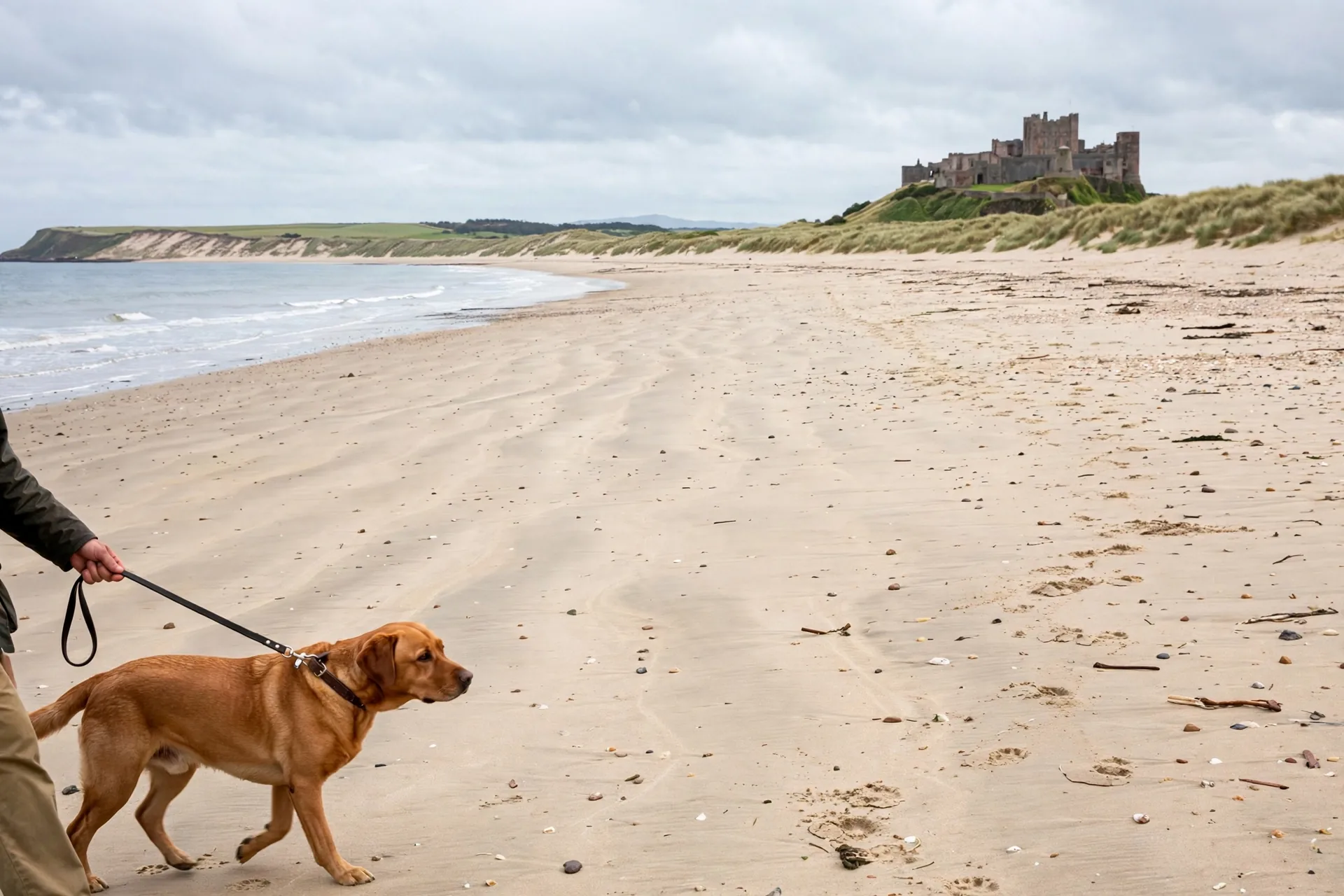
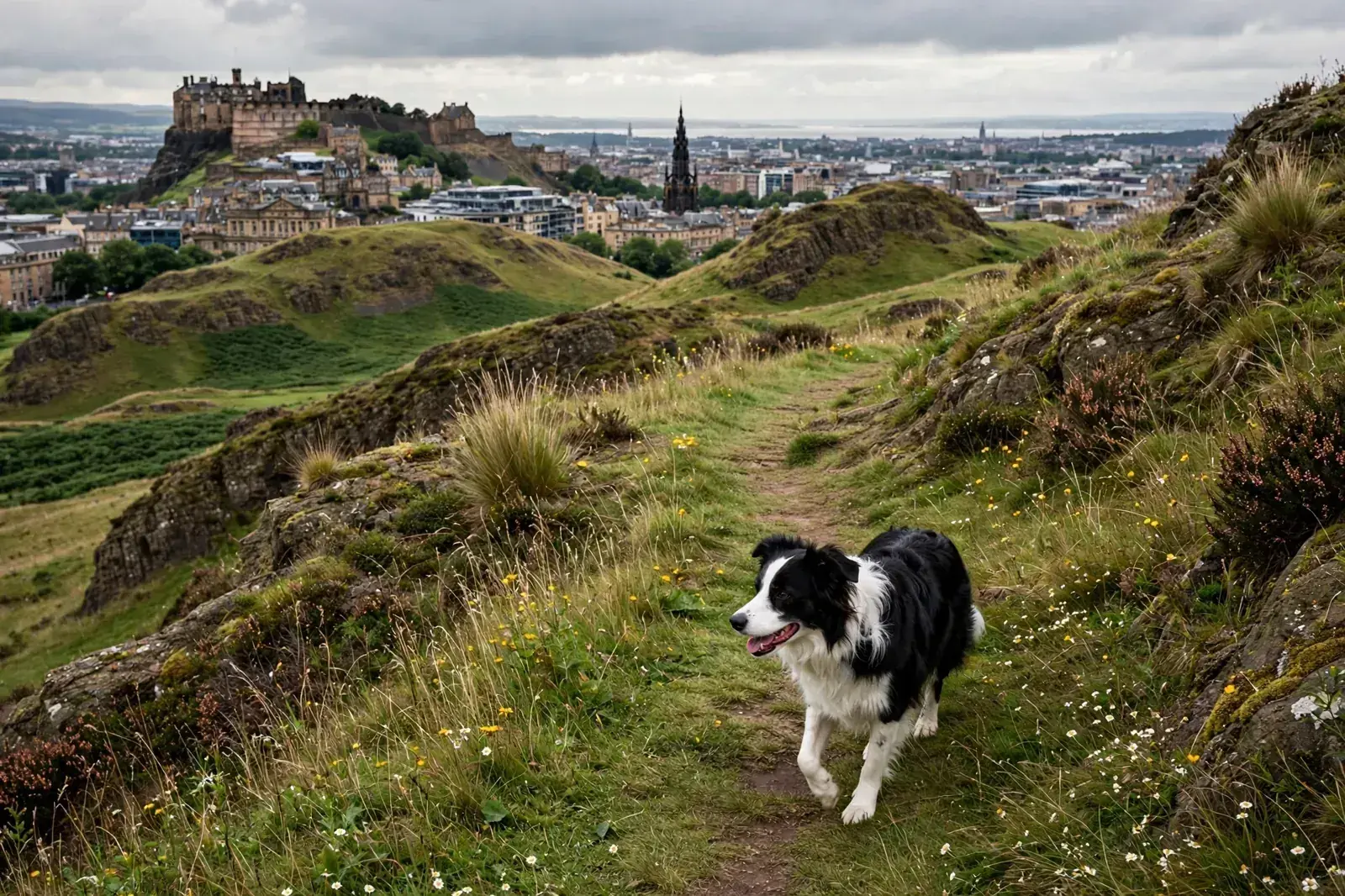
Berwick-upon-Tweed, just over the border in England, is the larger town to the south, and it makes a good contrast to Eyemouth. The coastal path runs the whole way from Eyemouth to Berwick, about 19 km, but most dog owners will drive or take the bus and spend the day walking the town walls, the riverside and the beaches. Berwick has more shops, more cafes and more accommodation, and it is the place to go if Eyemouth's small-town range feels limiting. For a longer trip, the coast south of Berwick opens into Northumberland, and our Northumberland dog guide covers the castles, beaches and walks that lie beyond, including Bamburgh and Holy Island, where tide times matter even more than they do in Eyemouth. If you are heading north instead, our Edinburgh dog guide covers the city walks, parks and practicalities of a capital city day out with a dog, including Arthur's Seat and the Water of Leith.
One more day trip is worth a mention for a longer stay: the coast north of St Abbs towards Cove and Cockburnspath, which is the start of the Berwickshire Coastal Path. The walking there is quieter and more remote, with farmland, small harbours and long stretches of coast path where you may not meet another walker for an hour. It suits a confident walker with a fit dog and a map, and it is the place to go when the Eyemouth to St Abbs stage feels too busy. Check the official guidance before you travel for current path conditions, and carry water and a phone, because the remoteness that makes it attractive also means there is less help close by if something goes wrong.
Rain, wind and winter
The east coast of Scotland is not a place to visit with a fair-weather plan. Rain, wind and cold are part of the Eyemouth experience, and a dog owner who plans for them will enjoy the town far more than one who hopes they will not happen. The good news is that Eyemouth is well set up for bad weather, because the beach stays open to dogs all year, the harbour walk is sheltered, and the town has indoor options for the worst of it. The bad news is that the cliff path does not forgive bad weather, and the difference between a bracing walk and a dangerous one can be a single gust.
Wind is the factor to watch most closely. The Berwickshire coast is exposed, and the wind on the cliff tops can be far stronger than the wind in the town. If the forecast shows strong winds, do not take a dog onto the cliff path. A small dog can be knocked off balance, a large dog can be blown towards the edge, and a gust can turn a narrow path into a hazard in seconds. The beach is the safe alternative on a windy day: the harbour wall shelters it, the sand is flat, and the dog can run without any drop to worry about. The town walk and the fort walk are also safer in wind than the cliff path, because they are lower and less exposed.
Rain changes the ground rather than the rules. The cliff path becomes slippery after rain, particularly on steps and on the rough trodden sections, and the farmland paths inland can turn to mud that is hard going for a dog's paws and for your boots. A drying coat, a towel and a spare lead are essential on a wet day, and a dog that has been out in the rain needs to be dried thoroughly before being left in a cold car or a cold room. Check the dog's paws after a wet walk: grit, salt and mud can cause soreness, and a small cut that is ignored on a wet day can become a limp on the next day.
Winter in Eyemouth is short days, strong winds and a harbour that feels more working than ever, because the fishing fleet does not stop for the season. The beach stays open to dogs, and a winter beach walk at low tide, with the town quiet and the light low over the sea, is one of the best dog walks in the Borders. But the days are short, so plan the big walk for the middle of the day and be back in the town well before dark. The cliff path in winter needs daylight, dry ground and a dog that is fit and sure-footed. If any of those are missing, stay on the beach and the town walks, and save the cliff path for a longer day.
Some practical winter notes: check opening times before you travel, because cafes, museums and the visitor information point may reduce their hours outside the summer season. Check your accommodation's heating, because a cold room after a wet walk is miserable for a dog that is already chilled. And carry a torch, because the walk back from the beach or the harbour after dark is unlit in places, and a dog on a lead in the dark needs to be seen by drivers as well as by you. A reflective lead or a light on the dog's collar is a small thing that makes a real difference on a winter evening.
Safety, wildlife and what to pack
The safety rules for Eyemouth are not complicated, but they are worth writing down before you travel, because the coast rewards the prepared and punishes the casual. The first rule is the cliff edge: keep dogs on a lead on the coastal path, near the harbour edge, and anywhere the ground drops away to the sea. The second rule is livestock: keep dogs on a lead around sheep and cattle, close gates behind you, and do not take dogs into enclosed fields with lambs, calves or foals. The third rule is the sea: do not let dogs swim from rocky coves, do not let them drink seawater, and keep them out of the water for a day or two after heavy rain, when the bathing water guidance advises against it.
Wildlife is a pleasure and a responsibility on this coast. Seals are regularly seen from the cliff path and around St Abbs Head, and they will watch a dog with the same curiosity the dog watches them. Keep the dog on a lead and enjoy the sighting from a distance. Seabirds nest on the cliffs from roughly April to July, and a dog that runs loose near a colony can cause birds to abandon nests. Keep dogs close during the nesting season, and do not let them chase birds on the beach. Adders are present in some parts of the Borders, though they are rarely seen on the coast path itself; if your dog is bitten, keep the dog calm and still, carry the dog if you can, and get to a vet as quickly as possible. Do not try to suck out the venom or apply a tourniquet.
Ticks are a more everyday concern, particularly on the inland and farmland sections of the coastal path and on the walks around Coldingham. Check the dog for ticks after every walk, particularly around the ears, the neck and the belly, and remove any you find with a tick remover, twisting gently until the tick releases. Carry a tick remover in your walking kit, and ask your vet about tick prevention before you travel if your dog is not already covered. The same kit should include a basic first-aid roll: a bandage, a small bottle of saline for flushing a cut, and the number of the nearest vet saved in your phone before you need it.
The packing list for Eyemouth is short but specific. A lead and a long line, because the beach rewards a long line and the cliff path demands a short lead. A harness that fits well and does not chafe when wet, because a collar alone is not enough on a cliff path. Water and a collapsible bowl, because there is no reliable drinking water for dogs on the cliff sections. Two towels and a drying coat, because a wet dog in a cold wind chills fast. Poo bags, and more than you think you will need. A torch and a reflective lead for winter evenings. And the dog's own bed or blanket for the accommodation, because a familiar smell is the fastest way to settle a dog in a strange room. Pack all of it the night before, and check the tide times and the weather forecast at the same time. A prepared dog owner is a relaxed dog owner, and a relaxed owner has a relaxed dog.
A one-day plan that actually works
A good day in Eyemouth with a dog is not a long list of attractions. It is a short list, done in the right order, with time left over for the dog to sleep. The plan below is built around the tide, the harbour and the coastal path, and it works for a fit adult dog in spring, summer or autumn. Adjust the distances for a smaller, older or less fit dog, and do not be afraid to cut the walk short: a dog that comes home tired and happy has had a better day than a dog that comes home exhausted.
Start early, before nine, with the beach at low tide. Park in the car park behind the beach, walk the dog on a long line on the sand, and let the dog run, paddle and sniff until the energy of the morning is spent. Forty minutes on the beach is enough for most dogs, and it sets up the rest of the day. Follow the beach with a coffee on the promenade or the quayside, with the dog drying off under the table, and a slow walk around the harbour while the working day is still quiet.
Mid-morning is the time for the coastal path. Walk from the harbour towards St Abbs, keeping the dog on a lead on the cliff sections, and aim for Coldingham Bay as the turning point or the lunch stop. The walk to the bay and back takes about three hours including stops, and it gives you the best of the cliff views without the commitment of the full stage to St Abbs. If the dog is still fresh at the bay and the weather is good, continue to St Abbs and take the bus back. If the dog is tiring, turn back at the bay and save St Abbs for another day.
Afternoon is for the town. Visit Gunsgreen House or Eyemouth Museum as a split visit, walk up to Eyemouth Fort for the view, and finish with a late lunch or an early dinner in a place with outside seating. The dog will be tired by now, and a tired dog is a quiet dog, which is exactly what you want in a cafe. End the day with a short evening walk on the beach, a final toilet walk, and an early night. The dog will sleep well, and so will you.
For a second day, reverse the pattern: a morning walk south towards Burnmouth, a visit to the other museum or house, and an afternoon in Coldingham or St Abbs by bus. Or use the second day for Berwick-upon-Tweed, with its town walls and riverside walks, and save the Eyemouth coastal path for a return visit. The town rewards a slow pace, and the best trips here are the ones that leave something undone, because that is the reason to come back.
Practical questions
Before you go
Are dogs allowed on Eyemouth Beach all year?
Yes, as far as the published information goes. No council dog ban has been found for Eyemouth Beach, and dogs are reported as allowed all year round. The Scottish Outdoor Access Code still applies: keep your dog under proper control, use a short lead near other people, and keep dogs close at heel during the bird nesting season, usually April to July. Check the signs on the day, because local rules can change.
Is the Berwickshire Coastal Path safe for dogs?
It can be, with the right section and the right lead. The St Abbs to Eyemouth stage is about 6 km and takes around two hours, but it runs along high cliffs with steps, rough ground and livestock in places. Keep dogs on a lead near cliff edges, near sheep and cattle, and around nesting seabirds. Avoid the cliff-top sections in high wind, and do not let a dog swim from rocky coves.
Can dogs go inside Gunsgreen House or Eyemouth Museum?
Do not assume so. Both are small indoor attractions where space is tight and dogs are not generally expected inside, although assistance dogs should be admitted. The practical plan is a split visit: one person looks around while the other walks the dog along the quayside or the beach, then swap. Check the official guidance before you travel, as opening times and dog policies can change seasonally.
Where is the best place to park in Eyemouth with a dog?
The car park behind Eyemouth Beach, near the Co-op, is the most useful base for a dog day out: it puts you straight onto the sand and the promenade, with public toilets nearby. Harbour-side parking is closer to Gunsgreen House and the quayside cafes but fills earlier on busy days. Arrive before late morning in summer, and check the official guidance before you travel for current charges and time limits.
What is the best time of year to visit Eyemouth with a dog?
Late spring and early autumn usually give the best balance: long daylight, quieter paths and beaches, and milder temperatures for a dog walking on cliff tops. Summer brings the liveliest harbour and the most cafes open, but also more people, more boats moving and hotter midday sun on exposed paths. Winter is wild and atmospheric, and the beach stays open to dogs, but expect short days, strong winds and some seasonal closures.
Can I walk from Eyemouth to St Abbs and back in one day with a dog?
Yes, for a fit adult dog it is a realistic day walk: about 6 km each way along the Berwickshire Coastal Path, roughly two hours each way plus stops, with Coldingham Bay as a natural halfway break. Check bus times before you set off, so you have the option of a one-way walk and a bus back if your dog tires. Carry water, because there is no reliable drinking water for dogs along the cliff sections.