This guide is independent and contains no paid placement. If affiliate links are added later, they will be clearly marked and will not change our editorial checks.
Fakenham works best as a working base rather than a resort: arrive, learn the market-day rhythm, walk the fields and river valley from town, and spend your coastal energy on one well-chosen day trip at a time. Check the official guidance before you travel for market days, beach rules and path conditions.
Start with market day, not the coast
Most visitors to north Norfolk head straight for the sea, and that is exactly why Fakenham rewards a different first move. This is an inland market town, not a seaside resort, and its weekly rhythm still shapes the week: on market day the centre fills with stalls, shoppers, delivery vans and dogs, while on an ordinary weekday the same streets are quiet enough for a nervous dog to practise town walking without being overwhelmed. If you plan your break around that rhythm instead of fighting it, the whole trip gets easier.
Begin with supplies before scenery. A market town earns its keep on a dog trip by solving the practical problems that coastal villages often cannot: a proper food shop for the week, a place to replace a chewed lead or a forgotten towel, somewhere to buy drinking water and treats in bulk, and a pharmacy and a vet practice within easy reach. Do that shopping early in the stay, while the car is still unpacked and the dog is still fresh, and you will not spend the rest of the week improvising. Keep a written list for the first shop — dog food for the whole stay plus a day spare, poo bags, towels, a spare lead, drinking water for the car, and any medication — because a market town rewards a list and punishes a vague wander.
On market day itself, walk the dog first and shop second. A dog that has already had a toilet walk and twenty minutes of sniffing is far better equipped for stalls, trolleys, food smells and strangers offering a fuss than a dog taken straight from the car into the busiest stretch. Keep the lead short through the stalls, not because the town is hostile to dogs but because stall legs, guy ropes, low crates and trailing cables create exactly the tangle that a long lead invites. If your dog is crowd-shy, walk the edge of the market rather than through its middle, and treat the visit as a short training outing — ten calm minutes beats thirty stressed ones.
Timing matters as much as route. Markets build through the morning and thin out later, so an early visit usually means fresher stock and firmer parking, while a late visit means fewer people but less choice. Neither is right for every dog: a confident, sociable dog may enjoy the morning buzz, while a reactive dog will do better at the quieter tail of the day. Check the official guidance before you travel for the current market day, opening pattern and any local rules, because market arrangements change and a guide cannot guarantee them. If the centre feels too much on the day, there is no failure in retreating to a field-edge walk and returning for supplies on a quieter weekday.
Market day also sets the social tone of the trip. Stallholders and regular shoppers in a working town tend to notice dogs, ask their names and remember them by the second visit, which is a gentler introduction to Norfolk than a crowded beach car park. Use that to your advantage: a calm, well-mannered dog that settles beside a stall while you queue is practising exactly the skill — waiting quietly in a busy place — that makes pub gardens and coastal cafés work later in the week. Bring a small mat or blanket so the dog has a defined place to lie, reward settling rather than greeting, and keep greetings short so the dog does not learn that every stranger is an invitation.
A calm town-centre loop
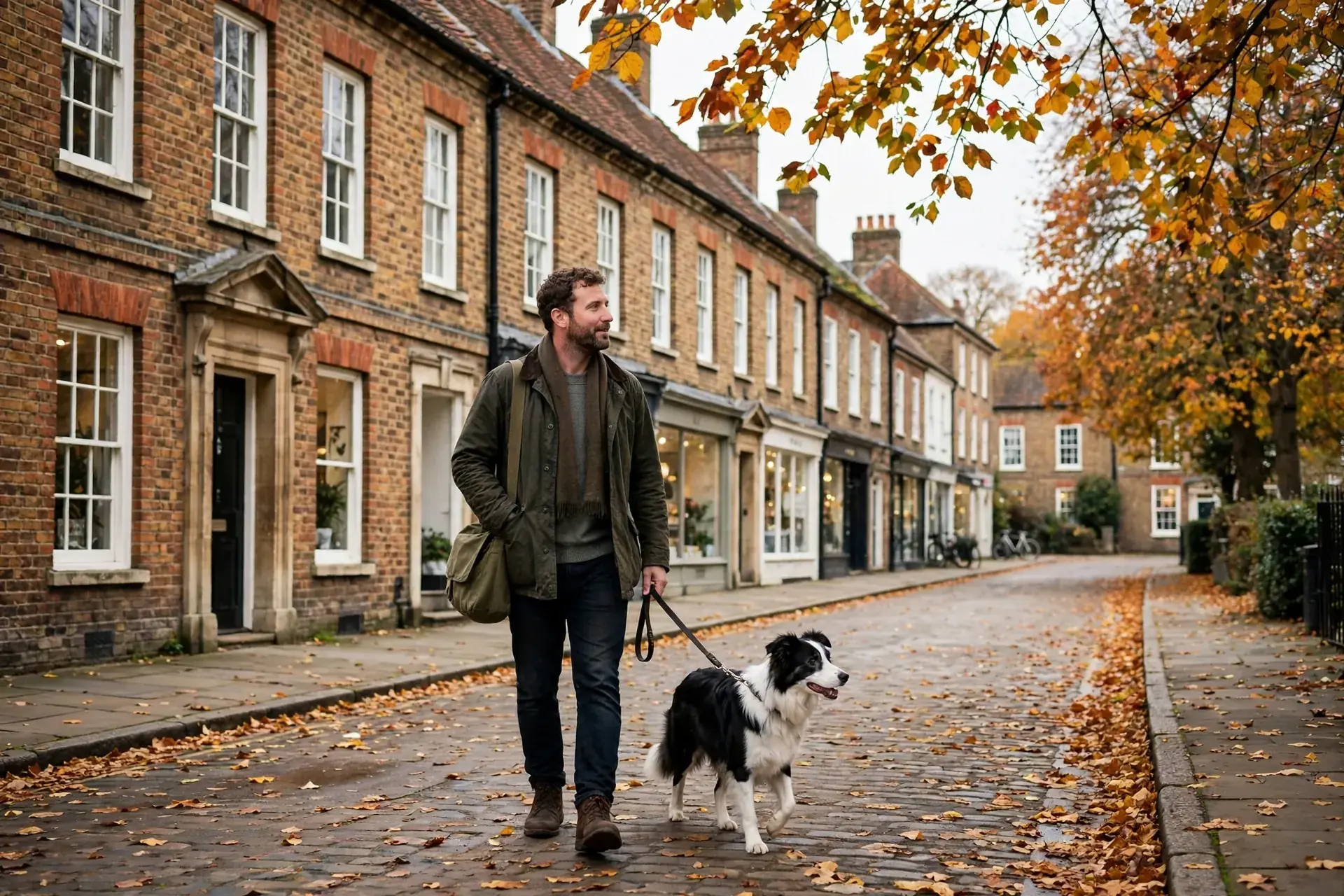
On a non-market day, Fakenham centre makes a useful first walk in its own right. The point of a town loop is not sightseeing but calibration: how does your dog cope with pavements, parked cars, shop doorways, other dogs on leads, cyclists and the occasional tractor passing through? A short, repeatable loop answers those questions close to the car, so you are not discovering them three miles into a field walk with no easy exit.
Build the loop in three parts. First, a quiet stretch where the dog can toilet and sniff without pressure — a side street or a green edge rather than the main shopping frontage. Second, a busier stretch with real-life distractions: shop fronts, people carrying bags, dogs waiting outside, and the sounds of a working town. Third, a calm exit back towards the car or your accommodation, so the walk ends on a settled note rather than at peak excitement. Walked once, this loop becomes your daily default: the morning toilet walk, the pre-drive settle, and the evening wind-down all use the same familiar ground.
Watch the small hazards that town walking hides. Dropped food is the commonest, especially near food stalls and takeaway fronts, and a scavenging dog needs a reliable leave cue more than a longer lead. Pavement cafés and pub gardens can be delightful, but only if your dog can lie under or beside a table without blocking a walkway; if the garden is crowded, choose a quieter table or move on rather than squeezing a large dog into a gap. Check the official guidance before you travel for any local dog rules, and always ask before taking a dog into an indoor space, because policies differ from one business to another and change without notice.
For dogs that struggle in towns, Fakenham has a useful quality: it is a town you can retreat from quickly. A few minutes in any direction takes you towards quieter residential streets and then open countryside, so a walk that starts badly can be shortened without a long march back through the busiest ground. Plan your exits before you need them — know which turning takes you out of the centre — and keep the first town walk short. Twenty minutes of calm town walking, repeated daily, builds more confidence than one long, overwhelming outing.
Field walks and how to read them
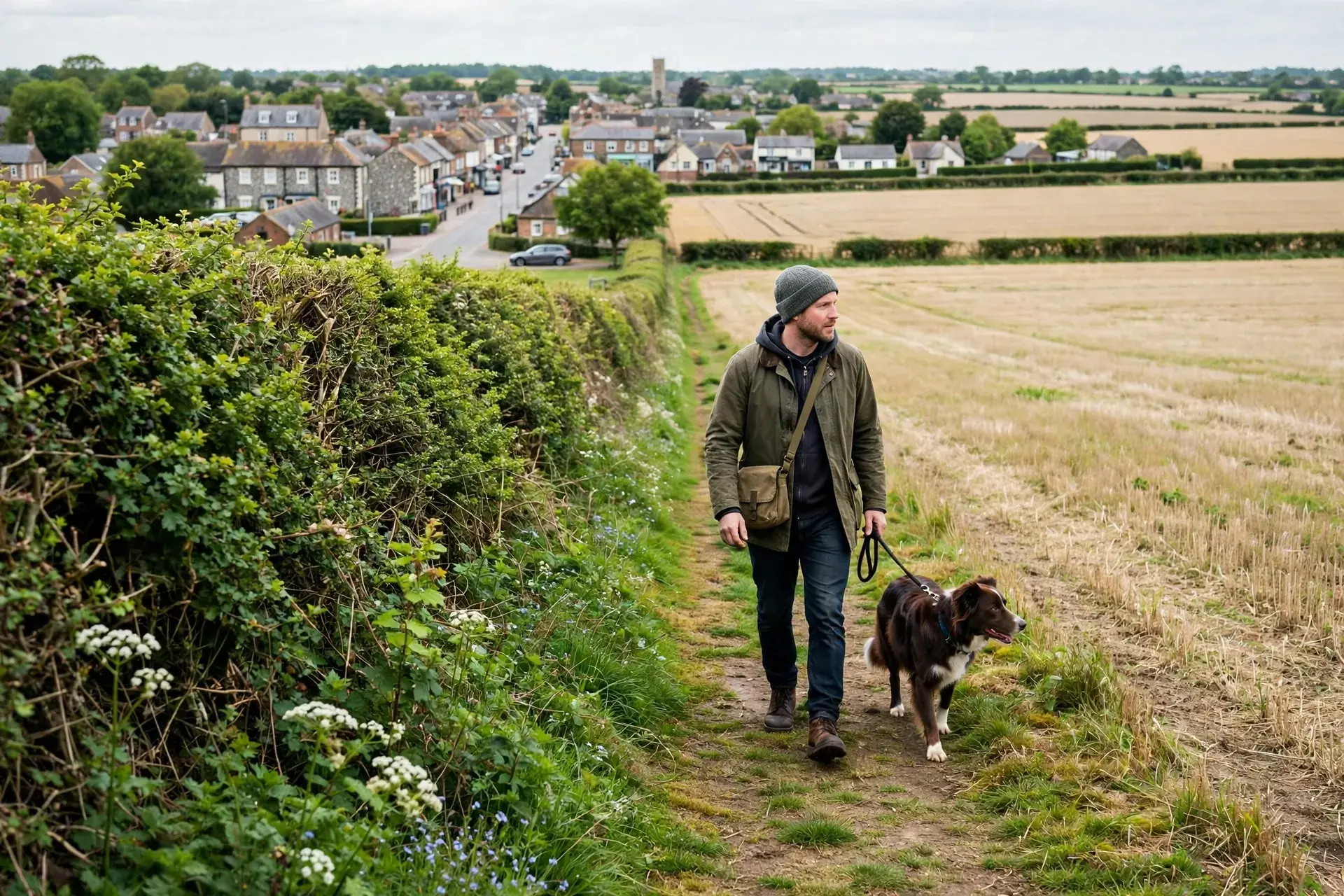
The walks that define a Fakenham stay are not waymarked trails with cafés at both ends but working field-edge paths, farm tracks and grass margins between arable fields. That is their charm and their discipline: wide skies, long hedgerows, hares in the margins and very few people, but also livestock behind hedges, farm vehicles on tracks, and ground that changes with the farming calendar. Learning to read a field walk is the single most useful skill this base teaches.
Start by reading the edges. A tall, thick hedgerow usually means a stock-proof boundary and a corridor of birdsong; a low, gappy hedge with a wire fence behind it means animals may be close, and your dog should already be on a lead before you reach the gap. Field margins — the grassy strips between crop and hedge — are often the actual walking line, and they narrow sharply at field corners, gateways and ditch crossings. Slow down at every gateway: gates are where livestock move, where dogs bolt through, and where mud collects. Clip the lead on before the gate, not after the dog has seen what lies beyond it.
Choose circular thinking over distance thinking. A five-mile out-and-back along a single track can be a dull, tiring march for a dog that has already sniffed everything once, while a shorter loop that mixes a track, a field margin and a quiet lane gives varied smells, varied footing and a natural halfway point to turn back. If you do not know the local paths, start with the shortest loop that still feels like a walk — roughly forty minutes — and extend it only once you know where the gates, stiles and livestock are. Stiles deserve particular care: dogs that jump stiles repeatedly strain joints, and dogs that need lifting need a handler who can manage both dog and gate safely, so check the official guidance before you travel for current rights of way and any temporary closures.
Lead discipline on field walks is not about control for its own sake but about reading what you cannot yet see. In open arable country, a dog on a long line can cover a surprising distance before you spot sheep in the next field, and a chasing dog can be through a hedge gap in seconds. The working rule that keeps everyone safe is simple: lead on wherever stock is visible, could be visible beyond the next hedge, or has recently been present — trampled ground, fresh droppings and feeding troughs all count as evidence. Off-lead running belongs on open ground with clear sightlines, no stock, and a recall you have already tested that day on easier ground.
Water and shade need planning on field walks in a way that coastal walks often do not. There may be no stream, tap or shop for the whole route, and arable fields offer little shade at midday in summer. Carry water for the dog as well as for yourself, offer it before the dog looks desperate, and plan summer walks for early morning or late evening when the ground is cooler and the light is lower. In winter the problem reverses: short daylight, heavy ground and ditches full of water, so carry a torch, keep the route short, and let the dog dry and warm up properly afterwards.
The farming year on the path
Norfolk farmland does not stay the same from month to month, and a dog walk that is perfect in May can be a different proposition in October. Understanding the farming year helps you choose routes, predict hazards and avoid the frustration of arriving at a favourite path to find it ploughed, sprayed or full of stock.
Spring brings lambing and nesting, and both demand restraint. Ewes with young lambs are at their most protective and most easily stressed, and ground-nesting birds on field margins and heath edges are easily disturbed by a dog running wide. This is the season for short leads, quiet field margins and resisting the urge to let a dog range far, even on apparently empty ground. It is also the season when paths dry out and the first long evenings arrive, so the reward for restraint is real: soft light, new growth along the hedges and a dog that is tired from sniffing rather than from chasing.
Summer is harvest country. Ripe crops stand tall beside paths, farm vehicles use tracks at all hours, and dust, pollen and heat all rise together. Keep dogs out of standing crops — both because it damages the crop and because a dog lost in tall wheat or barley is invisible and disoriented — and be ready to step aside for tractors and trailers, pulling the dog well off the track and keeping the lead short. After harvest, stubble fields look temptingly open, but they are still working land: check whether access is permitted, watch for sharp stubble underfoot, and remember that the next crop may already be drilled and fragile.
Autumn is the season that tests your mud kit. Rain returns, tracks soften, and field margins that were firm in August become channels of clinging clay. This is also the season of game shooting in parts of the Norfolk countryside, which means gunfire at a distance, beating lines and dogs working — a strong reason to keep your dog close, avoid wandering near shoots, and check the official guidance before you travel for any local notices. The compensation is the colour: hedgerows heavy with berries, long evening light, and far fewer walkers than in summer.
Winter strips the landscape back to its structure: bare hedges, open views, frozen ruts and ditches full of water. Field walks become shorter and more deliberate, and the best winter route is often the one with the firmest surface rather than the prettiest view. A farm track with a hard core beats a beautiful grass margin that has turned to slurry, and a lane-based loop beats a field crossing when the ground is waterlogged. Salt and grit on lanes can irritate paws, so rinse and check feet after winter walks, and watch for ice on ditch crossings and boardwalks.
Across all seasons, one habit covers most surprises: look at the field, not just the path. A freshly drilled field, a herd moved overnight, a new fence line or a closed gate all tell you something about what the next hour holds. Dogs read those signals instantly through smell; walkers who pause and look will read them too.
The Wensum river-valley direction
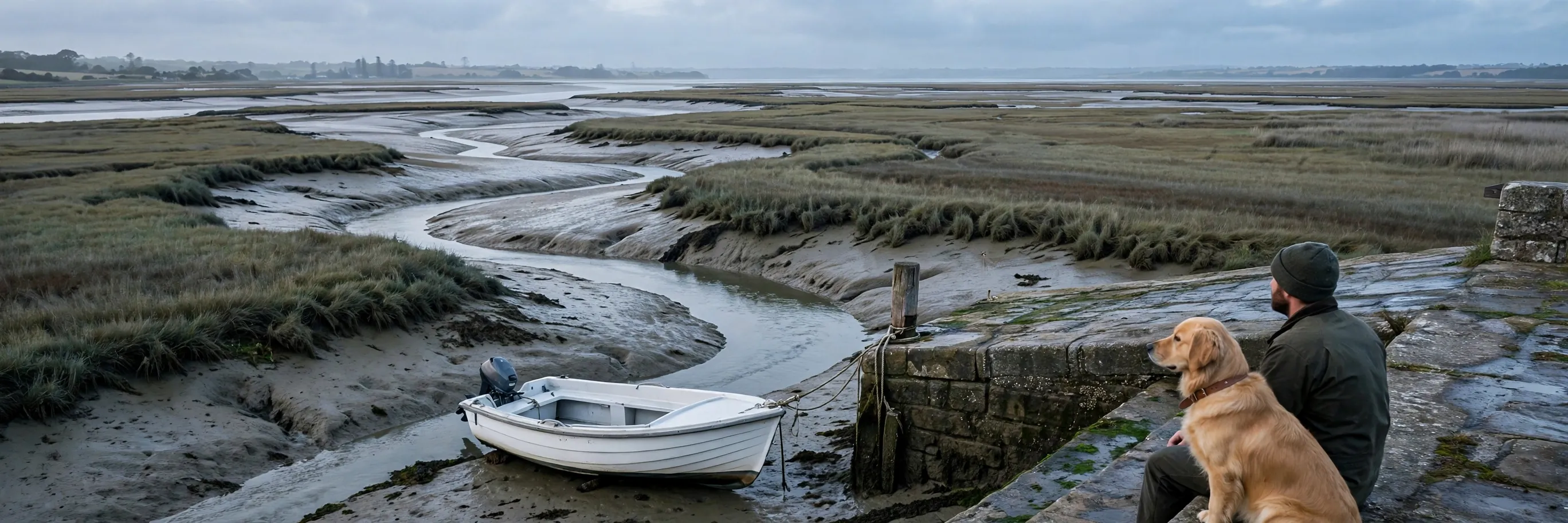
From Fakenham, the River Wensum gives the walking a different character from the open arable fields: a shallow valley, damper ground, riverside trees and meadows, and a sense of enclosure after the big skies of the field edges. River-valley walking suits dogs that like water, shade and varied smells, but it brings its own cautions, and it rewards a slower pace than a field-margin stride.
The first caution is the ground itself. Valley floors hold water long after the fields above have dried, so riverside paths can stay soft, slippery and muddy well into spring, and boardwalks, bridges and bank edges can be treacherous after frost. Keep dogs on a lead near fast water, weirs and steep banks, and do not let a dog swim in water you have not assessed: current, depth, bank exit points and water quality all matter, and a dog that enters easily may struggle to climb out on a steep or undercut bank. If your dog swims, choose a shallow, slow entry with a gentle exit, rinse afterwards, and check the official guidance before you travel for any water-quality notices.
The second caution is wildlife. River valleys concentrate birds, mammals and livestock in a narrow corridor, so a dog that is calm on an open field may still be excited by ducks, swans, moorhens and riverside cattle. Swans in particular deserve respect: a dog that chases a swan on the water risks injury and a dangerous rescue. Keep the lead on through the busiest riverside stretches, and let the dog watch water birds from a distance rather than learning that the riverbank is a place for pursuit.
Done well, a river-valley walk is the ideal second walk of the day: shorter, shadier and more enclosed than a field loop, and a good cool-down after a coastal day or a long drive. It also teaches a useful contrast for the dog — open running on the fields, close control by the water — which is exactly the flexibility a Norfolk week demands. Pack a towel even for a short valley walk, because a dog that finds a muddy ditch will find it in the last five minutes, not the first.
Fakenham as a coast base: the trade-offs
The honest question about Fakenham is not whether the coast is reachable — it is — but what you give up by staying inland, and whether that trade suits your dog. The coast is a drive away in every direction, so every seaside day costs loading time, parking time and a car journey in both directions, and a dog that travels badly will feel that cost more than a dog that sleeps through car rides. Weigh that against what the inland base gives back: quieter nights, easier parking, cheaper and more flexible accommodation, field walks without a drive, and a town that works on ordinary weekdays as well as holidays.
The trade works best on a one-outing-a-day rhythm. Choose one coastal destination, drive out in the morning, walk properly, eat, and come home in good time for an evening field-edge stroll near your base. Trying to chain two coastal towns into one day usually produces two rushed car parks and a tired, overstimulated dog, and it wastes the very advantage of an inland base — the calm evening walk that resets the dog for tomorrow. If the weather turns, the inland base shows its other strength: you can abandon the coast without abandoning the day, because the field walk is still there.
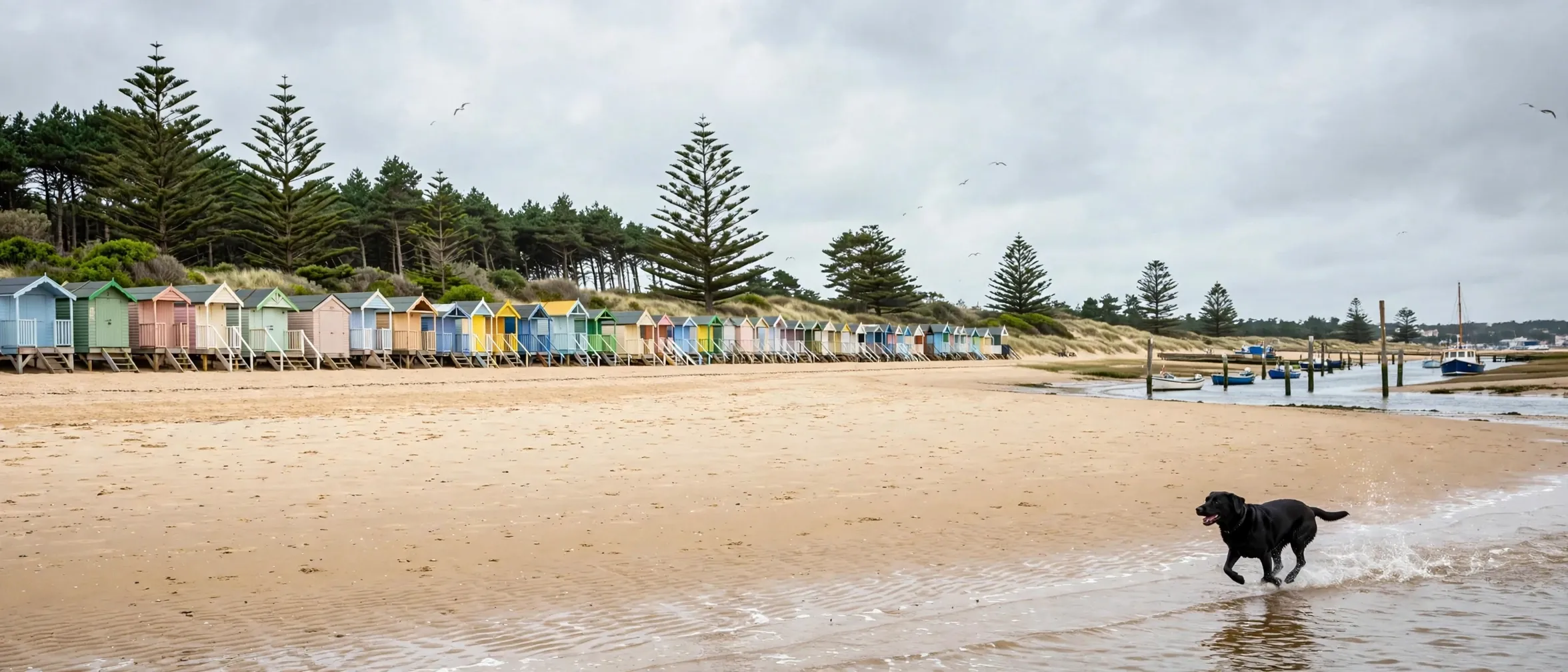
For a first coastal outing, Wells-next-the-Sea is the natural choice from Fakenham: a harbour town with a beach, pinewoods and a compact centre that rewards the same short-lead, settle-and-wait skills you have been practising in Fakenham. Read its beach zones and seasonal rules before you go, because Wells manages dogs differently across the beach and the seasons, and check the official guidance before you travel for tides and parking. Arrive early on a fine day, walk the beach or the pinewoods first while the dog is fresh, and save the harbour and cafés for the calmer middle of the day.
Holt makes a good second outing and a useful comparison: another Norfolk market town, but Georgian, compact and closer to the coast, with woodland walks and a high street that suits a dog that has already learned town manners in Fakenham. Pairing the two towns across the week teaches you something practical — which sort of town your dog actually prefers — and it spreads the driving so no single day is dominated by the car. If your dog finds Holt easier than Fakenham, or the reverse, that preference is worth remembering for the next Norfolk trip.
Further along the coast, Blakeney offers harbour, salt marsh and seal-trip country, but it is a different kind of day: more tide-dependent, more exposed, and more dependent on boat and parking arrangements. Treat it as a dedicated outing with its own checks, not as an afterthought tacked onto another coastal stop. Whichever destination you choose, the rule is the same: check beach rules, tide times, parking and seasonal restrictions in advance, and carry water, shade and a towel, because a coastal car park on a hot day is no place to discover you have forgotten them.
Finally, be honest about your dog's travel tolerance before committing to a week of coastal driving. A dog that pants, drools or vomits in the car will not enjoy five consecutive coastal days, however good the beaches are. In that case, flip the balance: three field-and-valley days around Fakenham, one coastal day, and one rest day with only short local walks. The coast will still be there next year, and a dog that arrives at the beach calm is worth more than a dog that arrives exhausted.
Staying put: parking, rest and evenings
An inland base only works if the boring logistics work, so sort them on day one. Parking in a market town is usually easier than at a coastal hotspot, but market day changes the pattern: arrive early, know which car parks fill first, and keep a fallback in mind so a full car park does not become a stressed lap of the town with a dog already overdue a walk. Park once, walk from the car, and avoid moving the car between a town walk and a field walk when a single base point serves both.
Rest is the most underrated part of a dog holiday, and a market-town base makes it easier to protect. Dogs that walk all day, every day, accumulate tiredness that shows up as reactivity, poor recall and restless nights, often on day three or four rather than day one. Build a genuine rest period into each afternoon — the dog on its bed, the house quiet, no visitors, no second walk — and treat it as part of the plan rather than a wasted afternoon. Older dogs, puppies and dogs recovering from illness need this most, but even fit adult dogs benefit from a slower middle day in a week-long stay.
Evenings in Fakenham suit a short, familiar loop rather than a new adventure. The dog already knows the town loop, the light is low, the traffic is thinner, and a twenty-minute sniff around familiar ground settles the day better than a new route in the dark. If you eat out, choose places that genuinely welcome dogs rather than merely tolerate them, ask in advance, and keep the visit short on the first night — a dog that learns that evenings mean a calm hour under a table will enjoy the rest of the week far more than a dog dragged through three long dinners.
Accommodation choice matters more inland than it might at the coast, because you will spend more time there. Look for a secure garden or a defined outdoor toilet area, a hard floor near the door for muddy paws, and somewhere to dry a wet dog without soaking the bedding. Ask directly about the dog rules — numbers, sizes, alone-time policy, garden fencing and cleaning expectations — and get the answers in writing with the booking, because a vague “dogs welcome” can hide conditions that only emerge on arrival. Check the official guidance before you travel for any local rules that affect your stay.
Seasons, mud and what to pack
Pack for Fakenham as you would for a working farm walk, not a seaside promenade, and you will rarely be caught out. The essential kit is unglamorous: two towels rather than one, a drying coat for the dog, a waterproof sheet for the car boot, a portable bowl and water bottle, a spare lead, poo bags, a torch for dark winter lanes, and a small first-aid kit with tick removers. Add a long line for open-ground recall practice, a mat for pub gardens and market stalls, and a brush for removing seeds and burrs after field-margin walks.
Mud deserves its own system, because Norfolk clay clings to paws, bellies and car boots with particular enthusiasm. The system that works is: a towel by the door, a second towel in the car, a shallow tray or old baking tray for a paw rinse, and a drying coat put on before the dog gets into the car rather than after. Rinse paws after walks near arable land and river valleys, check between the toes for stones, seeds and cuts, and dry the belly and ears of low-slung dogs properly — damp ears and skin folds cause more holiday vet visits than dramatic injuries do.
Ticks, harvest mites and adder awareness belong in the seasonal briefing too. Long grass, bracken edges and field margins carry ticks from spring through autumn, so check the dog after every walk, especially around ears, armpits and groin, and remove ticks promptly with a proper remover. Adders are shy and bites are uncommon, but dogs that nose into banks, heath edges and sunny clearings are the most exposed, so keep dogs out of dense undergrowth in warm weather and know the route to the nearest vet before you need it. Check the official guidance before you travel for current advice on ticks, livestock diseases and any local notices.
Summer heat needs a different kind of caution inland. Field walks offer little shade and no sea breeze, so a dog that copes happily on a coastal path may overheat on an inland track at midday. Walk early or late, carry more water than you think necessary, watch for heavy panting and reluctance to continue, and never leave a dog in a parked car — a market-town car park in July heats up as fast as any coastal one. Winter, by contrast, rewards layers for the dog as well as the walker: a coat for short-coated, elderly or small dogs, a warm bed away from draughts, and shorter, more frequent walks rather than one long cold slog.
A three-day base plan
The plan below shows how the pieces fit together across a short break. It is a template to adapt, not a timetable to obey: swap days for weather, shorten walks for a tired dog, and drop a coastal day entirely if the dog needs rest.
Day one is for settling. Arrive, unpack, walk the town loop, and do the first shop — food, towels, water and treats — while the dog is still fresh. In the afternoon, take the shortest field-edge loop you can find, let the dog sniff everything twice, and finish with a calm evening in your accommodation. Resist the urge to drive to the coast on arrival day: a dog that has travelled, unpacked and walked a new town has already had a full day, and a rushed beach visit adds stimulation without adding enjoyment.
Day two is the coastal day. Drive to one destination — Wells for a first visit, Holt for a town-and-woodland day, or Blakeney for a harbour and marsh outing — walk properly, eat calmly, and come home in good time for a short evening field walk near base. Keep the coastal walk to the dog's comfortable distance rather than the guidebook's maximum, and build in a rest stop on the way home so the dog does not go straight from beach excitement to car to house without a pause.
Day three is the river-valley and rest day. Walk the Wensum direction in the morning at a slow pace, practise close control by the water, and then protect the afternoon: a proper rest, a short evening loop, and an early night. If the dog is still fresh and the weather holds, add a second field walk in the late afternoon; if the dog is tired, skip it without guilt. A three-day break that ends with a rested dog is a better advertisement for Norfolk than a three-day break that ends with an exhausted one.
Extended to a week, the pattern repeats with variations: alternate coastal days with field days, keep one full rest day in the middle, and revisit the walk the dog enjoyed most rather than chasing novelty every day. Dogs do not rate holidays by the number of new places visited; they rate them by how predictable, comfortable and sniff-rich each day felt. Fakenham, used as a base rather than a stopover, gives you exactly that: a town to come back to, fields to walk from the door, and a coast that stays a treat rather than becoming a chore.
Practical questions
Before you go
Is Fakenham a good base for the north Norfolk coast with a dog?
Yes, if you are happy to drive to the coast and back. Fakenham sits inland, so you trade a seafront location for a quieter, more affordable base with market-day supplies and field walks on the doorstep. Plan one coastal outing per day rather than several, and check the official guidance before you travel for beach rules, parking and seasonal restrictions at your chosen destination.
What should I expect on market day with a dog?
Expect a busier, louder town centre with stalls, shoppers, trolleys and food smells, plus more dogs than on an ordinary weekday. Keep your dog on a short lead through the stalls, avoid the densest stretch if your dog is nervous in crowds, and do your shopping in a calm order: a toilet walk first, then the stalls, then a quiet rest. Check the official guidance before you travel for the current market day and any local rules.
Are the field walks around Fakenham suitable for dogs that chase livestock?
Only with strict lead discipline. Field-edge paths in working farmland can run close to sheep, cattle and horses, and the law expects dogs to be under close control around livestock. Keep a lead on wherever animals are visible or could be behind the next hedge, use a long line only on open ground with clear sightlines, and turn back rather than testing whether your dog will ignore stock.
How muddy do the walks get, and what should I pack?
Expect mud after rain at almost any time of year, and deep, clinging mud on unsurfaced field tracks and river-valley paths through autumn and winter. Pack two towels, a drying coat, a waterproof groundsheet for the car boot, a portable water bowl and a spare lead. Rinse paws after walks near arable fields, and check the official guidance before you travel for any temporary path closures.
Can I walk from Fakenham to the coast with my dog?
Not as a casual day walk. Fakenham is an inland town and the coast is a drive away, so treat coastal days as car trips with a walk at the far end. If you want a long walk, choose a circular field or river-valley route from town instead, and save the coast for a dedicated outing with its own parking, tide and beach-rule checks.
What is the best time of year to visit Fakenham with a dog?
Late spring and early autumn usually give the best balance: firm field paths, long daylight and fewer crowds than high summer, without the deepest winter mud. Summer suits early-morning and late-evening walks, while winter rewards a slower plan with one good walk a day and a warm, dry base. In every season, check the official guidance before you travel for local restrictions and path conditions.