This guide is independent and contains no paid placement. If affiliate links are added later, they will be clearly marked and will not change our editorial checks.
Fermanagh Lakelands with a dog work best when water comes first in the planning: check algae and weather, confirm every boat and ferry dog policy in writing, and treat swimming as optional rather than assumed. Base yourself in Enniskillen between Upper and Lower Lough Erne, take a hire boat or cruiser only on a vessel that explicitly welcomes your dog, use the seasonal ferry for a led walk on Devenish Island, keep dogs out of the Marble Arch cave tour, and enjoy leads-on exploring in the grounds of Florence Court and Castle Coole. Check the latest official guidance before you travel for every operator and venue rule in this guide.
Start with water: the safety-first planning checklist
Most holiday guides start with a list of places. This one starts with a checklist, because in the Fermanagh Lakelands water is not scenery at the edge of the day — it is the day. County Fermanagh is dominated by Lough Erne, a long, island-scattered system of Upper and Lower loughs joined around Enniskillen, with marinas, jetties, ferries, anglers, cruisers and reed-fringed shores in every direction. A dog that is brilliant on a forest trail can still be at risk on a slippery pontoon, on a moving deck or at a steep bank, so work through the checks below before you book anything, and again on the morning of any boat or swimming plan.
First, weather and water state. Check the forecast for wind as carefully as for rain: on a lough this size, wind builds choppy waves quickly, makes jetties wet and exposed, and turns a calm morning hire into a tiring return against the weather. Postpone small-boat plans in strong winds, and never let a timetable pressure you into sailing or swimming in conditions you would not choose freely. Second, algae and water quality. Blue-green algae can occur in nutrient-rich lough water in warmer months and can be fatal to dogs; look for official warnings, signs at the shore and visible scums or paint-like streaks, and treat any doubt as a no. Our blue-green algae and dogs guide explains what blooms look like and what to do in an emergency, and it is worth reading before any lakeland trip, not after a scare.
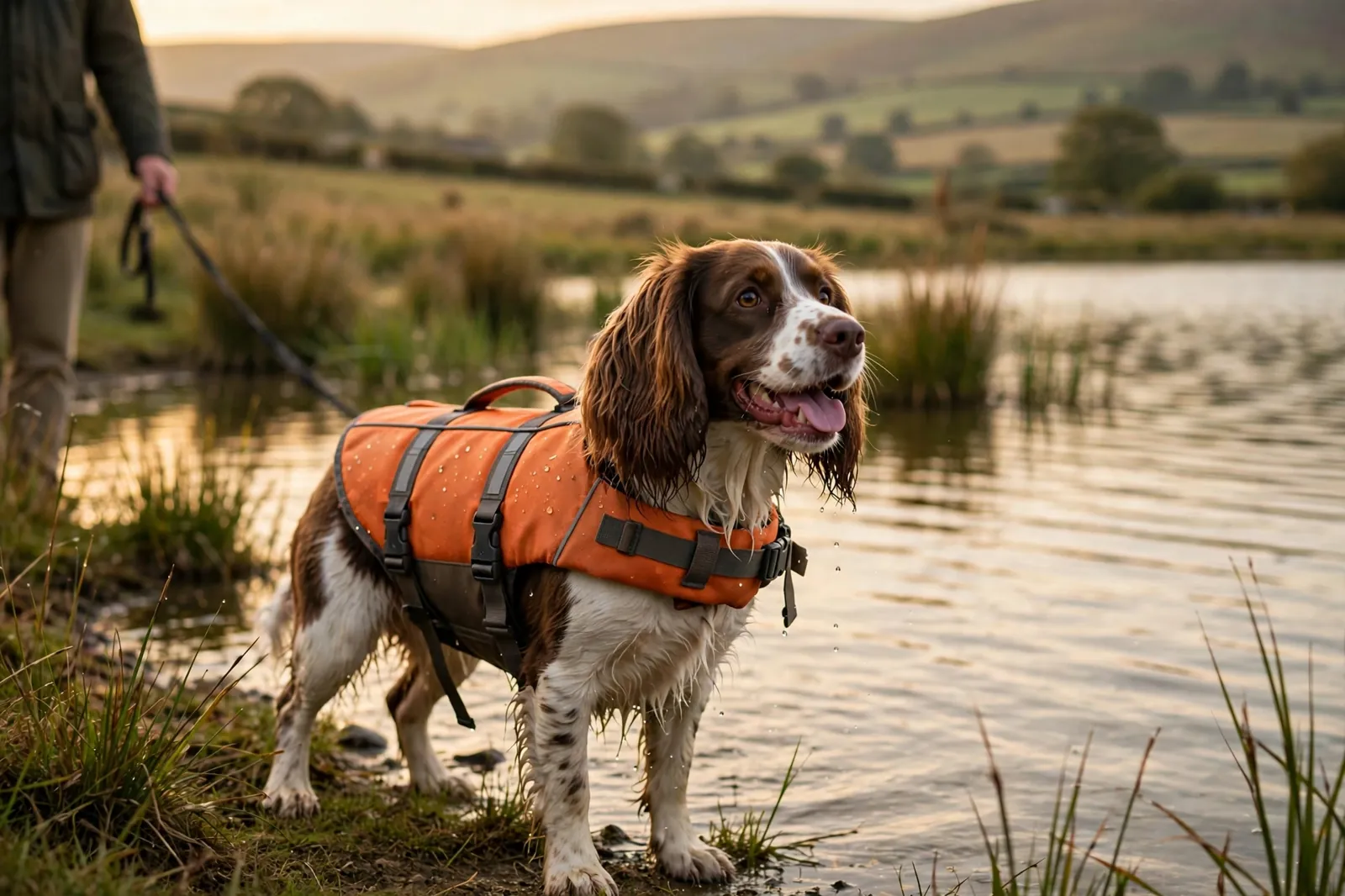
Third, your dog on a boat, honestly assessed. Is your dog calm around engines, other passengers and sudden movement? Can it settle on a non-slip surface, wait while you handle ropes or fenders, and resist lunging at birds, anglers' floats or another dog on a narrow pontoon? If the answer is uncertain, choose a short day-boat outing or a passenger ferry crossing as a first test rather than committing to several nights on a cruiser. Fourth, kit: a well-fitting lead and a spare, a harness for lifting and steadying rather than hauling by the collar, a dog life jacket if you plan regular boat or deep-water shore time, towels and a dry layer for the car, poo bags in a waterproof pocket, and drinking water with a bowl, because lough water is not a drink. Fifth, exits and help: note the nearest vet to your base and to your furthest shore, save the marina or operator number in your phone, and tell someone ashore your rough plan and return time for longer boat days.
Finally, permissions. Dog policies in Fermanagh are set operator by operator and venue by venue, and they change between seasons. A website photograph of a dog on a deck is not a policy. For every boat, ferry, cave, house and stay in this guide, the instruction is the same: check the latest official guidance before you travel, and for boats and accommodation get the dog answer in writing for your exact dates and your exact dog. That single habit prevents almost every avoidable disappointment in the Lakelands — the turned-away boarding, the house tour one of you has to miss, and the swim that should never have happened.
Lough Erne by boat: hire boats, cruisers and dog policies
Seeing Lough Erne from the water is the experience most visitors remember, and there are two main ways to do it with a dog: a day boat hired for a few hours, or a self-drive cruiser hired for several nights as floating accommodation. Day boats are the simpler introduction. Operators around the lough, including marinas near Enniskillen and on the Lower Lough, hire small motor boats for exploring nearby islands, finding a picnic shore and returning the same day. Some welcome dogs, some do not, and some welcome them only outside peak sailings or with conditions about where the dog can sit. Ask before you book: are dogs allowed on this boat, is there a charge, is there a size, breed or number limit, must the dog stay off seats and in one area, and what happens about cleaning if the dog is wet or muddy? Also confirm life jackets for people, whether a dog life jacket is provided or you should bring your own, the fuel and damage terms, the area you are permitted to cruise, and the latest return time.
Cruisers are a bigger commitment and need a harder conversation. Sleeping, cooking and living with a dog in a confined cabin for several nights suits a settled dog and an owner who has planned stops, toileting on shore, drying space and a routine for muddy paws at every mooring. Cruiser fleets vary widely: some companies allow dogs on selected boats only, some charge a supplement, some require dogs to stay off beds and upholstery and expect the boat returned without dog hair or odour, with cleaning charges if it is not. Get all of that in writing, including what counts as damage, because a chewed cushion or a scratched door on a hire cruiser is an expensive souvenir. Ask also about moorings: where you can stop overnight, whether shore facilities welcome dogs, and how you will get a dog that needs a late-night toilet break safely off a deck in the dark, on a lead, by torchlight, without anyone going overboard in the attempt.
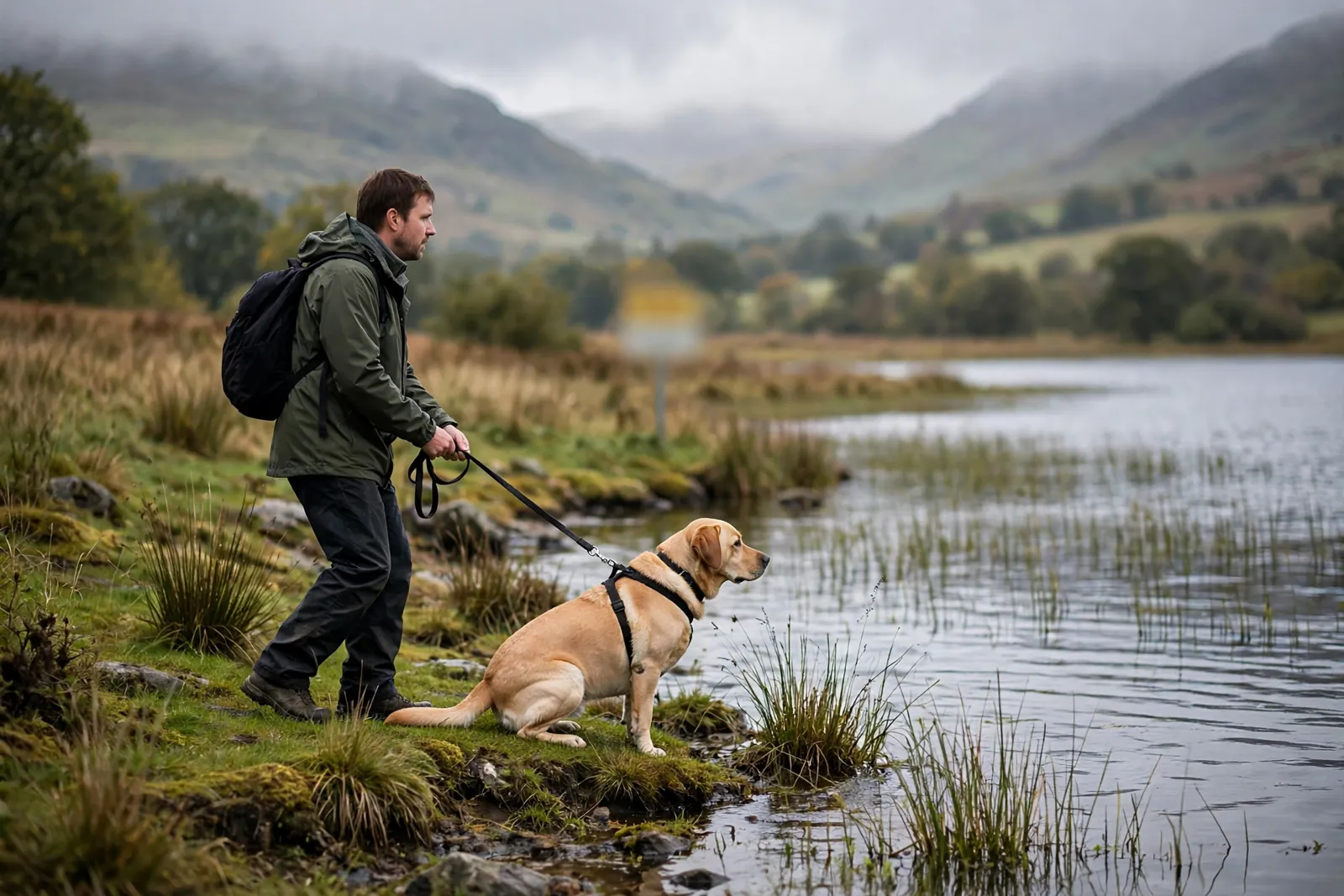
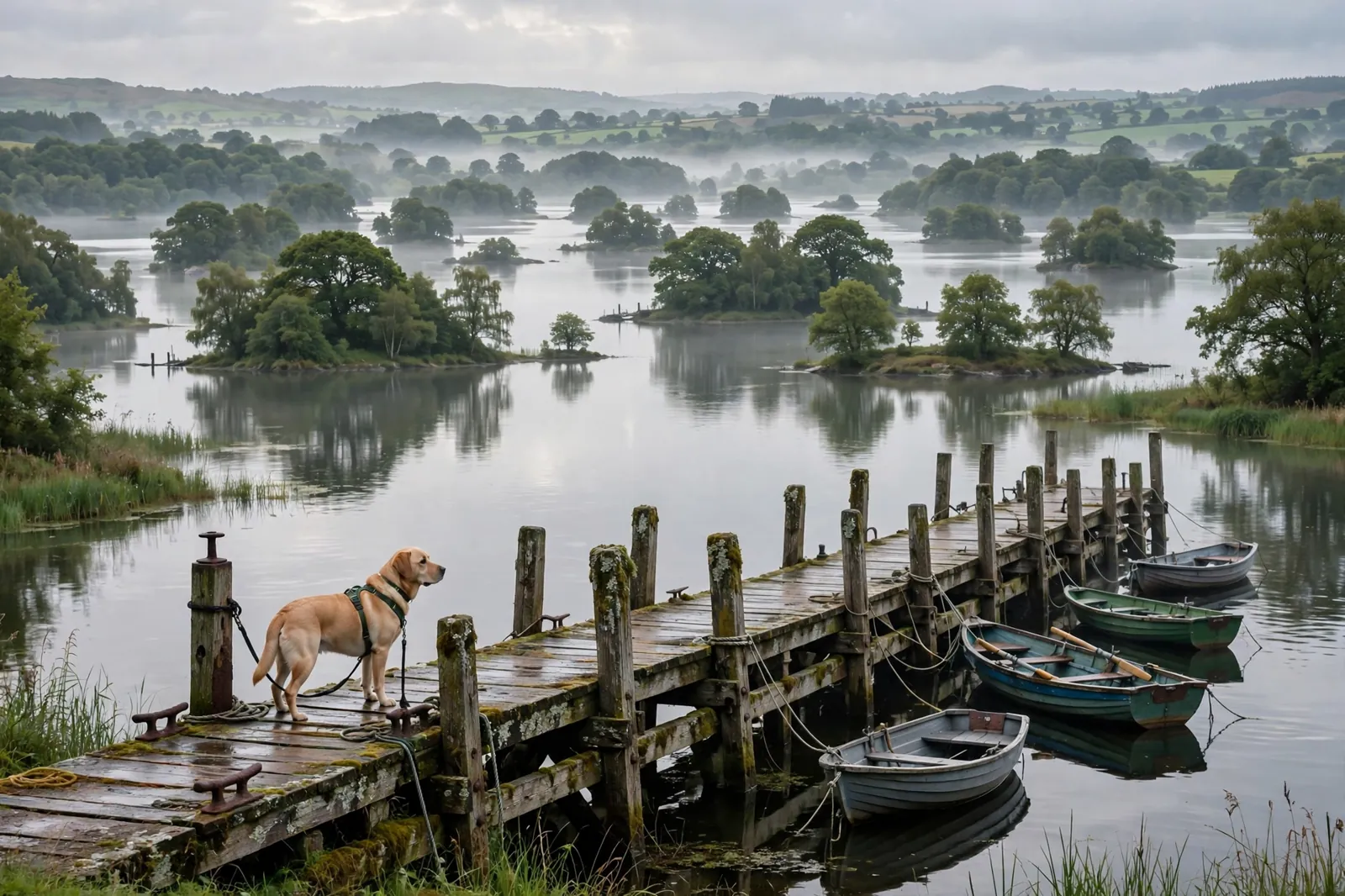
On the water itself, keep the system simple and boring, which is exactly what safe boating should feel like. Board last with the dog once bags are stowed, settle it on a mat in the cockpit or cabin area the operator specifies, and keep the lead on during boarding, mooring and any lock, jetty or marina manoeuvre, while shortening it so it cannot tangle around feet, ropes or controls. One adult should be designated dog handler at busy moments so the helm is never also holding a lunging dog. Never tie a lead to the boat in a way that would drag a dog if it fell in, and never let a dog ride with its head and shoulders over a low rail at speed, chase wash, or bark unchecked at swimmers, kayakers and anglers — courtesy on a shared lough is part of the licence to be there. If your dog is miserable — panting, pacing, drooling or trying to hide — shorten the day and return; a boat trip is optional, and no photograph is worth a frightened dog.
If hiring your own boat feels like too much for a first visit, water taxis, guided boat tours and scheduled sightseeing sailings around Enniskillen and the Lower Lough can give you the island views with someone else driving. Their dog policies are just as varied, and some passenger boats cannot take dogs at all for space or hygiene reasons. The same rule applies: check the latest official guidance before you travel, book the specific sailing, and arrive early so boarding with a dog is calm rather than a last-minute scramble up a gangway. For general preparation, our dog water safety guide covers life jackets, cold water and safe entry and exit points in more detail.
Island days: Devenish and the ferries dogs can use
Lough Erne is famous for its islands — well over a hundred on the Lower Lough alone by traditional counts — and an island day gives a dog a walk with a natural boundary, a sense of arrival and, usually, fewer distractions than a mainland shore. Devenish Island is the best-known island visit: an early monastic site with a landmark round tower, church ruins and carved stonework, set in open grassland a short ferry ride from the mainland near Enniskillen. The visit is entirely outdoors, which makes it one of the more dog-compatible heritage outings in Fermanagh, provided the ferry crossing works for your dog and you keep it on a lead among ruins, visitors and any grazing or nesting wildlife.
The ferry to Devenish usually sails in season from Trory Point, a short drive from Enniskillen, but timetables, operating days and the season itself vary, and sailings can be cancelled for weather or water conditions. Whether dogs can travel, whether they travel free or for a fare, and whether the operator expects a lead, a muzzle or a carrier for the crossing are decisions for that season's operator — confirm them directly before you set out, and confirm the time of the last return sailing before you board outwards. Missing the last boat with a dog, no facilities and falling light is the kind of story nobody needs. Arrive in good time, keep the dog on a short lead on the jetty and on deck, settle it away from the gangway, and carry water and bags: an island with ruins and grass is not an island with bins, taps or shade on demand.
On Devenish itself, plan a slow circuit rather than a dash to the tower and back. Keep to paths and mown areas around the ruins, give other visitors space at the narrowest points, and watch for ground-nesting birds and livestock in season — an island that looks empty can still be a working or protected habitat. The shore is not a swimming invitation: banks can shelve steeply, boat wash arrives without warning, and algae risk applies here as anywhere on the lough, so admire the water from the grass and offer a drink from your bottle instead. Allow time to simply sit: the view back towards Enniskillen and across to other islands is the reward, and a dog that has settled on a mat beside you will enjoy the island smells at exactly the right pace.
Other island and waterside stops can be built into boat-hire days and drives around both loughs — monastic and historic sites, island viewpoints and marina villages among them — but access, landing rights and dog rules differ island by island, and some islands are private, protected or reachable only by your own boat. Do not land anywhere just because a jetty exists. Use current charts, operator advice and official visitor information to choose landings that welcome the public, and check the latest official guidance before you travel for each site. An island day planned that carefully — ferry confirmed, dog confirmed, return confirmed, water carried — is one of the most distinctive days out in Northern Ireland; an island day improvised can go wrong in ways a mainland walk rarely does.
Marble Arch Caves, Florence Court and Castle Coole
Rain and rest days in Fermanagh often turn on three big names, and each needs a different dog plan. Marble Arch Caves, in the foothills of Cuilcagh Mountain in the south-west of the county, is a show cave system where visitors tour underground rivers and chambers with a guide, usually including a short boat section underground. Dogs are not normally taken on the cave tour — the combination of boats, wet rock, steps, darkness and other visitors makes that entirely understandable — so a dog team needs a rota: one person tours while the other enjoys the visitor centre surroundings and woodland walks above ground with the dog, then you swap if a second tour suits, or you save the caves for a dog-free slot in a longer stay. Do not arrive assuming a dog can wait in a car in the car park; that is unsafe in warm weather and a miserable plan in any weather. Check the latest official guidance before you travel for tour booking, opening, accessibility and the current position for assistance dogs, and book tours ahead in busy periods because they sell out and run to a timetable that will not wait for a late dog swap.
Florence Court, near Enniskillen at the foot of Cuilcagh, and Castle Coole, on the edge of Enniskillen itself, are National Trust places where the dog offer is much stronger outdoors than indoors. In general terms, dogs on leads are welcome in many of the grounds, parkland, woodland and garden areas, while the houses themselves are normally for people only, apart from assistance dogs. That split suits a good visit: walk the grounds together first — Florence Court for its walled garden setting, pleasure grounds and forest trails towards the mountain, Castle Coole for its lakeside parkland and tree-lined walks beside Lough Coole — then, if you want the house tour, use the same swap system as at the caves, or content yourselves with the grounds, which many dog owners honestly prefer. Facilities such as cafés, second-hand bookshops and indoor seating vary in their dog access between properties and between rooms, so ask on arrival rather than walking in with confidence.
Ground rules in estate grounds reward attention. Keep dogs on a short lead near the house, gardens, play areas, livestock and deer, and follow any local signs asking for leads in specific fields or seasons; parkland that looks like a park may still be grazed farmland. Bag and carry out waste even on woodland trails, carry water on warm days because estate walks can be longer than they look on a map, and be careful at lake and river edges within the grounds, where banks, algae and cold water carry the same risks as on the lough itself. Opening days and times for both properties are seasonal and the houses may be closed while grounds stay open, so check the current National Trust information before you travel and build your day around what is actually open, not around a previous year's memory.
Together, these three places make a useful weather ladder for a Fermanagh stay. A dry morning goes to Castle Coole's parkland straight from Enniskillen; a full fine day goes to Florence Court for grounds and forest; and a wet day, paradoxically, can be cave day for the humans in shifts, because the underground tour is sheltered even if the dog's above-ground walk is not. Planning the ladder in advance, with the dog's part in each rung made explicit, stops the classic big-house disappointment of a whole family standing at a ticket desk learning a rule that a two-minute check would have revealed at breakfast.
Lakeshore and forest walks: choosing your shore
Not every Fermanagh dog day needs a boat. The shores, forests and country parks around the loughs provide the daily walking that a holiday actually runs on, and the skill is choosing a shore that matches your dog's fitness, your tolerance for mud and the weather that morning. Castle Archdale Country Park, on the Lower Lough near Lisnarick, is a classic starting point: woodland and lough-shore trails, a marina setting and historic wartime heritage from its flying-boat past, in a compact area where you can build walks of different lengths. Lough Navar Forest, above the Lower Lough near Derrygonnelly, offers forest drives and walks with a celebrated viewpoint over the lough and towards Donegal on a clear day — a drive-and-walk combination that suits a dog that does better with several short walks than one long one. Ely Lodge and the shores around it, and the waymarked trails in forests such as Castle Caldwell and Crom — the National Trust estate on Upper Lough Erne with old woodland and lough edges — extend the menu further. For each, check the latest official guidance before you travel for parking, trail closures, forestry operations and any seasonal restrictions.
Shore walking has its own etiquette and hazards, distinct from both beach and riverside walking. Banks can be soft, slippery and undercut, reed beds hide a sudden drop into deep water, and a shore that is firm in a dry week can be flooded after rain when lough levels rise. Keep dogs out of marinas' working areas, off private jetties and away from anglers, whose lines, hooks and bait are a genuine veterinary risk to a scavenging dog. Swans, geese and other waterbirds nest and loaf at shore edges and can be bold in defence of young; give them a wide berth on a lead rather than testing who retreats first. In woodland sections, add the usual ticks, mud and livestock checks, and in spring and summer keep dogs close where ground-nesting birds use shore meadows and rough grass.
Build walks honestly around distance and surface. A fit dog can link shore paths and forest trails into a long, satisfying circuit, but many Fermanagh trails are out-and-back along a shore, which means the return distance is fixed the moment you turn — carry water for the whole walk, not the half you have done. Puppies, older dogs and dogs in recovery do better with the country-park pattern: a loop of twenty to forty minutes, a rest and a drink at the car, then a second short loop or a viewpoint stop, which delivers novelty without exhaustion. If you are combining Fermanagh with other Northern Ireland walking, our Tollymore Forest Park dog walk guide makes a good forest comparison — river trails under the Mournes after lough shores, with the same lead and water discipline serving you in both places.
Evening walks deserve a specific mention, because lakeshore light is Fermanagh's quiet glory and the hour when a badly planned day can still end well. Choose a shore you have already visited in daylight, keep the walk short and on a known path, take a torch for the return to the car, and keep the dog on a lead as birds settle and other wildlife moves. Midges can be a real presence by still water on summer evenings, for dogs as well as people, so a breezy point may be pleasanter than a sheltered bay. End at the water's edge if you like — just end with looking, listening and a drink from a bowl, not with a dusk swim in water you can no longer read.
Water safety in practice: swimming, algae and cold water
Should your dog swim in Lough Erne at all? The honest answer is: sometimes, in the right place, in the right conditions, for the right dog — and quite often the right answer on a given day is no. This section turns the checklist from the start of the guide into shore-side decisions. First, place. A safer swimming spot is a gently shelving, clearly visible entry and exit, away from boats, jetties, moorings, slipways, anglers and navigation channels, with no sudden drop, no strong flow from an inflow or outflow, and an owner able to reach the dog quickly without entering deep water themselves. If you cannot see the bottom at the edge, cannot judge the depth, or can see weed, scum or debris concentrated at the shore, choose a walk instead. Busy marinas, harbour walls and the shores below dams or weirs on connected rivers are never swimming places, however inviting they look on a hot afternoon.
Second, algae, the risk that most changes the decision. Blue-green algae — cyanobacteria — can bloom in Lough Erne and other still or slow waters in warm, settled weather, sometimes as green scums, flecks or a paint-like sheen, and sometimes with few clear signs. Dogs are at particular risk because they swallow water while swimming and lick it from their coats afterwards, and poisoning can develop frighteningly fast. Follow official warnings and shore signs absolutely: a closed or warned shore is closed. If no warning is posted, still inspect the water yourself, keep the dog out of any discoloured, scummy or unusually green water, and rinse a dog that has entered suspect water with clean water, stop it licking its coat, and contact a vet urgently if it becomes unwell after being in or near the water, telling the vet you suspect algae exposure. Do not wait to see whether symptoms settle.
Third, cold, depth and tiredness. Large loughs stay cold well into summer, and cold water can shock a dog, sap swimming strength and turn a confident retrieve into a struggle, especially for puppies, older dogs, small dogs and flat-faced breeds, which should not be swimming in deep open water at all. Keep swims short, stay close to the shore, never throw balls or sticks further and further out as a game, and never let a dog chase birds or drift after a floating toy into deeper water — a recall that works on land must be proven, on a long line in shallows, before it is trusted at a lough edge. A dog life jacket with a handle adds buoyancy and a lifting point for regular boat and swimming dogs, but it is an aid, not a permission slip for bad places or bad days.
After any swim, finish the job properly: rinse the dog with clean water where you can, dry ears and coat, offer fresh drinking water, and watch over the next hours for coughing, lethargy, vomiting or behaviour changes after water exposure, seeking veterinary advice promptly if anything seems wrong. Keep a record, even on your phone, of where the dog swam and when; if a vet visit follows, that detail genuinely helps. Owners who build this routine — check, decide, limit, rinse, watch — will find Fermanagh swimming can have its place in a holiday. Owners who cannot run the routine on a given day should skip the swim without regret: the Lakelands offer a dog a hundred pleasures, and almost none of them require being in the water.
Enniskillen as your base, and a two-day pattern
Enniskillen, the island town between Upper and Lower Lough Erne, is the practical heart of a Fermanagh dog holiday. Staying in or near the town puts shops, supermarkets, cafés and pubs, veterinary services and fuel within easy reach, gives you evening pavement and waterside walks without a drive, and shortens the journey to departures and shores in both directions — Castle Coole at the town's edge, Devenish's ferry at Trory, the Lower Lough shores to the north-west and the Upper Lough and Crom to the south-east. Ask the standard dog questions wherever you book, in town or in a loughside village or self-catering cottage: dog charges and how many dogs are allowed, whether there is enclosed outdoor space, whether the dog can join you where you eat, whether it may be left alone and for how long, and where the nearest safe after-dark walk is that is not an unlit lough road. A quieter village base — around Kesh, Lisnaskea, Belleek or the marina settlements — trades that choice for immediate shore access and dawn quiet, and suits a dog that finds towns stimulating, provided you stock up and plan food with the smaller choice in mind.
Eating and daily logistics with a dog follow the usual Irish welcome with the usual need to verify. Many pubs and cafés in and around Enniskillen welcome dogs in some areas and not others, and outdoor seating that is perfect in June is no plan in October, so phone ahead for the meal that matters rather than relying on a listing. Carry a settle mat and water bowl so the dog's routine travels with you, keep lough-muddy dogs out of carpeted dining rooms as a matter of basic courtesy, and build a drying and paw-wash routine at your accommodation from day one — Fermanagh shores will supply mud generously, and a system at the door saves both the deposit and the evenings. For supplies, note where the nearest pet shop, supermarket and vet are on arrival day, not on the evening you need them.
For a two-day pattern that uses this guide in order, try this shape. Day one is a shore and town day: a morning walk at Castle Coole or Castle Archdale to test paws, legs and water discipline at close range, an afternoon in Enniskillen with a café stop and stock-up, and an early evening lakeshore stroll at a shore you have already seen in daylight. Day two is the water day, taken only if weather and algae checks pass: the Devenish ferry for an island walk, or a confirmed dog-welcome day boat for a few hours, followed by a deliberately lazy afternoon and, if energy remains, Florence Court's grounds on the way back towards base. A third day adds Marble Arch with a human rota, or Lough Navar's viewpoint and forest walks, and leaves the best shore for a return visit rather than exhausting every option at once.
Leave the Lakelands as you found them: gates and jetties left as they were, waste carried out from islands and shores alike, leads used where they protect birds, stock, ruins and other visitors, and nothing of the dog left in the water but a brief ripple. Fermanagh rewards the unhurried — the visitor who checks, confirms and then slows down will see more islands, meet more patience from operators and residents, and give a dog the kind of holiday it actually enjoys: new smells, safe water at a respectful distance, and a settled mat waiting at every stop.
Practical questions
Before you go
Can dogs go on hire boats and cruisers on Lough Erne?
Some hire companies allow dogs on day boats and some cruiser companies allow them on selected boats, often with a charge, a size or number limit and rules about bedding and furniture. Policies vary by operator and by boat, so never assume. Ask in writing before you book whether dogs are allowed on that exact boat, what the charge is, and what cleaning or damage terms apply.
Can dogs visit Marble Arch Caves and Florence Court?
Dogs are not normally taken underground on the Marble Arch Caves tour, so plan for one person to stay above ground with the dog or leave the cave tour for a dog-free slot. At Florence Court and Castle Coole, dogs on leads are generally welcome in many outdoor grounds and parkland areas, but not inside the houses except for assistance dogs. Check the current National Trust and venue guidance before you travel, as opening and access rules change.
How do we reach Devenish Island with a dog?
Devenish is reached by a passenger ferry, usually sailing from Trory Point near Enniskillen in season. Whether dogs can travel, whether a lead and muzzle or carrier is expected, and whether a fare applies are set by the operator for that season. Confirm the dog policy, timetable, return sailing and weather cancellation terms directly with the operator before you set out, and keep your dog on a short lead on the boat and on the island.
Is it safe for my dog to swim in Lough Erne?
Not automatically. Lough Erne is large, deep and busy with boats, and conditions change with wind, currents near channels and inflows, cold water and seasonal blue-green algae. Only let a dog enter water at a calm, shallow, clearly accessible shore you have checked first, well away from boats, jetties and anglers, and never during an algae warning. If in doubt, keep the dog out and offer drinking water from a bowl instead.
Where is the best base for exploring the Fermanagh Lakelands with a dog?
Enniskillen is the most practical base for most visitors, because it sits between Upper and Lower Lough Erne with the widest choice of stays, food, shops, vets and boat and ferry departures nearby. Villages around the loughs give a quieter stay and shorter drives to specific shores. Wherever you book, confirm dog charges, enclosed outdoor space, rules for leaving a dog alone and the nearest safe after-dark walk.