This guide is independent and contains no paid placement. If affiliate links are added later, they will be clearly marked and will not change our editorial checks.
Do not try to see everything in seven days. Keep the drive short, arrive in daylight, let the dog learn one home and one walk first, build in a full rest day, and save the longest outing for day four, when the dog is settled rather than still adjusting. The best first holidays feel slightly under-planned, because the slack is what absorbs bad weather, tired dogs and changed plans.
The week before you leave: rehearsals beat packing lists
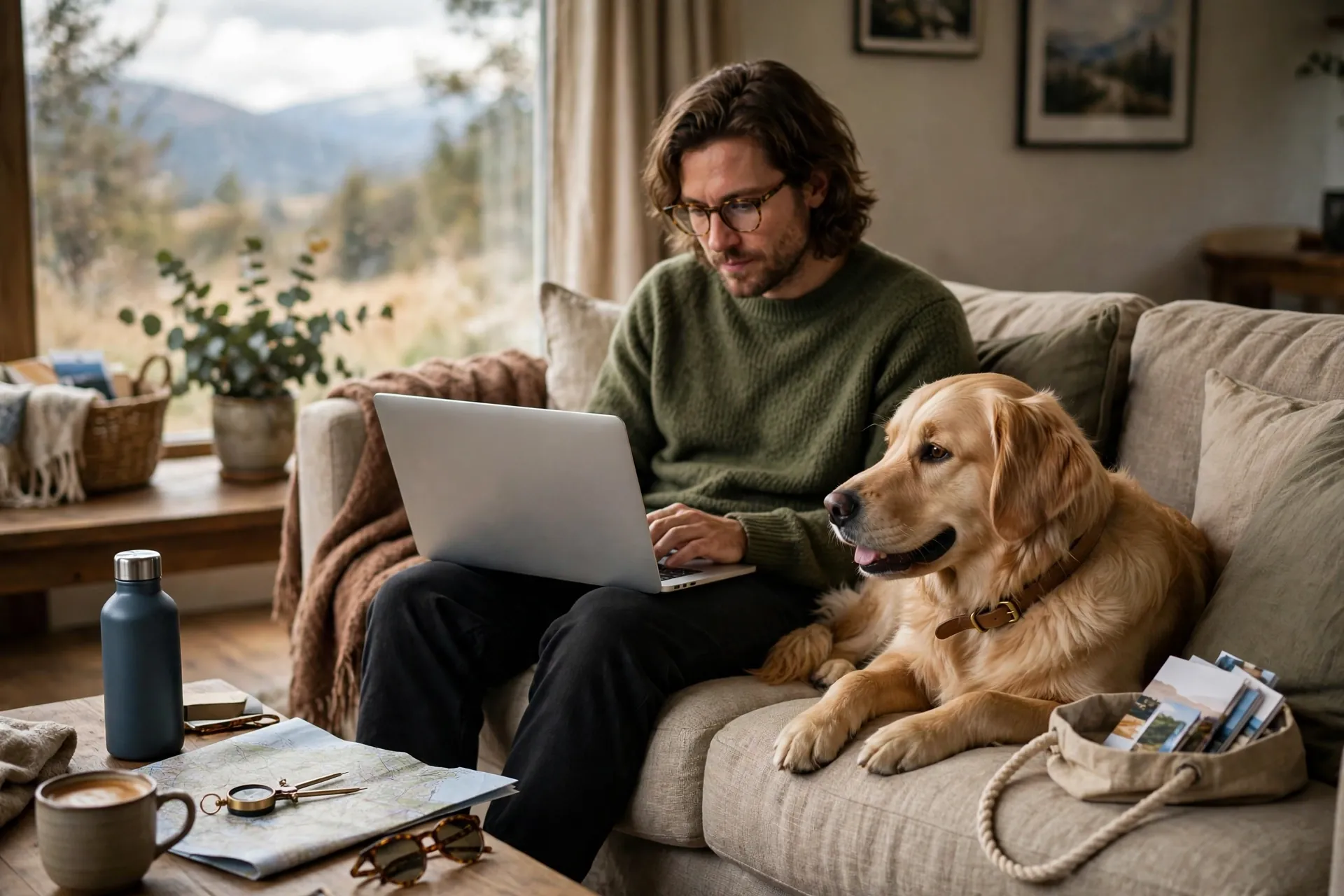
A first holiday goes wrong most often before the car is loaded, not on the road. Dogs cope with new places far better when the unfamiliar parts have been rehearsed at home: the car routine, the new bed, the harness, the feeding puzzle and the sound of a different front door. Spend the week before departure making each of those things boring. A short practice drive every other day, ending with something pleasant, teaches a nervous traveller that the car leads to good outcomes. Sleeping on the holiday bed for two or three nights at home loads it with familiar scent, which matters more than any calming spray on arrival night.
Booking checks belong in this week too, not in the car park on arrival day. Confirm in writing that the specific property accepts your dog, how many dogs are covered, what the pet fee totals, and whether the garden is enclosed and how high the fence or wall runs. Ask about alone-time rules, because many cottages forbid leaving a dog unattended at all, and a first holiday is the wrong time to discover that the hard way. Confirm the check-in window and whether early arrival is possible: arriving in daylight, with time for a garden sniff and a short walk before dark, is worth more than any welcome basket. Save the property address, the key instructions, the nearest vet, the nearest out-of-hours vet and the nearest supermarket in your phone, and print the vet numbers as a backup, since rural signal is not guaranteed.
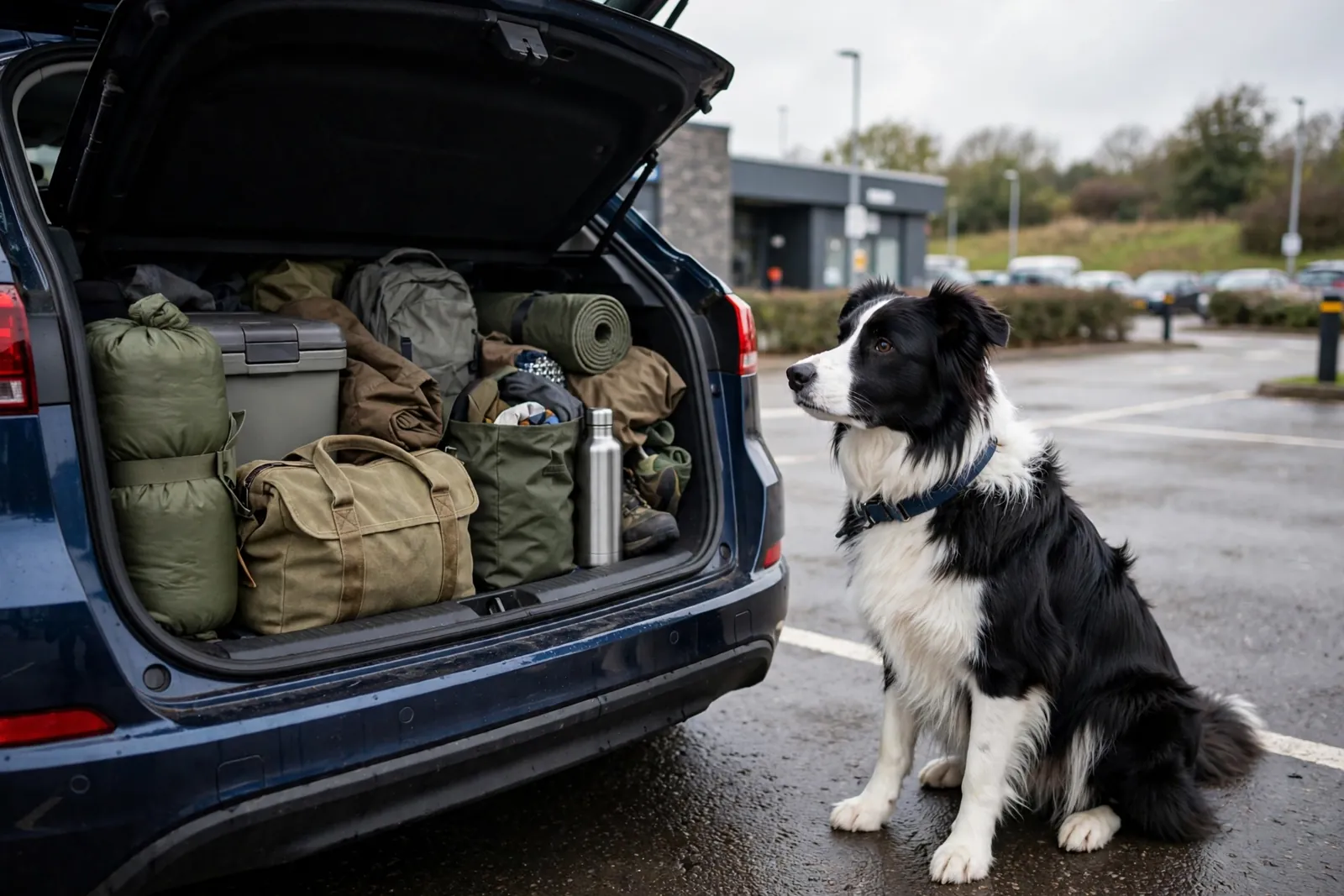
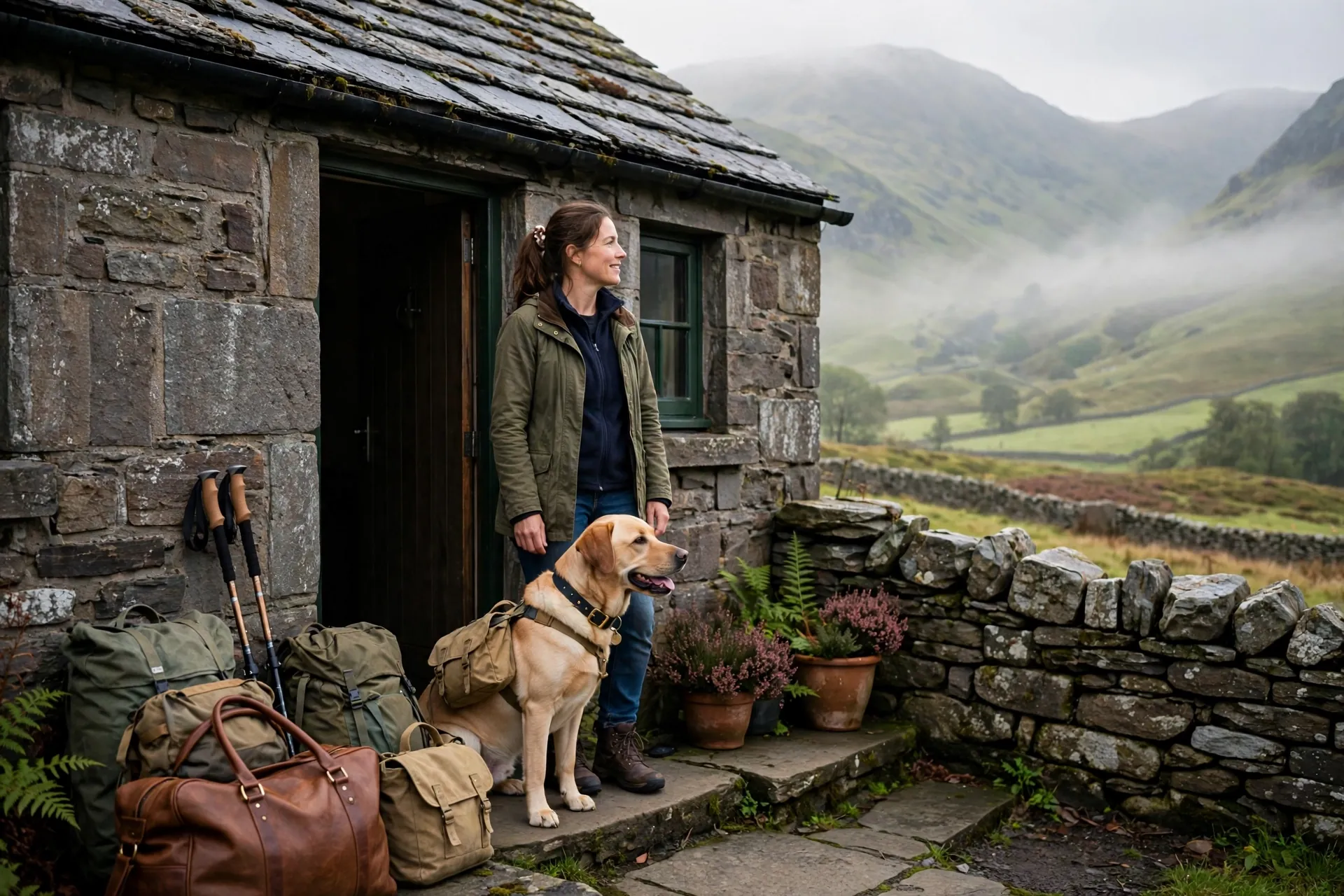
Pack for the dog first and the humans second. The non-negotiables are food for the whole week plus two spare days, measured into daily portions if you can, fresh water and a bowl, the usual lead and a long line, a harness that fits after a winter coat or a summer trim, the bed and a familiar blanket, towels and a drying coat, poo bags, any medication with its instructions, the vaccination record, and a torch for late toilet trips. Add a stuffed food toy, a lick mat and a chew for settling, and a spare lead, because leads break at the worst moment. Dogs with sensitive stomachs should not meet a new food brand on holiday: keep the diet identical, introduce no rich treats from cafes, and carry a small supply of the plain food your vet recommends for upset stomachs if that is already part of your dog's routine. If your dog travels in the car, check the restraint, the boot guard or the seatbelt harness before departure day, and read our dog car safety guide for the restraint rules that apply in the UK.
Finally, plan the journey like a dog owner, not like a satnav. Choose a route with a planned stop every two hours at a place where a dog can actually walk, not just a motorway service area car park. Aim for a total drive under three hours where possible, and avoid the Friday evening rush if you can travel on a Saturday morning instead. Feed a light meal three to four hours before departure rather than a full bowl immediately before the car, and offer water at every stop. Dogs that suffer travel sickness often do better with a slightly cool car, fresh air and a settled, forward-facing position, and your vet can advise on options before you travel if sickness has been a problem before. Tell your usual vet you are travelling, and ask what to do if a minor issue arises while you are away.
Day 1: arrive slowly, and let the dog read the house
Day one has one job: teach the dog that this strange house is safe. Resist the urge to unpack everything, tour the village and tick off a famous walk before dinner. Instead, arrive, let the dog out on the lead in the garden, and walk the boundary together. Check gates, gaps under fences, low windows, ponds and any route to a road, and note anything that needs a temporary fix, such as a blocked gap or a kept-shut internal door. Move cleaning products, medicines, chocolates and anything chewable out of reach, and photograph any existing damage so a later deposit discussion starts from facts.
Once the boundary is understood, set up the dog's corner before your own suitcases are unpacked. Put the bed in a quiet spot with a view of the room but not in the main through-route, add the familiar blanket, water, and a stuffed food toy, and let the dog investigate at its own pace. Some dogs claim a house in ten minutes; others need an hour of sniffing, retreating and sniffing again. Both are normal. A short, sniff-heavy walk of twenty to thirty minutes around the immediate area teaches the dog the route to the toilet spot and the way back to the front door, which is the most useful geography of the whole week. Keep the lead on for this first walk even if the area looks quiet, because an excited dog in an unknown place is a dog that can vanish around a corner.
Evening one should mirror home as closely as you can manage. Feed at the usual time, in the usual bowl, in a calm corner. Take the last outing at the usual hour, along the now-familiar short route, and settle the dog in the same arrangement as at home, whether that is a crate, a bed beside yours, or a bed downstairs with the door open. A dim light, a familiar blanket and a long-lasting chew help many dogs drift off, while a brand-new routine of sleeping alone in a cold kitchen rarely helps any dog on night one. If the dog paces, pants or whines, sit nearby quietly rather than starting a game or offering constant reassurance, which can accidentally teach the dog that night-time restlessness earns attention. Most first-night restlessness fades by night two once the house smells familiar, and a calm, boring evening is the fastest route there.
Before bed, do the small jobs that make day two easy: lay out walking kit by the door, fill the water bottle, check tomorrow's weather and the nearest dog-friendly walk, and confirm the plan for breakfast. A first day that ends with the dog asleep on its own bed, in a house it has sniffed thoroughly, is a successful first day, even if you saw nothing famous at all.
Day 2: first proper walks, short and sniffy
Day two is for the first real walk, but keep it shorter than you think the dog can manage. A good rule is the dog's normal home walk length, on easy ground, with plenty of sniffing stops, rather than a heroic hike to a viewpoint. New smells, new dogs, new livestock and new surfaces all add mental load, and a dog can be exhausted by a forty-minute sniffing walk in a new valley in a way it never is by the same walk at home. Choose a route you have checked for the practical details: where dogs are allowed, whether livestock is present, whether there are stiles or gates the dog cannot manage, and where you can cut short if the dog tires or the weather turns.
Use day two to learn how your dog behaves away from home. Some dogs become more reactive in new places, barking at dogs they would ignore at home; others become clingy, sticking close and checking in constantly. Neither is a failure, but both are information. If your dog reacts, increase distance, change direction calmly and reward the choice to look away, rather than forcing a close meeting to prove friendliness. Keep greetings with strange dogs brief and on the lead unless you are in a clearly suitable off-lead area and both dogs are relaxed. In the countryside, keep dogs on a lead around livestock at all times, and check the official guidance before you travel for the local rules on leads, seasonal restrictions and nesting birds, since these change by place and season.
Build the afternoon around rest. After the morning walk, give the dog a quiet hour with a chew or a food puzzle, then a second short outing later in the day, ideally the same route as the morning, so the dog builds a mental map. Dogs learn places by repetition, and a route walked twice feels like a home route by the third walk. If you want a pub lunch, choose a dog-friendly pub you have already checked, keep the visit short, bring a mat and water, and sit where the dog can settle without being in the main flow of people. A successful day two ends with a tired, calm dog and owners who know one walk, one pub and one toilet route well, which is a solid foundation for the rest of the week.
Watch for the small signs that the dog is coping: eating normally, drinking, toileting on schedule, settling within a few minutes of lying down, and showing interest in walks. Loose stools on day two are common with travel stress and new water, and often settle with plain food and rest, but persistent vomiting, diarrhoea, lethargy or refusal to drink deserve a call to a vet. Save the vet's number where everyone in the party can find it, not just on one phone.
Day 3: the rest day that saves the holiday
The rest day is the most counter-intuitive and most valuable day of a first dog holiday. By day three, many owners feel guilty about a quiet day and push for another big outing, yet this is exactly when a dog benefits most from doing less. Sleep, familiar routines and low stimulation let the dog consolidate everything it has learned: the house, the garden, the walk, the car, the new sounds at night. Dogs that get a rest day are usually calmer, more responsive and more fun on days four and five than dogs that are marched from attraction to attraction without a break.
A rest day does not mean a locked-in day. Plan two or three short garden or lane walks of ten to twenty minutes, spaced through the day, with long sniffing and toilet opportunities. Between walks, use enrichment that tires the brain without tiring the body: scatter feeding in the garden, a stuffed food toy, a short training game with familiar cues, or a gentle grooming session if your dog enjoys it. Keep visitors, new dogs and noisy outings off the schedule. If the weather is good, an hour in the garden with the dog on a long line, watching the world and chewing, counts as a holiday for most dogs, even if it feels uneventful to the humans.
Use the slack in the day for the jobs that are easier without a tired dog in tow: a supermarket run, a look at the local map for day four, checking tide times or beach dog rules if a coastal day is planned, and confirming a restaurant or pub booking for later in the week. Owners who use the rest day to recharge also make better decisions later, because a holiday spent managing an overtired dog is tiring for everyone. If your dog is a puppy or an older dog, the rest day is not optional: puppies need frequent naps and short bursts of activity, and older dogs need joint-friendly rest between longer walks, with soft bedding and a warm, draught-free sleeping spot.
By the evening of day three, you should be able to answer three questions: where does the dog settle best in the house, what walk does it enjoy most so far, and what time does it naturally wind down? Those answers shape the second half of the week far better than any guidebook list, and they are the reason a first holiday needs a rest day built in rather than bolted on.
Day 4: the big day out, earned by three calm days
Day four is the day to attempt the walk, beach or attraction that made you choose this area in the first place. The dog is settled, you know its energy patterns, and you have a rest day behind you rather than ahead of you. That combination makes a longer outing enjoyable instead of overwhelming. Still, keep the ambition realistic: a three- to four-hour outing with breaks, shade, water and a shorter afternoon is a big day for most dogs, and a six-hour forced march rarely is. Choose one highlight, not three, and build the day around it.
Preparation makes the difference between a highlight and a slog. Check the route for dog rules before you leave: seasonal beach bans, lead requirements on cliffs and moorland, livestock, stiles, river crossings and whether dogs are allowed at the cafe or attraction at the end. Pack water for the dog as well as yourselves, a collapsible bowl, a spare lead, poo bags, a towel, a basic first-aid kit and a phone charger. In warm weather, walk early or late, seek shade and water, and watch for heavy panting, slowing down or seeking shade, which are signs to stop, cool the dog and head for the car. In cold or wet weather, pack a drying coat and check that the dog can warm up properly afterwards, especially small, short-coated or older dogs.
At the destination, let the dog set the pace for the first half hour. A dog that is allowed to sniff, explore and choose its speed will settle into a rhythm and last longer than a dog dragged briskly from car park to viewpoint. Take a proper break halfway: water, a snack for the humans, and a quiet sit for the dog, ideally off the main path where the dog can watch without being jostled. If you meet other dogs, keep meetings short and move on while both dogs are still happy, rather than letting excitement tip into over-arousal. If the dog starts lagging, lying down or refusing to walk, believe it: cut the route short, find the nearest exit or shorter loop, and call it a successful day rather than pushing on to a viewpoint the dog will not remember fondly.
After a big day, protect the evening. A short toilet walk, a familiar dinner, a chew and an early night help the dog recover, and the next morning will tell you whether the distance was right. A dog that wakes bright, eats well and asks for a walk got the right amount; a dog that is stiff, reluctant or still flat at lunchtime was overdone, and the following day should be shortened accordingly. That feedback loop, applied honestly, is how a first holiday teaches you your dog's real holiday limits.
Day 5: rain, tiredness or both, handled without drama
Day five is where first holidays often wobble, because a big day plus British weather can leave everyone tired, wet or both. Plan for it in advance rather than treating it as a failed day. A wet-weather plan is not a consolation prize: it is a different kind of good day, built around covered walks, dog-friendly indoor stops and cottage comfort. Forestry tracks, surfaced park paths and canal towpaths stay usable when muddy fields do not, and a dog-friendly garden centre, pub or market can provide a change of scene without a long drive.
Wet-dog systems matter more on day five than on day one, because damp bedding, muddy floors and a chilled dog compound quickly. Keep a drying routine by the door: towel, drying coat, a mat for muddy paws and a box for wet leads, and ventilate the house after drying so condensation does not build up. Wash or swap the dog's bedding if it is damp, and check paws for mud balls, cuts or irritation after wet walks, especially between the toes. Dogs that swim or paddle should be rinsed if the water was muddy or salty, and dried thoroughly, since a wet coat in a draughty cottage chills a dog faster than a wet coat on a summer walk.
If the dog is tired rather than wet, day five should shrink, not expand. Swap the planned long walk for two short ones, add enrichment at the cottage, and let the dog sleep. Owners sometimes worry that a quiet day wastes the holiday, but a dog that rests on day five will enjoy days six and seven far more than a dog pushed through tiredness into grumpiness or reactivity. Watch for signs of genuine over-tiredness: reluctance to start walks, increased barking or reactivity, restless sleep, or a normally sociable dog becoming snappy. All of these are requests for rest, and the kindest answer is a shorter day.
Use day five to check the practical details for the journey home: fuel, the route, the planned stop, and whether the dog's food will last until you are home. A small shop on day five prevents a hungry-dog problem on day seven, and a quick clean of the cottage, including the dog's corner, makes departure morning far calmer.
Day 6: towns, cafes and people, at the dog's pace
Day six is a good day for people places, because the dog is now confident in the area and you know how it behaves around strangers, traffic and other dogs. A market town, a dog-friendly cafe, a garden or a gentle riverside walk offers a different kind of stimulation from open countryside, and it teaches the dog that holidays include towns as well as fields. Keep the day structured in short blocks: a morning walk, a town visit of an hour or two, a rest at the cottage, and a short evening walk, rather than a single long town day with no break.
Town skills are worth rehearsing rather than assuming. Practise settling on a mat under a cafe table, walking calmly past shop doorways and other dogs on narrow pavements, and waiting quietly while you pay or queue. Bring water, a chew and the mat, and choose seating where the dog is not in the main walkway. If the dog becomes restless, a short walk around the block usually resets it better than staying and hoping. Keep visits to dog-friendly venues you have checked in advance, and respect the venue's rules: some welcome dogs throughout, some restrict dogs to a terrace or a specific room, and some allow only well-behaved dogs on a lead. A dog that has a calm cafe experience on day six is a dog you can take out again on future holidays.
Day six is also the right day for a gentle souvenir of the week: a photo in a favourite spot, a note of the walks that worked, and a list of anything to pack differently next time. Note the dog's favourite walk, the best toilet route, the pub that welcomed you, and any item you wished you had brought. That list turns a first holiday into a template for the second, and it costs nothing to write while the details are fresh. If you have time, revisit the dog's favourite walk for a short outing, since ending the holiday on a familiar, happy route leaves a better memory for dog and owners alike than a frantic last attempt at a new attraction.
Evening six should start the wind-down. Feed at the usual time, keep the evening calm, and avoid a late, exciting outing that leaves the dog wired on the last night. A settled final night makes departure morning easier for everyone, and a dog that sleeps well on night six is a dog that travels well on day seven.
Day 7: pack up, leave the cottage well, and travel home kindly
Departure day is often the most stressful day of a first holiday, because packing, cleaning, checking out and a long drive all compete for attention while the dog's routine dissolves. The antidote is to do most of the work the night before: pack the humans' bags, clean the dog's corner, strip bedding if the property asks for it, and leave only the morning essentials out. On the morning itself, walk the dog first, on the familiar route, before the packing noise starts, and feed at the usual time if departure allows. A dog that has had its normal morning is far calmer during the packing chaos than a dog whose routine has already been abandoned.
Leave the property the way a good guest should. Check the garden for toys, balls and poo bags, check under beds and behind doors for chews and leads, and do a final sweep for damage, reporting anything honestly rather than hoping it goes unnoticed. Photograph the property as you leave it, and keep the checkout instructions and key return details in one place. If a deposit is held, ask when it will be released and what would delay it, so there are no surprises later. A clean, honest departure also makes a return booking far easier, and many owners return to a first cottage precisely because the first stay went smoothly.
For the journey home, apply the same rules as day one: a light meal well before departure, water at every stop, a planned stop every two hours, and a cool, settled car. Dogs often travel home more quietly than they travelled out, because the car now means something familiar, but do not assume it: keep the restraint in place, keep the temperature comfortable, and stop if the dog becomes restless or sick. On arrival home, unpack the dog's things first, put the bed back in its usual spot, and give the dog a familiar garden walk before the suitcases are opened. A calm homecoming, with the usual dinner and the usual last outing, closes the holiday properly and tells the dog that home is still home.
Finally, debrief while the week is fresh. Write down what worked, what did not, and what you would change: the drive length, the walk distances, the cottage features that mattered, and the dog's reactions to towns, beaches and other dogs. That note is the most valuable souvenir of a first dog holiday, because it turns one week's experiments into a reliable plan for every holiday that follows.
Costs, rules and safety nets for the week
A first dog holiday costs more than the cottage price, and budgeting for the extras in advance prevents the small resentments that spoil a week. The usual extras are the pet fee, which commonly runs from around twenty-five pounds to seventy-five pounds per dog per week, though some properties charge per night or per stay, and a refundable damage deposit. Add fuel, food, a vet contingency, and the small costs of cafe visits, parking and attractions. Dogs that need a new harness, a drying coat or a travel bed before the trip add a one-off cost that should not be counted against future holidays. Get the all-in cottage total in writing before you pay a deposit, including the pet fee, cleaning charges and any deposit, so the final bill holds no surprises.
Rules are the other safety net. Before you travel, check the official guidance for the area you are visiting on leads, livestock, seasonal beach restrictions and protected wildlife, since a rule that applies on one beach or moor may not apply on the next. In England and Wales, dogs must be kept under control around livestock, and farmers may take action if a dog worries livestock, so a lead around sheep and cattle is not optional politeness but a legal and safety necessity. Check the official guidance before you travel for any local bylaws, and follow on-site signs even when they are stricter than the general rules. If you are unsure whether dogs are allowed somewhere, ask before you go rather than assuming, since a turned-away dog at an attraction entrance is a miserable start to a day.
Insurance and identification complete the safety net. Make sure your dog's microchip details are up to date with your current phone number, and that the dog wears an ID tag with your name and number while travelling, since a dog that slips a lead in an unfamiliar place is harder to reunite without them. Pet insurance that covers vet fees away from home and third-party liability is worth checking before departure, including any exclusions for pre-existing conditions or for dogs left unattended. Carry the policy number and the insurer's claims number with the vet numbers, and keep a photo of the dog on your phone, in case you ever need to describe it quickly to a stranger or a warden.
For a full budget breakdown, including sample weekly costs and kennel comparisons, see our guide to dog holiday costs in the UK. It helps to cost the week before you book, not after, because the difference between a budget week and an expensive one is often a handful of choices: off-peak dates, a cottage with a lower pet fee, and a destination where the best walks are free.
If things go wrong: illness, escape, barking and bad weather
Most first-holiday problems are small, but they feel large when you are far from home, so a simple plan for each one helps. For illness, the plan is: call the local vet early, describe symptoms clearly, and follow their advice rather than waiting for a problem to resolve itself. Vomiting, diarrhoea, limping, a swallowed object, a tick that cannot be removed cleanly, or any sudden change in behaviour all deserve a call. Our guide to finding an emergency vet on holiday explains what to ask, what to carry, and how out-of-hours services work, and it is worth reading before departure rather than in a crisis.
For an escaped dog, the plan is: stay calm, do not chase, and use the recall cue and a high-value treat if the dog is in sight. If the dog is out of sight, alert the property owner, check the garden and the immediate lanes, and contact the local dog warden and nearby vets, since a found dog is often taken to one of those first. Prevention matters more than recovery: check gates on arrival, keep the lead on until you know the area, and never rely on a garden fence you have not walked and tested. For barking complaints, the honest response is to apologise, reduce the trigger, and increase distance or rest, rather than arguing about the rules. A dog that barks at passers-by needs a quieter sleeping spot, a covered window or a white-noise buffer, not a longer walk to tire it out, since tired dogs often bark more, not less.
For bad weather, the plan is a flexible day, not a cancelled holiday. Short, frequent walks, covered routes, indoor dog-friendly stops and cottage enrichment can fill a wet day enjoyably, and a storm day is a good day for the rest-day routine. For a car breakdown with a dog, keep water, a lead and a blanket accessible rather than buried under luggage, and never leave a dog alone in a hot car while you seek help. For a cottage problem, such as a broken gate or a heating failure, contact the owner or agent promptly and in writing, with a photo, so the issue is logged and can be fixed or compensated fairly.
The thread through all of these plans is the same: act early, keep the dog's routine as stable as you can, and ask a local professional rather than guessing. First holidays are learning experiences, and a problem handled calmly often becomes the story you laugh about on the second holiday, rather than the reason there never is one.
Practical questions
Before you go
How long should the first day's drive be with a dog?
Keep it under three hours of driving where possible, with a proper stop every two hours for water, a toilet break and a short sniffing walk. A shorter first journey leaves the dog with energy to explore the new home calmly instead of arriving overtired and unsettled.
Should we plan a rest day on a first dog holiday?
Yes. A full rest day in the middle of the week lets a dog process new smells, sounds and routines. Short garden walks, enrichment at the cottage and an early night usually produce a calmer, happier dog for the second half of the week than another big day out.
What if our dog will not settle on the first night?
Keep the routine as close to home as possible: the same bed, the same feeding time and a last outing at the usual hour. A familiar-smelling blanket, a stuffed food toy and a dim, quiet sleeping spot help most dogs. If restlessness continues for more than a night or two, or the dog seems unwell, contact a local vet for advice.
Can we eat out with the dog during the week?
Often, yes, if you choose pubs and cafes that welcome dogs and book ahead. Bring a mat, a chew and water, and keep visits short on the first few days. If a venue is unsure, do not push it: a takeaway eaten together at the cottage is a better evening than a stressed dog under a busy table.
What should we do if the dog gets ill on holiday?
Find the nearest vet and the nearest out-of-hours service before you need them, and save both numbers in your phone. For vomiting, diarrhoea, limping, a swallowed object or any sudden change, call the practice for advice rather than waiting to see if it passes. Carry your dog's vaccination record and any medication list.
Is seven days too long for a first dog holiday?
For most settled adult dogs, a week is a good length: the first two days are for settling, the middle days are the real holiday, and the last day is for winding down. For a very young puppy, a nervous dog or a dog that has never stayed away from home, a shorter first break of three or four nights is a kinder test run.