This guide is independent and contains no paid placement. If affiliate links are added later, they will be clearly marked and will not change our editorial checks.
Glencoe walks with a dog work best when you build the day around valley, woodland and lochside routes rather than headline summits. Keep your dog on a lead near livestock, deer and road edges, carry water even on cool days, and treat any hill route as weather-dependent. The Signal Rock woodland loop, Glencoe Lochan trails and the lower sections towards Loch Achtriochtan give most dogs a full, satisfying day without exposure, scrambling or cliff edges.
Valley first: why the floor of the glen wins
Glencoe tempts people upwards. The ridges look close on a map, the car parks sit almost underneath them, and photographs make the tops feel like the obvious prize. With a dog, invert that logic. The floor of the glen offers riverside paths, birch woodland, loch shores and long views of exactly those ridges, with escape routes in every direction and none of the exposure that turns a gust of wind or a tired paw into a serious problem. A valley day here is not a consolation prize; for most dogs it is the better day.
There is also a welfare argument. Mountain paths in the glen are steep, stony and often wet, and a dog that pulls even slightly can unbalance a walker on descent. Older dogs, puppies building fitness, short-legged breeds and any dog recovering from injury will manage valley distances far more happily. If you want a comparison point for mountain judgement elsewhere in Scotland, our Cairngorms with a dog guide works through the same seasons-and-altitude thinking in a very different landscape.
Plan the day as a chain rather than a single march. Two or three shorter valley walks separated by a rest, a drink and a change of scenery suit dogs better than one relentless outing, and they suit Glencoe better too, because light and weather change by the hour. A morning woodland loop, a lochside stroll after lunch and a short riverside leg before you leave will show you more of the glen than a single slog, and your dog will finish bright rather than flattened.
Glencoe Lochan and Signal Rock: the gentle openers
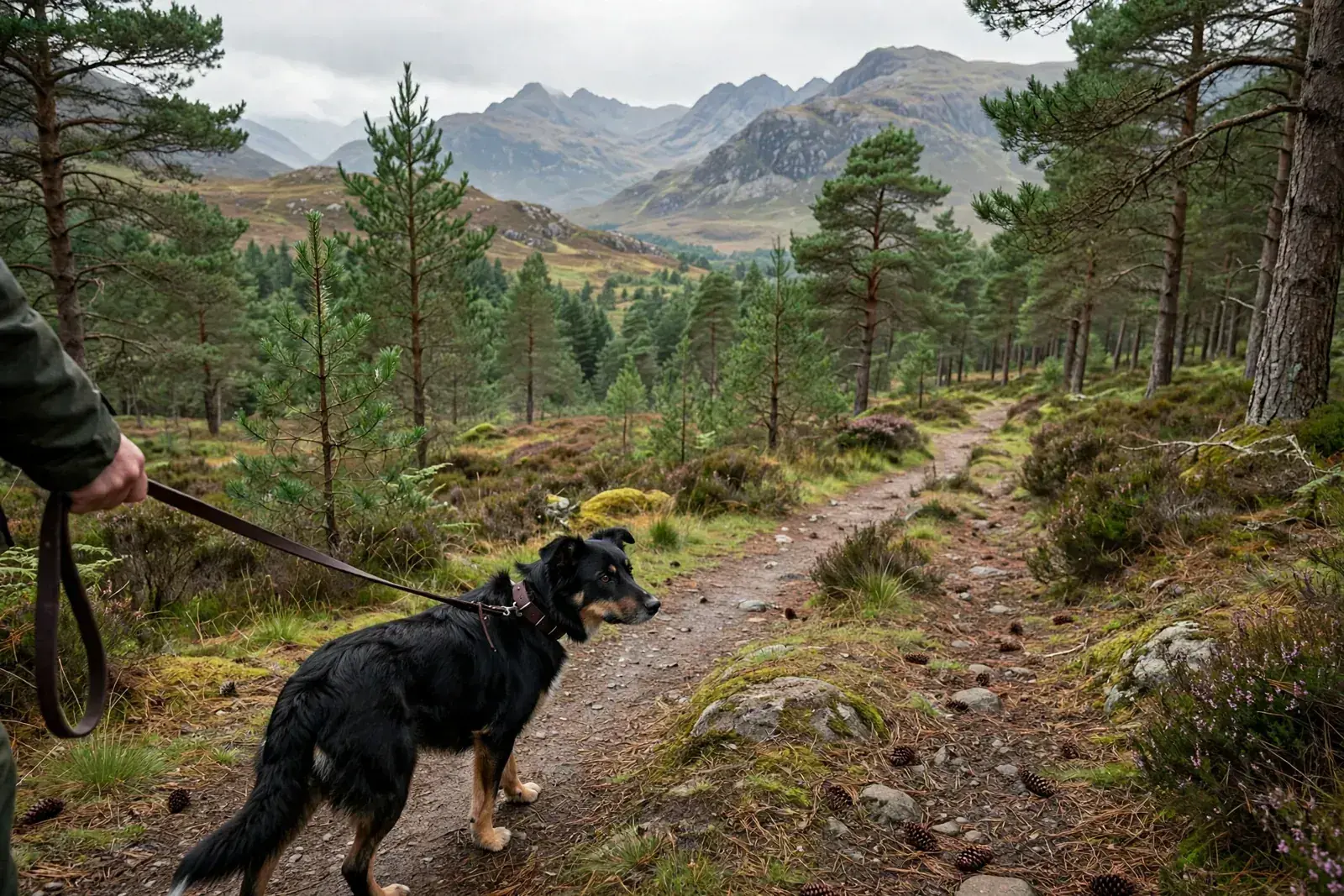
The woodland trails around Glencoe Lochan, just outside Glencoe village, are the friendliest introduction in the area. The lochan was landscaped in the nineteenth century, planted with North American conifers to remind a homesick Canadian wife of home, and the result today is a sheltered circuit of level paths, tall trees and still water reflecting the Pap of Glencoe. Loops here can be as short as twenty minutes or stretched towards an hour, which makes them ideal for a first leg-stretch after the drive, an older dog, or a wet hour when higher ground is miserable.
Signal Rock and the An Torr woodland, on the south side of the river near the Clachaig Inn, add a second sheltered option with a story attached: local tradition links the rock to a fire signal used by the MacDonalds of Glencoe. The paths climb gently through mixed woodland to the rock itself, with the River Coe never far away. Keep your dog close near the riverbank, because the Coe runs fast and cold after rain, and do not let dogs drink from or paddle in spate water at any time of year.
Practical points matter in both woods. Surfaces are generally good but can be muddy and rooty after wet weather, car parks are small and fill by late morning in summer, and midges in still, damp conditions from roughly June to August can make lingering unpleasant for dogs and people alike. A head net for you and a willingness to keep moving rather than picnic in the trees will solve most midge problems. As always in Scotland, check the latest official guidance before you travel if closures or forestry work are mentioned locally.
The Lost Valley: brilliant, but not for every dog
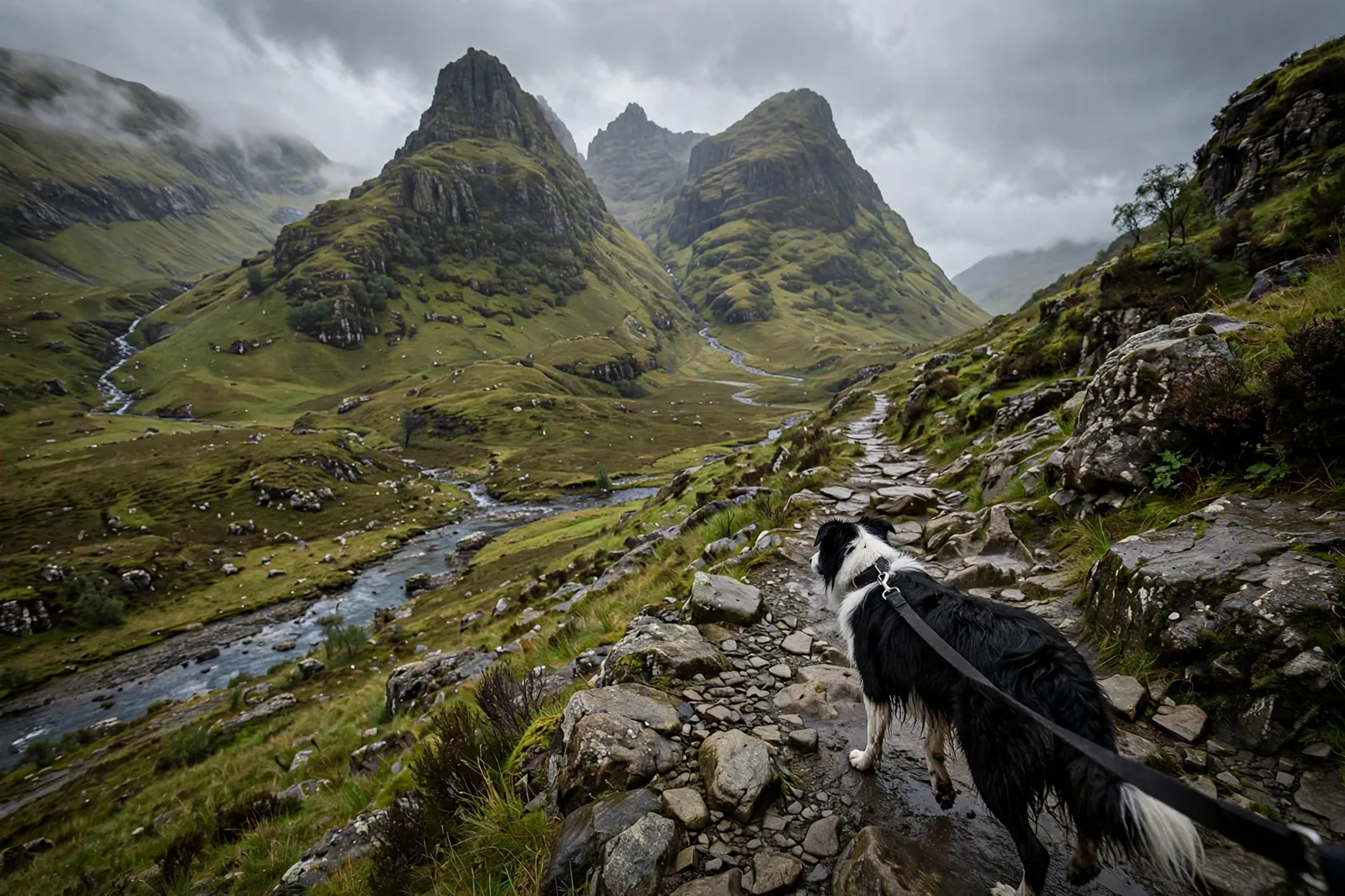
The walk into Coire Gabhail, usually called the Lost Valley or Hidden Valley, is the route many visitors ask about first. It starts near the main Three Sisters car park on the A82, descends to a bridge over the River Coe, then climbs through a rocky gorge beside waterfalls before opening into a broad, flat-floored corrie where the MacDonalds are said to have hidden rustled cattle. The scenery is extraordinary. So, for a dog, are the demands: metal stairs, bouldery sections, a river crossing point, sustained steep ground and places where a lead and a pulling dog make life awkward for everyone.
Judge this route honestly against your dog rather than against other people's photographs. A fit, calm, medium or large dog that walks steadily on a short lead, ignores other walkers in narrow places and has coped with rocky ground before may manage it well in dry summer conditions. A reactive dog will find the gorge stressful because passing places are limited. A small dog may need carrying over boulders, which is unsafe on wet rock. Puppies, seniors and dogs with joint problems should enjoy the valley floor instead and lose nothing by it.
If you do go, go early, go in settled weather, and turn back without argument if the river is high, the rocks are greasy or your dog is unhappy on the stairs. Carry water for the climb, because the burn water should not be relied on, and keep the lead short and fixed rather than extendable in the gorge. The return is by the same route, so any section you found hard on the way in must be negotiated tired on the way back — leave energy in reserve for it.
Loch Achtriochtan and the old road: big views, level feet
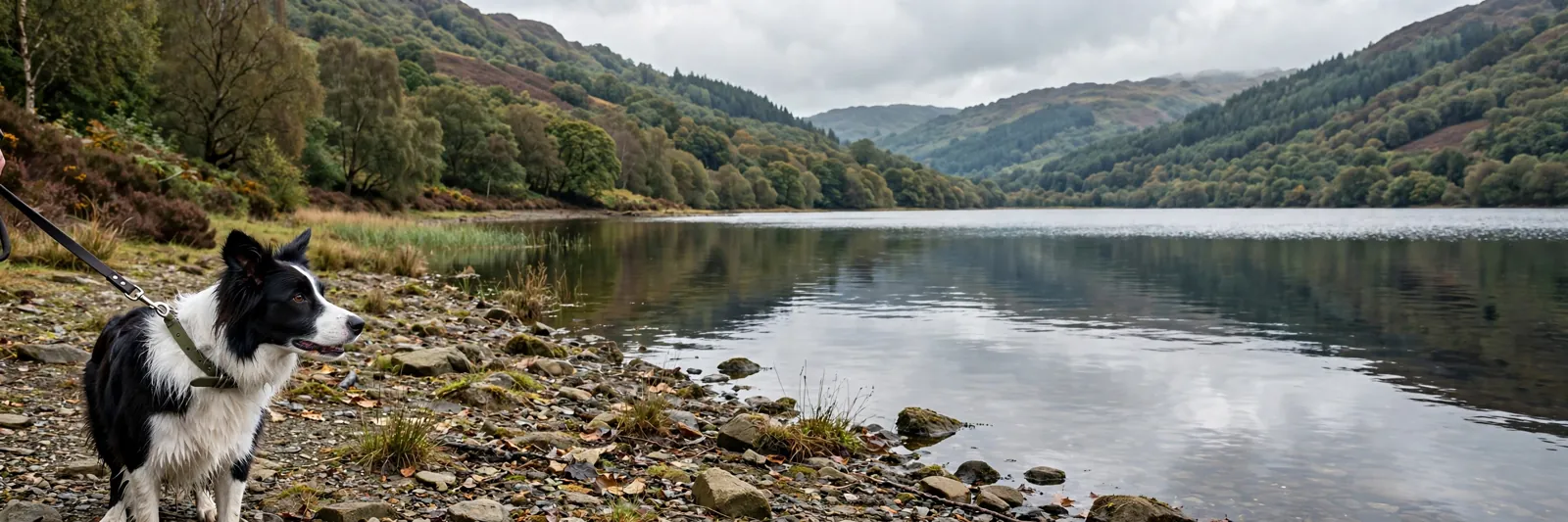
For the classic Glencoe postcard — the white cottage at the foot of towering peaks — walkers head towards Loch Achtriochtan and the lone house beneath Buachaille Etive Beag. Short paths around the loch shore and along the old road line give level, open walking with enormous views, sheep grazing close by and the river winding through the pass. This is the walk to choose when you want scale without altitude, and it photographs beautifully in low morning or evening light when the day-trip crowds have gone.
Level does not mean careless. This is working farmland and crofting ground: sheep may be on or beside the path, lambs are present in spring, and your dog belongs on a short lead for the whole walk, full stop. The Scottish Outdoor Access Code requires dogs to be under close control around livestock, and a lead is the simplest way to guarantee it. Park only in designated areas, never blocking gates or passing places, and expect the small car parks here to be full by mid-morning in peak season — the larger Three Sisters parking and a walk in may be easier.
Water needs thought as well. Loch Achtriochtan looks inviting, but cold water, soft margins and nesting birds in season are all reasons to keep dogs out unless you are at a firm, obvious shore spot away from wildlife. Bring drinking water and a travel bowl regardless; Highland burns and lochs can carry livestock contamination, and a thirsty dog will try to drink whatever is nearest. Our Loch Lomond with a dog guide covers loch-shore etiquette in more depth if your trip combines both areas.
The weather window: Glencoe's real route planner
More Glencoe days are decided by weather than by fitness. The glen funnels Atlantic weather between high walls, conditions at the car park can differ completely from conditions five hundred metres up, and rain here is measured in commitment rather than drizzle. Check a mountain forecast — not just a town forecast — the evening before and again on the morning, and understand what the wind figures mean: gusts that feel fresh in the village can be strong enough on a ridge to knock a dog sideways and chill it fast, especially a wet, short-coated dog.
Build a two-plan day. Plan A might be a higher or longer route for a settled forecast; Plan B is the valley chain described in this guide. Decide at breakfast which plan you are following and do not drift from B into A halfway round because the sun came out for twenty minutes. Equally, downgrade without disappointment: cloud base in Glencoe can sit on the valley floor, and a woodland and lochside day in mist, with the peaks appearing and vanishing, is atmospheric rather than failed.
Kit follows from the forecast. A fitted harness rather than a collar for any rocky or steep ground, a short fixed lead, a dog coat for small, old or thin-coated dogs in cold wind, paw checks after stony paths, a towel and a dry layer for the car, and water plus food if you will be out over a normal mealtime. For people, the usual Highland rule applies: waterproofs live in the bag all year, not just in winter, and a paper map or downloaded route matters because signal in the glen is patchy once you leave the A82 corridor.
Livestock, deer and the lead rules that matter here
Glencoe is not a park with scenery added; it is a working, living landscape where sheep graze the lower ground, red deer move through the glen in large numbers, and ground-nesting birds use the moorland edges in spring and summer. Deer deserve particular respect with dogs. A dog that chases a deer risks injury on rock and road, exhaustion, and being lost in big country, and deer with calves in early summer can be defensive. If deer are visible ahead on your line, change direction early rather than walking closer to test your dog's recall.
The law and the code point the same way. Under the Scottish Outdoor Access Code you may walk widely, but you must keep your dog under proper control, avoid disturbing livestock and wildlife, and take your litter and dog waste away with you. Around lambing, roughly spring, give sheep with lambs a wide berth even from a path, and never let a dog approach, bark at or work its way around a flock. If cattle are present near a route — less common in the glen itself than on surrounding farms — treat them as a reason to reroute, especially with calves at foot.
Roads are the other constant hazard. The A82 through the glen is fast, heavily used by coaches and freight, and bordered in places by unfenced grazing and deer movement at dawn and dusk. Cross it only at sensible sightlines, keep the lead short near every car park, and never let a dog out of the car off the lead beside it. Several of the most popular stops sit directly on this road, and excitement straight from a long drive is exactly when dogs bolt. Clip the lead on before the door opens, every single time.
Bases, food and the end of the walking day
Glencoe village, Ballachulish and Kinlochleven are the practical bases, with further options back towards Tyndrum or forward to Fort William. When booking, ask the dog questions that matter in a Highland village: is there a secure or at least enclosed area for a last outing, what is the pet charge per dog per night, can the dog join you in a bar or eating area, and where would you walk after dark in rain? A property that answers crisply is usually one that hosts dogs often and happily.
For food during the day, the pattern in the glen is pubs, hotel bars, cafés and takeaway counters, many of which welcome dogs in bar or outdoor areas — but policies change and kitchens keep seasonal hours, so check the latest official guidance before you travel and have a fallback. The Clachaig Inn is a long-standing walkers' hub on the south side of the glen; Glencoe village and Ballachulish offer cafés and shops for picnic supplies. Never plan on leaving a dog in a parked car while you eat: Highland car parks offer no reliable shade or cool, and vehicles heat up even on bright, breezy days.
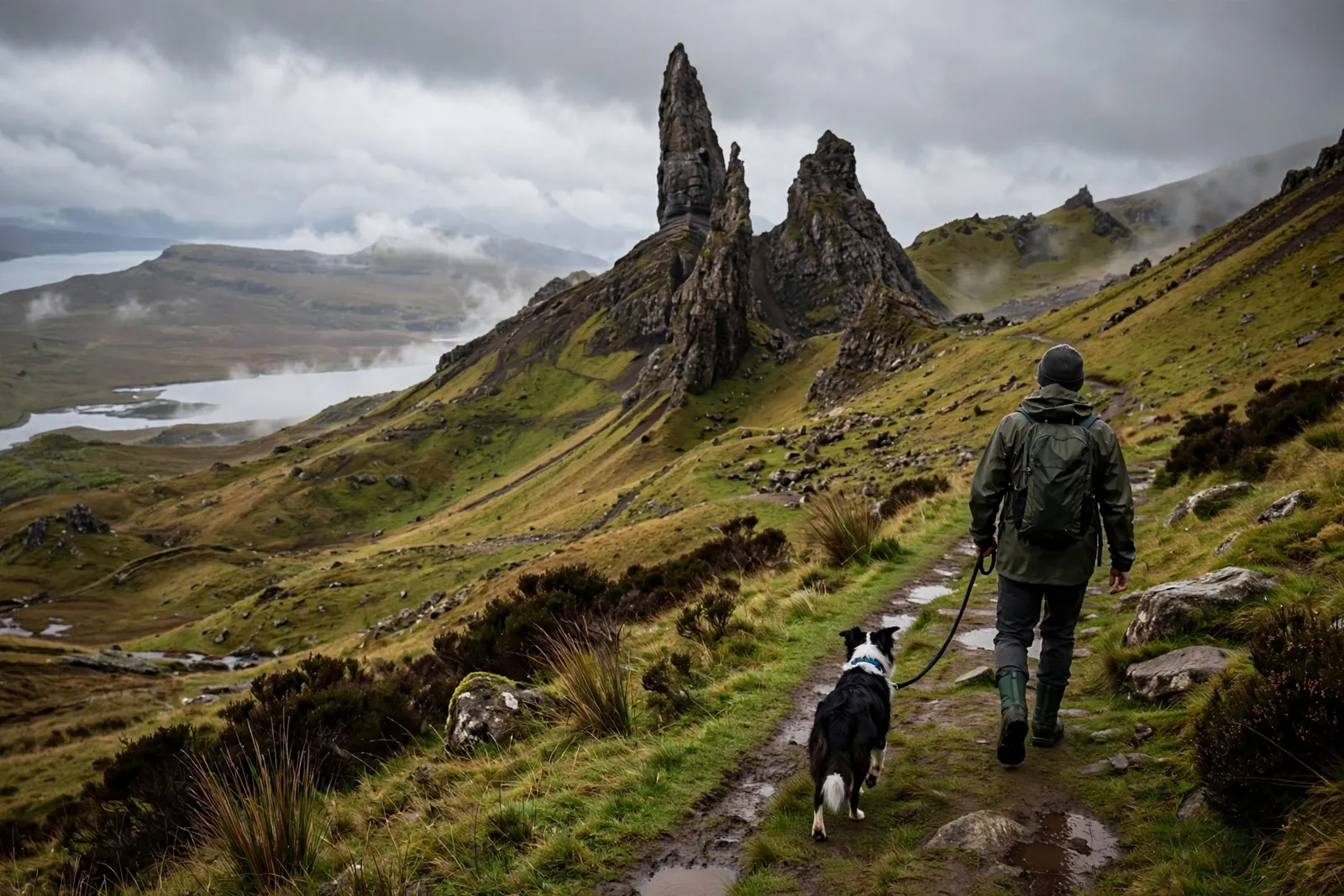
If your itinerary continues north or west afterwards, ferries may feature later in the trip; our Isle of Skye with a dog guide pairs well with Glencoe as a two-centre Highland plan, sharing the same weather discipline and the same rule that the dog's comfort, not the map's ambition, sets each day. Build a rest day into a longer stay: dogs accumulate tiredness quietly, and a gentle lochan morning after two bigger days keeps the whole week enjoyable.
A realistic one-day and two-day pattern
For a single day, try this shape. Arrive by mid-morning and start with the Glencoe Lochan woodland loop to burn off car energy in shelter. Follow it with the Loch Achtriochtan shore and old road walk while light is good, eating a picnic or pub lunch between the two with the dog settled under the table or beside the car boot. Finish with a short Signal Rock woodland leg if legs — yours and the dog's — are willing, and be back at your base before dusk rather than squeezing in one more viewpoint on a fast road.
Over two days, keep day one exactly as above and reserve day two for your one bigger decision: the Lost Valley for a suitable dog in suitable weather, or a longer valley link-up — village, lochan, riverside and shore combined with proper rests — for everyone else. That structure means a weather downgrade on day two costs you nothing emotionally, because the bigger route was always conditional. Photographers should note that the glen faces broadly east-west, so early and late light side-lights the peaks while midday can be flat and harsh.
However long you stay, leave the glen as you found it. Bag and bin every trace of your dog, stick to worn lines on fragile ground, close gates behind you and keep voices low around livestock and deer. Glencoe carries a heavy history — the 1692 massacre of the MacDonalds is commemorated in the village — and a respectful hush in places costs nothing. The glen will look after walkers who look after it, and dogs, as ever, simply follow the standard their owners set.
Practical questions
Before you go
Do dogs need to be on a lead in Glencoe?
In practice, yes for most of the glen. Keep your dog on a short lead around sheep, deer, car parks and the A82, and under close control everywhere else under the Scottish Outdoor Access Code. Around lambing and ground-nesting birds, a lead is the only reliable way to meet that duty. Check the latest official guidance before you travel for any local restrictions.
Can my dog do the Lost Valley walk?
Some dogs can, many should not. The route involves metal stairs, boulders, a steep rocky gorge and limited passing places. It suits a fit, calm dog used to rocky ground on a short lead in dry weather. Puppies, older dogs, reactive dogs and dogs with joint problems are better served by the Lochan, Signal Rock and Loch Achtriochtan routes.
Where is the easiest walk in Glencoe for an older dog?
The Glencoe Lochan woodland trails near the village are the gentlest option, with level, sheltered paths and loops you can shorten at any point. The Loch Achtriochtan shore paths are also level but more exposed to wind and require a lead throughout because of grazing sheep.
When is the best time of year for Glencoe walks with a dog?
Late spring and early autumn usually balance daylight, quieter car parks and fewer midges. Summer brings crowds and midges in still weather; winter brings short days, ice and serious mountain weather, though valley walks remain possible on settled days. Always check a mountain forecast, not just a town forecast.
Are there dog-friendly places to eat in Glencoe?
Yes — pubs, hotel bars and cafés in and around Glencoe village, Ballachulish and Kinlochleven commonly welcome dogs in bar or outdoor areas, but policies and seasonal hours change. Check the latest official guidance before you travel, and never leave a dog in a parked car while you eat.