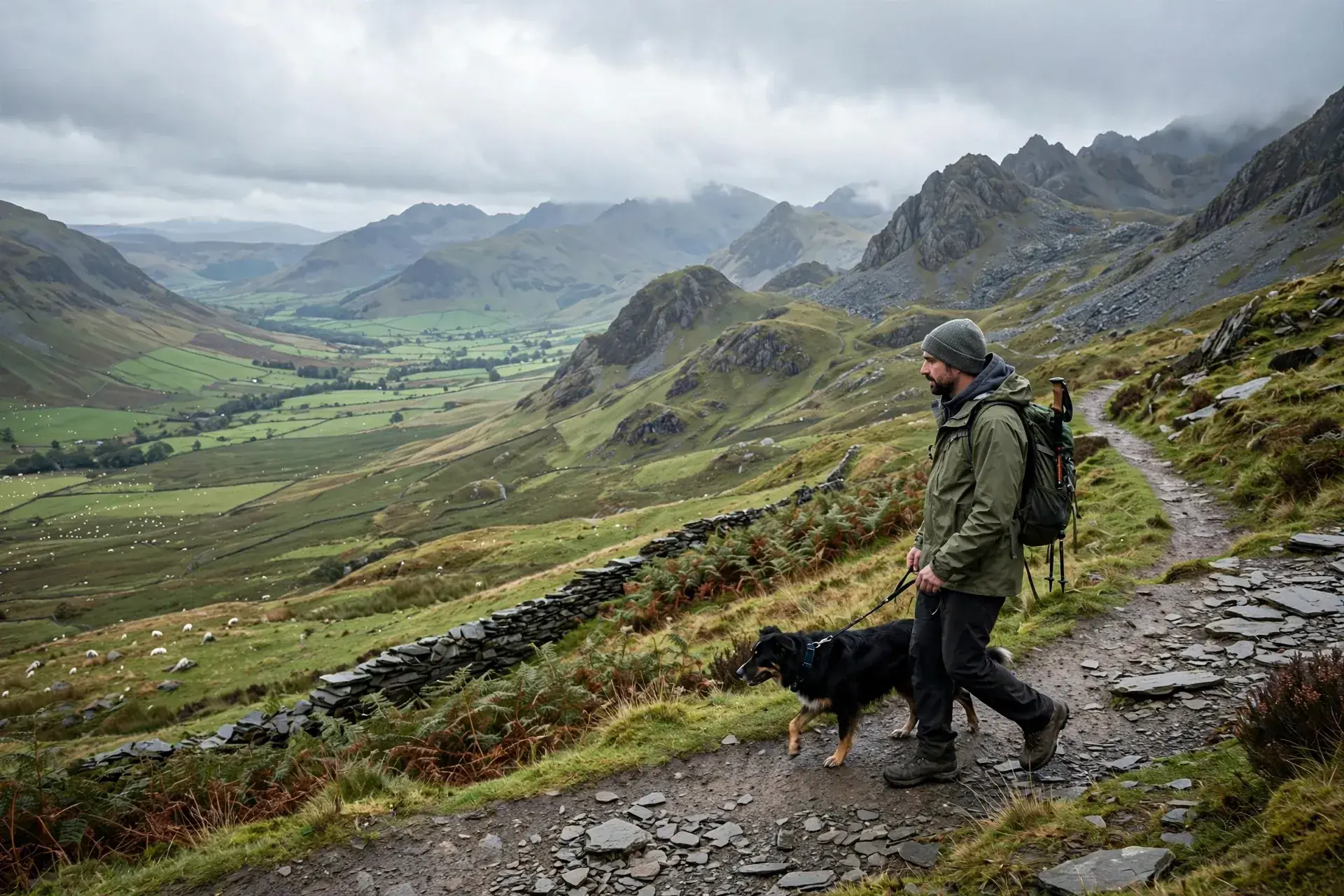
This guide is independent and contains no paid placement. If affiliate links are added later, they will be clearly marked and will not change our editorial checks.
Loch Lomond is a rewarding dog trip if you pick a shore to suit your dog: the west shore is easier, busier and better served, while the east shore is quieter, wilder and harder to reach. Keep dogs on a lead near livestock and villages, book a camping permit for March to September stays in management zones, check boat rules operator by operator, and keep dogs out of green or scummy water in warm months.
West shore vs east shore: which suits your dog?
Loch Lomond is large enough to feel like two different trips. The loch is about 23 miles long, and the road, railway and facilities are not evenly spread around it. Choosing a shore first, before choosing a walk or a beach, prevents the most common mistake: basing yourself somewhere pretty but impractical, then spending the holiday driving narrow roads with a restless dog in the back.
The west shore follows the A82 from Balloch up through Luss, Tarbet and Ardlui. It has the railway at Balloch, larger car parks, more cafes, more boat departures and a wider choice of accommodation. For a first visit, for an older dog, for a dog that needs shorter and more frequent walks, or for anyone travelling without a car, the west shore is usually the calmer choice. Paths tend to be better surfaced, help is closer if weather turns, and you can string together a village stop, a short shore walk and a boat trip without a long drive in between. The trade-off is popularity. On sunny weekends Luss and Balloch can be busy, pavements narrow, and a reactive dog will meet many other dogs at close range.
The east shore, reached via Drymen to Balmaha and then along the B837 to Rowardennan, feels noticeably quieter and more wooded. It is the side for Conic Hill views, for the West Highland Way, and for walkers who want forest and shore rather than villages and piers. Facilities are thinner, parking fills early, the road beyond Balmaha is narrow and single-track in places, and phone signal can be patchy. A confident, fit dog that settles well in the car will thrive here. A dog that needs a vet quickly, a flat evening toilet walk, or frequent escapes from other dogs may be better served on the west shore. Neither shore is better in general; they suit different dogs, and many good trips use Balloch as a base and visit the east shore for one planned day rather than the other way round.
Whichever shore you choose, build in the Trossachs realistically. The wider national park includes lochs, forests and villages well beyond Loch Lomond itself, and distances on the map look shorter than they drive. One main walk, one shore stop and one village break is a full and satisfying dog day here. Trying to circle the whole loch by car in a day leaves little time to actually walk, and most dogs would trade the extra viewpoints for one unhurried hour off the lead in a safe, permitted place.
Beaches and swimming spots: where dogs can paddle
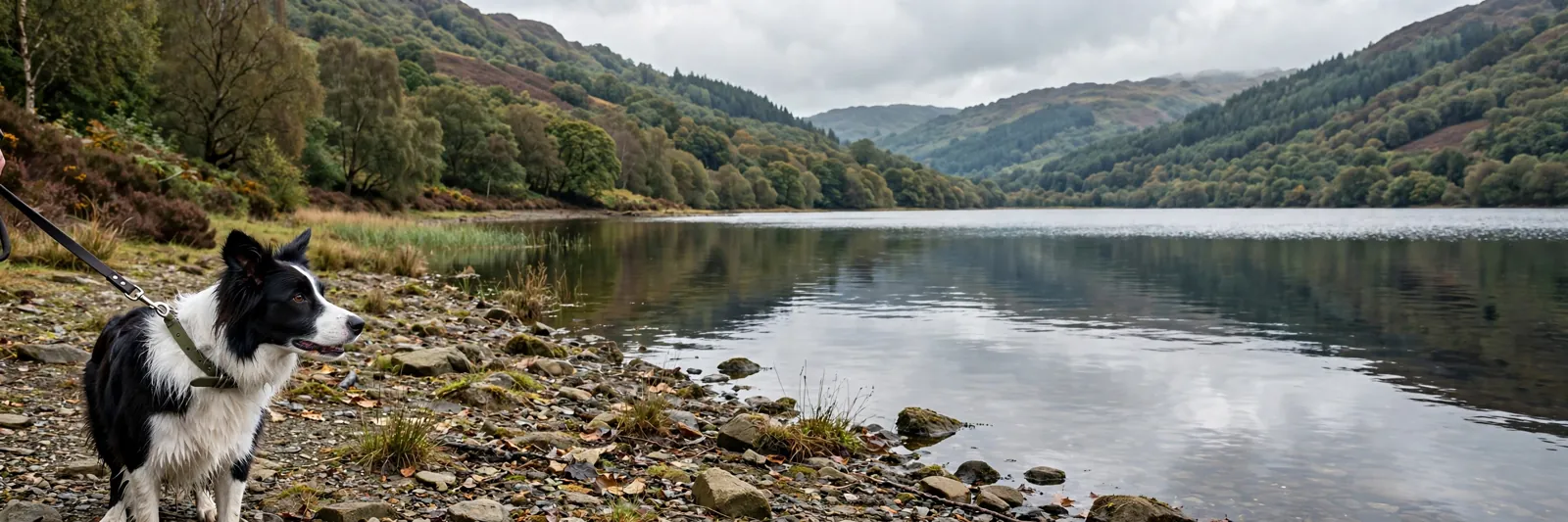
Loch Lomond does not have seaside-style beaches with a single set of rules. Instead it has a chain of shingle and sandy shores, village piers, managed parkland and quieter bays, each with its own signs, parking and expectations. Places such as Luss, Milarrochy Bay on the east shore, and the shores around Balloch and Loch Lomond Shores are popular starting points because access is clear and the gradient into the water is often gentle. Quieter shores exist further north and on forest tracks, but quiet does not mean unrestricted, and it does not mean safer for swimming.
For most dogs, paddling at a gentle edge matters more than swimming out. Loch water stays cold even in summer, shelves can drop steeply without warning, and submerged branches, rocks and old pier structures are common hazards near popular stops. Choose a shore where you can see the bottom for the first few metres, where there is no boat launching, and where you can call your dog out onto dry land without scrambling over rocks. Keep first entries short, even for strong swimmers, and watch for shivering, frantic splashing or a dog repeatedly trying to climb out. A long line can help in training contexts, but never tie a dog to yourself or to a fixed object in deep water.
Season and crowding change the picture. In peak summer, managed areas may ask for dogs on leads near picnic lawns, play areas and cafes, even if the shore itself is more relaxed. After heavy rain, water quality and currents near river mouths can worsen, and debris collects in bays. In warm, still weather, the bigger risk is invisible at a glance from the car park, so read the dedicated section on algae below before letting any dog drink or swim. If a shore looks green, soupy or crowded with dead fish or birds, leave it for another day and choose a forest walk instead. No swim is worth an emergency vet journey in an unfamiliar area, and good trip planning always keeps a dry alternative in the plan.
Walks from Balloch, Luss and Balmaha
Balloch is the practical gateway. Trains from Glasgow arrive here, Loch Lomond Shores provides parking, shops and shore access, and Balloch Country Park offers broad parkland paths that suit a first or last day, an older dog, or a wet-weather leg-stretch without committing to a hill. Park paths are generally easier underfoot than shore or forest tracks, but they are shared with cyclists, families and many other dogs, so leads and close control matter near entrances, cafes and the castle area. Balloch works best as a base and a services stop rather than the whole holiday: do the shopping, the vet check if needed, and the easy walk here, then head out to quieter shores early in the day.
Luss, on the west shore, is a small conservation village with a pier, a sandy and shingle beach, and short walks that punch above their length. Village lanes, church grounds and shore paths make a lovely hour or two, but Luss is compact and popular, parking is limited, and coaches and day visitors concentrate in the middle of the day. Arrive early or late, keep dogs on short leads in the village itself, and treat Luss as a scenic stop rather than a place for off-lead running. Dogs that struggle with crowds, narrow passing places or children running up to say hello will find an early morning visit a very different experience from a sunny Saturday lunchtime.
Balmaha, on the east shore, is the walker base. It sits below Conic Hill, on the West Highland Way, with a boatyard, cafes when open in season, and access to shore and oak woodland walks, including routes towards Inchcailloch island via the local boat service when operating. The climb up Conic Hill is short but steep and rocky in places, with Highland cattle and sheep often present, and it is not a suitable first hill for every dog. Puppies, older dogs and dogs recovering from injury are better served by the lower woodland and shore paths, which still give views and variety without the descent on tired legs. Wherever you walk around Balmaha, carry water for your dog as well as yourself, because shore access does not always mean safe drinking water, and check the official latest guidance before you travel for path closures, forestry work and island boat times.
West Highland Way sections with a dog
The West Highland Way runs for about 96 miles from Milngavie to Fort William, and its Loch Lomond sections are among its most beautiful and most demanding. You do not need to walk the whole trail to enjoy it with a dog. Day sections and short out-and-back walks from Drymen, Balmaha, Rowardennan, Inversnaid and Crianlarich can give the flavour of the route without the logistics of a full thru-hike, baggage transfer and dog-friendly accommodation every night.
The southern lochside section, roughly from Balmaha through Rowardennan towards Inversnaid, is the stretch to research most carefully. In places the path is narrow, rooty and rocky, with steps, boulders and short scrambly sections close to the water. Many fit dogs manage it happily at a steady pace, but it can be slow going, hard for large dogs to be lifted over obstacles, and tiring for older joints. Wet weather makes rocks slippery and burns cross the path with more force. If your dog pulls on the lead, wears a pack, or is nervous of close passing on narrow paths, walk a short sample section first before committing to a long point-to-point day with no easy exit.
Further north, the route leaves the loch and the terrain changes again, but the same planning principles apply: check livestock and deer on farmland sections, carry enough water where streams may be unsafe to drink, plan road crossings on leads, and confirm that any accommodation, campsite or baggage service actually accepts dogs before relying on it. Stiles, ladders and gates vary along the trail and are not all dog-friendly, so a harness with a handle can help for short assists, provided your dog is comfortable being supported. Build rest days into any multi-day plan. Dogs often walk further than they should on day one because the smells are new, then show the stiffness on day three. Shorter days with time to dry, feed and check paws will get most pairs further than one heroic distance followed by a forced rest.
Boats, cruises and water taxis: dog rules explained
Getting onto the water is one of the best ways to understand the scale of Loch Lomond, and many visitors with dogs hope to include a cruise, an island trip or a water taxi between shores. The good news is that dogs are commonly carried. The important caveat is that there is no single loch-wide dog policy. Each operator sets its own rules for whether dogs travel free or for a small charge, whether they must stay on a lead, whether they are allowed inside cabins or only on outside decks, and whether size, numbers or wet and muddy conditions affect boarding.
Confirm directly before you book, not on the pier. Ask four specific questions: are dogs allowed on this exact sailing, is there a charge, where must the dog sit or stand, and what happens if the return sailing is cancelled for weather. That last point matters on island and cross-loch routes, where being stranded on the wrong shore with a dog and no car is a real logistical problem. Services to islands such as Inchcailloch from Balmaha or Luss, and longer cruises from Balloch, Tarbet and other piers, operate seasonally and can change timetable, route and dog policy, so check the official latest guidance before you travel and again the day before you sail.
On board, set your dog up to succeed. Board calmly, settle the dog on a mat if you carry one, keep the lead short but not tight, and keep aisles and doorways clear. Bring water and offer it on longer sailings, watch for signs of motion sickness or stress such as drooling, panting and restlessness, and never let a dog lean out over rails or jump for the shore before the vessel has fully moored. If your dog is nervous of engines, crowds or unstable footing, choose a short sailing first rather than a full loch cruise, travel at quieter times, and have a shore walk as a backup. Private hire boats, kayaks and paddleboards have separate rules again, and hire companies may prohibit dogs entirely for safety and insurance reasons, so never assume a dog can board just because a cruise vessel accepted one yesterday.
Camping management zones and permits, in plain terms
Camping is where Loch Lomond trips most often go wrong on paperwork rather than on walking. Loch Lomond and The Trossachs National Park operates Camping Management Zones in popular lochshore areas. In simple terms, during the management season, which runs from March to September, wild camping in those zones is only allowed with a permit for a designated pitch area, or by booking a formal campsite. Outside the zones, and outside that season, Scotland's access rights and the Scottish Outdoor Access Code still require responsible behaviour, but the permit system does not apply in the same way. Check the official latest guidance before you travel, because zone maps, dates, prices and booking windows can change.
A permit is not a campsite booking. Permit areas are typically basic, with limited or no facilities, a maximum stay, and a set number of permits per area per night to reduce pressure on fragile shores. Popular areas on Loch Lomond sell out well ahead for weekends and school holidays, so book as early as the system allows and do not rely on turning up and finding space. Bring everything you need, including a way to store food securely, a trowel or waste plan where no toilets exist, and a lead, tether and ground plan for your dog. A dog that barks at every passing walker, chases deer at dawn or digs at a tent door will make a permit pitch miserable for neighbours in a way a remote bothy night never would, so be honest about suitability.
Dogs do not need a separate camping permit, but they are fully your responsibility under access and animal welfare law. Keep dogs under close control at all times, on a lead around livestock and in busy permit areas, and clear up and carry out all waste, because many lochshores have no bins. Fires, where allowed at all, must follow current local rules and fire bans, and a dog near a stove, guy ropes and hot pans needs a settled spot away from cooking. If you prefer certainty, a booked campsite with toilets, water and clear dog rules is often the better first Loch Lomond night, with a permit pitch as a later trip once you know how your dog settles outdoors here.
Livestock, deer and water safety: the risks that matter
The countryside around Loch Lomond is a working landscape. Sheep graze many lower fields and open hillsides, cattle including Highland cows graze around Conic Hill and farmland sections, and red deer are common in woodland and on higher ground, especially at dawn and dusk. In spring, lambing and calving make livestock more protective. In autumn, the deer rut makes stags unpredictable and best given very wide space. Dogs must be under close control at all times, and on a lead near livestock, deer, roads and other visitors. A recall that works in an empty park at home is not proof it will work when a deer breaks cover ten metres away, so use a lead or long line wherever a chase would end badly. Our guide to livestock worrying law explains the legal position and what farmers and land managers are entitled to do.
Water safety deserves equal weight. As well as cold and depth, warm months bring a risk of blue-green algae, also called cyanobacteria, in sheltered, nutrient-rich bays. Blooms can look like green paint, pea soup or scum on the surface, can collect downwind on a shore, and can be fatal to dogs even in small amounts if swallowed. There is no safe way to judge a bloom by eye as harmless. Keep dogs out and stop them drinking from any loch water that looks green, cloudy or scummy, rinse a dog that has entered suspect water with clean water, and contact a vet urgently if there is vomiting, drooling, staggering or collapse after swimming. Our detailed guide to blue-green algae and dogs covers signs, first steps and prevention in full.
Add the smaller hazards and you have a sensible pre-walk routine. Ticks are active in woodland, bracken and long grass for much of the year, so check your dog after every walk and carry a tick remover; our guide to ticks on dogs in the UK explains what to look for. Adders are present in sunny, quiet habitats in Scotland and are best avoided by keeping dogs on paths in warm weather. Midges can make summer evenings unpleasant for people and for thin-coated dogs resting outside, so plan camping and picnic stops with breeze, shelter and timing in mind. None of these risks should put you off Loch Lomond. They should shape simple habits: lead on near animals, eyes on the water before any swim, and a paw, coat and tick check back at the car.
Practical stops and a simple plan that works
A good Loch Lomond dog day has a shape. Start early, do the main walk while car parks are quiet and temperatures suit your dog, visit a village or take a boat in the middle of the day only if your dog settles in crowds, and keep a short, easy evening walk close to where you are staying. Balloch is the stop for trains, supermarkets, larger car parks and a country park walk. Luss is the stop for a short scenic shore break on the west shore, best early or late. Balmaha is the stop for hill, woodland and West Highland Way walking on the east shore, with an early start for parking. Tarbet and Ardlui, further north on the west shore, give access to the upper loch and onward routes, but with fewer fallback options if weather or a full car park changes your plan.
Pack for the loch, not for the forecast alone. Carry drinking water and a bowl for your dog on every main walk, because loch water is not always safe to drink. Carry poo bags and a small bag to carry waste out where there are no bins. Bring a towel and a dry layer for the car, because a dog that has paddled will be wet, cold and muddy at exactly the moment you want to enter a cafe. A spare lead, a head torch for winter afternoons, and the number of a local vet saved offline are small items that solve large problems. If you are relying on a boat, a permit or a popular car park, screenshot the booking and the directions, because signal around parts of the loch cannot be relied upon.
Finally, leave room for the trip to be smaller than planned. Loch Lomond rewards lingering: one shore watched properly as light changes, one woodland walked slowly enough for a dog to sniff, and one village visited without rushing for the next pier. Dogs do not measure a holiday in viewpoints collected. They measure it in walks that fit their legs, water they were allowed to paddle in safely, and evenings where they could settle. Plan around that measure, check the official latest guidance before you travel for boats, permits, path works and algae warnings, and Loch Lomond becomes one of the most repeatable dog trips in Scotland rather than a beautiful place you only half managed.
Practical questions
Before you go
Are dogs allowed on Loch Lomond beaches?
Dogs are generally welcome on most Loch Lomond shores, but rules vary by site and season, and busy managed beaches may ask for leads near picnic areas, play areas and slipways. Keep dogs under close control, clear up immediately, and check signs on arrival and the official latest guidance before you travel, as local rules can change.
Can I take my dog on a Loch Lomond cruise or water taxi?
Many Loch Lomond cruise and water taxi operators welcome well-behaved dogs, often free or for a small charge, but policies differ by operator, vessel and route, and dogs usually must stay on a lead and off seats. Always confirm directly with the operator before you book, and check the official latest guidance before you travel.
Do I need a permit to camp with my dog at Loch Lomond?
Between March and September, camping in Loch Lomond and The Trossachs Camping Management Zones generally requires a permit or a booked campsite pitch, and this applies whether or not you bring a dog. Permits are limited and popular weekends sell out, so book well ahead and check the official latest guidance before you travel for current zones, dates and prices.
Is it safe for my dog to swim in Loch Lomond?
The loch is cold even in summer, with sudden deep water, currents near river mouths and boat traffic, so only let confident dogs enter at gentle, shallow edges and keep them close. In warm months, blue-green algae can occur in sheltered bays and can be fatal to dogs, so avoid green, scummy or paint-like water entirely and check warnings before you travel.
Does my dog need to be on a lead around Loch Lomond?
Use a lead near livestock, roads, car parks, villages and busy beaches, and whenever signs ask for one. Sheep, cattle and deer are common around the loch, especially in spring lambing and autumn deer rut, and dogs must be under close control at all times. Shorten the lead, give wildlife wide space, and check the official latest guidance before you travel.