This guide is independent and contains no paid placement. If affiliate links are added later, they will be clearly marked and will not change our editorial checks.
Haddington is an easy East Lothian base for a dog: flat riverside paths along the Tyne, a walkable historic centre around St Mary's Church and the Nungate Bridge, parks and gardens for a slower second walk, and the coast and countryside within a short drive. Keep your dog on a lead near roads, bridges, livestock and wildlife, check the official guidance before you travel for venue and beach rules, and plan the main walk for the cooler part of the day in summer.
Walking the River Tyne
The River Tyne is the reason Haddington works so well with a dog. The town sits on the river in East Lothian, and the paths beside it give you a proper walk without leaving the town at all. Water draws dogs in: there are smells along the bank, birds to watch, ducks to notice, and a steady line of interesting ground to sniff. For most dogs, a riverside loop is more satisfying than the same distance on pavements, because the route changes constantly — open grass, shaded trees, a bridge crossing, a quiet stretch where the water runs faster, and then a wider, slower section where the river spreads out.
Start by thinking of the Tyne as a series of short sections rather than one long trail. You can walk upstream for a while, cross at a bridge, and come back on the other bank, which turns a straight out-and-back into a loop and gives the dog new ground on the return leg. That matters more than it sounds. Dogs that retrace the same path tend to hurry; dogs on fresh ground slow down, sniff more, and settle better afterwards. A loop also lets you shorten the walk easily: if the dog is tiring, if the weather turns, or if a path is muddy, you can cross at the next bridge and head back to the car or to the town centre instead of committing to the full distance.
The ground beside the Tyne is mostly flat, which makes Haddington a good choice for older dogs, puppies building up distance, and dogs recovering fitness after a rest. Flat does not mean effortless, though. Riverside grass can be soft after rain, and paths that look firm in summer can turn slippery in winter. After heavy rain the river can rise and the banks can be muddy, so wear boots with grip, keep a towel in the car, and be ready to turn back if a section looks waterlogged. Check the official guidance before you travel if there has been flooding or a storm, because local paths can close or change condition quickly and the safest information will be the current local notice rather than a general guide.
Water safety deserves a clear-headed look before you let a dog near the edge. The Tyne is a real river, not a shallow stream, and its depth and current change with the weather. Some dogs swim confidently and some should never be encouraged into moving water. If your dog is a strong swimmer, choose a calm, shallow entry point away from bridges and fast water, and keep the lead on until you are sure of the spot. If your dog is small, elderly, unwell, or a poor swimmer, keep them on a lead and well back from steep banks. Never throw a ball or a stick into the river and expect the dog to work out the current. A toy that floats downstream creates a chase that can carry a dog further than you expect, and a stick can lodge or splinter. Bring a floating toy you can control, or skip the water play and let the dog enjoy the bank instead.
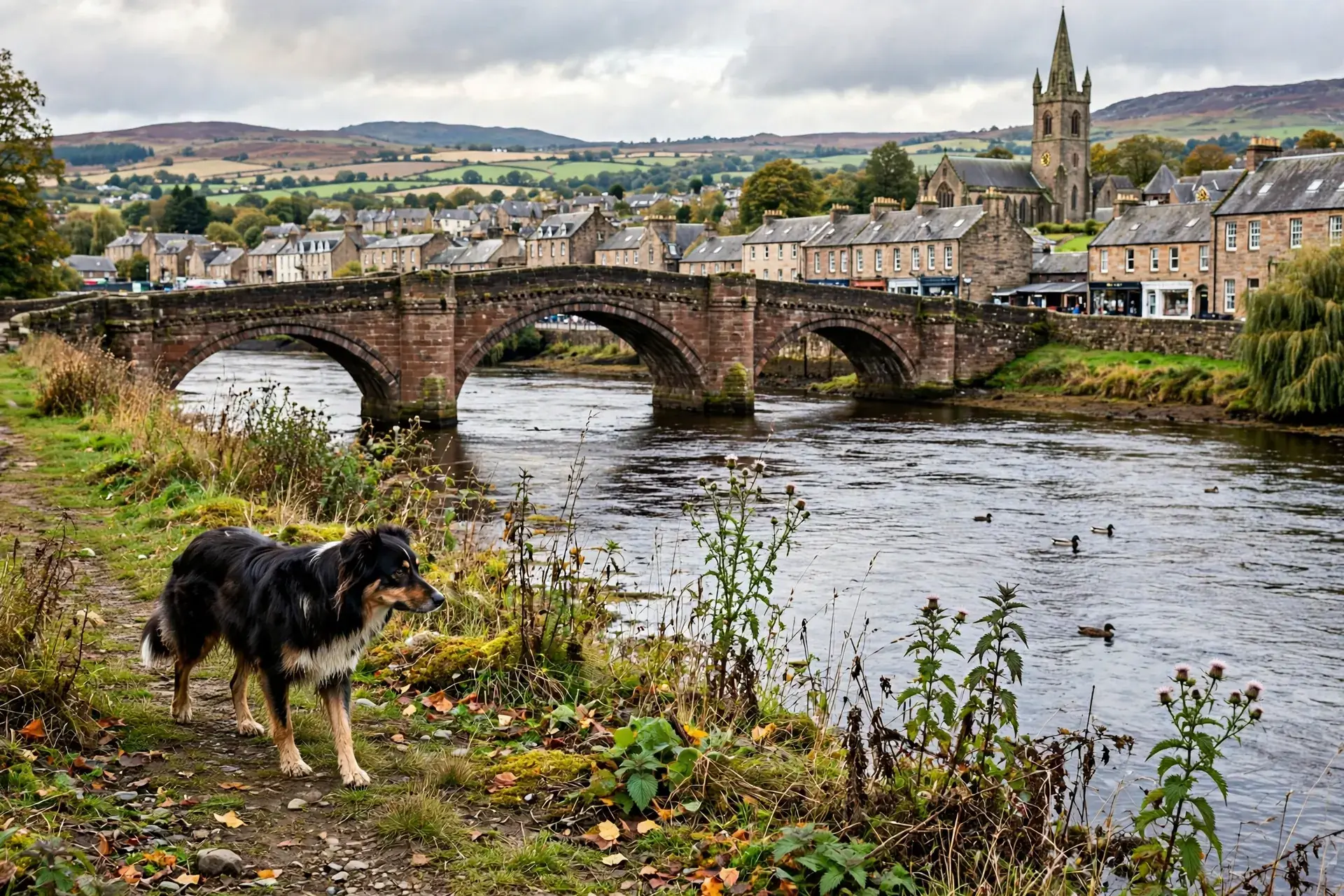
Bridges are the natural pinch points on a riverside walk, and Haddington has some of the most characterful ones in East Lothian. The Nungate Bridge, a historic stone crossing over the Tyne, is the best-known landmark for a dog walk here: it is a good place to pause, look back along the river, and take a photograph, but it is also a place to shorten the lead and keep the dog close. Bridges concentrate people, other dogs, cyclists and traffic into a narrow space, and a dog that is fine on an open path can feel crowded on a bridge. Walk across calmly, keep the dog on your inside away from the edge or the road, and do not stop in the middle of a narrow crossing if other people are waiting to pass.
Think about the other users of the path as well. Riverside paths in Haddington are shared: walkers, runners, families with children, cyclists and other dog owners all use the same ground. That is part of the charm, and it is also the reason a short lead and good recall matter more here than on an empty moor. Keep to one side, step aside for faster users, and call your dog in before a blind corner or a bridge approach. If your dog is reactive, the riverside can still work — choose the quieter stretches, walk early in the morning or later in the evening, and use the open grass beside the path as a buffer so you can create distance before another dog arrives.
A practical riverside routine helps. Carry water for the dog even on a short walk, because river water is not a safe substitute for clean drinking water and some dogs will drink from the river and then feel unwell. Carry poo bags and use them: riverside grass is used by families, children and other walkers, and leaving waste beside a popular path is the fastest way to make a town less welcoming to dogs. Bring a spare lead or a long line so you can give the dog more freedom on open grass without losing control near the water. And build in rest stops. A dog that lies down on cool grass beside the river for ten minutes will enjoy the second half of the walk far more than a dog that is marched without a break.
The historic town centre
Haddington is the county town of East Lothian, and its centre still reads as a historic market town. The High Street is broad and walkable, the buildings have a solid, stone-built character, and the town feels lived-in rather than staged for visitors. That is good news for a dog walk: you can combine a riverside loop with a slow circuit of the centre and give the dog town smells, shop fronts, market-day bustle and quiet side streets in one outing, without needing to drive between stops.
St Mary's Church, often called the Lamp of Lothian, dominates the town and is the landmark to orient by. Its tower and long stone body are visible from several approaches, and the churchyard and the ground around it give a sense of how old this town is. You do not need to go inside to enjoy it with a dog — a slow walk around the outside, a pause on the grass, and a look back towards the river are enough. Keep the dog on a lead in the churchyard, respect graves and memorials, and do not let the dog dig, climb on stones, or disturb other visitors. Churchyards are quiet places, and a calm dog on a short lead fits in well; a dog that barks, pulls or chases birds does not.
The Nungate Bridge and the other historic crossings are the second anchor of a town-centre walk. Haddington grew up around its river crossings, and the bridges still shape how you move through the town. Walking from the centre down to the Nungate Bridge, crossing the Tyne, and returning by another bridge is the simplest way to link the town and the river in one route. It also gives you a natural halfway point: if the dog is flagging, cross and head back; if the dog is full of energy, continue along the bank before you return to the centre.
Market days and busy Saturdays change the feel of the centre. The High Street can be lively, with stalls, shoppers, prams, other dogs and delivery vehicles sharing the same space. Some dogs love that energy; others find it stressful. Know your dog before you choose the time. A confident, social dog may enjoy a Saturday morning wander, while a nervous or reactive dog will do better on a weekday or early on a Sunday, when the streets are quieter and there is more room to step aside. If you do visit on a busy day, keep the lead short, walk on the quieter side of the street, and avoid narrow shop doorways where a dog can be stepped on or can block the pavement.
Shops and services in the centre are worth a look, but do not assume a dog can go inside. Some shops welcome dogs, some allow them only in a porch or entrance area, and some do not allow them at all. The polite approach is to ask before you enter, keep the dog close to your leg, and leave promptly if the dog is unsettled. If you need to pop into a shop that does not allow dogs, one person should stay outside with the dog — never tie a dog up outside a shop and leave them alone in a busy street. A tied dog is vulnerable, can be stolen, can panic at traffic, and can block the pavement for other people.
Historic towns also reward a slower pace. Haddington is not a place to rush through on the way to somewhere else; it is a place to stop, look up at the stonework, read a plaque, and let the dog sniff a wall or a patch of grass. That slower pace suits dogs, because sniffing is work for a dog and a town full of new smells is genuinely tiring. A twenty-minute amble through the centre, with pauses and sniffing, can be as satisfying as a much longer walk on a dull path. Build that into your plan: allow time, do not try to cover every street, and let the dog set the pace for part of the walk.
Finally, remember that the centre is also where you will find practical help: a pharmacy, a supermarket, a vet practice, and places to buy water, snacks and poo bags if you run short. Knowing where those are before you need them is part of a calm visit. Save the location of the nearest vet on your phone before you set off, and keep a note of your own vet's number as well. It is a small step, but it matters if the dog picks up a cut paw on a stone step or eats something they should not have on the street.
Parks and gardens
After the river and the town centre, Haddington's parks and gardens give you a third kind of walk: open, green, and slower. Parks are where many dogs do their best settling — there is space to move, grass to roll on, trees to sniff, and room to practise recall without the pressure of a narrow path or a busy road. They are also where you can give a dog a proper off-lead run, if the rules allow it and the dog's recall is reliable.
Use parks as a second walk rather than the main event. A good pattern is a riverside loop in the morning, a rest, and then a shorter park walk in the afternoon, or the other way round. Two shorter walks with a rest in between suit most dogs better than one very long walk, especially in warm weather or for older dogs. Parks also work well as a warm-up: a ten-minute sniff and stretch on grass before you head to the river can take the edge off a dog that has been in the car.
Check the local rules for each park and garden before you let a dog off the lead. Some green spaces welcome dogs off lead, some require dogs on lead at all times, and some have seasonal restrictions, sports pitches, children's play areas, or wildlife zones where dogs must stay on a lead or stay out altogether. Check the official guidance before you travel and look for signs at the entrance — the sign at the gate is the rule that applies on the day, even if a guide or a website says something different. If there is a children's play area, keep the dog out of it and on a lead nearby. If there is a sports pitch in use, give the game a wide berth and do not let the dog chase a ball.
Gardens need a little more care than open parks. Planted beds, flower displays, and formal lawns are not a dog toilet or a digging patch. Keep the dog on the paths, do not let them trample planting, and watch for bulbs, berries, and ornamental plants that can be toxic if eaten. Some garden plants that are harmless to look at are dangerous if a dog chews them, and a dog that grazes on grass in a garden may also pick up treated plants. If your dog is a keen grazer or a digger, keep them on a lead in gardens and save the free running for open grass.
Parks and gardens are also the best place to work on the quiet skills that make the rest of the trip easier: settling on a mat, waiting calmly while you have a coffee, and walking past other dogs without pulling. Bring a mat or a blanket, find a quiet corner with a view, and practise a short settle. Ten minutes of calm lying down in a park is worth more than an hour of frantic running, and it teaches the dog that new places are for resting as well as for exploring. Reward the calm, not just the movement.
Think about the ground underfoot in parks too. After rain, low-lying grass can be boggy, and paths can be muddy. In dry summer, grass can be hard and dusty, and some dogs will pick up grass seeds in their ears and between their toes. Check paws after a park walk, especially between the toes, and carry a small towel to wipe muddy feet before the dog gets back in the car. A drying coat is useful in winter, and a spare towel is useful all year round.
Haddington and the John Muir Way
The John Muir Way is a long-distance route that crosses Scotland from Helensburgh on the west coast to Dunbar on the east coast, passing through East Lothian on its way to the sea. Haddington sits close to that line, and the Way gives you a way to stretch a town walk into a longer countryside walk without needing to navigate a maze of minor roads. For dog owners, that is valuable: a waymarked route is easier to follow, easier to shorten, and easier to explain to someone else if you need help.
You do not need to walk the whole John Muir Way to enjoy it. Most visitors use it as a series of day sections, and Haddington is a natural start or finish point for a section towards the coast. Walk out along the Way for an hour, then turn back, or arrange a lift or a bus back if you want a one-way walk. The key is to plan the return before you set off: check the distance, check the time, and make sure the dog has enough energy and water for the way back as well as the way out. A dog that is fine for an hour out may be tired for an hour back, especially in warm weather or on soft ground.
The countryside around Haddington is working farmland as well as walking country, and the John Muir Way passes through fields, pastures, and farm tracks. That means livestock, and livestock means lead rules. Keep your dog on a lead near sheep, cattle, horses, and lambs, and keep them on a lead in any field where you cannot see what is around the next corner. Even a friendly dog can worry sheep, and a dog that chases livestock can cause serious harm and can be in serious trouble under the law. If you meet cattle, give them a wide berth, keep the dog close and quiet, and do not walk between a cow and its calf. If a field feels unsafe, turn back and choose another route — there is always another walk.
Waymarked routes also cross roads, farmyards, and gates. Teach the dog to wait at gates, and always close gates behind you. A gate left open can let livestock out onto a road, and it is one of the easiest mistakes to make on a country walk. At road crossings, put the dog on a short lead, wait for a clear gap, and cross briskly without letting the dog stop to sniff in the middle of the road. Country lanes can look quiet and then carry a tractor or a fast car with little warning, so treat every lane as a road, not as a path.
The John Muir Way is also a good way to link Haddington with the coast over a longer day, if you and the dog are fit enough and the weather is kind. The route eastwards takes you through East Lothian countryside towards Dunbar, with villages, farmland, and eventually the sea. That is a full-day walk for most people and dogs, not a casual stroll, so plan it as a separate trip: check the distance, check transport back, carry food and water for both of you, and build in rest stops. If that sounds too much, use the Way for a shorter out-and-back from Haddington and save the coast for a drive — the town is a better base for a short walk than a starting point for a forced march.
Seasonal notes matter on the Way. In spring, lambing season means extra care around sheep and lambs, and some fields may have temporary restrictions. In summer, the route can be hot and exposed in places, with little shade, so walk early and carry extra water. In autumn, the ground can be muddy and the days shorten quickly, so start early and carry a torch or a headlamp if you might finish in the dusk. In winter, the Way can be icy on shaded stretches and waterlogged in low ground. Check the official guidance before you travel for the current condition of the route, and do not be afraid to choose a shorter, town-based walk instead.
Beaches and countryside nearby
Haddington's strength as a dog base is that it is quiet and inland, while the East Lothian coast is a short drive away. That combination suits many trips: a calm town walk in the morning, a beach run in the afternoon, and a quiet evening back in town. It also means you can choose the walk that fits the weather. If the coast is windy, stay by the river. If the town is hot, head to the beach for a breeze. Having both options within a short drive is the reason Haddington works as a base rather than just a stop.
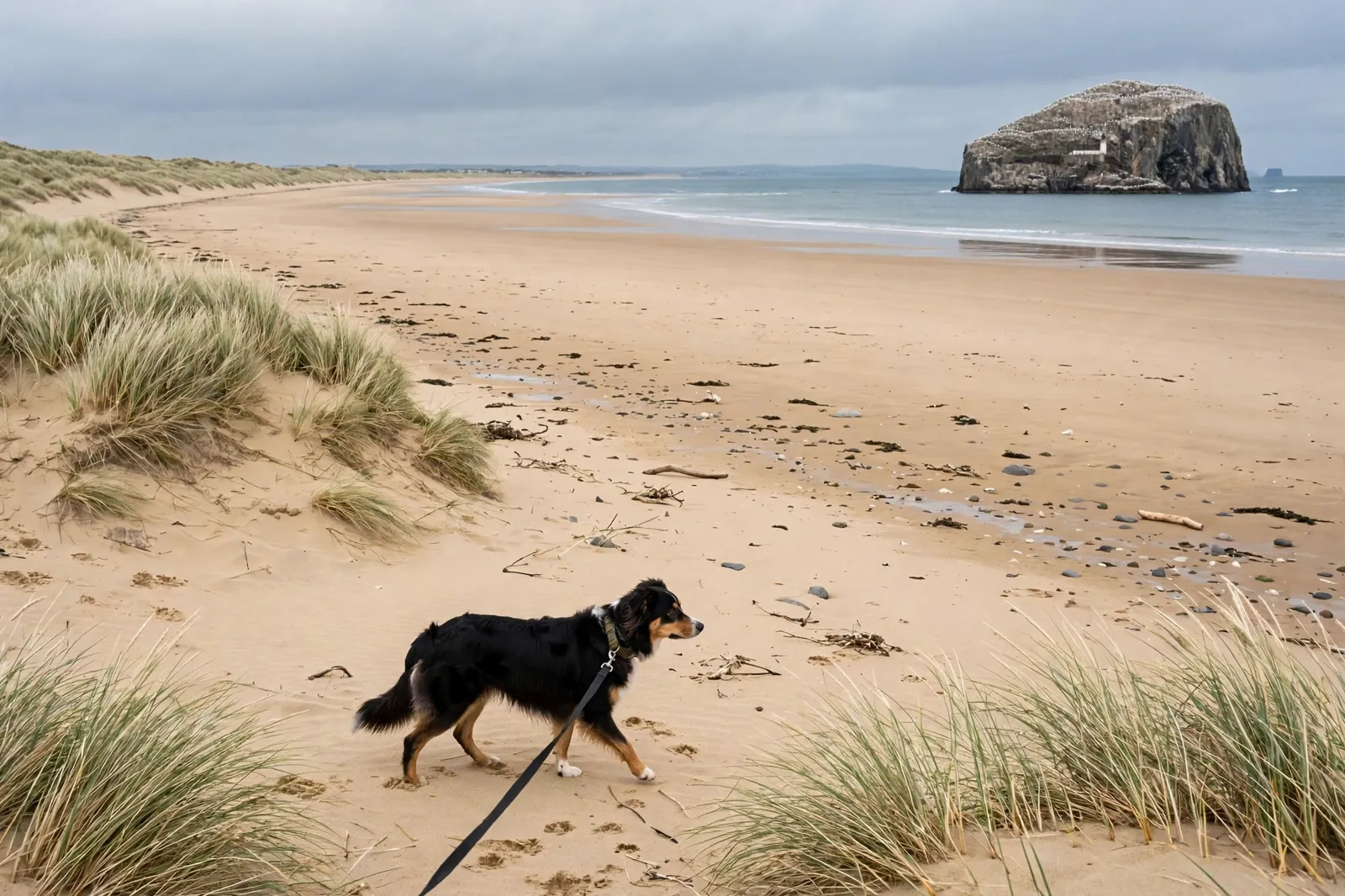
The beaches to know are Gullane, Yellowcraig, Belhaven Bay and North Berwick, each with its own character. Gullane is a vast, sandy beach with dunes behind it and Bass Rock visible offshore — a classic East Lothian beach walk where a dog can run, sniff, and paddle. Yellowcraig is quieter, with dunes, woodland behind the beach, and a more sheltered feel. Belhaven Bay, near Dunbar, is wide and open, with the John Muir Way running alongside it and a famous bridge to the sands at low tide. North Berwick has a town beach and a harbour, with cafes and a livelier seafront. Our guide to East Lothian dog beaches covers parking, access, wildlife rules and the seasonal restrictions for each of these beaches in detail, and it is worth reading before you choose a beach for the day.
Beach rules change by beach and by season, and they are the most common source of confusion for visitors. Some beaches welcome dogs all year, some restrict dogs during the summer months, and some have zones where dogs must stay on a lead to protect nesting birds or other wildlife. Check the official guidance before you travel for the beach you plan to visit, look for signs at the car park and at the beach entrance, and follow the sign on the day. If you are unsure, keep the dog on a lead — a lead walk on a beach is still a good walk, and it is far better than a fine or a disturbed nesting site.
Wildlife is a real consideration on East Lothian beaches. The coast is important for birds, including waders, terns, and wintering geese, and dogs running through a flock can cause serious disturbance. Keep your dog under control near birds, keep them on a lead near roosting or nesting areas, and do not let them chase. The same applies to seals: if you see a seal on the beach, give it a wide berth and keep the dog on a lead and well away. A seal on land is resting, not playing, and a dog approaching it can cause stress and injury to both animals.
Countryside around Haddington offers a different kind of walk from the beach: farm tracks, woodland edges, quiet lanes, and open fields. These walks are often quieter than the coast, and they suit dogs that prefer sniffing and exploring to running on sand. Use the same rules as on the John Muir Way: keep the dog on a lead near livestock, close gates, and stay on paths where the land is farmed. If a path is not clear, do not push through a crop or a fenced field — turn back and find another route. Scottish access rights are generous, but they come with responsibilities, and a dog owner who respects crops, livestock, and fences keeps those rights working for everyone.
Combining town, beach and countryside in one trip needs a little planning. Do not try to do all three in a single day with a dog that is not used to it. A better pattern is to pick one main walk per day and let the other walks be short and easy: a riverside loop in Haddington on arrival day, a beach walk on the second day, and a countryside walk on the third. That gives the dog time to rest, time to settle, and time to enjoy each place without being tired before you start. If you are only in Haddington for a day, choose either the town and river or the beach — not both at full length — and save the other for a return visit.
After a beach walk, check the dog carefully. Sand gets between toes, salt water dries on coats, and some dogs will drink sea water and then be sick. Rinse the dog with clean water if you can, dry the paws, and check for cuts from shells or sharp stones. Carry a towel and a bottle of clean water in the car for the drive back to Haddington. A dog that is rinsed and dried after the beach will settle far better in the evening than a dog that is left sandy and salty.
Cafes, pubs and places to stay
Eating and drinking out with a dog in Haddington is possible, but it takes a little more planning than in a big city. The town has cafes and pubs, and some of them welcome dogs, often in an outdoor area, a conservatory, or a specific dog-friendly part of the building. Others do not allow dogs indoors at all. That mixed picture is normal for a small Scottish market town, and the way to handle it is to check before you set off rather than to assume.
Check the official guidance before you travel and confirm directly with the venue if you can. A quick phone call or a message the day before is enough: ask whether dogs are welcome inside, whether there is an outdoor area, whether there is a size limit, and whether the dog needs to stay on a lead. Venues change their rules, change their layout, and change their minds about dogs, so a policy you read online last year may not be the policy today. A direct confirmation saves a wasted walk and an awkward moment at the door.
When you do find a dog-friendly cafe or pub, help the dog settle. Bring a mat or a blanket so the dog has a defined place to lie down, bring water and a small chew or a stuffed Kong to keep them occupied, and choose a table out of the main walkway so the dog is not stepped on or constantly disturbed. Keep the lead short but not tight, and do not let the dog wander to other tables, beg for food, or bark at other dogs. If the dog cannot settle after ten minutes, take them outside for a short walk and try again, or switch to a takeaway and eat on a bench or in a park. A calm dog in a cafe is welcome; a stressed dog is not enjoying it, and neither are you.
Pubs need the same approach, with a little extra care around other dogs and children. Many pubs that welcome dogs do so because they are used to walkers coming in from the river or the John Muir Way, and they expect dogs to lie quietly under a table. If your dog is reactive to other dogs, choose a quieter time, sit in a corner, and be ready to leave if another dog arrives and the space becomes too tight. Do not feed the dog from the table, do not let them drink from a glass, and do not leave them tied up outside a pub while you go inside — a pub garden is not a safe place to leave a dog alone.
Places to stay in and around Haddington range from hotels and bed and breakfasts to self-catering cottages and farm stays. Some welcome dogs, some welcome dogs in selected rooms only, and some do not allow dogs at all. When you book, declare the dog at the time of booking, ask about the pet fee, ask about the number of dogs allowed, and ask about the rules: can the dog be left alone in the room, is there a garden or a toilet area, and are dogs allowed in the breakfast room or the lounge? Get the answers in writing with your confirmation, because a verbal promise at booking is hard to prove on arrival.
Self-catering is often the easiest option with a dog, because it gives you a kitchen, a garden or a yard, and no shared dining room to negotiate. Look for a property with an enclosed garden, a hard floor that is easy to clean, and a short walk to a park or a riverside path. Check the boundary of the garden before you let the dog off the lead: a low fence, a gap under a gate, or a hedge with a hole in it can let a determined dog out in seconds. Walk the garden with the dog on a lead first, check the gates, and only then let them explore.
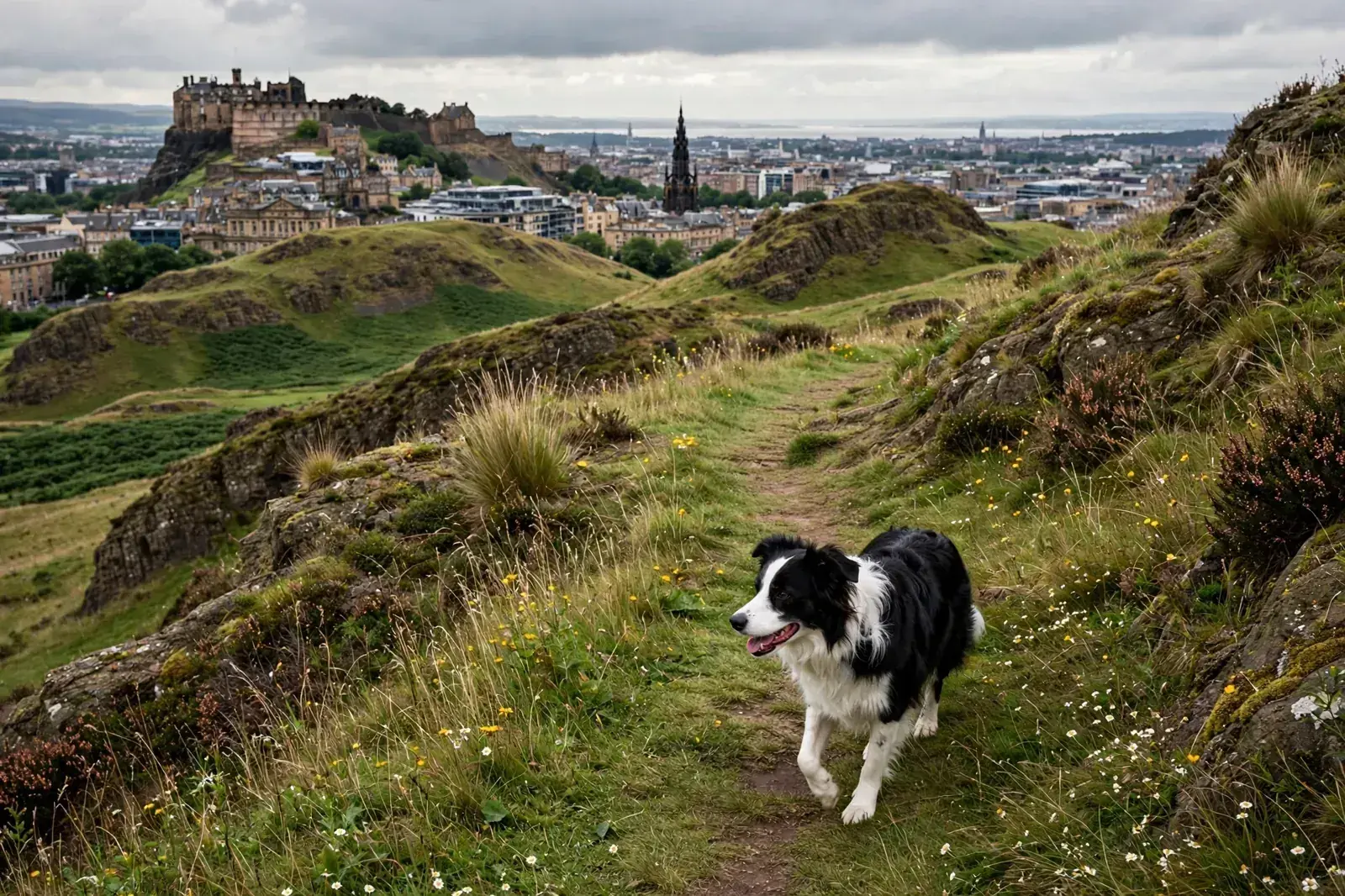
If you are staying in Haddington as a base for Edinburgh, the city is a short train or drive away, and our guide to Edinburgh with a dog covers Arthur's Seat, Holyrood, the Water of Leith, and how to plan a city day that works for a dog. Haddington is a calmer place to sleep than the city, with easier parking and quieter evening walks, and many visitors prefer to base themselves here and visit Edinburgh for a day rather than staying in the centre. That works well if the dog is used to travel, but do not try to do a full Edinburgh day and a full Haddington walk on the same day — pick one, and let the dog rest for the other.
Parking and arrival
Arriving well sets up the whole visit. Haddington is a small town, and parking is generally easier than in Edinburgh or North Berwick, but market days, sunny weekends, and school holidays can fill the town centre car parks. Arrive early if you can, especially if you want a spot near the river or the High Street, and have a second car park in mind in case the first is full. A calm arrival is worth more than a perfect parking space: a dog that starts the day with a stressful search for parking and a long walk through traffic will be less settled than a dog that starts with a short, easy walk from a slightly further car park.
Use the town centre car parks and on-street parking near the High Street and the river, and choose a spot that gives you a short, safe walk to the riverside paths rather than a busy road crossing. Look for a space where you can open the car doors safely, get the dog out on a lead, and walk to grass without crossing a main road. Avoid parking where the dog will have to wait in the car while you pay or sort out tickets — sort the parking first, then get the dog out, then walk. If you are unsure about parking rules, check the signs at the car park and the official guidance before you travel, because restrictions, charges, and time limits can change.
Never leave a dog in a parked car in warm weather, even with a window open and even for a few minutes. Cars heat up quickly, and a dog can overheat in a very short time. In summer, park in shade where possible, carry water, and take the dog with you when you leave the car. In winter, the opposite problem applies: a car can get cold, and a wet dog left in a cold car will chill quickly. The rule is simple: if you are not in the car, the dog is not in the car, unless you are standing beside it with the doors open and the dog is safe.
Arrival by train and bus is also possible, and Haddington is served by buses from Edinburgh and from other East Lothian towns. If you are arriving without a car, check the bus times before you travel, because rural bus services can be infrequent, especially on Sundays. Keep the dog on a lead at bus stops and on the bus, and check the operator's rules for dogs before you travel — most buses allow dogs, but the driver has the final say, and a dog that is noisy or unclean may be refused. If you are travelling by train to a nearby station and then by bus or taxi to Haddington, check each leg separately and allow extra time for the dog.
Pack the car as if you will need everything in it. A good Haddington kit is: water and a bowl, poo bags, a spare lead and a long line, a towel and a drying coat, a mat for cafes, a chew or a Kong, food and any medication, a first-aid kit with a tick remover, and a torch if you might walk in the dusk. Keep the kit in a bag by the door so you can grab it for any walk without repacking. The dogs that enjoy Haddington most are the ones whose owners are prepared for mud, rain, and a change of plan.
Lead rules, livestock and wildlife
Lead rules in Haddington are not about restricting your dog; they are about keeping the dog, other people, livestock, and wildlife safe in a place where all of those share the same paths. The general rule is simple: keep your dog on a lead near roads, bridges, other dogs, children, livestock, and wildlife, and only let them off the lead where you have a clear view, good recall, and no one else is likely to be disturbed. If you are unsure, keep the lead on. A lead walk is still a good walk.
Livestock deserves the most serious attention. Sheep, cattle, and horses are common in the fields around Haddington, and a dog that chases livestock can cause injury, abortion in pregnant ewes, and death, even if the dog is only playing. Farmers have the right to protect their livestock, and a dog that worries sheep can be shot in some circumstances under the law. That is a stark fact, but it is the reality of walking in farming country. Keep your dog on a lead in any field with livestock, keep them on a lead where livestock may be around the next corner, and do not let them off the lead in a field you have not checked. If you see sheep, call the dog in, put the lead on, and walk calmly past without letting the dog stare, stalk, or bark.
Wildlife needs a similar approach, with a gentler tone. Ducks, swans, geese, herons, and other water birds use the River Tyne, and dogs that chase them can cause stress and injury. Keep the dog on a lead near the water's edge where birds are present, and do not let them swim after birds. In parks and gardens, keep the dog away from nesting birds in spring, and keep them on a lead where ground-nesting birds may be present. On the coast, the same rules apply to waders and seals, as noted above. A dog that has learned to ignore birds is a dog that can enjoy more places, so practise a calm leave-it around birds before you visit.
Other dogs are the most common lead decision on a town walk. Not every dog wants to meet yours, and not every owner wants a greeting. Keep your dog on a lead when you approach another dog, ask the owner if a greeting is welcome, and respect a no. If the other dog is on a lead, assume they are on a lead for a reason — they may be reactive, ill, in training, or simply not social. Do not let your dog run up to a leaded dog, even if yours is friendly. A friendly greeting that is not wanted is still a stressful encounter, and it can lead to a fight that neither owner wanted.
Recall is the skill that makes off-lead time safe, and it is worth practising before you visit. A reliable recall means the dog comes back the first time you call, even when there is a bird, another dog, or a smell to investigate. If your dog's recall is not reliable, use a long line instead of letting them off the lead. A long line gives the dog freedom to explore while you keep control, and it is a better choice than an off-lead dog that will not come back. Practise recall in a secure field at home, reward the return every time, and do not use recall to end the fun — call the dog, reward them, and then let them go again, so recall does not mean the walk is over.
Finally, remember the law and the local rules. In Scotland, dog owners have responsibilities under access legislation, and dogs must be under proper control at all times. That means a dog that is off the lead must still be under control, and a dog that is not under control can be a problem even if it is on a lead. Check the official guidance before you travel for the current rules in East Lothian, look for signs on paths and in parks, and follow the signs on the day. The signs are there because someone has learned the hard way what can go wrong in that spot.
Seasons and weather
Haddington changes with the seasons, and the best walk in one season can be a poor choice in another. Late spring and early autumn are usually the easiest times to visit with a dog: the days are long, the weather is cooler than high summer, the paths are drier than winter, and the town and the coast are quieter than in the school holidays. If you can choose, choose May, June, September, or early October for a first visit. You will get the best of the river, the town, and the coast without the crowds or the heat.
Summer is popular for a reason — the river banks are green, the parks are at their best, and the beaches are warm — but it needs more planning with a dog. Walk early in the morning or late in the evening, when the sun is lower and the paths are cooler. Avoid the middle of the day, especially on hot, still days, and watch for signs of heatstroke: heavy panting, drooling, lethargy, and a dog that will not move. Carry water, offer it often, and do not expect the dog to walk as far in heat as they would in cool weather. Pavements and stone bridges can be hot underfoot, so test the ground with your hand before you walk the dog on it. If it is too hot for your hand, it is too hot for their paws.
Summer also brings more people to the river, the parks, and the beaches, which means more dogs, more children, and more picnics. That is not a reason to avoid Haddington in summer, but it is a reason to choose your time and your route. Early mornings are quiet, late evenings are calm, and weekdays are easier than weekends. If you visit on a busy day, keep the lead short, give other people space, and do not let the dog approach picnics or barbecues. Food left on the ground can be dangerous for dogs — cooked bones, corn on the cob, chocolate, and alcohol are all hazards — so watch what the dog picks up.
Autumn is one of the best seasons for Haddington with a dog. The trees along the Tyne turn colour, the light is softer, and the paths are quieter after the summer crowds have gone. The ground can be muddy after rain, and the days shorten quickly, so start early and carry a torch if you might finish in the dusk. Autumn is also the season for fallen leaves, conkers, and acorns, all of which some dogs will try to eat. Acorns and conkers can be toxic, so keep an eye on what the dog picks up and teach a reliable leave-it before you visit in autumn.
Winter in Haddington can be beautiful and very quiet. Frost on the river, mist over the fields, and empty paths make for a peaceful walk, and a dog that loves cold weather will enjoy it. But winter paths beside the Tyne can be muddy, slippery, and waterlogged after rain, and the river can rise quickly. Wear boots with grip, keep the dog on a lead near the water, and be ready to turn back if a path is flooded. Shorten the walk in very cold weather, dry the dog thoroughly afterwards, and check for ice balls between the toes if there has been snow. A drying coat and a warm place to rest after the walk matter more in winter than in any other season.
Spring brings lambs, nesting birds, and new growth, and it needs the most care around livestock and wildlife. Keep the dog on a lead near lambs and nesting birds, stay on paths, and do not let the dog disturb a nest or a lambing field. Spring weather in East Lothian can change quickly — sunshine, rain, and wind in a single walk — so pack a waterproof, carry a towel, and be ready to shorten the walk if the weather turns. The reward for that care is a town and a river at their freshest, with new leaves, birdsong, and longer days ahead.
A practical half-day plan
This plan is for a relaxed half day in Haddington with a dog, allowing two to three hours at a slow pace with sniffing, rest, and a cafe stop. It is not a forced march, and it can be shortened at several points. The aim is to give the dog river, town, and park in one outing, and to leave time for a rest afterwards. Adjust the timings to your dog: an older dog may need more rests and a shorter route, while a young, fit dog may want a longer riverside stretch before you return to the centre.
Start at the Nungate Bridge. Park in the town centre, walk to the bridge on a lead, and take a moment to look along the river. This is a good place to let the dog sniff and settle before the main walk. From the bridge, follow the River Tyne upstream on the riverside path, keeping the dog on a lead near the bridge and the road, and using a long line on open grass where it is safe. Walk for twenty to thirty minutes, at the dog's pace, with a pause on a bench or on the grass if the dog wants to rest. Do not rush this section: the upstream path is where the dog will do most of their sniffing, and that sniffing is part of the exercise.
Cross at the next bridge and return downstream on the other bank. This gives the dog fresh ground, a different view of the river, and a natural halfway point. If the dog is tiring, cross early and head back. If the dog is still full of energy, continue downstream for another fifteen minutes before you cross. Keep the lead short on bridges, step aside for other users, and keep the dog away from the water's edge where the bank is steep. On the return leg, look for a quiet patch of grass where the dog can have a short off-lead run if the rules allow it and recall is reliable — if not, a long line on the grass is just as good.
Finish the riverside loop with a slow circuit of the town centre. Walk past St Mary's Church, along the High Street, and through the quieter side streets, letting the dog sniff shop fronts, walls, and patches of grass. This is the town part of the walk, and it should be slow: a town walk is about smells and interest, not distance. If the dog is flagging, shorten the circuit and head for the park or the car. If the dog is still keen, add a short park or garden walk as a final stretch, with a settle on a mat in a quiet corner.
End with a cafe or pub stop if the dog is settled, or with a takeaway eaten on a bench if they are not. Choose a dog-friendly venue you have checked in advance, sit out of the main walkway, and give the dog water and a chew. Ten minutes of calm settling in a cafe is a good end to a half day, and it teaches the dog that the trip ends with rest, not with more walking. If the dog cannot settle, do not force it — take them for a short toilet walk, put them in the car with water and ventilation, and eat your own food in peace. A dog that is tired and calm in the car is better than a dog that is stressed in a cafe.
After the walk, check the dog: paws for cuts or mud, coat for ticks or grass seeds, and ears for seeds or water. Offer water, offer food at the usual time, and let the dog rest. A half day in Haddington should leave the dog tired but not exhausted, and ready for a quiet evening. If the dog is still full of energy after the half-day plan, add a short evening walk by the river — but do not add a second long walk on the same day. Dogs, like people, need rest after a good walk, and a dog that is over-walked on the first day will be less keen on the second.
If you have a full day, use the half-day plan in the morning and spend the afternoon on the coast or in the countryside, as described above. Drive to Gullane or Belhaven Bay for a beach walk, or take a short section of the John Muir Way, and then return to Haddington for a quiet evening. That pattern — town in the morning, coast in the afternoon — is the best use of Haddington as a base, and it gives the dog two different kinds of walk without overdoing either one.
Planning a longer East Lothian trip? Combine this Haddington plan with our East Lothian dog beaches guide for the coast and our Edinburgh with a dog guide for a city day, and check the official guidance before you travel for the latest rules on each beach, venue and path.
Practical questions
Before you go
Can dogs walk off lead along the River Tyne in Haddington?
It depends on the exact stretch, the time of year and who else is using the path. Many riverside paths in Haddington are shared with walkers, cyclists and families, so keep your dog on a lead unless you have a clear, safe stretch, good recall and no livestock or wildlife nearby. Use a long line where you want more freedom, and clip the lead back on near bridges, roads, other dogs and the water's edge.
Is Haddington a good base for East Lothian dog beaches?
Yes, Haddington works well as a quiet inland base. The coast at Gullane, Yellowcraig, Belhaven Bay and North Berwick is a short drive away, and the John Muir Way links the town towards the coast on foot and by bike. Check the official guidance before you travel for seasonal dog rules on each beach, because restrictions can change by beach and by season.
Are dogs welcome in Haddington cafes and pubs?
Some cafes and pubs in and around Haddington welcome dogs, often in outdoor areas or in a specific dog-friendly part of the building, while others do not. Policies change, so check the official guidance before you travel and confirm directly with the venue before you set off. Bring a mat, water and a lead, and be ready with a takeaway plan if the dog cannot settle indoors.
Where should I park when visiting Haddington with a dog?
Use the town centre car parks and on-street parking near the High Street and the river, and choose a spot that gives you a short, safe walk to the riverside paths rather than a busy road crossing. Arrive early on market days and sunny weekends, leave the car in shade where possible, and never leave a dog in a parked car in warm weather.
What is the best half-day walk in Haddington with a dog?
Start at the Nungate Bridge, follow the River Tyne upstream and downstream in a loop, cross by a second bridge, and finish with a slow circuit of the town centre and a park or garden. The route is mostly flat, gives the dog river smells, open grass and town interest in one outing, and leaves time for a cafe stop. Allow two to three hours at a relaxed pace with sniffing and rest breaks.
When is the best time of year to visit Haddington with a dog?
Late spring and early autumn are usually the easiest seasons: longer daylight, cooler walking weather and quieter paths than high summer. Summer brings more visitors and warmer river banks, so walk early or late in the day. Winter can be beautiful and very quiet, but paths beside the Tyne can be muddy and slippery after rain, so check the official guidance before you travel and pack towels and a drying coat.