This guide is independent and contains no paid placement. If affiliate links are added later, they will be clearly marked and will not change our editorial checks.
Come outside regatta week, walk the Thames Path early, and use the Chilterns for the dog’s proper exercise. The riverside is beautiful but busy and the river itself is not a swimming spot; the hills above the town are where a fit dog gets to stretch out.
Henley has two seasons, and dogs feel both
There is no English town whose calendar matters more to a dog owner than Henley-on-Thames. For one week in early July, Henley Royal Regatta turns the riverside into a vast outdoor party: marquees, striped blazers, loudspeakers, brass bands and crowds that spill across every path and pavement. For the rest of the year, the same town is a calm Thames-side market town, where the river moves slowly past the bridge, the shops open quietly, and a dog can walk the towpath without meeting a hundred people in the first ten minutes.
The difference is not a small one. A dog that would happily trot along the Thames Path on a Tuesday in September may find regatta week genuinely frightening, and the town’s infrastructure bends around the event in ways that make ordinary dog routines harder: car parks close or fill before breakfast, the riverside paths become one-way streams of people, and the noise carries across the water all day. None of this makes Henley a bad destination for dogs — it makes it a destination where the date matters as much as the route.
The best months to visit with a dog are the shoulder seasons. April and May bring fresh green to the Chilterns and the first long evenings on the river; September and October bring the towpath back to the locals, the rowing clubs back to training, and the pubs back to their normal, dog-friendly rhythm. Winter has its own appeal: the river is at its most atmospheric in low mist, the paths are empty, and a dog in a coat can walk for miles without meeting anyone. Summer outside regatta week is lovely too, but the riverside is busy on weekends and the towpath can feel crowded by midday.
Whatever the season, the shape of a good Henley day is the same: river early, hills later, town in between. The Thames Path is at its best before ten in the morning, when the light is low and the boats are still moored. The Chilterns are best in the afternoon, when the sun has warmed the woods and the climbs feel less like work. And the town centre is best in the middle of the day, when the shops are open and the cafes are serving. Plan the day around that rhythm and the dog gets the best of all three worlds.
Regatta week: what to do with the dog
If your visit falls during Henley Royal Regatta, the honest starting point is that the racing itself is not a dog event. The regatta enclosures are ticketed and crowded, dogs are not part of the scene inside them, and the riverside walkways that are normally the dog’s territory become packed with spectators. A dog on a lead in that crush is miserable and in the way, and a nervous dog may panic in a crowd with no easy exit.
That does not mean you cannot enjoy regatta week with a dog in tow, but it means planning the dog’s day separately from your own. Walk the river very early, before the crowds arrive — six or seven in the morning, when the towpath belongs to the rowers and the dog walkers — and then settle the dog somewhere calm for the middle of the day. If you are staying locally, that means back at the accommodation; if you are visiting for the day, it means the dog may be better off at home. The regatta runs for five days, and a dog that is stressed on day one will not improve by day five.
The evenings are the other pinch point. The town stays busy late during regatta week, the pubs are packed, and the noise from the riverside carries into the night. A dog that is normally settled by nine o’clock may find the music and the crowds unsettling, so keep the evening routine as normal as possible: a last walk before the crowds peak, a familiar bed, and a room away from the riverside if you can choose one. If your dog is noise-sensitive, regatta week is simply the wrong week, and the week after — when the marquees come down and the town exhales — is one of the best weeks of the year to visit.
One practical note: during regatta week, parking and road closures change daily, and the routes you rely on for a quick dog walk may be closed or diverted. Check the official guidance before you travel if you are visiting in early July, and have a backup walk in mind — the Chilterns paths above the town are unaffected by the riverside closures and make a good escape when the town centre is too busy to walk through.
Walking upstream: Marsh Lock and beyond
The Thames Path upstream from Henley runs north-west towards Marsh Lock and then on through a landscape of water meadows, islands and wooded banks. It is the quieter direction, and the one most local dog owners prefer. From the bridge, the path follows the river past the moorings and the boathouses, and within ten minutes the town is behind you and the river belongs to the rowers, the herons and the occasional narrowboat.
Marsh Lock is the natural first stop. The lock keeper’s cottage, the weir and the island make a good turning point for a short walk, and the ground around the lock gives the dog room to sniff without the pinch points of the towpath. Beyond the lock, the path continues through open meadows where the river widens and the views open up towards the Chilterns. This is the stretch where a long line works well: the path is broad, the sightlines are good, and you can see other walkers coming from a long way off.
The upstream walk has one feature that matters for dogs: the river here is deep and fast near the weir, and the towpath edge is unfenced. Keep the dog on a lead near the lock and the weir, and never let a dog swim near a weir or a lock — the currents are unpredictable and the exit points are few. Further upstream, where the river slows and the banks flatten, a confident swimmer can paddle in a quiet backwater, but only where you can see a safe exit and only on a long line. The Thames is not a dog swimming pool, and Henley’s stretch is busier than most.
For a longer walk, the upstream path continues towards Shiplake and beyond, and the distance is easy to judge because the river is the guide: walk until the dog has had enough, then turn around. The return leg is always different, because the light changes and the boats you passed on the way out have moved on. A fit dog can manage six or seven miles out and back without ever leaving the river, and the flat ground makes it an easy distance. Bring water in summer, because the upstream path has little shade and the meadows can be hot by midday.
Walking downstream: the meadows and the lock
Downstream from Henley, the Thames Path runs south-east past the River and Rowing Museum and the riverside meadows towards Hambleden Lock. This is the more manicured direction: the meadows are open and green, the path is broad, and the views back towards the town and the bridge are the ones that appear on postcards. It is also the busier direction, because the museum and the meadows draw families, and on a summer weekend the path can feel like a promenade.
The meadow beside the museum is a good place to let a dog settle and sniff before committing to the towpath. It is open, flat and visible from all sides, so a reactive dog can be given space and a nervous dog can watch the world from a safe distance. The museum building itself does not admit dogs except assistance dogs, so plan a split visit if you want to go inside: one person stays with the dog on the meadow while the other looks around, and the building is compact enough that the wait is short.
Beyond the meadow, the path narrows as it approaches the lock, and the river here is at its prettiest, with wooded islands and the Chilterns rising on the far bank. Hambleden Lock is a good turning point, and the lock area gives the dog a new set of smells and a place to pause. The towpath beyond the lock continues towards the villages downstream, and the walking stays flat and easy for as far as you want to go.
The downstream path has a different hazard from the upstream one: it is popular with cyclists, and the towpath is narrow in places where the meadow ends and the river bends. Keep the dog on the side away from the water and be ready to step aside, especially on blind bends where a cyclist can appear suddenly. A bell on the dog’s collar helps, and a bright lead makes the dog visible to cyclists coming from behind. The downstream walk is at its best early in the morning or late in the evening, when the cyclists have gone and the river belongs to the walkers again.
Up into the Chilterns
Henley sits at the foot of the Chiltern Hills, and the climb out of the town is the best exercise a dog will get all day. The Chilterns are a chalk ridge, wooded on top and open on the slopes, and the paths that climb from Henley lead quickly into beech woods, bluebell banks in spring, and open ridge walks with views back over the Thames valley. For a dog that has spent the morning on a flat towpath, the hills are a welcome change of pace.
The climb is steep in places, and the paths can be rough underfoot, with tree roots, chalk rubble and mud after rain. This is not a walk for a dog with sore joints or a puppy that is still growing — save the hills for a fit adult dog and choose the riverside for the others. Carry water in summer, because the woods are shady but the open ridges are exposed, and the chalk paths reflect the heat. In winter the woods are at their most beautiful, with bare branches and long views, but the paths can be slippery with wet leaves.
Livestock grazes the chalk grassland on the ridges, and the sheep and cattle are a constant on the open stretches. Keep the dog on a lead wherever stock is in sight, and be ready to shorten the lead on the narrow woodland paths where a deer might appear without warning. The Chilterns are also home to red kites, which circle overhead in numbers that still surprise visitors — a dog will notice them, and a chase-prone dog needs a lead on the open ground where the kites hunt.
The reward for the climb is the view. From the ridges above Henley, the Thames winds through the valley below, the town sits neatly by the bridge, and the whole landscape opens out in a way that the riverside never shows. It is the view that makes the climb worth it, and the dog, panting happily at the top, will have earned its rest. Walk back down slowly — descending is harder on a dog’s joints than climbing — and finish with a gentle stretch along the river to cool down.
The town centre, the bridge and the market place
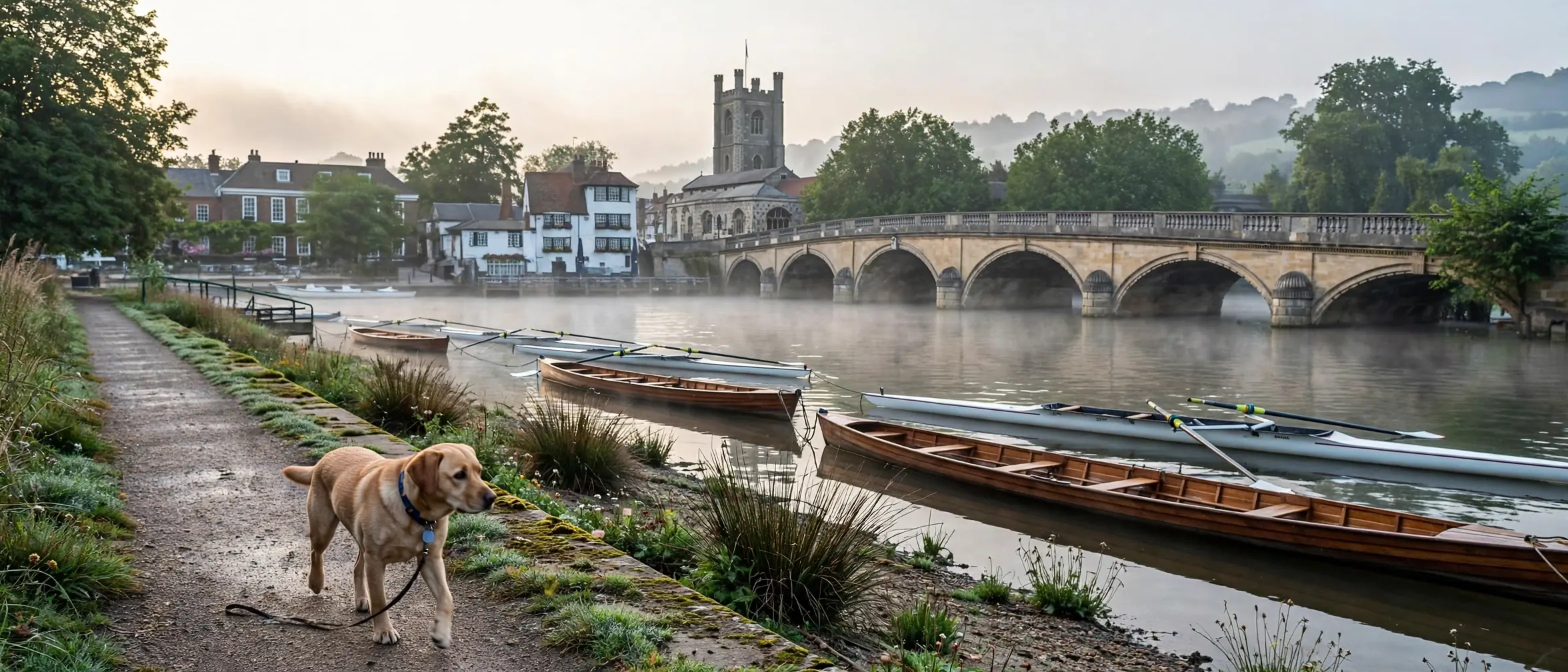
Henley’s town centre is small, handsome and very walkable, and it is best approached on foot from the river. The bridge itself is the town’s centrepiece: five stone arches across the Thames, built in the eighteenth century, with the river running fast beneath it and the rowing clubs on either bank. Crossing the bridge with a dog is a pleasure in itself, but the pavements are narrow and the traffic is steady, so keep the dog on the inside and move briskly — the bridge is a crossing, not a viewpoint, and the best views of it are from the towpath below.
The market place, a short walk from the bridge, is the town’s social heart. The market cross, the town hall and the surrounding shops make a compact, attractive square, and on market days the stalls sell local produce and the atmosphere is friendly. The square is a good place to sit with a dog, but it is also a place where a reactive dog will meet a lot of people in a small space, so choose a quiet corner and keep the lead short. The streets radiating from the square — Hart Street, Duke Street and Bell Street — hold the town’s shops, cafes and pubs, and they are worth a slow wander if your dog is comfortable in a busy street.
The town’s independent shops are one of its quiet pleasures. Henley has kept more of its small shops than many Thames towns, and the window displays reward a slow walk. Dogs are welcome in some shops and not in others, and the rule is usually posted on the door — look for the sign rather than assuming. A dog that waits patiently outside a shop is a well-trained dog, and a short wait with a treat is a good training opportunity, but never tie a dog up outside a shop in a busy street and walk away. The town centre is safe, but a tied-up dog is a vulnerable dog.
Finish the town walk by returning to the river. The walk back along the towpath towards the bridge is the town at its best: the boats moored along the bank, the rowers training on the water, and the light catching the bridge’s arches. It is a short walk, but it is the one that stays in the memory, and it is the reason most visitors come back to Henley.
Pubs and cafes: the riverside rooms and the quieter streets
The riverside pubs are the first thing most visitors notice about Henley, and on a fine day their gardens are among the prettiest places to sit in the Thames valley. The catch is that everyone else has noticed them too: on a summer weekend the riverside rooms and gardens are busy, the tables are close together, and a dog that needs space will struggle. A confident, settled dog will enjoy them; a reactive one will not, and there is no shame in choosing otherwise.
The better bet for most dogs is a street or two back from the river. The pubs on Hart Street, Duke Street and the lanes behind the market place are smaller, calmer and more forgiving, with flagstone floors and landlords who know the regular dogs by name. Their gardens are quieter, their rooms are less crowded, and a dog under the table is a normal sight rather than an obstacle. The walk to them is short, and the difference in atmosphere is large.
Cafes follow the same pattern. The ones on the market place and by the bridge are the busiest, and their outdoor seating works well in good weather if your dog is comfortable with people passing close by. The cafes on the quieter streets are easier, and a coffee there, with the dog settled on its mat, is a better rest than a crowded table by the river. Takeaway is always an option: a sandwich on a bench by the Thames, with the boats going past and the dog at your feet, is often the best lunch in Henley.
Timing shapes the experience more than the choice of pub. Lunchtime is calm, the late afternoon brings the rowing crews in from training, and the evening brings the dinner crowd. If your dog is nervous, aim for the quiet hour between lunch and evening, when the room is calm and the staff have time to make a fuss of the dog. And during regatta week, the normal rules do not apply at all — the riverside pubs are packed from morning to night, and the quieter streets are the only sensible choice.
Staying the night: river views, quiet rooms and regatta booking
A room with a river view is the dream in Henley, and it is worth asking what that view costs in noise. The rooms facing the Thames hear the towpath, the moorings and the pubs late into the evening, and a light-sleeping dog may do better in a room a street back from the water, where the nights are quieter and the mornings start later. When you book, ask where the room sits, not just what it looks like — the position matters more than the view.
The garden or courtyard is the next thing to settle. Is there somewhere enclosed where the dog can go out last thing at night, and how far is it from the room? A small courtyard by the back door is ideal; a walk through the hotel lobby and across a car park is not, especially at midnight in the rain. Then ask about the dining room: are dogs allowed in, or only in the bedroom? And can the dog be left alone in the room at all, and for how long? Get the answers in writing before you pay, because a verbal promise at booking is hard to rely on when you arrive tired in the evening.
Charges are the last piece. Is the fee per dog or per stay, and is there a limit on the number of dogs? Some of Henley’s hotels charge per night per dog, which adds up quickly on a longer stay, while others charge a flat fee. Ask for the all-in total, including any cleaning charge, and compare that figure rather than the room rate alone. Regatta week changes everything: the town’s hotels fill months ahead, prices rise sharply, and some places change their dog rules for the week, so book early and confirm the policy in writing.
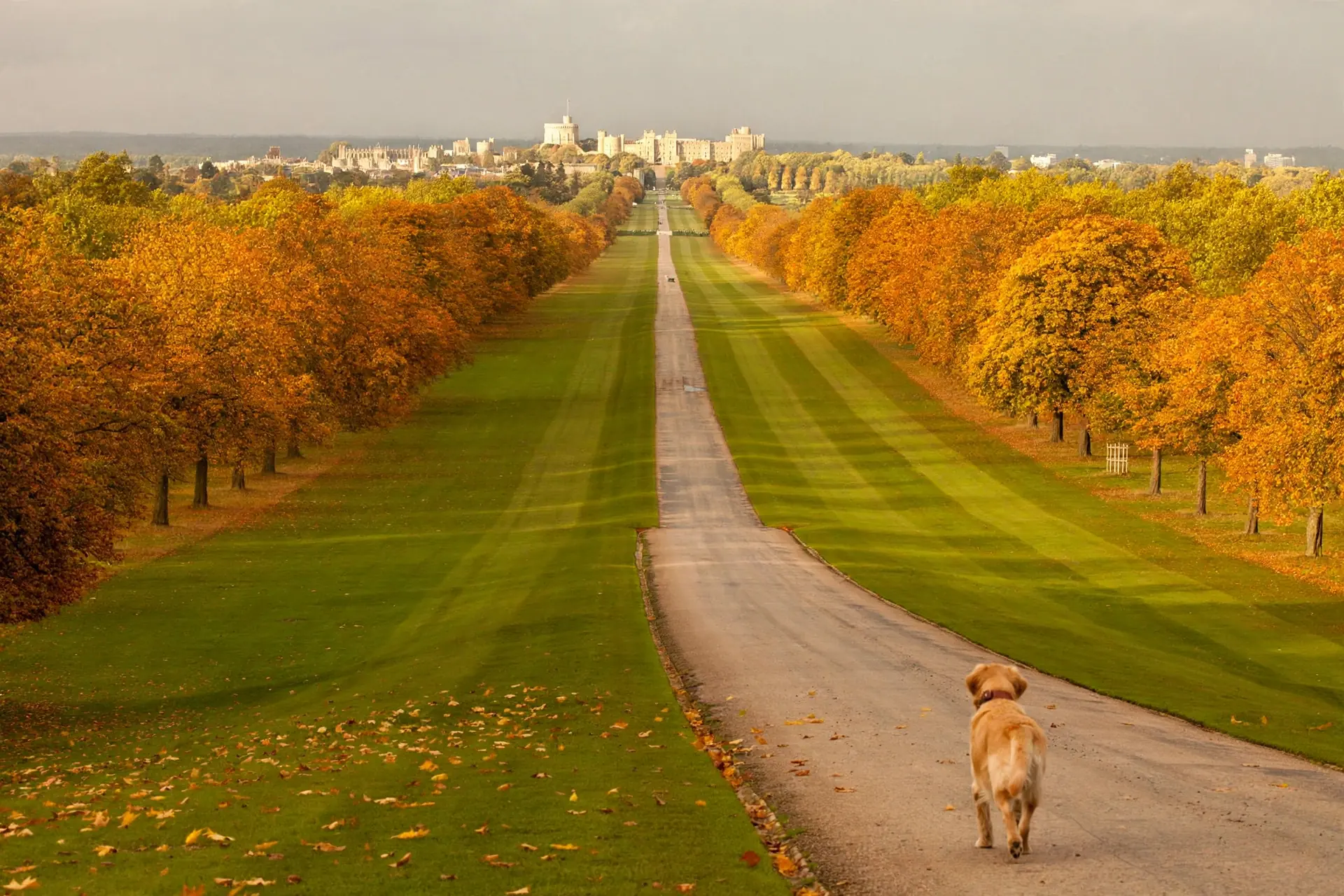
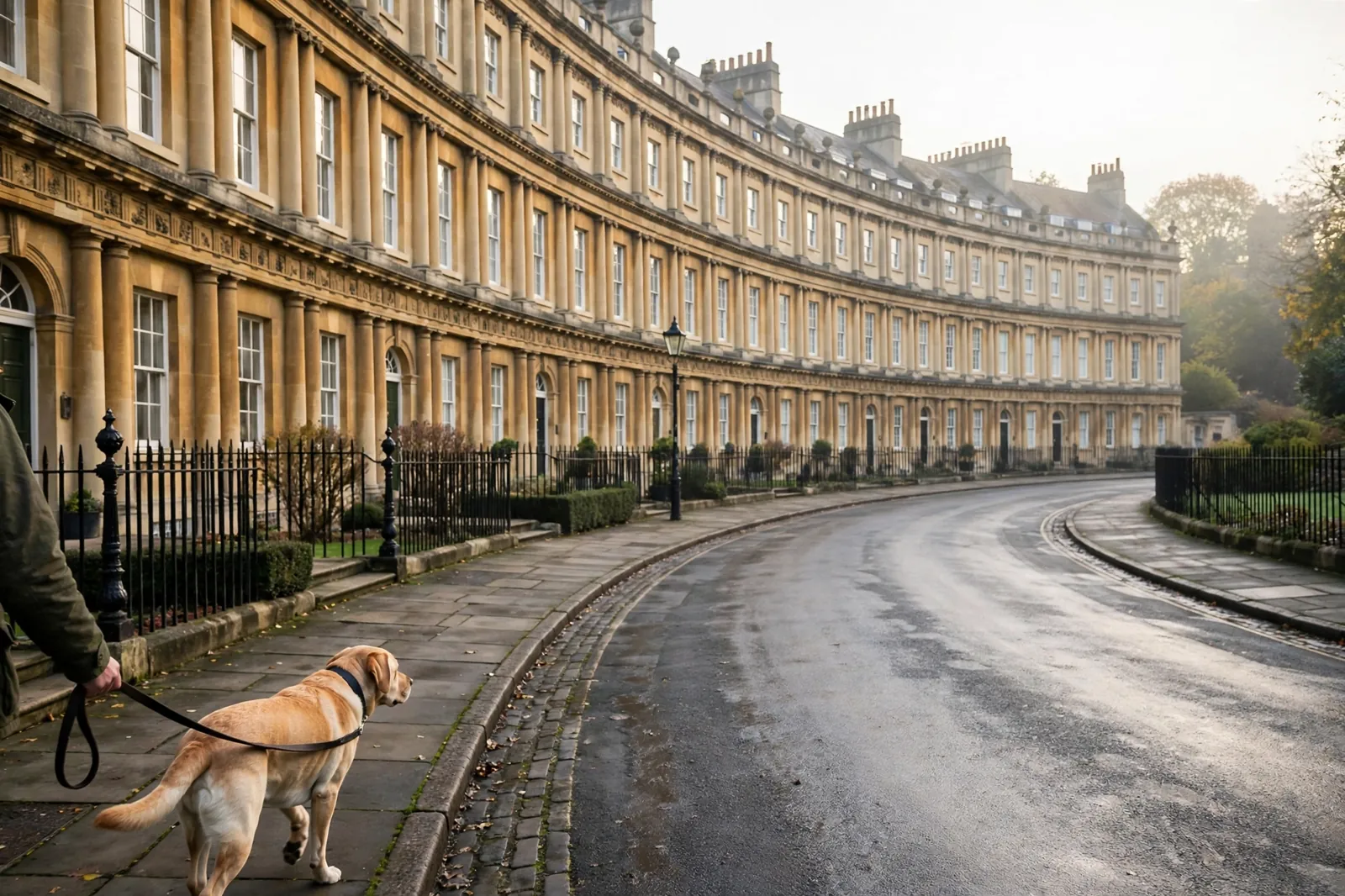
The cottages on the Chiltern slopes above the town suit a longer stay. They usually have a garden, a kitchen and the freedom to come and go without a lobby, which suits a dog that needs space and a routine — but they are a drive or a steep walk from the river, so you will be using the car for the towpath. Henley also works as a base for the wider Thames valley: Windsor is a short drive downstream, with its Long Walk and Great Park, and Bath is further west for a longer trip.
Trains, the branch line and parking on the edge
The train is the most pleasant way to reach Henley. The branch line from Twyford connects with the main line from London Paddington, and the journey from the capital takes a little over an hour with the change. The branch line is a small, single-carriage service at times, so a large dog may need to sit in the vestibule, but the ride itself is gentle and the station is a short, flat walk from the town centre and the river. A car-free visit to Henley is genuinely easy.
Driving in is a different experience. Henley is reached from the M4 or the M40, and the approach roads wind through the Chilterns on narrow lanes that are beautiful and slow in equal measure. Allow extra time on a summer weekend, when the town’s roads fill with visitors, and avoid the town centre during regatta week unless you have a parking space booked — the road closures change daily and the routes you rely on may be diverted.
The car parks near the river fill first, and the ones on the edge of town are the better choice for a dog owner: park there, and walk in along the towpath, which is pleasanter than circling the centre with a dog waiting in the car. Arrive before ten in the morning on a summer weekend, or the riverside spaces will be gone. The charges are what you would expect for a Thames-side town, and the walk in from the edge car parks is part of the visit, not a chore.
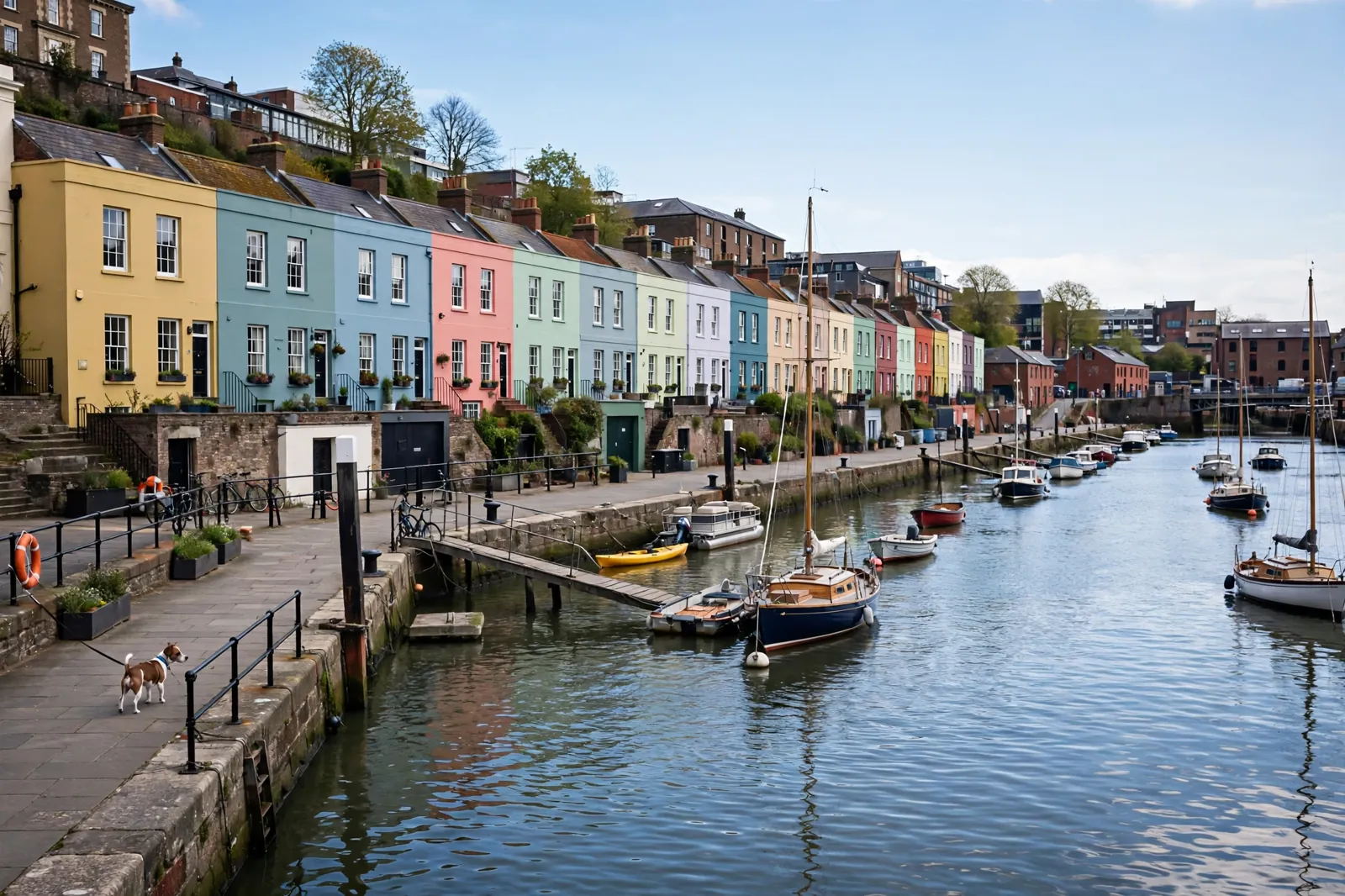
Summer heat and winter flooding are the two practical hazards. The riverside car parks have little shade, so get the dog out straight away and walk to the river, where the water and the trees keep the air cooler. After heavy rain the Thames Path can flood near the locks, and the detours are not always signposted, so check the official guidance before you travel if there has been recent flooding — and carry a towel in the car, because a wet towpath walk ends with a wet dog. Our guide to Bristol covers another great riverside city if you are planning a longer Thames and Severn trip.
Practical questions
Before you go
Can dogs walk the Thames Path through Henley-on-Thames?
Yes, the Thames Path runs through Henley and is one of the best dog walks in the town, but it is a shared route used by walkers, runners and cyclists, and the towpath edge drops straight into the river. Keep dogs on a lead near the water, especially around the bridge and the moorings where boats are manoeuvring.
Is Henley Regatta a good time to visit with a dog?
For most dogs, no. Regatta week in early July brings very large crowds, loudspeakers, marquees and busy riverside paths, and the town centre becomes hard to move through with a dog. Confident dogs can cope with a very early morning riverside walk before the crowds arrive, but plan to leave the dog somewhere quiet during the racing itself.
Where can dogs swim near Henley-on-Thames?
Swimming in the Thames at Henley is not something to plan around. The river is busy with rowing boats, launches and moored craft, the current is stronger than it looks, and water quality varies. Dogs that love water are better off at a quieter stretch upstream or downstream, away from the town moorings, and even then only on a long line with a safe exit.
Are the Chilterns walks near Henley suitable for dogs?
Yes, the Chiltern Hills rise steeply from the town and offer wooded climbs and open ridge walks, but the paths are steeper and rougher than the riverside, and livestock graze the chalk grassland. Keep dogs on a lead near sheep and cattle, carry water in summer, and check the official guidance before you travel for any seasonal path closures.
Where do I park in Henley with a dog?
Henley has several town-centre car parks, and the riverside car parks near the bridge fill earliest, especially on summer weekends and regatta week. Arrive before ten in the morning, or park on the edge of town and walk in along the river, which is pleasanter than circling for a space with a dog waiting in the car.
Can dogs go into the River and Rowing Museum?
The museum building does not admit dogs except assistance dogs, so plan a split visit. The museum grounds and the riverside meadow beside it are good for a lead walk while one person goes inside, and the building is compact enough that a split visit takes well under an hour.