This guide is independent and contains no paid placement. If affiliate links are added later, they will be clearly marked and will not change our editorial checks.
Kirkby Stephen is a compact, walkable Eden Valley market town where a dog can have a proper day out without a car: start with the riverside loop through Stenkrith Park and Frank's Bridge, browse the High Street and Saturday market, then choose between a gentle valley walk and the long Coast to Coast or Nine Standards Rigg routes. Keep dogs on a lead in town and in the park, near livestock and on roads, and check the official guidance before you travel for current access, parking and river conditions.
Why Kirkby Stephen works with a dog
Kirkby Stephen sits in the upper Eden Valley in Cumbria, on the eastern edge of the county and within easy reach of the Yorkshire Dales, the North Pennines and the Lake District. It is a working market town rather than a resort, and that is exactly what makes it so easy with a dog. The centre is compact enough to explore on foot, the River Eden runs through the town, and the surrounding farmland and moorland are crossed by public footpaths and long-distance trails. You can arrive, park, walk, eat and sleep without the complicated logistics that a busier honeypot village often demands.
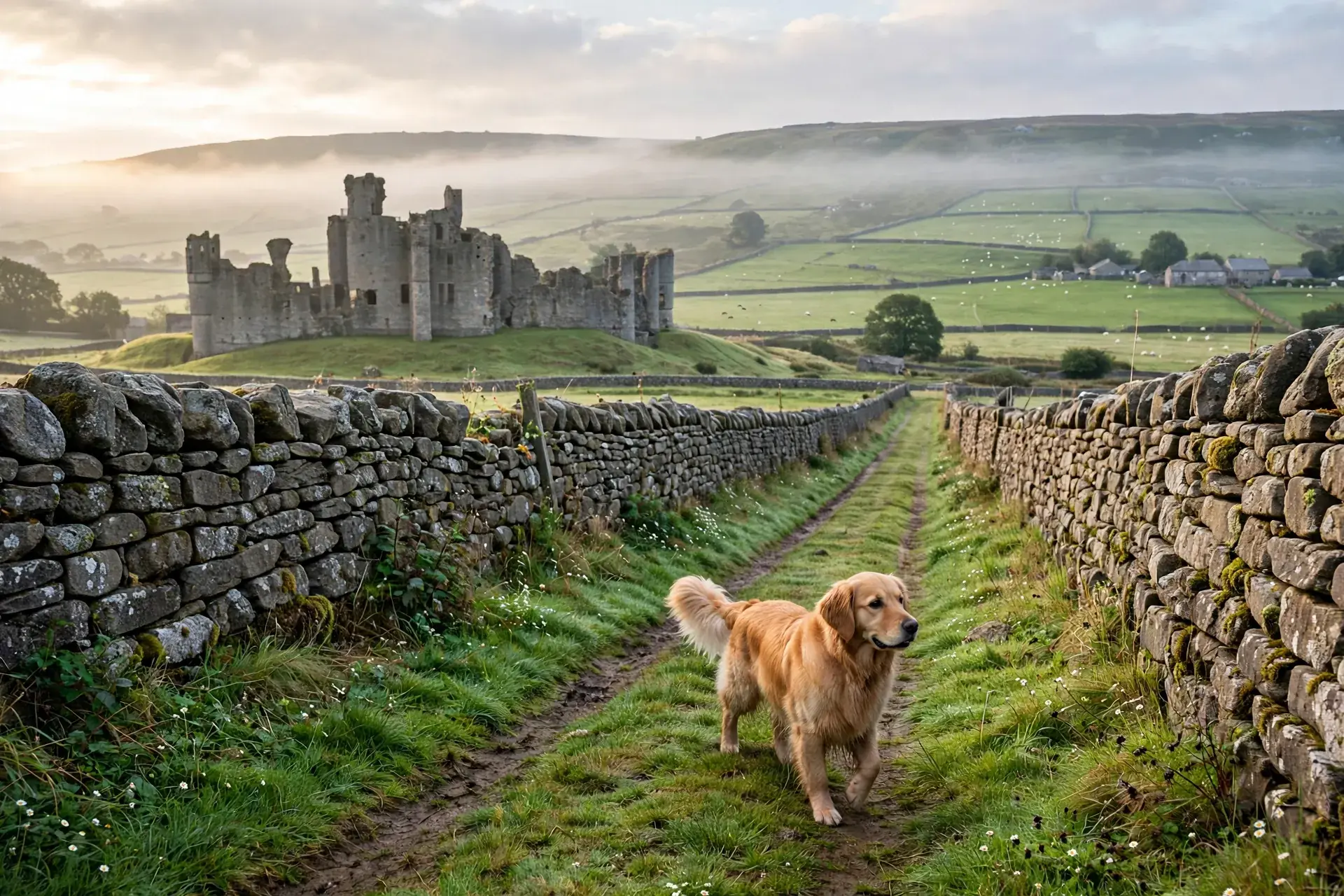
The town has a long history as a market and staging point on the road through the Eden Valley, and the wide High Street, the parish church of St Stephen, the market square and the rows of stone-built shops and houses still give it a clear sense of place. For a dog owner, the practical appeal is simpler: there are pavements for the town stretch, grass and riverside paths for the exercise stretch, and open fells for the days when the dog still has energy to burn. A short stay can therefore mix three very different kinds of walking without moving the car, which is a kindness to a tired dog and to the person holding the lead.
Kirkby Stephen also works as a base rather than only as a stop. From here, the Eden Valley opens out towards Appleby-in-Westmorland to the north-west and the Yorkshire Dales to the south-east, and the Coast to Coast path passes directly through the town. That makes it a natural overnight halt for long-distance walkers and a sensible centre for a long weekend of shorter walks. If you are planning a wider trip, our 3 day Lake District itinerary with a dog shows how to balance walking days with rest days, and the same principle applies here: one big fell day, one river day and one slow town day will suit most dogs better than three hard days in a row.
Before you set off, it helps to think about what kind of dog you are bringing. A young, fit collie will cope happily with the climb to Nine Standards Rigg on a cool, dry day, while an older dog, a puppy, a brachycephalic breed or a dog recovering from an injury will be far happier on the flat riverside paths and the short valley loops. Kirkby Stephen suits both, because the easy and the demanding walks start from almost the same place. The skill is choosing the right one for the dog in front of you, the weather on the day and the amount of daylight left, rather than the walk you had imagined at home.
The Eden river loop: the walk to build a day around
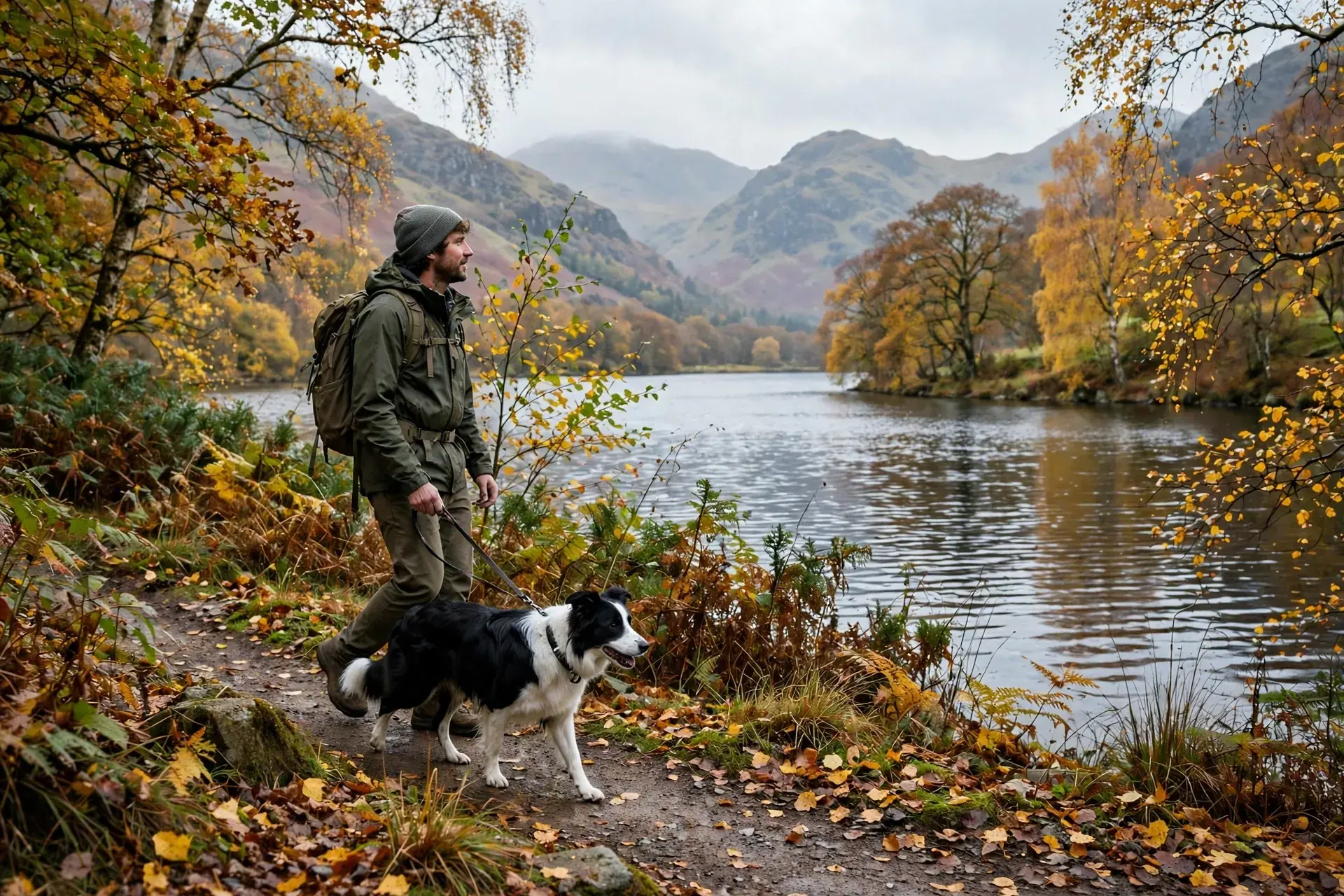
The best way to understand Kirkby Stephen with a dog is to walk the river loop first. It is the walk that links the town, the park, the bridges and the open valley, and it gives a new visitor a clear mental map of the place in a single outing. Start in the town centre, drop down to the River Eden, follow the riverside paths through Stenkrith Park, cross at Frank's Bridge or another footbridge, and return along the opposite bank or through the quiet lanes at the edge of town. The loop is gentle, mostly flat and easy to shorten or lengthen, which makes it a good first walk after a journey and a good last walk before the drive home.
Walk the loop slowly, especially on a first visit. The Eden here is a lively, stony river rather than a wide, slow lowland stream, and the sound of the water, the smell of the riverside grass and the sight of dippers and wagtails along the banks will hold a dog's attention far longer than a straight pavement walk. Let the dog sniff at the bridges, the stone walls and the field gates, and stop often. A riverside loop is not a route to rush: it is a chance for the dog to settle into a new place, stretch after travelling and learn the smells of the town before you ask for a longer day on the fells.
Plan the loop around the time of day and the season. Early morning is usually the quietest time on the riverside paths, and it is the best choice for a reactive dog or a dog that finds other dogs exciting. Midday in summer brings more families, picnics and paddling, so keep the lead short and the dog close through the busiest stretches. In winter, the same paths can be muddy, icy or partly flooded after heavy rain, so wear boots with grip, carry a towel in the car and be ready to turn back if the river is high. The loop is still worth doing in poor weather, but it is a different walk when the Eden is running fast and brown, and it deserves more caution.
If you want a longer day, the river loop can be extended in either direction along the valley without committing to a fell climb. Follow the Eden upstream or downstream for a mile or two, then return by a parallel lane or field path, and you have a satisfying half-day walk with plenty of variety. If you want a shorter day, walk only the park and bridge section, then spend the rest of the morning in the town centre. Either version counts as a proper walk, and the dog will not be keeping score. The point of the loop is that it is flexible, and flexibility is what makes a dog-friendly break work when the weather, the dog's energy or the traffic on the road changes the plan.
Stenkrith Park and the riverside
Stenkrith Park is the green heart of the Kirkby Stephen dog walk. It is a public park on the River Eden at the edge of the town, with open grass, trees, riverside paths and places to sit, and it is the obvious first stop for a dog that needs to stretch its legs after a car journey. The park is popular with local dog walkers, families and visitors, so expect to meet other dogs, children, cyclists and people out for a stroll. That shared, sociable character is part of its charm, and it is also the reason to keep your dog on a lead and under close control here rather than treating the park as an off-lead exercise field.
Use the park as a sniffing and settling space rather than a sprinting space. Walk the riverside paths at the dog's pace, let the dog investigate the grass, the trees and the riverbank, and use the open ground for a little lead training or a calm game. A long line can be useful here if you want to give the dog more freedom without losing control, but keep it short near the water, near the road and near other dogs. If your dog is reactive, visit early or late in the day, keep to the quieter edges of the park and be ready to move aside and let other walkers pass. A calm first visit sets the tone for the rest of the trip.
The River Eden runs through and beside the park, and the water is the main attraction and the main hazard in the same place. Some dogs will paddle happily at a shallow edge; others will want to swim, chase the current or scramble down a steep bank. Do not let the dog decide for itself. Choose a shallow, slow, easily reached entry point, keep the lead in your hand, and be ready to call the dog back before it gets into deeper or faster water. After heavy rain the river can rise quickly and the banks can become slippery, so check the water before you let the dog near the edge, and check the official guidance before you travel if you are unsure about local river conditions.
Stenkrith Park is also a good place to practise the practical side of a dog-friendly trip. Bring poo bags and use the bins provided, keep the dog off picnic areas and children's play equipment, and be polite about other people's space. The park is maintained for everyone, and a dog owner who picks up, keeps the dog close and moves on quietly is welcome back. In summer, bring water for the dog and a bowl, because the river is not a reliable drinking source, and in winter bring a towel and a drying coat for the walk back to the car. Small preparations like these make the difference between a relaxed park visit and a muddy, thirsty scramble.
Frank's Bridge and the town end of the river
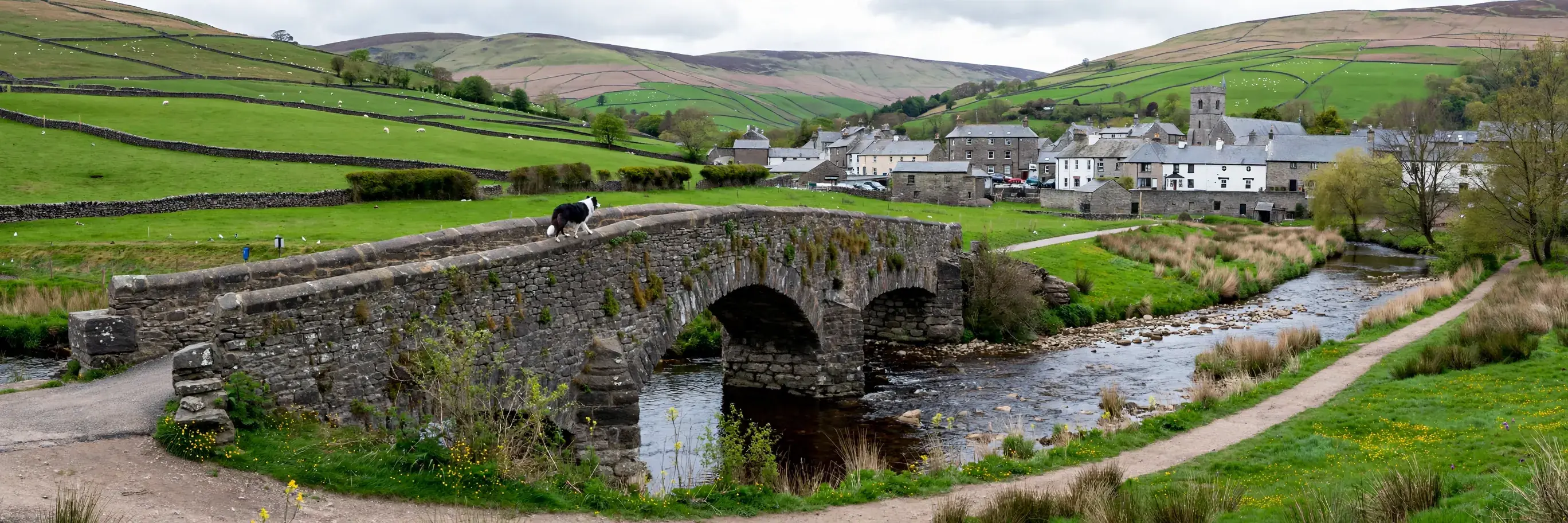
Frank's Bridge is one of the best-known landmarks on the Kirkby Stephen dog walk, and it is worth understanding what it is before you cross it. The bridge carries a footpath over the River Eden at the town end of the riverside walk, and from its span you get a clear view of the river, the stonework, the banks and the valley beyond. It is a natural turning point for a short loop, a good place for a photograph and a useful landmark when you are giving directions or describing a route to another walker. Dogs usually cross it without fuss, but take care on a narrow bridge: keep the dog on a short lead, keep to one side and let other walkers pass.
The area around Frank's Bridge is where the town and the river meet most closely, and that meeting shapes the walk. On one side are the streets, houses and shops of Kirkby Stephen; on the other are the fields, walls and open valley that lead towards the fells. The bridge therefore works as a hinge between the urban and the rural parts of the day. Cross it in the morning and you are heading out into the valley; cross it in the evening and you are heading back towards food, shelter and a warm bed. It is a small piece of infrastructure, but it gives the walk a shape and a rhythm that a featureless riverside path does not have.
Take the bridge section slowly, especially if your dog is nervous about bridges, water or heights. Some dogs hesitate on open or narrow bridges, on metal grates or on surfaces that sound hollow underfoot. Do not drag the dog across or crowd it from behind. Let the dog approach, sniff and look, walk calmly ahead on a loose lead and reward the dog on the far side. If the dog is genuinely distressed, turn back and use another crossing rather than forcing the issue. A dog that learns that bridges are safe and unhurried will cross the next one with confidence, and Kirkby Stephen has enough alternative routes that you do not need to win this particular argument on the first day.
From Frank's Bridge, you can build several different walks. A short return along the opposite bank takes you back towards the town centre and the park. A longer route follows the river further out of town, then loops back through the lanes. A third option uses the bridge as the start of a walk towards the open country to the east, where the Coast to Coast path and the routes towards Nine Standards Rigg begin to climb away from the valley. Whichever you choose, keep the lead on until you are well clear of the road and the bridge, and keep an eye out for cyclists and other walkers who may be approaching from the far side without seeing you.
The market town: High Street, Saturday market and cafes
Kirkby Stephen is a market town, and the market is still the best reason to time a visit for a Saturday. The weekly market brings stalls, local produce, crafts and food to the town centre, and it gives a dog walk a purpose beyond exercise: you can browse, buy lunch, meet local people and watch the town at its busiest. A Saturday market is also the most stimulating environment your dog will meet in Kirkby Stephen, so plan for it. Arrive early if your dog is nervous in crowds, keep the lead short, keep the dog close to your leg and away from food stalls, and be ready to step aside into a quiet side street if the dog needs a break.
The High Street itself is worth a slow walk on any day of the week. It is a wide, stone-built street with independent shops, cafes, pubs, a butcher, a baker and the kind of small businesses that make a market town useful as well as attractive. Walk it at the dog's pace, stop to look in the windows and let the dog sniff the doorways and the corners. This is not a shopping centre: it is a working street where people live, work and walk their dogs, and the best way to enjoy it is to treat it as a stroll rather than a route to be completed. Keep the dog on a lead throughout, pick up after the dog, and remember that pavements are shared with pushchairs, wheelchairs and older pedestrians who may not expect a dog underfoot.
Cafes and pubs in Kirkby Stephen are generally welcoming to dogs, but the welcome is usually in a specific area rather than everywhere in the building. A pub may welcome dogs in the bar and on the terrace but not in the restaurant; a cafe may have a dog-friendly table by the door or outside. Always ask before you sit down, and do not assume that a dog-friendly reputation from last year still applies. Bring a mat for the dog to lie on, a chew or a stuffed Kong to keep the dog occupied, and water if the establishment does not provide a bowl. A dog that settles quietly under a table is welcome everywhere; a dog that barks, paces or begs at other tables will not be invited back, however friendly the landlord is.
The parish church of St Stephen, the market square and the older streets around the centre give the town a historic character that rewards a slow look. You do not need to take the dog inside the church or into every shop to appreciate the place: the stonework, the rooflines, the market cross and the views down the High Street towards the fells are all visible from the pavement. If you want to learn more about the town's history, look for the local information boards and the small museum and visitor information points in the town, and check the official guidance before you travel for current opening times. A market town is best understood on foot, at walking pace, with a dog at your side and time to stop.
Coast to Coast: walking through town with a dog
The Coast to Coast is one of Britain's best-known long-distance walking routes, running from St Bees on the Cumbrian coast to Robin Hood's Bay on the Yorkshire coast, and Kirkby Stephen is one of its natural staging points. The route passes through the town, which means that long-distance walkers arrive on foot, rest, resupply and leave on foot, and dogs are a familiar sight on the trail in the walking season. For a visitor, that gives Kirkby Stephen a particular energy: you will meet walkers with backpacks, muddy boots and tired dogs, and you will hear the trail talked about in pubs, cafes and shops as a living part of the town rather than a line on a map.
If you are walking the Coast to Coast with a dog, Kirkby Stephen is a practical place to plan a rest day or a short stage. The town has accommodation, food shops, a pharmacy and places to eat, so you can restock, wash clothes, rest the dog and check the weather before the next section. Do not try to walk a full long-distance stage at the same pace you would walk alone: a dog needs more stops, more water and more sniffing time, and a tired dog on a long fell section is a welfare problem, not a challenge to be pushed through. Break the route into shorter days, plan a bail-out point where you can return to the town by road if the dog tires, and book dog-friendly accommodation in advance, because the town is small and the best rooms fill early.
Even if you are not walking the whole Coast to Coast, you can walk a section of it from Kirkby Stephen as a day walk. Follow the trail out of town in either direction for an hour or two, then return by the same route or by a parallel path, and you will have walked a genuine piece of a famous long-distance route without committing to a multi-day expedition. The waymarking is generally clear, but carry a map or a downloaded route on your phone, because the trail crosses farmland, moorland and lanes where the path is not always obvious. Keep the dog on a lead through farmland and near livestock, and keep the dog under close control on the open fell, where sheep and ground-nesting birds may be present in the breeding season.
The Coast to Coast also raises a practical question that every dog owner on a long-distance trail should think about in advance: transport. If you walk a linear section and need to return to Kirkby Stephen, you will need a bus, a taxi or a lift, and not all of them accept dogs. Check the official guidance before you travel for current bus and taxi arrangements, and ask your accommodation provider for advice: local hosts know which taxi firms take dogs, which buses are dog-friendly and where the practical pick-up points are. Do not assume that a service that took a dog last year still does, and do not leave the transport question until you are standing on a remote lane with a tired dog and no signal.
Nine Standards Rigg: the big moorland day out
Nine Standards Rigg is the big walk from Kirkby Stephen, and it is the one that most visitors ask about first. The Rigg is a long, open ridge to the east of the town, topped by a line of tall stone cairns known as the Nine Standards, and on a clear day the views stretch across the Eden Valley, the North Pennines and the Yorkshire Dales. The cairns themselves are striking: a row of stone pillars standing against a wide moorland sky, with no trees, no walls and no buildings to interrupt the horizon. It is a walk that feels remote and elemental, and it is a very different experience from the sheltered riverside paths in the valley below.
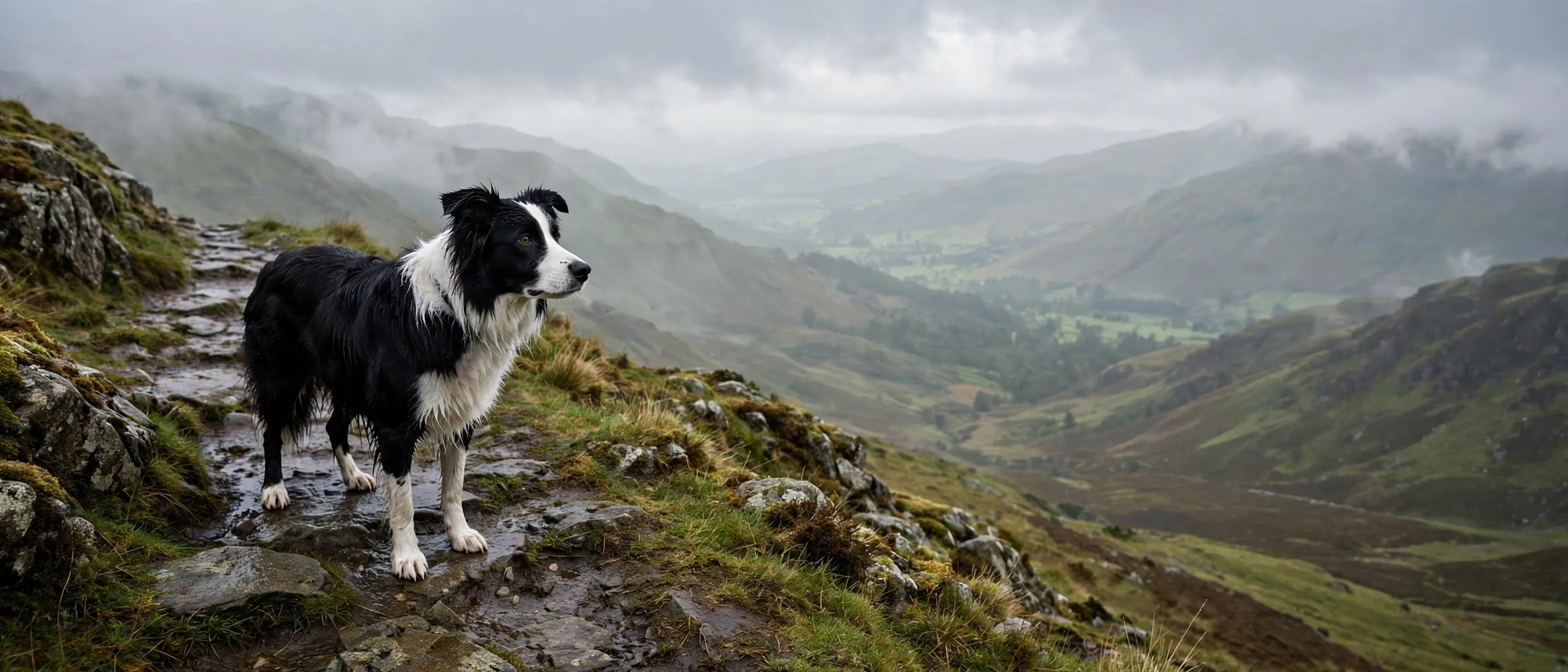
Do not underestimate this walk. The route from Kirkby Stephen to the Rigg climbs steadily out of the valley, crosses open moorland and returns by the same or a similar route, and the whole outing can take several hours. The ground is uneven, boggy in places and exposed to wind and rain, and there is little shelter once you leave the valley. The weather on the fell can be very different from the weather in the town: a calm, sunny morning in Kirkby Stephen can become a cold, windy, misty afternoon on the Rigg, and visibility can drop quickly. Only attempt the full route on a settled day, with plenty of daylight, a map, a compass or a charged phone, waterproofs for you and a coat for the dog if the dog feels the cold, and enough food and water for both of you.
For a dog, the Rigg is a rewarding but demanding walk. A fit, healthy adult dog with good recall and experience of moorland will enjoy the open ground, the smells and the freedom to move, but the dog must be under close control throughout. Livestock, including sheep, may be grazing on the fell, and ground-nesting birds are present in the breeding season, so a lead or a long line is the safe choice unless you are certain that no livestock are nearby and your dog's recall is genuinely reliable. Carry water for the dog: there is no reliable drinking water on the open moor, and a dog that has been running and climbing will need to drink regularly. Carry food too, and offer a snack halfway, because a long climb burns more energy than a flat riverside walk.
Know when to turn back. If the wind rises, the mist comes down, the dog starts to lag or the light begins to fade, the right decision is to return to the valley, even if the cairns are in sight. The Rigg will still be there on another day, and a dog that is pushed too far on a cold, wet moor can become hypothermic, lame or simply exhausted. If you want a shorter taste of the same landscape, walk part of the way up, enjoy the view back over the Eden Valley, and return by the same route. That is a proper walk in its own right, and it leaves the full Rigg for a day when the weather, the dog and the daylight are all on your side.
Shorter Eden Valley walks for tired legs
Not every day in Kirkby Stephen needs to be a fell day, and not every dog needs a long walk to be content. The Eden Valley around the town offers a range of shorter, gentler walks that are ideal for older dogs, puppies, dogs recovering from an injury, or simply for the day after a big walk. Follow the river upstream or downstream for a mile, walk a quiet lane between dry stone walls, or loop through the fields at the edge of town on a public footpath. These walks are short, flat and easy to shorten further, which makes them perfect for a morning stretch, an evening wind-down or a wet day when the fells are not inviting.
The key to a good short walk is to make it interesting rather than long. Let the dog sniff, let the dog choose the pace, and stop at the gates, the walls and the riverbank where the smells are richest. A twenty-minute sniffing walk on a long line can tire a dog more effectively than an hour of brisk marching, because sniffing is mentally demanding and gives the dog a sense of agency. If your dog is young and excitable, use the short walk for training: practise recall in a quiet field, practise loose-lead walking on a lane, or practise settling on a mat at a bench. Short walks are not a lesser option; they are a different kind of exercise, and many dogs need them more than they need another long hike.
When you walk the valley paths, remember that you are walking through working farmland. Keep the dog on a lead near livestock, close gates behind you, keep to the marked footpath and do not let the dog chase sheep, lambs or cattle. During lambing season, which is usually in spring, be especially careful, and during the bird breeding season, keep the dog out of long grass and moorland where ground-nesting birds may be present. Farmers in the Eden Valley are generally welcoming to walkers who follow the countryside code, and a dog owner who keeps the dog under control, picks up and closes gates is welcome to return. If you are unsure about access on a particular path, check the official guidance before you travel.
If you are staying for several days, use the shorter valley walks to build a routine. Walk the same riverside loop at the same time each morning, and the dog will learn the route, the smells and the other regular walkers. Routine is reassuring for a dog in a new place, and it makes the rest of the day easier: a dog that has had a good morning walk is more likely to settle in a cafe, in a pub or in the car. For ideas on how to structure a multi-day trip so that the dog gets enough rest between walking days, our 3 day Lake District itinerary with a dog is a useful model, even though the scenery is different: the principle of one hard day, one easy day and one rest day applies just as well in the Eden Valley as it does around Windermere.
River safety, swimming and livestock
The River Eden is the thread that runs through this guide, and it deserves a section of its own, because river safety is where a relaxed dog walk can turn into an emergency. The Eden at Kirkby Stephen is a spate river: after heavy rain in the hills, the water level can rise quickly, the current can strengthen and the colour can change from clear to brown. A spot that was a safe paddling place in the morning can be a fast, deep, dangerous river by the afternoon. Always look at the river before you let the dog near it, and if the water is high, fast or discoloured, keep the dog well back from the bank and walk on the higher path instead.
Swimming is a personal decision for each dog owner, and it should be based on the dog, the place and the conditions on the day. A strong, confident swimmer in a shallow, slow, easily reached pool is a different proposition from a small, elderly or inexperienced dog in a deep, fast stretch below a bridge or a weir. Never throw a ball or a stick into fast water, never encourage a dog to jump from a bank or a bridge, and never let a dog swim where you cannot reach it quickly if it gets into trouble. Weirs, waterfalls and bridge piers create currents and undertows that are not obvious from the bank, and a dog that is swept downstream can be very difficult to rescue. If you are in any doubt, keep the dog on a lead and enjoy the river from the path.
Water quality is another factor to consider. After heavy rain, rivers can carry runoff from farmland and roads, and in warm weather, still or slow-moving water can develop blue-green algae, which is toxic to dogs. Do not let a dog drink from the river as a matter of routine: carry fresh water and a bowl, and offer it regularly. If the dog does swim, rinse the dog with clean water afterwards if you can, and watch for vomiting, diarrhoea or lethargy in the hours after the walk. If you see algae, a strange colour or a strong smell in the water, keep the dog out entirely and check the official guidance before you travel for local advice.
Livestock safety is the other half of this section, and it applies to the whole Eden Valley, not just the river. Sheep, cattle and horses graze the fields and the fells around Kirkby Stephen, and a dog that chases livestock can cause injury, abortion in pregnant ewes and, in the worst case, be shot by a farmer acting within the law. Keep the dog on a lead in any field with livestock, keep the dog under close control even in fields that look empty, and do not let the dog approach or bark at animals through a fence. If cattle block the path, give them a wide berth, keep the dog on a short lead and do not walk between a cow and its calf. A dog that is calm around livestock is a pleasure to walk in the Eden Valley; a dog that is not must be managed carefully, every time.
Pubs, cafes and dog-friendly stays
Kirkby Stephen has a small but genuine choice of pubs, cafes and places to stay, and the dog-friendly ones are worth seeking out in advance rather than discovering by trial and error. Start by deciding what kind of stay you want: a hotel or inn in the town centre, a bed and breakfast on a quiet street, a self-catering cottage in the valley, or a campsite or caravan site on the edge of town. Each has different advantages for a dog owner. A town-centre inn puts you within a short walk of the river and the High Street; a cottage gives you a private garden and a kitchen; a campsite gives you space and freedom but less shelter in bad weather. There is no single right answer, only the answer that fits your dog, your budget and the season.
When you book, ask the specific questions that matter to a dog owner rather than accepting a general "dogs welcome" label. Ask whether there is a charge per dog per night, how many dogs are allowed, whether the dog can be left alone in the room, whether there is a garden or an enclosed area, and where the nearest practical toilet walk is after dark. Ask whether the dog is welcome in the bar, the restaurant or the breakfast room, and whether there is a charge for cleaning or damage. Get the answers in writing with your confirmation, and keep the email until you are home. A host who answers these questions clearly is a host who has thought about dogs; a host who is vague is a host who may change the rules on arrival.
Pubs and cafes deserve the same careful approach. The best dog-friendly pubs in a market town are the ones where the dog is treated as a normal customer: a bowl of water on arrival, a quiet corner under a table, and staff who are happy to see a well-behaved dog. Help the pub by helping your dog: bring a mat, settle the dog before you order, keep the lead short and the dog under the table, and do not feed the dog from your plate. If the dog barks, paces or begs, take the dog outside for a short break rather than hoping the behaviour will stop on its own. A short, calm pub visit is better than a long, stressful one, and it leaves the pub happy to welcome the next dog.
For a longer stay, think about the practical details that make a cottage or a room work for a dog. Is there a hard floor that is easy to clean after a muddy walk, or a carpet that will show every paw print? Is there a place to dry the dog and hang wet coats? Is there a secure garden or a yard where the dog can go out last thing at night? Is the garden fenced, and how high is the fence? These questions matter far more than the view from the window, and they are the questions that a good host will answer willingly. If you are comparing Kirkby Stephen with other bases, our guide to Lake District vs Peak District with a dog shows how to weigh terrain, lead rules, stays and travel side by side, and the same comparison method works for any two towns in the north of England.
Rainy days and winter in Kirkby Stephen
Kirkby Stephen is in the north of England, and the weather is part of the experience. Rain is common in every season, wind is frequent on the fells, and winter can bring frost, snow and ice to the higher ground. A dog-friendly trip here therefore needs a wet-weather plan, not just a fair-weather plan. The good news is that the town and the valley offer plenty of options when the fells are not inviting: the riverside paths are sheltered, the town centre is walkable in the rain, and a short walk followed by a long pub lunch is a perfectly respectable way to spend a wet day with a dog.
On a rainy day, choose the walk that will stay safe and enjoyable rather than the walk you had planned. The riverside loop through Stenkrith Park and Frank's Bridge is a good wet-day choice, because it is short, flat and close to shelter, and you can shorten it further if the rain gets heavier. The lanes and the town centre are also good wet-day options, because they are surfaced and easy to walk in boots. Avoid the open fell in heavy rain, high wind or poor visibility: the ground becomes boggy, the paths become slippery, and the dog will be cold, wet and miserable long before you are. A wet dog on a windy moor loses heat quickly, so carry a drying coat and a towel, and be ready to turn back early.
Winter in Kirkby Stephen brings its own rewards and its own risks. A frosty morning in the Eden Valley, with the river mist rising and the fells white in the distance, is one of the most beautiful sights in Cumbria, and a dog will enjoy a crisp, dry winter walk as much as any other. But winter also brings ice on pavements and bridges, frozen puddles, short daylight and the risk of snow on the higher ground. Check the forecast before you set out, carry a torch if you may be out near dusk, and keep the dog on a lead on icy paths where a slip could send the dog into the road or the river. After a winter walk, dry the dog thoroughly, check the paws for ice, grit and salt, and give the dog a warm, dry place to rest.
For a genuinely wet or stormy day, have a backup that does not depend on walking at all. A slow morning in your accommodation, a short toilet walk, a drive to a nearby town for a look around, and an afternoon in a dog-friendly pub or cafe can be a rest day rather than a wasted day. Dogs need rest days, especially on a multi-day trip, and a forced rest day in bad weather is often the day the dog needed most. If you are travelling with children or with a dog that needs more stimulation, bring a chew, a puzzle feeder or a training game for the indoor hours. A wet day in Kirkby Stephen is not a failed day; it is a different kind of day, and a dog that has been walked, fed and settled will not be counting the miles.
Parking, vets, travel and packing
Parking in Kirkby Stephen is straightforward, but it rewards an early start. The town has car parks within a short walk of the High Street, the river and Stenkrith Park, and there is on-street parking in parts of the town. On a Saturday market day, in the summer walking season and on a bank holiday weekend, the most convenient spaces fill early, so arrive before mid-morning if you want a space near the river. Check the signs for charges, time limits and payment methods when you arrive, and check the official guidance before you travel for any changes. Never leave a dog in a car on a warm day, even with a window open, and in summer, park in the shade and leave the dog with water if you must leave the car for a few minutes.
Getting to Kirkby Stephen is part of the planning. The town is served by road from the A66 and the M6, and by rail from Kirkby Stephen station, which is on the Settle to Carlisle line and a short distance from the town centre. If you arrive by train, check the walking route from the station to the town in advance, because it is a country walk rather than a station forecourt, and it is not a route to attempt in the dark with a dog and luggage for the first time. If you arrive by car, the drive through the Eden Valley is part of the pleasure, but the roads are narrow in places and can be busy with farm traffic, so allow extra time and drive carefully. If you use public transport for a linear walk, check in advance whether dogs are accepted and whether a booking is needed.
Know where the nearest vet is before you need one. Kirkby Stephen has veterinary services in the town and in the surrounding area, but opening hours can be limited, especially at weekends and on bank holidays, and the nearest out-of-hours emergency vet may be some distance away. Save the number in your phone before you set out, and keep a note of your own vet's number as well. Bring any medication the dog needs, with a spare day's supply, and bring the dog's vaccination record if you are staying in accommodation that asks for it. A small first-aid kit for the dog, including a tick remover, antiseptic wipes, a bandage and a towel, is worth packing for a fell walk, and it weighs almost nothing in a day pack.
Pack for the dog as carefully as you pack for yourself. The essentials are a lead and a spare lead, a long line for open ground, a harness that fits well, poo bags, fresh water and a collapsible bowl, food and treats, a towel and a drying coat, a mat for pubs and cafes, and a chew or a toy for settling. For a fell walk, add waterproofs for you, a coat for the dog if the dog feels the cold, a map and a charged phone, and a head torch in winter. For a summer walk, add sun protection for a pale-nosed dog and extra water. Check the weather forecast the night before and again in the morning, and be ready to change the walk if the forecast changes. A well-packed day bag is the difference between a walk that is cut short by a forgotten lead and a walk that ends when you choose to end it.
Finally, leave Kirkby Stephen as you found it. Pick up after your dog, close gates, keep to the paths, take your litter home and be polite to the farmers, shopkeepers and other walkers you meet. A market town that welcomes dogs does so because dog owners behave well, and a single thoughtless visit can change a landlord's mind or a farmer's attitude. If you have had a good stay, tell the host, the pub or the cafe: a word of thanks and a recommendation to another dog owner is the best way to keep Kirkby Stephen dog-friendly for the next visitor. For a wider view of how to choose between the national parks that surround the Eden Valley, see our Lake District vs Peak District with a dog comparison, and for a town of a similar scale and character in the Yorkshire Dales, see our guide to Middleham with a dog.
Practical questions
Before you go
Can dogs go off lead in Stenkrith Park?
In practice, keep your dog on a lead in Stenkrith Park unless a sign on the day says otherwise. The park is a shared riverside space with families, other dogs, picnic areas and the River Eden close by, so a lead keeps the visit calm and safe. Use the open ground only for on-lead sniffing and training, and save off-lead running for a secure field or a quiet stretch of open access land where your dog has reliable recall and livestock are not present.
Is Kirkby Stephen a good base for Coast to Coast walkers with a dog?
Yes, Kirkby Stephen is one of the most practical dog-friendly bases on the Coast to Coast. The route passes through the town, so walkers can arrive on foot, restock, find somewhere to stay and return to the trail without a car. Plan shorter daily stages than you would walk alone, carry water and food for the dog, and book dog-friendly accommodation in advance, because the town is small and the best dog-friendly rooms fill early in the walking season.
Can dogs swim in the River Eden at Kirkby Stephen?
Some dogs do paddle and swim in the Eden at Kirkby Stephen, but treat the river with respect every time. Water levels rise quickly after rain, currents can be strong under bridges and around weirs, and banks can be steep and slippery. Let a dog enter only at a shallow, slow, easily reached spot, keep a lead handy, and never encourage swimming after heavy rain or in spate. Check the official guidance before you travel if you are unsure about local conditions.
Are dogs welcome in pubs and cafes in Kirkby Stephen?
Several pubs and cafes in Kirkby Stephen welcome dogs, usually in the bar area or on a terrace rather than in the main dining room, and policies can change with the season or the landlord. Always ask before you sit down, keep your dog on a lead under the table, and bring a mat and a chew so the dog settles while you eat. If one place is full or does not allow dogs that day, there is usually another option a short walk away in the town centre.
Where can I park with a dog in Kirkby Stephen?
Kirkby Stephen has town-centre car parks within a short walk of the High Street, Stenkrith Park and the River Eden, and there is also on-street parking in parts of the town. Arrive early on market days and in the summer walking season, because the most convenient spaces fill quickly. Park in the shade where possible, never leave a dog in a car on a warm day, and check the official guidance before you travel for current charges, time limits and any changes to the car parks.
Is Nine Standards Rigg suitable for dogs?
Nine Standards Rigg can be a rewarding walk for a fit, well-exercised dog, but it is a serious moorland route, not a gentle town stroll. The ground is open, exposed and boggy in places, the weather can change fast, and livestock may be grazing on the fell. Keep your dog under close control, carry water, food, a lead and waterproofs for both of you, and turn back early if the wind rises or visibility drops. Only attempt the full route on a settled day with plenty of daylight.