No company has paid for a mention here, and nothing in this article is sponsored. Labradors differ widely in energy, weight and confidence, so treat the health points as background reading, raise anything specific with your own vet, and confirm the newest official guidance before you set off.
Travelling with a Labrador in the UK works brilliantly if you plan water-first: check every swim spot for safe exits, currents and algae warnings, run a strict towel-and-boot-liner system for mud, keep the dog on a lead anywhere food, bins or livestock appear, and protect enough car and cottage space for a large dog to dry, turn and sleep. Do the water and food planning well and the rest of the breed — friendly, energetic, trainable — is a holiday asset.
Water first: reading a swim spot before the lead comes off
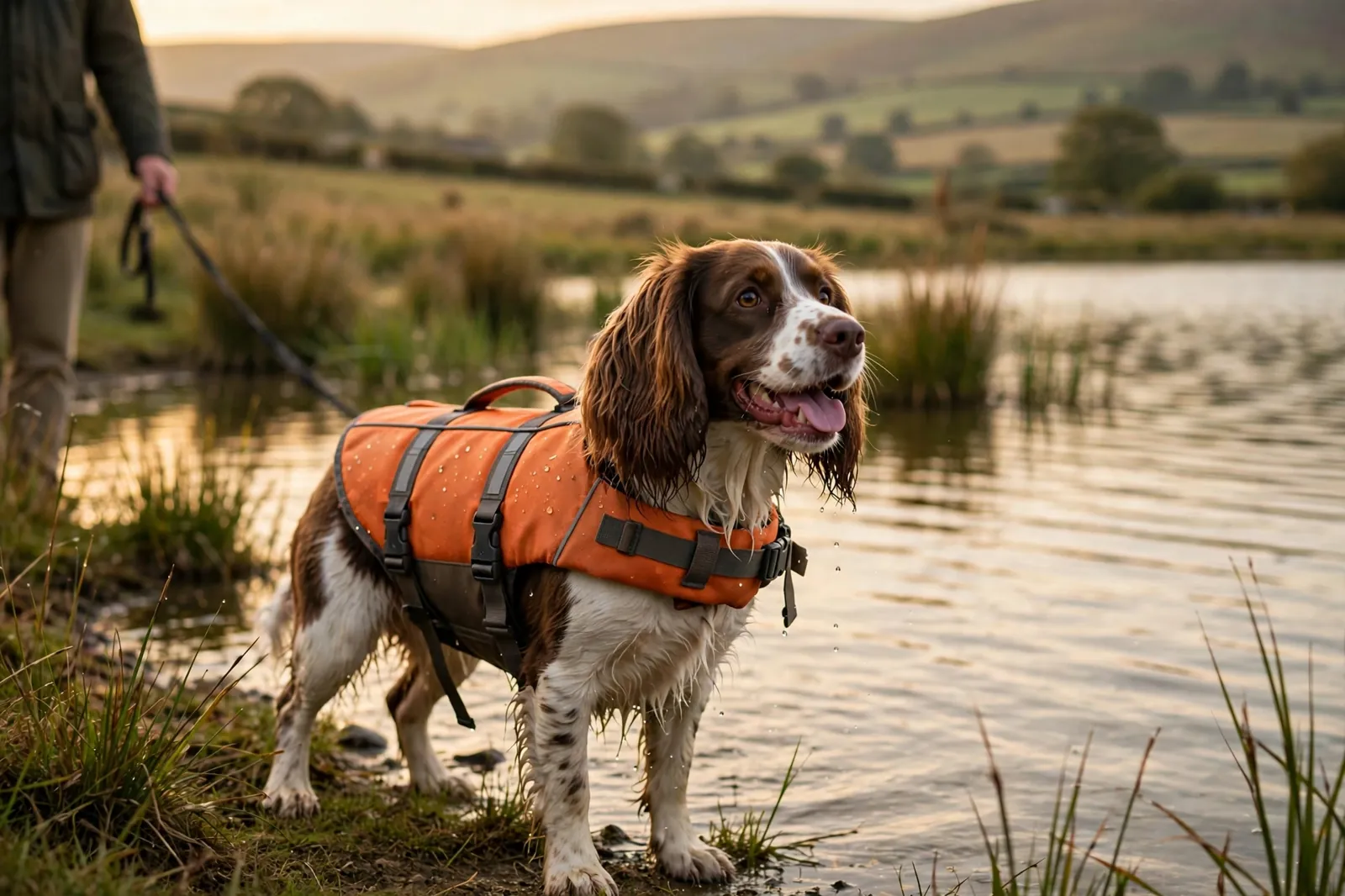
The water is not at the end of the walk. With a Labrador, the water is the walk. A black, yellow or chocolate shape is already leaning towards the lake while you are still reading the car park sign, and that joyful certainty is exactly why the checking has to happen before the lead clip opens, not while the dog is mid-river with something unspeakable in its mouth. Start every waterside stop with the same sixty-second survey, lead firmly on. Where would the dog get in, and — more important — where would a tired, wet dog get out again? A gently shelving gravel shore with a clear walk-out is a swim spot. A steep bank, a harbour wall, a canal edge with sheet piling, or a riverbank that drops straight into deep water is a viewing spot, however loudly the dog disagrees.
Next, look at what the water is doing rather than what it looks like in a photograph. Rivers after rain in the Dales, the Wye, the Tweed or any Welsh valley can run far faster than their summer trickle suggests, and a strong swimmer is still a dog-shaped object in a current, with limited ability to judge strainers, submerged branches and weirs. Weirs deserve a special mention: the recirculating water below even a small weir is dangerous to dogs and people, and no retrieve is worth approaching one. On beaches, add tides, rip currents and the state of the sea to the survey, and keep swims to conditions you would happily wade in yourself up to your knees. Harbours, marinas and working quays are a no by default: ladders instead of exits, boat movement, ropes, diesel sheen and fishing hooks all stack the risks in the wrong direction.
Finally, look at who else uses the water. Anglers mean lines, hooks and bait on the bank. Nesting birds on a lakeshore in spring mean the dog should stay out of the reedbeds entirely. Other dogs already swimming can turn a calm entry into a wrestling match in deep water, so wait for space rather than launching into a crowd. Our dedicated guide to dog swimming safety in the UK works through entry points, life jackets and emergency steps in full, and it is the right pre-holiday read for any Labrador owner — because with this breed, the question is rarely whether swimming will feature, only whether it was planned.
Algae, currents and cold water: the three quiet risks
The risk owners most often miss is invisible from the car. Blue-green algae — cyanobacteria that can bloom in lakes, reservoirs and slow rivers in warm weather — can make water toxic to dogs, and a Labrador that drinks while swimming, then licks its coat dry afterwards, gets a double exposure. Warning signs at the water may exist, but they may also be absent, out of date or on a noticeboard you walked past. Learn the look of it: bright green scums, paint-like streaks, pea-soup discolouration or mats collecting at the downwind shore are all reasons to keep the dog out altogether, not reasons for a shorter swim. If official signage or a local authority notice advises against entering the water, treat that as final for the day and check the official latest guidance again before any later visit, because bloom conditions change with weather.
Cold water is the second quiet risk, and Britain supplies it in every month. Labradors were shaped by retrieving work in chilly water and most plunge in without hesitation, which owners misread as immunity. It is enthusiasm, not immunity. Keep early-season and winter swims short, watch for shivering, clumsiness or a dog that suddenly wants out, and have the towel ready at the exit point rather than in the car. Puppies, older Labradors, lean dogs and any dog with a health condition you know about deserve extra caution and, where you are unsure, veterinary advice before a swimming-heavy holiday rather than after a frightening one. A dog that has swallowed a lot of water, is coughing repeatedly, seems unusually tired after a swim or is breathing oddly needs prompt veterinary attention — do not wait for the drive home to decide.
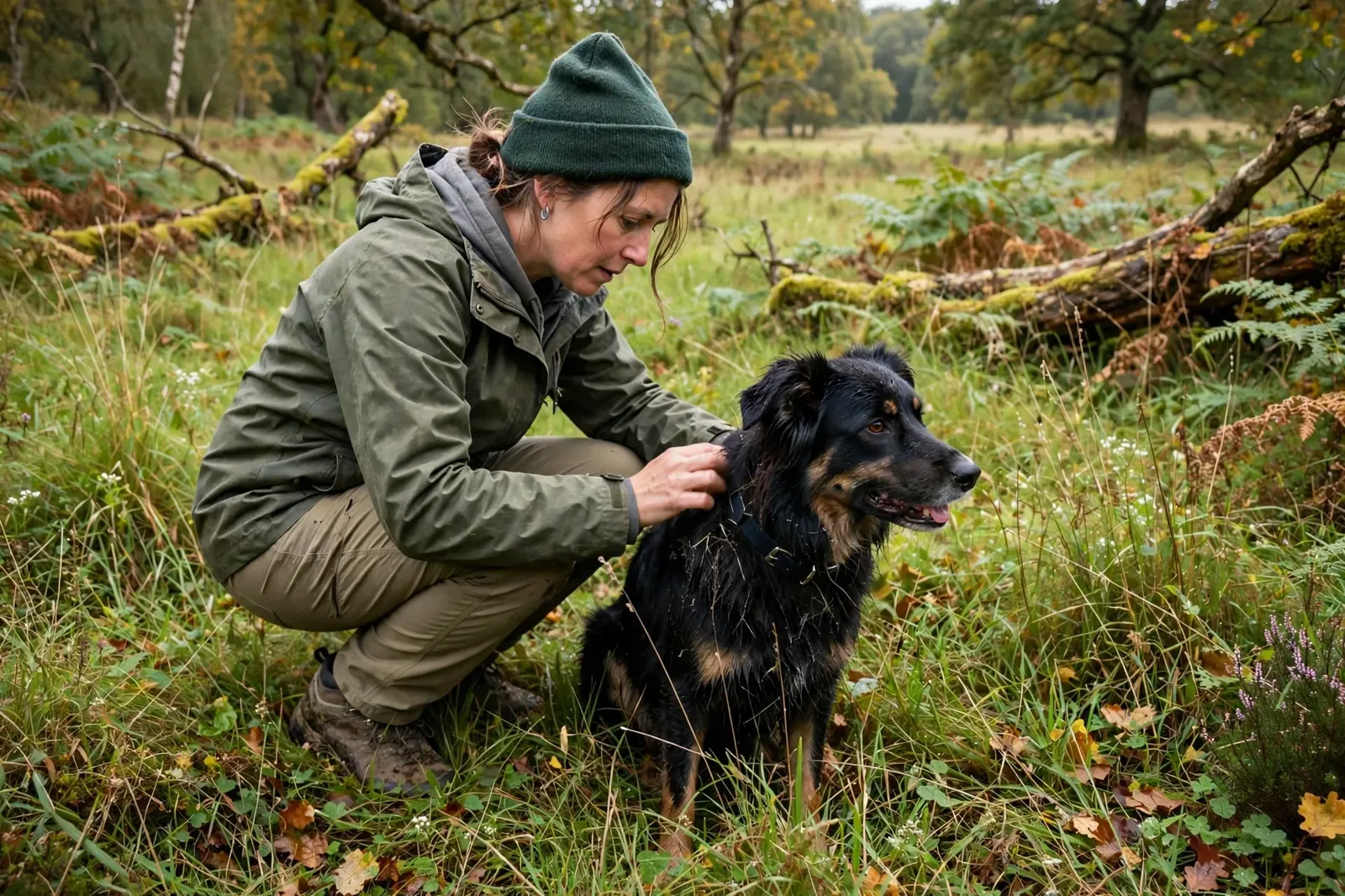
Third, rinse and dry with intent. Lake, river and sea water leave coats holding grit, salt and whatever was in the shallows, and a Labrador will happily bring all of it into the car, the cottage and the bed if allowed. A clean-water rinse where facilities exist, a thorough towel-down every time, and a check of ears, armpits, groin and between the toes for cuts, grass seeds and hooked debris turn the post-swim shake from a damage event into a routine. While you are checking feet after waterside and farmland walks, remember that the same damp, muddy margins grow the season's other parasites too; our guide to ticks on dogs in the UK covers where they hide and how to remove one safely.
The mud and wet-gear system that saves the cottage deposit
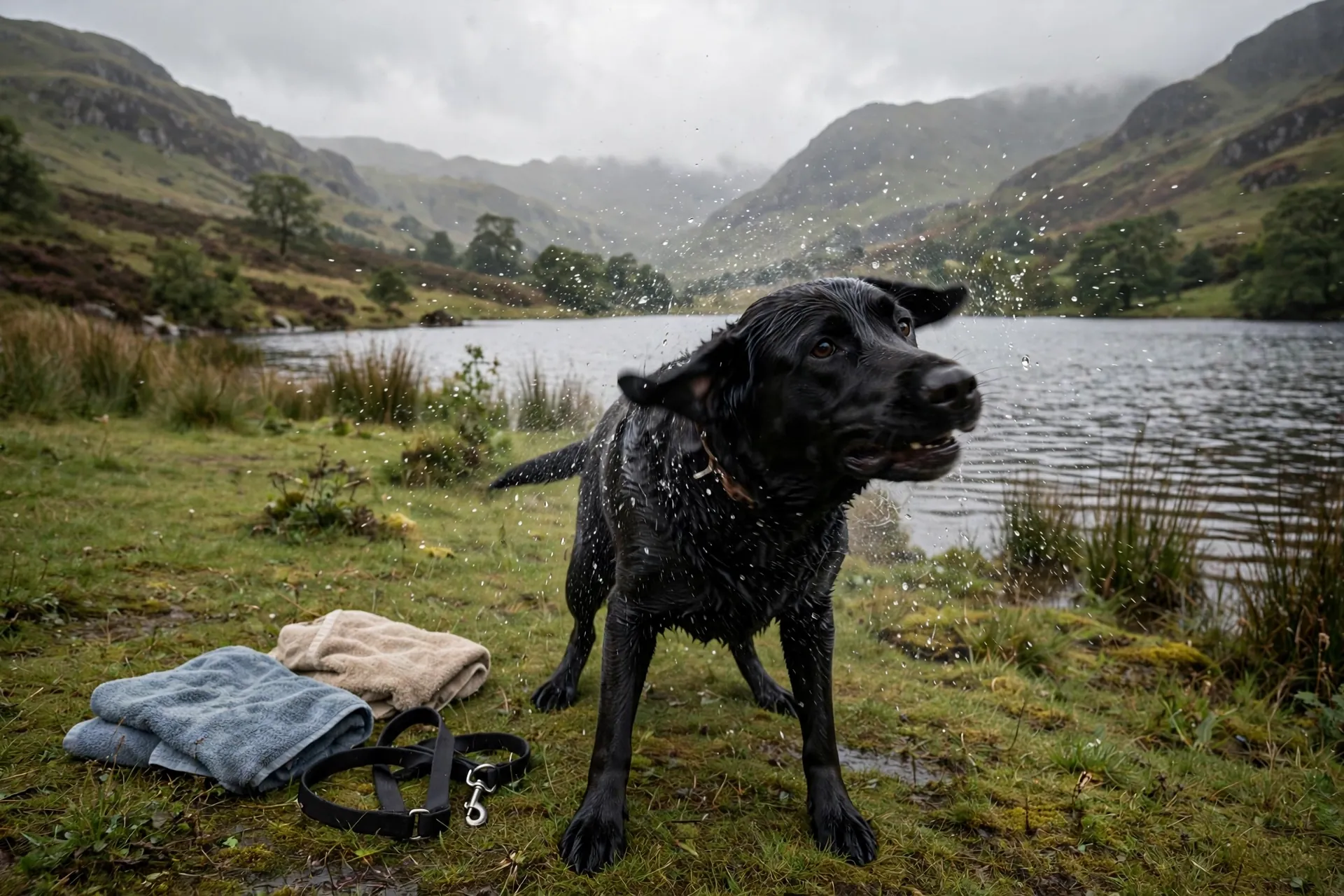
Every Labrador holiday generates a second, parallel holiday made entirely of wet things: towels that never fully dry, a lead stiff with lake water, a car boot that smells of pond, and paw prints in places no paw has any business reaching. Owners who cope are not luckier; they run a system. Set it up before the first walk. In the car, the boot gets a waterproof liner or a washable old blanket as the base layer, with the dog restrained properly on top of it — never loose among luggage — and a dedicated wet bag lives in the boot for sodden towels and coats. Two large towels is the minimum for a swimming breed; three is honest. One dries the dog, one lives under the dog for the drive, and one rotates through the cottage airing cupboard or over a rail while the others are in use.
At the stay, claim the doorway. The moment you arrive, before bags come in, choose the drying corner: a washable mat inside the door, hooks or a rail for the wet lead and drying coat, towels folded within reach, and a clear rule that the dog is towelled and settled there before entering the rest of the property. Cottage owners who welcome Labradors expect mud; what damages goodwill, and deposits, is mud distributed evenly through a pale-carpeted house because nobody decided where the wet dog would stand. A drying robe, if your dog already accepts one at home, earns its packing space on a wet week; if your dog has never worn one, a holiday is not the time to introduce it and discover the objection mid-hallway.
Wash paws with water, not optimism. A shallow tub or a paw-plunger by the door, filled fresh each walk, removes grit that towels merely relocate, and it protects cottage floors and the dog's own skin, since dried mud worked into pads and between toes causes soreness on the next day's walk. Dry between the toes properly for a dog heading back out into cold, wet ground. Then hang everything to dry every single night, however tired you are: the owner who skips the evening reset wakes to a car full of cold, sour-smelling kit and a dog that has to be dried with yesterday's damp towel, and the whole system unravels from there.
Food motivation and scavenging risks: the nose that never clocks off
A Labrador's relationship with food is not greed in the human sense; it is a deep, breed-typical motivation that breeders, trainers and every owner of a dog that once ate a whole fruit cake will describe the same way. On holiday, that motivation meets the richest scavenging environment of the dog's year: dropped chips in seaside towns, picnic scraps on village greens, barbecues in neighbouring gardens, bait near fishing pegs, bins overflowing outside holiday cottages in August, and the fallen harvest of every blackberry hedge and orchard verge. Holidays also lower everyone's guard. The dog that is never fed from the table at home gets slipped sausage at the pub because everyone is relaxed, and then spends the rest of the week professionally attending every meal.
Manage the environment first, because willpower — yours and the dog's — is a poor control. On the lead anywhere food is on the ground or within snatch height: town centres, harbour sides, market squares, pub gardens at busy times and any path past a picnic. Scan ahead as you walk busy routes, the way you would for broken glass, and cross the road or arc wide around dropped food rather than staging a leave-it test beside it. In the cottage, agree the rules in the first hour: bins with lids, food stored out of reach, no feeding from plates, and particular care with the classic hazards — cooked bones that can splinter, chocolate, grapes and raisins, xylitol in sugar-free products, rich fatty scraps that can trigger serious illness, and corn cobs, which are a notorious blockage risk. If your dog does swallow something sharp, cooked bones, medication, a cob or anything unidentified, contact a vet promptly for advice rather than waiting for symptoms.
Then use the motivation instead of fighting it. A dog this food-driven is a joy to train on holiday if the rewards are in your pocket: high-value treats buy you recalls away from gulls and picnic rugs, a reliable trade makes dropped items a game you win calmly, and scatter-feeding a portion of dinner in the cottage garden gives the scavenging brain a legal job before bed. Practise leave, drop and a cheerful recall at home in the weeks before you travel, in gradually busier places, so the skills exist before the harbour wall tests them. A long line, used safely in open spaces where leads are required or recall is unproven, bridges the gap between freedom and control without pretending the dog is ready for either extreme.
Exercise without overdoing it: filling the tank, emptying it sensibly
Plan a Labrador's holiday exercise like a budget with two accounts. The physical account is obvious: most healthy adult Labradors thrive on a substantial daily outing or two, with sniffing, trotting, some free running where rules and safety allow, and swimming as a bonus rather than a requirement. The mental account is where holiday plans fail. A dog walked for three hours along a new coastal path may still be restless in the cottage all evening if the day contained no problem-solving, no training games and no chance to settle and process. Ten minutes of scent games, a few rewarded recalls on the walk, a chew after dinner and a genuinely undisturbed afternoon nap will do more for evening calm than a fourth hour of marching.
Respect the step-up problem. At home your dog may manage an hour a day comfortably; a holiday that immediately demands ten-mile days back to back invites sore muscles, damaged pads on unfamiliar gritty paths, and joint strain — particularly relevant in a breed where hip, elbow and weight issues are common enough that owners should discuss big exercise increases, and any limping or reluctance, with their vet. Build distance across the week, alternate a long day with a shorter, sniffier one, and watch the dog in front of you rather than the itinerary: slowing down, sitting on hills, heavy panting that does not settle, or a dog that is stiff rising after rest are all instructions to shorten tomorrow, whatever the guidebook says. Young Labradors still growing, and older dogs with arthritis or other conditions, need individually adjusted plans, not the generic route — ask your vet before you travel if you are unsure what is appropriate.
Weight belongs in this section honestly. Labradors gain weight readily, holiday feeding creeps up through treats and pub lunches, and an overweight dog finds heat, hills and long walks harder and riskier. Measure holiday food as carefully as home food, count training treats as part of the ration, and let swimming and walking be the treat economy instead of edible extras at every stop. You will come home with a fitter dog and better photographs, and the dog will not know anything was rationed except that the games were excellent.
Boot space for a big, wet dog: measure the dog, then the luggage
A Labrador occupies more car than owners expect, because the unit of measurement is not the dog standing neatly in the showroom of your imagination; it is the dog lying flat, turning round, shaking once, and settling for three hours in a safely restrained travelling position, plus wet kit, plus your luggage, plus the holiday shopping on the way home. Do the tape-measure test at home on the driveway, fully loaded, before booking anything non-refundable. The dog needs a space in which it can lie down in a natural position and turn without climbing over bags, with ventilation reaching it and a restraint arrangement that is actually fitted — a crash-tested harness on a seat or a properly secured crate or guard setup in the boot, as fits your car and dog. Our guide to dog car safety compares harness and crate arrangements and the Highway Code duties behind them, and the driveway test is where those choices stop being theoretical.
Break the journey like you mean it. Plan a stop every couple of hours at most — sooner for young, old or travel-anxious dogs — for water, a toilet break on the lead and a leg-stretch away from traffic. Motorway services have busy, noisy dog areas at best; a planned detour to a quiet village green ten minutes off the route often gives a calmer break and a better driver rest too. Never leave the Labrador in a parked car in warm weather while you eat inside, and treat any stop where the dog must wait in the car as a short, shaded, cool-weather-only pause with a person checking constantly — or, far better, reorganise so it does not happen at all.
Wet-dog logistics on travel days need one decision made in advance: the dog swims on the last walk at home or not at all before a long drive, because four hours in a car with a lake-wet Labrador is a punishment for every occupant including the dog. Towel thoroughly, change the boot blanket if the first is soaked, and keep a dry settle blanket purely for the car so the dog is not lying on damp bedding for hours, which chills and rubs. On arrival, walk the dog before unloading the holiday into the cottage; a dog that has toileted, sniffed the new street and entered the house calmly will survey the kitchen bin situation with fractionally less ambition than one released straight from the boot into paradise.
Choosing stays that survive a Labrador (and that a Labrador survives)
Not every property marketed as dog-friendly has met a Labrador. Filter for the breed specifically. You want hard floors or washable rugs in the entry and living areas, an enclosed outdoor space the dog cannot excavate or hurdle in the first ten minutes, a hose, tap or at least an outdoor water source for paw washing, and stairs with a gate option if an older or excitable dog should not thunder up and down them freely. Ask direct questions before booking: is there a maximum dog size or weight, are dogs allowed on sofas or beds and under what cover rules, what is the cleaning fee and what does it actually cover, and where exactly is the nearest proper walk from the door at seven in the morning in the rain? Vague reassurance at booking stage becomes a specific dispute at checkout stage, so get the answers in writing.
Location beats luxury for this breed. A modest cottage ten minutes from a safe river walk and a big, sniffy common will produce a better week than a beautiful house whose only exercise option is a lead walk along a fast road to a small, restricted beach. Check beach rules for your exact dates before you travel, since many popular beaches restrict dogs in the main season, and check the official latest guidance for any protected sites, reserves or farmland routes on your list. Where a stay advertises a secure garden, apply the usual scepticism on arrival: walk the boundary yourself, test the gate latch, look for gaps under fences and hazards left by previous guests, and only then let the dog explore it off the lead.
In hotels and bed and breakfasts, the Labrador questions are different: will a large, friendly dog that sheds and occasionally announces arrivals be genuinely welcome in communal spaces, is there a dog-free breakfast room rule that means one person eats alone, and where does the dog sleep if bedroom policies are strict? None of these are problems if they are known in advance; all of them are problems if they are discovered with a wet dog in the corridor. Budget the full picture — pet fees, cleaning charges and any damage deposit — using the breakdown approach in our guide to dog holiday costs in the UK, so the Labrador line in the spreadsheet is as realistic as the rest of the breed is enthusiastic.
A Labrador holiday day, hour by hour
Pull the pieces together into a rhythm that repeats, because Labradors settle into holidays at the speed their routine repeats. Start early with a proper first walk before breakfast — not a garden toilet trip, but thirty to forty minutes of sniffing and movement that takes the edge off the day and lets the dog greet the cottage morning calmly. Breakfast for everyone afterwards, with the dog's measured food in its own bowl in its own place, and then the main outing of the day late morning, when you have checked the swim survey, packed towels, treats, water for both ends of the lead, poo bags and the long line. Build the swim, if conditions allow, into the middle of the walk rather than the end, so the dog walks partly dry on the way back and the car stays fractionally more respectable.
Afternoons are for the second account: rest. A dog that has walked, swum and lunched needs an undisturbed settle in the cottage, with water down and curtains against the exciting street if necessary, while humans read, visit a dog-free attraction in shifts, or simply share the quiet. Late afternoon brings the second walk, shorter and sniffier, ideally somewhere the dog can watch the world — a harbour wall from a safe distance, a village green on the lead — without another full expedition. Evenings run on the doorway system: paws washed, coat dried, dinner measured, a chew or scent game, and one last lead walk before bed along the route you have already checked in daylight.
Notice what this rhythm never contains: an unplanned dog left in a car, a swim taken because the dog demanded it at an unchecked place, food fed from plates by a relaxed table, or a walk length chosen by the itinerary rather than the dog. None of those require talent to avoid — only the decision, made once in advance, that the Labrador version of the holiday has its own structure. Follow it and the breed gives you back everything it promises: a dog that swims like it was invented for the purpose, walks all day without complaint, makes friends responsibly and sleeps like a stone. That is the Labrador holiday worth booking again.
Practical questions
Before you go
How much exercise does a Labrador need on holiday in the UK?
Most healthy adult Labradors need a substantial daily mix of walking, free running where it is allowed and safe, swimming if conditions suit, and calm sniffing time, but the right amount depends on age, weight, fitness and any joint or health issues. Build the day around two proper outings rather than one exhausting march, watch for slowing, heavy panting or reluctance, and ask your vet before a holiday if you plan a big step up from home exercise.
Is it safe to let my Labrador swim in lakes and rivers on holiday?
Sometimes, but never automatically. Check entry and exit points, currents, tides, water temperature, fishing lines, boat traffic and any blue-green algae warnings before allowing a swim, and keep sessions short in cold water. If you cannot see a safe way out of the water for a tired dog, or official guidance advises against entering, keep the dog on the lead on the bank instead.
How do I stop my Labrador scavenging on holiday walks and in pubs?
Prevention works better than retrieval. Keep the dog on a lead around picnic areas, bins, fish-and-chip queues and livestock fields, practise a rewarded leave and drop at home before you go, carry high-value treats to trade, and scan the ground ahead on busy paths. If your Labrador swallows something sharp, cooked bones, medication, chocolate or anything you cannot identify, contact a vet promptly for advice rather than waiting to see.
What wet and muddy gear should I pack for a Labrador holiday?
Pack at least two large towels, a drying coat or robe if your dog accepts one, a waterproof boot liner or old blankets for the car, a spare lead and collar, paw wipes, a portable water bowl, and a sealable bag for sodden kit. At the cottage, agree a drying corner by the door with a washable mat so wet equipment stays in one place instead of spreading through every room.
Will a Labrador fit comfortably in my car for a long UK drive?
Measure the dog, not just the boot. A Labrador needs room to lie down, turn and settle in a properly restrained position for the whole journey, with ventilation and scheduled water and toilet breaks. If the dog can only sit hunched once luggage is loaded, use a roof box, send luggage ahead, choose a larger vehicle, or shorten the trip rather than squeezing the dog into leftover space.