This guide is independent and contains no paid placement. If affiliate links are added later, they will be clearly marked and will not change our editorial checks.
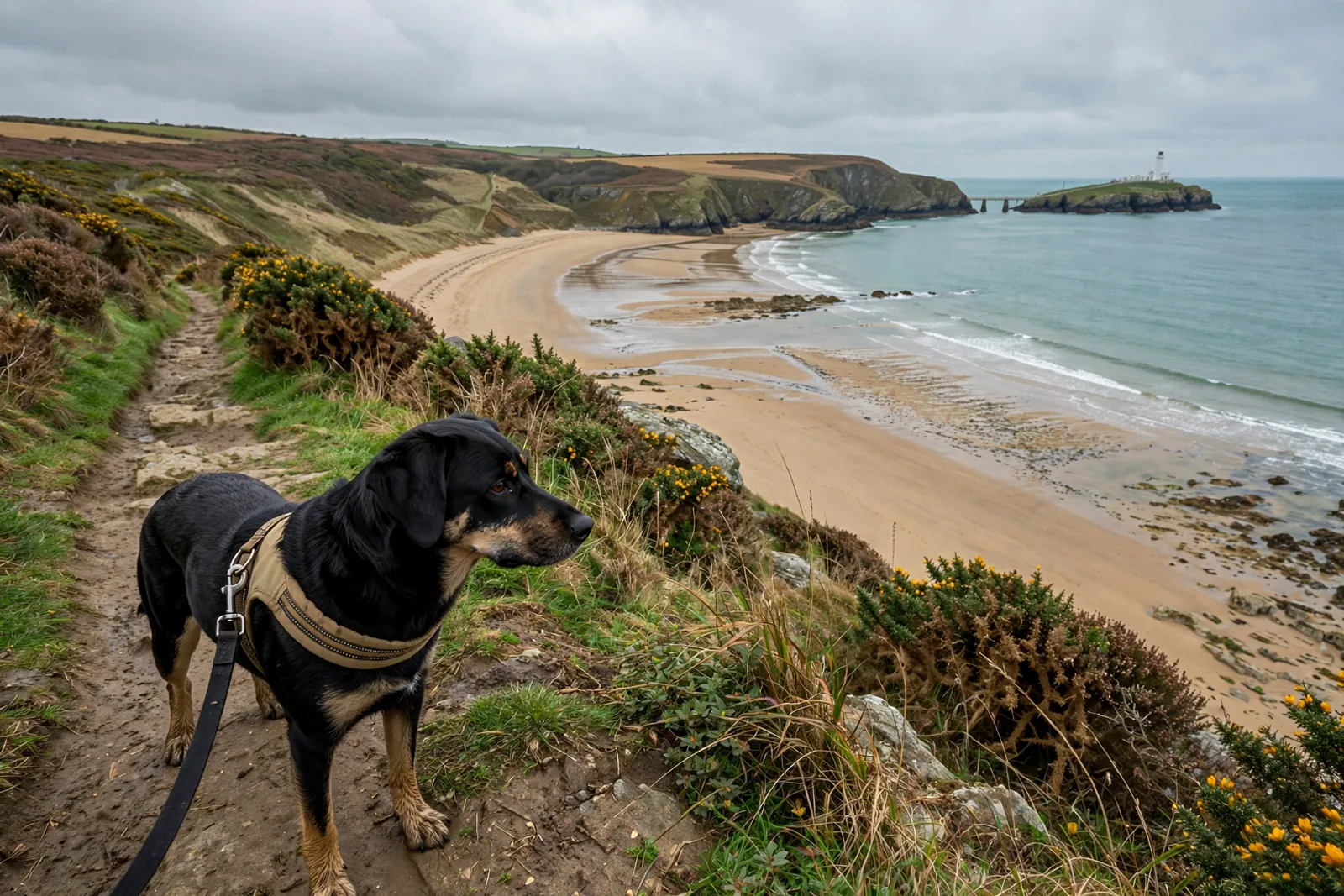
The Llyn Peninsula with a dog works best when you choose a coast first. The south coast around Pwllheli and Abersoch has the sheltered sandy beaches, the shops and the easier evenings; the north coast around Nefyn and Aberdaron is quieter, wilder and better for coast path walking. Keep dogs on a lead around livestock and on cliff sections, respect seasonal beach zones, carry water on headland walks, and check the latest official guidance before you travel for current beach rules and path notices.
North or south coast? Choose your base first
Most Llyn decisions are made in the wrong order. Visitors pick a beach from a photograph, book the nearest cottage, and only then discover that the peninsula has two distinct coasts separated by a spine of small hills, narrow lanes and working farmland — and that driving between them is slower than the map suggests. With a dog, the base matters even more: it decides your morning walk, your after-dark routine, how far you drive with a sandy dog in the car, and whether evenings offer a choice of pubs or a single quiet lane. Use the table below before you look at a single property listing.
| Decision | South coast: Pwllheli, Abersoch, Llanbedrog | North and west: Nefyn, Morfa Nefyn, Aberdaron |
|---|---|---|
| Sea and beaches | Sheltered, sandy, warmer-feeling; good for dogs that swim and owners who like a promenade | More exposed, rockier in places, bigger Atlantic weather; better for empty sand at quiet times |
| Walking style | Beach walks, harbour strolls and shorter coast path sections between villages | Longer coast path days, headlands and hill views, fewer bail-out points |
| Supplies and services | Supermarkets, vets, cafés and takeaways concentrated in Pwllheli and Abersoch | Village shops and seasonal cafés; stock up before the far west |
| Evenings | Choice of pubs and restaurants, busier in summer, livelier pavements | Quiet lanes, dark skies, early nights; wonderful for nervous dogs |
| Dog profile it suits | Sociable dogs that cope with people, other dogs and promenade distractions | Dogs that need space, distance from strangers and predictable, uncrowded walks |
| Price and availability | Highest demand around Abersoch; book early for school holidays | Often better value further west, with fewer large properties |
The pattern that emerges is simple. First-time Llyn visitors with a sociable dog usually do best on the south coast, within reach of Pwllheli for supplies and a vet, visiting the north coast as a day trip. Returning visitors, reactive-dog owners and serious walkers often reverse that: base in the quieter north or west, accept longer drives for a big shop, and enjoy mornings when the coast path belongs to you, the dog and the choughs. Families splitting the difference often choose Criccieth at the eastern gateway, which faces south, has a castle, a promenade and rail access, and shortens the drive home at the end of the week.
Whichever coast you choose, apply the same three booking checks. First, confirm the dog rules in writing: number and size of dogs, charges, and whether dogs may be left alone in the property. Second, ask about enclosed outdoor space honestly — a garden described as enclosed for a spaniel may not contain a determined terrier, and a shared yard changes the morning routine entirely. Third, identify your first-morning walk before you arrive: a ten-minute circuit from the door, on ground you can manage in slippers-adjacent footwear with a torch, matters more than any view promised for day three.
Beaches, bay by bay: restrictions, tides and space
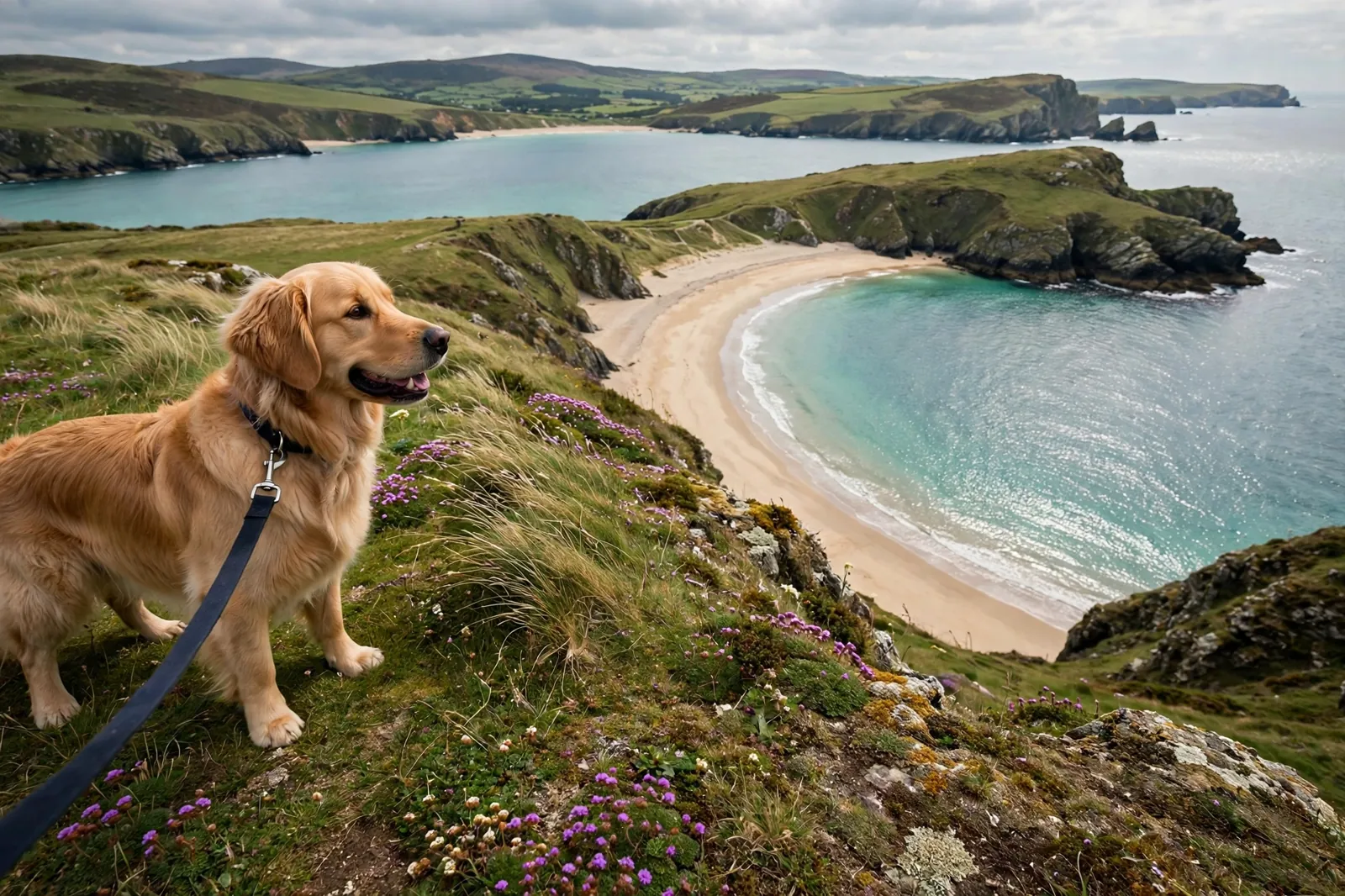
The Llyn's beaches are the reason most people come, and they reward a little homework. Many welcome dogs all year, but several of the most popular apply seasonal restrictions to part of the beach, commonly through the main holiday season, with the dog-free zone signed at the access points and another section usually remaining open. The single most reliable habit is to read the sign at the beach entrance on the day, every time, rather than relying on a list saved months earlier, and to check the latest official guidance before you travel for the current zones and dates for beaches managed by the local authority.
On the south coast, Pwllheli's long sandy beach curves away from the town and marina, giving space even on busy days if you walk beyond the first access points; the promenade suits an evening lead walk, and the town behind it supplies everything a dog holiday consumes. Abersoch's main beach is the social centre of the south coast in summer — sailing, beach huts and crowds — which some dogs love and others find exhausting, while its harbour and quieter ends reward early starts. Llanbedrog combines sand, shelter and the famous colourful beach huts with woodland and a headland above it, making it a natural half-day rather than a quick paddle stop. Further west, Porth Neigwl, also known as Hell's Mouth, is a long, exposed Atlantic-facing bay: magnificent for a fit dog on a calm day, unforgiving in big surf, and a beach where swimming decisions, for dogs and people, should be conservative.
The north coast changes the register. Nefyn and Morfa Nefyn offer a sweeping bay under steep ground, a golf course on the headland and the celebrated walk out along the sand towards the lifeboat station and the small cove settlement at Porthdinllaen, where the tide decides how much of the route is beach and how much is the lane above. That tide point generalises: several north-coast bays shrink dramatically at high water, and a dog walk planned from a midday photograph can become a scramble over rocks at the wrong hour. Carry a tide timetable, plan beach walks for a falling tide, and always know your exit before the sand narrows. At the western end, the beaches near Aberdaron and the broad sweep of Porthor, famous for its whistling sand, feel genuinely remote, with limited facilities and parking that fills on fine summer days.
Water quality, jellyfish in warm spells, and blue-green algae in still freshwater pools near beach streams all deserve the same calm routine: look, read any notices, and keep the dog out of suspect water. Let dogs drink from your bottle, not from rock pools or streams, and rinse salt and sand from coats at the end of beach days to protect skin and car upholstery alike. A dog that has sprinted on sand for an hour has done harder exercise than the distance suggests, so build shade, rest and water stops into beach time rather than treating the beach as rest itself.
The Wales Coast Path in honest sections
The Wales Coast Path loops around the Llyn from the eastern gateway near Criccieth and Porthmadog, along the south coast, around the western tip at Aberdaron and back along the north coast towards Caernarfon — well over a hundred miles of it if every bay is followed faithfully, and far more than any single holiday needs. The sensible way to use it with a dog is in sections chosen for their endings: a village with a café, a bus route back, a beach for the final hour. Out-and-back walks are the honest default, because linear walks depend on rural bus timings that should be checked on the day, and a missed connection with a tired dog is a long road walk.
South-coast sections are the gentlest introduction. Between Criccieth, Pwllheli and Llanbedrog the path mixes promenade, low cliffs, lanes and beach, with frequent access points, water top-ups in villages and plenty of chances to shorten the day. Dogs that are new to coast paths, older dogs, and owners rebuilding fitness all do well here, because the bail-out options are real rather than theoretical. The section west towards Abersoch and on to Porth Neigwl adds exposure and distance between facilities; carry everything, including more water than the mileage suggests, because sea wind dehydrates dogs quietly.
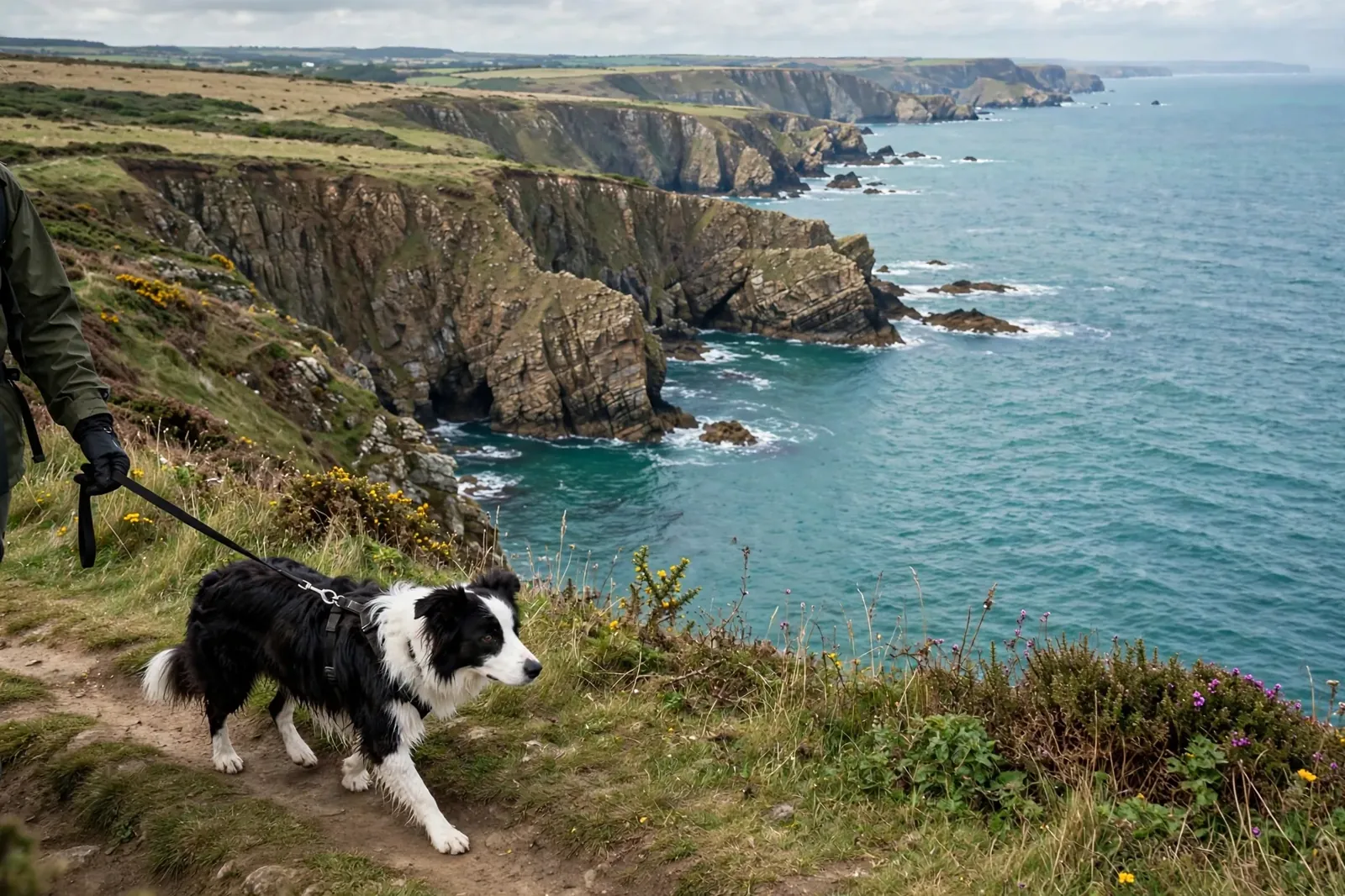
The western end around Aberdaron and the headlands towards Uwchmynydd is the path's dramatic act: high cliffs, island views towards Bardsey, seabirds, and a feeling of standing at the edge of Wales. It is also the section to treat with most respect — narrow in places, close to drops, busy with ground-nesting birds in season and shared with grazing livestock. Keep the dog on a short lead on cliff sections without exception, give ponies and cattle a wide, calm berth, and turn back without regret if wind makes a narrow section feel unsafe; the path will be there on a calmer day. North-coast sections between Aberdaron, Porthor and Nefyn then settle into a rhythm of coves, small harbours and farmland, with the long views across to Anglesey on clear days.
Extend the comparison if your Welsh trip has two centres: our Anglesey with a dog guide covers the island you can see across the water from the north coast, and the two combine naturally into a fortnight of Welsh coastline without repeating a single walk. Walkers heading further south in a later trip will find our Pembrokeshire Coast Path with a dog guide the closest counterpart, with the same discipline about cliffs, livestock and tides applying in both places.
Headlands and hills beyond the coast path
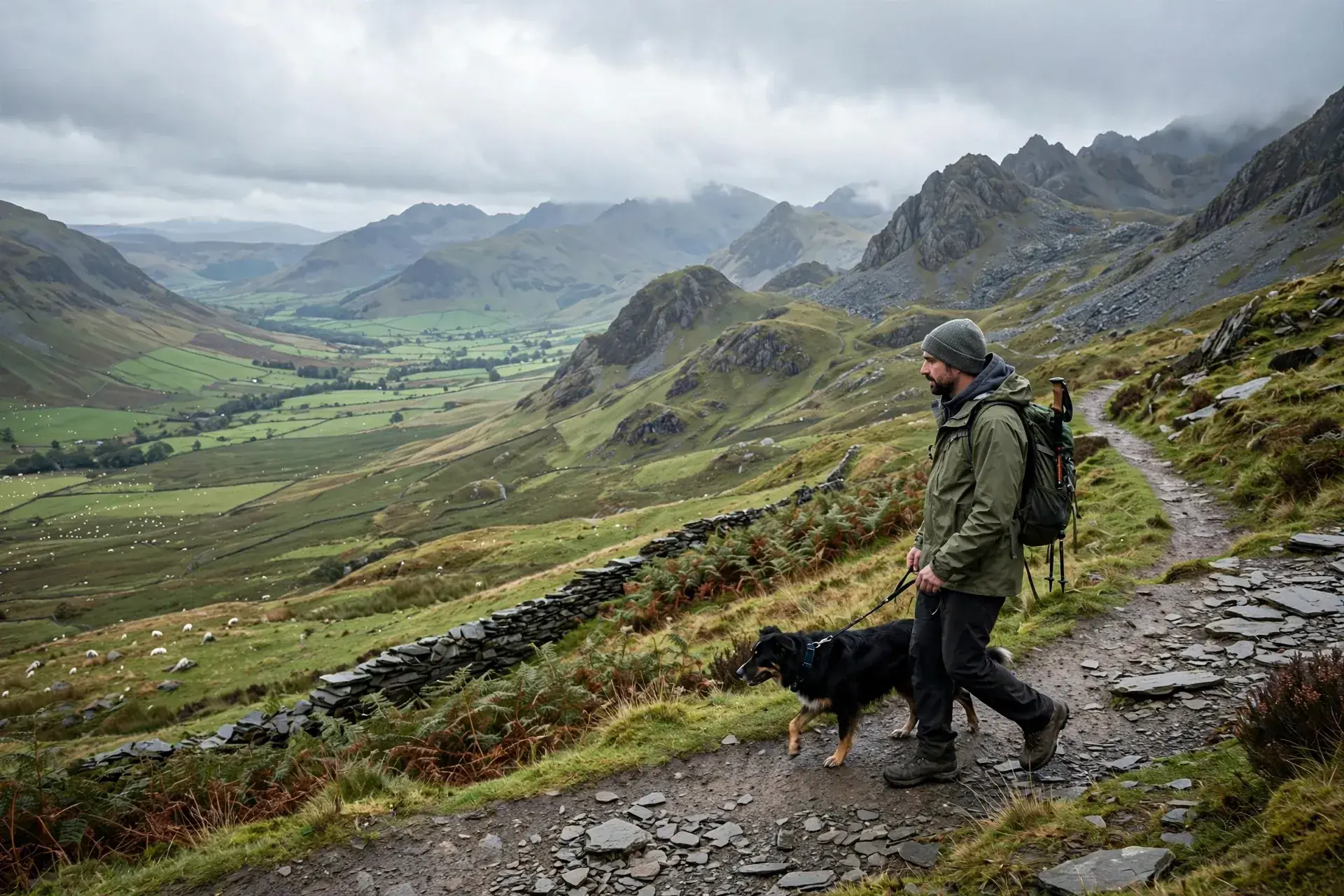
A Llyn holiday built only on beaches misses the peninsula's vertical pleasure: the chain of modest, characterful hills down its spine, each small by mountain standards and each delivering a disproportionate view. Yr Eifl, the highest ground on the Llyn, rises above the north coast near Llithfaen and Trefor and rewards a fit dog and a clear morning with a panorama that takes in Anglesey, the mountains of Eryri and, on the very best days, far more of the Irish Sea world besides. Its slopes are farmland and open hill in mixture, so the livestock rules are total: lead on around sheep, gates as you found them, and no assumption that a quiet hillside is an empty one.
Lower headlands make better everyday targets. The headland above Llanbedrog, topped by its distinctive viewpoint, pairs with the beach below for a compact morning of woodland, sculpture-viewpoint and sand. Mynydd Tir y Cwmwd above Llanbedrog and the bumps and headlands around Aberdaron and Abersoch all offer the same bargain at different scales: an hour of climbing for a view that reorganises your mental map of the whole peninsula, showing both coasts at once and explaining the decision table at the start of this guide better than any paragraph can. Dogs read these hills differently, of course — as wind, scent and sheep-management exercises — and a headland walk tires a dog's brain as much as its legs, which is why hill mornings often produce the calmest café afternoons.
Hill judgement on the Llyn is mostly weather judgement. These are small hills with big exposure: Atlantic weather arrives fast, mist can close over Yr Eifl while the coast below stays clear, and wind on an exposed ridge will chill a wet dog quickly. Carry a map you can read offline, a dog coat for small, old or thin-coated dogs in the cooler months, and a turnaround time agreed before the summit enthusiasm takes over. In summer the risks invert: bracken hides ticks, adders are a known possibility in warm coastal and heathland ground across Wales, and there is little natural water on the tops, so carry the dog's share as well as your own and check coats and paws at the car.
For a trip that pairs peninsula hills with real mountains, our Snowdonia with a dog guide covers Eryri, visible from almost every Llyn summit and an easy day trip from the eastern end — though many visitors find, having climbed Yr Eifl at dawn with the dog and seen Snowdonia queuing in the distance, that the smaller hill was the better decision.
Towns, villages and stays that work with a dog
Pwllheli is the peninsula's working capital and its most practical base: a marina town with supermarkets, independent shops, a weekly routine of cafés and takeaways, a veterinary presence, and a beach and promenade for the twice-daily walks that structure a dog holiday. Staying in or near town suits first visits, multi-generational groups where not everyone walks far, and anyone whose dog needs predictable pavements after dark. Abersoch, a few miles south-west, is the peninsula's fashionable village: watersports, boutiques, busy summer evenings and premium prices, with a beach scene that social dogs enjoy at quieter hours. Choose it for the buzz if your dog shares your taste for it; choose elsewhere if either of you prefers an empty lane by nine in the evening.
Criccieth, at the eastern gateway, offers a castle on its headland, a promenade, ice cream fame and a station, and it shortens both the arrival and departure drives — a genuine welfare point for dogs that travel badly, because the last hour of a long journey is often the worst. Nefyn and Morfa Nefyn on the north coast suit walkers: village amenities without resort bustle, the great bay on the doorstep and the Porthdinllaen walk as a built-in morning routine. Aberdaron, at the western tip, is the pilgrim's end of the Llyn, small, weather-aware and wrapped in coast path, with the facilities of a village rather than a town; stock up in Pwllheli, arrive with a full tank and a full fridge, and let the place set a slower pace for you and the dog.
Across all of these, the stay itself matters more than the settlement. Holiday parks, cottages, farm stays and small hotels all feature on the Llyn, and the dog questions are constant: Is there an enclosed space for the first sleepy toilet trip? Where is the nearest proper walk that is not a lane with fast traffic? Are dogs welcome in the bar or breakfast room, or will every meal involve a rota? What is the dog charge, and does it buy anything — bowls, blankets, a wash station — or is it simply a fee? Farm stays deserve a particular conversation, because working farms have working dogs, livestock in adjacent fields and yard movements at dawn; many dogs thrive on the interest, and some find it a week-long provocation, and only you know which yours will be.
Eating out follows the same geography. Pubs and cafés in the main villages commonly welcome dogs in bars and gardens, but kitchens, policies and seasonal hours change, so check the latest official guidance before you travel and confirm on the day rather than arriving with a hungry dog and a plan built on an old review. A reliable pattern is a big walking lunch — café or picnic at the furthest point of the day — and a simple evening near base, which suits dogs that settle better in familiar surroundings and owners who prefer not to drive narrow lanes in the dark.
Leads, livestock, seals and sea safety
The Llyn is farmland that happens to have a coastline, and its rules flow from that fact. Sheep and cattle graze fields the coast path crosses, headlands above the beaches and much of the open hill ground. Dogs belong on a lead around livestock, full stop, and under close control everywhere else, following the Countryside Code for Wales. If cattle approach with calves in the field, the standard advice applies: keep the dog quiet, give the herd space, move calmly to the boundary, and be prepared to let the dog's lead go if cattle charge, so you can both reach safety separately — then recover the dog once the herd has settled. Incidents are rare where owners read fields before entering them; they concentrate where a dog was off lead and out of sight around a blind corner.
Wildlife adds its own seasons. Grey seals haul out on quieter shores and rocky coves around the peninsula, especially in the autumn pupping season, and a dog anywhere near a seal pup can cause a mother to abandon it as surely as touching it would. Keep dogs on a lead on any beach or cove where seals are present, watch from a respectful distance, and treat a pup alone on the sand as a wild animal doing something normal, not as an animal in need of your help; if it looks injured or in immediate danger, contact the relevant local rescue organisation rather than intervening. Seabird colonies on the western cliffs, choughs feeding on the short turf of headlands, and ground-nesting birds in spring and early summer all ask the same thing: a dog on the path, on a lead where signed, and out of the vegetation.
Sea safety closes the section, because the Llyn's two coasts behave differently and both deserve respect. The south coast is generally the calmer water, but offshore winds can still carry inflatables — and swimming dogs — out faster than expected, and weirs, harbour structures and marina traffic create their own hazards around Pwllheli and Abersoch. The north and west coasts face the open sea: swell, rip currents at certain states of tide, and beaches that change character completely between a calm morning and a windy afternoon. Dogs should swim only where you would be content for them to, never be encouraged to chase birds or balls into heavy surf, and be kept on a lead on harbour walls, piers and slipways, where algae can make stone treacherously slippery. After any sea swim, offer fresh water, because dogs that have swallowed a lot of seawater can become unwell, and note that a dog shaking salt water over a café terrace is a social problem you can solve with a towel kept by the door.
Waste and courtesy bind it together. Bag and carry out dog waste everywhere, including remote headlands and winter beaches; bins cluster at car parks and village access points, and the carry is part of the ticket for bringing a dog to farmed, visited coastline. On narrow path sections, step aside with the dog held close to let others pass, keep leads short around horses and cyclists on shared lanes, and remember that a friendly dog bounding up to a stranger is, to the stranger, simply a dog bounding up. The Llyn welcomes dogs warmly on these terms, and the terms are not much to ask.
Two and three day patterns, and the seasons
A two-day south-coast weekend might run like this. Day one: arrive via Criccieth for a promenade stretch and castle views, continue to Pwllheli, walk the long beach beyond the town access points in the afternoon, and settle into the evening routine of a short promenade lead walk after supper. Day two: Llanbedrog for the full combination — beach, woodland and headland viewpoint — with lunch in the village, then a gentle section of coast path towards Abersoch for the final hour before the drive home. The pattern deliberately alternates beach energy with headland effort, so the dog sleeps well without ever being emptied out.
A three-day north-and-west trip asks more and gives more. Day one: Nefyn bay and the walk towards Porthdinllaen, timed to the tide, with a village evening. Day two: drive west to Porthor's whistling sand in the morning, then Aberdaron and a sensibly shortened section of the western coast path, lead on for cliffs and livestock, turning back at your agreed time rather than your furthest ambition. Day three: Yr Eifl from the Llithfaen side on a clear morning, or, if the hill is in cloud, a low-level alternative of lanes, laneside paths and a final beach, because a Llyn trip should end with a plan B executed cheerfully rather than a summit forced in mist. Build the driving honestly into each day: the peninsula's lanes are part of its charm and part of its timetable, and a dog that has spent an hour in the car needs a real walk, not a viewpoint stop, at the other end.
Seasons rearrange all of this. Spring brings lambs to every field the path crosses, longer leads and shorter tempers in farmyards, and beaches at their emptiest in term time. Summer brings the full social Llyn — regattas, beach days, seasonal beach zones at their widest and car parks that reward early arrivals — plus the heat discipline of walking early and late, carrying water and never leaving a dog in a car on a warm day, even in a coastal breeze. Autumn is many locals' choice: the sea at its warmest, the crowds gone, seal pups to be watched from afar and given space, and hedgerow colour on every lane. Winter strips the trip to essentials — short daylight, fewer open doors, serious weather — and repays flexible planners with empty beaches, dramatic seas watched from safe ground, and pubs with fires that welcome a damp dog as a fellow weather survivor.
Whatever the pattern, leave margin. The Llyn punishes tight schedules with tide times, lane traffic and weather that changes its mind, and rewards travellers who treat the plan as a menu rather than a contract. A dog does not know what it missed; it knows whether today involved a good walk, a warm rest and its people in an unhurried mood, and on those measures the peninsula is an easy place to succeed.
Shorter legs and steadier paws on the Llyn
Not every dog team arrives able to use the coast path in long sections, and the Llyn is kind to those who cannot, because its pleasures stack in short units. Promenades at Pwllheli and Criccieth, harbour edges, village lanes and the first flat yards of almost every beach allow a senior dog a complete holiday built from twenty-minute walks, viewpoint stops and long café rests, with the sea in view for nearly all of it. Choose a base in or beside a town, so that the morning and evening circuits need no driving, and day trips become optional pleasures rather than the only way to reach a walk.
Puppies and dogs rebuilding fitness can use the south-coast path sections as a measuring instrument: level surfaces, frequent access points and villages at human intervals let you set exact distances and end every walk with the dog wanting slightly more. Build across the week rather than within the day, alternate a path day with a beach-and-village day, and watch for the quiet signs of a dog that has done enough — lagging, excessive sniffing as avoidance, lying down at gates — which on a holiday should be read as information, not disobedience. Carry water from the start; young and unfit dogs drink more, pant more and overheat faster than their enthusiasm suggests.
Owners with limited mobility will find promenades, harbours and the larger beach access points among the more workable coastal experiences in Wales, though surfaces, gradients and beach access vary a great deal between bays and should be checked in current local information before relying on them. What the Llyn offers everyone, at every pace, is the thing the decision table promised at the start: a choice of registers within a few miles. Busy or quiet, sand or headland, town or lane — pick the version of the peninsula that fits the dog in front of you today, and it will feel, as it has for generations of Welsh holidaymakers, like the edge of the map in the best possible way.
Practical questions
Before you go
Are dogs allowed on Llyn Peninsula beaches all year?
Many Llyn beaches welcome dogs all year, but several popular beaches apply seasonal restrictions to part of the beach, commonly from spring to early autumn. The restricted zone is usually signed at access points and often leaves another section open to dogs. Check signs on arrival and check the latest official guidance before you travel, because zones and dates can change.
Where is the best base on the Llyn Peninsula with a dog?
Pwllheli suits most dog owners for its shops, vets and south-coast beaches, Abersoch suits watersports and social evenings but is busier and pricier, Nefyn and Morfa Nefyn suit quieter north-coast walking, and Aberdaron suits coast path walkers who want the wild western end. Match the base to your dog's tolerance for crowds as much as to your own.
Can dogs walk the Wales Coast Path around the Llyn?
Yes, dogs can walk the Wales Coast Path around the Llyn with you, keeping them on a lead around livestock, on cliff sections and wherever signs require it. The path is long, so use it in sections, plan water and exit points in advance, and avoid assuming every stretch has a shortcut back to a road or village.
Do dogs need to be on a lead on the Llyn Peninsula?
On a lead around livestock, near cliff edges, on narrow coast path sections, in car parks and wherever local signs require it, yes. Elsewhere dogs should stay under close control following the Countryside Code, and on a lead during ground-nesting bird season on sensitive ground. If in doubt, clip the lead on.
When is the best time to visit the Llyn Peninsula with a dog?
Late spring and early autumn balance mild weather, open businesses and quieter beaches, and seasonal beach restrictions are narrower outside the main summer period. Midwinter can be superb on settled days but brings short daylight, fewer open cafés and stronger Atlantic weather, so plan shorter, flexible walks.