This guide is independent and contains no paid placement. Rules, parking arrangements and seasonal restrictions change, so check official New Forest and Forestry England information before you travel.
Lyndhurst is an excellent base for walking with a dog, provided you treat the New Forest as a working landscape first and a walk second. Keep your dog on a lead or under very close control near ponies, donkeys and cattle, never feed or touch free-roaming animals, stay on tracks across heathland in bird breeding season, check for ticks after every walk, and plan routes from the village so the car is an option, not a necessity.
The pony at the gate
A pony is standing squarely in front of the forest gate, head low, hindquarters turned just enough to make the latch unreachable, entirely unbothered by your timetable. Your dog has noticed it at exactly the same moment you have. This small, ordinary stand-off — repeated at gates, on tracks, beside car parks and sometimes in the middle of the road all over the New Forest — is the moment that decides whether a Lyndhurst walk goes well. Push forward, squeeze past or let the dog drift closer for a sniff, and a peaceful walk can turn in seconds. Stop, shorten the lead, step back and wait, and the pony will usually wander off in its own time, leaving you with nothing more dramatic than a two-minute delay and a good story.
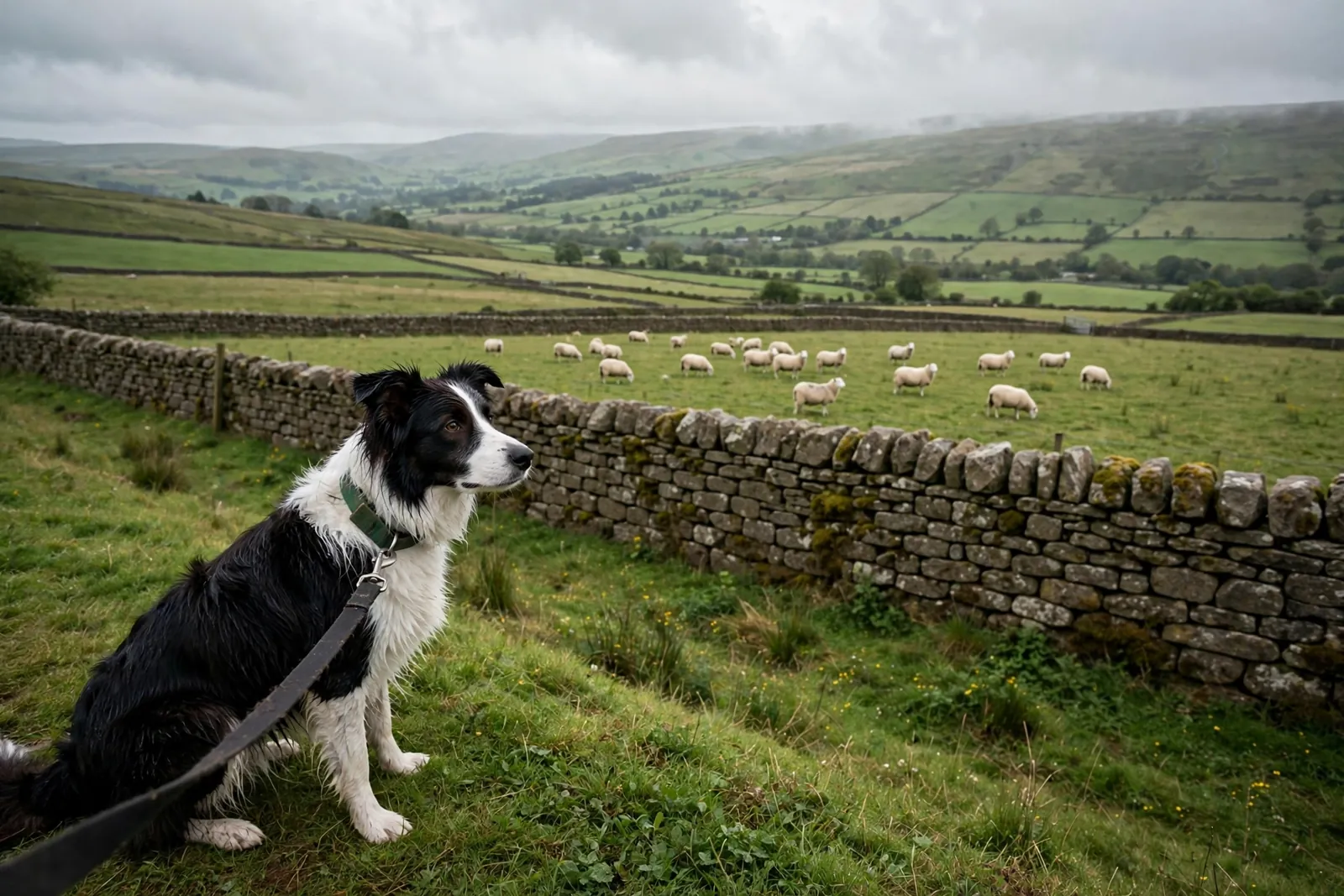
Start every walk in Lyndhurst with that scene in mind. The village, often described as a capital of the New Forest, sits surrounded by open forest, enclosed woodland, heath and grassland grazed by animals that live here all year. Unlike a fenced country park, there is no point where the walk finishes and the livestock area begins. The animals are already there when you arrive, and they may be around the next corner, behind a gorse bush, asleep on a sunny verge or gathered around a car park where visitors have fed them in the past. Your dog does not need to chase an animal to cause a problem: barking at close range, lunging on a long line or simply appearing suddenly at a gate can startle a pony or a cow with a calf.
That is not a reason to avoid Lyndhurst. It is a reason to walk it on its own terms. The tracks are wide and varied, the village gives you food, water and shelter within easy reach, and a dog that is used to a lead will have a full, interesting day without ever running loose through sensitive ground. Dogs that need reliable off-lead running to settle are harder work here, especially in spring and summer, and honest planning matters more than optimism. If your dog is young, reactive or still learning recall around horses, build the day around on-lead exploring, sniffing stops and quiet inclosure paths rather than open heath where temptation is everywhere. The Forest rewards patience far more than pace, and the best Lyndhurst days are usually the unhurried ones.
Free-roaming animals: the rules that actually matter
Ponies, donkeys, cattle and, in some seasons and places, pigs roam freely across much of the New Forest under an old commoning system. The animals belong to local commoners and are a working part of the landscape, not tame park animals and not wild ornaments put there for photographs. They graze the lawns, heaths and woodland edges, shape the vegetation other wildlife depends on, and have priority in the practical sense that walkers, cyclists and drivers are expected to work around them. Understanding that single point makes every other rule easier to follow.
Keep your distance. Give ponies, donkeys and cattle a wide berth — at least several metres, and considerably more for a mare with a foal, a cow with a calf, a group resting together or any animal that lifts its head, pins its ears, swishes its tail hard or moves towards you. Never position yourself, your dog or your children between a mother and her young, and never back an animal into a fence, gate or corner while trying to pass. If a track is effectively blocked, wait at a distance or retrace your steps and take another route. A longer walk is always cheaper than a kick, a knock or a frightened animal bolting across a road.
Do not feed them, and do not touch them. Feeding free-roaming animals — even an apple core, a carrot offered kindly or a handful of pony treats bought for the purpose — harms digestion adapted to poor forest grazing, draws animals towards roads and car parks where they are at risk from traffic, and teaches them to approach people and cars in ways that end badly for everyone. Stroking and petting carry the same problem from the other direction: an animal that seems placid while eating can bite or kick without warning, and a dog at your feet raises the stakes considerably. Photograph from a distance, keep the dog out of the frame and out of the interaction, and move on. Signs repeating this advice are not decoration; check the latest official guidance before you travel if you are unsure, because local campaigns and bylaws are updated from time to time.
Take special care on roads and in car parks. Animals wander onto roads throughout the Forest, day and night, and collisions are a longstanding problem. Drive slowly, expect an animal to step out from behind a parked car or a hedge, and never stop in the road to let your dog look at ponies through the window at close range. In car parks, keep your dog on a lead from the moment the door opens, do not eat picnics surrounded by hopeful ponies if you can avoid it, and take all food waste home or put it in a secure bin. A dog that slips a collar beside a busy road or a group of donkeys around a car is in danger immediately, so check collar and harness fit before you set off, not in the car park.
Finally, clear up after your dog everywhere, including on forest tracks and heathland, and take the bag to a bin or home with you. Bagged waste left hanging on a gate or gorse bush is still litter, and unbagged waste near grazing animals and watercourses helps spread disease and fouls paths other people — including riders and families — need to use. Carry more bags than you think you need; Lyndhurst walks have a habit of lasting longer than planned.
Lead discipline near livestock
Lead discipline in the New Forest is not a single yes-or-no rule, and treating it as one gets visitors into trouble. The consistent expectation is close control everywhere, with a lead whenever animals are nearby, near roads and car parks, in enclosed or signed areas, and whenever your dog cannot return instantly on the first call without veering towards something interesting. Our guide to the dog on lead law in the UK explains where leads are legally required more generally, and it is worth reading alongside this one, because local signs, bylaws and landowner instructions all sit on top of the national picture.
In practice, around Lyndhurst the simplest safe habit is this: lead on by default in car parks, on village pavements, at gates and road crossings, anywhere ponies, donkeys or cattle are visible, and across open heath in bird season. Consider letting the lead out, or using a long line where it is safe and permitted, only in a quiet inclosure with clear sightlines, no livestock in view, no ground-nesting bird concerns and a dog whose recall you have already tested in less tempting places. Even then, keep scanning. Animals move quietly and appear quickly; a herd drifting through trees can be on top of a track bend before you hear it. Shorten up early rather than wrestling a lunging dog in the moment.
The legal backdrop is unforgiving for good reason. Worrying livestock — chasing, attacking or even causing stress that leads to injury or loss — is an offence, and farmers and commoners depend on visitors taking it seriously. Read our explainer on the livestock worrying law, rules and penalties before any countryside trip with a dog that has a strong chase instinct. Beyond the law, think about the animal in front of you: a pony that bolts can injure itself on a fence or road, a cow that feels cornered by a barking dog may charge, and a dog, however friendly, looks like a predator to an animal protecting young. A standard fixed lead gives you far more control in these moments than a retractable line locked at full length, which can tangle around legs, gorse and gateposts precisely when you need your hands free.
Train the boring skills before you come. A reliable wait at gates, a settle beside you while animals pass, loose-lead walking past distractions and a recall practised on a long line in a secure field will do more for a Lyndhurst holiday than any new piece of kit. Bring high-value treats for rewarding calm behaviour at a distance, and use them to reward your dog for looking at a pony and then back at you — not for edging closer. If your dog barks persistently at livestock, increase distance immediately, even if that means abandoning the planned route. No view, pub lunch or circular walk is worth rehearsing a reaction that could end the holiday, or worse.
Forest tracks from the village
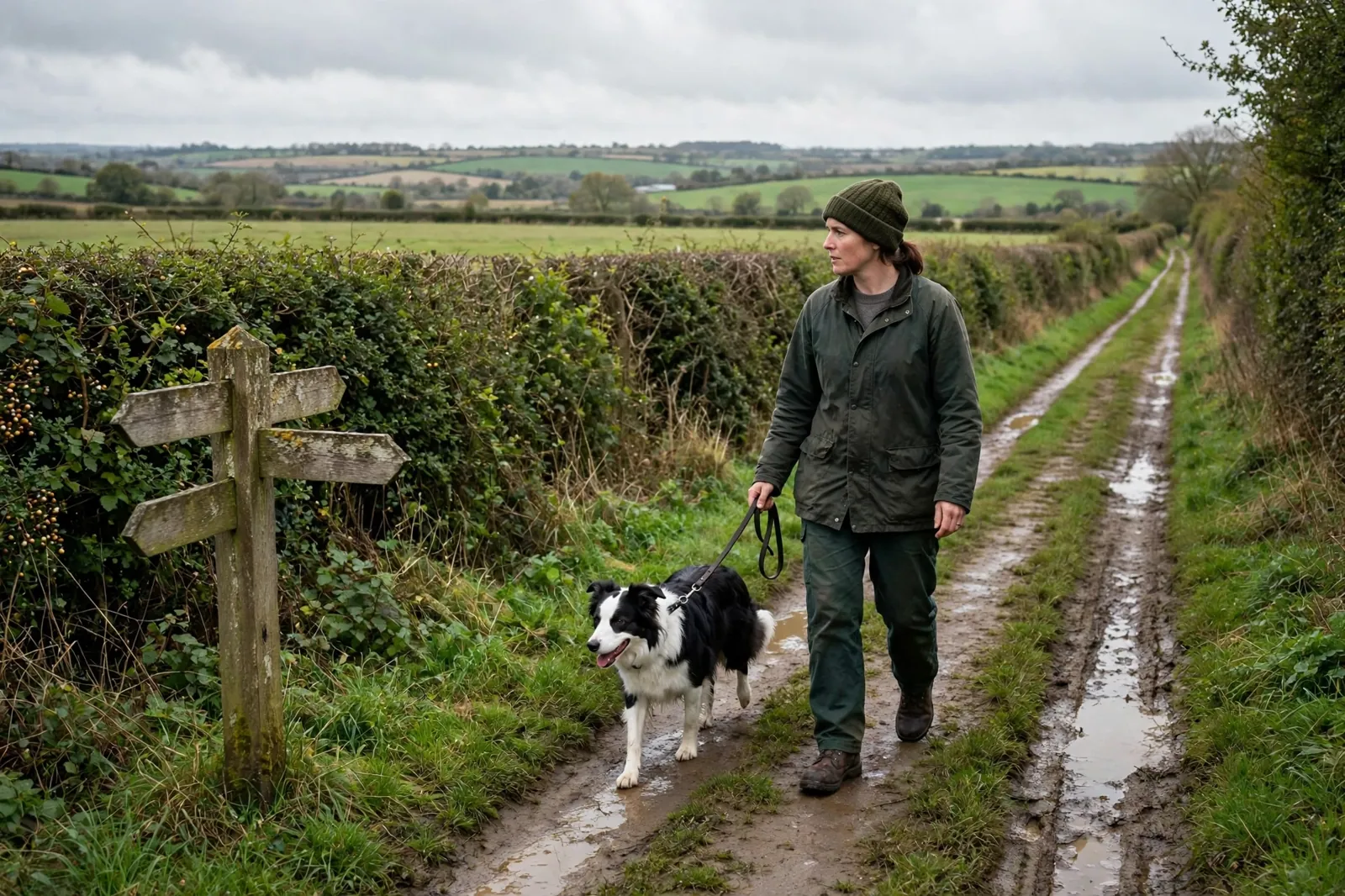
One of Lyndhurst's real advantages is that good walking starts in the village itself. From the High Street area you can reach forest tracks, woodland inclosures and open ground on foot, which means a dog that travels badly, an older dog that needs a short morning loop, or a rainy day when nobody wants a car journey can still produce a satisfying walk. Always confirm your exact route on a current map before you set off, follow waymarking and local signs on the ground over any description you have read in advance, and check official sources for closures, forestry work, flooding or seasonal diversions. Tracks that are firm in August can be deep mud by November.
For a gentle introduction, choose a broad gravel forest track through an inclosure. Enclosed woodland usually offers shade in summer, shelter on windy days, clear sightlines along the main rides and a surface that stays usable longer in wet weather than an open heath path. These walks suit a first morning: your dog can settle into the sights and smells of the Forest — deer scent, pony droppings, birdsong, cyclists passing — while you practise lead handling at gates and junctions without the added pressure of animals grazing immediately beside the path. Expect to meet riders, so step aside onto the verge, keep the dog close and still, and let horses pass at their pace rather than trying to walk parallel to them.
For a longer day, combine a woodland stretch with a section of more open ground, returning through the village or to a car park with a clear, recognisable route rather than improvised shortcuts. Open lawns and forest edges around the village are beautiful for a picnic stop at a distance from grazing animals, but they are also where dogs are most tempted to run and where ponies are most likely to appear from behind a rise. Keep the lead on, choose a stop where you can see approaching animals and other dogs, and move on calmly if a group drifts towards your blanket. Water matters on longer routes: carry water for your dog as well as yourself, because forest ponds and streams are not reliable drinking sources, may be important for wildlife, and can be stagnant or contaminated. Never let a dog drink from or plunge into a pond signed for wildlife, and rinse muddy paws in water you have carried if a stream is better left alone.
Shorter options matter as much as headline routes. A twenty-minute early-morning circuit on firm tracks before breakfast, a shaded midday sniff walk rather than a hot march, and a calm evening loop on a lead while the light fades will keep most dogs content across a stay without any single walk becoming an expedition. Puppies, senior dogs and dogs recovering from injury should have their distance set by the dog in front of you, not by a route description. Build in a genuine rest day if you are staying several nights: the Forest will still be there tomorrow, and an overtired dog is more likely to bark at ponies, pull towards cattle and ignore recall on the walk after.
Wayfinding deserves respect. Forest junctions can look identical, phone signal is patchy in places, and a track that seems to be heading back to the village can curve away into a much larger circuit. Download or carry an offline map, note the name of your starting car park or the street you left, and turn back early if the light, weather or ground changes. Tell someone where you are going if you are walking alone, keep a charged phone for emergencies rather than navigation alone, and save a local vet and taxi number before you need them. None of this is dramatic; it is the quiet preparation that keeps a simple dog walk simple.
Heathland and ground-nesting birds: seasonal care
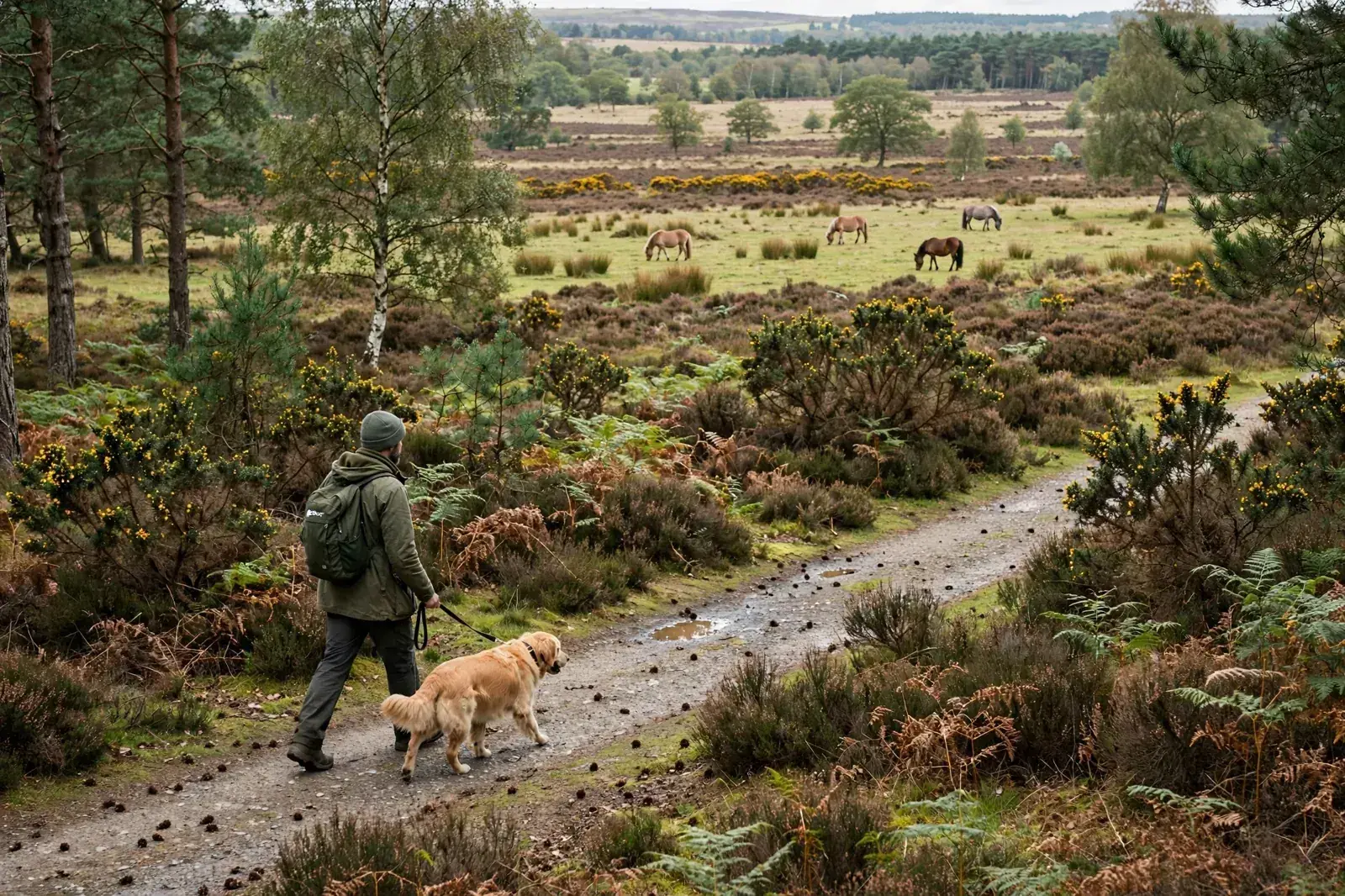
The open heaths around Lyndhurst — rolling ground covered in heather, gorse and scattered pines — are among the most precious habitats in the New Forest and the easiest for a dog owner to damage without noticing. Rare birds nest on or near the ground here, hidden in low vegetation rather than up in trees. A dog running joyfully through heather in spring can flush a sitting bird, expose eggs or chicks to predators and cold, and repeat the damage on every walk without ever catching anything. From the dog's point of view nothing has happened. From the bird's point of view the nest may be finished.
Take extra care through the main breeding season, roughly from March to July, and follow any signs that extend or vary those dates locally. In that period, keep your dog on a lead or on the main tracks across heathland, do not allow running through heather and gorse however empty the ground looks, and respect taped areas, temporary signs and ranger requests immediately and without argument. Our wider guidance on keeping dogs under control around wildlife is a useful companion, but the rule on the heath is deliberately simple: if in doubt, lead on and stay on the track. Outside the breeding season the heath still deserves care — wet ground erodes quickly, adders shelter in sunny edges, and grazing animals use the same open ground — but the nesting period is when a single off-track run carries the heaviest cost.
Heathland also changes how a walk feels for your dog. There is little shade, wind is stronger, scents carry a long way and lizards, ponies and deer can appear at distance and trigger a chase before you have seen them yourself. On hot days, cross heath early or late, carry extra water, and be ready to cut the route short: heat builds quickly on open ground with no tree cover and no reliable water. On cold, wet days the same openness means exposure, so a dog coat for a thin-coated or older dog is sensible rather than soft. Gorse and cut heather stems are tough on paws, so check pads at rest stops and remove thorns and seeds before they work deeper.
If you want off-lead freedom during a Lyndhurst stay, plan it deliberately rather than improvising it on the heath. Look for a secure dog field or a genuinely suitable enclosed space away from livestock and nesting habitat — ask your accommodation host what local dog owners actually use, and check the latest official information before travelling, rather than assuming any fenced-looking area is available to the public. A planned half-hour of safe running in the right place does far more for a dog than an anxious hour of being called back from ponies and birds in the wrong one, and it lets the rest of the day stay calm, on-lead and enjoyable for everyone sharing the Forest.
Ticks, mud and paw care after forest walks
Woodland, bracken, long grass and heath edges are prime tick habitat, and the New Forest is no exception. Ticks can be active through much of the year in mild weather, with risk highest in spring and autumn, and a dog that brushes through vegetation at track edges — exactly where the best smells are — will pick them up. Prevention and checking are routine work here, not an emergency response. Read our full guide to ticks on dogs in the UK, including removal and Lyme disease risk before your trip, talk to your vet about suitable tick prevention for your dog, and do not rely on a product that has lapsed because the packaging is still in a drawer at home.
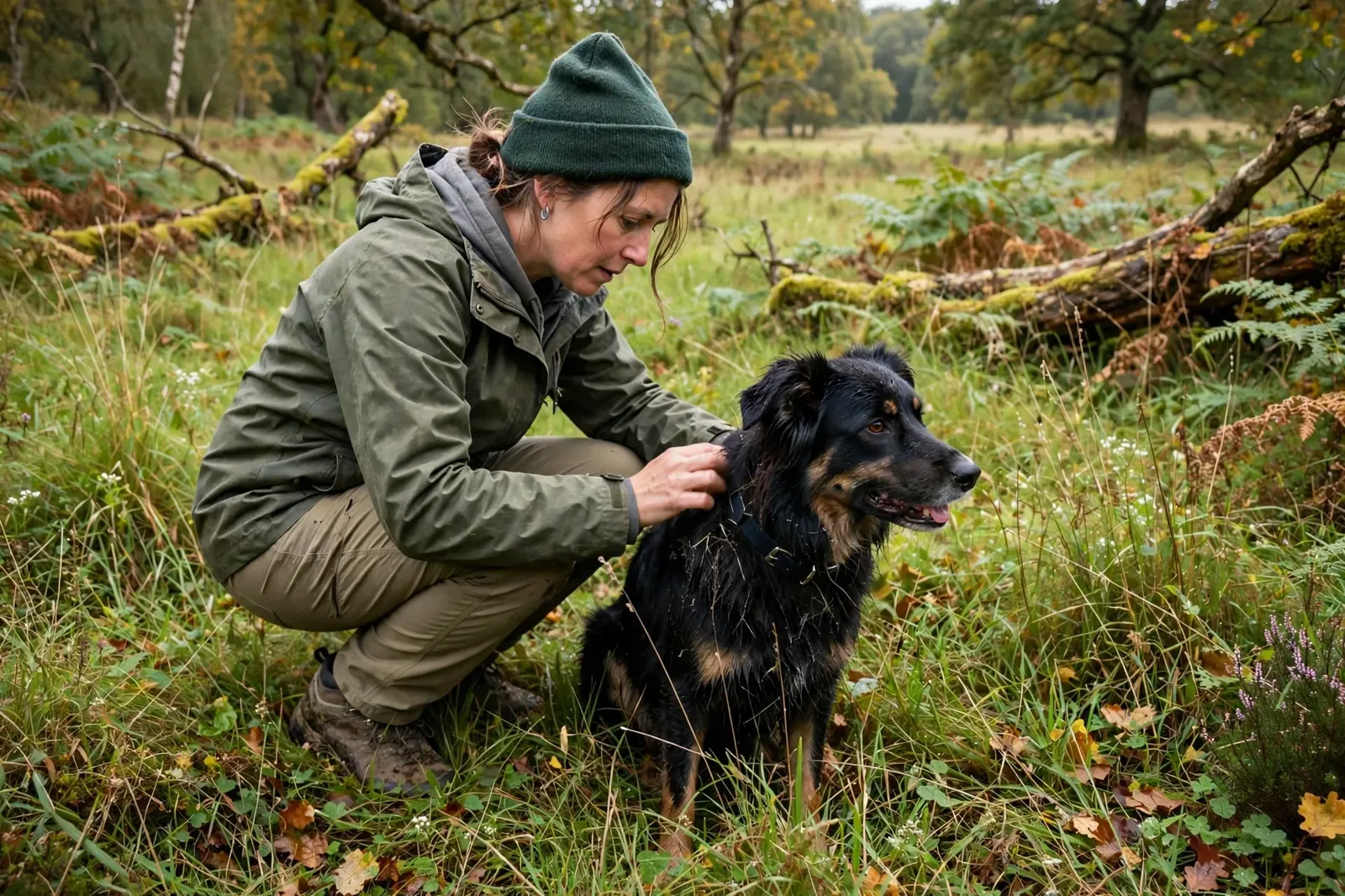
Check your dog after every walk, not just at the end of the holiday. Run your hands against the coat over the ears, neck and collar line, armpits, belly, groin and between the toes — the warm, thin-skinned places ticks favour — and check yourself as well if you have been sitting on grass or brushing through bracken. Carry a proper tick remover in your walking bag, not back at the accommodation, and if you find a tick, remove it promptly and correctly as described in the guide above rather than squeezing, burning or covering it in creams. Note the date, watch the site and your dog's energy and appetite over the following days, and contact a vet promptly if you see a spreading rash, lethargy, loss of appetite or anything that worries you. Before you travel, save the number of a vet near Lyndhurst and know how you would get there without a car if you had to.
The other daily jobs are duller but just as important. Forest tracks produce serious mud in wet months, and chalky dust and grit in dry ones. Rinse or wipe paws on return, check for small stones, gorse spines and grass seeds worked between pads, and dry between the toes for dogs prone to soreness. Grass seeds in summer deserve particular attention around ears, eyes, armpits and paws: a dog suddenly shaking its head, licking a paw obsessively or holding an ear oddly after a walk needs a vet, not a wait-and-see approach, because seeds travel inwards. A simple routine — water, paw check, tick check, dry bed — repeated after every walk becomes automatic within a day or two and prevents most of the small problems that otherwise accumulate into a vet visit by day four.
Carry a compact kit and keep it in one bag so it actually goes with you: lead plus a spare, poo bags, water and a collapsible bowl, tick remover, a small towel, treats for calm behaviour, and a charged phone. In summer add shade planning and extra water; in winter add a torch, because forest tracks are properly dark at teatime in December and a dog that slips a lead at dusk is hard to find. None of this kit replaces control or judgement, but having it to hand turns most surprises back into minor inconveniences.
Pubs, cafes and stays in Lyndhurst: what to expect
Lyndhurst works well as a dog base partly because the village itself is compact and used to walkers. In general terms you can expect to find pubs with gardens, cafes accustomed to muddy boots, and a range of hotels, inns, bed-and-breakfasts, self-catering cottages and holiday parks in and around the village that accept dogs in at least some rooms or units. What you cannot assume is that dog friendly means the same thing in each place. One pub will welcome dogs throughout the bar but not the restaurant; another will offer a garden only, which is wonderful in June and useless in a February downpour. A hotel may accept dogs in a handful of ground-floor rooms that book out early, charge a nightly pet fee, and ask that dogs stay off beds and out of the breakfast room. Always check the specific policy for your dates, in writing where possible, before you rely on it.
Ask practical questions and you will get practical answers. Are dogs allowed where you plan to eat, or only outside? Is there a secure garden, or a garden your dog shares with the car park? Where is the nearest short walk for a late-night toilet trip, and is it lit? Is there an outside tap, a boot room or somewhere to dry a wet dog that is not the bathroom of a small cottage? Is there a maximum number or size of dogs, a charge per dog per night, or a rule about dogs being left alone in the room — a rule you should plan around rather than test, because a dog barking in a strange room can end a stay faster than mud ever will. Hosts and staff answer these questions constantly; a clear email before booking is a kindness to them as well as protection for you.
In pubs and cafes, use the etiquette that keeps dogs welcome for the next visitor. Keep your dog on a lead, settled under or beside your table, and out of walkways, doorways and the route staff use carrying hot food. Bring a mat or settle blanket if your dog struggles to relax on hard floors, ask for water rather than assuming a bowl is safe to take from another table, and take a restless dog out for a short walk rather than letting it bark through someone else's lunch. Wipe muddy paws before going inside where a mat or tap is provided, and if your dog shakes forest water over a neighbouring table, apologise and offer to help — goodwill in small villages is a real and finite resource. After a long wet walk, a garden table in weak sunshine may suit everyone better than the warmest corner indoors, including the dog.
Base yourself for the dog you have. A reactive dog will usually do better in self-catering with its own entrance and a quiet toilet walk than in a busy hotel corridor. An older dog needs ground-floor access, minimal steps and a short distance from car to door more than it needs a view. A young dog that chews needs an honest conversation with a host about what is in the room, not crossed fingers. Lyndhurst offers enough variety that the right fit usually exists; it just rarely happens to be the first listing that catches your eye. Book the stay that makes the walks easy, because on a New Forest holiday the walks are the point.
Parking and passes in brief
Many car parks serving the Forest around Lyndhurst operate paid parking or a parking pass arrangement, and the operator, price and method differ between Forestry England car parks, council car parks in the village and private or attraction car parks. A pass can be good value if you are staying several days and using Forest car parks repeatedly, while a single day may be cheaper paid individually — but schemes, prices and eligibility change, so treat any figure you have seen in an older article, including anything quoted from memory, as out of date until you have checked. Before you travel, check the current Forestry England and local council information for the specific car parks you plan to use, confirm whether payment is by app, card, cash or pass, and allow for the fact that phone signal in a forest car park may not support a last-minute app download.
On the day, the disciplines are simple. Park only in marked car parks, display any ticket or pass clearly, close gates behind you, and never park on verges, across forest access gates, on open grazing or in passing places — vehicles on verges damage the grazing, obstruct commoners, riders and emergency access, and can be fined. Keep your dog on a lead in the car park itself, give ponies gathered around cars a wide berth rather than manoeuvring your dog between them and a bumper, and lock all food inside the vehicle out of sight, because animals that associate cars with food are a genuine nuisance and at risk themselves. If a car park is full, move to the next one rather than inventing a space; Lyndhurst gets busy on sunny weekends and bank holidays, and an early start solves most parking problems more pleasantly than circling ever will.
A calm one-day plan for Lyndhurst with a dog
Use this as a shape for the day rather than a timetable to defend. Arrive early enough to park without stress, sort tickets or passes before the dog comes out of the car, and start with a short lead walk from the village or car park so your dog can toilet, sniff and settle before any longer route. Have water and a small breakfast stop somewhere your dog can lie down quietly, and use the time to check the map, the weather and any signs about livestock movements, forestry work or bird-season restrictions that affect your planned direction.
Make the morning the main walk, while the ground, the dog and the light are at their best. Choose one clear circuit — a woodland inclosure route for shade and firm tracks, or a mixed route with a careful, on-lead heath section outside nesting concerns — and walk it at sniffing pace with regular water stops and settle breaks at gates where your dog can watch the Forest go by at a distance. Reward calm behaviour around ponies and other dogs generously, shorten up at every gate and road crossing, and be willing to turn the circuit into an out-and-back if animals, mud or heat make the second half a worse idea than it looked on the map. Finishing the main walk wanting slightly more is the right outcome for a first day.
Spend the middle of the day in the village. A pub garden or cafe stop works best after the walk, when a tired dog is most likely to settle under a table, and it gives you a natural pause to dry paws, do a first tick check, refill water bottles and reassess the afternoon honestly. If your dog is still full of energy, the answer is usually a short, interesting lead walk and some calm sniffing games near your base, not a second expedition onto open heath in the heat of the day. If the weather closes in, swap the afternoon walk for a short forest loop on the firmest tracks you can find and an early return — a wet-weather half day in Lyndhurst is still a good day, and forcing a full route in horizontal rain teaches a dog nothing except that holidays are miserable.
Finish with a gentle evening loop, a proper paw and tick check, food at the usual time if you can manage it, and a last lead walk on a familiar, well-lit route near where you are staying or parked. Note what worked — which tracks were firm, where animals gathered, which cafe welcomed the dog without fuss — because on a longer stay those small notes build the next day's better plan, and on a day trip they are exactly what you will want to remember when you return. Leave the Forest as you found it: gates closed, bags binned, animals unfed and undisturbed, and a dog asleep before you reach the main road. That, in Lyndhurst, is a day done properly.
Practical questions
Before you go
Do dogs have to be on a lead in the New Forest around Lyndhurst?
Not on every track at all times, but your dog must be under close control everywhere and on a lead whenever livestock, ponies, donkeys or cattle are nearby, near roads and car parks, and wherever signs ask for a lead. If recall is unreliable around animals, keep the lead on for the whole walk.
What should I do if a pony blocks the path or a forest gate?
Stop well back, bring your dog in close on a short lead and wait, or take a wide, calm detour around the animal. Never push past, squeeze through a gate beside a pony, wave arms, or use food to move it. Ponies have right of way here in practice, and a short wait is part of walking in the Forest.
Can I feed or stroke New Forest ponies, donkeys and cattle?
No. Do not feed, pet or try to stroke free-roaming ponies, donkeys or cattle, and keep children and dogs well away from them. Feeding harms their health, encourages them towards roads and car parks, and can make animals defensive. Watch and photograph from a respectful distance instead.
When do ground-nesting birds on the heath need extra care?
Take extra care through the main breeding season, roughly from March to July. Keep your dog on a lead or on the main tracks across heathland, do not let it run through heather and gorse, and follow any local signs or diversions. Nests are on the ground and almost impossible to see until a bird flushes.
Do I need a parking pass for New Forest car parks near Lyndhurst?
Many Forest car parks operate paid parking or a parking pass scheme, and arrangements and prices change. Check the current Forestry England and local council information for the specific car park before you travel, display any pass or ticket clearly, and never park on verges, across gates or on open forest.