This guide is independent and contains no paid placement. Local rules on dogs, access and seasonal restrictions can change, so check the official guidance before you travel.
Start on the flat riverside path, not on a hill. Matlock works best as a river walk with town pauses and optional Peak District extensions, and after rain the river itself decides how far you go.
Start on the river, not on a hill
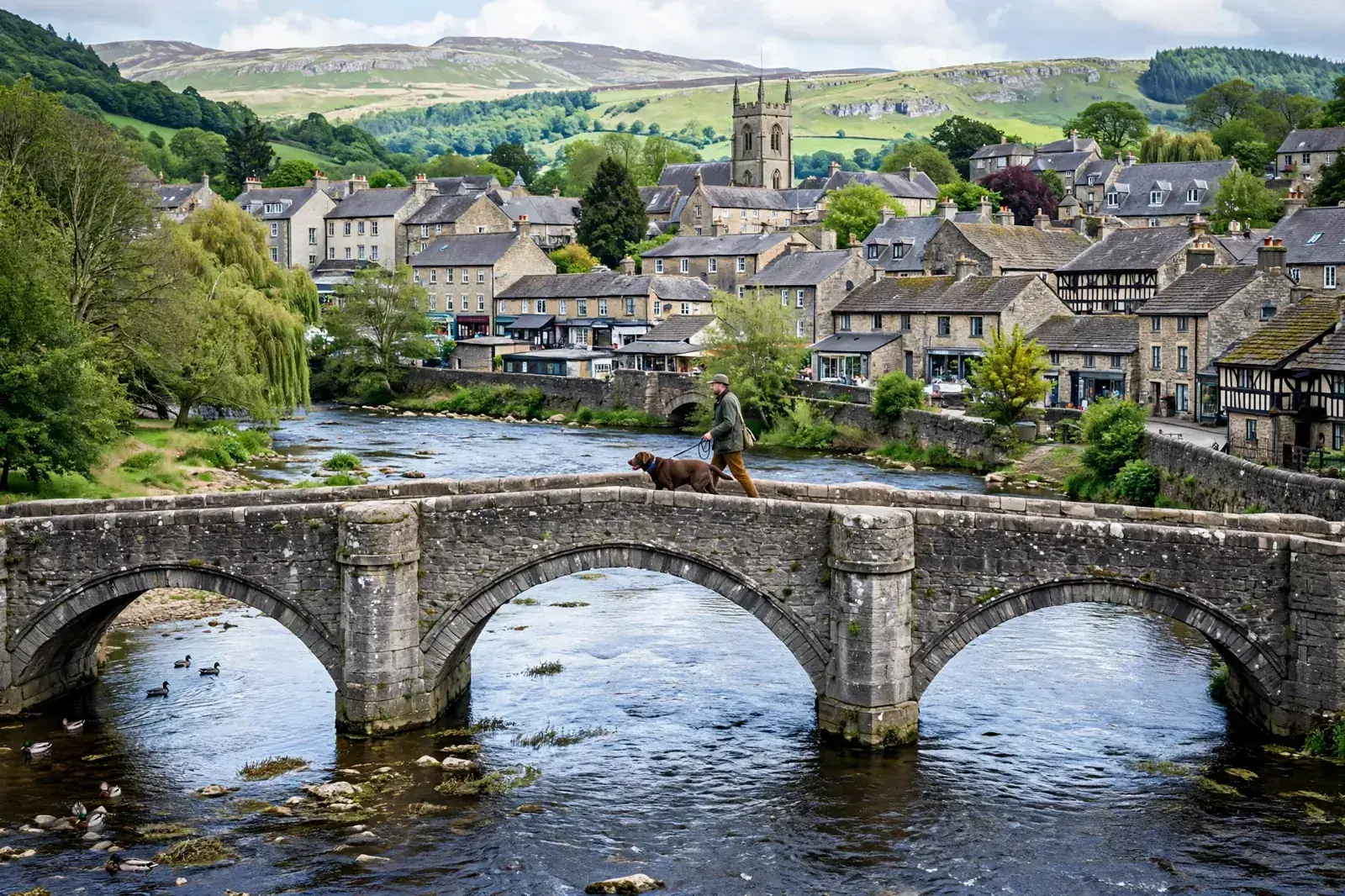
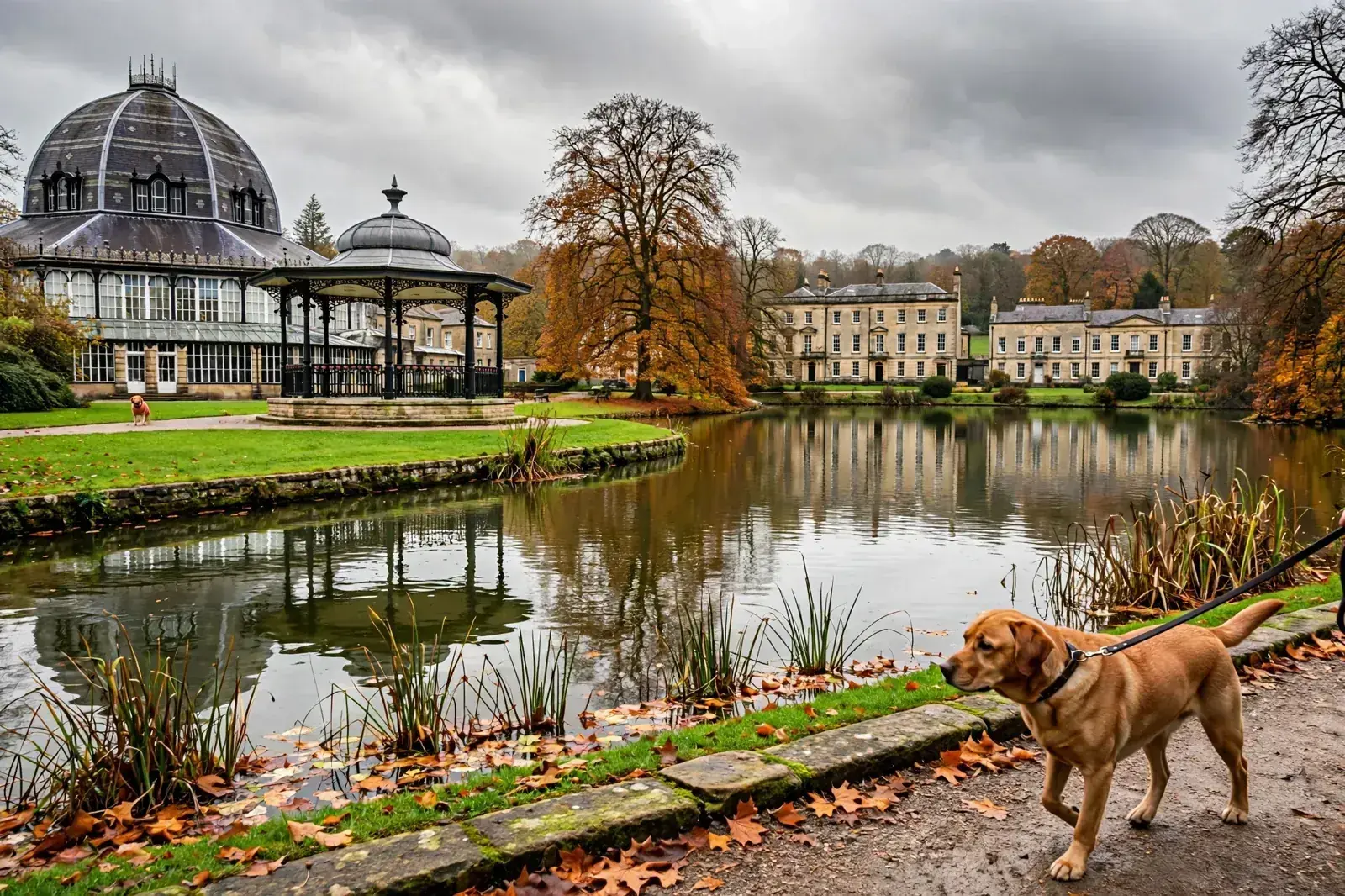
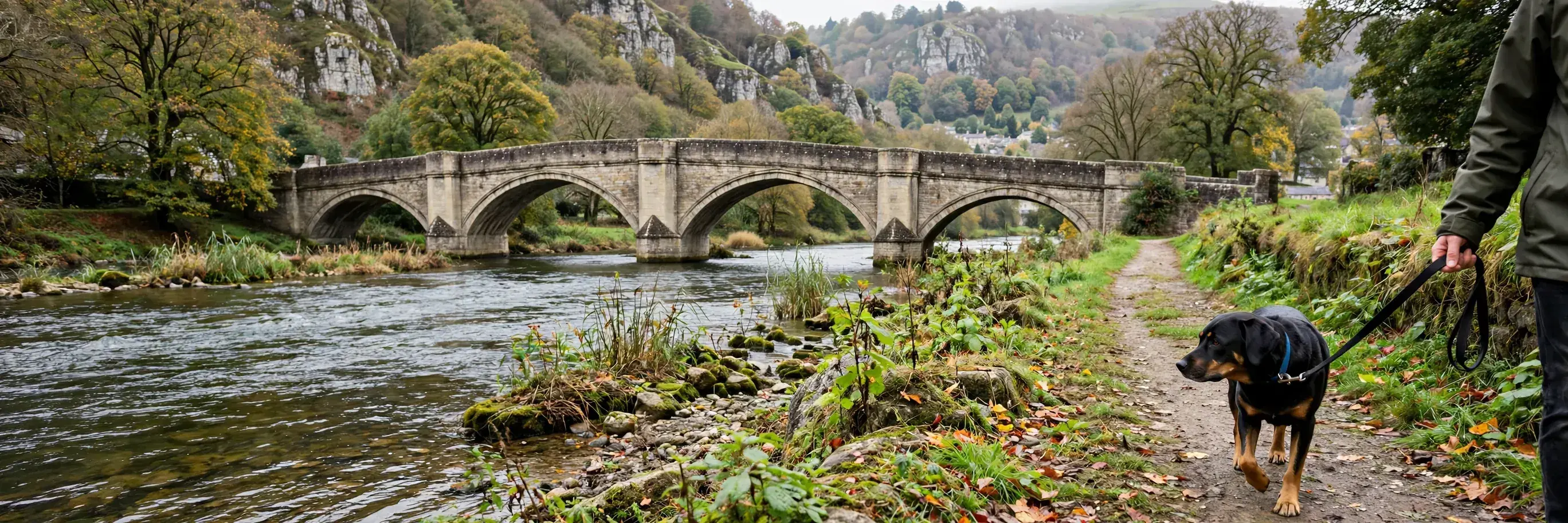
Matlock sits in a steep-sided valley, and that single fact shapes every sensible dog walk here. The River Derwent runs through the middle of town, and the flat path beside it is the kindest possible introduction for a dog that has just come out of a car. Begin there rather than driving straight to a hilltop viewpoint. The riverside route lets a stiff dog loosen up, gives a nervous dog time to read the place at its own pace, and gives you a clear view of the water before you commit to anything longer. Hall Leys Park, beside the river in the town centre, is the natural first stop: open grass, mature trees, benches and a riverside promenade where dogs on leads are part of the normal scene.
Keep the dog on a lead along the river, even if your dog is usually reliable off lead elsewhere. The Derwent is fast in places, the banks are not fenced along their whole length, and swans, ducks and moorhens treat the water as their territory. A dog that plunges in after a duck can be swept further than you expect, and cold water in winter is a shock even for strong swimmers. The lead is not a punishment here; it is what lets you enjoy the river without a rescue. Bring a towel in the car regardless of the forecast, because a riverside dog will find mud even on a dry day, and a wet dog in a car boot is a smell you will remember for the rest of the trip.
Read the river as you walk it. In normal flow the Derwent is a companion: clear, chatty, easy to cross by bridge. After heavy rain it changes character, running higher, faster and browner, and riverside paths can be under water in low spots. That is not a reason to cancel the day; it is a reason to change the route, which this guide covers below. Watch for anglers too, especially early in the morning. Give them a wide berth, keep the dog close and the lead short, and never let a dog investigate tackle, hooks or bait. A calm riverside walk is mostly about manners: lead on, distance from wildlife, and a steady pace that lets the dog sniff without stopping every other walker.
Use the town as a pause, not the main event
Matlock town centre is compact, and that is good news for a dog walk. The main streets run close to the river, so you can move between riverside path, park and pavement without long detours or complicated navigation. Treat the town as a series of pauses: a water bowl outside a cafe, a shady bench while you check the map, a short pavement stretch to the next green section. Dogs cope better with town noise when it comes in short bursts between quieter stretches, so avoid turning the whole outing into a pavement march. If your dog is noise-sensitive, time the town section for a quieter hour and keep the busiest shopping stretch brief.
Pavement manners matter more in a small town than on a country path, because everything is closer: pushchairs, other dogs, cyclists and delivery vans share the same narrow space. Keep the lead short and on the side away from the road, step aside into a doorway or a wide spot when another dog passes, and reward the dog for walking past calmly rather than stopping for every greeting. Not every dog wants to meet every other dog, and a lead is not an invitation. If your dog is reactive, the riverside path at a quiet time of day is a far better choice than the main street at lunchtime, and there is no shame in choosing the quieter option.
Food and drink stops work best when you check before you sit down. Some Matlock cafes and pubs welcome dogs inside, others offer a terrace or garden, and policies can change with the season or the time of day, so check the official guidance before you travel rather than assuming last year's rule still holds. Look for shade and water first, then for a spot where the dog can lie without blocking a walkway. A dog that has had a proper walk first will settle far more easily under a table than one that has been waiting all morning for exercise. Carry a portable bowl and a chew or a stuffed toy for the wait; a settled dog is what makes a cafe stop possible at all.
A level loop for easy legs
Not every dog in Matlock needs a hill, and the best walk in town is arguably the flattest one. A gentle out-and-back along the riverside, with the option to cross by bridge and return on the other bank, gives older dogs, puppies and dogs recovering from injury a real walk rather than a token pavement shuffle. The surface is mostly firm, the gradients are modest, and there are benches at intervals where you can sit while the dog watches the water. Measure the walk by the dog, not by the map: a twenty-minute sniffy amble that leaves an old dog content beats a forced hour that leaves them limping the next day.
Plan the loop around practical details that are easy to overlook. Identify a toilet spot early, ideally grass away from the main path, and carry bags even if you think the dog has already been. Older dogs may need to stop more often, and a route with no escape from other dogs is harder for them than a route with wide verges where you can step aside. If the dog uses a ramp or a harness for car access, keep the same routine at the start and end of the walk so the outing feels predictable. Predictability is underrated: the same starting point, the same first five minutes, and the dog relaxes faster every time you repeat it.
Shorten the loop without guilt when the dog tells you to. Signs worth respecting include lagging behind, lying down, excessive panting that does not settle, and a reluctance to go on that was not there at the start. Turn back at the next bridge rather than pushing on to complete a planned circuit; the river will still be there tomorrow. If you are staying locally, this same level loop doubles as the last outing of the evening, when a familiar, lit, flat route matters more than scenery. A dog that sleeps well after a gentle evening walk is a dog that will enjoy the next day's bigger walk far more.
The step up to High Tor
High Tor is the dramatic limestone crag that rises above Matlock, and it is tempting to head straight there for the view. For a fit, confident dog it can be a rewarding extension to the riverside walk, but it is a step up in every sense: steeper paths, more exposure, and sections where a lead and good footing matter. Do not attempt it as the first walk of the day with a cold dog, and do not attempt it at all with a dog that struggles with steps, steep ground or heights. The view from the lower riverside path is already excellent, and there is no prize for reaching the top with an unhappy dog.
If you do go up, choose your route with the dog in mind rather than the shortest line on the map. Steep, loose or stepped paths are harder on descent than ascent, because a dog's weight pushes forward and paws slip on dry stone. Keep the lead short on narrow sections, give way to walkers coming down, and stop in wide spots rather than on bends where you block the path. Carry water for both of you, because there is no tap on a crag, and a dog that has been running on the flat will drink far more once the gradient bites. In summer, start early: south-facing rock holds heat, and a dark-coated dog on hot stone is a welfare issue, not a photo opportunity.
Know when to turn back. High Tor rewards patience, not determination: if the dog hesitates repeatedly on steep ground, if the path narrows with a drop on one side, or if the wind picks up on an exposed section, the sensible move is down. A dog that has had a good riverside walk and a short climb has still had a good day. Back in town, a drink, a rest and a gentle evening loop will do more for the dog's enjoyment than a forced summit. The Peak District is full of viewpoints; the only viewpoint that matters is one you reach with a dog that is still wagging at the end of it.
Joining the Peak District from Matlock
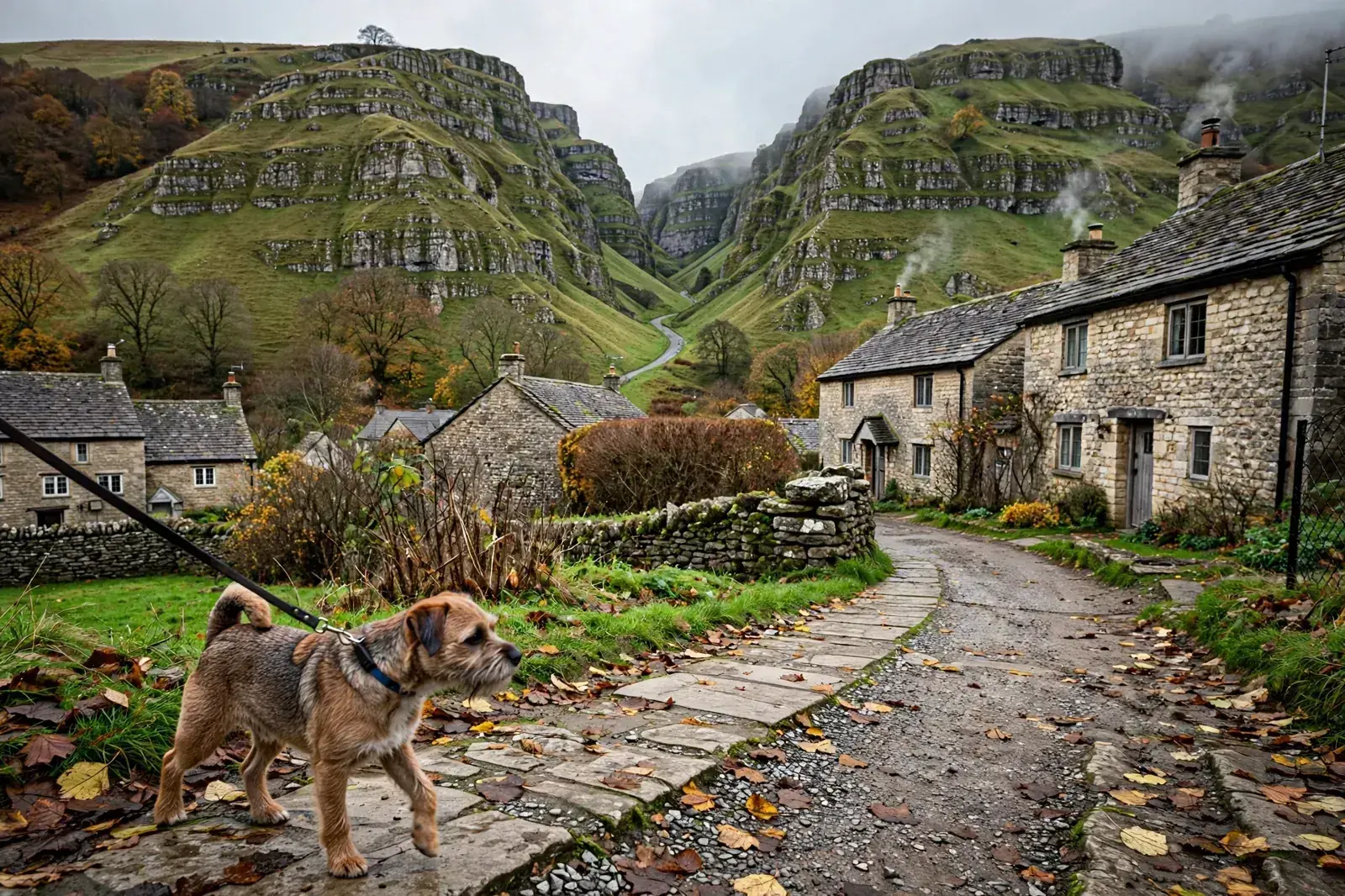
Matlock's real strength is its position: it sits at the edge of the Peak District, so a riverside morning can grow into a longer day without a long drive. The Derwent Valley Heritage Way follows the river south towards Cromford, where mills, canal and woodland give a walk a completely different texture from the town centre. This is a good next step for a dog that enjoyed the flat riverside path, because the terrain changes gradually rather than jumping from pavement to moorland. Check the official guidance before you travel for any current access or path information, and keep the dog on a lead where livestock, canal towpaths or mill grounds require it.
For a contrasting day, the market town of Bakewell is a natural companion trip, with its own River Wye walks and a different valley character, while Buxton offers spa-town gardens and a higher, more open feel. Comparing the three towns helps you learn what your dog prefers: river flat, market-town bustle or open garden. Some dogs clearly prefer one; a dog that loved Matlock's riverside may be less happy on Buxton's open paths in wind, and a dog that was bored on the flat may come alive on a longer valley trail. Let the dog's reaction, not the guidebook's ranking, decide the next day.
Longer Peak District walks need a different packing list from a town stroll. Carry more water than you think you need, a collapsible bowl, a lead long enough for a controlled sniff but short enough for livestock fields, and a towel for the car. Check the weather for the higher ground, not just the valley: Matlock can be calm while the tops are windy and wet. Tell someone your route if you are heading somewhere remote, keep the phone charged, and remember that a dog that is fit for an hour on the flat is not automatically fit for three hours of hills. Build distance gradually across a holiday, and the Peak District will reward you with walks the dog actually enjoys.
After rain: reading the river and changing the plan
Rain changes Matlock more than it changes many Peak District towns, because the river is the centre of the walk. After sustained rain, check the water level before you set out: a river running fast and high against its banks is a signal to stay on higher paths and keep the dog well back from the edge. Riverside paths can be muddy, slippery or partly flooded, and a dog that slips on a wet bank can be in the water before you can react. This is the day for the town's higher streets, the park's upper paths or a shorter, firmer route, not for a heroic riverside circuit. Check the official guidance before you travel if flooding is reported locally.
Mud is a management problem, not a reason to stay indoors. A dog that has walked a muddy riverside path needs a drying routine: a towel at the car, a second towel at the accommodation, and a check between the toes for grit and small stones. Long-coated dogs pick up leaves and twigs that tangle if left, so a quick brush after a wet walk saves a longer grooming session later. If you are staying in rented accommodation, protect floors with a washable mat by the door and keep the dog off light-coloured bedding until dry. Hosts remember muddy dogs; a clean, well-managed dog is welcome back, and that matters if you plan to return.
Wet weather also changes what the dog needs from the day. A short, interesting walk with lots of sniffing can tire a dog more than a long, wet march, because sniffing is mentally demanding work. Use the rain as an excuse to explore the town at a slower pace: a covered market area, a dog-friendly cafe stop, a gentle loop with frequent shelters. If the dog is genuinely miserable in rain, a waterproof coat helps more than encouragement, and some dogs simply prefer a shorter outing with a longer indoor play session afterwards. The goal is a content dog, not a completed route, and a flexible plan is what makes a rainy Peak District day work.
Eating and staying with a dog in Matlock
Matlock's eating options suit a dog walk well because the town is small enough that a cafe or pub is rarely far from the river. The practical question is always the same: is the dog welcome inside, on a terrace, or not at all, and has that changed since you last visited? Policies vary by venue and season, so check the official guidance before you travel and, where it matters, phone ahead. A venue that welcomes dogs on a quiet weekday may restrict them at a busy weekend lunchtime, and a garden that is perfect in summer may be closed in winter. Planning the stop in advance avoids standing outside a pub with a hungry dog and a closed door.
When you do sit down, set the dog up to succeed. Choose a table away from the main walkway, put a mat or blanket down if the dog has one, and give them something to do: a chew, a stuffed toy, or simply the chance to lie and watch. Order water for the dog as well as for yourself, and keep the lead looped where it cannot trip staff. A dog that barks at every passing dog will not enjoy a busy terrace, so pick a quieter corner or a quieter time. If the dog cannot settle, a shorter stop and a walk is kinder than an hour of stress for everyone, including the other diners.
Staying overnight with a dog in Matlock follows the same logic as anywhere in the Peak District: confirm the dog policy for the specific room or unit, not just the property in general, and ask about charges, limits and where the dog can and cannot go. Ask about the evening toilet walk too: a flat, lit route from the accommodation matters far more at 11pm in rain than a scenic view from the window. Pack the dog's bed, food, bowl and a familiar blanket, because a dog that sleeps in its own bed settles faster in a strange room. Leave the accommodation as you found it, mud and hair included in your own cleaning, and you keep the town welcoming for the next dog owner.
A day plan that respects the dog
A good Matlock day starts slowly. Begin with a short toilet walk and breakfast, then the riverside path while the dog is fresh and the town is quiet. Let the dog sniff, paddle at the edges only where it is safe and the lead allows, and stop for a drink before you reach the town centre. By late morning you will know how the dog is feeling: loose and keen means a longer extension is possible, while lagging or heavy panting means the level loop and a cafe stop is the right day. This kind of morning reading is the single most useful skill a dog owner can develop, and Matlock's gentle start makes it easy to practise.
Midday is for rest, not for mileage. Dogs, especially older or dark-coated ones, do not need a midday hill in summer, and a shaded rest in the park or back at the accommodation will pay off in the afternoon. Use the middle of the day for the town itself: a slow pavement stroll, a pub lunch, a look at the shops, all at the dog's pace. If you want a second walk, make it the shorter, flatter version of the morning route rather than a new challenge. Two moderate walks with a proper rest between them suit most dogs better than one exhausting expedition, and the dog will still be keen the next day.
Finish with the familiar. The last walk of the day should be the route the dog already knows: the riverside loop, the park, the quiet street back to the car or the accommodation. A familiar final walk lets the dog empty, settle and sleep, and it gives you a chance to check paws, coat and general condition in good light before dark. If the day included a hill, a river swim or a long drive, check the dog again the next morning before planning anything ambitious. Matlock rewards this rhythm: river first, town second, hills only when the dog is ready, and a calm finish every time.
Practical questions
Before you go
Can dogs swim in the River Derwent at Matlock?
Swimming is not something to assume. The Derwent can run fast and cold, banks are not fenced everywhere, and wildlife and anglers share the water. Keep your dog on a lead near the river, and check the official guidance before you travel if you are considering any water access.
Is Matlock a good base for Peak District walks with a dog?
Yes, for a gradual approach. The riverside paths suit easy days, the Derwent Valley routes towards Cromford add distance without steep moorland, and towns such as Bakewell and Buxton offer contrasting day trips. Build distance slowly rather than starting with a long hill walk.
What should I do if the river is high after rain?
Change the route, not the day. Stay on higher, firmer paths, keep the dog well back from the water, and use a shorter town or park loop. If flooding is reported locally, check the official guidance before you travel.
Are dogs welcome in Matlock cafes and pubs?
Many venues welcome dogs, but policies vary by venue, season and time of day. Check before you sit down, look for shade and water, and choose a spot where the dog can lie without blocking a walkway.
Is High Tor suitable for older dogs?
Usually not as a full climb. The paths are steep and exposed, and descent is harder than ascent. Older dogs, dogs with joint problems and dogs that struggle with steps will enjoy the level riverside loop far more.
Where can my dog toilet on a riverside walk in Matlock?
Use grass away from the main path, ideally in Hall Leys Park or on a wide verge, and always carry bags. Keep the dog off formal flower beds and away from play areas, and clean up immediately.