This guide is independent and contains no paid placement. Rules summaries are a starting point for planning, not legal advice: always confirm your exact route against current official guidance.
Most dogs can move to the UK without quarantine if the sequence is right: microchip first, rabies vaccination second, the correct travel document for your country, tapeworm treatment inside the arrival window for Great Britain, and an approved route. Start at least four months ahead, use a vet who issues travel documents regularly, and check the latest official guidance before you travel at every stage.
Start with the timeline, not the transport booking
Every failed dog relocation story has the same opening: somebody booked the attractive flight or ferry first and discovered the paperwork afterwards. The paperwork is the long pole in this tent. A dog starting from zero — no compliant microchip record, no rabies vaccination history that counts — can need months before it is legally travel-ready, because the rabies vaccination must follow the microchip and a waiting period must pass before entry is permitted. Dogs with continuous, correctly recorded vaccination histories move faster, but the document checks, the certificate appointment and the final treatment window still need scheduling around your move date, not squeezed beside it.
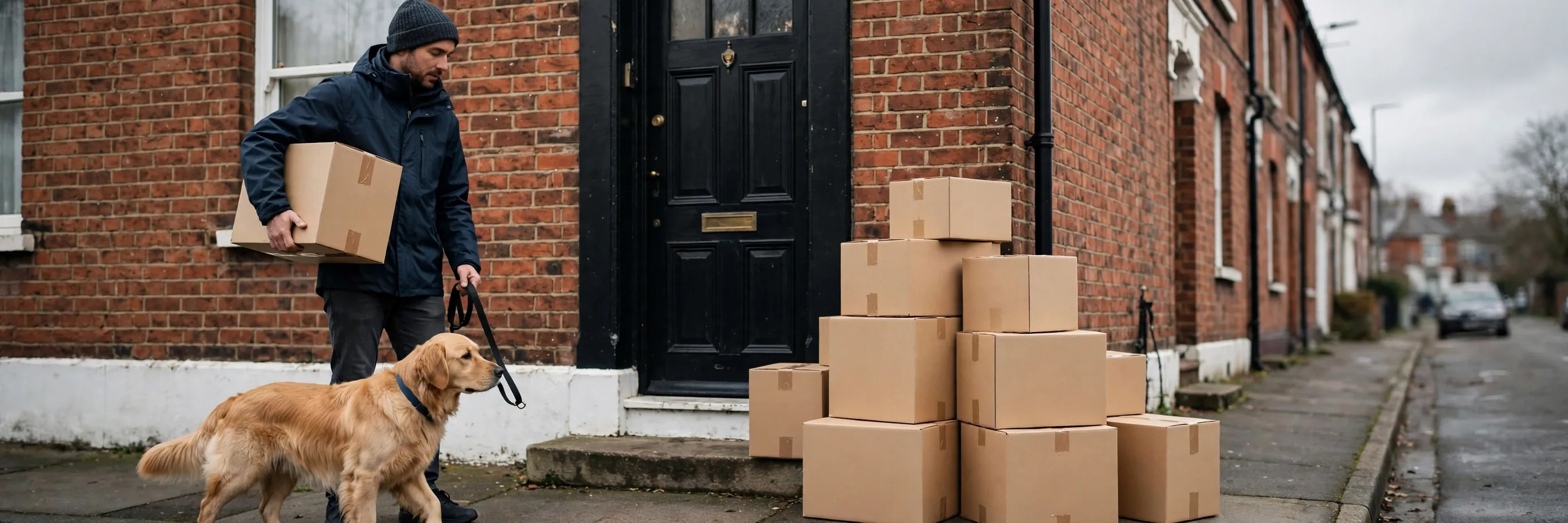
Build the plan backwards. Fix the target arrival week, then place the milestones in reverse: final vet visit and tapeworm treatment in the last days before travel, travel document issued inside its validity window, rabies vaccination confirmed valid well before that, microchip checked readable at every appointment. Put each date in a shared calendar with alerts a fortnight ahead, because a missed window does not cost an hour — it can cost the entire booking chain, from pet shipper to the completion date on your new home. If your move date itself might slip, tell your vet and any pet transport company early; professionals who move animals for a living have seen every permutation and can usually re-sequence a plan that a first-timer would write off.
One more timing truth: the human side of your move will generate chaos in the final fortnight whatever you do — removals, paperwork, goodbyes. The dog's plan should be finished, printed and boring by then. Aim to have every document except the final treatment signed off a month before departure, so the last weeks contain exactly one animal task: a single calm vet visit, executed exactly on schedule.
The document chain: chip, rabies, certificate
The chain has a strict order, and order is where most errors live. First, the microchip: your dog must be chipped, the chip must be scannable, and its number must be recorded identically on every document that follows. Ask the vet to scan the chip at the start of every relocation appointment and to read the number aloud against the paperwork — chips migrate, scanners fail, and a transposed digit discovered at a border is a crisis, while the same digit caught at the clinic is a shrug. If a chip cannot be found or read, deal with it immediately, because re-chipping restarts parts of the sequence.
Second, rabies. The vaccination must be administered after the chip is implanted or confirmed, by an authorised vet, and recorded with the chip number, the vaccine details and the validity dates. A waiting period — commonly twenty-one days after a primary vaccination — must pass before the dog can enter Great Britain, and booster histories must be continuous: a lapsed booster can reset the clock back to primary status. Keep the original vaccination records, not photographs alone, and if your dog's history spans several clinics or countries, assemble it into one folder early and let your travel vet audit it for gaps while there is still time to repair them.
Third, the travel document itself. Depending on where you are travelling from, this is typically an animal health certificate issued by an official veterinarian within a set window before travel, or a pet passport issued in a country whose passports Great Britain accepts — note that GB-issued pet passports no longer function for European travel the way they once did, and rules differ between Great Britain and Northern Ireland, which follows a different regime. The certificate route is a single-journey document with a short issue window, so its appointment is the fixed point the rest of the final week hangs from. Because country lists, accepted documents and validity windows are updated by government, treat every specific in this section as a prompt to verify: check the latest official guidance before you travel, ideally twice — once at planning stage and again the week before departure.
Tapeworm timing and the last vet visit
Dogs entering Great Britain from most countries must receive a tapeworm treatment — specifically against Echinococcus — administered by a vet and recorded on the travel document, within a defined window before arrival: not less than twenty-four hours and not more than one hundred and twenty hours before entry. That window is the tightest scheduling constraint of the whole move. Too early and the treatment is invalid; too late and the dog does not travel. Count the hours against your actual arrival time on British soil, not your departure time, and then build in margin for delays: a ferry crossing postponed by weather can push a compliant arrival out of the window, which is one reason experienced movers aim for the middle of the window rather than either edge.
There are exemptions for dogs arriving from a small number of countries recognised as free of the relevant tapeworm, and the list is maintained officially — if you are travelling from one of them, confirm your status rather than assuming it, and carry the document trail either way. Northern Ireland arrivals sit under different arrangements again. The pattern of this whole guide repeats here: the rule is knowable, the window is workable, and the only unforced error is guessing.
Use the final vet visit for more than the treatment. Ask for a general health check and a fit-to-travel view, confirm the chip scans, collect enough of any regular medication to cover the first month in the UK, and get printed copies of everything — vaccination history, certificate, treatment record — in a folder that travels with you in the cabin or the car, never in checked luggage or the removals van. Photograph every page as backup. Border pet checks are usually brisk and professional when the folder is complete and in order; the dogs that spend hours at the arrivals centre belong to the folders that are not.
Banned types and other hard limits
Before any other planning, check that your dog is legally able to live in the UK at all. British law prohibits certain types of dog — the pit bull terrier type, Japanese tosa, dogo argentino and fila brasileiro — and since 2024 the XL bully type has been banned in England and Wales, with ownership possible only under strict exemption conditions for dogs already resident by the relevant dates. Crucially, assessment is by physical type and characteristics, not by pedigree or breed label, so a dog described as a crossbreed in its home country can still fall within a prohibited type description on arrival. Importing a banned type, even unknowingly, risks seizure of the dog. If there is any doubt about your dog's type, take specialist advice before booking anything, because this is the one question in the entire process where a wrong answer cannot be repaired later.
Other limits are softer but real. There is a cap on the number of animals that can travel under the non-commercial pet rules — generally five — beyond which the movement becomes commercial and different requirements apply, with limited exceptions such as attending shows with evidence. The pet route also requires that the movement is genuinely non-commercial: the dog is moving because you are, not being sold or transferred to a new owner on arrival, and the timing of your own travel relative to the dog's matters, with rules about how far apart owner and animal journeys can be and what authorisation is needed if someone else accompanies the dog. Households moving several dogs, or sending a dog ahead with a transporter, should map these conditions carefully at the planning stage.
Also count the receiving end. If your first UK address is rented, a hotel or a relative's spare room, the dog's welcome there is a practical limit as real as any border rule. Secure the housing answer early — see the next sections — because "we will find somewhere dog-friendly when we land" is the sentence that turns a well-planned border crossing into a miserable first month.
Routes in: ferry, tunnel, or air cargo
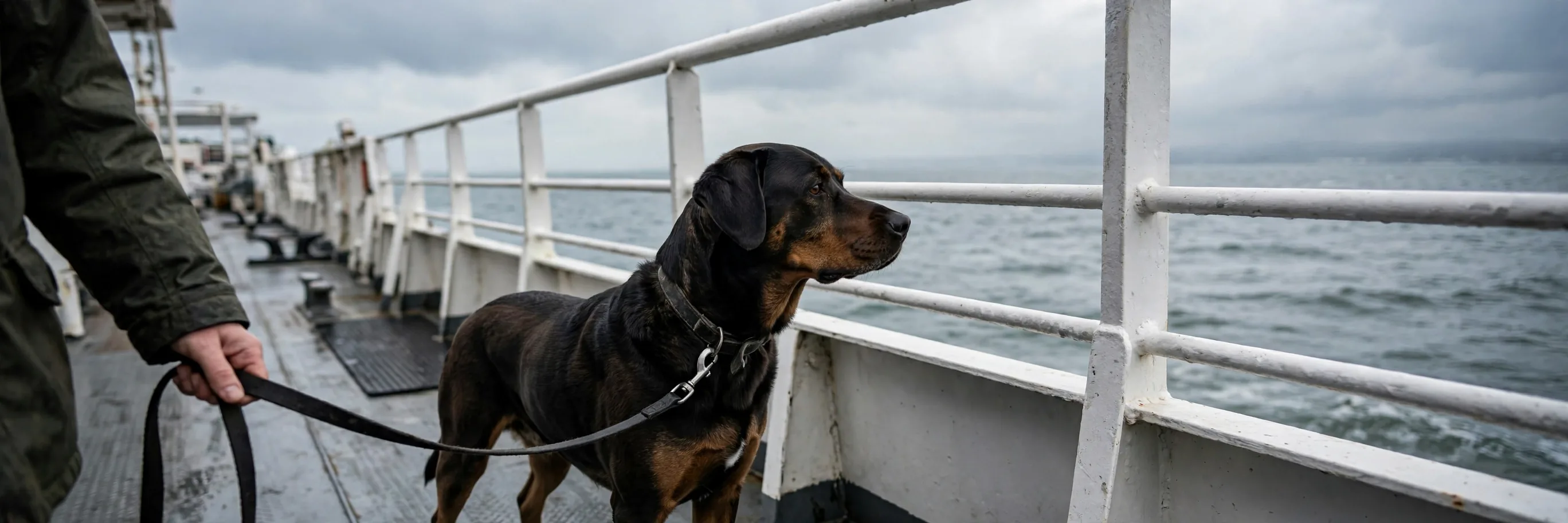
There are three broad ways in, and the best choice depends on where you start and how your dog travels. For most of continental Europe, the surface routes are kinder. The Channel Tunnel's shuttle service lets the dog stay in your car with you for the short crossing, which many owners consider the lowest-stress option of all, provided your dog settles in the car and you time the tapeworm window around the booking. Ferries on the longer routes offer kennels, dedicated pet decks or pet-friendly cabins on some services; our guide to dogs on UK ferries compares how the main operators handle dogs, and it is worth reading before choosing a route, because the difference between a pet cabin and a night in a car on a vehicle deck is the difference between a calm arrival and a frazzled one.
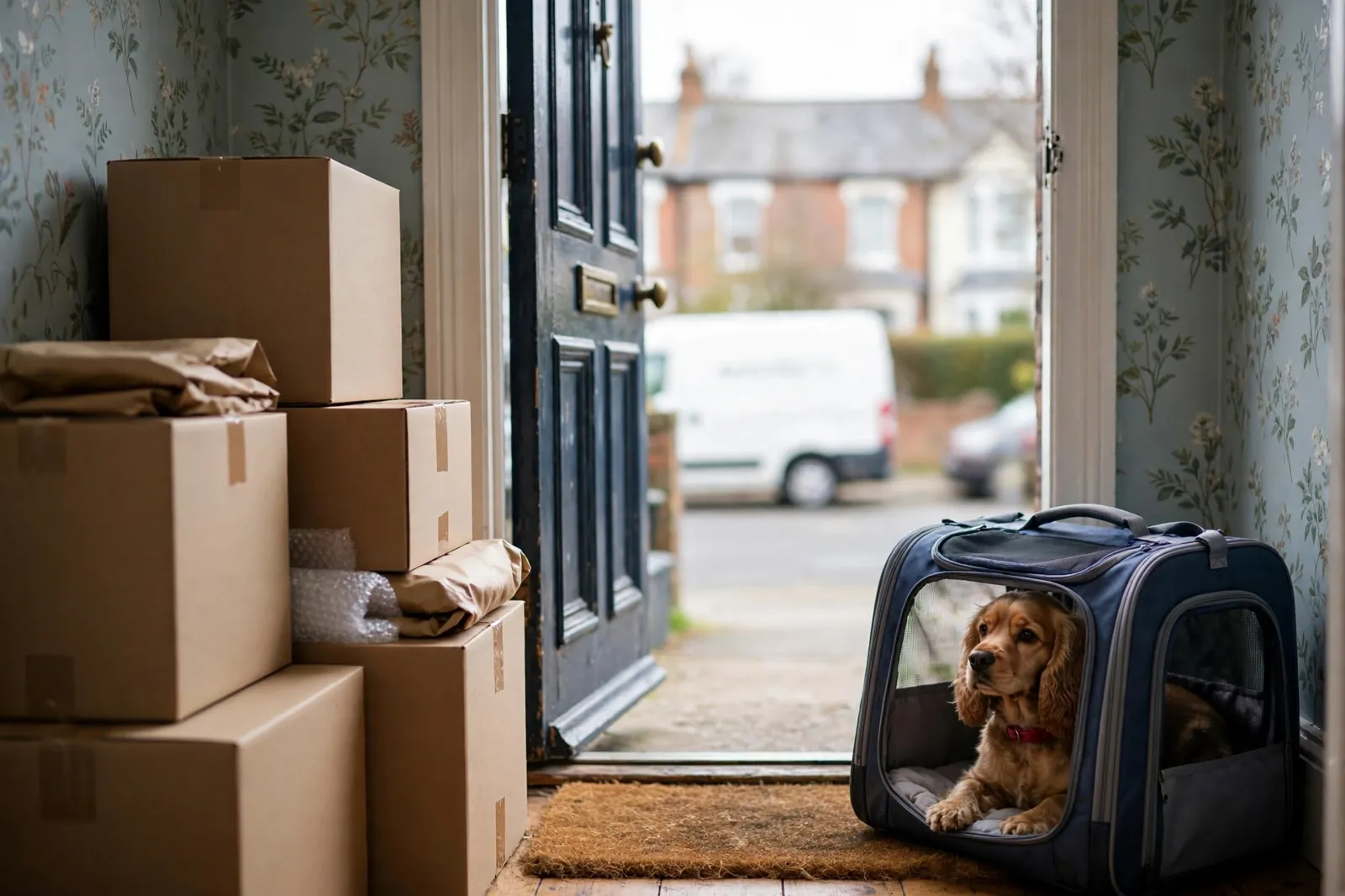
Flying is the only option from most of the rest of the world, and the UK's rules surprise many movers: pets arriving by air generally must travel as manifested cargo in the hold, on approved routes with approved carriers, arriving through designated airports with animal reception facilities. In-cabin arrival is essentially limited to recognised assistance dogs. That means a crate, a pet shipper in most cases, airline temperature embargoes in hot months, and a collection process at the destination cargo centre that adds hours after landing. None of this is unmanageable — thousands of dogs do it safely — but it must be booked as the specialised service it is, with an IATA-compliant crate the dog has been trained to rest in at home for weeks beforehand.
Whichever route you choose, book the dog's space before your own ticket is final, because pet capacity is limited on every service and sells out around peak moving seasons and school holidays. Keep the arrival logistics loose: a buffer night near the arrival point, no onward connection that a two-hour pet-check delay would break, and a plan for the dog's first toilet, drink and leg-stretch the moment the formalities end. The border is a process; the dog experiences it as a long strange day that ends, ideally, with a familiar blanket and a bowl of the usual food.
What the move really costs
Budget honestly and the costs hold no surprises. The veterinary chain — microchip if needed, rabies vaccination, health certificate appointments — varies by country but usually sits in the low hundreds of pounds equivalent; official-vet certificate fees are the steepest single vet item. Transport spans the widest range: a dog in your own car on a ferry or shuttle adds a modest per-pet fare, while a long-haul cargo flight with a professional pet shipper can run from several hundred to several thousand pounds depending on the dog's size, the route and the season. Crates, if you need an airline-compliant one for a large dog, are a real purchase, not an afterthought.
Add the quiet costs that catch people out. There may be arrival handling fees at cargo centres, out-of-hours charges if your flight lands when the reception centre works reduced staffing, and the cost of a plan B if a document error delays release. Insurance deserves a line of its own: check whether your existing pet policy survives an international move — many do not — and arrange UK cover to start on arrival, noting that pre-existing condition rules differ between insurers. Our guide to dog travel insurance in the UK explains how policies treat travel, relocation and exclusions, and relocators should read the relocation angle particularly carefully.
Finally, price the first month as part of the move: a vet registration visit, microchip database updates, possibly a new licence-free but essential set of basics — tags with your new UK number, a longer lead for countryside walking, a coat for a dog arriving from a warm climate into a British winter. None of it is extravagant; all of it lands in the same month as your human moving bills, which is exactly why it belongs in the budget from the start.
The first month: vets, chips and settling in
Arrive, breathe, and then keep the dog's world deliberately small. Relocated dogs have processed new smells, sounds, surfaces, water tastes and routines all at once, often after the strangest journey of their lives. The dogs that settle fastest get a week of radical predictability: the same feeding times, the same short walk from the door, the same bed with the same unwashed blanket from the old home, and visitors kept few and calm. Exploration can wait until the basics feel boring; boring is the goal. Appetite, sleep and toilet habits usually normalise within days when the routine holds, and a dog that is still not eating, or is showing persistent stress signs after the first week, deserves a vet conversation rather than more patience.
Register with a local veterinary practice in the first week, even before you need one, and take the full document folder to the first appointment. Ask the practice to scan the chip, confirm the number matches your records, and review what the UK climate adds to your dog's preventive care — tick prevention matters across much of Britain, and lungworm and seasonal canine illness are local risks a vet in your new area will calibrate better than any general guide. Update the microchip database to your new UK address and phone number immediately: it is a legal requirement that the record be accurate, the chip must be registered on a compliant UK database, and this single admin task is the one that reunites lost dogs with owners. A relocated dog in a strange neighbourhood is precisely the dog most likely to slip a door in week one.
Housing, if you are renting, needs the same first-week diligence. Our guide to renting with a dog in the UK covers references, deposits and the conversation with landlords; make sure your agreement's dog permission is in writing, register the dog's presence where the building requires it, and meet the neighbours before the dog's first bark introduces itself. Then start widening the world a street at a time: the local park's dog community, the café that welcomes dogs, the circular walk that will become the default. A month in, the move stops being an event and becomes simply where you live — which was the point of all that paperwork.
Everyday British dog law for new arrivals
British dog law will feel familiar in outline and specific in detail. Your dog must wear a collar with your name and address on a tag when in public places — a phone number is strongly advised as an addition — and the microchip record must stay current. There is no general national lead law, but local orders can require leads in specific parks, promenades and seasonal beach zones, and dogs must be on a short lead near roads and on much farmland access land during the ground-nesting and lambing season. Around livestock, the rule is absolute: keep the dog on a lead or under the closest control, because farmers may legally shoot a dog that is worrying sheep, and our guide to livestock worrying law explains the responsibilities that catch out newcomers to the countryside every spring.
Fouling rules carry fixed penalties in most public places, so the poo-bag habit is not optional etiquette but law-adjacent common sense, and our guide to dog fouling fines sets out what applies where. Dangerous-dog law is behaviour-based as well as type-based: it is an offence for a dog to be dangerously out of control anywhere, including your own home if a visitor is injured, and the threshold is lower than many arrivals expect. None of this should feel forbidding. Britain is a dog-dense, dog-welcoming country with extraordinary walking access — thousands of miles of public rights of way, a coast path network, and a pub culture that treats a dog under the table as normal. Learn the few hard rules, and the rest is a very good place to own a dog.
One cultural note to finish: British dog etiquette runs on understatement. Recall your dog before it reaches strangers rather than after, ask before greetings, keep the dog close past horses and cyclists, and apologise cheerfully for the mud. Do those things and the country will do what it does for millions of resident dogs — make room for yours at the fire.
Practical questions
Before you go
What does my dog need to enter the UK?
In most cases: a working microchip implanted before or at the same time as the rabies vaccination, an up-to-date rabies vaccination with the required waiting period observed, the correct travel document for your route — an animal health certificate or a valid pet passport issued in an accepted country — and, for dogs entering Great Britain from most countries, tapeworm treatment given by a vet within the specified window before arrival. Rules differ by origin country, so check the latest official guidance before you travel.
Will my dog have to go into quarantine?
Not if the entry requirements are met correctly and the paperwork checks out on arrival. Quarantine is the fallback when requirements have not been met, documents are wrong, or the animal comes from a country whose status requires it. That is why the pre-travel document check matters: most quarantine cases are paperwork failures discovered at the border, not animals that were ever a health risk.
Can my dog fly in the cabin to the UK?
Generally no on flights arriving into the UK: with limited exceptions such as assistance dogs, pets arriving by air must travel as cargo in the hold on approved routes with approved carriers. Dogs can travel in the cabin on some flights leaving the UK and within parts of Europe, which is why many people fly to a nearby European city and continue by ferry or Eurotunnel instead. Always confirm the current carrier rules before booking.
Are any dog breeds banned in the UK?
Yes. Certain types are prohibited under UK law, including the pit bull terrier type, Japanese tosa, dogo argentino and fila brasileiro, and since 2024 the XL bully type is banned in England and Wales subject to exemption arrangements. Assessment is based on physical type, not pedigree papers alone. If your dog could fall within a banned type description, take specialist legal advice well before planning a move.
What should I do in the first week after arriving?
Keep life small and predictable: same food if possible, short familiar walks, and plenty of rest while the dog processes a huge change. Register with a local vet, transfer or update the microchip record to your new UK address and phone number, check your pet insurance position, and learn the local rules on leads, livestock and beach access. Routine is the fastest settler for a relocated dog.