This guide is independent and contains no paid placement. Seasonal opening hours, events and services change, so check the official latest guidance before you travel.
Plan backwards from midnight: last proper walk in daylight or early evening, safe room ready by nine, dog settled with a chew before eleven, and no door left unguarded when guests spill out at twelve. Decide honestly between hosting, going out and staying away — and check collar tag and microchip details while the registries are still staffed.
Start at midnight and work backwards
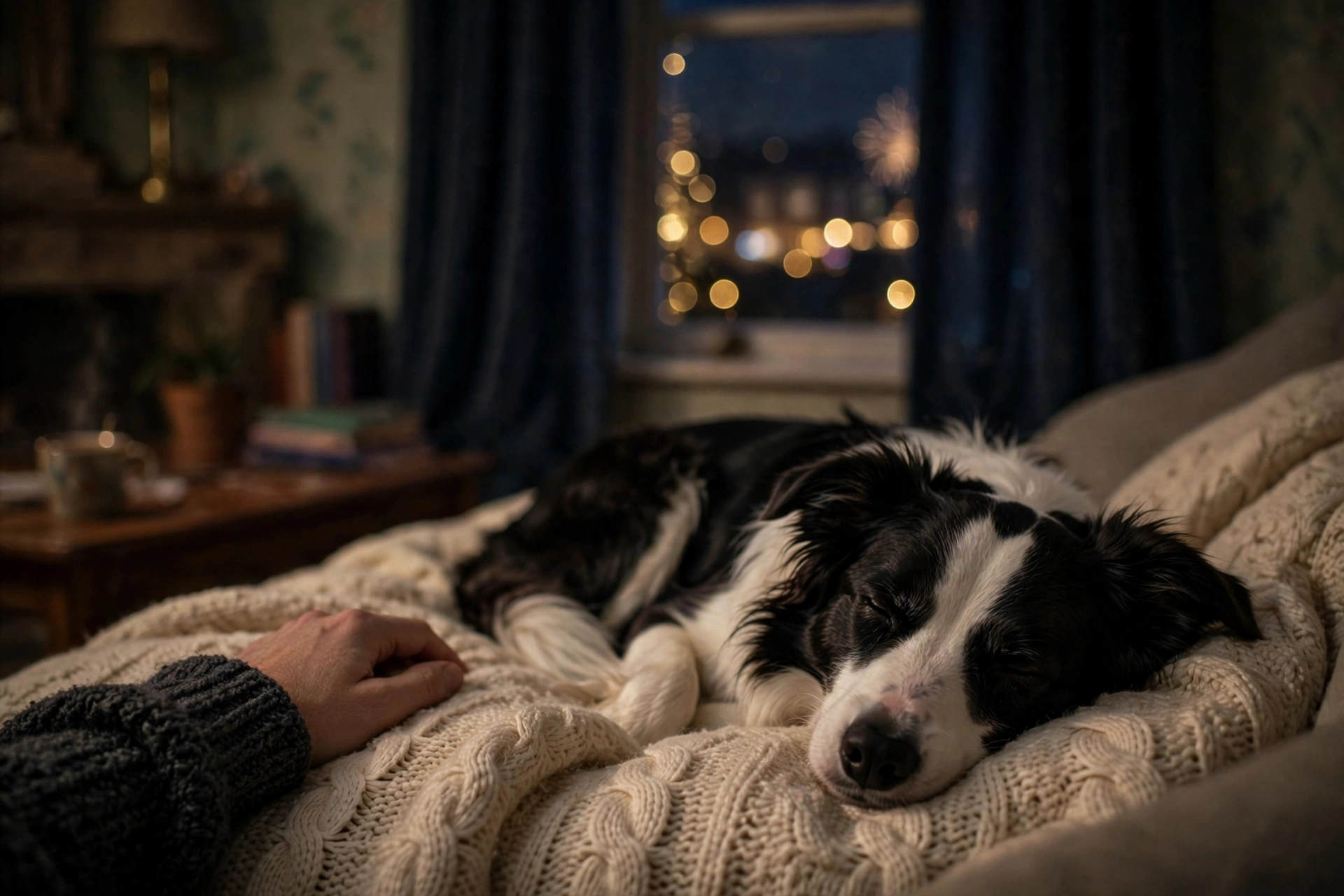
Midnight, then. The clock finishes its countdown, the room erupts, somebody opens the front door to watch the sky, a neighbour's firework leaves its garden at an angle its designer never intended, and your dog — who was managing, just about, on the sofa — decides that the hall, the stairs or the street is the answer. Almost every New Year's Eve dog disaster is a midnight disaster, and almost all of them are built during the six hours beforehand by people planning for a normal evening with a noisy bit at the end. This guide plans the other way round: fix midnight first, in detail, and let the rest of the evening arrange itself around it.
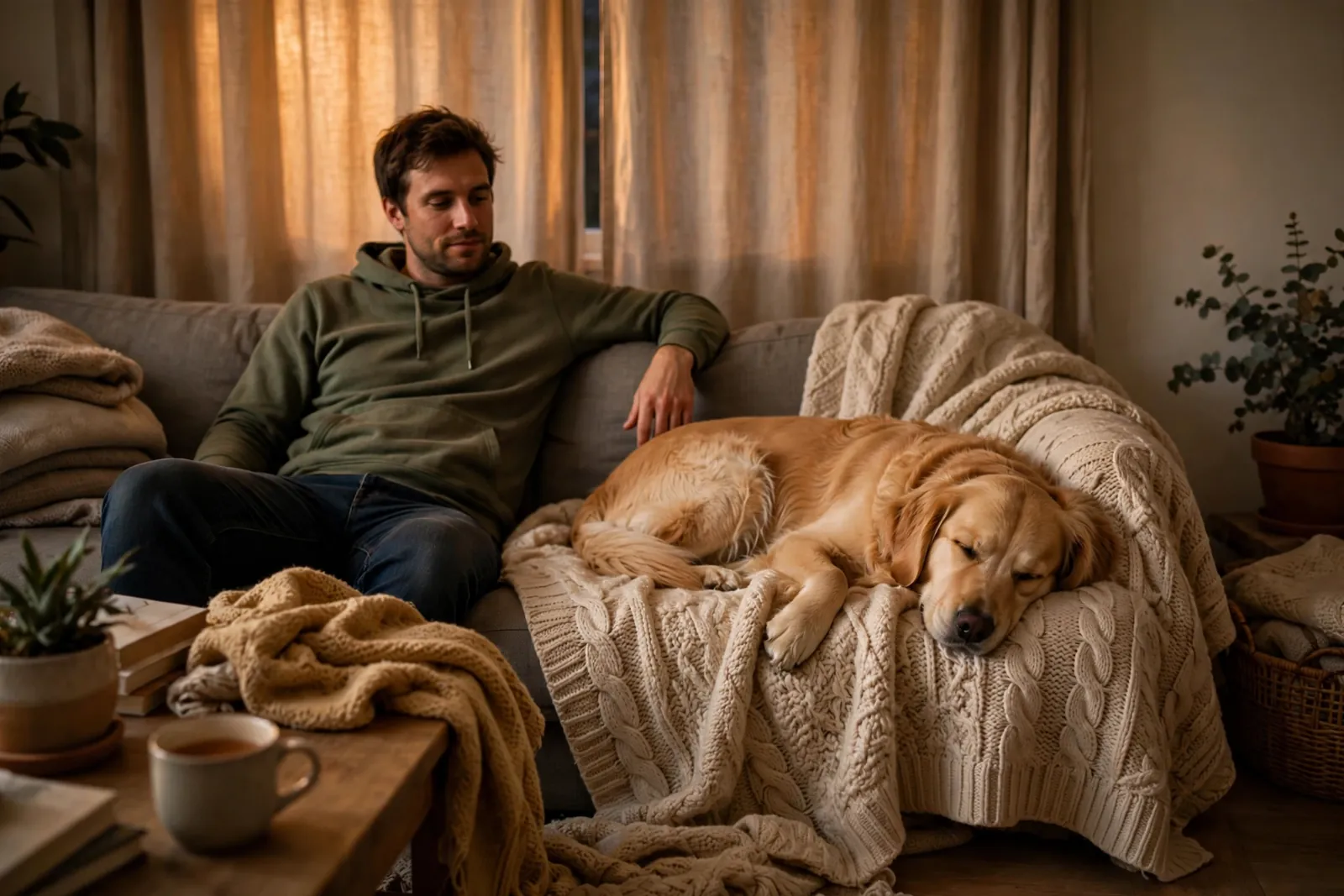
So picture the moment and allocate it. Where exactly will the dog be at midnight? The honest answers are a safe room with the door shut, or settled beside a named person who is not going outside, not holding a sparkler and not halfway through a bottle. Who is that person? Somebody specific, agreed in advance, ideally the person the dog already takes its cues from. What will the dog be doing? Working on a long-lasting chew given at about twenty to twelve works better than being stroked and reassured through the bangs, because an occupied mouth and a familiar task compete with listening in a way that anxious patting does not. And what is the door plan? At midnight every door in the house wants to be open. Shut the safe-room door before the countdown starts, and let the celebrations happen on the other side of it.
This is also where New Year's Eve parts company with Bonfire Night, and owners who have read general fireworks advice should notice the differences rather than assume the job is done. Our dedicated guide to dogs and fireworks in the UK covers the foundations — safe rooms, sound masking, walking before dark — and all of it still applies. But 5 November noise builds through an evening and fades by ten or eleven, while 31 December often stays deceptively quiet until a single intense peak when the whole country is awake, celebrating and opening doors. Add house parties, overnight guests and owners who may have been drinking, and midnight on New Year's Eve is its own problem, deserving its own plan.
Timing the last walk of the year
The last proper walk on New Year's Eve should happen in daylight if you can possibly manage it, and in the early evening at the very latest. Mid-afternoon is ideal: the dog gets a real outing, at real length, on a route you both know, and comes home with the whole evening ahead to decompress. Dogs read household tension accurately, and a home that is filling with balloons, bottles and arriving guests is not a home in which a dog can be expected to settle on an empty tank. Walk first, party second. If work or travel makes an afternoon walk impossible, take the longest morning walk you can and add a calm lead walk in the early evening before the streets change character — before, roughly, the point at which groups start moving between houses and pubs.
After that, the rule is garden breaks on a lead, full stop. Even in a garden the dog has used a thousand times, keep the lead on once darkness falls and parties begin, because a single nearby firework can send a normally garden-loyal dog over or through a fence it has never tested. Use a well-fitting collar or harness you have checked this week, not the one with the cracked buckle you keep meaning to replace. A torch, a head torch ideally so both hands stay free, turns a two-minute garden visit into a controlled exercise instead of a torchlit search for a dog that has gone to ground under a shed.
Be honest about toileting, too. Some dogs, once the noise starts, will not relieve themselves outside whatever you do, and standing in the garden for twenty minutes in the cold while a frightened dog pulls for the door achieves nothing except a colder, more frightened dog. Offer the opportunity early and often during the quieter hours, accept a skipped late break if the dog refuses, lay a puppy pad near the back door if accidents would otherwise mean distress for everyone, and remember that one imperfect night is survivable. The dog that held on until a calm New Year's Day morning walk has not failed at anything.
The safe room, midnight edition
The safe room itself follows the familiar principles, with three New Year adjustments. First, timing: it must be fully ready by about nine in the evening, not assembled at half past eleven by somebody hunting for the dog's blanket in a house full of guests. Bed or crate in its most familiar form, water, a chew in reserve, a worn item of your clothing, curtains drawn, and a television or radio playing something with continuous human voices at a volume that softens outside noise without adding to the dog's sense that the house itself has become loud. Second, position: choose the room furthest from the street and the front door, because at midnight both become sources of sudden sound, light and cold air. An upstairs back bedroom beats a downstairs front room every time.
Third, people. On Bonfire Night the safe room often works best with the dog alone in it or with one calm person. At a New Year's Eve party the room needs a rota and a rule. The rule: visits are short, quiet and by people the dog knows, and nobody — however fond, however merry — takes the dog out to join the party for the countdown because it feels unkind to leave it out. The rota: if the dog settles better with company, plan who sits the eleven-to-twelve shift in advance, with a book and a drink in hand, rather than negotiating it at the moment the dog starts to fret. Children who have been allowed to stay up should visit earlier in the evening and be in their own beds or with the main party by midnight; a tired, excited child is not the companion a noise-stressed dog needs.
Test the room during the quiet part of the evening. Settle the dog there at nine with the first chew while the party is still civilised, go back to your guests, and observe through the door whether the dog is resting or winding itself up. A dog that settles at nine will usually ride out midnight. A dog that is already pacing at nine needs its plan upgraded early — company in the room, an extra garden break before the noise, and a word with the household that the dog's door stays shut whatever happens outside it.
Hosting, going out, or staying away: three different plans
Hosting at home is, for most dogs, the kindest of the three options, because the territory is familiar and the safe room is the genuine article rather than an improvisation. Its risks are social rather than environmental: guests who feed the dog, guests who open doors, guests who think a frightened dog at midnight needs a cuddle from a stranger in a party hat. All three are managed by briefing, briefly and cheerfully, when people arrive — where the dog will be, that the door of that room stays shut, and that the dog is on a strict nothing-from-anyone diet for the night. Most guests are relieved to be told; uncertainty, not malice, causes the trouble.
Going out to somebody else's party is the option that needs the coldest eye. Leaving a dog home alone through midnight fireworks is a decision some owners of genuinely bombproof, older dogs can defend — and even then, a neighbour's display can change the calculation in a single year. For the majority of dogs, and for any dog with a known noise worry, being alone at midnight is the one arrangement this guide advises against outright. The alternatives are a trusted sitter in your home who understands the midnight plan, taking the dog with you only if the host has agreed in detail and a quiet room genuinely exists at that house, or reshaping the evening: celebrate earlier, be home by eleven, and let midnight happen with you in it. If a dog would be left longer than its normal, comfortable alone-time even without fireworks, the plan was already broken before noise entered it.
Staying away is the third shape of the night, and it splits in two. A deliberately quiet rural stay, chosen because the area has few displays and little party traffic, can give a noise-sensitive dog the calmest New Year of its life — our guide to New Year breaks with dogs explains how to judge a stay's genuine quiet rather than its marketing. The trap is the opposite booking: a city-centre hotel or a festive party house in a town, where midnight is loudest, corridors fill with celebrating strangers, and your dog is coping with novelty and noise at once. If you are already booked somewhere lively, the answer is not panic but preparation — this guide's safe-room and last-walk timings, translated into the space you have, plus a conversation with your hosts about the quietest room in the building.
ID, microchip and the checks to do while offices are open
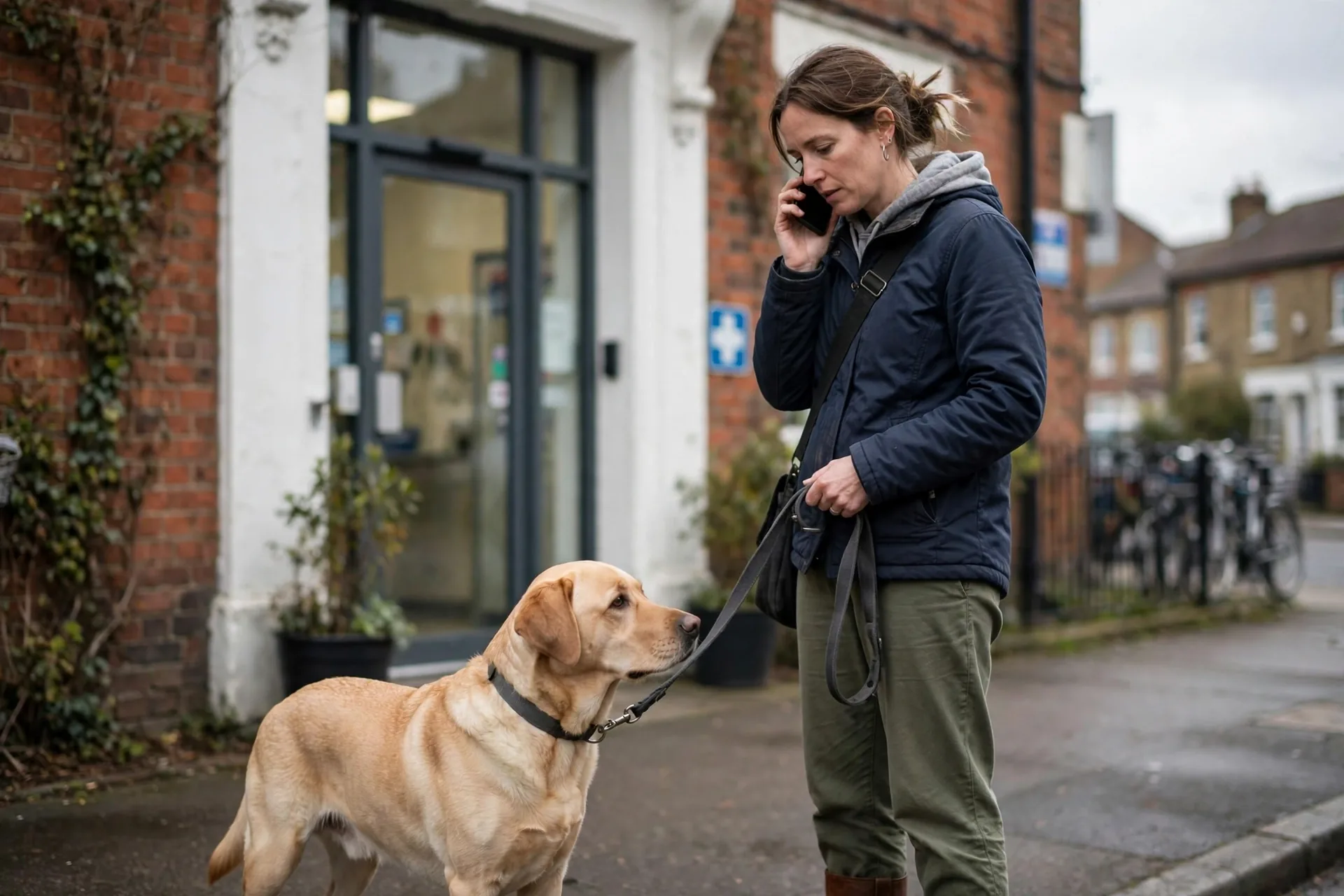
New Year's Eve has one administrative feature nobody thinks about: for roughly thirty-six hours, the normal world of answered phones largely closes. Microchip databases, council dog wardens, local rescue centres and your own vet's reception all run reduced or emergency-only services across the New Year period, which means the checks that take two minutes on 30 December become slow or impossible on 1 January. Do them early in the week instead. Confirm the mobile number on the dog's collar tag is your current one and that the tag is actually attached — tags fall off, collars get swapped for festive bandanas, and the tag ends up on the collar hanging by the door while the dog wears the other one.
Then check the microchip record itself, not your memory of it. Log in to the database your dog's chip is registered with, or phone them during office hours, and verify the phone number and address held. A dog found at one in the morning on New Year's Day can be scanned by an emergency vet or warden within the hour, and the difference between a dog home by breakfast and a dog in kennels for two days is usually nothing more glamorous than whether that phone call reached a live, correct number. Follow the finder route from the other side as well: know which out-of-hours vet serves your area, save the number, and note that social media lost-dog groups in your area are often the fastest reunification channel of all — worth joining before you ever need them.
None of this is pessimism; it is the same logic as checking a torch battery. Escapes cluster on this night for identifiable reasons — doors open at midnight, gardens visited in the dark, startled dogs bolting from leads during celebrations in the street — and preparation converts most of them into brief scares. Add the physical checks while you are at it: collar fit you cannot pull over the head, harness straps snug, lead clip that closes cleanly, and a spare lead and tag in the car if you are travelling. Ten minutes on the thirtieth buys a calmer conscience on the thirty-first, whatever the evening brings.
Party hazards that are not fireworks
Noise takes the headlines, but a New Year's Eve gathering assembles a hazard list of its own, and it deserves the same unglamorous sweep as any festive table. Alcohol sits at the top of it: glasses set down on floors and low tables, bottles left open by chair legs, and a dog that laps something sweet and strong while the room is watching the television. Alcohol is genuinely dangerous to dogs, not merely unwise, and the party format — drinks at dog height, humans distracted — is precisely how incidents happen. Institute a house rule that drinks live on tables and mantelpieces, never on the floor, and that the dog's water bowl is the only drinking vessel at ground level.
Food follows the Christmas script with a party twist. Buffet tables put cooked bones, cocktail sausages on sharp sticks, cheese boards with grapes in some households, chocolate desserts and bowls of nuts at exactly the height of a determined medium-sized dog, and buffets stand unattended for hours in a way a served dinner never does. Site the buffet in a room the dog does not enter, or accept a lead-and-mat arrangement with a named supervisor, but do not rely on a dog's usual good manners surviving four hours of unsupervised proximity to a cheese board. Party poppers, balloons and streamers add the foreign-body category: burst balloon fragments and popper streamers are classic swallow hazards, and the bang of a balloon bursting at close range has undone many a carefully settled dog.
Finally, the human hazards. Sparklers and garden fireworks at midnight combine open flame, excited movement and a dog that has been brought outside exactly when it should not have been — keep dogs indoors while anything is lit, without exception, and let the humans who want the sky have the garden to themselves. Cigarettes and vapes left on low tables, medication in guests' handbags in the hall, coats with chocolate in the pockets draped on the bed the dog sleeps on: walk the house once at ten o'clock with a hazard eye, the way you would for a crawling toddler, and move what you find. It takes five minutes and it is the least festive, most useful thing you will do all night.
After midnight: settling down and New Year's Day
The fireworks do not stop at five past twelve; they taper, unevenly, with late displays and individual gardens firing until one or two in the morning in many areas. Resist the urge to declare the night over at the first lull and let the dog into the garden off the lead. Keep the safe-room arrangement running until the noise has genuinely finished, offer a lead garden break only when things have been quiet for a good while, and expect a dog that refused to toilet all evening to need that break at an unsocial hour. This is normal. Put the coat and torch by the safe-room door at eleven and the three o'clock visit becomes a small, calm procedure instead of an expedition.
Sleeping arrangements for the night deserve one decision made early: if the dog is more settled with you, let it sleep where you sleep, and if guests are staying over, tell them the dog's routine before they arrange themselves in the room the dog considers its own. Overnight guests also mean a morning of open doors and unfamiliar routines, so the dog's first outing on New Year's Day should be a proper lead walk by you, not a hopeful release into a garden where a gate may have been left open by somebody heading for a morning train.
New Year's Day itself is one of the great dog-walking days of the year — quiet roads, empty early paths and a population moving slowly — with two footnotes. The first is debris: firework casings, spent sparklers, broken glass and the remains of midnight picnics litter exactly the parks and pavements you will walk, and a scavenging dog should be kept on a short lead and watched until councils and weather have cleared the worst of it. The second is your own condition. A dog does not care that you danced until three, but it does need its walk at a sensible hour from a person capable of holding the lead properly. Plan the walk rota as honestly as the midnight one, and everyone — dog included — starts the year in credit.
The New Year's Eve checklist, in order
By 30 December: microchip record checked, collar tag correct and attached, collar and harness fit tested, out-of-hours vet number saved, sitter or stay arrangements confirmed, chew supply bought — the long-lasting kind, plus a spare. By mid-afternoon on the thirty-first: main walk done, garden breaks offered, party hazards swept, drinks rule agreed with the household, and the question of who drives if a vet trip is needed answered by a person who will stay sober enough to do it.
By nine in the evening: safe room ready and tested with the dog settled in it once already, curtains drawn, television or radio on, spare lead and torch placed, buffet and drinks confirmed as dog-inaccessible, guests briefed in one cheerful sentence each. By eleven: dog offered a final quiet garden break on the lead, settled in the safe room, best chew in reserve. At twenty to twelve: the reserve chew comes out, the safe-room door closes, the named person takes their post, and the front door acquires a guardian for the countdown. At midnight, while the sky does its worst, the plan does its work — and at some point in the small hours, when the quiet is real, one dog gets a lead, a torchlit garden and the first toilet break of the year.
Written down like that, the night sounds like an operation, and in one sense it is: New Year's Eve is the single most predictable emergency of the dog-owning year, arriving on a date printed in every calendar. Predictability is a gift. It means nothing in this checklist needs inventing under pressure, and the dog asleep in a back bedroom while the bongs ring out is not lucky — it is planned.
Practical questions
Before you go
What time should the last dog walk be on New Year's Eve?
Aim for a proper walk in daylight or mid-afternoon, and treat early evening as the latest acceptable slot. After dark, stick to lead garden breaks only, because parties, street celebrations and early fireworks make pavements unpredictable, and a startled dog can bolt even on a familiar route.
How is New Year's Eve different from Bonfire Night for dogs?
Bonfire Night noise builds through an evening and usually fades by late evening. New Year's Eve often stays quiet until one intense peak at midnight, when doors open, guests go outside and the whole country celebrates at once. The plan has to be built backwards from midnight, with the dog already settled behind a closed door.
Can I leave my dog home alone on New Year's Eve?
For most dogs, and for any dog with a known noise worry, being alone through midnight fireworks is not advisable. Use a trusted sitter in your home, reshape the evening to be back before midnight, or take the dog only to a host who has agreed a genuine quiet room in advance.
What should I check on my dog's ID before New Year's Eve?
Check that the collar tag shows a current mobile number and is attached to the collar the dog will actually wear, then log in to your microchip database during office hours to confirm the phone number and address are correct. Save your out-of-hours vet's number too, because normal services run reduced hours over New Year.
When is it safe to let my dog out after midnight fireworks?
Wait until the noise has genuinely finished — late displays can run until one or two in the morning. Offer a lead garden break once things have been quiet for a good while, keep the dog on the lead even in your own garden, and expect that a dog which refused earlier may need a break in the small hours.