This guide is independent and contains no paid placement. If affiliate links are added later, they will be clearly marked and will not change our editorial checks.
Base yourself in Oban for at least two nights. Use the town for McCaig's Tower, the esplanade and Ganavan Sands, treat Kerrera as a full unhurried day, and build every onward island plan around the CalMac sailing you have actually booked — with your dog booked in exactly as that sailing requires.
Start with the sailing board
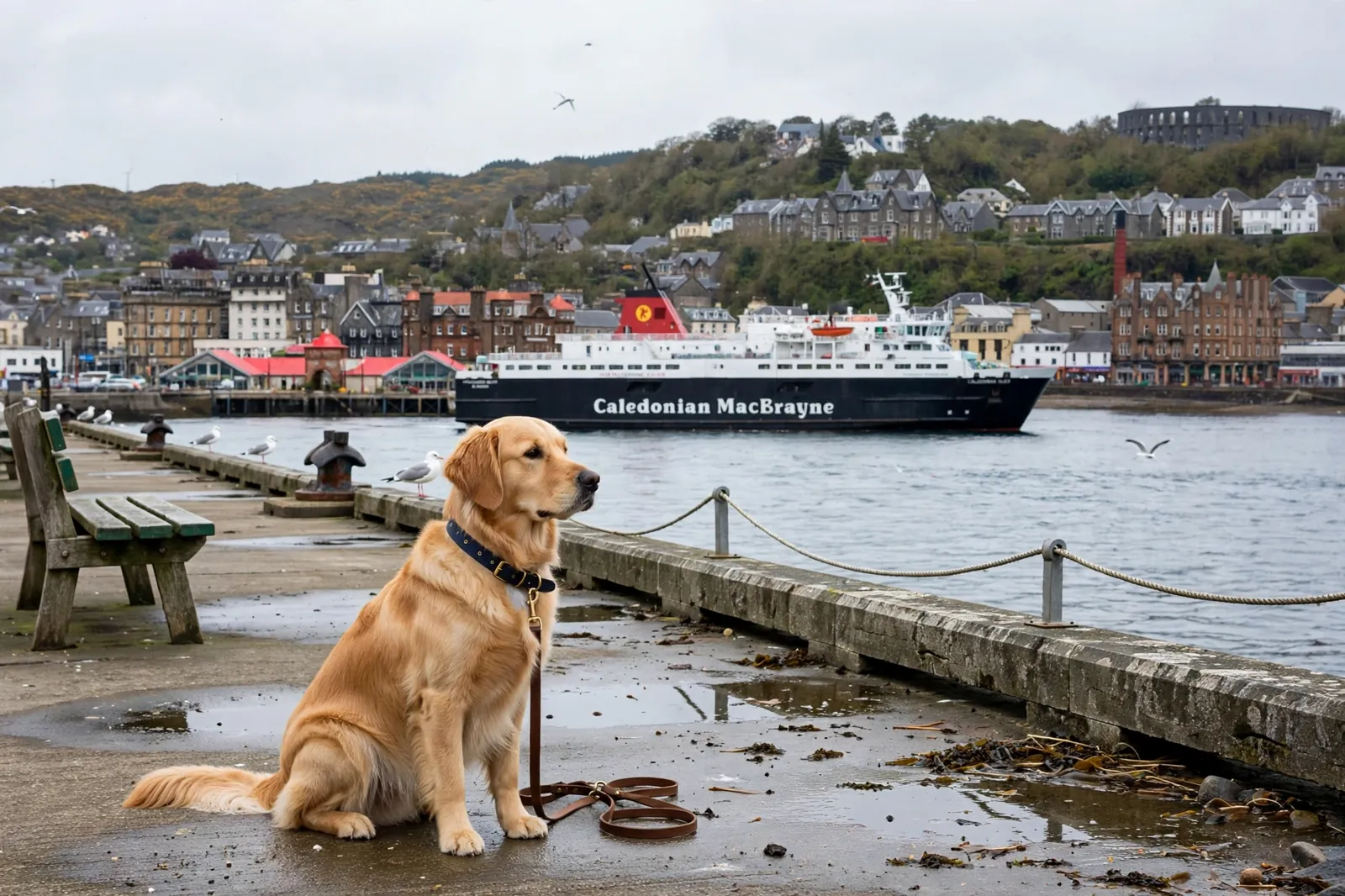
Most Scottish harbour towns reward wandering. Oban rewards a timetable. It is the main ferry hub for the southern Hebrides, with Caledonian MacBrayne — CalMac — sailings linking the town to Mull, Lismore, Coll, Tiree, Barra, South Uist and Colonsay, among other routes, and that single fact should organise your whole stay. A walk that ends an hour after the last useful sailing, a lunch booked across town when check-in is closing, or a day trip planned without checking the return boat can unravel an otherwise easy holiday.
So plan in a different order from usual. First, decide whether Oban is your destination or your doorway. As a destination, it gives you a compact, walkable town, a proper beach a short distance north, a hilltop folly above the roofs and an island you can reach in minutes. As a doorway, it gives you early starts, vehicle queues and the need for a buffer night either side of a long crossing. Many dog owners try to make one night do both jobs, and that is where the stress creeps in.
Give the town two nights at minimum, three if you want Kerrera as well as an onward island. That spacing lets you absorb a delayed sailing without losing a prepaid night elsewhere, gives the dog a familiar base between crossings, and leaves one flexible day for weather. Oban in rain is still workable — the esplanade, cafes and short town walks hold up — but a beach day and an island day both deserve the better forecast, and you can only swap them around if your itinerary has slack.
Finally, remember that ferry travel with a dog is a distinct skill from ferry travel without one. Toilet timing, water, motion, noise on vehicle decks and long waits in marshalling lanes all need thought in advance. Our wider guide to dogs on UK ferries covers operator rules and crossing routines across the country, and it is worth reading alongside the Oban-specific detail below before a first Hebridean trip.
CalMac with a dog, explained plainly
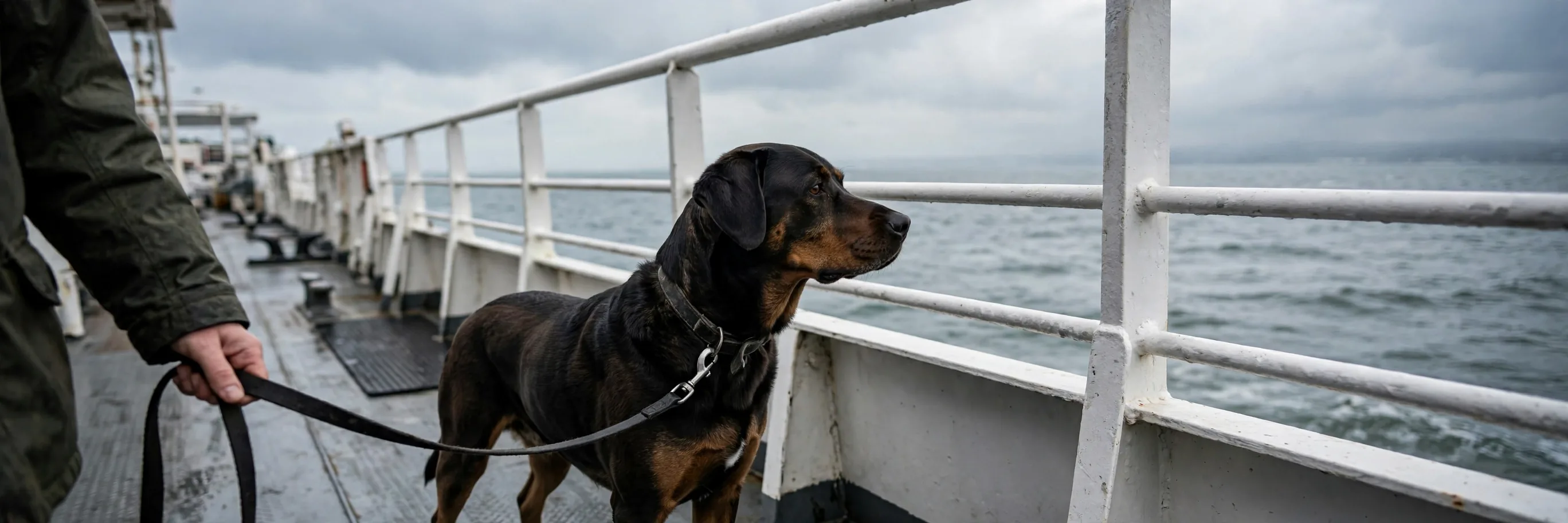
CalMac welcomes dogs on its network, but there is no single onboard experience to memorise, because the fleet ranges from large vessels serving Mull to much smaller ferries on short or remote routes. On larger ships you can generally expect a designated pet area — typically a defined lounge or section where dogs stay on a short lead on the floor, not on seats. On some sailings and smaller vessels, dogs may instead travel in your vehicle and remain there for the crossing, with no access to the car deck once the ship is under way. Which arrangement applies depends on the ship and the route, not on your preference.
That distinction changes what you pack in the cabin bag. If your dog will sit with you in a pet area, bring water and a portable bowl, a familiar mat or blanket that smells of home, poo bags for the terminal and any outdoor areas, and something calm to chew if your dog settles that way. Keep the lead short, let the dog sit or lie on the floor, and position yourselves away from the busiest doorways and the food service queue where paws, trays and hot drinks create unnecessary friction. If your dog will stay in the car, the preparation happens before boarding: a proper toilet stop, ventilation thought through for the weather, water available as your vet advises, bedding arranged so the dog can brace gently, and nothing loose that could slide.
Booking detail matters. Pet carriage arrangements, any charge or free carriage, the need to declare the dog at booking or check-in, and the capacity of pet areas can all change, and popular summer sailings fill up. Do not rely on a forum post from two seasons ago. Follow the booking instructions for your exact sailing, declare the dog exactly as asked, and check the latest official guidance before you travel. Assistance dogs are treated differently from pet dogs and are welcome more widely on board; if you travel with an assistance dog, confirm the arrangements for your vessel in advance so boarding is smooth.
Behaviour expectations are common sense but worth stating. Dogs should be under control in terminals and pet areas, kept off seats, and taken to relieve themselves before boarding rather than expected to wait through a long crossing plus a queue. If your dog is anxious around strangers, chooses the quietest corner, boards when the area is least crowded where staff allow it, and gets a mat that defines their space. If your dog is boisterously friendly, the same corner strategy protects other passengers — a ferry pet area is shared space, and a calm crossing is a collective effort.
Terminal and arrival logistics
Oban ferry terminal sits by the harbour in the centre of town, close to the railway station, which makes arriving without a car more realistic here than in many ferry ports. Drivers should still treat check-in deadlines as hard edges. Vehicle check-in closes well before sailing, queues form in marshalling lanes where engines, reversing signals and other dogs are all close together, and foot passengers with dogs need to be through the terminal in good time too. Check your booking for the exact latest check-in time for your sailing and work backwards from there, adding a toilet stop and a buffer for town traffic.
Build the pre-boarding walk into that backwards plan. A dog that has had twenty minutes of sniffing along the harbour, a drink and a toilet break boards calmer than one lifted straight from a two-hour drive into a queue. The area immediately around a busy terminal is not an off-lead place — use a short lead, watch for luggage wheels and coach movements, and find grass or a quieter street a few minutes away rather than using the busiest pavement as your dog's only option. In summer, marshalling lanes can be hot and exposed; shade and water matter even in Scotland, and a dog should never be left in a hot vehicle while you go into the terminal to sort paperwork if it can possibly be avoided.
Arriving into Oban follows the reverse logic. After a crossing, resist the urge to drive straight on for another two hours. Let the dog out promptly once you are clear of the port, offer water, take a short leg-stretch along the esplanade, and only then decide whether the onward drive is sensible. If you are staying in town, many properties are within walking distance of the harbour, but Oban is built into a hill: a short distance on the map can mean a steep street with luggage and a tired dog. Check the actual approach to your accommodation, where you can unload, and where the nearest practical evening toilet walk is — a harbour-front flat and a guest house high above town are very different arrivals.
Rail travellers get a compact arrival: station, harbour and town centre all close together. Keep the dog close on platforms and in the station area, carry water for the train journey, and plan the walk from station to accommodation as carefully as drivers plan parking. However you arrive, the first hour sets the tone — unhurried, watered, walked and fed in that order usually beats a grand tour of the town with a dog that simply needs the basics.
McCaig's Tower: the short, steep reward
Above the town stands the granite silhouette everyone photographs: McCaig's Tower, the unfinished colosseum-like folly commissioned by banker John Stuart McCaig in the late nineteenth century, intended in part to provide work for local stonemasons and to serve as a monument to his family. Whatever its origins, for a dog owner its value is simpler — it is the best short viewpoint walk in town, with gardens inside the circular walls and a panorama back across the harbour to Kerrera and beyond towards Mull on a clear day.
Short does not mean flat. The routes up from the town centre involve steep streets and, depending on the approach, steps, and the climb will test older dogs, very young puppies and anyone managing a pram alongside a lead. Take it slowly, pause on the way up — the views reward pauses anyway — and carry water even though the walk is brief, because steep plus a sunny day plus an excited dog adds up. Once inside, keep your dog on a lead and under close control: the gardens are shared with picnickers, children and other dogs, the walls and drops are not places for exploring paws, and not every visitor wants a greeting. It is a viewpoint and a garden, not a dog run.
Timing improves the experience considerably. Early morning and later evening are quieter than the middle of a cruise-visit day, and the light across the bay is usually better at the ends of the day too. In wet weather the paths and steps can be slippery, so footwear with grip matters as much as the dog's confidence. If your dog struggles with steps entirely, be honest about it and swap this walk for the level esplanade instead — Oban gives you the same harbour views from sea level, and a holiday should not hinge on one climb.
Combine the tower with a town loop rather than treating it as an isolated tick-box. Walk up, enjoy the gardens, come down a different street if your dog manages one-way systems on hillsides better, and finish with a level stretch along the harbour to loosen legs after the descent. Downhill on a lead is its own skill for strong pullers; a harness that fits well and a pace you control will keep both of you steadier than a collar and optimism.
The esplanade and Dunollie: the everyday walk
If McCaig's Tower is the postcard and Ganavan is the outing, the esplanade is the routine — and routines are what dogs on holiday actually live by. The Corran Esplanade curves along the northern side of the harbour, a level promenade with benches, views to Kerrera and a steady parade of ferries, fishing boats and kayaks to watch. It is ideal for first walks, last walks, older dogs, wet-day leg stretches and the important half-hour before a sailing, because it is close to everything and asks nothing of knees or paws.
Keep leads short and expectations realistic. This is a shared promenade with joggers, mobility scooters, prams, cyclists nearby and other dogs every few metres in season, plus gulls that regard chips as a public resource. Teach a settle on a bench if your dog can manage it — Oban harbour life is excellent training material — and do not let your dog mug strangers for seafood. The working harbour edges demand respect: keep dogs back from quay edges, fishing gear, stacked creels and vehicles moving around the piers.
Halfway along the northern shore, Dunollie Castle and its grounds give the esplanade walk a destination. The castle, historic home of the MacDougalls, operates as a small museum and attraction with grounds; dog access to grounds and any indoor areas follows the attraction's own current policy, so check the latest official guidance before you travel and be ready for grounds-only access or seasonal closure. Even without going in, the wooded shore around Dunollie breaks the promenade nicely and adds shade on a bright day.
Use the esplanade strategically across the day. A dog walked well here in the morning, watered and settled while you explore the town's shops — many of which will not admit dogs, so plan who stays with the dog rather than tying them outside — and walked again before dinner is a dog that copes with a restaurant terrace, a guest house lounge or an early night before a dawn sailing. Bored, under-walked dogs write the bad reviews of otherwise good trips.
Kerrera: the island day trip that needs no big ferry
Look across the harbour and you are looking at Kerrera, the island that shelters Oban from the open sea. Reaching it involves no CalMac booking at all: a small passenger ferry runs from Gallanach, about two miles south of the town, across a narrow sound in a few minutes. Dogs are carried on this little crossing, and once across, the island offers a car-light landscape of tracks, farms and shore that feels remarkably removed for somewhere you can see from your breakfast table. Sailing times, capacity and the crossing point arrangements can change, so check the latest official guidance before you travel and aim for an earlier outbound boat than you think you need.
The classic Kerrera walk heads south from the ferry slip towards the island's tea garden and on to Gylen Castle, the small sixteenth-century castle perched above the shore at the southern end. It is a substantial walk there and back on island tracks — allow a full, unhurried day with stops, not a squeezed couple of hours between other plans. Distances feel longer on tracks with gates, livestock and photo stops, and your dog's water needs planning because opportunities to refill are limited; carry water for the dog as well as yourselves from the start.
Livestock is the governing rule of the island. Kerrera is a working farming landscape with sheep, cattle and other animals, plus ground-nesting birds in season. Keep your dog on a lead or under genuinely close control as signage and common sense dictate, close every gate behind you, give animals a wide berth, and if cattle approach, stay calm, keep the dog close and be prepared to let go of the lead if you are ever charged — standard countryside safety advice that matters more on an island with one small ferry home. Our guide to the neighbouring island gives a flavour of this style of day: see the Isle of Mull with a dog for how ferry-first planning works on the bigger crossing, then scale the same discipline down for Kerrera.
Facilities on Kerrera are part of its charm and its challenge. The tea garden near the southern route is seasonal and not guaranteed on any given day, toilets and shelter are limited, and weather can turn a pleasant track walk into a wet wait for the return boat. Pack food, water, a dog towel, a spare lead and warm layers, and know the time of the last ferry back before you set off — missing it is not a minor inconvenience on an island with very limited accommodation. Dogs that cope with Kerrera cope with most of island Scotland; it is a gentle, honest test of your systems.
Eating in a seafood town with a dog
Oban calls itself a seafood capital, and the harbour is lined with places serving what the boats land — restaurants, cafes, pubs and famous takeaway stalls and huts near the piers. With a dog, your realistic options arrange themselves in tiers. At the most flexible end are takeaways: buy fish and chips or a seafood platter to go, and eat on the esplanade or harbour benches with the dog settled at your feet and the ferries as entertainment. Next come pub bars and cafe terraces, where many businesses welcome dogs in defined areas, often with water bowls provided. Formal dining rooms are the least likely tier, and some will be people-only without exception.
Policies live at the level of the individual business and the individual room within it. The same pub may welcome dogs in the bar but not the restaurant, on the terrace in summer but not inside in a wet February, or with a limit on numbers at busy times. Ask before you sit down, specify that the dog will stay on the floor under or beside your table, and keep that promise precisely — a dog on a lead that does not trip waiting staff, beg at neighbouring tables or shake harbour water over other diners is an ambassador for the next dog owner. A mat or blanket gives your dog a defined place and protects floors from wet paws; a long-lasting chew can buy you a peaceful main course.
Seafood itself needs a little care around dogs. Cooked fish in small amounts is one thing, but rich sauces, bones, shells and discarded scraps around harbour seating are hazards — mussel and crab shells, fish bones and the gulls that patrol for all three. Keep your dog from scavenging under tables and around bins, never feed shellfish shells or cooked bones, and be alert after meals on the esplanade, where dropped food concentrates. If your dog has a sensitive stomach, keep their normal food as the base of the trip and treat your seafood feast as your own; a dog with an upset stomach in a guest house or a ferry pet area is miserable for everyone.
Book ahead in season, and say the dog is coming when you book. Oban fills up in summer and on sailing-linked weekends, and a table secured without mentioning the dog can evaporate on arrival if the only free tables are in a dog-free room. Early sittings are easier with dogs than the packed middle of service, and a well-walked, toileted, recently watered dog settles under a table far better than one brought straight from a car journey. Hungry owners and restless dogs make poor decisions; walk first, eat second.
Where to stay: choosing your base
Oban's accommodation spreads from harbour-front hotels and apartments through guest houses climbing the hill to self-catering on the edges of town and campsites and holiday parks further out. For a dog owner, the right choice is rarely the prettiest photograph; it is the place where the 11pm toilet walk, the muddy return from Ganavan and the early sailing start are all easy. Rank those practicalities above a sea view you will mostly see in daylight when you are out anyway.
Town-centre stays win on ferry logistics. You can walk to the terminal, the esplanade does your morning and evening walks without a car, and eating options surround you. The trade-offs are parking — confirm it in writing, including whether it is on site or a walk away — noise on busy harbour nights, and stairs in older buildings without lifts, which matter for older dogs and heavy luggage. Ask the specific dog questions before paying: how many dogs, any size or breed conditions, a per-dog or per-stay charge, which rooms or floors dogs actually occupy, whether dogs may be left alone in the room even briefly, and whether there is any garden or yard at all, or whether every toilet trip means the street.
Stays on the hill and edges of town trade a little convenience for calmer nights, easier parking and often more space, at the cost of a steep walk home after dinner and a drive or longer walk to an early sailing. Self-catering suits many dog owners best of all: a door you control, floors that forgive sand, a kitchen for normal feeding routines and no breakfast-room negotiations. Check the garden claim carefully — enclosed, shared and merely present are three different things — and ask about the distance to the first sensible walk, because a beautiful rural let two miles up a lane without verges can make every toilet trip a car journey.
Wherever you choose, set up the dog's corner on arrival: bed or blanket from home, water bowl in a consistent place, food stored away from harbour-day temptations, and the lead, towel and poo bags stationed by the door. Walk the immediate surroundings together in daylight so the after-dark route is familiar, and identify the nearest vet practice and its out-of-hours arrangement before you need it — save the number in your phone alongside the ferry booking. A base that works at 7am and 11pm works for the whole holiday. Travelling on northwards afterwards? Pair this stay with Fort William with a dog for the next natural stop up the coast road.
A calm ferry-day routine, hour by hour
Onward island days — Mull above all, but also the longer sailings to the Outer Hebrides or the smaller islands — go best when they follow a routine rather than a scramble. The evening before, check the sailing status and any disruption updates from the operator, lay out the cabin bag for the dog, charge phones, and walk the dog well so the night is settled. Set the alarm for the check-in time minus the drive, the toilet walk and a genuine buffer, not minus optimism.
On the morning itself, feed sensibly. Many owners give a slightly earlier, normal meal rather than a huge breakfast immediately before a crossing, and fresh water stays available until boarding. Walk the esplanade or the streets near your stay for a proper toilet opportunity — nerves make dogs need a second chance ten minutes later, so build in two. At the terminal, follow staff directions exactly, keep the dog in the vehicle or with you as instructed during marshalling, and have the booking details and any dog declaration ready before you reach the front of the queue.
On board, settle once and stay settled. Choose the quietest suitable spot in the pet area if you are using one, put the mat down, water the dog after the first part of the crossing once movement feels normal, and take any permitted deck or relief opportunities only where the crew and signage allow them — never open vehicle-deck or restricted doors on assumption. If your dog stays in the car, use the time to rest yourself; checking is not possible on most crossings once under way, which is precisely why the pre-boarding preparation matters. Seas are usually kinder on the short Mull run than on long open-water crossings, but a dog prone to travel sickness deserves a vet conversation before a Barra-length sailing, not during one.
On arrival at the island side, reverse the routine promptly: out of the terminal area, water, a short walk, and a pause before the next drive. Island roads are often single-track and slower than the map suggests, and a dog that has just crossed needs a break as much as the driver needs a coffee. Keep the first island walk modest, find your base, and let the exploring start properly the next morning, when everyone has slept in the place they will wake up in.
Weather, tides and packing for the west coast
Argyll weather writes its own itinerary. Oban can deliver four seasons between breakfast and the afternoon sailing, and the sea that makes the views also makes the wind. Pack for the dog with the same seriousness as for yourself: a drying coat or towel that lives by the door, a spare lead and collar in case one is soaked or lost, familiar food for the whole trip plus a buffer day in case a sailing disruption strands you happily for an extra night, and any medication counted out with spares. West coast midges are a real presence in still, damp conditions from late spring into early autumn, mostly at dawn and dusk and mostly away from the breezy shore; a harbour-front walk in a breeze is a better evening plan than a sheltered inland thicket on a muggy night.
Footing and paws deserve a mention. Harbour surfaces, wet granite, seaweed-slick shore rocks and hot tarmac on the rare scorching day each carry their own risks. Rinse salt and sand from paws after beach sessions, check between toes for small stones and shell fragments after Ganavan, and keep dogs off slippery harbour edges and pier ladders entirely. Lifejackets for dogs are worth considering for boat trips, kayak outings and dogs that swim out of their depth in tidal water; harbour water is working water, with boats manoeuvring and limited exit points for a swimming dog.
Tide and daylight planning tie the whole guide together. Ganavan at low tide, Kerrera with a known last boat, a tower climb in clear evening light, a sailing at an hour that means a dark start in winter — write these fixed points into a simple shared plan for your group so that one person is not carrying the whole timetable in their head while also holding a lead, a coffee and a boarding card. And when the weather closes in completely, Oban still works: short esplanade circuits between showers, a long cafe lunch where dogs are welcome, the museum and shops in relays while one of you walks the dog, and an early night before a better forecast. A west coast holiday is not ruined by rain; it is only ruined by having no plan for it.
Practical questions
Before you go
Are dogs allowed on CalMac ferries from Oban?
Yes, dogs travel on CalMac services from Oban, but the onboard arrangements depend on the vessel. Larger ships usually have a designated pet area where dogs stay on a lead, while on some routes dogs may need to remain in your vehicle for the crossing. Pet tickets, capacity and the exact area vary by sailing, so check the latest official guidance before you travel and book the dog in as directed rather than simply turning up.
Can I take my dog on the ferry to Kerrera?
Yes. The short passenger ferry to Kerrera from Gallanach, just south of Oban, carries dogs, and the island is well suited to a lead walk to the tea garden and castle end of the island. There are livestock and free-roaming animals on Kerrera, so keep your dog under close control, close gates and allow a full day rather than rushing the return sailing.
Are dogs allowed on Ganavan Sands all year round?
Ganavan Sands is used by dog walkers throughout the year, but local restrictions, seasonal signage and byelaws can change, and parts of a beach can be managed differently in the busiest months. Read the signs at the car park and beach entrance on the day, keep dogs away from swimmers and picnics, and check the latest official guidance before you travel if a restriction would change your plans.
Is the McCaig's Tower walk suitable for older dogs?
The tower itself sits above the town and the direct routes up are short but steep, with steps and sloping streets. A fit older dog that manages hills at home will usually cope if you go slowly and rest, but it is not a step-free stroll. Choose the gentler road route where possible, avoid the climb in hot weather, and let the dog set the pace rather than aiming for a time.
Where can I eat in Oban with my dog?
You will usually have the best luck with cafe terraces, pub bars and harbour-side takeaway seafood eaten outdoors on the esplanade, rather than formal dining rooms. Policies differ between the bar, terrace and restaurant areas of the same business and can change seasonally, so ask which area welcomes dogs before you sit down, and keep a towel and water bowl handy for wet days.