This guide is independent and contains no paid placement. If affiliate links are added later, they will be clearly marked and will not change our editorial checks.
Otley works best as a walking break: climb the Chevin for the valley panorama, drop to the River Wharfe for flat riverside miles, then finish in a market town with pubs, shops and a proper sense of place. Plan the ridge for the morning, the river for the afternoon, and check dog rules at each stop before you travel.
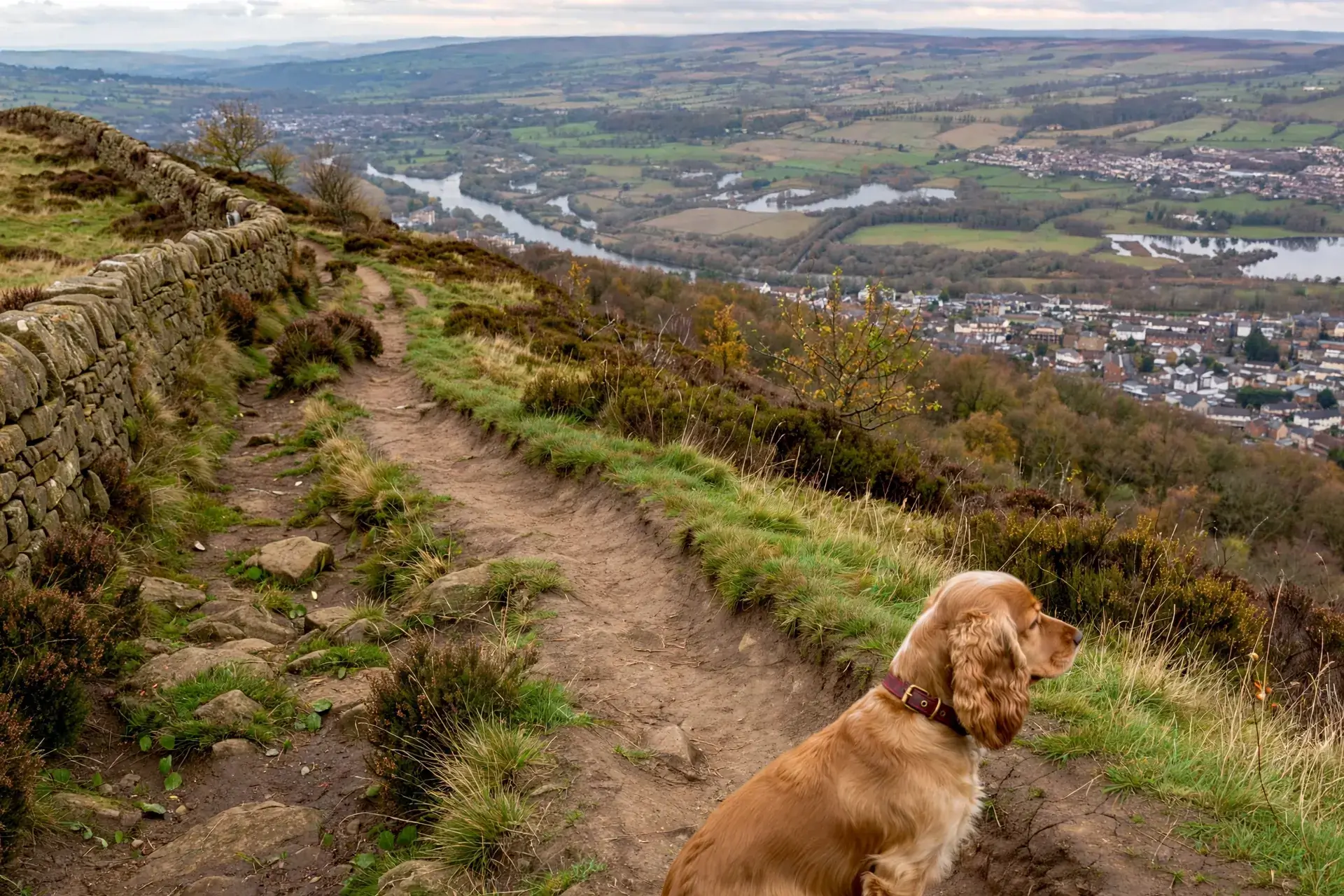
Stand on the Chevin on a clear morning and Otley suddenly makes sense. The ridge runs along the south side of the town like a long green wall, and from its top path the whole Wharfe valley opens out below: the river winding between fields, the town tucked against the hillside, dry stone walls stepping down the slope, and the moorland edge of the Dales fading into the distance. It is the kind of view that makes a dog walk feel like a proper outing rather than a loop round the block, and it is the single best reason to bring a dog to Otley. Dogs notice it too, in their own way: the wind carries smells from miles away, the open ground invites a good run, and the woodland edges on the lower slopes are thick with scent.
What makes Otley unusual is how little separates that ridge from ordinary town life. You can be on the Chevin within twenty minutes of leaving the Market Place, and back down by the river an hour later, with a pub lunch in between. The town sits on the River Wharfe in West Yorkshire, roughly between Leeds to the south-east and Ilkley to the west, and it has kept the shape of a working market town: narrow streets, independent shops, a market square, and pubs that have served walkers for generations. This guide works from the top down, exactly as a good day here unfolds. Start on the ridge, follow the river, wander the town, and use Otley as a base for the wider valley when you want more.
The Chevin ridge walk and viewpoints
The Chevin is the walk to do first, and the one to plan most carefully. The ridge rises steeply above the town, and the main paths climb through woodland before breaking out onto open grass and rock along the top. The classic route starts from the town side, climbs through the trees, and then follows the ridge path east and west along the crest, with views opening on both sides. The best-known viewpoint is Surprise View, where the panorama over the Wharfe valley suddenly appears through a gap in the trees, and on a clear day you can pick out the river, the town roofs, and the hills beyond. Take your time here: the viewpoint rewards a slow stop, a drink of water for the dog, and a look at the map before you choose which way to walk along the ridge.
The ground underfoot changes a lot in a short distance, so choose footwear and a lead to match. The woodland paths on the lower slopes can be muddy and rooty after rain, while the top path is drier and rockier, with exposed gritstone outcrops that are hard on paws after a long hot spell. A long line gives an energetic dog room to explore without risking a sudden drop or a dash towards a cyclist, and a harness with a handle helps on the steeper steps. In summer, carry more water than you think you need: there is little shade on the open crest, and the wind that cools you on the ridge can mask how warm a thick-coated dog is getting. In winter the same exposure works the other way, with wind chill biting hard on the top path, so a drying coat and a warm layer for the dog are worth packing.
Other walkers, runners, cyclists and horse riders all use the Chevin, so recall and lead manners matter more here than on a quiet field walk. Keep your dog close on narrow woodland stretches and at path junctions, and be ready to step aside on the wider ridge path. Livestock graze in parts of the surrounding farmland, so check the official guidance before you travel for current access and grazing information, and keep dogs on a lead wherever livestock are present or signed. The Danefield Estate side of the Chevin, to the east, offers quieter woodland paths and a different feel from the busy viewpoint end, and it makes a good second walk if the main ridge is crowded on a weekend. However you plan it, treat the Chevin as a half-day outing rather than a quick leg-stretch: the climb, the views and the descent all deserve unhurried time.
- Surprise View: the classic panorama over the Wharfe valley; arrive early on weekends to enjoy it without a crowd.
- Ridge path: open, breezy and dry underfoot in fair weather; keep dogs close where the path runs near drops or walls.
- Danefield Estate: quieter woodland on the eastern side, good for a calmer second walk with plenty of shade.
- Descent routes: several paths drop back into town or towards the river; check your route before you start, as some are steep and uneven.
If your dog is older, very small, or unsure on steep ground, do not let the Chevin put you off Otley. Drive to one of the higher parking areas near the ridge, walk the flatter top path for a short stretch, and enjoy the view without the climb. The panorama is just as good from a gentle ten-minute stroll as it is after a hard ascent, and a dog that arrives fresh will enjoy the ridge far more than one that is already tired from the climb. Check the official guidance before you travel for current parking and access information, because car park locations and any charges can change.
The River Wharfe riverside paths
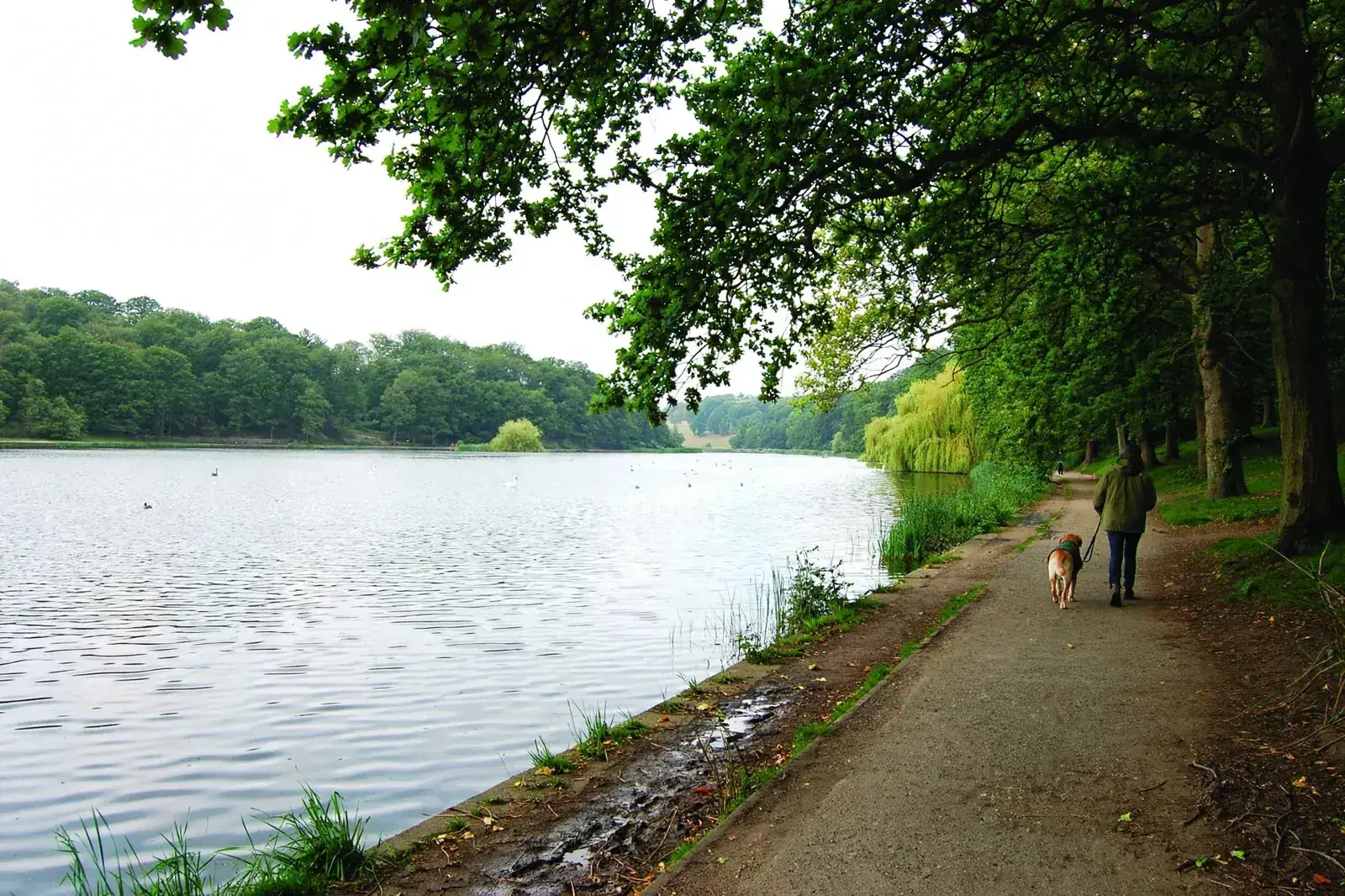
Down in the valley, the River Wharfe gives Otley its second great walk, and it is the opposite of the Chevin in almost every way. Where the ridge is steep, exposed and panoramic, the riverside is flat, sheltered and close-up: kingfishers and herons if you are lucky, the sound of water over stone, meadows and trees, and a path that lets a dog settle into a steady, sniffing rhythm. The riverside paths run along the Wharfe through and around the town, and they make an ideal afternoon walk after a morning on the ridge, or a gentle first walk on arrival day when the dog is still stiff from the car. Most dogs prefer the river walk to the ridge walk, if only because the ground is kinder and the smells are closer.
The best way to use the river is to treat it as a series of short out-and-back walks rather than one long commitment. Start near the town centre, follow the path downstream or upstream for twenty or thirty minutes, and turn back when the dog tells you to. The banks vary: some stretches are firm and grassy, others are muddy after rain, and some have steeper drops to the water. Keep your dog on a lead near roads, bridges and any stretch where the bank falls away, and only let them paddle where the water is slow, shallow and clear. The Wharfe is a living river, not a swimming pool: depth and current change with rainfall upstream, and after heavy rain the river can run fast and high even when the sky over Otley is clear. Never let a dog swim where you cannot see the bottom, and never throw a ball or stick into moving water.
Water safety deserves a paragraph of its own, because river walks tempt dogs into trouble. Blue-green algae can appear in slow, warm water in summer, and floodwater after storms can carry debris and bacteria. If the water looks green, scummy or unusually cloudy, keep your dog out and rinse them off if they have already been in. Watch for fishing hooks and discarded line near popular fishing spots, and check paws after a riverside walk for cuts from sharp stones or glass. A towel and a bottle of clean water in the car turn a wet, muddy dog into a manageable one, and a drying coat earns its keep on the drive home. Check the official guidance before you travel for current advice on river conditions and water quality, especially after wet weather.
The riverside also connects Otley to its neighbours on foot, which is part of its charm. Longer walks follow the Wharfe towards Pool-in-Wharfedale in one direction and towards Ilkley in the other, and these valley walks are among the most rewarding dog walks in the area. They are not, however, walks to improvise: check the route, the distance, the return transport and the river conditions before you set out, and carry a phone, water and a lead. A dog that has walked five miles along a riverbank needs a lift or a bus back, not a second five miles in the other direction.
The market town centre, streets and shops
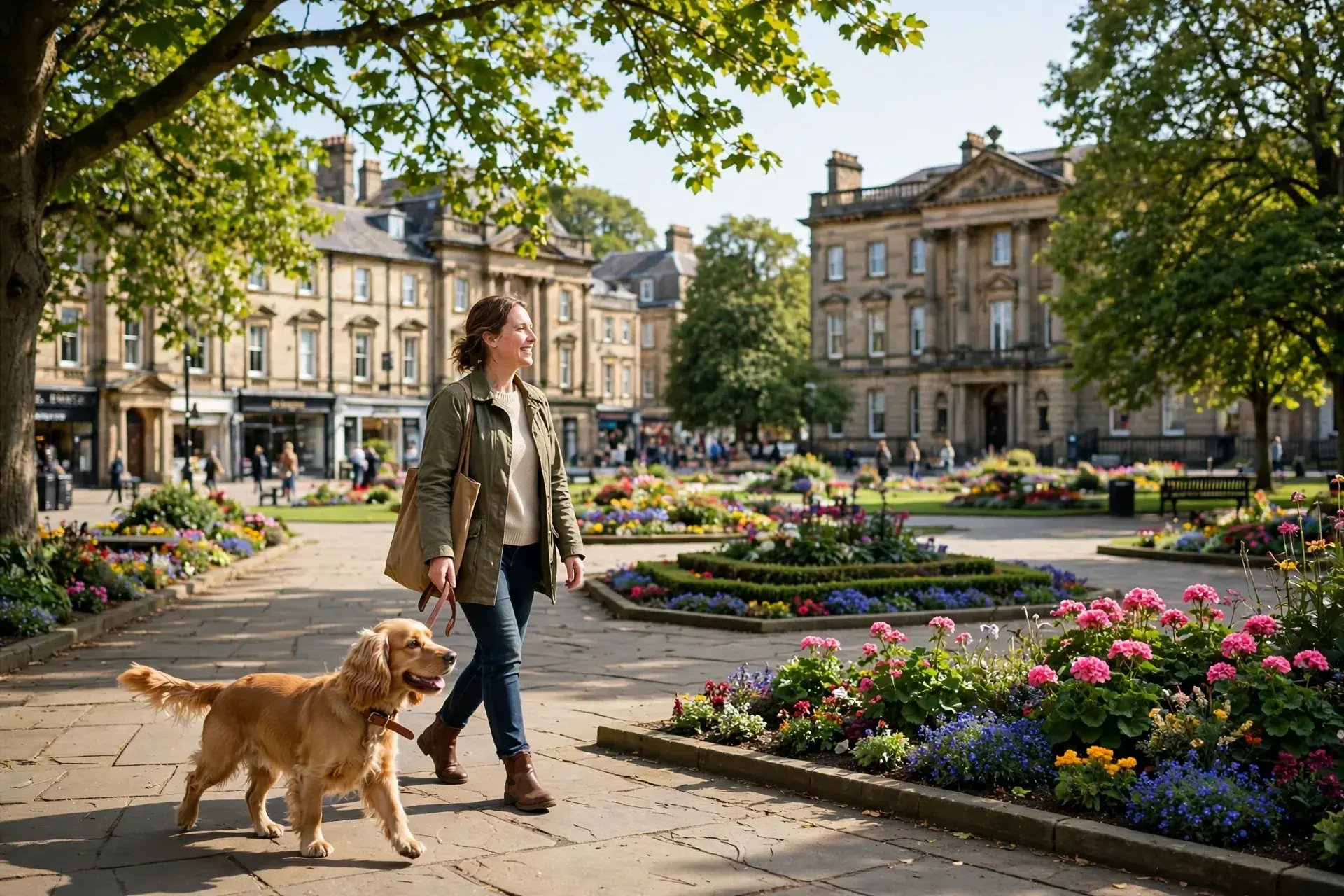
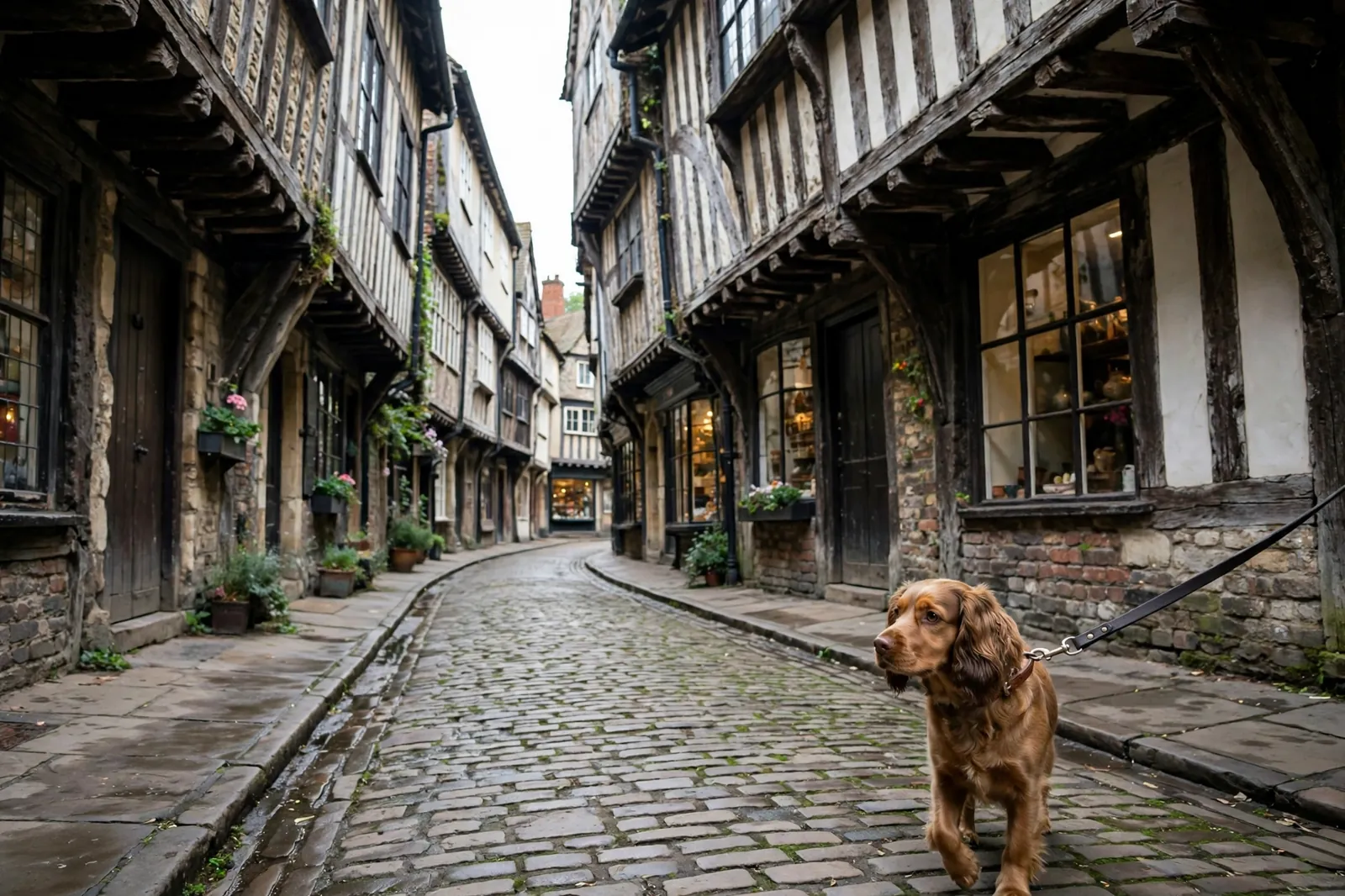
Otley town centre rewards a slow wander, and it is the part of the trip where the dog becomes a companion rather than a walking partner. The Market Place is the heart of the town, surrounded by handsome stone buildings, and the streets that run off it — Kirkgate, Boroughgate, Bondgate and the lanes between them — are full of independent shops, butchers, bakers, cafes and the kind of small businesses that have served the town for years. Market days bring stalls, colour and noise, and they are worth timing a visit around if your dog is comfortable in crowds. If your dog is not, come early, before the stalls are fully set up, or late in the afternoon when the crowds thin.
Walking a dog through a market town takes a different set of manners from a country walk. Pavements are narrow in places, shop doorways open straight onto the street, and other dogs, children and delivery vans all share the same space. A short lead, a dog that walks close to your side, and a habit of pausing in doorways to let people pass will make the whole experience calmer for everyone. Many shops welcome well-behaved dogs inside, and some keep a water bowl by the door or a biscuit jar on the counter, but never assume: ask before you step in, and be ready to wait outside if the answer is no. A dog that can settle on a mat outside a cafe while you order is worth more than any amount of off-lead freedom on a crowded street.
The town centre is also where Otley shows its character as a place that people actually live in, rather than a resort built for visitors. You will see schoolchildren, farmers, commuters and pensioners going about their day, and the town has a friendly, unhurried feel that suits dogs well. Take the time to explore the side streets and the churchyard, where the pace drops and the dog can sniff properly, and look up at the stonework and the shopfronts as you go. If you are staying for more than a day, the town centre becomes your base camp: the place to buy supplies, fill water bottles, pick up treats, and ask local people about the best current walking conditions. A quick chat with a shopkeeper or a fellow dog walker often tells you more about muddy paths and closed gates than any website can.
Practical shopping for a dog break is easy in Otley. The town has supermarkets and pet supplies within a short walk or drive, so you do not need to pack everything from home. Stock up on poo bags, treats and a spare lead, and buy a local map if you plan longer walks: phone signal can be patchy on the ridge and in the valley, and a paper map does not run out of battery. Keep the town centre walk short on the first day, especially if your dog is young or nervous, and build up to a longer browse once you know how they cope with crowds, traffic and shop doorways.
Pubs, cafes and food stops
Otley is a good town for hungry walkers with dogs, and its pubs and cafes are one of the best reasons to finish a walk in town rather than driving straight home. The town has a long pub tradition, with several pubs around the Market Place and along the main streets, and many of them welcome dogs in at least part of the building — usually the bar, a snug, or the terrace in good weather. A dog-friendly pub in Otley is not a novelty or a marketing gimmick; it is simply how pubs here have always worked for walkers coming off the Chevin or the river. Even so, policies differ from pub to pub, and they can change with a new landlord or a refurbishment, so check the official guidance before you travel, or phone ahead if the dog matters to your plans.
The etiquette for taking a dog into a pub or cafe is simple, but it is worth stating plainly. Bring a mat or blanket for the dog to lie on, a water bowl if the pub does not provide one, and enough treats to keep a young dog settled while food arrives. Choose a table in a corner or by the door where the dog is out of the way of staff carrying trays, and keep the lead short and under your foot. Order at the bar if that is the house style, and do not let the dog wander between tables or beg from neighbours. A dog that can lie quietly for an hour while you eat is a dog that will be welcome again; a dog that barks at every arrival or steals food from the next table will not be, however friendly it is at home.
Cafes are often the better bet for breakfast or a mid-morning stop, especially on a wet day when the dog needs to dry off before you sit down. Look for cafes with a tiled or wooden floor, a corner table, and a water bowl by the door — these are the small signs that dogs are genuinely welcome rather than merely tolerated. In summer, terraces and beer gardens are the obvious choice, but remember that a dog in full sun on a hot pavement needs shade and water just as much as you do. Takeaway food is a useful fallback on the busiest days: buy lunch, find a bench by the river or a grassy spot near the Market Place, and eat with the dog beside you. It is often the most relaxing meal of the trip.
Planning food stops around your walks saves a lot of standing around with a hungry dog. If you are climbing the Chevin in the morning, plan a pub or cafe lunch in town afterwards, when the dog is tired and ready to settle. If you are walking the river in the afternoon, a late lunch or an early dinner works well, with a shorter evening walk to finish the day. Always carry a few treats and a collapsible water bowl, even if you plan to eat indoors: a thirsty dog in a warm pub is a restless dog, and a bowl of water on arrival settles most dogs faster than anything else. And if a place you had your heart set on turns out not to welcome dogs, do not argue: thank them, move on, and enjoy the next place instead.
Walks toward Ilkley, the Dales and the valley
Otley sits at a useful crossroads for longer walks, and it makes a good base for exploring the Wharfe valley in both directions. To the west, the valley leads towards Ilkley, with its moor, its riverside paths and its own dog-friendly town centre. The walk from Otley towards Ilkley along the river is a proper half-day outing: flat, scenic and full of interest, but long enough that you should plan the return leg before you start. Options include walking one way and catching a bus back, arranging a lift, or simply walking out for an hour and retracing your steps. Check the official guidance before you travel for current bus times and routes, because rural services can be infrequent, especially on Sundays.
To the east and south, the valley opens towards Pool-in-Wharfedale, Harewood and the outskirts of Leeds, with gentler walking and a different landscape of parkland, woodland and farmland. These lower walks suit older dogs and puppies better than the Chevin, and they are a good choice on a windy day when the ridge is too exposed. To the north, the hills rise towards the edge of the Yorkshire Dales, and the walking becomes wilder and more remote. Day trips into the Dales from Otley are entirely practical by car: drive to a Dales village, walk a valley or a moorland edge, and return to Otley for the evening. Our guide to Harrogate with a dog covers another spa town within easy reach, with Valley Gardens, the Stray and Pinewoods walks that pair well with a longer stay in the area.
Longer walks need a little more planning than a town stroll, and the planning is part of the pleasure. Check the route on a map the night before, note where the path crosses roads or farmland, and work out where water is available for the dog. Carry a lead even if you expect off-lead walking, because livestock, ground-nesting birds and other walkers can all appear without warning. In the Dales and on the moors above Ilkley, sheep and grouse are a real consideration: keep dogs on a lead or under very close control during the bird nesting season and whenever livestock are nearby, and check the official guidance before you travel for current access rules and seasonal restrictions. A dog that chases sheep can cause serious harm and can put its own life at risk, so this is not a rule to bend.
- Otley to Ilkley: a long, flat riverside walk west along the Wharfe; plan the bus or lift back before you set out.
- Otley to Pool-in-Wharfedale: a gentler valley walk east, good for older dogs and for windy days when the ridge is exposed.
- Ilkley Moor: a short drive west for open moorland walking, with wide views and plenty of space; keep dogs under control around sheep and ground-nesting birds.
- Yorkshire Dales day trips: drive north for valley and moorland walks, then return to Otley for the evening; start early and carry water, a map and a lead.
Multi-day stays work well from Otley because the walking changes every day. One day on the Chevin, one day along the river, one day towards Ilkley and one day in the Dales gives a dog four completely different walks without ever repeating a route. Vary the length as well as the landscape: a long hill day should be followed by a shorter, flatter day, especially for older dogs or dogs that are not used to daily walking. Watch for stiffness in the morning, sore paws after rocky ground, and tiredness that lasts into the next day — all signs to shorten the next walk. A good base is not just somewhere to sleep; it is somewhere that lets you choose the right walk for the dog you have that morning.
The courthouse, heritage and town history
Otley has more history than its size suggests, and the town centre is the best place to feel it. The Otley Courthouse, a handsome stone building in the town, now serves as an arts and community centre, hosting exhibitions, performances and events, and it is a useful landmark when you are finding your way around. Like many historic buildings, it is not a place to assume dogs can enter: check the official guidance before you travel for current access and dog rules, and enjoy the building from outside if dogs are not admitted. The courthouse is a reminder that Otley was once a place where the business of the district was done, and its stone facade and prominent position still give the town centre a sense of occasion.
The town's most famous son is Thomas Chippendale, the cabinet-maker and furniture designer, who was born in Otley in 1718. His name is still part of the town's identity, and you will find references to him in the town centre and in local history. Otley also has a long tradition as a market town and a centre for the surrounding farming district, and the Market Place, the parish church and the old streets around them still show that history in their layout. The churchyard is a peaceful place for a short, quiet walk with a dog on a lead, and the lanes around the church are among the oldest and most attractive parts of the town.
History in Otley is best enjoyed at walking pace, with the dog on a short lead and time to look up. Notice the stone buildings, the dates carved above doorways, the old shopfronts and the way the streets follow the slope down to the river. The town has grown and changed, but it has kept its market-town bones, and that is what makes it pleasant to walk through. If you want to learn more, the local library and the courthouse programme are good starting points, and a rainy afternoon is the perfect time to read up on the town while the dog dries off. Check the official guidance before you travel for opening times and dog policies at any indoor attraction you plan to visit, and have a riverside or Chevin walk as a backup if the dog cannot come in.
Events add another layer to Otley's calendar. The town hosts a show, a carnival and a calendar of markets and community events through the year, and the famous Chevin Chase fell race takes place on Boxing Day, drawing runners and spectators to the ridge. These events can make the town lively and fun, but they also bring crowds, noise and road closures, so check the official guidance before you travel if you are visiting on an event day. A noise-sensitive dog may prefer a quiet riverside walk while the town celebrates, and a sociable dog may enjoy the atmosphere — know your dog, and plan accordingly.
Parking, buses and arrival
Arriving in Otley with a dog is straightforward, but a little planning makes the first hour much easier. If you are driving, aim to arrive with a plan for where to park and where the first walk starts. Otley has town-centre car parks within a short walk of the Market Place and the riverside, and there is parking near the Chevin for ridge walks. Check the official guidance before you travel for current locations, charges, time limits and any vehicle restrictions, because car park arrangements can change. On a busy market day or a sunny weekend, town-centre car parks fill early, so an earlier arrival or a slightly longer walk from a quieter car park is often the calmer choice.
Once you have parked, give the dog a proper break before you do anything else. A short toilet walk, a drink of water and a few minutes to sniff the new surroundings will settle most dogs far better than being marched straight into a busy street. Keep the first walk short and close to the car, especially after a long drive, and save the Chevin climb for later in the day when the dog has loosened up. If you are arriving by bus, the town centre is compact and walkable, and the main bus stops are close to the Market Place and the riverside paths. Bus services connect Otley with Leeds, Ilkley and Harrogate, which makes a car-free break genuinely possible, but rural bus frequencies can be low, especially on Sundays and in the evening. Check the official guidance before you travel for current timetables, and have a backup plan — a taxi number, a shorter walk, or a pub lunch — if a bus does not turn up.
Otley has no railway station of its own, so most visitors arrive by car or bus, or by train to Leeds or Ilkley followed by a bus. If you are coming by train, check the official guidance before you travel for current connections and dog rules on trains and buses: dogs usually travel free on local buses and trains when they are well behaved and kept off seats, but rules vary by operator. Pack the car as if you were going to a trailhead rather than a town: a towel, a water bottle and bowl, poo bags, a spare lead, a drying coat and a blanket for the dog to lie on. The first thing a tired dog needs on arrival is water, a toilet stop and a quiet place to settle — give them that, and the rest of the day will go far better.
Leaving Otley deserves the same care as arriving. Give the dog a final riverside walk before the drive home, and check that you have everything: leads, bowls, coats, toys and any medication. A wet dog in a car on a long journey is miserable for everyone, so dry the dog properly and use a car seat cover or a crate if you have one. If the drive is long, plan a stop halfway where the dog can stretch its legs and have a drink. The best breaks end the way they begin — with a calm dog, a full water bowl and a walk that is long enough to be satisfying but short enough to leave energy for the journey home.
Where to stay
Otley and the surrounding Wharfe valley offer a good range of places to stay with a dog, from cottages and bed and breakfasts to hotels and self-catering accommodation in nearby villages. The best choice depends on your dog: a cottage with an enclosed garden suits a dog that needs a safe toilet area at night, while a hotel room with a ground-floor entrance suits an older dog that struggles with stairs. Self-catering is often the easiest option for dog owners, because you can cook, dry the dog and manage mud without worrying about a dining room. Whatever you book, confirm the dog policy in writing before you pay: how many dogs are allowed, whether there is a pet charge, whether dogs can be left alone in the room, and whether there is an enclosed outdoor area.
Location matters as much as the property itself. A stay on the edge of town, close to the Chevin or the river, gives you a walk from the front door and saves a car journey every morning. A stay in the town centre puts pubs, shops and cafes within easy reach, but it can be noisier at night and may mean a short walk to the nearest green space. A stay in a nearby village — Pool-in-Wharfedale, Burley-in-Wharfedale or one of the Dales-edge villages — can be quieter and closer to open countryside, but check how far you are from shops, vets and a pub. Our guide to Leeds with a dog is useful if you want to combine a city day with your Otley stay, with Roundhay Park and the canal walks offering a very different kind of dog day.
Booking ahead is essential in school holidays and on summer weekends, when the best dog-friendly cottages in the Wharfe valley are reserved months in advance. Shoulder-season stays in spring and autumn are easier to book and often cheaper, and they suit dogs better anyway, with cooler walking weather and quieter paths. When you arrive at your accommodation, do the same boring first-hour routine as at a holiday park: walk the boundary, check gates and fences, move cleaning products and any welcome food out of reach, and set up the dog's bed in a familiar spot. Photograph any existing damage and tell the owner straight away. A calm first evening sets the tone for the whole stay, and a dog that settles quickly on the first night will sleep better for the rest of the break.
Finally, be honest about your dog when you book. A host who knows you have a large, lively spaniel can put you in the right room or cottage; a host who discovers it on arrival may not be able to. Mention barking, chewing, shedding and any history of accidents, and ask what the host expects in return. Most dog-friendly hosts are dog owners themselves and will be reasonable if you are straightforward. Leave the place as you found it, strip the dog bedding, and leave a note if anything has been damaged. Good dog owners get invited back, and the Wharfe valley has some of the most welcoming hosts in Yorkshire for those who look after the place.
Vets and practical safety
Before you travel to Otley, save the details of the nearest veterinary practices and an out-of-hours emergency vet, and keep them in your phone. Otley has veterinary practices in the town, and there are further practices in Ilkley, Leeds and Harrogate, but opening hours and emergency cover vary, and a rural practice may direct you elsewhere at night. Check the official guidance before you travel for current practice details and emergency numbers, and do not rely on memory or on a search in a panic. If your dog is on medication, bring more than you need for the trip, keep it in its original packaging, and carry a copy of the prescription or the vet's contact details.
Day-to-day safety on Otley walks comes down to a handful of habits. Keep your dog on a lead near roads, livestock and the riverbank, and check the ground for hazards after wet weather: sharp stones on the Chevin, broken glass near car parks, and discarded fishing line by the river. Ticks are a real consideration in woodland and long grass from spring to autumn, so check your dog after every walk, especially around the ears, armpits and groin, and use a tick remover rather than pulling. Adders are rare but present on some moorland and heathland in the wider area, so keep dogs on paths and out of thick bracken in warm weather, and know the signs of a bite — swelling, pain and distress — and the route to the nearest vet.
Heat is the most underestimated risk on a walking break. The Chevin ridge has little shade, and a dog that runs hard in warm weather can overheat quickly, especially a brachycephalic breed, an overweight dog or a thick-coated dog. Walk early in the morning or late in the evening on hot days, carry water and offer it often, and never leave a dog in a parked car, even with the windows open. If a dog shows signs of heatstroke — heavy panting, drooling, wobbling or collapse — cool them with tepid water, move them into shade, and get to a vet immediately. Cold weather brings its own risks: icy paths on the ridge, salt on pavements that irritates paws, and cold water in the river. Rinse paws after a winter walk, dry the dog thoroughly, and watch for limping or stiffness that suggests a cut or a sprain.
Finally, think about identification and control. Make sure your dog's microchip details are up to date and that the collar tag shows a working phone number. A dog that slips a lead on the Chevin or bolts after a deer in the valley can cover a surprising distance, and a correct tag is often the difference between a quick reunion and a long search. Carry a spare lead, a whistle if your dog is trained to one, and a recent photo of your dog on your phone. These are small preparations that cost nothing and matter enormously on the one day you actually need them.
Seasonal notes
Otley changes with the seasons, and the best walk in May is not the best walk in January. Spring is arguably the finest time to visit with a dog: the Chevin greens up, the woodland paths fill with bluebells and birdsong, the river runs clear, and the days lengthen. Paths can still be muddy in March and April, and lambing season means livestock rules are strict, so keep dogs on leads around farmland and check the official guidance before you travel for current access information. Spring is also tick season, so start your parasite prevention before you travel and check the dog after every walk.
Summer brings long days and warm evenings, but it also brings heat, midges and crowds. Walk the Chevin early in the morning before the sun is high, and save the shaded riverside paths for the middle of the day. Carry extra water, watch for blue-green algae in slow river water, and be ready for the town centre to be busy on market days and sunny weekends. Autumn is many regulars' favourite season in Otley: the valley colours are superb, the paths are firm after a dry summer, the crowds thin, and the light on the Chevin in the late afternoon is worth the walk alone. October can be wet, so pack waterproofs and a drying coat, and check river levels after heavy rain before you let a dog near the water.
Winter on the Chevin is a different experience altogether. On a clear, frosty morning the ridge is crisp and quiet, with views that stretch for miles, and a dog that loves cold weather will be in its element. But the ridge is exposed to wind, the paths can be icy, and daylight is short, so start early, carry a torch, and plan a shorter walk than you would in summer. The riverside paths get muddy and the river runs high after winter rain, so check conditions before you set out and keep the dog on a lead near the water. Christmas and New Year bring the Chevin Chase and festive events in town, which are fun to watch but busy — plan a quiet walk for a noise-sensitive dog. Whatever the season, the rule is the same: check the weather, check the official guidance before you travel, and choose the walk that suits the day and the dog in front of you.
One last seasonal thought: Otley is at its best when you slow down and let the place set the pace. A market town, a river and a ridge do not need a packed itinerary, and a dog does not need a new attraction every hour. Give the dog a good morning walk, a long lunch in a pub, a gentle afternoon by the river and an early night, and you will have had a better break than any checklist could provide. If you are planning a wider Yorkshire trip, our guide to York with a dog covers walls, riverside walks and a city of layers for the next leg of your journey. Come back to Otley in a different season and the same walks will feel new again — that is the quiet reward of a place built around a ridge, a river and a market square.
Practical questions
Before you go
Is Otley a good base for a dog-friendly break in West Yorkshire?
Yes, for walkers who like variety. Otley packs a proper ridge walk, riverside paths and a working market town into a small area, and it sits between Leeds, Harrogate and the edge of the Yorkshire Dales, so day trips are easy. It suits dogs that enjoy hills and sniffy woodland more than dogs that need flat, enclosed parks, so match the base to your dog before you book.
Can dogs walk off lead on the Chevin?
Many dogs do walk off lead on the open parts of the Chevin, but it is not a fenced dog park. Keep your dog on a lead near roads, car parks, livestock, cyclists and other walkers, and only let them off where you have clear sightlines and a reliable recall. Check the official guidance before you travel, because access rules and any seasonal restrictions can change.
Is the River Wharfe safe for dogs to swim in?
Treat the Wharfe with respect. The river looks gentle in places but the current, depth and bank conditions change with the weather, and water quality varies after heavy rain. Let your dog paddle only in slow, shallow water where you can see the bottom, keep them out after floods, and check the official guidance before you travel for current advice on swimming and water quality.
Are dogs welcome in Otley's pubs and cafes?
Many pubs and cafes in and around Otley welcome dogs, usually in bar areas, on terraces or in a designated dog-friendly room, but policies differ from place to place and can change. Check the official guidance before you travel, or phone ahead, especially if your dog is large, reactive or needs indoor space, and always take a mat and water bowl of your own.
Where can I park in Otley with a dog?
Otley has town-centre car parks within a short walk of the Market Place and the riverside, plus parking near the Chevin for ridge walks. Check the official guidance before you travel for current charges, time limits and any height or vehicle restrictions, and never leave a dog in a parked car in warm weather, even for a few minutes.
What is the best time of year to visit Otley with a dog?
Late spring and early autumn usually give the best balance: long daylight, firm paths and fewer midges than high summer, with the Chevin at its greenest in May and June and the valley colours at their best in October. Winter walks can be wonderful on a clear, frosty day, but the ridge is exposed and the riverside paths get muddy, so pack for wind and wet ground.