This guide is independent and contains no paid placement. If affiliate links are added later, they will be clearly marked and will not change our editorial checks.
Give the dog a proper half day at Roundhay Park, walk the Leeds and Liverpool Canal towpath out of the centre, use the neighbourhood parks for daily routines, split the big indoor attractions because most are assistance-dogs only inside, and check train, bus and venue policies before you go. Base near Roundhay or the canal for the easiest mornings.
Roundhay Park: build the trip around it
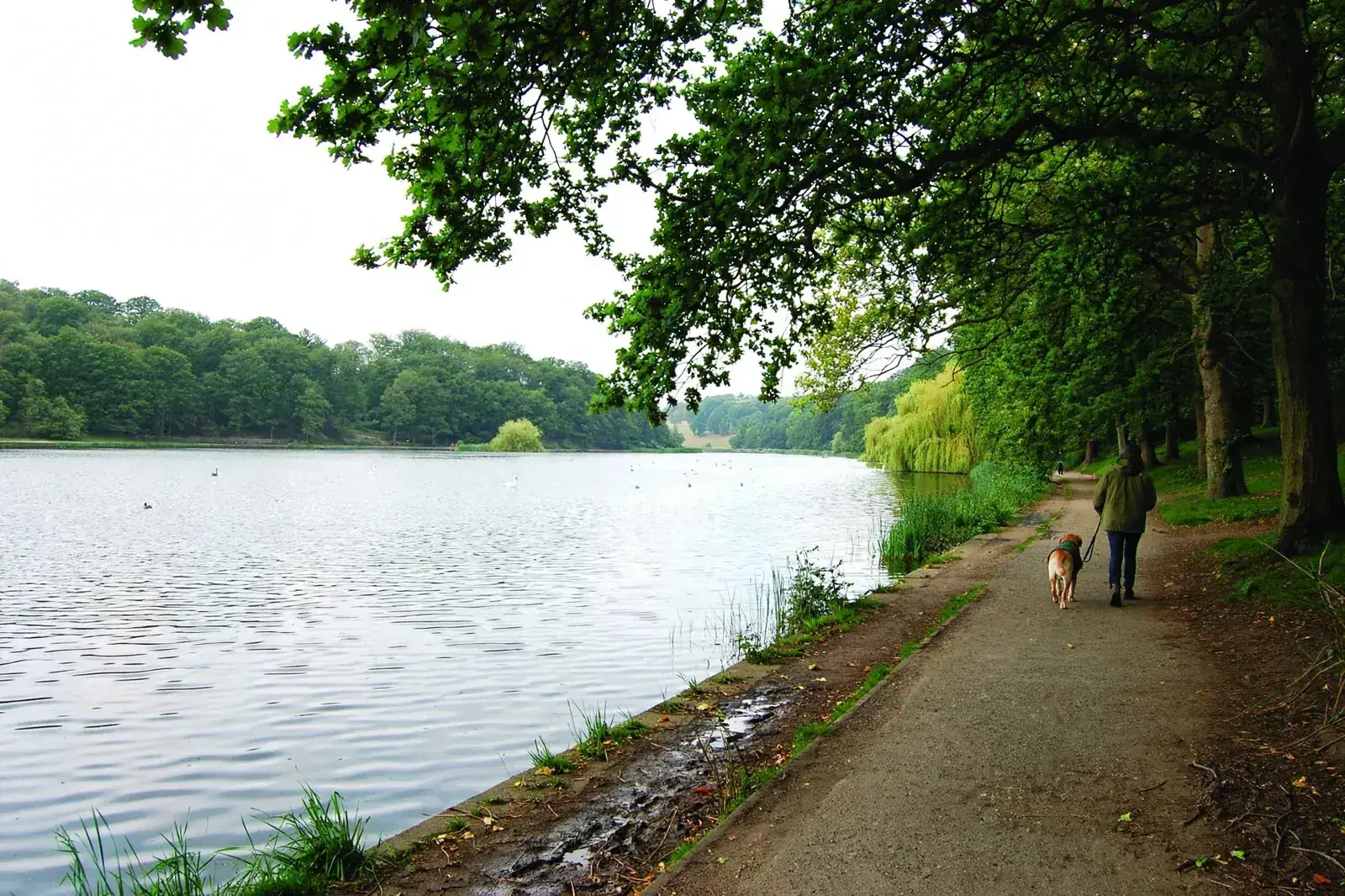
Roundhay Park, in the north-eastern suburbs, is one of the largest city parks in Europe and the natural anchor of a Leeds dog break: hundreds of acres of parkland, two lakes including the large Waterloo Lake, woodland, gardens and open grass that can absorb a full half day without repeating a path. Dogs get a genuine expedition here rather than a token run — long circuits of the lakes, woodland shade in summer, and space for proper exercise under reliable recall in the open areas. The responsibilities match the scale: leads or close control around the lakes and their waterbirds, near the cafes and play areas, on shared paths and anywhere signage directs, and no dog swimming in the lakes unless local guidance clearly permits, which as a default you should assume it does not.
The park's specialist gardens and indoor elements have their own arrangements — the tropical plant houses and similar attractions on the park's edge follow an assistance-dogs-only pattern for interiors in the usual way, so check the official information before you go if they are on your list, and treat them as the human half of a split visit while the other adult continues the lake circuit. Parking fills on fine weekends and event days, and the park hosts concerts and festivals in season that fence areas and change access completely, so check the official park and council information for your dates before planning a Saturday around it. Arrive with water and a circuit in mind; Roundhay is big enough to improvise badly in.
Practical rhythm: do Roundhay first, not last. A dog exercised here in the morning settles through a city afternoon, and owners see the park in its best light and quietest hours. Staying nearby converts it into your daily walk — see the stays section — while staying centrally makes it a planned expedition by bus, taxi or car, which is also fine provided it is planned as one and not squeezed into a spare hour. In winter the lakeside paths stay walkable when woodland tracks muddy, and the park in frost, with mist on Waterloo Lake, is one of the great urban dog walks in the north. For the wider stays groundwork that pairs with this choice, our dog-friendly hotels in the UK guide sets out the booking questions.
The Leeds and Liverpool Canal out of the city
The Leeds and Liverpool Canal — the longest canal in northern England — leaves the city from the canal basin and Royal Armouries area and climbs westward through locks towards Kirkstall and beyond, and its towpath is the second pillar of a Leeds dog stay. From the centre, the walk changes character as you go: paved and urban at the basin, then greener through the lock flights and the Kirkstall valley, with a famous ruined abbey in its parkland as a natural turning point for a half-day route. Kirkstall Abbey's grounds are a classic Leeds dog walk — extensive parkland around the ruins where dogs on leads are part of the scenery — while entry arrangements for the ruins and any visitor facilities follow the site's own rules, so check the official information before you go.
Towpath craft applies in full: short leads at locks, under bridges and on the narrow sections, step aside for cyclists, keep dogs out of the canal water, and respect moored boats. The Kirkstall direction is the visitor's best first towpath day because the destination rewards the distance; the return can be by bus or train from the Kirkstall area, which turns an out-and-back into a journey. Eastward from the centre, the Aire riverside paths offer a different, shorter waterside loop for stays near the Calls and the docks area. After heavy rain, unsurfaced towpath sections muddy and the river paths can flood in places, so check conditions and choose the paved basin stretches on the wettest days.
The canal also explains Leeds's shape to a newcomer better than any map: this was a wool and engineering city built on water and rail, and walking the towpath reads that history at dog pace. Give it a full morning at least once in the stay. Our guide to taking a dog on UK trains covers the return-leg logistics that make one-way towpath walks work, and the same pattern — walk out, ride back — is the most useful transport habit a dog owner can learn in any British city.
City centre and neighbourhood parks
Roundhay and the canal carry the expedition days; the daily routine runs on Leeds's neighbourhood parks. Woodhouse Moor, close to the university and the centre's north-west, is the students' and locals' park: open grass, avenues and a busy, social atmosphere that suits confident dogs and gives central stays a real morning walk. Meanwood Park and the Meanwood valley trail, a few miles north, offer the connoisseur's alternative — woodland, beck-side paths and a green corridor that feels like countryside threaded through suburbs, ideal for dogs who prefer sniffing to socialising. Golden Acre Park, further north towards Bramhope, adds lakes, gardens and woodland for a second big-park day if Roundhay leaves you wanting more of the same in a different key.
South and east have their own answers. Cross Flatts Park serves the southern neighbourhoods, Temple Newsam — the great historic estate to the east, with extensive parkland, gardens and a home farm — is the eastern expedition: grounds and parkland where dogs under control are part of the day, with the house and farm elements following their own dog rules, so verify the split on the official site before you go. In the centre itself, the riverside around Leeds Dock, the Calls and the station quarter gives lead-walk texture rather than exercise: pleasant for an evening circuit with a settled dog, especially outside the Friday and Saturday nightlife peak, when the city centre's bar districts are a human plan.
The Leeds lesson is to layer the walks: a big anchor, a towpath journey, a neighbourhood routine. Dogs on holiday thrive on that variety, and owners stop repeating one circuit three times a day. Whatever the layer, the control rules repeat — leads near water and waterbirds, play areas, sports and roads; close control or a long line everywhere else; signage obeyed on the day. Leeds's parks are well used and well loved, and a visiting dog that follows the local pattern is welcomed into it without friction.
Museums and attractions: what the dog skips
Leeds's headline indoor attractions — the Royal Armouries museum at the dock, the city museum and art gallery, the medical and industrial museums — generally admit assistance dogs only in their interiors, not pet dogs. Policies are set by each venue and can differ for special exhibitions, outdoor courtyards and events, so check the official site before you go for every attraction and build the day on the answer you actually receive. The Royal Armouries makes the split visit painless: it stands on the canal basin, so the non-touring adult gets the towpath, the dock and the riverside as the dog's half, which in fine weather is the better half anyway.
The industrial museum at Armley Mills and the medical museum near the centre follow the same verify-first pattern, and both sit near canal or park walking that turns a partner's museum hour into a dog's proper outing. Kirkstall Abbey, covered in the canal section, is the happy exception in spirit: a major heritage site whose appeal is mostly outdoors in parkland, though you should still verify the current arrangements for the ruins and facilities before you go. Theatres and music venues are human evenings; if a show matters to the trip, arrange the dog's evening honestly — settled at the accommodation within its rules, or with trusted care — rather than assuming a quiet dog will be waved in.
Solo travellers can still have a full Leeds trip without interiors: Roundhay, the canal, Kirkstall, Temple Newsam's grounds and the neighbourhood parks fill three days, and the cafe and pub scene covers the evenings. If one interior really matters, book local dog care for that window. Our guide to assistance dog access rights in the UK explains the assistance-dog access that venue signage refers to, and why it differs from the pet dog position you will be planning around.
Where to stay with a dog in Leeds
Leeds divides into three sensible dog bases. A Roundhay or Oakwood base puts the great park at the end of the street and a local high street of cafes on the doorstep, with a bus ride to the centre — the dog-first choice, and the one that turns Roundhay into a daily pleasure rather than an expedition. A city-centre or Leeds Dock base gives you the canal basin, the stations and the attractions on foot, with towpath and riverside walks for the routine and a planned trip out to the parks. A Headingley base adds a leafy, lived-in neighbourhood, Woodhouse Moor within reach and an easy run to Kirkstall, at student-city liveliness in term time that some dogs enjoy and some owners schedule around.
Ask the full booking questions before committing, in writing where possible: which rooms accept dogs, the fee per dog per night or per stay, size or number limits, where the dog may go in the building, whether it can be left alone in the room, and the access practicalities of floors, lifts and stairs for older dogs. Leeds's converted mills and warehouses make characterful stays with long corridors and interesting level changes; know them before you arrive with luggage and a large dog. Self-catering suits many dogs best — hard floors, your own door routine, room for the familiar bed — but verify the nearest grass and whether any garden is genuinely enclosed. Our national hotels guide lists the complete checklist.
Prices move with the city's calendar — arena events, festivals, cricket at Headingley and football fixtures all fill the dog-welcoming stock and lift rates — so check what is on before fixing dates, and book the best-located rooms early for event weekends. Bring the settling kit: own bed or blanket, a first-evening chew, bags in every coat, and a towel stationed by the door. Between Roundhay mud, canal towpaths and Yorkshire weather in general, that towel will be the hardest-working item you pack from autumn through to spring.
Cafes, pubs and eating together
Leeds feeds a dog owner well in its neighbourhoods. Oakwood and Roundhay's cafe scene exists substantially to serve park walkers and is used to dogs; Headingley's cafes and pubs, Horsforth and Chapel Allerton's high streets, and the independent centre all offer welcoming options, with pubs that have bar areas and gardens the most consistently flexible format. In the centre, the waterside around Leeds Dock and the Calls works well at off-peak times, while the busiest bar districts on weekend nights are for humans. As everywhere, verify each venue — check its own website or phone ahead — because policies change with management and refurbishment, and a listing is a lead, not a promise. Our UK dog-friendly cafes guide covers the etiquette: walked and toileted first, short lead out of walkways, off the seats, settled on a mat if you carry one.
Timing and the fixture list shape the Leeds version. A post-Roundhay weekend brunch in Oakwood queues at the peak and relaxes an hour either side of it; a canalside lunch near the dock is calmest on weekday middays; Headingley on a cricket or rugby day runs at a different temperature altogether, which belongs in the plan if your dog is crowd-sensitive. Carry the portable water bowl regardless of venue promises, plus a chew for waits. In summer, pub gardens after a towpath walk are the city's dog dining at its best, with a shade check before you commit to a table.
Picnic Leeds is a real alternative rather than a consolation: bakery supplies eaten on a Roundhay bench, takeaway coffee on the canal, or a Temple Newsam lawn on a grounds day. Keep the usual vigilance about dropped food in the centre at night and around market areas, rinse paws after gritted winter towpaths, and remember the universal rule — a dog that arrives exercised, emptied and ready to rest is welcome in more places, and welcomed back in all of them.
Getting around: trains, buses and one-way walks
Leeds is a rail city, and most visiting dogs will arrive at Leeds station, one of the busiest in the north: a large, echoing, multi-level space that rewards a calm pause between platform and street, especially with a nervous dog at rush hour. Trains follow the national pattern in our guide to taking a dog on UK trains — lead on, off seats, consideration for fellow passengers, operator conditions applying — and local services make Headingley, Kirkstall's area and the suburban parks reachable without a car. Plan the one-way walks the canal section described around those return legs, checking timetables before you set off rather than at a rural platform with a tired dog.
Buses do the rest of the work, including the Roundhay run from the centre, and carry dogs at the driver's discretion in the usual British pattern: on a lead, well behaved, off seats and out of the aisle, with off-peak travel the considerate choice and a plan B held for a full bus on an event day. Leeds has no tram to plan around, which simplifies the checking to trains, buses and each venue's own rules. Taxis and private hire vary by operator and driver, so declare the dog at booking and carry a clean blanket for the seat or footwell.
Drivers will find the centre workable if they park once and walk: central parking is priced for demand, event days at the arena, Elland Road or Headingley change availability across whole districts, and the city's hills and one-way systems reward a parked car and a good pair of shoes. Roundhay and Temple Newsam both reward arriving early on fine weekends. However you arrive each day, keep the layering principle — anchor walk, towpath or neighbourhood routine, sightseeing in the settled hours between — and Leeds's transport never has to carry the dog's exercise, only the dog.
Seasons, sport and finishing well
Spring is Roundhay's show season and the canal's most forgiving quarter, with long evenings arriving before the summer events. Summer fills the park calendar — concerts and festivals at Roundhay and Temple Newsam can fence areas and fill car parks, so check official information for your dates — and brings hot spells in which the paved centre and lock-side paths hold heat: walk early, use Roundhay's woodland and Meanwood's shade at midday, and carry water on every towpath leg. Autumn colours Meanwood and Roundhay superbly and returns the city to a local rhythm. Winter is short days, frost on the lakeside paths and mud in the woodlands; keep the big days for bright mornings, the evenings for neighbourhood pubs, and expect the towel to work overtime.
Sport is Leeds's second calendar. Cricket and rugby at Headingley, football at Elland Road and arena events in the centre each move crowds, transport and prices for hours or days, and each belongs in the booking decision rather than the arrival-day discovery. None should deter you: a matchday Leeds is a city enjoying itself, and a dog walked early and based sensibly experiences it as atmosphere at a distance. Dogs sensitive to noise also need the winter fireworks season and any stadium effects planned into evening routes, with the settled indoor base as the default during the loudest hours.
Leave the standard slack and do the standard checks: one unplanned half day for the neighbourhood you liked best, a local vet and out-of-hours details saved near the base, tick checks after Roundhay woodland, Meanwood and Temple Newsam walks in season, and paws rinsed after canal grit. Leeds gives a dog two great gifts — a park big enough to be a holiday in itself and a canal that turns transport into walking — and asks in return only the usual honesty about leads, water and what your particular dog enjoys. Plan around the dog in front of you, and this big-hearted city is an easy place to get right.
Practical questions
Before you go
Can dogs swim in the lakes at Roundhay Park?
As a rule, plan on dogs not swimming in Roundhay's lakes, including Waterloo Lake; keep dogs on a lead or under close control near the water and its birds, and follow local signage on the day. Check the park's official information before you go for any current guidance. The park offers extensive land exercise, so most dogs leave well exercised without entering the water.
Are dogs allowed at Kirkstall Abbey?
The parkland around Kirkstall Abbey is a popular dog-walking area where dogs on leads are a familiar sight, while arrangements for the ruins themselves and any visitor facilities follow the site's own rules. Check the official information before you go for the current position, keep dogs on leads in the grounds, and combine the visit with the canal towpath walk from the city centre for a complete half day.
Can dogs go inside Leeds museums?
Most major indoor attractions in Leeds, including the Royal Armouries and the city museums and galleries, admit assistance dogs only in their interiors rather than pet dogs, though policies vary by venue and exhibition. Check the official site before you go for each attraction. Pairs often split the visit, with one person touring while the other walks the dog on the canal or riverside by the dock.
Are dogs allowed on trains and buses in Leeds?
Dogs are generally carried on trains under the national pattern — on a lead, off seats and with consideration for other passengers, subject to operator conditions — and on Leeds buses at the driver's discretion, provided the dog is well behaved and does not block aisles. Travel off-peak where possible, allow extra time at busy Leeds station, and check the latest official guidance before you travel.
When is the best time to visit Leeds with a dog?
Spring and autumn usually offer the best balance of daylight, milder weather and manageable crowds at Roundhay and on the canal. Summer brings park concerts and festivals that can close areas, so check official information before visiting. Sporting fixtures at Headingley and Elland Road and arena events fill transport and accommodation at any time of year, so check what is on before booking.