This guide is independent and contains no paid placement. If affiliate links are added later, they will be clearly marked and will not change our editorial checks.
Use the harbour early and late, walk the Camel Trail for flat, safe miles, time the beaches by tide and season — many nearby beaches restrict dogs in summer — and take the ferry to Rock only with a dog that settles on boats. Park on the town edge, book stays and suppers early in season, and check beach signs and official guidance before you go.
The harbour town: quays, crowds and dog craft
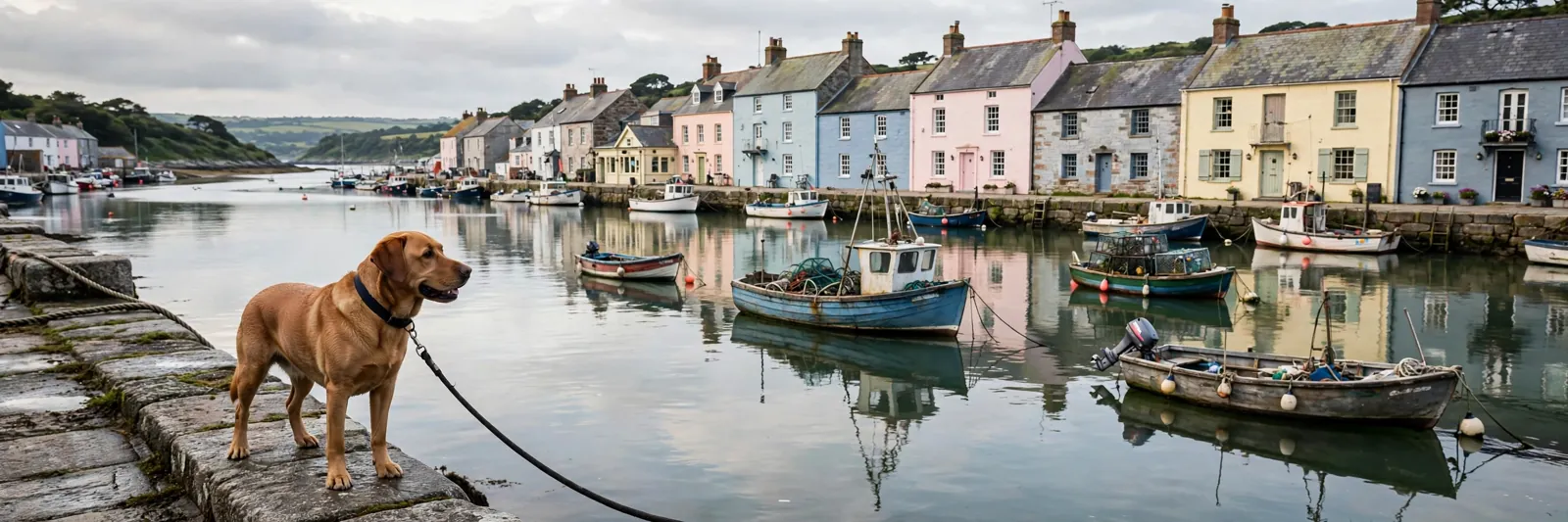
Padstow is a working harbour that became a famous food town, and a dog experiences both halves at once. The inner harbour, with its fishing boats, crab pots, fish market sheds and ring of pastel cottages and cafes, is compact, busy and full of smells that will test any lead arm. Dogs on leads are part of the scene around the quay, the harbour commissioners' rules and basic courtesy both apply — keep leads short, keep dogs out of working areas and off the boat decks and gear, and never let a dog foul the quay or the slipways. The harbour water itself is not a swimming spot: it is a working basin with boat movements, ladders and deep water at every tide state.
Timing transforms the experience. Before nine in the morning the quay belongs to fishermen, deliveries and local dog walkers, the light on the estuary is at its best and your dog can actually stop and sniff. By late morning in season the narrow streets fill, the pasty and ice-cream queues spill across the pavements, and a dog's-eye view becomes a forest of legs and dropped chips. Plan the harbour for early and evening, give the middle of the day to beaches, the trail and the coast path, and the town will feel generous rather than crowded. In the evening, when the boats settle and the restaurants fill, a slow quayside circuit is one of the pleasures of a Cornish stay.
The food fame needs managing rather than avoiding. Padstow's restaurants are booked out in season and most formal dining rooms do not take dogs; the dog-friendly version of the town's food scene is its pubs with gardens, its harbourside cafes with outdoor seating, its bakeries and takeaways eaten on the quay wall, and its fish bought fresh to cook in self-catering kitchens. Verify every venue individually, book dog-welcoming tables as early as you book anything, and keep a dog settled and out of walkways — harbour cafes are tight, and a lead stretched across a pavement trips waiters and toddlers alike.
Two dates deserve flags. May Day, with the famous 'Obby 'Oss celebrations, fills Padstow completely: drums, crowds, dancing and a packed harbour from morning to night. It is a remarkable human festival and a poor dog day — most dogs should be walked out of town entirely or left with a trusted sitter. The Christmas festival in December brings similar crowds in miniature. On ordinary peak-season days the same principle applies at smaller scale: the harbour is a place to pass through happily with a dog, not a place to linger at noon.
Beaches near Padstow: tides, seasons and sand
Padstow itself sits on an estuary rather than an open beach, and understanding that unlocks its beach geography. The town beach at low tide is estuary sand and mud along the Camel — beautiful to look at from the path, but not a swimming or digging beach, with soft mud, boat channels and fast-moving water as the tide returns. The real beaches lie a short walk or drive away, on both sides of the estuary mouth, and they divide neatly into the walkable and the drivable.
Walkable first. St George's Well and the coves along the coast path toward Harbour Cove give sandy pockets at lower tides with views across to Rock; check the tide, because these coves shrink and cut off as the water rises. Hawker's Cove, below the old lifeboat station beyond the headland, is the connoisseur's quiet option, reached by the coast path and best at mid to low tide. Trevone Bay, a couple of miles west, is a proper sandy surf beach with a cafe and car park — and it operates seasonal dog restrictions in summer, as do many of Cornwall's managed beaches, so check the current signs and official guidance before you go and expect a lead-or-ban pattern in the peak weeks. Trevone also has a famous blowhole in the cliffs nearby; keep dogs well away from fenced cliff features and all cliff edges.
A short drive opens the bigger names. Harlyn Bay, wide, family-friendly and surf-school busy, also applies seasonal dog rules in summer — verify before you travel rather than assuming. Constantine Bay and its neighbours Treyarnon and Porthcothan are often more dog-welcoming, with some stretches allowing dogs year-round under control, but each beach has its own order and signage, and dune systems, rock pools and surf conditions differ. The golden rule for this whole coast is the one in our national guide to UK beach dog rules, bans and fines: the sign at the access point is the law for that beach on that day, and Cornwall Council and private beach managers both enforce their orders.
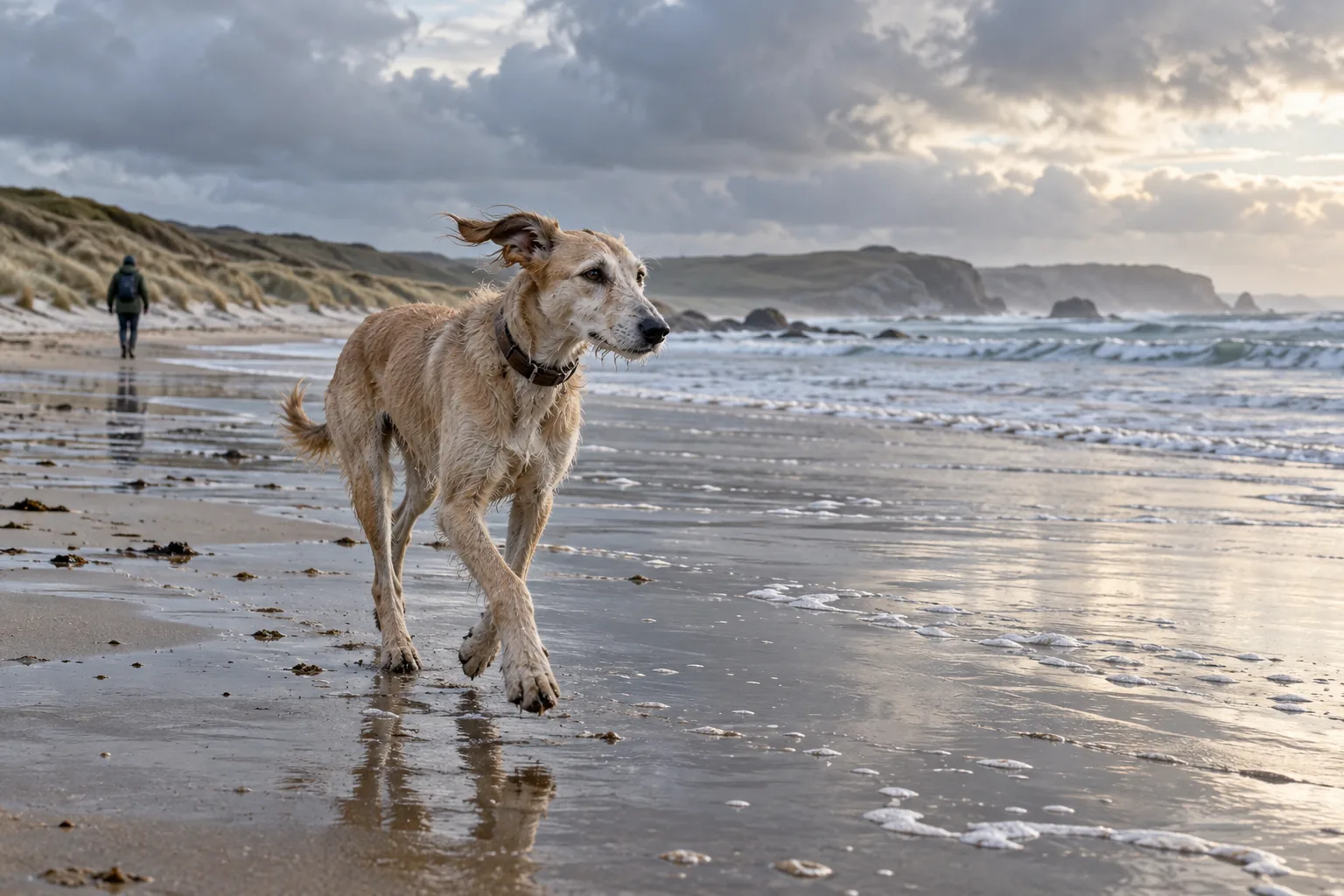
Surf and swell are the safety headline. These are Atlantic beaches with lifeguard patrols on the main bays in season; swim zones are marked for people, and dogs should be kept out of patrolled swim areas, away from surf schools and out of the water entirely in rough conditions. Rock pools strand, rip currents run at several of these bays, and a dog chasing a ball into surf is the classic Cornish rescue story. Choose calm corners on calm days, keep the ball game on the sand, carry fresh water because beach dogs drink sea water and make themselves ill, and rinse salt and sand off coats and paws at the end of the day.
The Camel Trail: Padstow's flat, safe miles
Every dog town needs one reliable, weatherproof, pushchair-and-paw-friendly walk, and Padstow's is outstanding. The Camel Trail follows the old railway line from Padstow inland along the estuary to Wadebridge and on toward Bodmin, roughly eighteen miles in full and almost entirely flat and surfaced. The Padstow to Wadebridge section, about five and a half miles each way, is the classic dog walk: estuary views the whole way, wading birds on the mudflats, the Iron Bridge viewpoint, and Wadebridge's cafes and pubs at the end, with a bus or taxi back if small legs have done enough.
The trail is shared, and its etiquette is specific. Cyclists hire bikes in both towns and the trail carries a steady two-way flow in season, including children wobbling on their first hire bikes. Keep dogs on a short lead or under genuinely close control, walk on the correct side where signed, and step aside early for bikes rather than at the last moment; a long line trailing across a cycle path is an accident with a date on it. Early mornings and evenings are quietest and coolest, the mid-section viewpoints have benches made for a flask stop, and the estuary light at the end of the day justifies the return leg for anyone with the energy.
Birdlife sets the lead rules at the water's edge. The Camel estuary is an important feeding ground for waders and wildfowl, especially in winter when the mudflats fill with curlew, redshank, little egrets and shelduck. Keep dogs on the trail and out of the mud and saltmarsh, where birds feed and rest and where a dog can bog itself quickly in soft estuary mud. The mud warning is practical, not decorative: estuary mud traps boots and paws, the tide returns fast across flat ground, and nobody should be off the paths and firm sand anywhere in the estuary system without local knowledge.
Extend the idea inland on wet or windy days. The trail continues from Wadebridge toward Bodmin through wooded valley scenery that shelters walkers when the coast is being battered, and the Saints' Way and local lanes around Little Petherick and Dennis Hill give shorter loops back into Padstow. A dog holiday based on the trail never lacks a walk, whatever the Atlantic is doing — which, on this coast, is the whole point of having a Plan B.
Across to Rock: the ferry and Daymer Bay
The little passenger ferry between Padstow and Rock, across the estuary mouth, is one of Cornwall's great small journeys, and it generally carries dogs — confirm the current arrangements and any fare for dogs with the operator before you travel, keep the dog on a lead and settled on the deck, and travel at quieter times if your dog is new to boats. At lower tides the landing points shift to the alternative slipway and beach landings, the crossing takes a few minutes, and the service is weather and tide dependent, so check the day's operating times rather than assuming a clockface timetable. The water taxi that runs in the evenings in season follows its own rules; ask before you book.
Rock itself is the estuary's other personality: sailing clubs, a long sandy beach-dune system at low tide and a quieter, more residential feel than Padstow. The beach along the estuary toward Daymer Bay gives excellent dog walking at lower tides on firm sand, with the same estuary warnings as everywhere here — channels fill fast as the tide turns, soft mud sits off the main sand, and the Doom Bar, the famous sandbank at the estuary mouth, is a navigation hazard for boats and absolutely not a walking target. Walk with the tide tables in your pocket, keep an eye on the water behind you, and leave the sandbanks to the oystercatchers.
Daymer Bay, beyond Rock, is the area's classic dog beach: a sheltered, family bay under Brea Hill, often welcoming dogs year-round under control — verify the current signage — with gentler water than the surf beaches, rock pools at low tide and the coast path climbing on toward Polzeath. The church of St Enodoc, tucked in the dunes and associated with John Betjeman, who is buried there, makes a lovely lead-walk destination across the golf course paths; keep dogs on leads across the course, watch for play, and give golfers right of way without argument. Polzeath itself, the surf village at the end of the walk, applies seasonal restrictions on its main beach in summer.
A Rock day pairs best with a Padstow evening. Take the ferry across late morning, walk the estuary sand to Daymer, lunch in Rock or Daymer according to the dog policy of the day, and return by ferry before the last sailing — or, for strong walkers and drivers, arrange a car shuffle so the day ends where it ends. Check ferry times before the first drink, not after it; the estuary does not care about your plans, and the road round via Wadebridge is a long way home.
Coast path days: Stepper Point and the headlands
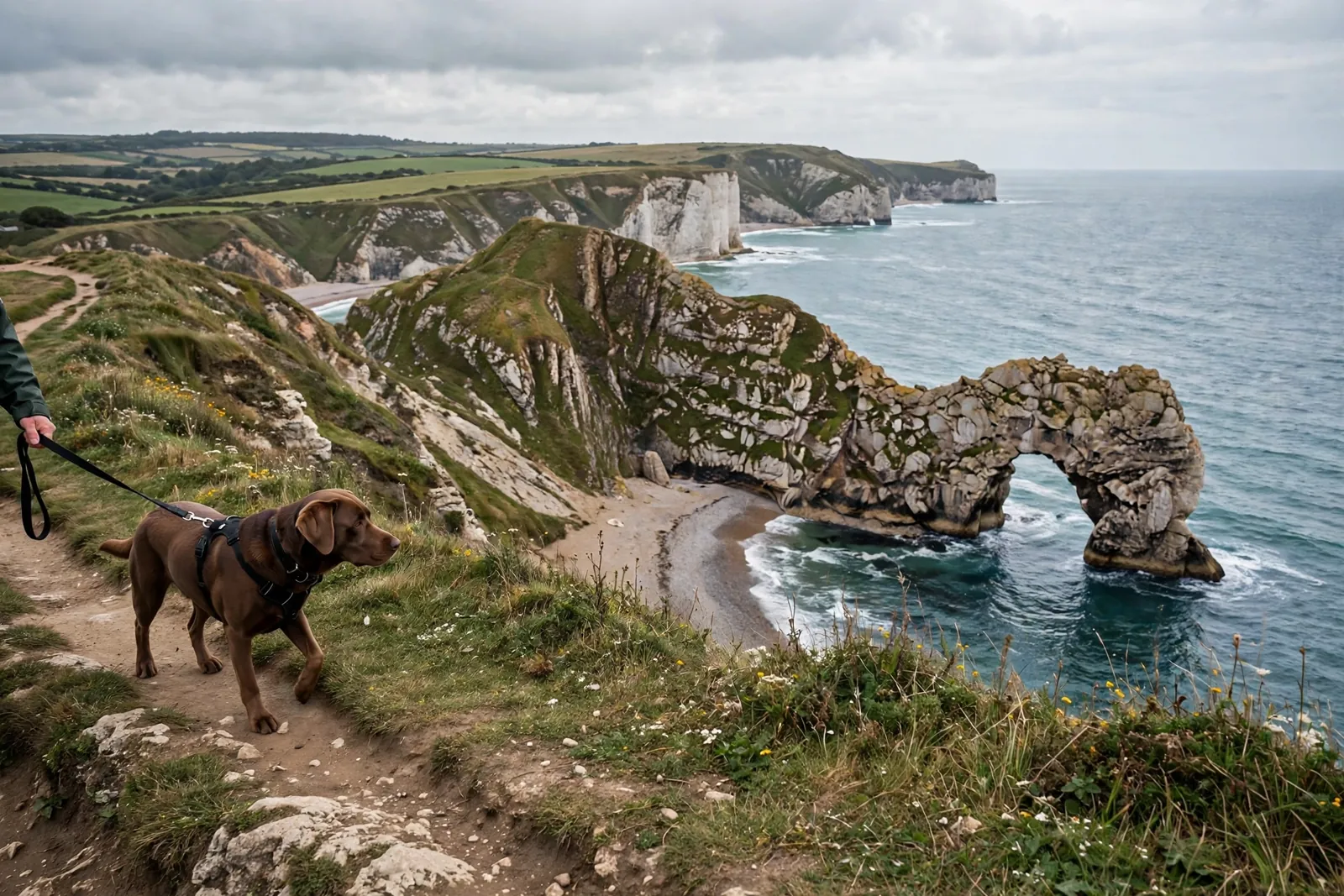
West and north from the harbour, the South West Coast Path climbs to one of the finest viewpoints in north Cornwall. The walk out past the war memorial and Harbour Cove to Stepper Point, with its daymark tower, gives big Atlantic views, the estuary mouth below and, on clear days, a coastline unrolling toward Trevose Head. It is a proper coast path section — undulating, exposed, with cliff edges that demand a lead and a sensible line well back from the edge. Dogs that pull toward seabirds or rabbits belong on a short lead here without exception, and in strong winds the headland is a place to admire from lower ground.
East of the town the character softens. The paths toward St George's Well and along the estuary shore give gentler walking that suits older dogs and hot days, with shade in the lanes behind the shore and regular escape routes back to town. Mix coast path mornings with trail afternoons and the week has a rhythm: exposure and views one day, flat estuary miles the next. Our guide to dog-friendly holiday parks in Cornwall covers the wider county beach-and-park picture if you are extending the trip beyond Padstow.
Coast path discipline is standard but worth restating for this stretch. Keep dogs on leads near livestock — the headland fields are grazed, and cliff-top sheep worrying is a real and serious offence — close every gate, carry water because there is no supply on the headlands, and check for adders in warm weather on quiet, sunny path edges, a small but genuine Cornwall risk in season. After heavy rain the path's steeper pitches run muddy and slippery; the trail exists for those days.
Photographers and birdwatchers will want the dawn shift. The estuary at first light, the harbour boats heading out and the headland empty of other walkers make the early walk the best hour of a Padstow day, and it has the practical bonus of a tired, contented dog by the time the town fills at lunchtime. Build the trip around that hour and most of Padstow's crowd problems solve themselves.
Where to stay with a dog in and around Padstow
Padstow's accommodation squeezes into a small town, so the dog decision is partly a geography decision. In-town hotels, inns and holiday cottages put the harbour at the door and the car in a public car park; the lanes immediately behind the town add quieter cottages with the trail minutes away; and the surrounding villages — St Issey, Little Petherick, Trevone and the farms inland — offer cottages, B&Bs and holiday parks with space, parking and a field-edge morning walk that town stays cannot match. After a harbour day, many dogs settle better out of town; after a foodie evening, many owners prefer to be in it. Choose honestly.
Ask the precise questions before booking, because small Cornish properties vary enormously. Is there any enclosed outdoor space, and is it private or shared? Which floors and stairs are involved — harbour cottages are famously steep and narrow — and are dogs allowed in the bar or dining room, or is breakfast a dogs-in-the-room arrangement? What is the fee, and what is the rule on leaving a dog alone? Our national guide to dog-friendly hotels in the UK sets out the full checklist; the Padstow additions are parking reality, harbour noise at festival dates and the distance to a proper morning walk.
Holiday parks and campsites around the area suit longer, dog-centred stays, with the usual checks applying: dog fees, maximum numbers, whether the pitch or caravan has any enclosed space, and the walk from the gate. Book peak season, school holidays and the May and December festival dates far ahead — Padstow's dog-welcoming stock is limited and the town's fame means it goes early. Shoulder season, especially late spring and September, gives the same walks with half the harbour crowd and is when many local owners would tell you the town is at its best.
Bring the settling kit for a harbour town: a towel station by the door for sandy, salty paws, the dog's own bed, a chew for the first evening, and a drying plan for wet trail days. Rinse sea water out of coats, check between toes for sand and small shells after beach days, and keep a fresh-water bottle in the car for the post-beach drink — thirsty beach dogs offered only sea water will drink it, and regret it.
Eating with a dog: pubs, pasties and harbour lunches
Padstow's dog-friendly eating is a pub, cafe and takeaway story, and it is a good one. The town's pubs welcome dogs in their bars and gardens in the usual Cornish way, the harbourside cafes with outdoor tables are made for a lead under the bench, and the bakeries will equip a quay-wall picnic that rivals any restaurant lunch: pasties eaten warm, with a dog watching the boats and the gulls watched in return. Gulls, again, are professionals here — keep food guarded, never feed them, and choose a bench away from the boldest patrols. Verify each venue's current policy before you rely on it, and follow the etiquette in our UK dog-friendly cafes guide.
Wadebridge, at the trail's end, is the pressure valve: a working town with a wider spread of dog-welcoming cafes and pubs, easier parking and prices a notch below the harbour. Rock and Daymer add beach cafes in season. For a special meal in the famous-name restaurants, plan it as humans-only, book early, and walk the dog first — or choose one of the pubs and restaurants in the surrounding villages where a dog under the table is part of the furniture and the fish is just as fresh.
Self-catering unlocks Padstow's other food secret: the fish landing itself. Buy from the harbour fishmongers and the town's delis, cook simply, and eat with the dog asleep after a trail day — for many visiting owners this is the meal they remember. Markets and farm shops on the roads inland add pasties, cheese and cider to the picnic economy. Carry the usual kit — bowl, water, chew, bags — and time restaurant lunches early or late to dodge the harbour rush.
A final note on queues. In season, the famous bakeries and cafes queue down the street at lunchtime, and a queue is a poor place for a dog: hot pavement, close strangers, dropped food and no shade. Send one person in, keep the dog in the shade with the other, or shift lunch by an hour. The pasty tastes the same at two o'clock, and the dog will thank you.
Parking, travel and the Padstow calendar
Padstow's lanes were not built for cars, and the town manages its traffic accordingly. The main car parks sit on the town's edge — by the harbour and station area and on the approach roads — and they fill by late morning on any fine day in season. Arrive before ten or after four, or stay out of town and walk in along the trail or the estuary path, which is the arrival the dog would choose anyway. Never leave a dog in a car in a Cornish car park; even mild days heat vehicles fast, and this is a rule without exceptions.
By train, the nearest stations are some distance away — Bodmin Parkway and Roche serve the area with onward buses and taxis — so rail arrivals need the last leg planned, including whether the taxi or bus will carry the dog; state the dog at booking. Our guide to taking a dog on UK trains covers the rail rules themselves. Many visitors drive, and the same journey logic applies as elsewhere in Cornwall: allow more time than the map suggests in season, when the lanes around the town slow to walking pace.
The calendar, honestly stated. May brings the 'Obby 'Oss and the start of the season; high summer brings full beaches, full car parks and the full harbour — glorious and demanding in equal measure, best handled with early starts. September and early October are the sweet spot for many dog owners: warm sea, open beaches as seasonal restrictions lift — check the dates each year — and a town breathing again. Winter is quiet, atmospheric and storm-lit, with the Christmas festival as its peak, short days and the trail as the reliable walk when the coast path is wild.
Before you travel, save a local vet and the out-of-hours cover for the area, carry your own vet's number and insurance details, and check the tide tables for every estuary and cove day. Tides are Padstow's master clock: they set the ferry landings, the beaches, the harbour's mood and the safety of every sand walk in this guide. Work with them, check the official sources before you go, and this small harbour town will give a dog one of the best weeks in Cornwall.
Practical questions
Before you go
Are dogs allowed on Padstow beaches all year?
Padstow town itself has estuary shore rather than a bathing beach, and the nearby sandy beaches each have their own rules. Several, including Trevone and Harlyn, apply seasonal dog restrictions during the summer, while others such as Daymer Bay have often welcomed dogs year-round under control. Rules change, so check the current signage at each beach and the official council guidance before you go.
Can dogs ride the Padstow to Rock ferry?
The Padstow to Rock passenger ferry generally carries dogs on leads, but arrangements, landing points and any dog fare are set by the operator and the crossing is tide and weather dependent. Confirm the current position before you travel, keep the dog settled on a lead on deck, and check the day's sailing times, as the service does not run to a fixed clockface timetable.
Are dogs allowed on the Camel Trail?
Yes, dogs are welcome on the Camel Trail between Padstow, Wadebridge and Bodmin. Because the trail is shared with large numbers of cyclists, including hire bikes and children, keep your dog on a short lead or under very close control, step aside early for bikes, and keep dogs off the estuary mud and saltmarsh where birds feed and the mud is dangerous.
When should you avoid Padstow with a dog?
May Day, when the 'Obby 'Oss celebrations fill the town with crowds and drumming, is the hardest day of the year for a dog in Padstow, and peak-season lunchtimes around the harbour are demanding for any dog that dislikes crowds. Visit early and late in the day, choose shoulder season if you can, and give festival dates a wide berth or arrange trusted dog care.
Where do you park in Padstow with a dog?
Use the main car parks on the edge of the town by the harbour and station area and on the approach roads, arriving before ten or after four in season because they fill quickly. Better still, stay outside the town and walk in along the Camel Trail or estuary path. Never leave a dog in a parked car, even on a mild day.