This guide is independent and contains no paid placement. If affiliate links are added later, they will be clearly marked and will not change our editorial checks.
Begin at St Mary's churchyard for the famous yews, walk the village at a gentle pace, spend the main part of the day in the Rococo Garden or the Slad Valley, and save steep climbs for a fit dog on a cool day. Keep dogs on leads in the churchyard and garden, watch for yew berries, and park once in the village.
The ninety-nine yews: start with a puzzle
Painswick's most famous story is also its best starting point for a dog walk. The churchyard of St Mary's is said to hold ninety-nine yew trees, with a legend that a hundredth tree will never grow, and visitors have counted, recounted and argued about the number for generations. Starting a visit with that puzzle gives the dog walk a shape: a slow circuit of the churchyard, eyes up at the clipped, dark-green shapes, and a reason to pause rather than rush through. Dogs, of course, do not count yews, but they do enjoy a slow, sniff-rich circuit with plenty of pauses, which is exactly what a yew-counting walk provides.
The puzzle also teaches the right attitude for Painswick as a whole. This is not a village to conquer in an hour, but a place to look closely, walk slowly and notice details: the shape of a clipped tree, the slope of a lane, the way the light falls on stone at different hours. A dog walk that follows that attitude will be calmer and longer in the good sense, because the dog gets time to sniff, the owner gets time to look, and neither feels hurried. If you try to count the yews, do it from the paths, keep the dog close, and accept that the exact number matters less than the walk itself.
Local legend aside, the yews are a practical feature of the churchyard walk. They provide shade in summer, shelter in a shower, and a dark-green backdrop that makes the honey-stone church stand out beautifully. They also demand care, because yew berries and foliage are toxic to dogs if eaten, so keep the dog on a short lead, keep it from mouthing fallen berries or leaves, and steer it toward paths and open grass rather than the base of the trees. A churchyard walk with a dog is a walk on paths, not a forage, and that simple rule keeps the puzzle enjoyable rather than worrying.
St Mary's churchyard with a dog
St Mary's churchyard is a public, historic space, and it suits a short, calm dog walk at the start or end of a Painswick visit. The ground is a mix of paths, grass and memorials, with the church tower overhead and views across the valley from the higher edges. Walk the churchyard as a loop, keeping to paths where they exist, keeping the lead short near memorials, and keeping voices low if other visitors are there for quiet reasons. A churchyard is not a dog park, and a dog that can walk calmly through it is a dog that has learned one of the most useful skills for Cotswold village visits.
The church itself may or may not welcome dogs inside, so check notices and ask before entering, and never assume that a welcome in the churchyard extends to the interior. If dogs are welcome inside, keep the visit brief, keep the dog close, and leave promptly if the dog becomes restless. If not, the churchyard and the village streets still give a full sense of the place, and the exterior stonework, tower and churchyard trees can be appreciated from outside without any compromise. A split visit, with one adult inside and the other walking the dog around the churchyard, works well for couples and families.
Respect for the churchyard extends to practical details. Clean up promptly, keep the dog from flower arrangements and freshly tended graves, and avoid letting the dog dig or scratch at the ground. Yew berries deserve a specific warning: fallen berries in autumn are attractive to some dogs, so watch the ground as well as the trees, and if your dog does eat something suspicious, contact a vet promptly rather than waiting to see if symptoms develop. A churchyard walk done carefully is a peaceful, memorable part of a Painswick day, and it sets a respectful tone for the rest of the visit.
The Rococo Garden in the valley
The Rococo Garden sits in a valley below Painswick, a playful eighteenth-century pleasure garden with winding paths, follies, woodland and open lawns, and it is the best main walk for many dogs visiting the village. Dogs on leads are generally welcome, though some areas, events and buildings may have different rules, so check the official guidance before you travel for current dog admission and opening times. The garden's charm for dogs is its variety: shaded woodland paths for a hot day, open grass for a stretch, winding routes that offer new smells at every turn, and follies that give owners a destination without demanding a long, steep climb.
Walk the garden as a loop rather than a dash between follies, and let the dog set the pace on the woodland paths, where sniffing is the main entertainment. Keep to paths and lawns, keep the dog away from planted beds and water features, and carry water, because the garden covers a sloping valley site and facilities are not always close at hand. A garden visit of an hour or two suits most dogs well, especially when paired with a short village walk before or after, and it is a far better choice for a warm day than a steep hillside climb, because the woodland shade keeps the walk comfortable.
The garden also suits dogs that need a contained, legible walk. Unlike an open hillside, where paths fork and livestock may appear, the garden's paths are clear, its boundaries are understood, and its atmosphere is calm. That containment helps nervous dogs, young dogs and dogs that are still learning lead manners, because there are fewer surprises and more chances to practise walking calmly past other visitors. If your dog is a keen digger or a determined plant-chewer, keep it on paths and lawns and away from borders, and use a short lead near the most delicate planting.
For a comparison with another Cotswold garden day, our Broadway with a dog guide pairs a village green with hillside paths, while Painswick pairs a village with a valley garden. Both show that a garden walk, done slowly, can be the main event of a day rather than a filler between walks, and that dogs often prefer a garden's variety to a single long trail.
Steep lanes and the village centre
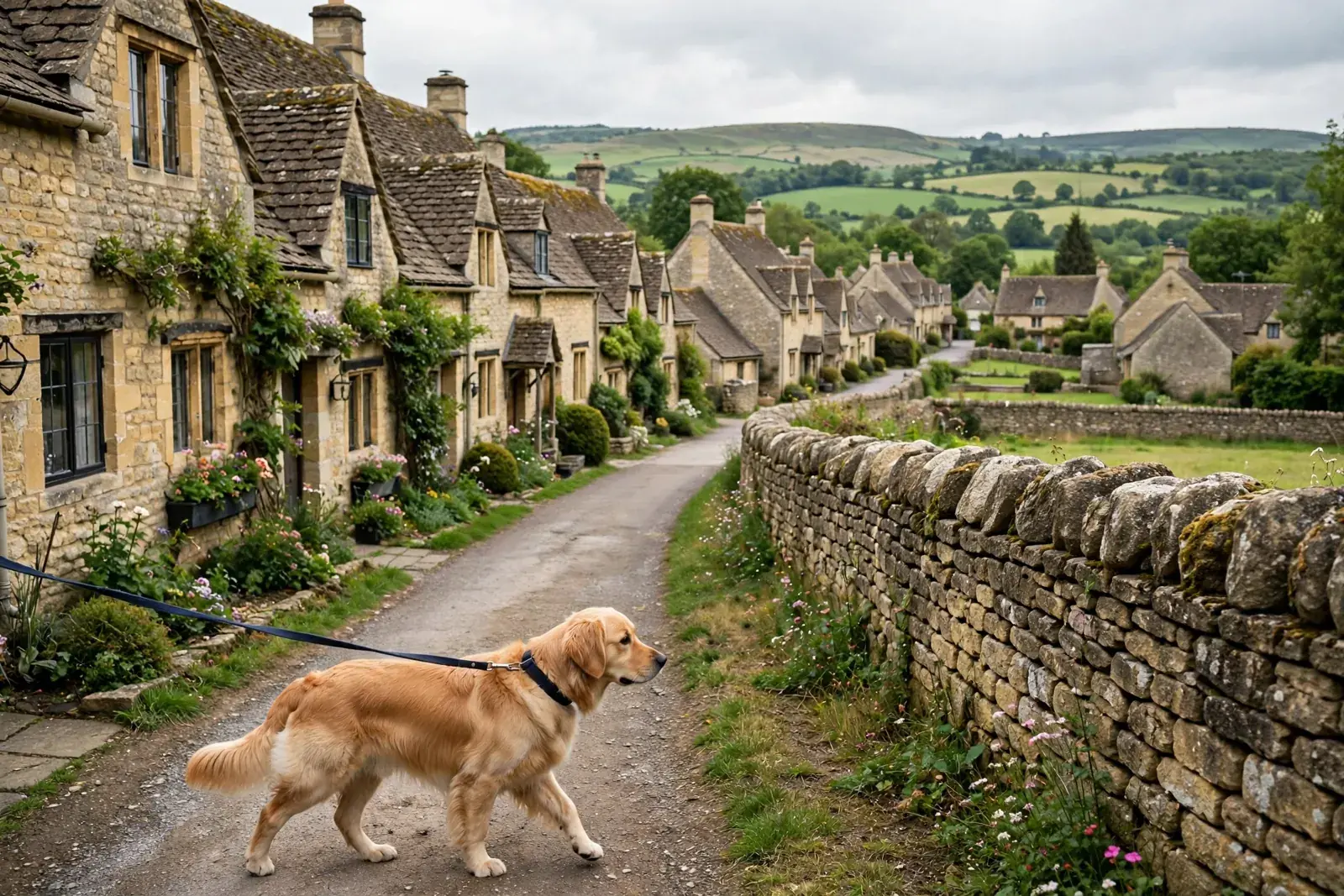
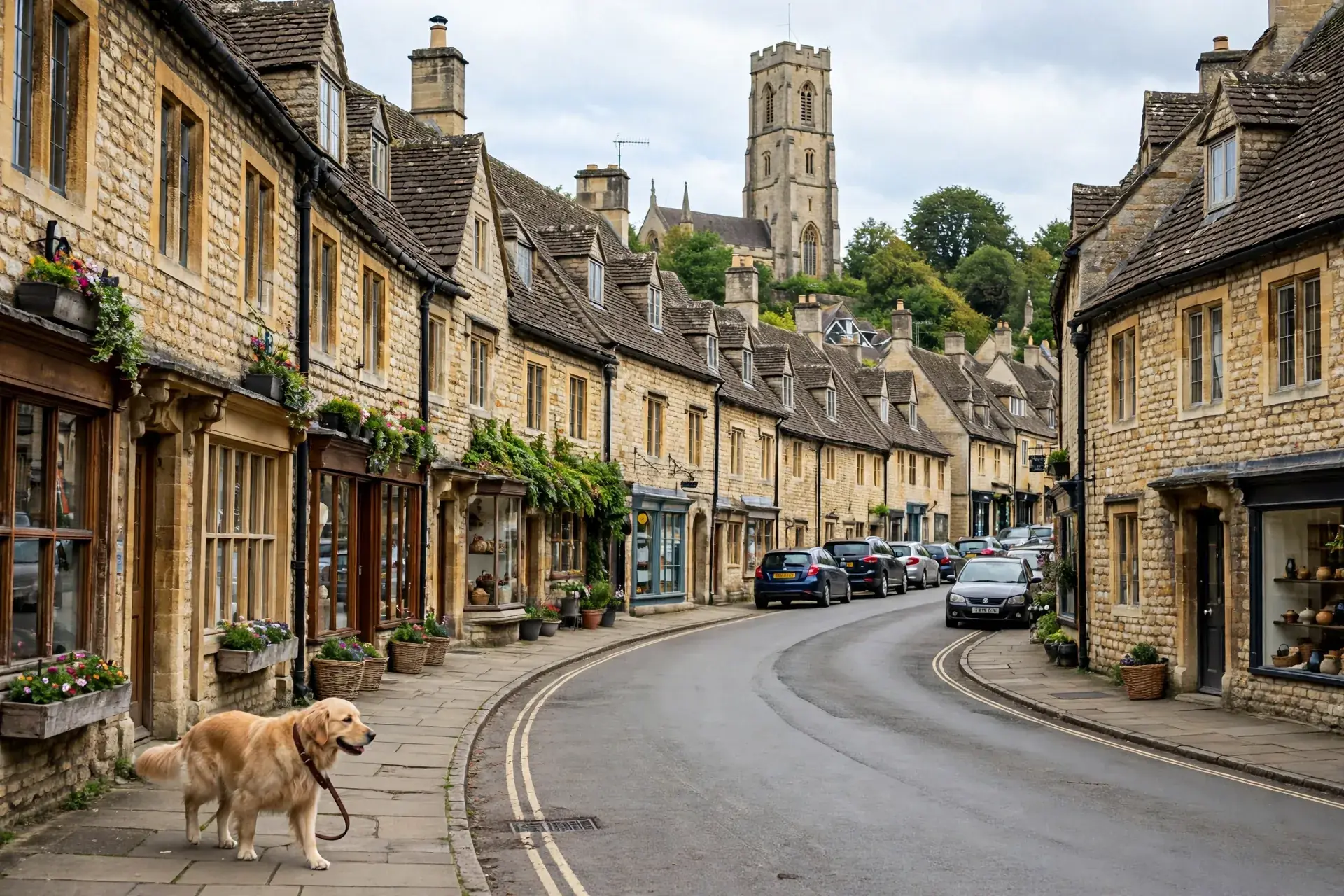
Painswick village climbs a hillside, and its lanes reflect that geography: narrow, steep in places, lined with honey-stone cottages, and full of corners, steps and side passages. Walking the village with a dog is therefore a route-planning exercise as much as a stroll. Choose a loop that uses the gentler streets for the outward walk and reserves the steepest lanes for the return downhill, or avoid the steepest lanes altogether if the dog is small, older or unfit. Pavements narrow in places, so keep the lead short, step aside for oncoming walkers, and use side lanes as breathing space when the main street is busy.
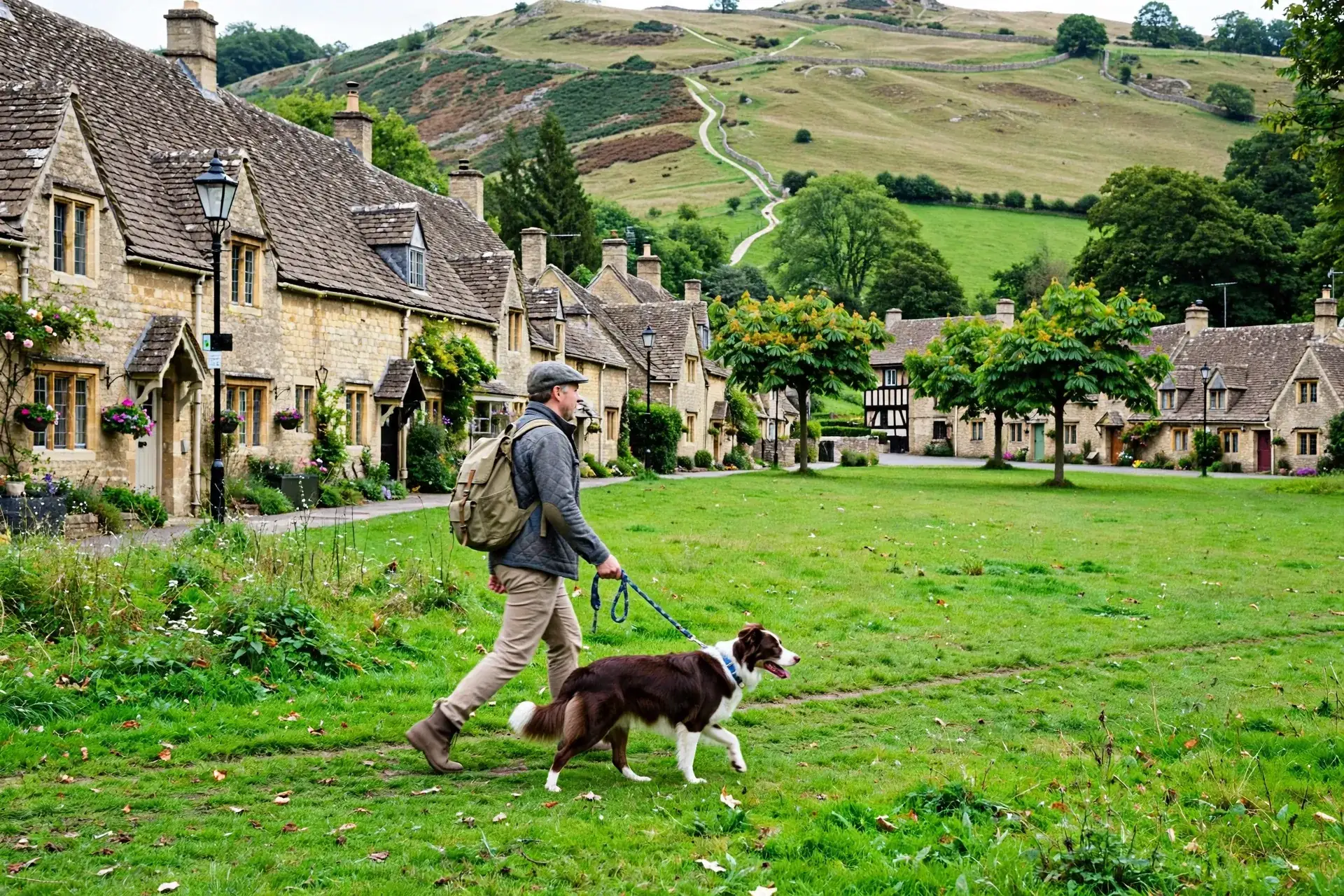
The village centre, around the church and the main street, offers shops, cafes and a useful concentration of dog-friendly stops. Policies vary venue by venue, so look for signs and ask politely, and do not assume that a welcome in one cafe applies to the next. A dog that can settle under a table for twenty minutes will enjoy the centre far more than a dog that is pulled from shop to shop, so build in cafe pauses as part of the walk, not as an afterthought. The centre is also a good place to resupply: water, bags and treats before the garden or valley walk, rather than discovering a shortage halfway down a valley path.
Street etiquette in a hill village matters because pavements are narrow and residents use them daily. Clean up promptly, keep the dog from private gardens and open doorways, and do not let the dog greet every other dog on a narrow lane, where leads tangle easily and there is little room to step aside. Early mornings and late afternoons are the quietest times in the village, and they are also the best light for photographs of stone and yews, so a dog walk at those hours often feels like a different, calmer village from the midday version.
Painswick Beacon and the high ground
Painswick Beacon rises above the village, offering open common land, wide views and a very different walk from the garden and valley. The Beacon suits fit dogs and walkers who want open ground, wind and a long horizon, and it pairs naturally with a village visit for those who arrive early and want a hill walk before lunch. The common is open, so a lead is wise near roads, other walkers and any livestock, and the ground can be exposed to wind and sun, so water, a hat and a windproof layer matter even on a day that feels warm in the village.
The climb to the Beacon is the main consideration. It is steep in places, and the descent is harder on knees and paws than the ascent, so a dog that bounds up may need a slower, shorter way down. Choose a route with a clear turn-back point, such as a lane junction or a field gate, and turn back before the dog is tired rather than after. A Beacon walk of an hour, with rests and water, suits most fit dogs, while a longer common walk suits only dogs with proven stamina and owners who carry a map and know the route.
Views from the Beacon reward the climb, with the Severn Vale on one side and Cotswold hills on the other, and the open grass is a wonderful place for a dog to sniff the wind and watch the world. Keep the visit simple: a walk, a rest, a photograph and a return, rather than a forced march across the whole common. A dog that enjoys the Beacon in the morning will often be happy with a quiet garden or village walk in the afternoon, and that balance is the key to a Painswick day that works for both walker and dog.
Slad Valley paths and woodland edges
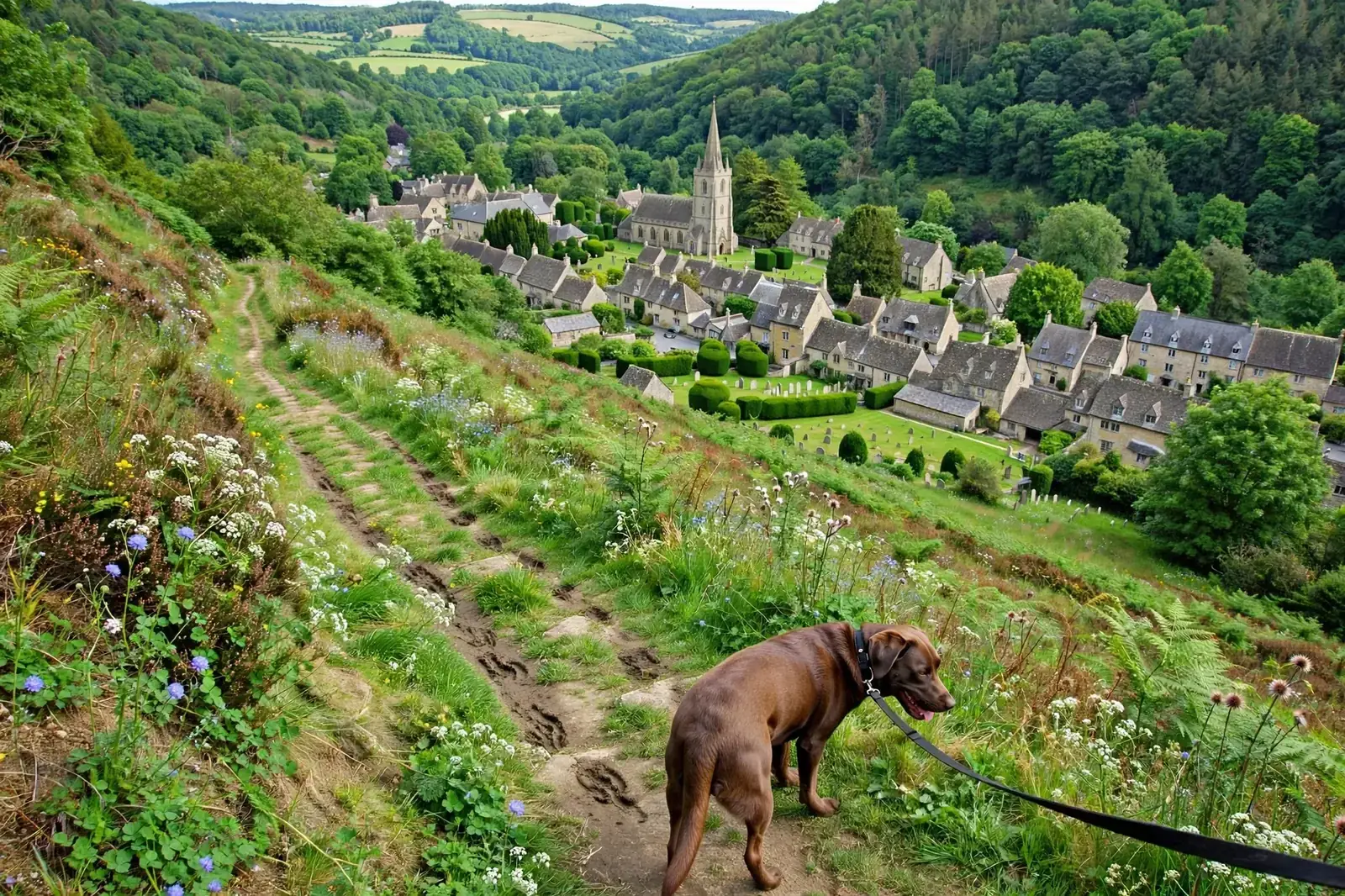
The Slad Valley, made famous by Laurie Lee's writing about his childhood there, runs near Painswick as a wooded, winding valley with lanes, field paths and streams. For dog walkers, the valley offers a quieter, greener alternative to the village streets and the open Beacon, with shade in summer, shelter in wind, and a sense of countryside that feels removed from the town even though it is close by. Paths in the valley vary from firm lanes to muddy field paths, so footwear and towels matter, and a map is useful where paths fork at field corners or woodland edges.
Walk the valley as a loop from the village if the dog is fit, or as a short out-and-back lane walk if the dog is older or the weather is wet. Keep the dog on a lead near livestock, on narrow lanes where farm traffic may appear, and near streams where banks can be slippery. Woodland edges in the valley are rich in scent, which dogs love, but they also hide brambles, fallen branches and muddy hollows, so keep the dog on the path rather than letting it crash through undergrowth. A valley walk of an hour, with a rest by a stream or on a grassy bank, is a satisfying outing that leaves the dog tired in the good sense.
The literary connection adds a layer to the valley walk, but it should not dominate the dog's experience. Laurie Lee's Slad was a working valley of farms, lanes and village life, and that working character remains: farm vehicles, livestock, field gates and working dogs are all part of the landscape. Walk the valley as a guest in a working place, leave gates as found, follow waymarked paths, and do not stray into crops or private gardens. A valley walk done respectfully is a walk that keeps the valley welcoming for the next dog walker as well.
Steep streets and older or smaller dogs
Painswick's steepness is the single biggest factor for older, smaller or less fit dogs, and it deserves honest planning. A village that climbs a hillside will tire a short-legged dog faster than a flat village, and a steep descent can be harder on joints than the climb. The solution is not to avoid Painswick, but to plan around the slope: use the car to move between levels, choose the flatter central streets for the main village walk, and save the garden and valley walks, which are gentler in gradient, for the main exercise. A ramp for the car, a harness rather than a collar pull, and frequent rests all help.
Small dogs need a different kind of care on steep lanes. Steps that are easy for a large dog can be a scramble for a dachshund or a terrier, and a long steep lane can be exhausting for short legs. Carry a small dog for the steepest sections if needed, without embarrassment, because a short carry preserves energy for the enjoyable parts of the walk. Puppies, similarly, should not be asked to climb steep lanes repeatedly, and their walks should be short, with plenty of sniffing and rest, rather than long climbs that strain growing joints.
For a general guide to planning Cotswold walks around a dog's fitness, our Cotswolds with a dog guide covers commons, livestock and parking, and it is a useful companion to this Painswick guide. The shared lesson is simple: match the walk to the dog, not the dog to the walk, and a village that is planned around its slopes will be enjoyed far more than a village that is tackled as if it were flat.
Cafes, pubs and a hillside lunch
Painswick's cafes and pubs are well placed for a hillside lunch, with gardens, terraces and dog-friendly interiors that reward a walk. Look for a venue with a quiet corner, a water bowl and a floor that is easy to clean, and check the policy on arrival, because dog rules can differ between the bar, the restaurant and the garden. A mat helps the dog settle, and a small chew or toy can keep a settled dog occupied while you eat. Keep the lead where it cannot trip staff, and place the water bowl away from passing feet.
Timing a hillside lunch around the dog's walk matters. A dog that has just climbed from the garden or valley will be thirsty and possibly muddy, so give water, wipe paws and let the dog settle for a few minutes before ordering. A dog that has had a quiet village morning may settle immediately. If the dog cannot settle, a short toilet walk before lunch often solves the problem, and a garden table is usually kinder than a formal indoor room for a dog that is still full of walk energy. Keep lunch to an hour or so for most dogs, because a long lunch in a busy venue tests even a calm animal.
Picnics are a good alternative in Painswick, especially in the garden or on a grassy valley bank, where the dog can lie on a mat and the owner can eat without worrying about restaurant rules. Pack the dog's food and water, keep rubbish contained, and choose a spot away from other picnickers' dogs and from livestock. A picnic also solves the rainy-day problem, when gardens are wet and indoor venues are full, because you can eat under a shelter or in the car without cutting the day short.
Parking, arrival and the first climb
Painswick has car parks within walking distance of the centre, and parking once and walking the village on foot is the simplest plan. Arrive early on weekends, when the village is busier and parking fills, and note the parking terms on arrival. Choose a space that gives a straightforward walk to the church and centre without a steep climb with an excited dog, and never leave a dog alone in a car in warm weather. Shade matters in summer, so favour a shaded bay if available.
The first ten minutes after arrival should be calm and practical, not a rush up the steepest lane. Let the dog toilet, drink and sniff around the car park area, check leads, bags, water and the route, and agree a rough plan: churchyard first, village loop second, garden or valley third. A dog that starts calmly will walk the steep lanes calmly, while a dog that starts in a rush will pull uphill and arrive at the churchyard already tired. If you are using a satnav, park and navigate on foot with a map, rather than driving around narrow lanes looking for a closer space.
The return to the car deserves the same care. Give the dog a final toilet walk and a drink, wipe muddy paws, and load any purchases so they cannot slide onto the dog. A tired dog may sleep quickly in the car, so keep the journey calm, with ventilation and a comfortable space, and stop for a break on a long drive home. The drive home is part of the day for the dog, not just a gap between the outing and home.
Seasons, yew berries and mud
Spring in Painswick brings blossom, longer days and busy garden paths, but also lambing fields and nesting birds on valley lanes, so leads stay on and paths stay followed. Summer brings the fullest village streets, the busiest garden and the warmest pavements, so early starts, shade and water matter most, and the woodland garden becomes the essential midday refuge. Autumn brings colour in the valley, quieter streets and cooler walking, but also yew berries in the churchyard and wet leaves on lanes, so watch the ground and keep the dog from mouthing berries. Winter brings frost, clear light and empty lanes, but short days and icy patches in shaded hollows, so check daylight before a valley walk and carry a torch for a late finish.
Mud is a Painswick constant, because hillside lanes, valley paths and garden routes all hold water after rain. After heavy rain, choose the village streets and the garden's surfaced paths over the muddiest valley sections, and save the Beacon and the steepest lanes for a drier day. A towel in the car, a drying coat for a short-coated dog, and a check for mud packed between toes after every walk are the basics of a mud routine. Dogs that are dried promptly and given a dry bed after a muddy walk recover faster and enjoy the next walk more than dogs that stay damp.
Yew berries deserve a final seasonal warning, because they appear in autumn and are toxic to dogs. Keep the dog on paths in the churchyard, watch for fallen berries, and contact a vet promptly if the dog eats any plant material that causes concern. The same caution applies to other garden plants and fungi on valley walks: keep the dog on paths, do not let it forage, and check the official guidance before you travel for any seasonal notices about plants, livestock or path closures.
Half day or full day in Painswick
A half day in Painswick suits a morning visit, a young dog, an older dog or a day when the weather is uncertain. Park, walk the churchyard, loop the village centre gently, stop for a cafe break, and finish with a short garden or valley stroll. Allow two to three hours, including pauses, and do not feel that you have missed something by skipping the Beacon or a long valley loop. A half day done well, with a settled dog and a relaxed lunch, is a complete Painswick experience, and it leaves the garden and valley as reasons to return.
A full day suits a fit dog and a clear day. Start with the churchyard and village in the morning, when the dog is fresh and the streets are quiet, then spend the middle of the day in the Rococo Garden or the Slad Valley, and finish with a late-afternoon village walk or a Beacon viewpoint if energy allows. Build in a rest between the halves, with water and a toilet walk, so the dog does not go straight from a long walk to a busy street without decompressing. End the day with a quiet cafe stop or a picnic, while the dog is still happy rather than exhausted.
Choosing between the halves is a question of honesty about the dog, not about ambition. A fit spaniel will enjoy a full day of garden, valley and Beacon, while a senior terrier will enjoy a half day of churchyard, village and garden far more. Match the day to the dog, check the weather, and be ready to switch plans mid-day if the dog's energy or the weather changes. A dog that sleeps well after Painswick, eats normally and greets the next morning with enthusiasm has had the right amount of hillside, garden and valley, whatever the step count.
Practical questions
Before you go
Are dogs allowed in the Rococo Garden at Painswick?
Dogs on leads are generally welcome in the Rococo Garden, though some areas, events and buildings may have different rules. Check the official guidance before you travel for current dog admission, opening times and any seasonal restrictions, and keep the dog on paths away from planted beds.
Can dogs walk in St Mary's churchyard at Painswick?
The churchyard at St Mary's is a public space where a dog on a lead can walk calmly, provided graves, memorials and other visitors are respected. Keep the lead short, keep the dog away from yew berries and flower arrangements, and move on if a service or a private moment is taking place.
Is the Slad Valley walk from Painswick suitable for dogs?
The Slad Valley offers lanes, field paths and woodland edges that suit many dogs, but the valley sides are steep in places and paths can be muddy after rain. Choose a short valley loop for older or smaller dogs, carry water, and keep the dog on a lead near livestock and on narrow lanes.
Is Painswick too steep for older dogs?
Painswick village itself is steep, with narrow lanes climbing the hillside, so older dogs need a planned route rather than a random wander. Use the flatter streets near the centre, take the garden and valley walks at a gentle pace, and drive between levels where possible instead of climbing the steepest lanes on foot.
Where do I park for a dog walk in Painswick?
Painswick has car parks within walking distance of the centre, and parking once and walking the village on foot works best. Arrive early on busy weekends, note the parking terms, and give the dog a toilet walk and water before the steep lanes, so the walk starts calmly.