This guide is independent and contains no paid placement. If affiliate links are added later, they will be clearly marked and will not change our editorial checks.
Poole is one of the largest natural harbours in the world, and it shapes every dog day here: the flat Quay walk, the ferry to Brownsea Island, the Sandbanks dog beach and the shoreline paths at Upton Country Park. Keep the dog on a lead on the Quay and near the water, check the tide and the beach signs before you let a dog off, and book the Brownsea ferry ahead in summer.
Start with the harbour, not the beach
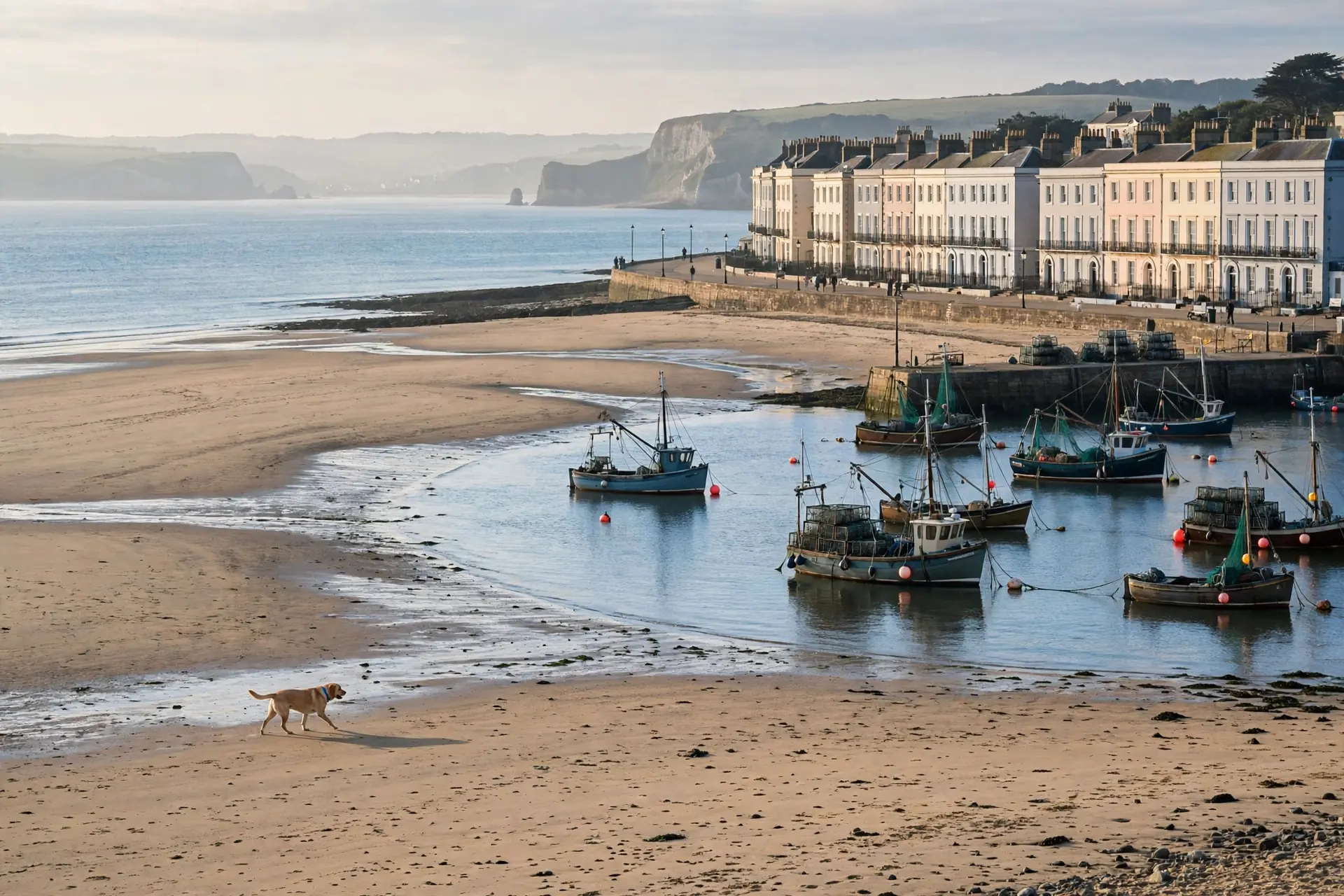
Poole Harbour is the fact that explains everything else about the town. It is a vast, shallow, sheltered stretch of water, claimed to be one of the largest natural harbours in the world, and it has made Poole a port, a fishing town, a sailing centre and a gateway to the islands for centuries. Stand on the Quay at low tide and you can see the scale of it: mudflats, channels, moored boats and, in the distance, the low green shape of Brownsea Island. For a dog, the harbour is a feast of smells — salt, seaweed, fish, rope and tar — and a lesson in self-control, because every one of those smells is more interesting than the next.
The best way to understand Poole with a dog is to let the water set the day. Walk the Quay in the morning, when the fishing boats are unloading and the gulls are loud, then decide what comes next: a ferry, a beach, a country park or a pub. The harbour rewards patience. Watch the lifting bridge open for a tall-masted yacht, watch the ferry pull away for Brownsea, watch the light change over the mudflats as the tide turns. A dog that has learned to settle and watch is a dog that will enjoy Poole; a dog that pulls at every new smell will need a short lead and a steady hand.
Poole is also a town of two halves, and it helps to know which half you are in. The old town around the Quay is narrow, historic and full of pubs, museums and independent shops. The modern town centre, a short walk away, is shops, cafes and the bus station. The harbour and the bay are to the south and east, and the beaches at Sandbanks and beyond are a short drive or bus ride away. You do not need to see all of it in one day. Pick the Quay and one other thing — the ferry, the beach or the country park — and the day will feel spacious rather than rushed. Our Dorset with a dog guide puts Poole in its coast-wide context if you are planning a longer trip.
Treat the tide as the day's timetable, because it decides which stretches of sand and shoreline you can actually use. Look up that morning's high and low water for Poole Harbour before leaving your accommodation, and match the Brownsea sailing times and the Sandbanks dog-area dates against it, since both shift through the year. The council and ferry operator pages carry the latest versions, so confirm them the same day.
Poole Quay and the old town
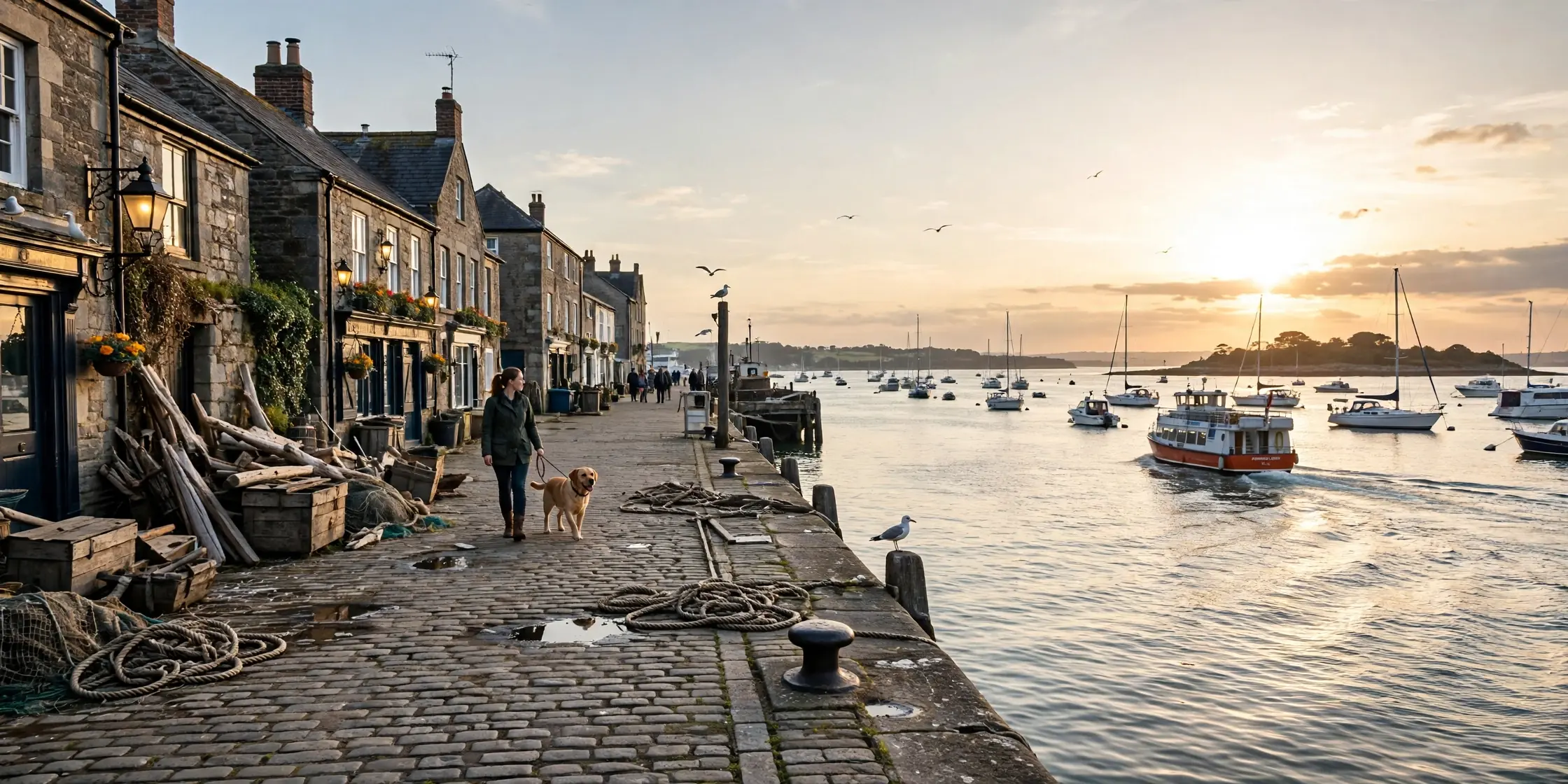
Poole Quay is the heart of the town, and it is a genuinely good dog walk. The Quay is flat, wide and paved, with the water on one side and a row of pubs, cafes and historic buildings on the other. The walk from one end of the Quay to the other takes about twenty minutes at a dog's pace, and there is always something to look at: fishing boats unloading, yachts coming and going, the RNLI lifeboat station, and the lifting bridge that rises to let tall boats through. Keep the dog on a short lead here. The edge of the Quay drops straight into the water, the road runs close to the pavement, and the crowds in summer leave little room for a dog on a long lead.
Behind the Quay, the old town is a network of narrow streets and alleyways with a strong maritime history. Poole's old town was built on trade — wool, pottery, fishing and shipping — and the buildings still show it, from the old customs house to the timber-framed houses that survive among later fronts. The Poole Museum, when it is open, tells the town's story, though dogs are not generally allowed inside; the streets themselves are the museum for a dog owner, and a slow wander through them is a pleasure in itself. Look for the old town's pubs, some of which claim centuries of history, and for the small squares and courtyards that give the old town its character.
The Quay is at its best early in the morning and in the evening, when the day-trippers have gone and the light is low over the water. In the middle of a summer day it can be crowded, hot and noisy, with buskers, market stalls and queues for the boats. If your dog is nervous in crowds, walk the Quay early, then retreat to the quieter streets of the old town or to the harbour paths beyond the centre. Benches along the Quay give a place to sit and watch the boats, and the pubs with outdoor seating are a good place to stop for a drink while the dog rests.
Watch for the details that make the Quay special: the ropes and bollards, the smell of the fish market, the gulls that follow the boats in, and the way the light changes as the tide turns. Poole is a working harbour, not a theme park, and that is its charm. A dog that can settle on the Quay has learned one of the best skills a travelling dog can have: how to be calm in a busy, interesting place.
The ferry to Brownsea Island
Brownsea Island is the jewel of Poole Harbour, and it is one of the most dog-friendly island trips in England. The island is owned by the National Trust, and dogs are welcome on the ferry and on the island, on a lead at all times. The ferry runs from Poole Quay and from Sandbanks, and the crossing takes about twenty minutes from the Quay. Book in advance in summer and at weekends, because the ferry is popular and the island limits visitor numbers.
On the island, the walking is gentle and varied: woodland paths, heathland, a shoreline trail and open grass, with views back across the harbour to Poole and Sandbanks. Brownsea is famous for its red squirrels, which are one of the few surviving populations in southern England, and for its role in the founding of the Scout movement. Dogs must stay on a lead, partly to protect the squirrels and the ground-nesting birds, and partly because the island's paths are shared with families and other visitors. Keep the lead short in the woodland, where squirrels are a powerful distraction, and watch for adders in the heathland in warm weather.
Give Brownsea half a day rather than squeezing it between other plans. Sail from Poole Quay, wander the woodland and shoreline trails for a couple of hours, pause at the island cafe, then catch a later boat back with the afternoon still free for the Quay. Pack drinking water and a full roll of bags, since taps and bins are few and far between once you step off the jetty, and wear footwear that handles muddy, uneven ground. Sailing times, fares and the island's dog conditions move with the season and the weather, so look at the operator's current notices on the morning you go.
If the ferry is full or the weather turns, the harbour still offers plenty. Boat trips around the harbour run from the Quay in the summer, and some welcome dogs on deck — check with the operator before you book. Even without a boat, the harbour paths and the views from the Quay are a day out in themselves, and the island will still be there next time.
Sandbanks and Poole Bay beaches
Sandbanks is the long golden spit where Poole Harbour meets the open sea, with waves on the seaward side, calm harbour water on the other, and some of Britain's priciest houses lining the roads behind the dunes. Dogs have their own marked stretch here that stays open through the whole year, while the main sands close to them during the warmer months. Read the notice boards at the beach entrances when you arrive, and confirm the current dog-area boundary and restriction dates on the council's beach pages beforehand, since both are redrawn from time to time.
The dog area at Sandbanks is generous, and on a good day it is one of the best dog beaches in Dorset: firm sand at low tide, shallow water for paddling, and room to run. Arrive early in summer, because the car parks fill and the beach fills with them. Keep the dog under control even in the dog area, because there are children, other dogs and the occasional horse rider, and keep the dog on a lead on the way to and from the beach, through the car park and along the promenade.
Beyond Sandbanks, Poole Bay continues east towards Bournemouth, with a long promenade and a series of beaches that each have their own rules. The promenade itself is a good dog walk out of season, when the beaches are quieter and the restrictions are lifted, but in summer the main beaches are restricted and the promenade is crowded. For a quieter beach day, consider the harbour side of Sandbanks, where the water is calmer and the crowds are thinner, or head to the beaches further west towards Studland, which are covered in our Dorset guide.
Beach safety matters here. The sea at Sandbanks can have strong currents, especially near the harbour entrance, and the sandbanks themselves shift with the tide. Never let a dog swim near the harbour mouth or the ferry channel, and watch for the tide coming in behind you on the long, flat beach. In summer, the sand can be hot on paws, so walk in the morning or evening, and carry water — there is no shade on the beach itself. After a beach visit, rinse the dog's paws and coat if you can, and check for sand between the toes, which can irritate the skin.
Upton Country Park and the shoreline
Upton Country Park, on the western shore of Poole Harbour, is the antidote to the busy Quay and the crowded beach. It is a large country park with woodland, meadows, a formal garden, a shoreline path and open grass, and it is one of the best places near Poole to give a dog a proper walk. The paths are mostly flat and well surfaced, the views across the harbour are lovely, and there is room for a dog to run on a long line in the open areas. Dogs must be kept under control and on a lead in some parts of the park, so keep the lead handy and follow the signs.
The shoreline path is the highlight: a flat, easy walk along the edge of the harbour, with wading birds at low tide and views across to Brownsea and the Purbeck hills. It is a good walk for older dogs and for dogs that prefer a steady pace to a scramble. The woodland paths are shadier and cooler in summer, and the meadows are at their best in spring, when the wildflowers are out. The park also has a tea room and a play area, so it suits a family day out as well as a dog walk.
Upton is popular, especially at weekends, so arrive early or late in the day for the quietest paths. Keep the dog on a lead near the car park, the tea room and the play area, and watch for cyclists on the shared paths. The park is also a good place to practise recall and settling, because there are other dogs, other people and plenty of distractions, but there is also space to step aside and give a reactive dog room.
From Upton you can stretch the outing into a longer harbour circuit, following the shoreline trail on towards Hamworthy and the western shore or back towards Poole town, with Brownsea across the water for much of the way. Take drinking water and bags, and choose footwear that grips on paths turned slick by rain. The park hosts fairs, runs and school-holiday events that fill the car park fast, so glance at the park's own notices for that day's opening hours and happenings before setting off.
Pubs, cafes and fish and chips
Poole's pubs are part of its harbour character, and several welcome dogs. The pubs along the Quay are the obvious choice: they have outdoor seating with a view of the water, they are used to dogs, and they serve the kind of food — fish and chips, pies, ploughman's — that suits a day by the sea. Dogs are usually welcome in the bar area and outside, rather than in the main restaurant, so ask on arrival and take the seat you are offered.
Fish and chips is the Poole meal, and the Quay and the old town have several places to buy it. Eat it on a bench by the water if the weather allows, or take it back to a pub garden. Keep the dog on a lead while you eat, keep food out of reach, and remember that gulls in Poole are bold and fast — a chip left unattended on a bench will not stay unattended for long. If your dog is a food thief, eat inside or keep the dog on the far side of the table.
Cafes in the town centre and at Sandbanks are generally relaxed about dogs outside, and some welcome them inside too. Policies change with the season and the staff, so ask before you sit down. Pack a collapsible bowl and a mat for the dog, and order something you can eat with one hand free. If a cafe is full, a takeaway coffee and a bench on the Quay is a perfectly good alternative, and the view is better than any cafe interior.
For a longer stay, the Weymouth with a dog guide covers the harbour and seafront eating further west, and the Swanage with a dog guide covers the Purbeck coast. In Poole itself, the rule is simple: walk first, eat second, and choose the pub that has space for a dog to settle rather than the one with the longest queue.
Parking, buses and the railway
For a dog day in Poole, choose your car park by what you plan to do first. The bays beside the Quay put you straight onto the waterfront, though they fill fast on sunny weekends and event days. Town-centre parking, a few minutes' stroll from the old town, suits a longer stay, while the Sandbanks car parks serve the beach and the Brownsea boats. Tariffs, maximum stays and summer rules differ between sites, so look up the latest charges for your chosen car park on the council's parking pages, and get there early in the warm months.
A parked car can turn dangerously hot even on a mild, sunny day, so never shut a dog inside one while you go off to look around. Spring and autumn sunshine through glass pushes the temperature up quickly, so treat any bright day the same way. When a shop, museum or boat trip bars dogs, split up instead: one of you stays waterside with the dog while the other goes in, then swap. The Quay and old town are compact, so the wait is never far from the action.
Poole is easy to reach without a car. The railway station sits in the town centre, a flat few minutes from the Quay, with trains in from London Waterloo, Bournemouth, Southampton and Weymouth, and dogs travel on them on a lead. From the bus station, routes run out to Sandbanks, Upton Country Park and the villages around the harbour, and drivers usually accept a well-behaved dog on board. Sunday and winter timetables thin out, so look at the bus operator's live departures for your route before you set off, and allow a cushion for the walk back to the station.
For drivers, Poole is reached from the A31 and the A35, and the town centre is well signed. The Quay area is narrow and busy, so follow the signs to the car parks rather than trying to drive along the Quay itself. Satnav can suggest routes through the old town that are tight for larger vehicles, so use the signed routes and allow extra time in summer, when the roads around Sandbanks and the Quay can be slow.
Tides, mud and harbour safety
In Poole, the tide deserves more respect than any other hazard. The harbour is broad and shallow, so the water can creep back across the flats far quicker than it seems, cutting off a beach stroll or a shoreline path at Holes Bay and Baiter Park. Look up the day's tide curve before heading out, and let somebody know your route when you walk alone. Hold your dog back from the exposed mud altogether: it is soft, clinging and deep in places, and a dog that wades in can flounder, panic and tire itself out before you can reach it.
Along the Quay, keep the lead short and your dog well back from the coping stones, above all while boats are manoeuvring or the Twin Sails Bridge is lifting. The drop to the water is sheer, the harbour is deep right against the wall, and a dog that slips over the edge finds no ledge or ladder to scramble onto. Should yours go in, stay on the Quay yourself: shout for assistance, and dangle a lead or rope for the dog to be steered towards the nearest slipway or steps, where it can climb out.
Around the beaches, give the harbour entrance and the ferry lane a wide berth, because the current runs hardest there, and steer clear of discarded fishing line, hooks and bait along the shore. After woodland and heath walks at Upton or on Brownsea, run your hands through the coat for ticks, and wash off salt water after a swim, since dried salt itches and dries the skin. In hot spells, still pools in the harbour shallows and the park ponds can bloom with blue-green algae; keep your dog from drinking or paddling where the surface looks pea-green or filmed, and ask at the park office or look at the day's local water-quality notices when anything looks off.
Lastly, give the harbour's birds room. Thousands of waders spend the cold months feeding and resting on Poole's flats, from Holes Bay to the Brownsea shoreline, and a loose dog racing across the mud can scatter a whole flock that has little energy to spare. Clip the lead on whenever you walk the shore as the tide falls, above all between autumn and spring, and steer away from reedbeds and saltmarsh where birds nest on the ground through the warmer months.
Staying over and day trips
Poole has a good range of dog-friendly places to stay, from harbourside hotels and town-centre inns to self-catering apartments and cottages on the edge of town. Sandbanks has hotels and apartments with sea views, and the surrounding villages offer cottages with gardens. Book early for summer weekends and school holidays, and confirm the dog policy in writing: how many dogs, whether there is a charge, whether dogs can be left alone, and where the nearest toilet walk is after dark.
Once you reach your Poole base, take the dog out for a short recce before touching the suitcases. Loop around the block to find the closest patch of grass for the final evening toilet walk, note whether the garden is fenced, and work out where the nearest vet sits. Pack the dog's familiar sleeping mat, its usual food and bowls, and a blanket that smells of home, because known bedding helps a dog unwind in an unfamiliar bedroom. Quayside rooms can stay noisy late on summer nights, so a nervous sleeper may rest better in a room facing away from the water.
Day trips from Poole are easy. Bournemouth's beaches and gardens are a short drive or bus ride east, and our Bournemouth guide covers the seafront in detail. West towards Purbeck, Swanage Bay and the Jurassic Coast offer wilder walking, and the Swanage with a dog guide is the place to start. North towards Wimborne, the River Stour and the market town streets make a calm half-day, and the Dorset countryside beyond is full of quiet footpaths and villages.
Shape each day around what your dog can manage rather than a list of places. A brisk morning circuit at Upton Country Park or along Baiter Park, then one unhurried stop, leaves a dog far happier than three hurried dashes across Dorset. A dog that has stretched its legs before lunch usually dozes through the drive back. Stash a towel, water and a spare lead in the boot, and confirm the beach and sailing rules before leaving, since summer limits on Dorset sands and the Brownsea boats are enforced.
Practical questions
Before you go
Can dogs go on the ferry to Brownsea Island?
Dogs ride the passenger boats from Poole Quay and from Sandbanks across to Brownsea, and they can explore the island's paths too, provided they stay clipped to a lead for the whole visit. Indoor rooms on the island are off limits to dogs, so plan to enjoy the outdoors. Summer sailings fill up, so reserve seats ahead, and look at the ferry operator's current dog conditions on the day, since sailing times and rules shift with the season.
Which Poole beaches allow dogs?
Sandbanks keeps one marked stretch open to dogs all year, while the main sands bar them through the summer months. Elsewhere around Poole Bay the picture changes beach by beach, so read the boards at each entrance and confirm the current dates on the council's beach pages. Keep the lead on through car parks and along the promenade, even when the sand itself is dog-friendly.
Is Poole Quay dog-friendly?
Yes, the Quay suits dogs well. The paving is flat, the stretch is wide, and there is always something to watch, from the fishing fleet to the Twin Sails Bridge lifting for a yacht. Stay close to your dog near the coping stones, the road and the summer crowds, and settle into one of the harbourside pubs or cafes in the old town when the dog needs a rest.
Where can I park in Poole with a dog?
Waterfront bays beside the Quay are handiest for the old town, with bigger town-centre car parks a short stroll away and beach parking at Sandbanks for the sands and the ferry. Summer weekends fill them all, so aim to arrive before the late-morning rush and leave time for the stroll to the water. A dog should never be left waiting in a parked car on a warm day, so take turns if one of you needs to pop into a shop.
Is Upton Country Park good for dogs?
Yes, it is one of the strongest dog walks around Poole. Woodland trails, open meadows, a formal garden and a level shoreline path with harbour views give a dog variety without steep climbs. Some corners require a lead, and the paths are shared with cyclists, families and wildlife, so keep the lead within reach even where the grass looks empty.
When is the best time to visit Poole with a dog?
Late spring and early autumn usually give the kindest mix: mild air, thinner crowds on the Quay and the beaches, and daylight long enough for a Brownsea sailing plus a Quay wander. High summer brings the liveliest harbour, so walk before the heat and reserve ferries early. Winter turns quiet and windswept, and the harbour paths can get muddy after rain, so pack boots and a towel.