This guide is independent and contains no paid placement. If affiliate links are added later, they will be clearly marked and will not change our editorial checks.
Pet dogs are NOT allowed inside the Portmeirion village itself — only assistance dogs are admitted. That is the core fact, and no workaround changes it: not carrying your dog, not a pushchair, not a quiet weekday. Check the latest official policy before you travel, because rules can change. What dog owners can do is still plenty: stay in dog-friendly places nearby, walk the Dwyryd estuary shore and woodland outside the village boundary, spend real time at nearby beaches such as Black Rock Sands, and split a group visit so the dog gets an outing rather than a wait in a car park. Official source: Portmeirion: plan your visit (checked October 2026).
The straight answer: pet dogs and the village
Start here, because too many trip plans unravel at the Portmeirion gate. Portmeirion, the colourful Italianate village designed by Clough Williams-Ellis on a private headland above the Dwyryd estuary near Penrhyndeudraeth in Gwynedd, does not admit pet dogs into the village itself. The buildings, piazza, gardens, shops, cafes and woodland paths inside the paid entrance are for human visitors and for assistance dogs only. If your dog is a pet — however small, however calm, however well travelled — the village tour is not an activity you can share with it.
We state this bluntly because the alternatives found in vague online advice help nobody. Suggestions that a dog might be allowed if carried, kept in a bag, pushed in a stroller or taken in outside peak hours are not a policy, and planning a holiday around a hoped-for exception risks a long drive, a disappointed group and a dog spending hours somewhere unsuitable while feelings run high. Equally, please do not tie a dog outside the entrance and tour at leisure: entrances are busy, weather on this coast changes quickly, and a tethered dog among strangers, pushchairs and arriving cars is stressed at best and unsafe at worst.
None of this makes Portmeirion a wasted journey for dog owners, and this guide exists to prove it. The village sits within one of the most rewarding coastal corners of north-west Wales, between the mountains of Eryri — Snowdonia — and the sweep of Cardigan Bay. The estuary at its feet, the beaches a short drive away and the lanes and woodland outside the boundary offer a full, varied day. Treat the village as one element of a wider trip rather than the whole trip, and the dog rule becomes a planning fact instead of a holiday problem. Check the latest official policy before you travel, on the village's own channels, for opening arrangements, ticket requirements and any change to the dog rule itself.
What counts as inside: boundary, hotels and grounds
Understanding the boundary helps you plan without guesswork. The village is a contained, ticketed site: visitors enter through a controlled entrance, and everything most people picture when they picture Portmeirion — the central piazza, the campanile, the painted facades, the hotel and village rooms, the cafes, shops and ornamental gardens, and the formal paths down towards the shore within the site — sits inside it. If it requires a village ticket or a village booking, assume the pet dog rule applies, and confirm any detail directly with the venue rather than inferring from a map.
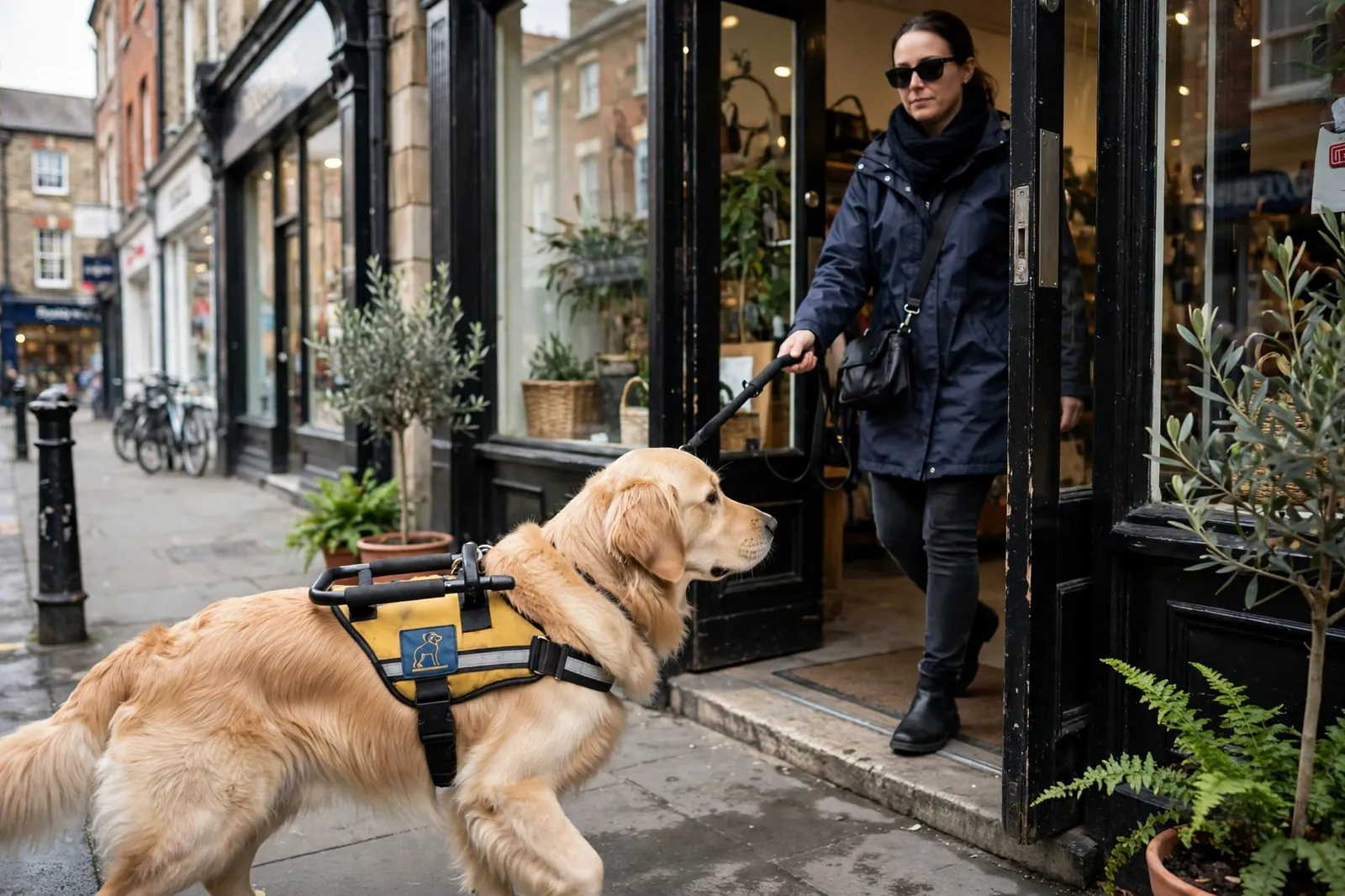
Accommodation needs the same care. Staying in the village's own hotel or village rooms is part of the inside-the-boundary experience, so do not assume a dog can join you there simply because some rural hotels elsewhere welcome dogs warmly. Policies for assistance dogs are different, as they are across the UK, and handlers should read our assistance dog access rights guide alongside direct contact with the village about specific access needs, step-free routes and rest areas. For pet owners, the practical answer is to sleep outside the boundary — which, as the staying section below shows, is easy and often better for the dog anyway.
What lies outside the boundary is a different landscape with different rules, and the distinction matters. Public rights of way, council-managed beaches, National Trust and other landowners' paths, village streets in Penrhyndeudraeth and Minffordd, and the wider estuary shore each set their own conditions. A path being outside Portmeirion does not automatically make it dog-friendly in every season — ground-nesting birds, grazing livestock, private gardens and tidal ground all bring their own restrictions — but it does mean the blanket village rule no longer decides the question. Read signs at each new threshold, because on this coast the threshold might be a gate, a slipway or a line in the sand.
Parking follows the same logic. The village car parks serve village visitors; arriving there with a dog and no plan for the dog is the scenario to avoid. If part of your group is touring the village while another part walks the dog, agree in advance who parks where, where the walking party sets off from, and where everyone reunites, because phone signal and one-way holiday traffic can turn a vague arrangement into an hour of circling. The split-visit section below gives a workable pattern.
Estuary and woodland walks outside the boundary
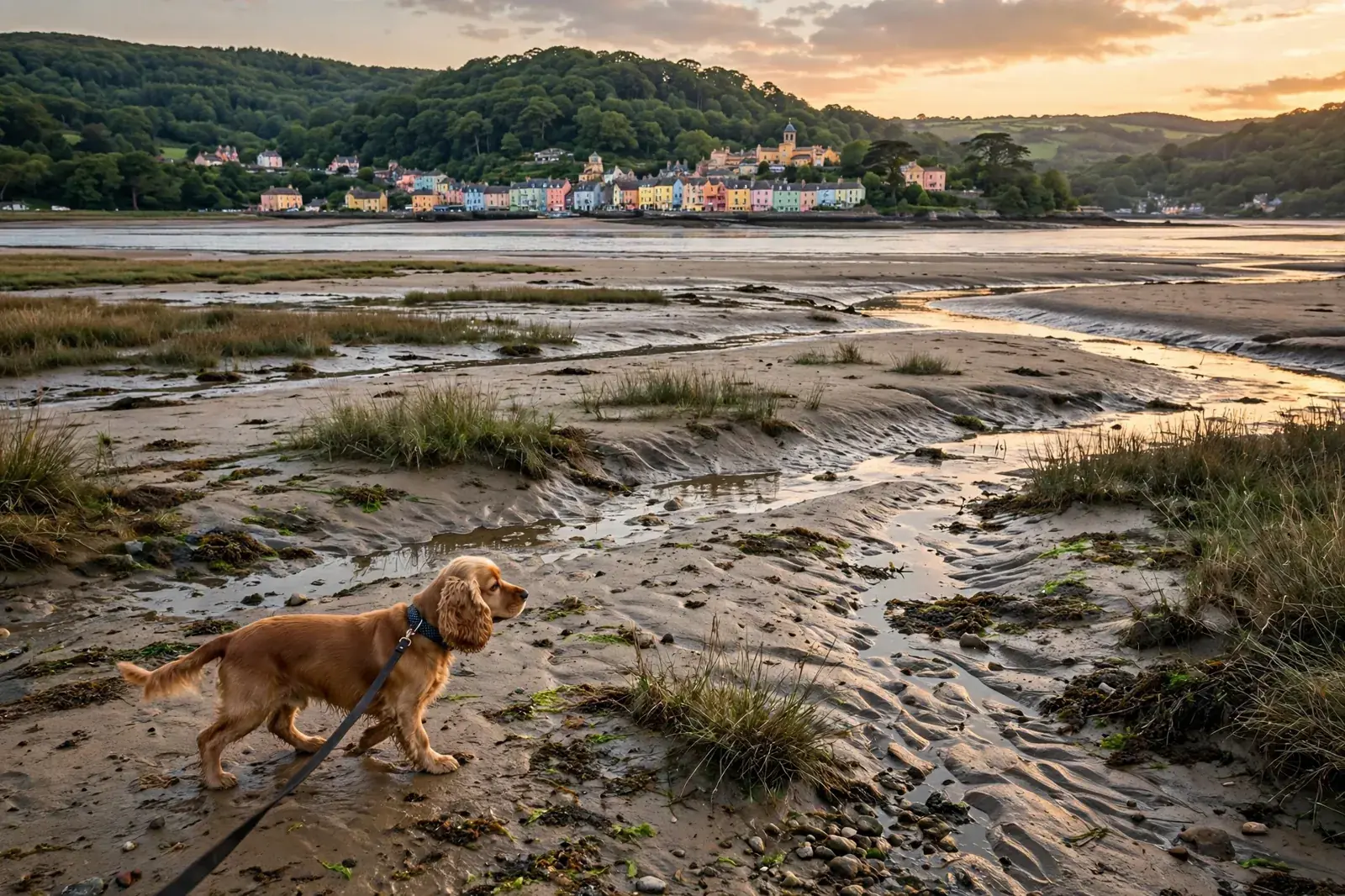
The Dwyryd estuary is the landscape Portmeirion looks out over, and from a dog's point of view it is arguably the better half of the scenery. Broad tidal sands and mudflats, saltmarsh edges, low wooded shores and big skies that change by the minute: an estuary walk here is a sensory feast of wader calls, sea air and safe, interesting ground, provided you respect the two governing facts of any tidal shore — the tide comes in, and much of what looks like firm sand is not. Walk the shore only with tide times checked, an exit always in sight, and a firm rule against following a happy dog out across soft channels or mud that can hold a paw, a boot or worse.
Woodland softens the day when wind or rain makes the open shore hard work. The lanes and paths in the countryside between Minffordd, Penrhyndeudraeth and the estuary carry a mix of oak woodland, farmland and glimpses of the village rooftops across the water — views that let the walking party share the postcard without crossing the boundary. Keep dogs on a lead around livestock without exception, close every gate, and treat grazing ponies, cattle and sheep as a signal to shorten the lead and widen your berth rather than as photo opportunities. In spring and summer, add ground-nesting bird awareness on rough and marshy ground: a dog on a lead or at close heel protects nests you will never see.
Distance is flexible, which makes this coast kind to mixed-ability groups. A gentle hour along firm shore paths and lanes suits an older dog or a hot afternoon, while fitter teams can build longer out-and-back routes linking shore, woodland and village-edge viewpoints, always with the tide table — not enthusiasm — setting the turnaround point. Carry fresh water even on an estuary walk: salt water is not drinking water, dogs that paddle and shake and paddle again lose more fluid than owners expect, and brackish pools can upset stomachs for a day. A bowl, a bottle and a towel in the car are the whole technology required.
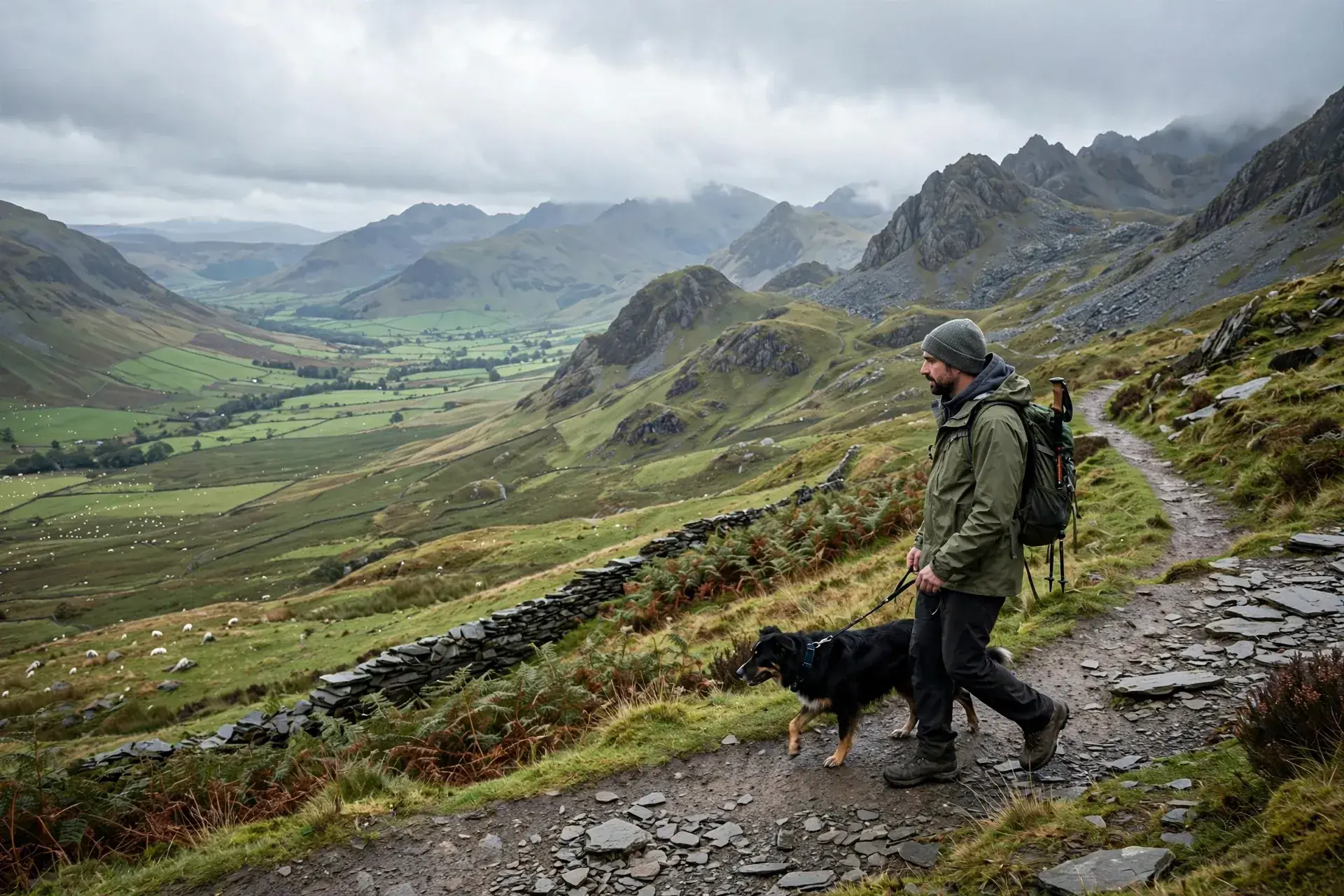
For a bigger walking week, this corner connects naturally with the wider national park. Our Snowdonia with a dog guide covers the mountain and valley walks inland, where the same lead discipline around sheep applies on a grander scale, and the contrast within a single holiday — estuary mornings, mountain afternoons — is exactly why this base rewards a stay of several nights rather than a flying visit.
Black Rock Sands and other nearby dog beaches
If the dog's half of the day needs a headline act, make it Black Rock Sands — Morfa Bychan — the wide, dune-backed beach west of Porthmadog, a short drive from Portmeirion. It is one of the few British beaches where cars may park on the sand, which makes it both wonderfully accessible and a place that demands a particular kind of dog management: moving vehicles, kites, ball games, picnics and dozens of other dogs share one enormous flat stage. Seasonal restrictions apply to a defined part of the beach during the main holiday season, while other areas remain available to dogs, so read the council signs at the access points on the day rather than relying on any guide, including this one, for the current lines on the map.
Work the beach by its edges and its hours. Early morning and later afternoon bring softer light, fewer cars manoeuvring and more space for a dog that finds crowds exciting or worrying. Walk away from the busiest parking rows before letting a reliable dog off the lead, keep recall honest — a beach this big turns a nearly-reliable recall into no recall at all when a football appears half a mile away — and never let a dog weave between parked cars, where drivers cannot see it and reversing happens constantly. Shade is scarce on open sand, so bring your own, along with fresh water, and watch for hot sand under paws on still summer days.
Swimming needs judgement rather than enthusiasm. The bay is generally gently shelving, but tidal currents, channels that fill behind you, and cold water in every month except perhaps late summer all argue for paddling depth for most dogs, close supervision for strong swimmers, and a firm recall before any dog reaches another family's picnic, a washed-up jellyfish or a resting bird. Rinse salt and sand from coats and paws afterwards, check ears after head-under dips, and bag and carry out waste even where the beach feels empty — bins sit at the access points, and a beach this loved stays lovely only if everyone treats it that way.
Black Rock Sands is not the only option. The coast towards Criccieth and along the Llŷn side, and the shores back towards Harlech, offer further beaches with their own seasonal dog rules, parking arrangements and characters — some quieter and better for nervous dogs, some with facilities that suit families. The pattern to learn is universal: check the current seasonal restriction before you go, arrive, read the sign anyway, and let the quieter end of any beach be the dog end. A dog that has had two honest hours on sand and shore will settle through almost anything the rest of the day contains.
Staying nearby with a dog: bases that work
Sleeping outside the boundary is no hardship here, because the surrounding towns and villages are geared for visitors and many of their cottages, inns, bed and breakfasts and campsites welcome dogs as a matter of course. Porthmadog is the practical hub: a harbour town with shops, vets, cafes and takeaways, the Ffestiniog and Welsh Highland railways, and easy road access to both Portmeirion and Black Rock Sands. Penrhyndeudraeth and Minffordd, closest to the village, suit walkers who want lanes and estuary paths from the door. Criccieth, with its castle headland and seafront, adds a gentle resort feel and evening walks along the front.
Choose the stay by the dog's needs rather than the listing photographs. An enclosed garden or yard matters more than a sea view for most dogs, because morning and late-evening toileting on a lead in an unfamiliar lane, in the rain, in pyjamas, loses its charm by night two. Ask directly about dog charges, whether dogs may stay in bedrooms and eating areas or only in part of the property, the flooring in dog-welcome rooms, and the nearest genuinely safe off-lead space. Self-catering suits many dog teams best: your own kitchen for feeding routines, no dining-room negotiations, and a door you control. Whatever you book, confirm the arrangement covers your actual dog — number, size and breed policies still vary — in writing before you travel.
Railway lovers should note a classic local combination with a dog-shaped caveat. The narrow-gauge lines from Porthmadog are among Britain's great little railway journeys, and dogs are commonly carried on them under conditions that change over time — but a railway day and a village day are different outings, and neither solves the other. Build the trip as a set of half-days that each have a named dog plan: beach morning, railway afternoon with the dog included if its policy allows on your date, village morning for the non-dog party while the dog party walks the estuary. The dog experiences a varied holiday rather than a series of exclusions, which is the entire point of travelling this way.
Evenings are the quiet dividend of staying local. Harbour walls at Porthmadog, lanes above the estuary and seafront strolls give the last walk of the day a holiday feeling instead of a chore, and a settled, well-walked dog under a pub table — where the house rules welcome it — ends the day as it should end. Stock up on food, poo bags and any medication with town facilities in reach, keep the car stocked with water and a spare lead, and the logistics of a dog base near a no-dogs attraction fade into the background entirely.
Splitting a group visit without spoiling anyone's day
For most dog owners, the village itself is still worth seeing — the dog rule excludes the dog, not you. The split visit is the honest solution, and done well it gives nobody the consolation-prize version of the day. The pattern is simple: divide into a village party and a dog party, give each a proper block of time — two to three hours is a fair village visit and a generous dog outing — then swap roles on a second day, take turns across a longer stay, or accept the division if only one tour is possible and the dog party genuinely prefers the beach. Resentment creeps in only when the dog shift is treated as a chore of minutes rather than a planned half of the holiday.
Logistics decide whether the split feels smooth. Agree the meeting point, the swap time and the parking plan before anyone sets off, and write them down where both parties can see them, because estuary paths and village lanes are exactly where phone batteries and signal go to die. The dog party should leave first if the walking route starts away from the village entrance, so the dog never experiences the excitement of arrival followed by the confusion of being walked away from its people at a busy gate. Hand over house keys, car keys and the dog's water and bags explicitly rather than assuming they are in the usual pocket — split days fail on small objects more than on big feelings.
What the dog party does with its hours matters, so plan it with the same care as the village tour: Black Rock Sands for energy, the estuary shore for scenery, woodland for shade, a cafe stop in Porthmadog where dogs are welcomed for the humans. Photograph the dog's day as enthusiastically as the village party photographs the piazza, and compare notes afterwards over supper. Children, in particular, often vote the beach-and-estuary version the winner, and a dog returning tired and salt-crusted to greet the village party is a reunion that improves both halves of the story.
Two firm boundaries complete the pattern. Never leave a dog alone in a car while others tour — not in shade, not with windows cracked, not on a mild day — because car temperatures rise faster than intuition allows and a village visit cannot be hurried responsibly from inside. And if the dog cannot be left at your accommodation, do not leave it there either: a dog settled alone only works for dogs genuinely relaxed home alone, in a property whose owner has agreed, for a short period, with water, bedding and a checked-safe room. If neither a dog party nor a settled stay is possible on a given day, the village waits for another trip and the whole group takes the beach. That is not defeat; it is the deal every dog owner signs, and this coast makes honouring it easy.
A full dog-first day around Portmeirion
Here is the day assembled, to show how naturally it fits together. Begin early at Black Rock Sands while the sand is cool and the beach is waking up: an hour of walking, paddling and ball games at the quieter end, fresh water offered twice, and a towel-down back at the car. Late morning, move to the estuary near Minffordd for a slower, shadier walk as the tide allows — leads on near any livestock, tide times checked before anyone steps onto the shore — and eat a picnic bought in Porthmadog with the village rooftops showing across the water and the dog asleep on a mat in the approved way of dogs that have already had the best of the day.
Early afternoon is the natural village slot for groups splitting the day: the dog party repeats a gentle version of the morning — woodland lanes, a harbour stroll, a dog-welcome cafe — while the village party tours at an unhurried pace, knowing the dog is having a day rather than serving a sentence. Solo travellers with a dog simply skip the village slot and lose nothing essential: extend the estuary, add Criccieth's front and castle hill, or ride the coast road towards Harlech as the light builds. By evening, base yourselves back at the stay for the enclosed-garden test passed, the familiar routine kept, and a last short walk under the big estuary sky.
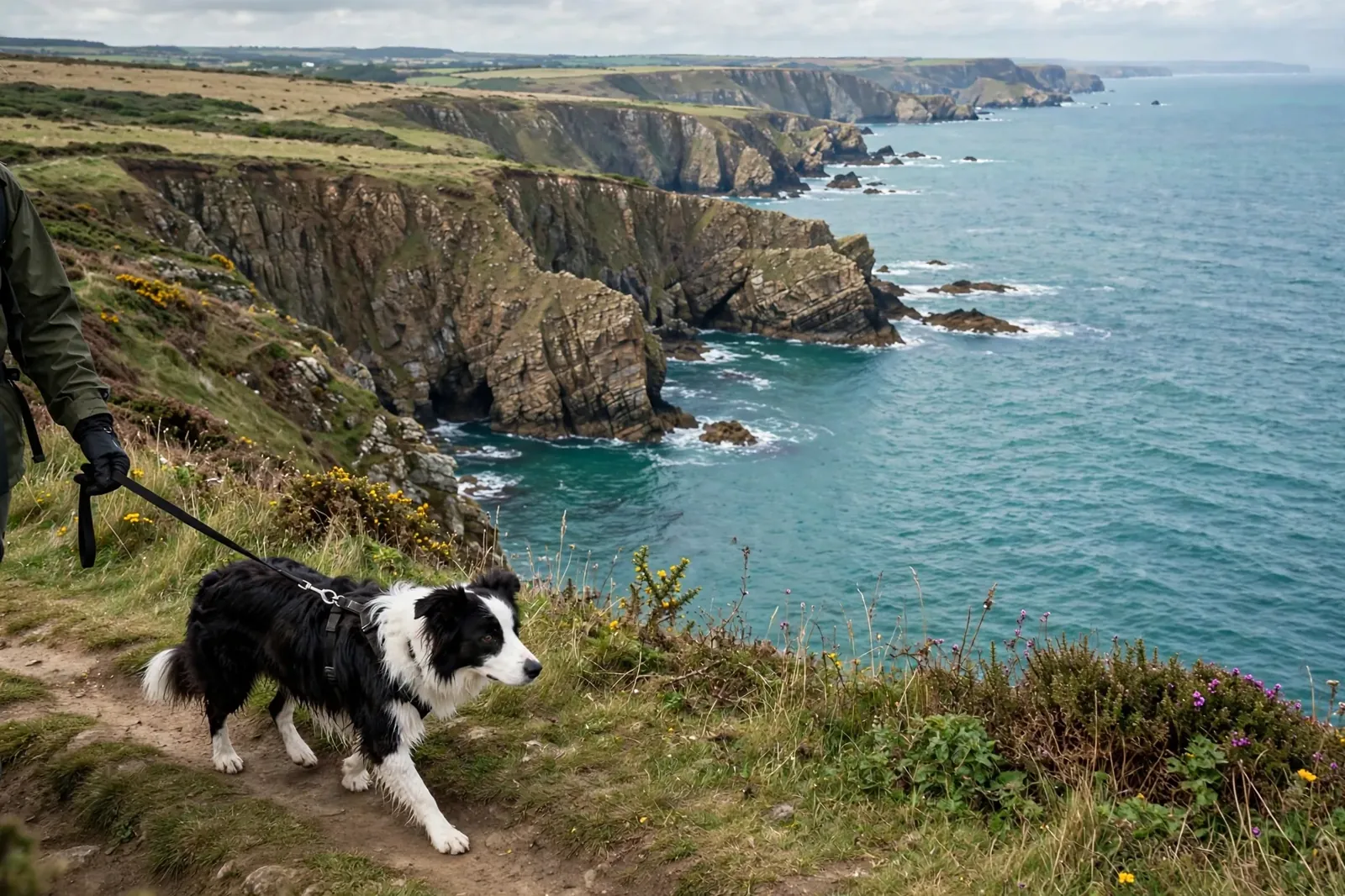
Season by season, adjust the emphasis rather than the structure. Spring brings lambs in every field — leads everywhere, no exceptions — and beaches at their emptiest. Summer demands early starts, shade planning and respect for seasonal beach zones. Autumn may be the connoisseur's choice: warm sea, quiet lanes, the village colours glowing for the half of the group that goes in, and estuary birds arriving for winter. Winter shortens everything except the welcome in dog-friendly pubs, and a storm-watching shore walk from a safe distance, with a dog leaning into the wind beside you, has its own fierce pleasure. In every season the rule that shapes the day stays the same, and it is a manageable one: the village is for people and assistance dogs, and everything around it — shore, sand, woodland and harbour — is for all of you together. Readers planning a longer Welsh circuit will find the coast continues beautifully in our Pembrokeshire Coast Path with a dog guide, where the same habits of tide checks, lead discipline and honest signage-reading serve you mile after mile.
Practical questions
Before you go
Can I take my pet dog into Portmeirion village?
No. Pet dogs are not allowed inside the Portmeirion village itself. The rule covers the paid village, its gardens, buildings and central piazza. Do not plan to carry a small dog, use a dog pushchair or ask at the gate for an exception, and check the latest official policy before you travel in case anything has changed.
Are assistance dogs allowed in Portmeirion?
Yes, assistance dogs are the exception and are welcomed. If you travel with an assistance dog, carry any identification you normally use, plan for water and rest breaks in a busy and sometimes steep village, and contact the village in advance if you have specific access questions. Our assistance dog rights guide explains the wider UK position.
Where can I walk my dog near Portmeirion?
Outside the village boundary you can explore estuary and woodland routes around the Dwyryd estuary, lanes and paths near Minffordd and Penrhyndeudraeth, and the wider Snowdonia coast. Rules change by landowner and season, tides cut off parts of the shore, and livestock graze nearby fields, so follow local signs, keep a lead near stock and check tide times before any shore walk.
Can dogs go on Black Rock Sands beach?
Black Rock Sands, near Morfa Bychan and Porthmadog, is a popular dog beach, but seasonal restrictions apply to part of the beach in the main holiday season and the rest is shared with cars, kites and other dogs. Check current council signs on arrival, keep your dog away from parked cars and moving vehicles, and carry fresh water and shade on warm days.
What is the best way to visit Portmeirion with a dog in our group?
Split the visit. One or two people take the dog on an estuary walk or to a nearby beach while the others tour the village, then swap, or leave the dog settled at dog-friendly accommodation with a familiar person if it is truly relaxed there. Never leave a dog alone in a car, agree meeting points and times in advance, and build the dog's half of the day as a real outing, not a wait.
Can I leave my dog in the car while I visit Portmeirion?
Portmeirion’s published policy covers the grounds, not your car, but a village visit takes hours and a car is no place to leave a dog for that long, especially in warm weather. The safer options are a dog-friendly base nearby or splitting the group so someone stays with the dog. The village rule itself is absolute: only guide and assistance dogs are permitted into the grounds, as Portmeirion states on its official visit page: Portmeirion: plan your visit (checked October 2026).