This guide is independent and contains no paid placement. If affiliate links are added later, they will be clearly marked and will not change our editorial checks.
A pub room usually wins on character and on eating with your dog in the bar, but it can lose on stairs, bar noise and a locked garden at night. A hotel usually wins on lifts, predictable corridors and a staffed front desk, but it can lose when the restaurant and breakfast room exclude dogs and you must eat in shifts. Judge the stay by the night your dog will actually have, not by the photograph of the room.
Arrival: the first hour sets the whole night
Most comparison guides start with the room. This one starts with the car park, because the first hour decides whether your dog settles or spends the evening on alert. In a pub with rooms, arrival usually means parking behind or beside the building, walking through a working bar, and checking in at the bar counter. That can be wonderful for a confident, sociable dog: there are people to greet, a water bowl by the door, and a fire to settle beside. It can be a lot for a nervous dog. The bar is not a lobby. Glasses clink, chairs scrape, a door opens to the garden every few minutes, and the smell of food hangs in the air. If your dog reacts to strangers, children, or other dogs, that first walk through the bar is the hardest part of the stay, and it happens before you have even seen the room.
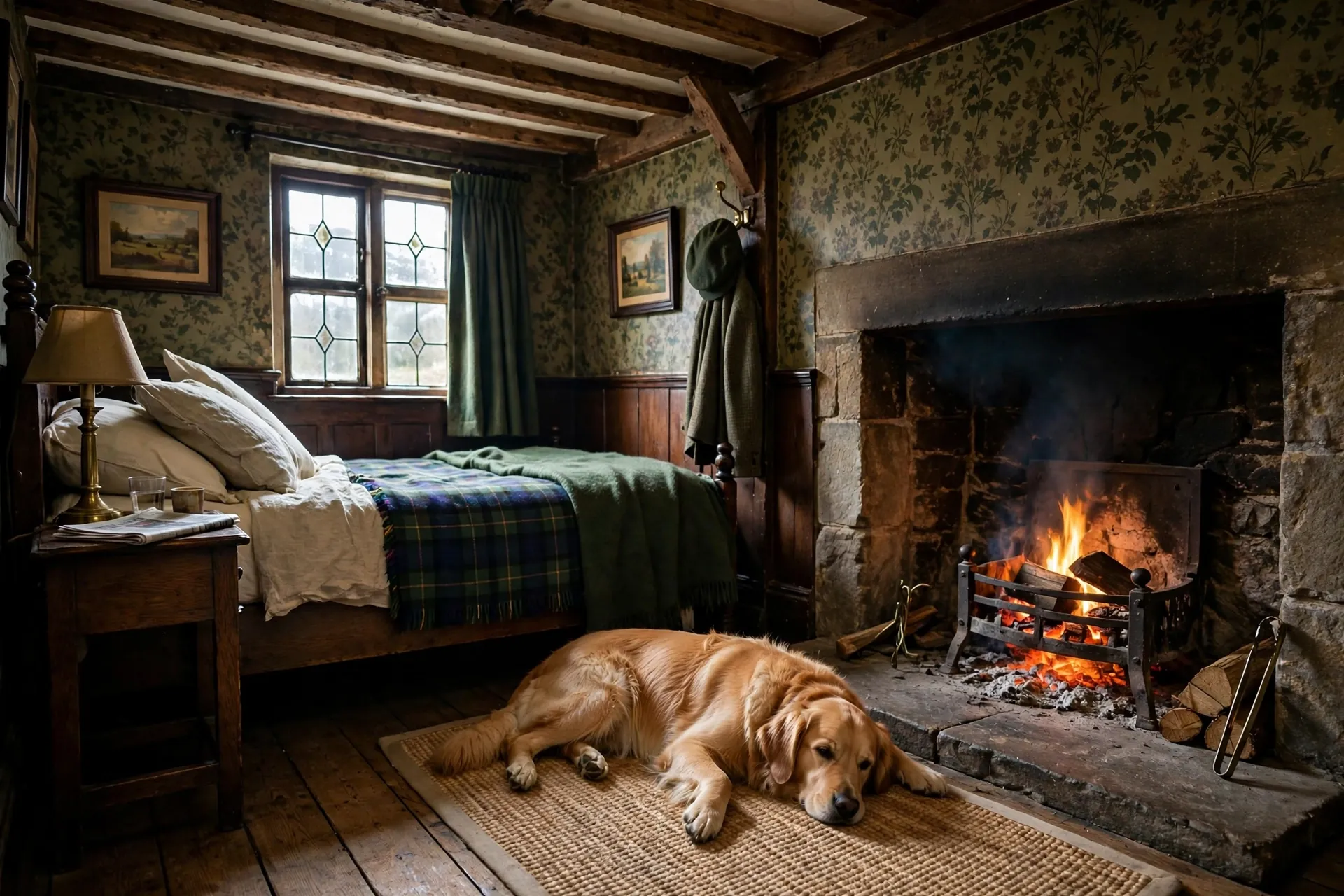
The room itself brings a second set of trade-offs. Pub rooms are often in older buildings, which means character and compromise in equal measure. Expect narrow, sometimes steep stairs, low beams, uneven floors, and a bathroom that may be small for drying a wet dog. Very few village pubs have a lift, so an older dog, a large dog, or a dog recovering from surgery may need carrying, a ramp, or a ground-floor room that may not exist. Ask for the exact route, not a general reassurance: how many steps, whether they are open-tread, whether there is a handrail, and whether the corridor is carpeted or bare wood. A dog that slips on polished boards at home will slip on them here too, and a portable mat by the door helps only if you know to pack it.
Hotel arrival is usually calmer and more predictable. You check in at a desk, take a lift or a wide staircase, and walk a carpeted corridor to a numbered door. That predictability is a real advantage for dogs that need routine: fewer surprises, fewer strangers at nose height, and a room that is much the same whether the hotel is in York or Yeovil. The trade-off is distance and formality. The room may be a long corridor from the exit, the corridor may be busy with housekeeping trolleys in the afternoon, and the first toilet walk may mean a lift ride, a lobby crossing, and a street walk before the dog can relieve itself. For a puppy, an older dog, or a dog that toilets urgently after a car journey, those extra minutes matter. Ask where the nearest exit is from your room, and whether a side door is closer than the main entrance.
In both kinds of stay, make the first hour deliberately boring. Walk the dog first, before you unload bags, and let it sniff the toilet area properly. In a pub, that usually means the garden or a patch of grass by the car park; in a hotel, it may mean a paved forecourt, a nearby green, or a short street walk. Note where the poo bins are, whether the area is lit, and whether other dogs use it, because you will be back here after dark. Then settle the room: water bowl in a corner away from the door, bed in the same place the dog sleeps at home if possible, and a familiar-smelling blanket on top. Leave the television off, keep voices low, and give the dog twenty unhurried minutes to learn that this room is safe. The dogs that struggle most on the first night are usually the ones that were rushed through arrival, fed a new treat, introduced to three new people, and then left alone while their owners went to dinner. For a closer look at how hotel rooms differ in practice, read our guide to dog friendly hotels in the UK before you shortlist.
One more arrival detail is easy to miss: who is actually in charge overnight. A pub landlord may live on site and be a few steps away, or may lock up and leave the building with only a phone number on the door. A hotel usually has a night team, but a small hotel may have a single person on duty who is also covering the bar and the phones. Neither is better in itself. What matters is knowing, before you need it, how to reach someone at 2am if the dog is ill, if a fire alarm sounds, or if you are locked out of the garden. Save the number in your phone on arrival, and check the official guidance before you travel if anything about fire exits, assistance dogs, or local rules is unclear.
Dinner: eating together, or eating in shifts
Dinner is where the pub usually pulls ahead, and it is worth understanding why before you assume it always will. In many pubs, the dog is welcome in the bar for the whole evening: under the table, on a blanket, with a water bowl that staff refill without being asked. You eat where you sleep, the dog does not have to be left alone, and the evening feels like a night out rather than a logistics exercise. That is a genuine, daily advantage, not a marketing line. It matters most on wet nights, on short breaks when you do not want to spend the evening apart, and for dogs that cannot be left alone at all. If your dog can settle under a table while food arrives, a pub dinner is the simplest version of a dog holiday.
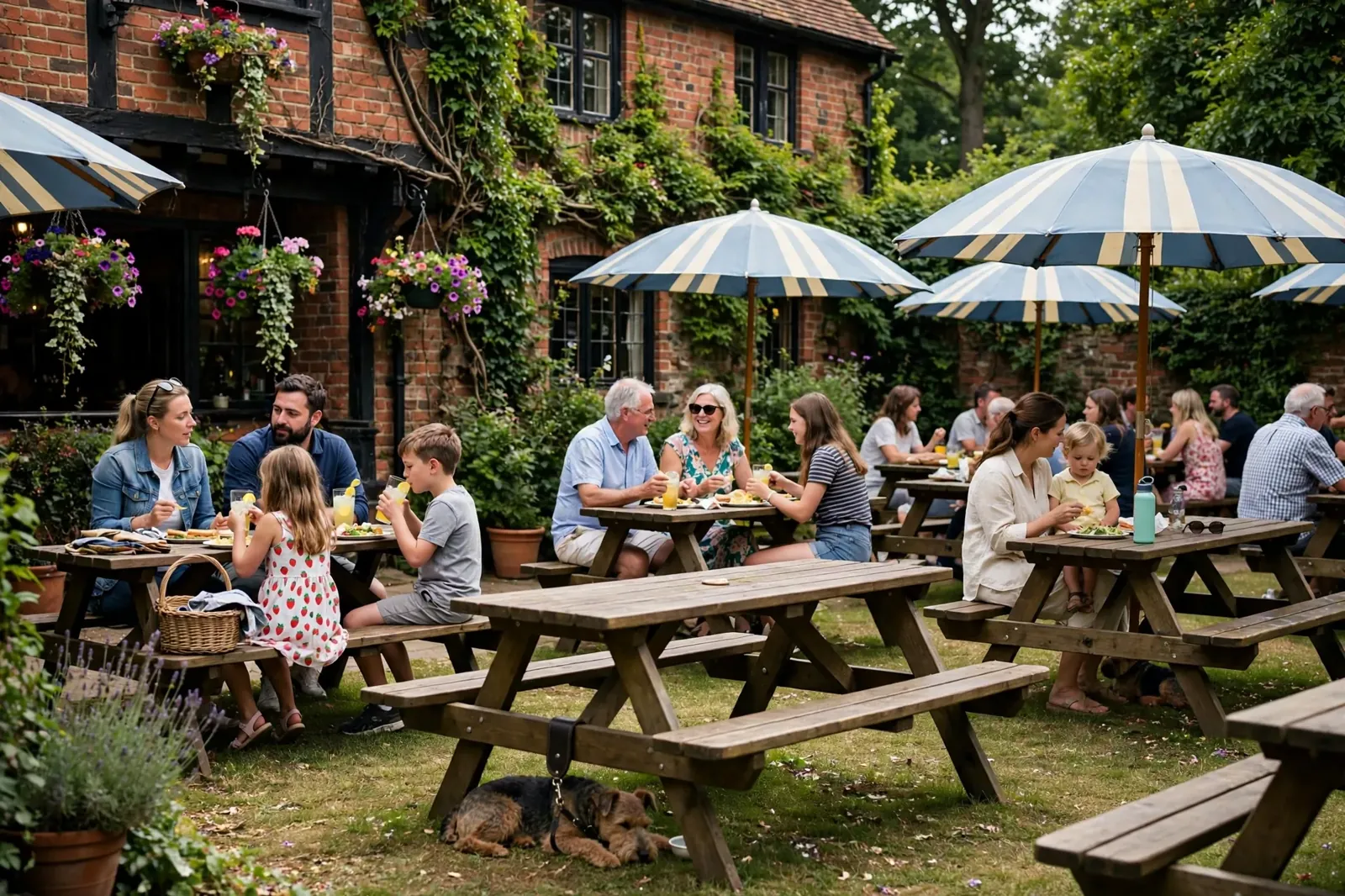
It is not, however, automatically calm. A pub bar at dinner time is a working room: orders called out, plates carried past at dog height, other dogs arriving with their own owners, and children moving between tables. A food-motivated dog will notice every plate. A reactive dog may find the doorway traffic harder than the food. A puppy may find the whole scene too exciting to settle. Ask where dogs are allowed, not just whether they are allowed. The bar and the restaurant may have different rules, the garden may close at a set time, and a separate dining room may exclude dogs entirely. If the dog is welcome in the bar but your party wants the restaurant menu, you may still end up eating apart. Our guide to dogs in pub gardens covers leads, tables, and other dogs in shared outdoor space, and the same habits make indoor pub evenings easier too.
Hotels handle dinner differently, and the difference is often about rooms rather than attitude. Many hotels welcome dogs in a lounge or bar but not in the main restaurant, and many breakfast rooms exclude dogs even when the bar welcomes them. That leaves three options, and you should know which one you are choosing before you book: eat in the dog-friendly lounge if one exists, take room service or a takeaway back to the room, or eat in shifts while one person stays with the dog. Room service sounds easy until you picture a large dog, a tray of hot food, and a small hotel room with no table. Eating in shifts sounds fair until the second person eats alone at nine o clock while the dog, now overtired, barks at corridor noise. None of these is a reason to rule hotels out. They are reasons to ask the exact question: in which room, at dinner, may the dog sit, and what happens if that room is full?
Kitchen hours shape the evening more than menus do. Pub kitchens commonly close earlier than hotel restaurants, sometimes as early as eight or half past eight on a weekday, and last food orders can catch late arrivals out. If you arrive at six after a long drive, that may be fine. If you arrive at eight after a delayed train, you may find only bar snacks, or nothing at all. Hotels, especially larger ones, often serve later, but a dog-friendly lounge menu may be shorter than the restaurant menu. Plan the evening backwards from the dog: a toilet walk before dinner, a settled spot under the table, water before food arrives, and a short, calm walk after eating rather than a long, exciting one. Dogs that toilet straight after a meal need a plan for that walk too, which brings us to the part of the night that no brochure photographs.
Finally, think about what dinner costs the dog in energy, not just what it costs you in money. A dog that has spent the day walking, travelled in a car, and then sat through a busy bar dinner may be tired but wired, like a child after a party. A quiet last hour before bed, with no new people and no ball games in the garden, usually produces a better night than another round of excitement. If you are travelling with children, agree the plan in advance: who holds the lead at the table, who takes the last walk, and what happens if the dog barks. A plan agreed in daylight is kinder than an argument at the table.
Night: noise, sleep, and the 2am toilet trip
Night is the test that separates a good stay from a merely pretty one. A pub room sits, by definition, above or beside a place where people drink, talk, and laugh. Even a quiet village pub gets louder as the evening goes on, and the sounds travel through old floors and thin ceilings in ways that modern hotel construction usually muffles. Closing time brings its own sequence: chairs stacked, glasses collected, voices in the car park, cars starting, and then a sudden quiet that can wake a light-sleeping dog just as surely as the noise did. If your dog barks at voices, paces at unfamiliar sounds, or sleeps lightly, ask which rooms sit directly above the bar, which face the car park, and whether any room is in a separate annexe or outbuilding. A room at the far end of a corridor, or in an annexe away from the bar, can be a completely different night from a room above the taps.
Hotels are not silent either. Corridor doors close with a thud, housekeeping starts early, ice machines hum, and neighbouring guests may return late and talk loudly outside your door. The difference is that hotel noise is usually intermittent and impersonal, while pub noise is social and sustained. For many dogs, intermittent corridor noise is easier to ignore than the continuous murmur of a bar below. For others, the opposite is true: a steady, low murmur becomes background, while a single door slam at midnight triggers barking. You know your dog. A dog that barks at the postman will bark at corridor traffic; a dog that sleeps through a television will probably sleep through a bar. Choose the kind of noise your dog already tolerates, not the kind you hope it will learn to tolerate on holiday.
Then there is the toilet trip. Every dog owner who has done one at 2am knows that this is where theory meets a torch, a lead, and rain. In a pub, the garden may be locked after closing, and you may need a code, a key, or a side gate that you have never used in the dark. Ask on arrival, in daylight, exactly how it works: which door, which gate, whether the light is on a timer, and where the dog may go. Walk the route once before bed, with the torch you will actually use, and note any steps, gravel that hurts paws, or a gate that sticks. In a hotel, the trip usually means a corridor, a lift that may be slow at night, a lobby, and a street. That can be a five-minute expedition, and for an older dog or a puppy it can feel very long. Ask whether a side exit is nearer your room, whether the lift runs all night, and whether the front door locks behind you. Pack poo bags, a short lead, and a torch by the door, not in a suitcase under the bed.
Sleeping arrangements deserve the same practical thought. Some pubs and hotels provide a dog bed, a bowl, and treats on arrival, which is a kind gesture but not a substitute for the bed your dog knows. Bring your own bed or blanket if you can, and place it away from the door so that corridor noise and late arrivals do not wake the dog every time someone passes. If your dog sleeps in a crate at home, bring the crate if the room allows it, and check the room size before you promise yourself you will. A crate in a small pub room can block the only route to the bathroom, which is a problem at 2am for everyone. If your dog sleeps on your bed at home, check whether the stay allows that, what the cleaning charge covers, and whether a throw over the bedding protects both the bed and your deposit. These are unglamorous questions, and they are exactly the ones that decide whether you sleep.
What if the dog barks in the night? The honest answer is that both kinds of stay may complain, and the consequences vary more than the noise does. Some places will have a quiet word in the morning; others may ask you to leave, with or without a refund. Ask for the policy before you book, and be honest about your dog. A dog that barks when left alone should not be left alone in either kind of stay. A dog that barks once at a door slam and settles is a different case, and most hosts understand that, provided you have warned them and have a plan. Keep the dog tired but not overtired, keep the room routine close to home, and keep a familiar chew or lick mat for the settling period. If fireworks, a storm, or a nearby event is expected, check the official guidance before you travel and ask the host what usually happens in that building, because a pub garden fireworks night and a hotel wedding are very different nights for a noise-sensitive dog.
Breakfast and checkout: the morning after
Breakfast is the mirror image of dinner, and it often decides which stay people would choose again. In a pub, breakfast is usually served in the same bar where the dog spent the evening, which means the dog is welcome again, the room is familiar, and the morning starts without a negotiation. Full breakfasts are commonly served in a window, often between seven and ten, and the dog can settle under the same table it used the night before. That familiarity is valuable: a dog that knows where its water bowl goes and where the door is will settle faster on the second morning than on the first. The trade-off is that a pub breakfast can be busy, with delivery drivers, walkers, and other guests arriving at the same time, and a dog that guards food or reacts to strangers may find a crowded bar harder than a quiet hotel lounge.
Hotel breakfast is where many stays quietly fail dog owners. A hotel may welcome dogs warmly at check-in, provide a bed and treats, and still exclude dogs from the breakfast room. The reasons are practical: hot buffets, open food, health and safety rules, and guests with allergies. Whatever the reason, the result is the same: one person eats while the other stays with the dog, or the dog waits in the room, or breakfast is taken back to the room in a form that was never designed for it. Some hotels solve this well, with a dog-friendly breakfast area, a terrace, or a room-service breakfast that actually arrives hot. Ask specifically: may the dog enter the breakfast room, is there a separate dog-friendly area, and what time does it open. A hotel that serves breakfast from seven to half past ten gives you time to walk the dog first; a hotel that stops at nine on a weekday does not, and a rushed morning walk is a poor start for everyone.
Checkout brings its own small decisions. Pub checkout is commonly between ten and eleven, hotel checkout between eleven and twelve, but both vary, and late checkout may be available if you ask. What matters for a dog owner is not the hour but the sequence: a toilet walk, breakfast, packing, a last walk, and a calm departure, in that order if possible. Packing around an unsettled dog, with suitcases open and doors propped, is how leads get tangled and dogs slip out. Pack most of your bags the night before, keep the dog bed until last, and do the final walk after the car is loaded, so the dog goes from a calm room to a calm car rather than from chaos to chaos. Check the room before you leave for the usual forgotten items: a lead hanging on a door hook, a bowl under a bed, a chew in a corner, and a poo bag roll in a coat pocket.
Muddy paws deserve a plan, not an apology. British weather does not respect checkout times, and a wet morning walk can leave a dog, a room, and a car in a state that no one enjoys. Pack a drying coat, an old towel, and a spare blanket for the car, and ask on arrival where muddy dogs should be dried: a boot room, a garden tap, or simply the bathroom. Some pubs have a dog wash or a hose by the back door; some hotels have nothing but a small bathroom and a white towel that you will feel guilty about using. A quick towel-down by the door, before the dog reaches the bed or the car seat, saves the cleaning charge argument later. If a damage or cleaning charge is mentioned at checkout, ask what it covers and whether it was explained at booking, and keep the booking confirmation that lists it. Disputes are much easier to resolve with a written figure than with a memory of a conversation.
Finally, judge the morning honestly before you book a second night. Did the dog settle quickly, sleep through the night, toilet without drama, and eat calmly? Did you eat together, or in shifts? Did the staff know the dog by name, or merely tolerate it? A stay that works for one night usually works for three, but a stay that required constant improvisation on night one will not improve on night two. If you are booking a longer trip, consider one night in each kind of stay as an experiment, rather than committing a whole week to a guess. You will learn more from one real night, with its 2am walk and its breakfast room, than from a dozen photographs and a filter that says dog-friendly. For dining in particular, our guide to dog friendly restaurants in the UK helps you plan the evenings when neither the pub nor the hotel fits the occasion.
Which stay suits which dog
There is no universal winner, but there are strong tendencies, and they map closely to the dog in front of you. A confident, sociable, food-calm dog that settles under tables and sleeps through noise will usually love a pub room. It gets people, smells, a fire, and a garden, and it gives very little trouble in return. A pub is also a good choice for a dog that cannot be left alone, because the evening does not require separation, and for a short break where eating together matters more than a lift or a large bathroom. The same dog in a hotel may be perfectly happy too, but it will miss the bar, and you will miss the simplicity of eating where you sleep.
An older dog, a large dog, a dog with stiff joints, or a dog that needs a lift will usually be happier in a hotel. Lifts, wide corridors, carpeted floors, and a bathroom with room to dry a dog properly are not luxuries for these dogs; they are the difference between a comfortable night and a painful one. A hotel is also often better for a dog that is nervous around strangers, because the corridor is predictable and the room is a clear retreat, whereas a pub bar is a social space that never quite closes. A reactive dog that barks at every new person may find a hotel corridor, with its brief encounters, easier than a bar full of people who want to say hello.
Puppies and first-time travellers need a special mention. A puppy may toilet frequently, chew skirting boards, and wake at night, and both kinds of stay will notice. A pub with a garden directly outside may make frequent toilet trips easier, but a pub bar full of food smells and friendly strangers may overexcite a puppy that is still learning to settle. A hotel with a quiet room and a predictable routine may help a puppy learn that a new room is safe, but the lift-and-lobby toilet trip can be too slow for a puppy that needs to go now. Whichever you choose, bring a crate if the puppy uses one, keep the first evening short and boring, and accept that the first night may be broken. That is normal, not a failure of the stay.
Multi-dog households face a different arithmetic. Pubs and hotels both commonly limit dogs to one or two per room, and a third dog may require a second room, a larger room, or prior agreement. Two dogs under one pub table need more space than one dog, and two dogs in a small hotel room need a clear plan for beds, bowls, and the 2am walk. Ask about the limit, the charge per dog, and whether the room you are booking can actually fit the beds. A room that photographs well with one spaniel may be cramped with two Labradors and their luggage. If you travel with an assistance dog, the rules are different again, and you should check the official guidance before you travel rather than relying on a pet policy that may not apply to assistance dogs.
Finally, consider the humans, not just the dog. A pub room suits travellers who like character, conversation, and a bar downstairs, and who do not mind stairs, noise, and a smaller bathroom. A hotel suits travellers who like predictability, a lift, a larger room, and a front desk that is staffed all night. Neither preference is wrong, and the best stay is the one where both the humans and the dog can relax. If one of you loves pubs and the other needs a lift, a hotel with a good bar, or a pub with a ground-floor annexe room, may be the compromise that actually works. Book the compromise deliberately, not by accident, and write down why you chose it, so that next time you are not starting from a blank search again.
The booking checklist: ten questions, asked in timeline order
Use this checklist in the order your night will happen, not in the order a booking site presents its filters. Ask the questions by email or message if you can, so that the answers are written down with your confirmation. A phone answer is useful, but a written answer is evidence if a policy changes between booking and arrival.
- Arrival: Is the exact room dog-friendly, and how do we reach it: stairs, lift, or ground floor, and how many steps?
- Arrival: Where is the first toilet walk, how far is it from the room, and is it lit after dark?
- Settling: Is there a dog bed, bowl, or blanket provided, and may we bring our own bed or crate?
- Dinner: In which exact room may the dog sit for dinner, and what time does the kitchen close?
- Alone time: May the dog ever be left alone in the room, and if so, for how long and under what conditions?
- Night noise: Does the room sit above the bar, beside a corridor, or in a separate annexe, and what is the usual noise pattern?
- 2am toilet: How does the night-time toilet trip work: locked gate, code, key, side door, lift, or lobby?
- Breakfast: May the dog enter the breakfast room, is there a dog-friendly area, and what are the serving times?
- Charges: What is the all-in dog charge for this booking, including cleaning and any damage deposit?
- Problems: What happens if the dog barks, and who do we contact overnight if something goes wrong?
Judge the answers by their detail. A host who answers with room numbers, times, and gate codes has thought about dogs. A host who answers only with a warm assurance has probably not thought about the 2am walk. Keep the checklist with your booking, pack for the answers you received rather than the stay you imagined, and enjoy the night you actually booked. The difference between a pub room and a hotel room is rarely the building. It is the hour-by-hour life inside it, and once you have walked that night in your head, the choice is usually clear.
Practical questions
Before you go
Can dogs stay in pub rooms overnight in the UK?
Yes, at pubs that specifically offer dog-friendly rooms, but the rule is set room by room, not by the building. Confirm that your exact room accepts dogs, ask about stairs, noise from the bar, and where the dog can toilet after the pub closes, and get the pet charge and any conditions in writing before you pay.
Do hotels or pubs charge more for dogs?
Both can charge, and neither pattern is reliably cheaper. Pubs often charge a flat nightly fee, while hotels may charge per night, per stay, or per dog. Always ask for the all-in total for your booking, including cleaning charges and any damage deposit, because two dogs or a longer stay can change the comparison completely.
Can I leave my dog alone in a pub room or hotel room?
Often no, or only briefly and only if the dog is quiet and crated. Many pubs and hotels prohibit unattended dogs outright, and a complaint can end a stay early. Plan your meals and outings on the assumption that the dog comes with you, and choose a stay where the dog can join you for dinner and breakfast.
What if my dog needs the toilet at 2am?
Ask before booking how the 2am trip actually works: whether the garden gate is locked, whether you need a code or key, how far the lit toilet area is, and whether a lift, stairs or a long corridor stands between your room and the door. Pack a torch, a short lead and poo bags by the door, and walk the route in daylight on arrival.
Are dogs allowed in pub restaurants and hotel breakfast rooms?
It varies by room, not just by venue. Many pubs welcome dogs in the bar but not in a separate restaurant, and many hotels welcome dogs in a lounge but not in the breakfast room. Ask which exact room the dog may enter at dinner and at breakfast, and what the fallback is if the answer is no.