This guide is independent and contains no paid placement. If affiliate links are added later, they will be clearly marked and will not change our editorial checks.
Start at Ripon Cathedral as a split visit, then let the dog lead the rest of the day: the River Ure and River Skell paths, the level Ripon Canal towpath, the market square for lunch, and Studley Royal for a longer lead walk. Keep the dog on a lead near water, roads and livestock, and check the official guidance before you travel for cathedral, abbey and canal rules.
Cathedral and market square split visits
Ripon is one of the smallest cities in England, and that is exactly why it works so well with a dog. The cathedral, the market square, the rivers and the canal all sit within a short, mostly level walk of each other, so a day here does not need a car once you have parked. The trick is to plan the cathedral as a split visit from the start, rather than arriving and then wondering what to do with the dog. Dogs are not generally admitted inside Ripon Cathedral, except for assistance dogs, so one person goes inside while the other stays outside with the dog, and then you swap. That simple plan removes the pressure, keeps the dog calm, and lets each person enjoy the building properly instead of rushing through it.
Agree the split before you reach the cathedral green. Decide who goes first, how long each visit will last, and where you will meet afterwards. Twenty to forty minutes is usually enough for a first look at the interior, the stonework, the windows and the quieter corners, and it is also a comfortable length for a dog walk around the outside. The person with the dog can circle the cathedral, look at the stone from the green, watch the market square from a distance, and give the dog a sniffing walk rather than a standing wait. If your dog is restless, keep moving. A slow loop is kinder than standing still by a doorway while people come and go.
The cathedral green and the streets around it are good for a calm first walk. Keep the dog on a short lead here, because the area is shared with visitors, families, cyclists and, on market days, stalls and shoppers. The ground is mostly paved or mown grass, which suits older dogs and puppies that are still building up their walking distance. In wet weather the grass can be soft, so bring a towel for paws and a mat if you plan to sit outside a cafe afterwards. If your dog is nervous around crowds, visit the cathedral area early in the morning or later in the afternoon, when footfall is usually lighter, and save the market square for a quieter moment.
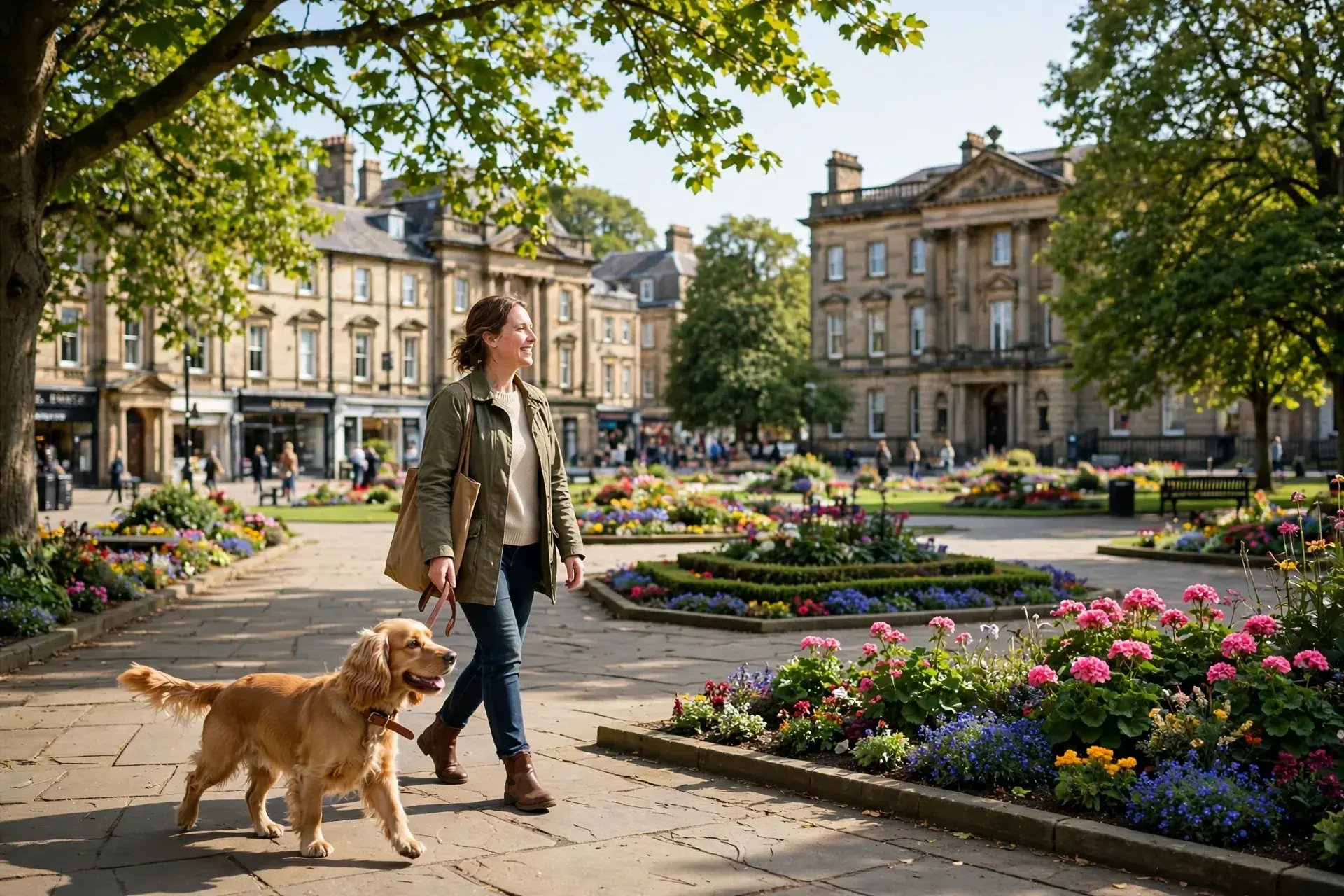
Ripon Market Square is the natural meeting point after a split visit. It is a wide, open square with shops, cafes and pubs around its edges, and it works well as a base for the rest of the day. On market days the square is busier and noisier, with stalls, smells and people moving in every direction. Some dogs love that energy, while others find it overwhelming. Watch your dog, not the stalls: if ears go back, if the lead tightens, or if the dog starts scanning constantly, step to a quieter side street or a bench on the edge of the square. A short break on a mat, with water and a chew, often resets a dog far better than pushing on to the next attraction.
Use the square to sort out the practical parts of the day. Buy water if you need it, check the time of the next bus, look at a map of the riverside paths, and decide whether you want lunch now or after a walk. The square is also a good place to practise the routine that will carry you through the rest of the trip: lead on, dog settled at your feet, order taken, dog rewarded for lying quietly. If your dog struggles to settle in busy places, choose a cafe with an outdoor table on a side street, or take food away and eat it on a bench near the river. Ripon rewards a slow pace, and there is no need to fit the cathedral, the square, the rivers and the canal into one rushed morning.
For a longer stay, think of the cathedral and the square as two separate visits rather than one long block. Visit the cathedral in the morning, walk the rivers at midday, return to the square for a late lunch, and come back to the cathedral green in the evening when the light changes and the crowds thin. That pattern gives the dog regular breaks, keeps the total walking distance manageable, and lets you see the same streets in different light. If you are travelling with children, the split visit also works well as a turn-taking system: one adult and the children go inside while the other adult walks the dog, then swap roles and compare notes over lunch.
River Ure and River Skell walks
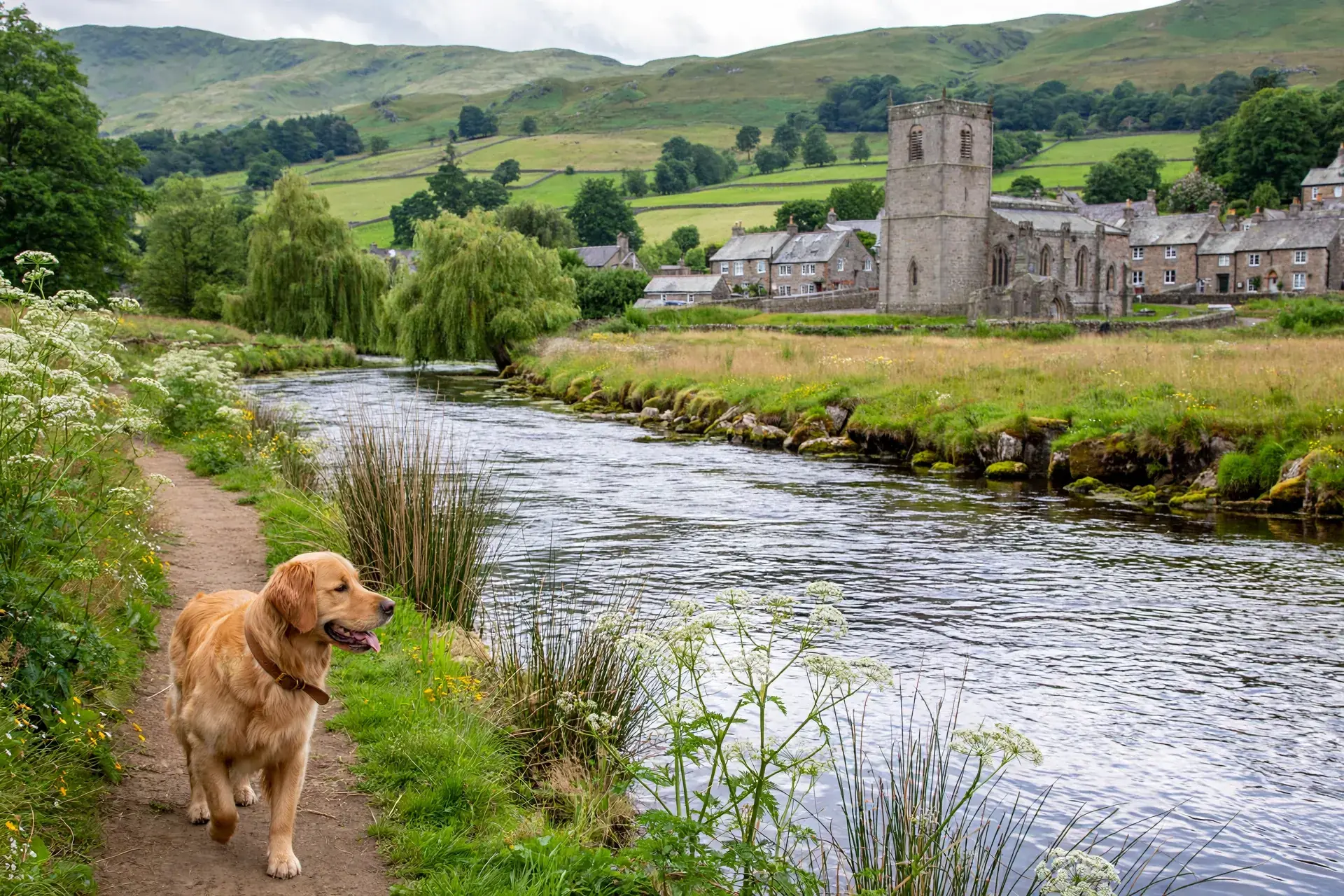
Ripon sits between two rivers, and the riverside walks are the heart of a dog day here. The River Ure runs to the north and east of the city, broad and steady, while the River Skell runs through the city and on towards Studley Royal and Fountains Abbey. Together they give you level paths, open views, shade in summer, and easy loops that can be shortened or lengthened without a car. Start with a short out-and-back walk, see how your dog responds to the water, the ducks, the bridges and the other walkers, and only then extend the route.
The River Ure path towards the racecourse is a good first choice. It is fairly flat, with open grass beside the path, room to step aside for other dogs, and views across the water that make the walk feel spacious even on a busy day. Keep the dog on a lead near the bank, especially if your dog is a keen swimmer or a chaser of water birds. The Ure can run fast after rain, and the bank can be slippery where the grass is worn. A long line gives a dog more freedom to sniff without letting it reach the water unsupervised, and it is a useful compromise on a shared path where other walkers, runners and cyclists also pass.
The River Skell offers a different character. It is narrower and more enclosed in places, with trees, stone bridges and quieter stretches that suit a calm, sniffing walk. The Skell path connects the city centre with the wider landscape towards Studley Royal, so it can be the start of a longer walk or a short loop on its own. Watch for narrow sections where the path runs close to the water, and keep the dog close when you cross a bridge or pass a weir. If your dog is reactive, choose a wider stretch of the Ure first, and save the narrower Skell sections for a quieter time of day.
Water safety deserves a clear plan before you set off. Do not let the dog drink from the river if you can avoid it, especially after heavy rain, and carry fresh water and a bowl. Rinse muddy paws after a riverside walk, check for cuts from stones or broken glass near bridges, and dry the dog before getting back in the car. If your dog does swim, choose a calm, shallow entry point away from weirs, locks and fast water, and never let the dog swim near a bridge pier or a boat. In summer, check for blue-green algae warnings and avoid still, warm water; check the official guidance before you travel if you are unsure about local conditions.
Wildlife is part of the riverside experience. Ducks, swans, herons and moorhens are common, and the banks are also used by walkers, anglers and, in the fields beyond, livestock. Keep the dog on a lead when livestock are visible, even at a distance, and do not let the dog chase birds or enter a field with sheep or cattle. If you meet an angler, give them a wide berth and keep the dog close, because a loose dog near fishing lines and hooks is a real hazard. A calm dog that can walk past ducks without lunging will enjoy the rivers far more than a dog that is constantly pulled back, so practise that skill on a quiet stretch first.
After rain, the riverside paths change. Low-lying grass can flood, the path can become muddy, and the river level can rise quickly. Check the weather and the river level before you set off, wear footwear with grip, and be ready to turn back and use the canal towpath or a park path instead. A short, dry walk is better than a long, muddy one that leaves the dog cold and the car full of wet towels. In dry summer weather the opposite problem appears: the grass can be hard and dusty, the shade becomes valuable, and the dog will need more water and more rest stops.
Ripon Canal towpath and locks
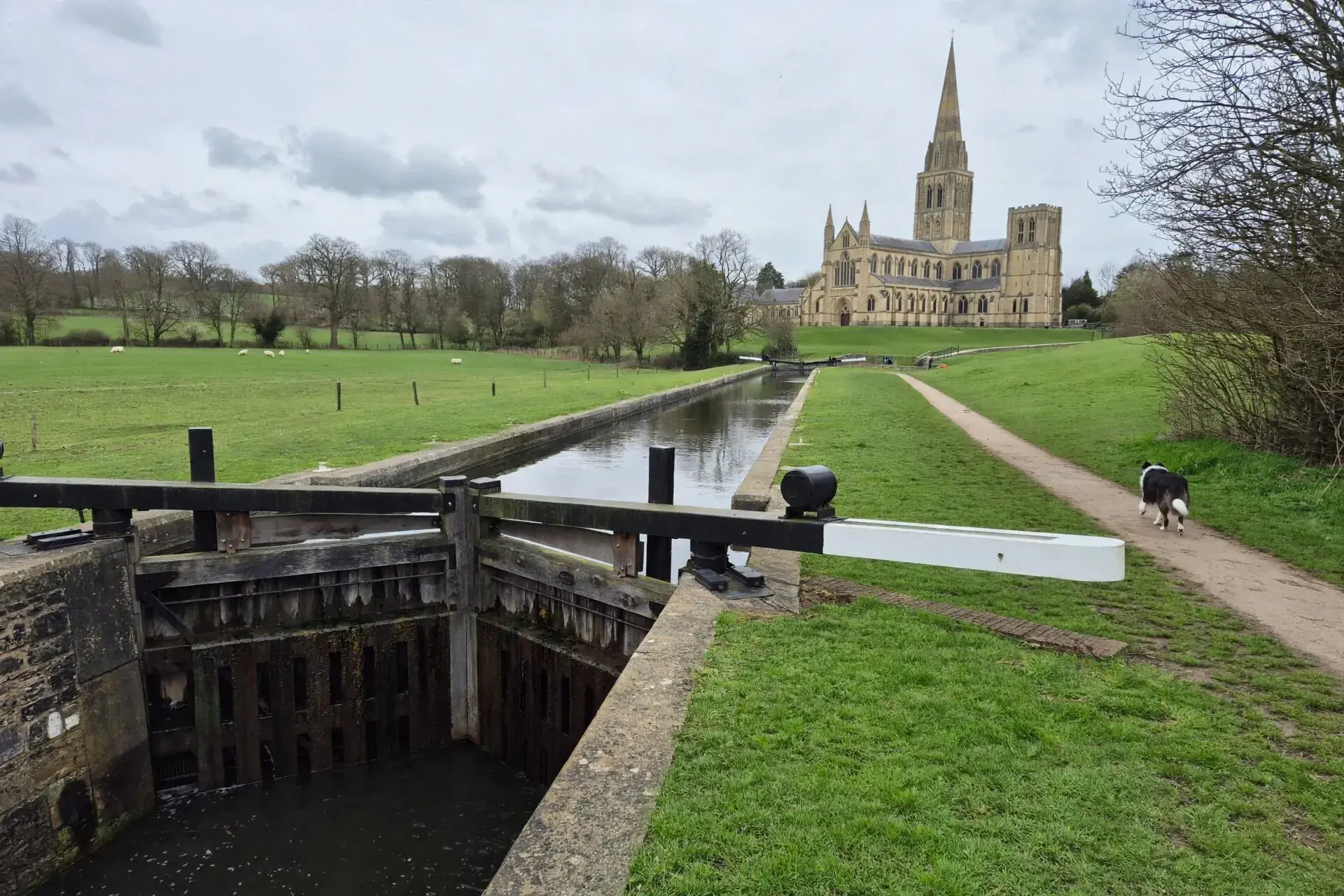
The Ripon Canal is short, level and easy to follow, which makes it one of the best dog walks in the city for a relaxed afternoon. The towpath runs beside the water, past locks and bridges, with open views and room to walk at a dog's pace. It is a linear route, so you can walk out for twenty minutes and back again, or continue further if the dog is still keen. The locks are the highlight for many visitors: the gates, the water, the stonework and the slow movement of a boat give the walk a sense of purpose without adding distance or hills.
Keep the dog on a lead on the towpath at all times. The water is close to the path, the lock edges can be slippery, and cyclists use the towpath as a through route. A short lead is best near a lock, where the dog needs to stay clear of the gates, the balance beams and the water. Step to the side when a boat passes, keep the dog on the landward side of the path, and do not let the dog jump onto a moored boat or run along a lock wall. If your dog is nervous around moving water or the sound of a lock filling, give it space, let it watch from a distance, and move on when it is ready.
The canal walk pairs well with the rivers. You can start at the market square, walk to the canal, follow the towpath for a stretch, and then return by a riverside path for a loop that feels varied without being long. That loop is a good test of your dog's stamina: if the dog is still pulling happily at the halfway point, continue; if the dog is slowing, sniffing more and looking for shade, shorten the route and head for a bench. Older dogs and puppies often do better with a canal out-and-back than with a full loop, because the towpath is flat and the return journey is familiar.
Look for the small details that make the canal interesting for a dog. The smells change at every bridge, the grass beside the towpath is good for a sniff, and the open water attracts ducks and moorhens. Keep the dog out of the water near locks and bridges, and watch for fishing lines, discarded hooks and litter near popular mooring spots. Carry a poo bag and a spare, because bins can be spaced out along the towpath, and take litter home if there is no bin nearby. A clean towpath is part of keeping the canal open and welcoming for dogs.
In winter the canal towpath can be icy in shaded sections, and in autumn fallen leaves can hide mud and uneven ground. In summer the towpath is popular with walkers, runners and cyclists, so start early if your dog is reactive or if you want a quieter walk. The canal is also a good wet-weather fallback: the towpath usually drains better than riverside grass, and the flat surface is easier for a dog that is already tired. Check the official guidance before you travel for any towpath closures, lock works or diversions, and follow any temporary signs on the day.
Studley Royal and Fountains Abbey approach
Studley Royal and Fountains Abbey lie a short drive west of Ripon, and they make a natural half-day extension to a Ripon break. The estate is large, with parkland, water gardens, woodland paths and the abbey ruins at its heart. Dogs on leads are welcome in much of the parkland and the wider estate, but access to the abbey ruins, the visitor centre, the cafe and some garden areas is restricted, so check the official guidance before you travel and confirm the current dog routes on arrival. Planning a split visit here, just as at the cathedral, is the easiest way to enjoy both the abbey and the dog walk without rushing either one.
Start at the visitor welcome area and ask for the dog route. Staff can point out which paths are suitable for dogs, where the lead rules apply, and where you can walk without entering a restricted area. The parkland paths are generally wide and well surfaced, with open grass for a sniff and shaded woodland for a hot day. Keep the dog on a lead throughout the estate, even in open parkland, because deer, sheep and other visitors may be present, and because the gardens are a designed landscape where dogs need to stay on the paths. Do not let the dog enter the water gardens, climb on stonework, or run through planted beds.
The walk from the parkland towards the abbey is best done slowly. The views open up gradually, the river and the ponds appear between the trees, and the abbey ruins come into view as a distant landmark before you reach them. That slow approach suits a dog far better than a direct march to a viewpoint. Stop often, let the dog sniff, offer water, and use a bench to rest. If one person wants to explore the abbey ruins in detail, the other can walk the dog on a parkland loop and then swap, just as at Ripon Cathedral. Agree a meeting point and a time, and keep the dog's walk to a comfortable distance rather than a forced circuit.
Studley Royal is also a good place to practise lead walking in a busier setting. The paths are shared with families, school groups and other dog walkers, and the estate can be busy on weekends and in school holidays. Keep the dog close on narrow woodland paths, step aside for other walkers, and use a short lead near the water gardens and the abbey entrance. If your dog is reactive, visit on a weekday, start early, and choose a wider parkland path rather than a narrow garden route. A calm dog that can walk past other dogs without lunging will enjoy the estate far more than a dog that is constantly corrected.
After the estate, return to Ripon for a quieter evening walk. The contrast is part of the pleasure: the grandeur of Fountains Abbey in the morning, the small scale of Ripon market square and the rivers in the afternoon. If you are staying for two days, split the estate and the city across the two days rather than trying to do both in one long day. A tired dog that has already walked for two hours in the parkland will not enjoy a second long walk along the river, and a short evening stroll is a better end to the day. For ideas on other North Yorkshire bases, our guide to Harrogate with a dog covers Valley Gardens, the Stray and Pinewoods, which pair well with a Ripon stay.
Spa gardens, parks and green space
Ripon does not have a single large spa garden in the way Harrogate has Valley Gardens, but it has a useful network of smaller parks, green spaces and riverside grass that together give a dog plenty of room to relax. The cathedral green, the riverside grass beside the Ure and the Skell, the canal-side verges and the parks on the edge of the city centre all serve a different purpose: the green is for a short break, the riverside is for a longer walk, and a neighbourhood park is for a quiet toilet walk in the morning or evening. Learn which green space is closest to your parking spot and your accommodation, and use it as your dog's home base.
Spa Gardens in Ripon, on the edge of the city centre, is a small, cared-for park with lawns, paths and seating. It is a good place for a short, calm walk, a sit on a bench, and a chance for the dog to settle after a car journey. Keep the dog on a lead, keep to the paths, and respect any signs about dogs in planted areas or children's play areas. The gardens are at their best in spring and summer, when the flowers and trees give shade and colour, but they are also a useful sheltered spot in autumn, when the trees break the wind. If the gardens are busy, use the riverside grass instead and return later.
Neighbourhood parks and recreation grounds are useful for a practical morning walk. They often have open grass, a path around the edge, and bins for dog waste, and they are usually quieter than the cathedral green. Check local signs for lead rules and for any areas where dogs are not allowed, especially near play equipment and sports pitches. A short loop around a park, with a few minutes of sniffing and a toilet stop, is often enough to settle a dog before breakfast and a longer walk later in the day. For an older dog, a park loop is also a good way to judge the day: if the dog is stiff or slow on the park path, shorten the riverside walk that follows.
Green space in Ripon is also about the gaps between attractions. The grass beside the river, the verge beside the canal, and the open ground near the racecourse all give a dog a chance to move off the pavement, sniff, and relax. Use those gaps deliberately: after a busy market square, find grass; after a long towpath walk, find shade; after a car journey, find a quiet park. A dog that gets regular green breaks will cope far better with a day in a city than a dog that is kept on pavements all day. Carry a mat so the dog can lie on grass without getting wet, and bring a towel for muddy paws in winter.
If you want a larger park day, Harrogate is a short drive away and offers Valley Gardens and the Stray, both covered in our Harrogate with a dog guide. That makes Ripon a good base for a two-centre break: a compact cathedral city one day, a spa town with larger gardens the next. In Ripon itself, keep the park visits short and frequent rather than long and rare, and always pick up after your dog, even on open grass where other dogs and children will follow.
Pubs, cafes and food stops
Ripon market square and the side streets around it have a good choice of pubs, cafes and food stops, and several welcome dogs in a bar area, a snug or on an outdoor terrace. Rules vary by venue and by season, and some places welcome dogs only in certain areas, so check the official guidance before you travel, ask on arrival, and do not assume that a dog-friendly sign on the door means the whole building is open to dogs. The best approach is to choose a venue with a clear dog area, settle the dog on a mat under the table, and order quickly so the dog is not waiting while you decide.
For lunch, a pub with a dog-friendly bar is often the easiest choice. The dog can lie under the table, the bar is usually quieter than the restaurant, and the menu is simple enough to order without a long wait. Bring a mat, a water bowl and a chew, and keep the lead short so the dog does not wander into the walkway or under another table. If your dog is a food thief, keep the lead under your foot and the dog on the far side of the table from the food. If your dog barks at other dogs, choose a table in a corner or by the door, where you can leave quickly if needed, rather than a table in the middle of the room.
Cafes are a good option for a shorter stop. A cafe with outdoor seating in the square or on a side street lets the dog sit outside in fresh air, watch the world go by, and settle without the noise of a busy pub. In cooler weather, look for a cafe with a dog-friendly indoor area or a sheltered terrace, and bring a blanket for a small or short-coated dog. Order at the counter if you can, so one person can stay with the dog while the other orders, and keep the dog's lead short while food is carried past. A calm cafe stop can be the highlight of the day for a dog that enjoys watching people, as long as the dog is not forced to sit in a crowd for too long.
Takeaway food is a useful fallback when the dog is tired or the pubs are busy. Buy sandwiches, pasties or fish and chips, and eat them on a bench by the river or on the cathedral green. That gives the dog fresh air, space to lie down, and no pressure to settle in a crowded room. It also lets you eat at your own pace and move on when the dog is ready. Keep food waste in a bin, do not feed the dog scraps that could upset its stomach, and check that the bench you choose is away from a road and from a children's play area.
For a longer break, York is an easy day trip from Ripon, and our York with a dog guide covers Minster split visits, riverside walks and dog-friendly pubs in a larger city. In Ripon itself, the rule is simple: one good pub lunch, one cafe stop, and one riverside picnic is a better plan than three long restaurant meals. The dog will thank you for the shorter sits, and you will enjoy the city more if you are not worrying about a restless dog under the table.
Parking, buses and arrival
Arriving in Ripon with a dog is easiest if you plan the first hour before you leave home. Choose a car park close to your first walk, check the charges and time limits, and have a plan for the dog's first toilet stop. Ripon has several public car parks within a short walk of the market square, the cathedral and the riverside, including car parks near the bus station and the leisure centre area. A car park close to the river means the dog can stretch its legs on grass within minutes of arriving, which is far better than a car park in the middle of the city where the first walk is on pavements.
On arrival, give the dog a short walk before you do anything else. A ten-minute loop on grass, a drink of water, and a toilet stop will settle most dogs after a car journey. Check the car park signs for the maximum stay and the payment method, and take a photo of the sign so you can check the time later. If you are staying for the day, choose a car park with a long-stay option rather than a short-stay bay that will force you to move the car mid-walk. In summer, park in shade where possible, leave a window cracked if you need to leave the dog in the car for a very short time, and never leave a dog in a hot car. In practice, plan so the dog is never left in the car at all: take the dog with you, use a split visit, or leave the car at your accommodation.
Buses to Ripon run from Harrogate, Leeds and other nearby towns, and the bus station is within walking distance of the market square and the riverside. Dogs are usually allowed on local buses at the driver's discretion, often on a lead and on the floor, but check the official guidance before you travel, because rules vary by operator and by route. If you are travelling by bus, keep the dog on a short lead, sit where the dog can lie out of the aisle, and be ready to move if the bus is crowded. A muzzle is not usually required, but some operators ask for one on busy services, so check before you travel and carry one if your dog will tolerate it.
Walking into Ripon from a nearby village or from a car park on the edge of the city is a pleasant alternative to driving into the centre. The approach roads have pavements in most places, but some rural lanes have no pavement, so keep the dog on a lead, wear high-visibility clothing in low light, and walk facing oncoming traffic where there is no pavement. If you are arriving by train, the nearest stations are at Harrogate and Leeds, with a bus connection to Ripon, so allow extra time for the change and for the dog's first walk at the bus station. For a wider Yorkshire trip, Wensley in Wensleydale offers a quieter village base, covered in our Wensley with a dog guide.
For the return journey, plan the last walk before you get in the car. A short riverside loop, a toilet stop, and a drink of water will help the dog settle for the drive home. Keep a towel in the car for muddy paws, a spare lead, and a bottle of water for the journey. If the dog is wet after a riverside walk, dry it before it gets in the car, and use a boot liner or a blanket to protect the seats. A calm departure is just as important as a calm arrival, and it leaves the dog with a good memory of Ripon rather than a rushed ending.
Where to stay with a dog
Ripon has a useful range of dog-friendly stays, from city-centre hotels and guest houses to self-catering cottages and farm stays on the edge of the city. The right choice depends on your dog, not on the prettiest listing. A calm older dog may be happy in a hotel room with a short walk to the riverside, while a young, energetic dog needs a cottage with a garden or a farm stay with direct access to fields. Write down your dog's needs before you browse: how many dogs, how large, whether the dog can be left alone, whether stairs are a problem, and whether the dog needs a secure garden.
When you compare stays, ask the same questions you would ask about a holiday park. Is the dog allowed in the room or cottage, or only in certain rooms? Is there a pet fee, and what does it cover? Is there a secure garden or a fenced area, and how high is the fence? Where is the nearest toilet walk after dark, and is it lit? Are dogs allowed in the breakfast room, the bar or the garden, or only in the bedroom? Get the answers in writing with your booking, and keep the email with your confirmation. A stay that answers those questions clearly is usually a stay that has thought about dogs properly.
Self-catering cottages are often the easiest choice for a dog stay in Ripon. The dog has its own space, you can cook at your own pace, and you can use the garden for a morning toilet walk without leaving the property. Check the cottage rules for dogs on furniture, dogs upstairs, and dogs left alone in the property. Some cottages ask for dogs to be crated when left alone, while others ask that dogs are never left alone at all. Plan your days around that rule: use split visits for the cathedral and the abbey, choose dog-friendly pubs for lunch, and save the longer walks for when the dog is with you.
Hotels and guest houses in the city centre are a good choice for a short break, especially if you want to walk to the market square and the riverside without driving. Ask for a ground-floor room if your dog struggles with stairs, and check whether the hotel has a lift. Ask where the dog can go for a toilet walk at night, and whether the hotel provides a bowl, a bed or a towel. A hotel that provides those small extras is usually a hotel that welcomes dogs rather than merely tolerating them. If you are staying for a weekend, book early: dog-friendly rooms in a small city can sell out quickly, especially in summer and on race days.
Farm stays and rural cottages outside Ripon offer more space and quieter walks, but they also need more planning. Check the distance to the nearest shop, vet and pub, and check whether the lanes around the property have pavements or are safe for a dog walk. Ask about livestock in the fields around the property, and keep the dog on a lead until you know the area. A rural stay is a good base for a longer trip that includes Studley Royal, the Yorkshire Dales and Harrogate, but it is less convenient if you want to walk to the market square for dinner. Choose the stay that fits the trip you actually plan to take, not the trip you imagine.
Vets and practical safety
Before you travel to Ripon, save the details of a local vet and an out-of-hours emergency vet on your phone. Ripon has veterinary practices in the city, and larger emergency services are available in Harrogate and York. Do not wait until you need a vet to look one up: a dog that has cut a paw on the riverside, eaten something on the canal towpath, or been stung by a wasp in a park needs help quickly, and a saved number saves time when you are stressed. Also save your own vet's number, your dog's insurance details, and a note of any medication your dog takes.
Pack a small dog first-aid kit for a Ripon trip. Include a spare lead, poo bags, fresh water and a bowl, a towel, a tick remover, saline solution for cleaning a wound, and any medication your dog needs. Add a muzzle if your dog will tolerate one, because a vet may need to examine a painful dog, and a muzzle can make that examination safer. Keep the kit in the car or in a day bag, and check it before you leave home. A kit that stays in the car is no use on a riverside walk, so take the essentials with you on every walk.
Riverside and canal walks bring specific hazards. Ticks are common in long grass and woodland from spring to autumn, so check your dog after every walk, especially around the ears, neck and belly. Remove a tick with a tick remover, clean the area, and watch for signs of illness in the following days. Blue-green algae can appear in still, warm water in summer; if you see a green scum on the water, keep the dog out and check the official guidance before you travel. After heavy rain, the rivers can carry debris, and the banks can be slippery, so keep the dog on a lead and do not let it swim in fast water.
Road safety is a practical concern in a small city. The market square and the streets around the cathedral are shared with cars, delivery vans and buses, and some side streets are narrow. Keep the dog on a short lead on pavements, cross at a marked crossing where possible, and do not let the dog walk on the road side of the pavement. At night, use a reflective lead or a light on the dog's collar, and keep the dog close on unlit riverside paths. If you are walking on a rural lane outside Ripon, walk facing oncoming traffic and keep the dog on the verge side.
Finally, think about your dog's identification and behaviour. Make sure the dog's collar has an ID tag with your mobile number, and that the microchip details are up to date before you travel. If your dog is reactive, use a yellow lead or a clear sign if that helps other walkers give you space, and choose quieter paths and quieter times of day. If your dog is friendly, do not let it run up to other dogs on a lead, because not every dog wants to greet. A calm, well-managed dog will enjoy Ripon far more than a dog that is constantly corrected, and the city is small enough that a little planning goes a long way.
Seasonal notes
Spring is one of the best times to visit Ripon with a dog. The riverside grass is fresh, the trees are coming into leaf, the canal towpath is firm underfoot, and the city is quieter than in summer. Lambs may be in the fields beyond the riverside paths, so keep the dog on a lead and do not let it enter a field with livestock. Spring rain can make the riverside muddy, so bring a towel and wear footwear with grip. The cathedral green and the market square are pleasant in spring light, and the split visit works well because the queues are shorter.
Summer brings longer days, warmer weather and busier streets. Ripon Racecourse days bring extra traffic and crowds, so check the race calendar before you travel and plan your walks to avoid the busiest times if your dog is nervous around crowds. Heat is the main summer risk: walk early in the morning or late in the evening, carry extra water, use shade on the riverside and in the parks, and never leave a dog in a hot car. The canal towpath can be busy in summer, so start early for a quieter walk, and watch for blue-green algae in still water.
Autumn is a good season for a Ripon dog break. The trees along the Skell and the Ure turn colour, the canal towpath is quieter, and the light is softer for an afternoon walk. Fallen leaves can hide mud and uneven ground, so keep the dog on a lead on narrow paths and check paws after a walk. Fireworks around early November can unsettle noise-sensitive dogs, so check whether there are displays near your accommodation and plan a quiet evening walk with a familiar route. Autumn rain can raise the river level quickly, so check the weather before a riverside walk and be ready to use the canal or a park path instead.
Winter in Ripon is quieter and colder, and the city takes on a different character. The cathedral green can be frosty, the riverside paths can be icy in shaded sections, and the canal towpath can be slippery after a frost. Walk in daylight where possible, use a reflective lead, and keep the dog warm with a coat if it is short-coated, older or very small. Winter is also a good time for a split visit, because the cathedral and the market square are less crowded, and a pub lunch with the dog settled under the table is a warm end to a cold walk. Check the official guidance before you travel in winter, as opening times for the cathedral, the abbey estate and some cafes can change in the low season.
Whatever the season, the Ripon plan stays the same: split the cathedral visit, let the rivers and the canal set the pace, use the market square for food and rest, and keep the dog's needs at the centre of the day. A small city rewards a small plan, and a dog that has had a good riverside walk, a calm pub lunch and a quiet evening will remember Ripon as a good place to return to. If you are planning a longer Yorkshire trip, use Ripon as a base for a day in Harrogate, a day in York, and a day in the Dales, and let each day be short enough that the dog enjoys it.
Practical questions
Before you go
Can dogs go inside Ripon Cathedral?
No, dogs are not generally admitted inside Ripon Cathedral, except for assistance dogs. Plan a split visit instead: one person goes inside while the other walks the dog around the cathedral green, the market square and the riverside, then swap. Check the official guidance before you travel, as rules for services and special events can change.
Where is the best riverside walk in Ripon with a dog?
The River Ure walk from the city centre towards the racecourse and the riverside paths along the River Skell are the easiest choices. Both are fairly level, close to parking and cafes, and easy to shorten if your dog tires. Keep dogs on a lead near roads, bridges and livestock, and check the official guidance before you travel after heavy rain, when riverside ground can be muddy or flooded.
Can I walk the Ripon Canal towpath with a dog?
Yes, the Ripon Canal towpath is a popular dog walk, with locks, bridges and open views along a short, level route. Keep your dog on a lead near locks, lock gates and the water edge, keep to the towpath, and watch for cyclists and other walkers. Check the official guidance before you travel for any closures or towpath works.
Are dogs allowed at Fountains Abbey and Studley Royal?
Dogs on leads are welcome in much of the Studley Royal parkland and the wider estate, but access to the abbey ruins, the visitor centre, the cafe and some garden areas is restricted. Check the official guidance before you travel, confirm the current dog routes and lead rules on arrival, and plan a split visit if one person wants to explore the abbey buildings in detail.
Where can I park in Ripon with a dog?
Ripon has several public car parks within a short walk of the market square, the cathedral and the riverside, including car parks near the bus station and the leisure centre area. Choose a car park close to your first walk so the dog does not have to cross busy roads, check the signs for charges and time limits on arrival, and check the official guidance before you travel, as charges and layouts can change.
Which pubs and cafes in Ripon welcome dogs?
Several pubs and cafes in and around Ripon market square and the side streets welcome dogs, often in a bar area, a snug or on an outdoor terrace. Rules vary by venue and by season, and some places welcome dogs only in certain areas, so check the official guidance before you travel, ask on arrival, and bring a mat and water bowl so your dog can settle quietly.