This guide is independent and contains no paid placement. Dog rules at beaches, reserves and historic sites change with the season, so check the official guidance before you travel.
Use Saxmundham as your base, not just a stop on the way to the sea. Stay in town, walk from the door in the morning, then drive or take the train for a different coastal outing each day: Aldeburgh for the promenade and shingle shore, Snape Maltings for the river and reedbeds, and the Leiston and Minsmere area for abbey ruins and big-sky nature. Keep dogs on leads near livestock, roads and wildlife, and check beach and reserve rules before each outing.
Saxmundham first: a base, not a single stop
Saxmundham is easy to misunderstand if it is treated as one attraction to tick off. It is a working Suffolk market town on the A12, the main road that runs up the Suffolk coast, and on the East Suffolk railway line between Ipswich and Lowestoft. That position is exactly why it works for a dog trip. Visitors can sleep somewhere quieter and cheaper than the seafront, buy supplies in a proper town, walk from the door without loading the car, and still reach the coast in a short drive. The town rewards a slower approach: a morning circuit, a market browse, a pub stop, and then a focused outing, rather than a rushed dash between famous sights.
The geography helps to explain the plan. Saxmundham sits a few miles inland from Aldeburgh, in the gentle valley country drained by the River Fromus, which flows towards the River Alde. To the north and east lie the heathland and woodland landscapes of the Suffolk coast and heaths, with large forestry blocks, open heath, reedbeds and grazing marshes. To the south, the road and rail run towards Woodbridge and Ipswich. To the north, the same line runs towards Halesworth, Beccles and Lowestoft. A dog owner based here therefore has three kinds of day in easy reach: a town-and-countryside day without a car, a coastal day by road, and a rail day that uses the train for one leg and walking for the rest. Mixing those three kinds across a short break keeps the dog interested without piling up long drives.
Choosing a base also changes what matters in accommodation. In a seaside town, the priority is often the distance to the beach and the view. In Saxmundham, the priorities are more practical: a ground-floor room or a cottage with a secure garden, parking close to the door, a short and level first walk for the last outing at night, and a host who is clear about whether the dog can be left alone, where the dog can sleep, and whether there is a charge per dog or per stay. Ask those questions before booking, in writing, because a vague promise of dog-friendliness tells you nothing about stairs, garden fences, or the rule for a barking dog. A cottage on a quiet side street with a small enclosed garden will usually suit a dog better than a grander property beside the A12, where traffic noise and a busy pavement shape every toilet trip.
Think about the dog you actually have when you pick the base. A sociable young spaniel may thrive on a busy market morning, a beach run and a pub garden in the afternoon. A nervous rescue may do better with a quiet lane, a woodland track where other dogs can be seen early, and a calm cottage to return to. An older dog may need level paths, shade in summer, and short outings broken up by rests in the car or the accommodation. Saxmundham can serve all three, but only if the daily plan is shaped around the dog rather than around a list of sights. Build the day from the dog outward: first walk, food, rest, second outing, evening settle. The sights fit around that rhythm, not the other way around.
Arrival day sets the tone, so keep it deliberately boring. Arrive in daylight if possible, walk the immediate streets first, find the nearest green space and the nearest shop, and let the dog sniff the new rooms, garden and stairways before anything exciting happens. Photograph any existing damage in rented accommodation, move cleaning products and food out of reach, and set up the dog bed, water bowl and familiar blanket exactly as at home. A calm first evening makes the first full day much easier, especially for a dog that is unsettled by new sounds, such as church bells, farm traffic, or trains passing through town. Saxmundham is not a noisy town, but it is a working one, and a dog that has settled overnight will cope better with market-day bustle the next morning.
Finally, treat Saxmundham as a hub for decisions, not a place to rush through. If the weather turns, the town still offers shops, cafes, a museum and sheltered streets, while a coastal day can be swapped for a woodland walk. If a beach has a seasonal dog restriction, another stretch of coast or an inland heath walk is a short drive away. If a reserve limits dogs, the surrounding lanes and a nearby village green still give the dog a good outing. That flexibility is the real advantage of a market-town base, and it is worth protecting by not over-scheduling. Two good outings a day, with rests between them, will give most dogs a better holiday than four hurried stops.
Market Place, High Street and the parish church
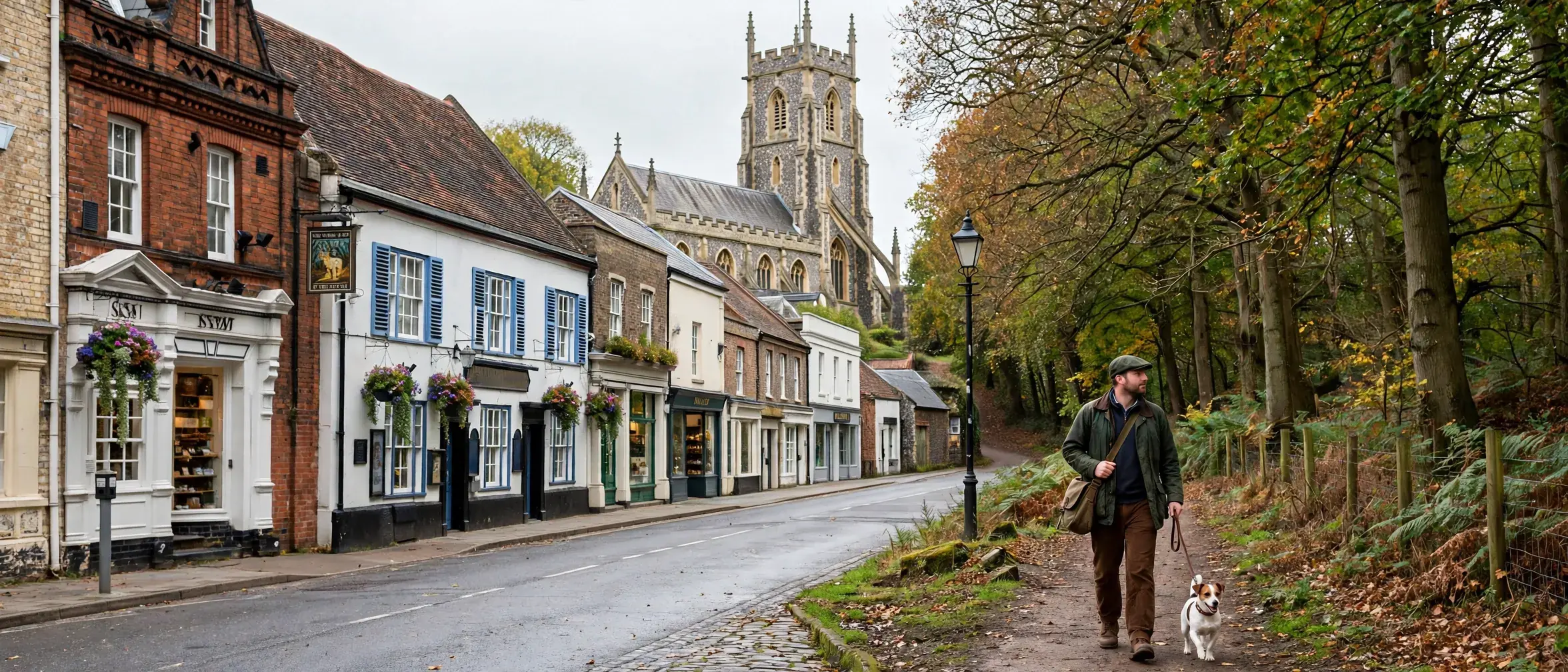
The heart of Saxmundham is small enough to learn in one unhurried walk, and that is part of its charm for dog owners. Market Place and High Street form the commercial spine of the town, with independent shops, cafes, a supermarket, pubs and services within a short, level stroll. Start at Market Place, look for the market stalls on market day, and then wander down High Street at the dog pace, which is to say slowly, with pauses at every interesting smell. The point is not to shop efficiently; it is to let the dog learn the town while you pick up supplies, a map, and a sense of what is open that day. Dogs on leads are a normal sight in a Suffolk market town, but keep the lead short on narrow pavements, step aside for pushchairs and mobility scooters, and never tie a dog outside a shop and walk away for a long browse.
Market day deserves a specific plan. A weekly market brings stalls, shoppers, children, other dogs and food smells into a small space, which can be exciting or overwhelming depending on the dog. Arrive early if your dog is calm in crowds, or walk the quieter streets first and visit the market later when the first rush has eased. Keep treats in a pocket for calm behaviour, avoid letting the dog lunge towards food stalls, and watch for dropped food, which is the most common market-day hazard for a greedy dog. If your dog is reactive to other dogs, choose the edges of the market rather than the centre, cross to the quieter side of the street when another dog approaches, and leave before the dog becomes tired and tense. A short, successful market visit beats a long, stressful one, and there will be other mornings.
High Street itself rewards a slower reading. Look for the mix of brick and rendered buildings, former coaching and trading premises, and small yards and side lanes that lead away from the main road. This is a town that grew around trade, farming and the railway, not around tourism, so the shopfronts tell a working story: butchers, bakers, hardware and household shops sit alongside cafes and charity shops. For a dog owner, that practical mix is useful. You can buy forgotten leads, towels, dog food, wet-weather gear and picnic supplies without a special trip, and you can ask shopkeepers about local walks, because people who live and work here often know which paths are muddy, which fields hold sheep, and which lanes are quietest at different times of day. Those conversations are worth more than a generic route description.
The Church of St John the Baptist is the historic anchor of the town, standing close to the centre with a tower that is visible across the rooftops. Churches in England vary in their dog policies, and many welcome well-behaved dogs on leads for a quiet visit, while others ask dogs to wait outside during services or events. Check the official guidance before you travel, and in any case treat a church visit as a calm, short stop rather than a long exploration. Keep the dog on a lead, avoid the dog approaching flowers, candles, memorials or other visitors, and leave promptly if the dog becomes restless. The churchyard also needs care: it is a place of remembrance and often a habitat for wildlife, so keep dogs on leads, stay on paths, and clear up promptly. A respectful churchyard walk, with the dog close and quiet, fits the town far better than an off-lead run.
Saxmundham Museum, a small local museum in the town, is worth checking for opening hours before you set out, because small volunteer-run museums often open on limited days and at seasonal times. A museum visit is usually a people-only stop, with the dog waiting with another member of the party or resting back at the accommodation, so plan it as a short cultural break within a longer town walk rather than as a whole morning. The value of a local museum for a dog trip is indirect but real: it explains the market, the railway, the farming landscape and the coastal trade that shaped the walks you will do later, and it often sells local maps and booklets that are more useful than a phone screen in a woodland with patchy signal. If the museum is closed, the town itself still tells much of the story, and the walk continues.
Between the market, the shops and the church, build in a proper rest. Dogs do not need constant stimulation, and a market town can tire a dog with smells, sounds and social encounters even on a short walk. Find a dog-friendly cafe or pub garden, order a drink, give the dog water, and let the dog settle under or beside the table. Watch for the signs that the dog has had enough: yawning, lip licking, turning away, pulling towards home, or a sudden loss of interest in treats. Those are not naughtiness; they are information. A dog that rests well in town will enjoy the afternoon woodland walk far more than a dog that has been pushed through every shop in a state of rising excitement.
Woodland, heath and field paths from town
The walks from Saxmundham are the quiet heart of this guide, because they are the walks you can do without a car, without a timetable, and without competing for a beach car park. The countryside around the town is a patchwork of farmland, small woods, hedgerows, and, a little further out, larger forestry blocks and open heath. Public footpaths and bridleways link villages, farms and woodland edges, and many routes can be walked as loops or as out-and-back tracks that are easy to shorten. Carry a proper map, whether paper or downloaded, because phone signal can be patchy under trees and on heath, and because a map shows field boundaries, roads and alternative exits in a way that a single plotted line does not. Check the official guidance before you travel if a route crosses conservation land, a working farm, or a forestry operation, where temporary closures and diversions are common.
Start with the shortest loop that works for your dog. A town-edge circuit that takes in quiet lanes, a field path and a stretch of woodland edge is enough for a first morning, and it teaches you the ground: where the pavement ends, where the path narrows, where livestock might be, and where the dog can safely sniff off the road. For an older dog or a puppy, a twenty to forty minute sniff-heavy walk on a long line is often more tiring, in a good way, than a forced hour on a short lead. For a fitter dog, extend the same route by adding a second field or a longer woodland section, rather than jumping straight to a long linear walk with no easy turning point. Always have a shortening option in mind, especially in heat, rain or fading light, because a dog that is happy at the halfway point may still be tired on the way home.
Woodland walks need a different kind of attention from open heath. Under trees, paths can be muddy, rooty and shaded, which is welcome in summer but slippery after rain and dark earlier in winter. Keep dogs in sight, because a dog that chases squirrels or deer through woodland can be out of earshot quickly, and forestry tracks are shared with cyclists, horse riders and timber vehicles. A bell on the collar, a bright harness, and a reliable recall are more useful than a long lecture about control. In autumn, watch for fungi, which can be toxic, and for fallen branches after storms. In spring, keep dogs close where ground-nesting birds and young wildlife are present, and check the official guidance before you travel for any seasonal restrictions on heath and woodland edges.
Heathland is the landscape that makes this part of Suffolk distinctive. Open, sandy, gorse-and-heather country, often grazed by ponies, sheep or cattle, stretches across the coast and heaths area, and it feels completely different from enclosed farmland. Dogs love heath for its smells and space, but heath also demands discipline: keep dogs on leads where grazing animals are present, stay on marked paths during the bird-breeding season, and watch for adders in warm months, especially on sunny banks and sandy tracks. Adders are shy and bites are uncommon, but a dog that noses into bracken or under gorse is at more risk than a dog kept on a path. If a dog is bitten, keep the dog calm and still, carry the dog if possible, and seek veterinary help immediately rather than trying home treatment. Prevention, in this case, is simply a lead and a path.
Field paths and farmland bring their own etiquette. Close gates behind you, even if you found them open, unless a sign says otherwise. Keep dogs on leads around sheep, cattle, horses and lambs, and never let a dog chase livestock, because the legal and welfare consequences are serious and a farmer may act to protect stock. Walk around field edges rather than across growing crops, clear up after the dog even on a remote path, and bag and bin waste rather than hanging bags on fences or leaving them by stiles. Stiles themselves deserve a thought: a small or older dog may need lifting over, a long-legged dog may jump, and a dog that is nervous on steps may need a gate or a different route. Plan for stiles when you choose a route, and do not assume every crossing has a dog-friendly gate.
Seasonal notes change these walks more than distance does. In spring, paths can be soft, lambs are in fields, and ground-nesting birds need space. In summer, carry water for the dog as well as for yourself, walk early or late on hot days, and check paws on hot tarmac and on sandy heath tracks. In autumn, woodland is at its best, but fallen leaves hide mud, roots and puddles, and pheasant shooting can mean dogs need to stay close and on leads near shoots. In winter, daylight is short, so start early, carry a light, and choose tracks that stay firm rather than field paths that turn to clay. After heavy rain, riverside and low-lying paths may flood, and a route that was easy in August can be impassable in February. A flexible plan, with a town walk as the fallback, is the safest plan.
Coast by rail and road: Aldeburgh, Snape, Minsmere and Leiston Abbey
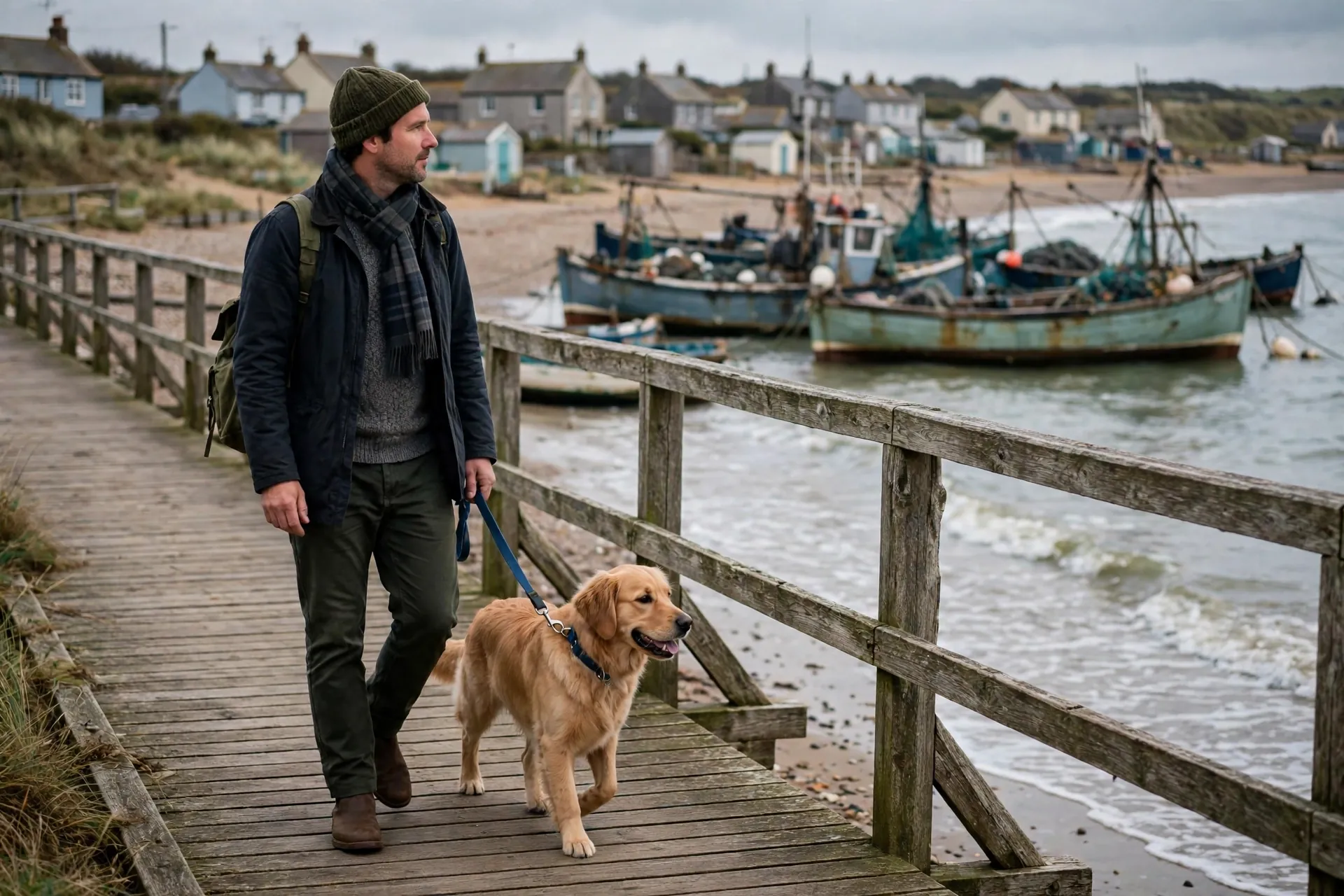
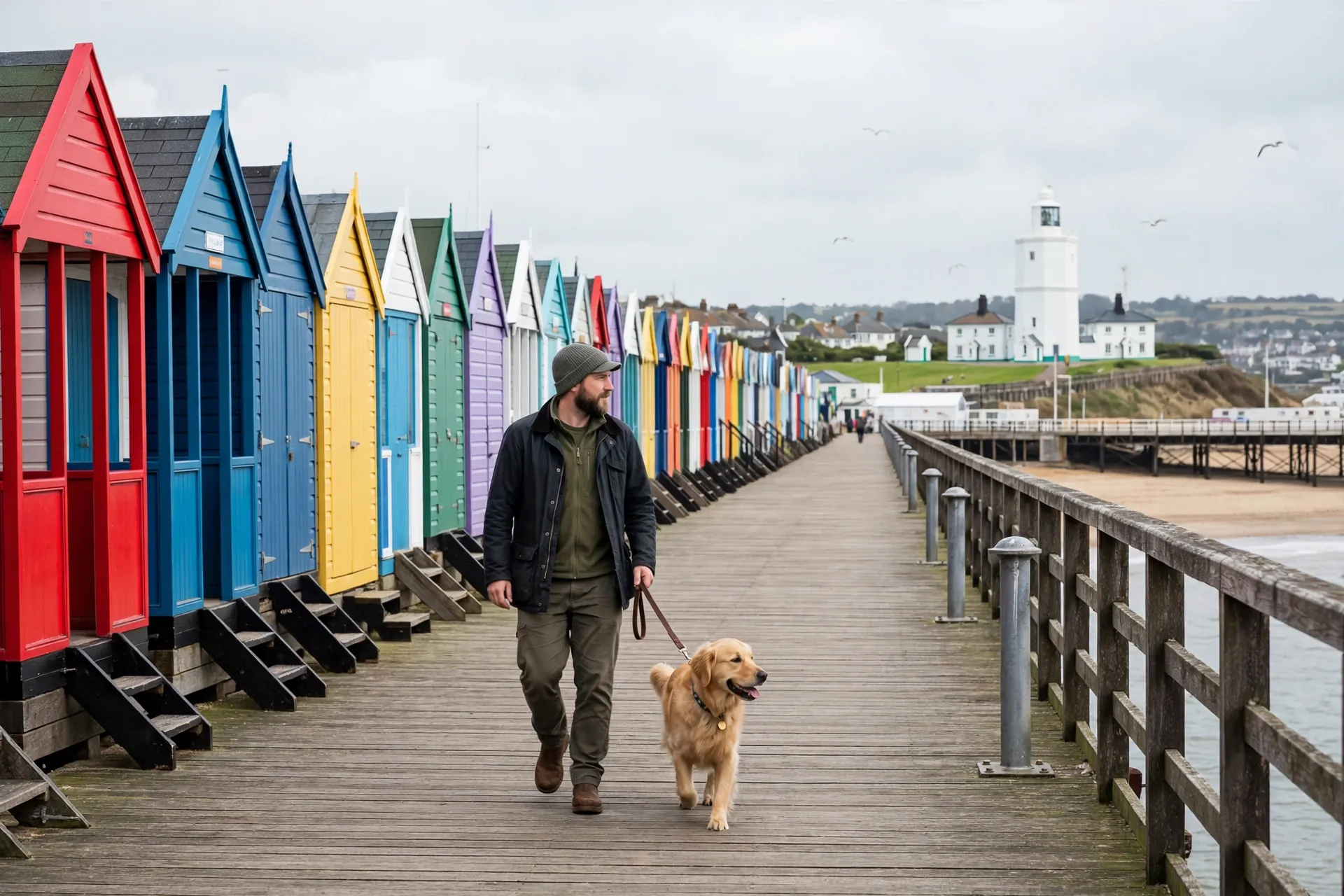
From Saxmundham, the coast is a choice, not a single destination, and the best choice depends on the dog, the weather and the season. Aldeburgh is the closest classic seaside town, a short drive east, with a shingle beach, a promenade, fishing boats drawn up on the shore, and fish-and-chip shops that make a simple lunch feel like an occasion. The promenade walk is level and easy for older dogs, while the shingle itself is harder work on paws and legs, so many dogs do best with a promenade walk, a paddle at the water edge, and a rest on a lead while the people eat. Read our Aldeburgh with a dog guide before you go, because beach rules, seasonal restrictions and parking details matter more than any general description, and check the official guidance before you travel for the current position on the exact stretch you plan to use.
Snape Maltings, a few miles south of Saxmundham towards the River Alde, offers a completely different coastal mood. The converted maltings buildings house shops, galleries and a concert hall, with riverside paths, reedbeds and open marsh views that suit a calm, on-lead walk. Dogs are often welcome in outdoor areas and in some indoor spaces, but policies vary by shop, cafe and event, so check the official guidance before you travel and do not assume a concert-day rule matches a quiet weekday rule. The riverside walk is level in places and muddy in others, and the reedbeds are important for wildlife, so keep dogs on leads near the water edge, watch for swans and other water birds, and avoid letting a dog swim in the river where currents, boats and mud make it unsafe. Snape works well as a half-day outing paired with a Saxmundham morning, because it is close, calm, and easy to shorten if the dog tires.
Leiston Abbey, a short drive north-east of Saxmundham, gives the trip a historic anchor that is very different from a beach. The abbey ruins stand in open farmland, with stone walls, arches and grassy grounds that invite a slow, on-lead wander. Ruins need practical care: uneven stone, low walls, open drops and grazing animals nearby all matter, and a dog that pulls towards other visitors or livestock needs a short lead and a calm pace. Check the official guidance before you travel for opening times, admission, and the current dog policy for the grounds and any indoor exhibition, because historic sites often treat grounds and buildings differently. Pair Leiston Abbey with a village walk or a pub stop in Leiston, rather than trying to combine it with a long beach day, so the dog gets one focused outing and a proper rest.
RSPB Minsmere, further up the coast towards Dunwich, is the big-sky nature day, and it needs the most careful planning of all the outings in this guide. Minsmere is a working nature reserve with reedbeds, scrapes, woodland and a beach, and its wildlife is the reason to go. Dogs are welcome in some parts of the reserve and restricted in others, and the rules can change with the breeding season, so check the official guidance before you travel and plan the visit around the current map, not around a memory of a previous visit. Keep dogs on leads where required, stay on marked paths, and never let a dog enter a hide area, a scrape edge or a nesting zone. If the reserve rules mean the dog cannot join the main walk, treat Minsmere as a people-focused stop with a separate dog walk nearby, on the coast path or in the surrounding lanes, rather than trying to bend the rules. A reserve that protects its birds properly is worth visiting on its own terms.
Rail day trips add a different pleasure, even though Aldeburgh itself has no station. From Saxmundham station, on the East Suffolk line, trains run south towards Wickham Market, Woodbridge and Ipswich, and north towards Darsham, Halesworth, Beccles and Lowestoft. A rail day might mean a train to Woodbridge for a riverside walk and a market-town browse, or a train north for a village and countryside walk, with the dog on a lead throughout and settled under the table at a station cafe. Check the official guidance before you travel for the current timetable, because rural lines often run hourly or less frequently, and a missed train can mean a long wait with a tired dog. For Aldeburgh by public transport, the usual pattern is a train to Saxmundham and then a bus or taxi for the final miles, so check bus times in advance and allow extra time for the connection, especially on Sundays and in winter.
Road day trips need the same discipline as rail days, just with different details. The A12 is fast and straightforward, but the lanes to the coast are narrow, with passing places, farm traffic, cyclists and walkers, so drive slowly and expect to reverse into a passing place. Park only in marked bays or car parks, never on grass verges or in farm gateways, and never leave a dog in a parked car in warm weather, even with a window open. On arrival at the coast, check the beach signs before letting the dog off the lead, because Suffolk beaches vary by town and by season, and a dog that is welcome on one stretch may be restricted on the next. Our Suffolk coast dog guide explains the year-round and seasonal patterns across the county, and it is worth reading alongside the town guides before a multi-day break. A short drive, a checked sign, and a lead in the pocket will prevent most coastal misunderstandings.
A two-day Saxmundham base itinerary
Day one starts in Saxmundham itself, because a base should be enjoyed, not just slept in. Begin with a morning walk from the accommodation, choosing a town-edge loop or a short field path that lets the dog sniff, toilet and settle before breakfast. After breakfast, wander Market Place and High Street, visit the church if it is open and dogs are welcome, and pick up supplies for the day. Keep the morning unhurried: a market browse, a cafe stop, and a rest back at the accommodation or in a quiet garden will leave the dog ready for the afternoon. In the afternoon, drive to Snape Maltings for a riverside walk and a calm browse, returning to Saxmundham in time for an early evening circuit and a pub or cafe stop. The dog gets two good walks, a town experience, and a river landscape, without a long drive or a crowded beach.
Day two is the coastal day, and it should be chosen the night before, based on the weather, the tide and the dog rules for that day. A good default is Aldeburgh: drive over in the morning, walk the promenade, let the dog paddle and sniff the shingle, have fish and chips or a cafe lunch, and then walk a quieter stretch before driving back. If the weather is hot, go early, carry water, and keep the shingle walk short, because dark shingle and reflected heat tire dogs quickly. If the weather is wet, shorten the beach walk and add a sheltered cafe or a drive through the lanes, rather than forcing a long, miserable shore walk. If Aldeburgh is busy or a seasonal restriction applies to the stretch you wanted, switch to a quieter coastal walk or to the Leiston Abbey and Minsmere area, where the dog walk and the historic or nature interest can be balanced differently. Flexibility is not a failure of planning; it is the plan.
For a longer break, add a third and fourth day without repeating the same outing. A rail day to Woodbridge gives a riverside town, a tide mill, and a different market atmosphere, while a northern day towards Halesworth or Beccles gives quieter countryside and a slower pace. A dedicated nature day around Minsmere and Dunwich, with the dog rules checked in advance and a backup coastal path walk ready, suits a fitter dog and a keen birdwatcher. A rest day, with only short town walks and a long afternoon rest, is also a legitimate itinerary choice, especially for older dogs, puppies, or dogs that have travelled a long way to Suffolk. Many dog holidays go wrong not because the days are boring, but because every day is packed, and a rest day protects the good days on either side of it.
Evenings in Saxmundham deserve the same care as days. The last walk should be short, familiar and level, on a route the dog already knows, with a torch in winter and a lead in hand. Feed the dog at the usual time, settle the dog in the usual place, and avoid a late, exciting walk that leaves the dog wired at bedtime. If you eat out in the evening, check in advance whether the pub or restaurant welcomes dogs indoors, on a terrace, or not at all, and plan for the dog accordingly: a dog that stays with you in a calm pub garden is a different evening from a dog left alone in unfamiliar accommodation, and many dogs settle better when they can lie under the table and watch the room. Keep evening outings short, and save the long walks for daylight.
Packing for a two-day base stay is simpler than packing for a touring holiday, because the car and the accommodation stay in one place. Pack a dog first-aid kit, a spare lead, a long line for heath and field walks, a drying coat or towels, a waterproof mat for the car, a familiar blanket, food measured for the stay plus a spare day, and any medication in its original packaging. Add a torch, a map, a charged phone, and a printed copy of the accommodation address and the nearest vet details, because phone batteries and signal are not guaranteed in woodland or on the coast. A single well-packed bag, kept by the door, makes every outing faster and calmer, and it means a change of weather or a change of plan does not become a scramble.
Practical planning: parking, pubs, vets and wet weather
Parking in Saxmundham is straightforward if you plan it like a local rather than like a visitor in a hurry. Use marked car parks and on-street bays, read the signs for time limits and charges, and avoid parking in farm gateways, on grass verges, or across dropped kerbs, even for a quick stop. In town, a central car park or a supermarket car park may be the most practical choice for a shopping and walking combination, but check the official guidance before you travel for current charges and time limits, because they change and because a ticket bought for shopping may not cover a long walk. At the coast, arrive early in school holidays and on sunny weekends, because beach car parks fill quickly, and have a second car park in mind before you set out. Never leave a dog in a car in warm weather, and in cold weather, never leave a dog in a car for longer than a brief, unavoidable stop.
Pubs and cafes are a central part of a Saxmundham break, but dog policies vary by venue, by room, and by time of day, so check before you travel rather than assuming a venue that welcomed dogs last year still does. A pub that welcomes dogs in the bar may not welcome them in the restaurant, and a cafe that welcomes dogs on the terrace may ask dogs to wait outside in bad weather. Call ahead for an evening meal, ask where the dog should lie, bring a mat or blanket for the dog to settle on, and order water for the dog as soon as you sit down. Keep the dog on a lead, under the table or beside your chair, and away from other tables, food service routes, and other dogs. A dog that settles quietly in a pub is welcome back; a dog that barks, begs or wanders is not, and the difference is usually training and tiredness, not friendliness.
Veterinary planning should happen before the trip, not during an emergency. Before you travel, note the location and opening hours of a veterinary practice in or near Saxmundham, and save the number for an out-of-hours emergency service, because rural practices may close early, operate on reduced weekend hours, or direct emergencies to a neighbouring town. Keep the dog vaccination record, insurance details and any medication list in the same place as the accommodation details, and tell the practice at the start of the stay if the dog has a condition that might need attention. Common Suffolk issues to watch for include grass seeds in ears and paws in summer, ticks after woodland and heath walks in warmer months, adder bites on heath in summer, and stomach upsets from beach water, dropped food or scavenged items. Check the dog after every walk, remove ticks promptly with a tick remover, and seek veterinary advice quickly if the dog becomes lethargic, vomits repeatedly, or shows swelling, limping or distress.
Wet weather in Suffolk is not a reason to cancel, but it is a reason to change the route. Choose forestry tracks, surfaced paths and town walks when field paths turn to clay, and keep a drying system ready at the accommodation: a covered porch or hallway for towelling down, a drying coat, spare towels, and a washable mat by the door. Dry the dog thoroughly, especially ears, paws and belly, and check paws for mud, stones and small cuts after a wet walk. In the car, use a waterproof boot liner and a towel, and ventilate the accommodation after drying a wet dog to prevent damp and condensation. A wet-weather day can still be a good day if the walk is shorter, the cafe stop is longer, and the dog gets a proper dry and rest afterwards, rather than a long, cold, muddy march followed by a damp evening.
Seasonal planning ties all of this together. Spring brings lambs, nesting birds and soft ground, so leads and paths matter most. Summer brings heat, ticks, busy beaches and seasonal dog restrictions, so early walks, water and shade matter most. Autumn brings woodland colour, fungi, mud and shooting, so visibility, recall and lead control matter most. Winter brings short days, cold water, flooded paths and early darkness, so torches, firm tracks and short, familiar loops matter most. In every season, the same habits protect the trip: check the official guidance before you travel, read the signs at the entrance to each beach, reserve and historic site, keep the dog on a lead near livestock, roads and wildlife, and carry water, waste bags, a lead and a phone. Saxmundham rewards that kind of careful, unhurried planning, because it gives the dog a town, a woodland, a heath and a coast, all within a short distance, and all best enjoyed at the dog pace.
Practical questions
Before you go
Is Saxmundham a good base for a dog-friendly Suffolk coast holiday?
Yes, for travellers who prefer a quieter inland base. Saxmundham sits on the A12 and the East Suffolk railway line, with shops, pubs and a station in town, and Aldeburgh, Snape Maltings, Leiston Abbey and RSPB Minsmere within a short drive. It suits visitors who want a morning walk from town and a different coastal outing each day, rather than staying right on the seafront.
Can dogs travel on the train from Saxmundham?
Dogs are generally carried on East Suffolk Line trains, but check the official guidance before you travel, because rules on leads, numbers of dogs and busy services can change. Keep the dog on a lead, under control and off seats unless the operator says otherwise, and plan the onward leg carefully: Aldeburgh has no station, so the Saxmundham-to-Aldeburgh leg needs a bus, taxi or car.
Are dogs allowed on the beaches near Saxmundham?
It depends on the beach and the season. Some Suffolk beaches welcome dogs all year, while others apply seasonal restrictions or zoned areas, so check the official guidance before you travel and look for the signs at each beach entrance. Aldeburgh and Southwold are the closest well-known seaside choices, and the rules can differ between stretches of the same town, so do not assume one sign covers the whole shore.
Where can I walk a dog directly from Saxmundham without driving?
Start with the town itself, then follow public footpaths into the surrounding farmland, woodland edges and heath. Short loops suit older dogs and puppies, while longer out-and-back routes toward the woodland and heath country north and west of town suit fitter dogs. Carry a map, keep dogs on leads near livestock and roads, and check the official guidance before you travel if a route crosses private or conservation land.
What should I check before visiting Leiston Abbey or RSPB Minsmere with a dog?
Check the official guidance before you travel, because nature reserves and historic ruins often apply different rules to grounds, buildings, hides and nesting areas. At a reserve, dogs may need to stay on leads, stay on marked paths or stay out of sensitive areas altogether, and at a ruin, uneven stone, open drops and grazing animals can matter as much as the formal dog policy. Build in a backup walk nearby so a restriction does not end the day.
Is Saxmundham easy for older dogs or dogs that tire quickly?
Yes, if you plan around short loops and car-supported outings. The town centre is compact, many walks can be shortened to a gentle circuit, and most coastal day trips are short drives from Saxmundham, so an older dog can have a sniff-heavy morning walk, a rest while you explore a town or ruin, and a second short outing later. Choose level paths, avoid long shingle stretches on hot days, and carry water in every season.