This guide is independent and contains no paid placement. If affiliate links are added later, they will be clearly marked and will not change our editorial checks.
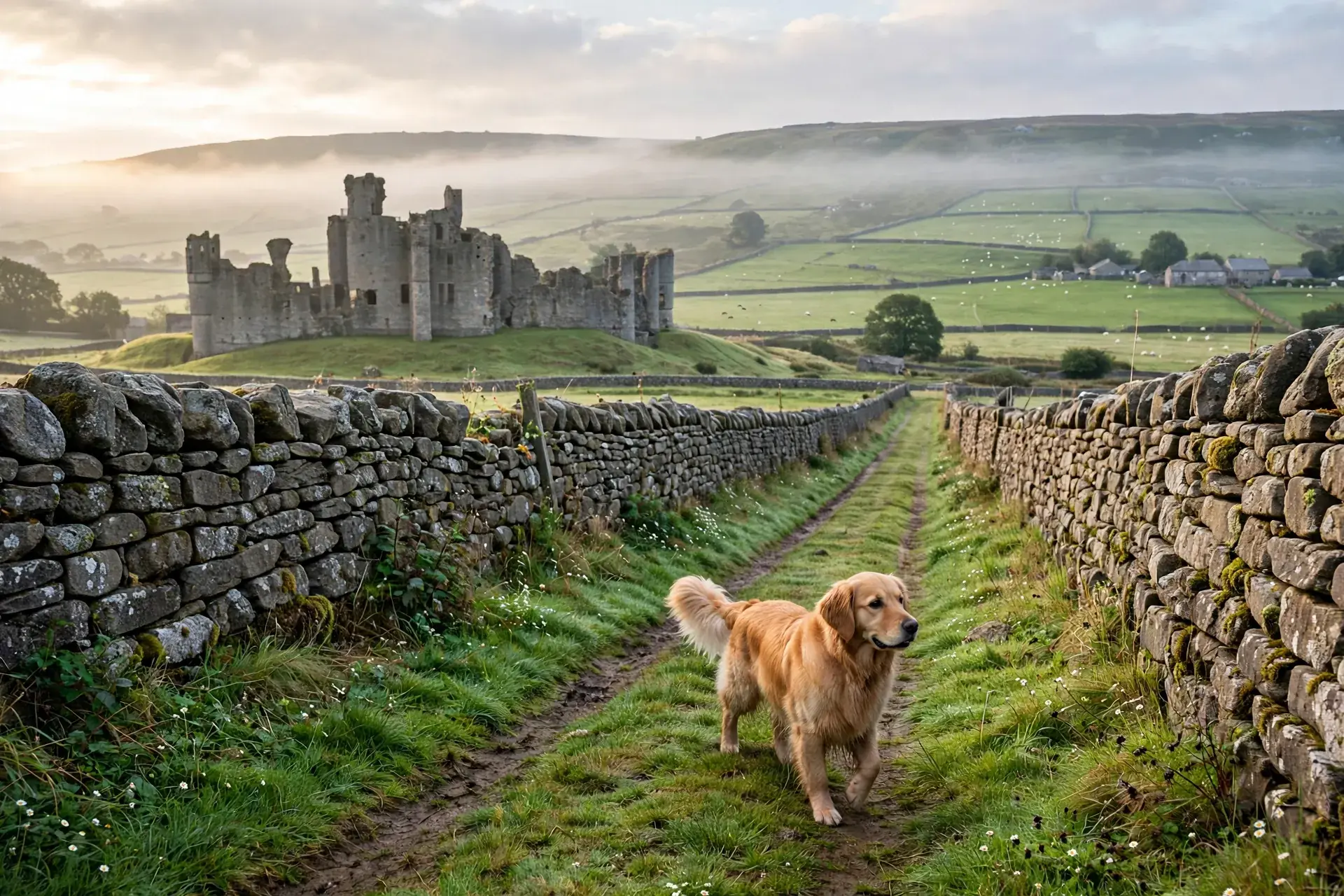
Settle is one of the easiest Dales bases for a dog trip: a compact market town, a railway station, short riverside walks from the centre, a steep but short climb to Castleberg Crag, and famous limestone country at Malham and Ingleton a short drive away. Keep your dog on a lead in town, near livestock and near cliff edges, and check the official guidance before you travel for cave visits, access changes and seasonal restrictions.
Why Settle works for dogs
Settle is a market town in North Yorkshire, on the edge of the Yorkshire Dales National Park, and it earns its place on a dog owner's shortlist for a simple reason: the walking starts where the town ends. You do not need to drive to a remote car park before your dog gets a proper walk. From the Market Place you can be on a riverside path in minutes, on a limestone crag above the rooftops in well under an hour, and on open fell in a morning. That matters when you are travelling with a dog, because the first walk of the day sets the tone for everything that follows. A dog that has sniffed, stretched and toileted properly is far easier to settle in a cafe, a pub or a holiday cottage than one that has spent the morning in the car.
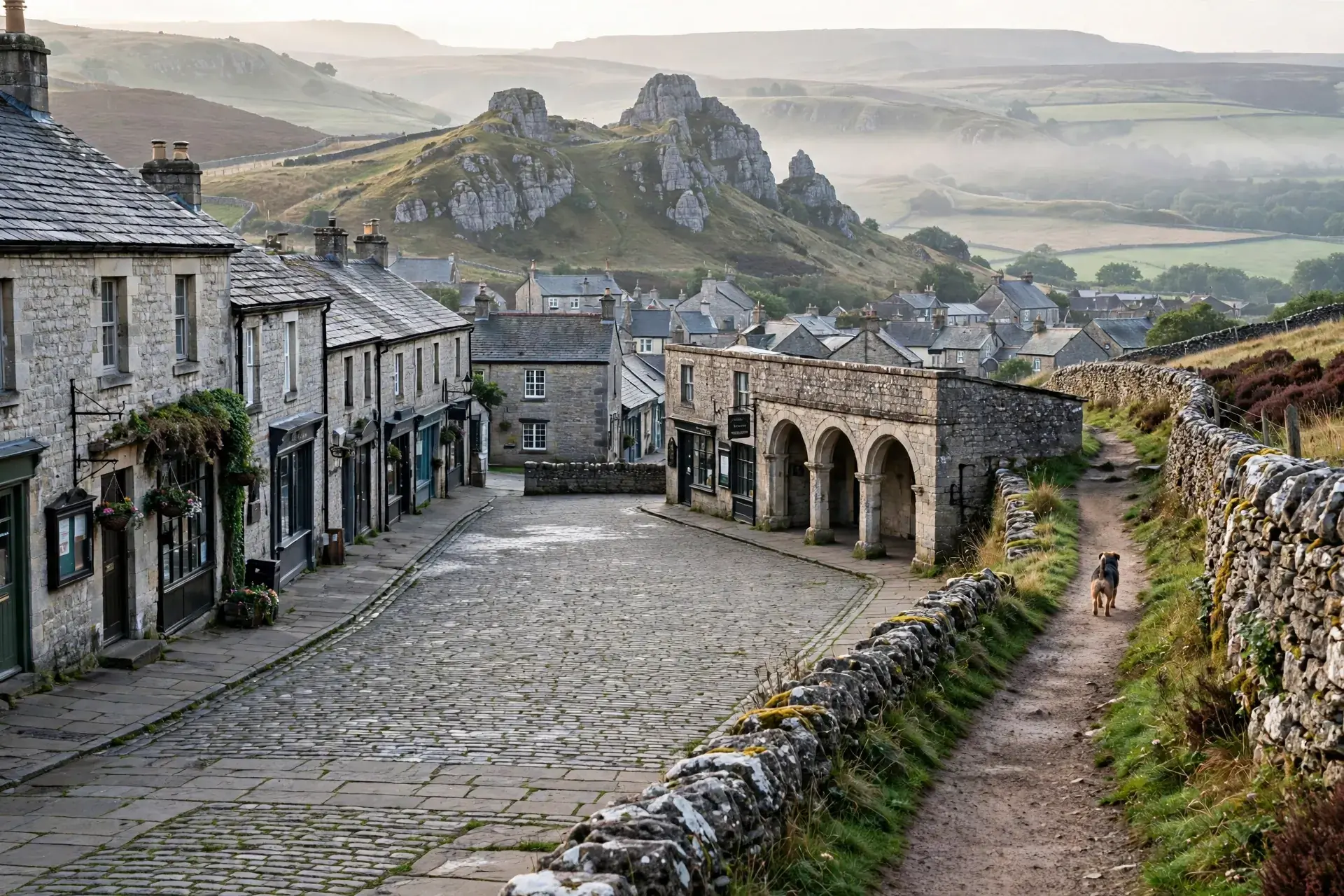
The town itself is small enough to explore on foot, which is another practical advantage. Settle has a Market Place at its centre, stone-built shops and cafes around it, a parish church, a town hall, and a station on the Settle to Carlisle railway line. The scale is human and dog-sized: streets are short, distances between the car park, the shops, the river and the start of the fell paths are modest, and you can plan a day around walking rather than driving. For older dogs, for puppies that are still building stamina, and for owners who want a slower break, that compactness is a genuine benefit. You can do a short morning loop, come back for lunch and a rest, and go out again in the afternoon without feeling that you have wasted the day.
Settle also works as a base because it sits between several different kinds of Dales landscape. To the south and east are the limestone pavements, scars and caves around Malham and the Ribble valley. To the north is the long, open valley of Ribblesdale, with the River Ribble running beside the railway towards Horton-in-Ribblesdale and the Three Peaks. To the west are the fells above Ingleton and the Lune valley. Each direction gives a different walk: river meadows one day, limestone scars the next, and a high fell ridge when the weather is clear and your dog is fit enough. That variety is useful over a long weekend, because you can match the walk to the weather and to the dog you have, rather than forcing the same kind of route every day.
It is worth being clear about what Settle is not. It is not a resort town with a long list of dog-specific attractions, and it does not have a large beach or a fenced dog park at its centre. Its appeal is quieter: a working market town, a good network of public footpaths and bridleways, and access to some of the best-known walking country in northern England. If your dog loves open ground, limestone, rivers and the smell of sheep-grazed grass, Settle will suit them. If your dog needs flat, fully enclosed exercise and no livestock, you will need to plan more carefully and choose your routes with the same care you would anywhere in the Dales. The rest of this guide is built around that honest picture: what is easy, what needs a lead, what to check before you go, and how to build a break that fits your dog rather than the other way round.
First visit: the town in an hour
Start in the Market Place. Settle's market square is the natural meeting point of the town, and on market days it fills with stalls, shoppers and dogs on leads. The square is overlooked by stone buildings including the Shambles, the Town Hall and the Folly, a seventeenth-century house that now holds a local museum. You do not need to visit every building to get a sense of the place: a slow loop around the square, down Duke Street and back along the main street, gives you the shape of the town in under an hour. Keep your dog on a short lead here. The streets are narrow in places, delivery vehicles use the same roads, and a dog that lunges towards another dog or a food stall can cause a problem in seconds.
From the Market Place, walk towards the parish church of Holy Ascension, which stands on rising ground at the edge of the town. The churchyard is a quieter spot than the square, and the view back across the rooftops towards the fells is a good first photograph. Respect the churchyard as a place of quiet and keep your dog on a lead and off graves. Churchyards in the Dales are often home to older trees, lichen-covered walls and, in spring, wildflowers; they reward a slow look, but they are not dog exercise areas. A short pause here, with water for the dog and a chance to check your map, is a sensible way to begin a walk rather than rushing straight onto the fell.
The Folly museum, on the edge of the Market Place, tells the story of Settle and the surrounding area, including its geology, its railway history and its local crafts. Museums of this kind do not usually admit pet dogs indoors, so plan on one person waiting outside with the dog, or on visiting on a day when the dog can rest at your accommodation. Check the official guidance before you travel for current opening hours and dog rules, because small museums change their hours seasonally and may close on particular weekdays. Even if you do not go inside, the building itself, with its mullioned windows and stone gables, is worth a look from the square.
Use this first hour to learn the practical geography of the town: where the car parks are, where the public toilets are, which cafes have outside seating, and which streets lead to the river and to the start of the fell paths. Note the location of the railway station, which is a short walk south of the centre, and the roads that carry through traffic. Dogs that are nervous in towns often settle once they know the route to the river, so walk that route on your first morning. A familiar path to open ground is one of the most useful things you can give a dog on a new trip, and Settle makes it easy to establish one quickly.
Castleberg Crag and the town viewpoints
Castleberg Crag, sometimes spelled Castlebergh, is the limestone crag that rises directly above Settle, and it is the town's most obvious landmark. The crag is a steep, wooded limestone outcrop with a small summit area that looks out over the town, the Ribble valley and the fells beyond. The walk from the Market Place is short but steep: a well-used path climbs through the town and then up the hillside, and most fit walkers reach the top in twenty to thirty minutes. For a dog, the climb is a good test of fitness and footing. The path includes steps and uneven limestone in places, and the summit area has drops nearby, so this is a lead walk, not an off-lead scramble.
Take the climb slowly, especially on a first visit. Limestone can be slippery when wet, and the path can be muddy after rain. Keep your dog on a lead and close to you on the steeper sections, and do not let a dog run ahead around a blind bend where the path narrows. At the top, give the dog water and a rest before you take photographs. The view rewards the effort: Settle spread out below, the Ribble winding through the valley, and the long ridge of the fells to the north. On a clear morning the light on the limestone is particularly fine, and on a still evening the town lights come on below while the fells darken behind them.
Castleberg is also a useful gauge for the rest of your trip. If your dog copes happily with the climb, the footing and the height, longer fell walks around Malham and Ribblesdale are likely to suit them. If your dog hesitates on the steps, pants hard on the climb, or is unhappy near the edge, choose flatter riverside routes for the rest of the break and save the higher walks for another visit. There is no shame in turning back halfway: the lower part of the path still gives good views, and a dog that has enjoyed a short climb is better off than one that has been pushed too far and is stiff the next day.
Other viewpoints around Settle are gentler. The paths towards Giggleswick and along the Ribble give wide views without a steep climb, and the lanes above the town to the west offer a slower ascent with more room to step aside. In all cases, keep to the marked paths, close gates behind you, and keep your dog under control near walls and field boundaries. Limestone country is full of hidden drops, sinkholes and loose rock, and a dog that chases a rabbit across open limestone can be in trouble before you can call it back. A long line is a useful compromise on these higher paths: it gives the dog room to sniff and explore while keeping you in control near an edge.
Ribble Way and riverside walks
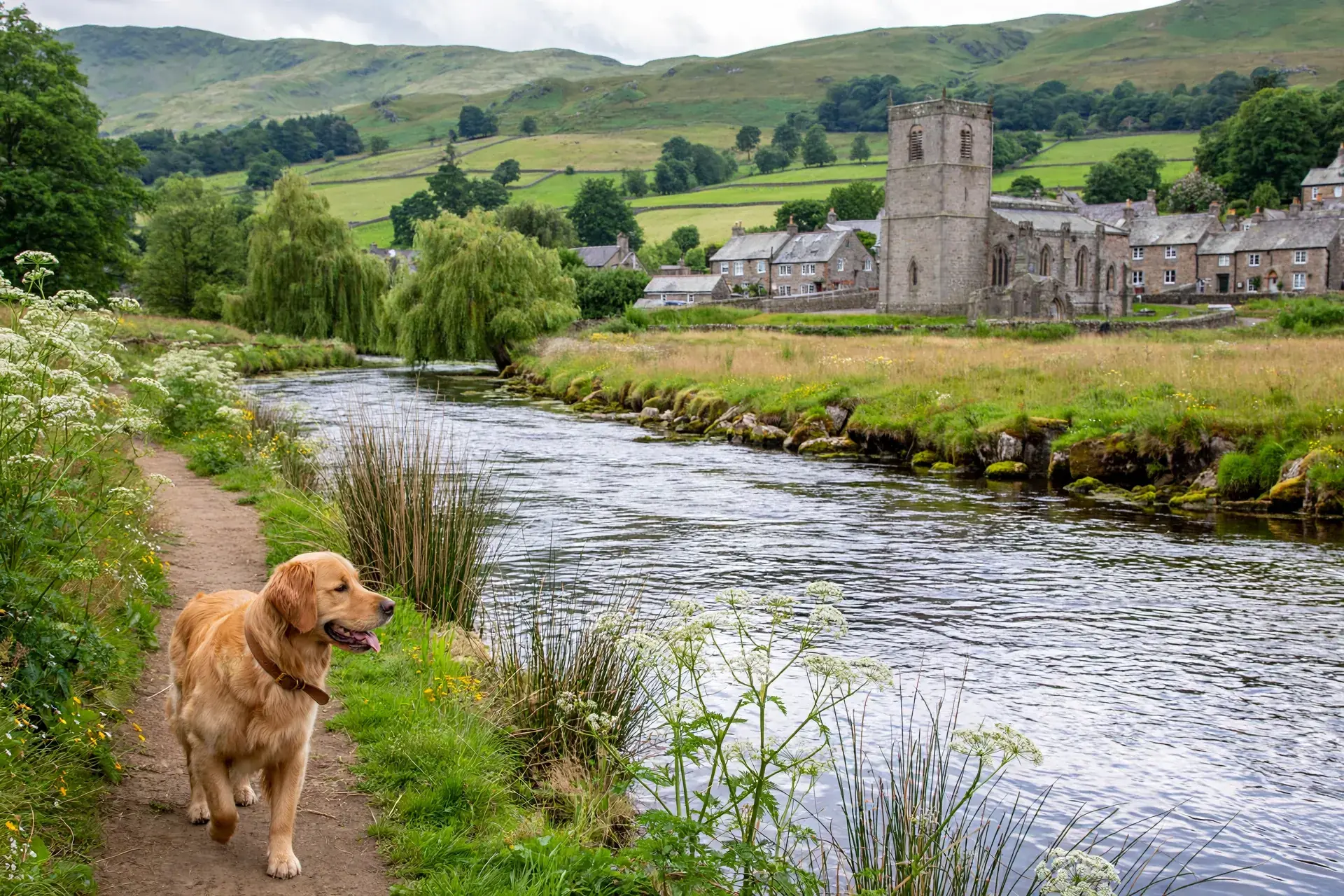
The River Ribble runs through Settle, and the riverside paths are the easiest walking in the area. The Ribble Way is a long-distance trail that follows the river from its source in the fells above Ribblehead down through Settle and on towards Preston and the coast. You do not need to walk the whole route to enjoy it. The sections around Settle, towards Giggleswick and Stainforth to the north, and towards Rathmell and Wigglesworth to the south, make excellent half-day walks with a dog, with flat or gently undulating ground, riverside meadows, and plenty of places to stop.
A good first riverside walk is the path from Settle towards Giggleswick, the neighbouring village just across the river. The route is short, mostly level, and follows the river through meadows and past old mill buildings. Giggleswick itself is a quiet village with a church, a school and a pub, and the walk between the two settlements is a pleasant introduction to the valley. Keep your dog on a lead where the path runs beside fields with livestock, and be ready to shorten the lead where the path meets a road or a bridge. River paths can be muddy after rain, and the ground beside the Ribble can be soft in winter, so wear boots with grip and carry a towel for the dog.
Heading north from Giggleswick towards Stainforth gives a longer riverside walk with a different character. Stainforth is a small village at the foot of the fells, with a waterfall, Stainforth Force, on the Ribble nearby. The force is a series of low falls and pools where the river drops over limestone shelves, and it is a popular spot for walkers and photographers. Dogs can enjoy the riverside here, but keep them on a lead near the falls and do not let them swim in fast water or near weirs. River levels in the Dales can rise quickly after heavy rain, and a dog that is a confident swimmer in a lake can still be in danger in a fast, cold river. Check the official guidance before you travel if you plan to let your dog paddle, and choose a calm, shallow stretch well away from the falls.
South of Settle, the Ribble Way continues through meadows towards Rathmell and Wigglesworth. This is quieter walking, with fewer people and more farmland, and it suits dogs that are easily over-excited by other dogs. The trade-off is more livestock and more gates, so keep your dog on a lead through fields and close every gate. Carry drinking water for the dog even on a riverside walk: river water can carry bacteria and algae, and dogs that drink from the river after rain can develop stomach upsets. A collapsible bowl and a bottle of clean water are small items that prevent a spoiled afternoon.
Riverside walking also brings seasonal considerations. In spring and early summer, ground-nesting birds use the meadows beside the Ribble, and dogs should be kept on a lead or under very close control in those areas. In summer, the riverbanks can be busy with families, picnics and other dogs, so choose an early start if your dog is reactive. In autumn, fallen leaves hide mud and uneven ground, and in winter the paths can be icy in shaded stretches. None of this makes the Ribble Way unsuitable for dogs; it simply means that the best riverside walk is the one you choose with the season, the weather and your dog in mind.
Attermire Scar and cave country
North-east of Settle, the limestone rises to Attermire Scar, a long cliff edge above the town, and to the caves that made this area famous among geologists. Victoria Cave, Jubilee Cave and other caves in the Attermire area were explored in the nineteenth century and yielded bones and artefacts that helped scientists understand the Ice Age history of northern England. Today the caves themselves are not tourist attractions in the usual sense: they are wild, gated or restricted in places, and they are not places to take a pet dog. The value for a dog walker is the landscape around them: limestone scars, pavements, dry valleys and open fell, all crossed by public footpaths.
The walk from Settle to Attermire Scar is a steady climb rather than a scramble. A common route leaves the town to the east, climbs through fields and limestone outcrops, and reaches the scar with views back over Settle and across to the fells. The path is rougher than the riverside routes, with uneven limestone, loose stones and sections where the ground is bare rock. Dogs need sound paws for this kind of walking: check pads before and after the walk, carry a basic paw-care kit, and consider dog boots if your dog has sensitive feet or if the limestone is wet and sharp. A dog that is comfortable on grass and woodland paths may find limestone pavement tiring, so build up the distance over a day or two rather than starting with the longest scar walk.
Attermire is also a place to practise good fell manners. Keep your dog on a lead or a long line near the scar edge, where the ground drops away and the wind can be strong. Do not let your dog chase sheep or disturb ground-nesting birds, and keep to the paths where the limestone pavement is fragile. Limestone pavement is a protected habitat: the flat blocks, known as clints, and the deep fissures between them, known as grykes, shelter rare plants and small animals. A dog that runs across the pavement can damage plants and can also injure a leg in a gryke, so keep the dog on the path and under control.
For cave enthusiasts, the right approach is to enjoy the surface and leave the underground to specialists. The show caves in the wider Dales, such as those at Ingleton and near Malham, have their own visitor rules, and most do not admit pet dogs. Check the official guidance before you travel for each cave you are interested in, and do not assume that a dog that is welcome in a car park will be welcome inside. If you want to learn more about the caves, the visitor centres and museums in the area, including the Folly in Settle, give a good introduction without taking a dog underground. The story of the caves, the bones and the early explorers is fascinating, and it is best learned above ground, with the dog resting in the shade and the limestone all around you.
Day trip: Malham Cove and Gordale Scar
Malham is about a thirty-minute drive from Settle, and it is the most famous limestone landscape in the Dales. Malham Cove is a huge curved limestone cliff, formed by a waterfall in the Ice Age, with a limestone pavement on top that has become one of the most photographed places in Yorkshire. Gordale Scar, a short walk from Malham village, is a deep limestone gorge with a waterfall at its head, and Janet's Foss, nearby, is a small waterfall in a wooded hollow. Together they make a classic Dales day out, and they are very popular with walkers and dogs.
Plan a Malham day with the same care you would give any busy honeypot. Arrive early, especially at weekends and in school holidays, because the village car park fills quickly and the paths to the Cove can be busy by late morning. The walk from Malham village to the Cove is straightforward: a surfaced path leads out of the village, across fields and along the beck to the foot of the cliff. From there, a stepped path climbs to the top of the Cove and the limestone pavement. The steps are steep and can be slippery, so keep your dog on a lead and take your time. The pavement at the top is uneven, with deep grykes, and dogs should stay on the path and away from the cliff edge. The view from the top, across the valley to the fells, is one of the best in the Dales, and it is worth the climb if your dog is fit and steady.
Gordale Scar is a shorter walk from Malham village, but it needs more care. The path follows a beck through a wooded gorge to a waterfall, and the final section involves scrambling over rocks beside the water. This is not a suitable route for every dog: small dogs, older dogs, and dogs that are unsteady on wet rock may struggle, and the gorge can be slippery and crowded. If your dog is not confident on rock, enjoy the lower part of the gorge and turn back before the scramble, or choose Janet's Foss instead, which is a gentler walk through woodland to a small waterfall and pool. Dogs should not swim in the pools at Janet's Foss or Gordale Scar without checking the depth and the current, and they should be kept on a lead in the gorge.
Malham village itself has a pub, a cafe and a shop, and it is a good place for lunch after a morning walk. As in Settle, ask about dog rules before you sit down, and keep your dog on a lead in the village. The paths around Malham cross farmland, so expect sheep and cattle, and keep your dog under control at all times. If you want a longer day, the walk from Malham to Malham Tarn, a lake on the fell above the village, is a rewarding extension, with open moorland, wading birds and a sense of space that contrasts with the gorge. The tarn walk is longer and more exposed, so take water, food and a waterproof for the dog as well as for yourself, and check the weather before you set out.
For a fuller comparison of national-park walking, our guide to the Lake District versus the Peak District with a dog explains how terrain, lead rules, swimming water and travel differ between the two parks, and it will help you decide whether a Dales base like Settle or a Lakes base suits your dog better on a longer trip.
Giggleswick, Stainforth and the villages
The villages around Settle are worth exploring in their own right, and they make excellent short walks for dogs that do not need a long fell day. Giggleswick, just across the Ribble from Settle, is a quiet village with a parish church, a village green and a pub. The church of St Alkelda is one of the oldest in the area, and the village has a calm, residential feel that contrasts with the bustle of the Market Place. A walk from Settle to Giggleswick and back, with a loop through the village lanes, is an easy hour that suits older dogs, puppies and dogs that are still settling into a new place.
Stainforth, to the north, is smaller and more rural, with stone cottages, a village hall and a pub. The walk from Settle to Stainforth can be done along the river or along the lanes, and it gives a good sense of the Ribble valley without a steep climb. Stainforth Force, the waterfall just outside the village, is a popular stopping point, and the riverside here is a good place for a paddle on a calm day. Keep your dog on a lead near the road through the village, and be aware that the lanes are narrow and carry farm traffic. A dog that walks well on a loose lead will enjoy these village walks; a dog that pulls hard will find the narrow lanes and the sheep in the fields more challenging.
Further afield, the villages of Rathmell, Wigglesworth, Austwick and Clapham each have their own character. Austwick, to the west of Settle, is a village of stone cottages at the foot of the fells, with paths up to the limestone scars above it. Clapham, to the north-west, is a larger village with a church, a pub and a village store, and it is the starting point for walks to Ingleborough Cave and the Ingleton Falls Trail. These villages are best visited by car or by a longer walk, and they make good lunch stops on a driving tour of the Dales. As always, check the official guidance before you travel for parking, pub rules and path closures, because village facilities change and some paths are closed during lambing or for land management.
Village walking also teaches a useful lesson about Dales dogs: the best walks are often the ones that link two villages by a field path, rather than the ones that follow a road. Field paths give the dog more to sniff, more room to walk, and less traffic, but they also mean more gates, more livestock and more mud. Carry a lead, a long line, water and poo bags, and be prepared to turn back if a field is full of cattle with calves. Cattle, especially cows with calves, can be protective and unpredictable, and a dog that runs towards them can trigger a charge. If you meet cattle on a path, keep your dog on a short lead, walk calmly and steadily through the field, and do not run. If the cattle block the path, find another route rather than forcing your way through.
Pubs, cafes and the Tuesday market
Settle holds a market on Tuesdays, and market day is the liveliest day of the week in the town. Stalls in the Market Place sell local produce, crafts, plants and food, and the town fills with shoppers, dogs and conversation. For a dog, a market is a rich but demanding environment: food smells, crowds, other dogs, children and narrow gaps between stalls. A well-socialised dog that is comfortable in crowds will enjoy a market visit, but a nervous or reactive dog will find it stressful. If your dog is new to markets, visit early, keep the visit short, and leave before the crowds build. Keep your dog on a short lead, keep them close to your leg, and do not let them sniff food stalls or take food from the ground.
Pubs and cafes in Settle vary in their dog policies, and the only reliable rule is to ask. Many pubs welcome dogs in the bar area or in a particular room, and some have water bowls and dog treats behind the bar. Cafes with outside seating are often the easiest option in good weather, because the dog can settle beside the table without being in a crowded room. In wet weather, a pub with a dog-friendly bar is a welcome refuge after a walk, but check the rules before you order. Some pubs allow dogs only at certain times, some ask that dogs stay on the floor rather than on chairs, and some have a separate dog-friendly area that is not obvious from the door. A quick question at the bar saves an awkward moment later.
Make pub and cafe visits easy for everyone by bringing the right kit. A mat or blanket for the dog to lie on, a water bowl, a chew or a stuffed Kong, and a lead that can be secured to a table leg without tripping anyone will make a long lunch possible. Feed the dog before you go in, or give them a small snack on arrival, so they are not begging for food from the table. If your dog barks, paces or begs persistently, take them outside for a short walk and try again, or cut the visit short. A dog that has had a good morning walk and a chance to toilet is far more likely to settle under a pub table than one that has been in the car all morning.
Shops in Settle are a mixed picture for dogs. Some independent shops welcome dogs, others ask that dogs wait outside, and food shops usually do not admit pet dogs. Do not assume that a shop that welcomed a dog last year still does, and do not take a dog into a food shop without asking. If you need to shop while travelling with a dog, take turns with another person, or use a shop with outside seating where one person can wait with the dog. The same principle applies to the museum, the church and other indoor attractions: plan for the dog to wait outside, or for one person to visit while the other walks the dog. A little planning prevents a situation where the dog is left tied outside a shop, which is stressful for the dog and a risk in a busy town.
Where to stay with a dog
Settle and the surrounding villages offer a range of dog-friendly places to stay, including holiday cottages, bed and breakfasts, pubs with rooms, campsites and self-catering apartments. The best choice depends on your dog: a cottage with an enclosed garden suits a dog that needs a safe toilet area at night, while a pub room suits a dog that is happy to settle in a small space and walk to a field in the morning. A campsite suits a dog that is used to tents and outdoor living, but it is a poor choice for a dog that barks at every footstep or that is unhappy in a tent in wet weather.
When you book, ask the specific questions that matter for your dog rather than relying on a "dog-friendly" label. Ask how many dogs are allowed, whether there is an extra charge, whether the garden is enclosed and how high the fence is, where the nearest toilet walk is after dark, and whether the dog can be left alone in the property for a short period. Ask about flooring, because a cottage with hard floors is easier to clean after a muddy walk but harder for an older dog to grip. Ask about stairs, because a dog that cannot manage stairs will need a ground-floor bedroom. Get the answers in writing, with the pet fee itemised, before you pay a deposit.
For a longer break, consider the villages around Settle as well as the town itself. A cottage in Giggleswick, Stainforth or Austwick may be quieter than a town-centre property, with a field path from the door and less traffic. The trade-off is fewer shops and cafes within walking distance, and a greater need for a car. A town-centre stay gives you a pub, a shop and a riverside walk on foot, but it also means more noise, more people and more dogs passing the door. Match the location to your dog's temperament: a nervous dog will often do better in a quiet village, while a social dog that enjoys watching the world will be happy in town.
Our guides to other Dales villages can help you compare bases before you book. Middleham, further east in Wensleydale, offers castle ruins, gallops and river walks in a racing town, and our Middleham with a dog guide covers its lead rules and horse safety. Wensley, also in Wensleydale, is a quieter village base with riverside paths and a historic church, and our Wensley with a dog guide explains its walks, fishing spots and stays. Both are useful comparisons if you are choosing between a Ribblesdale base at Settle and a Wensleydale base further east.
Getting there, parking and the railway
Settle is reached by road from Skipton to the south-east, from Kirkby Lonsdale and Lancaster to the west, and from the A65, which runs through the town. The drive from Skipton takes about thirty minutes, and from Lancaster about forty-five minutes, depending on traffic. The roads are mostly single carriageway with bends and, in places, narrow sections through villages, so allow extra time and drive carefully. If your dog is a nervous traveller, plan a stop on the way: a lay-by or a village green where the dog can stretch, toilet and drink before the final stretch into Settle.
Parking in Settle is straightforward if you arrive early. There are public car parks close to the Market Place and near the station, plus on-street parking in some areas. Charges and time limits vary, so read the signs at the entrance to the car park rather than assuming that a car park you used before has the same rules. On market days and in school holidays, the car parks fill early, and you may need to park further from the centre and walk in. That walk is not a problem for most dogs, but it is worth planning for: park, give the dog a short toilet walk, and then explore the town, rather than leaving the dog in the car while you look for a space.
Never leave a dog in a parked car in warm weather, even for a few minutes. Cars heat up quickly, and a dog can overheat in a surprisingly short time. In cold weather, a dog left in a car can also become chilled, especially if the car is in shade and the dog is wet from a walk. The safest rule is simple: if you cannot take the dog with you, do not leave the dog in the car. Plan your day so that the dog is either with you or resting at your accommodation, and use a car park that is close to your first walk so the dog does not spend long in the car at all.
The railway is one of Settle's great advantages. Settle station is on the Settle to Carlisle line, one of the most scenic railways in England, running north through Ribblehead, Dent and Kirkby Stephen to Carlisle, and south through Hellifield to Leeds. Dogs can travel on the train, usually on a lead and under the seat or in the vestibule, and the line gives access to walks at Ribblehead, Dent and Horton-in-Ribblesdale without a car. Check the official guidance before you travel for current dog rules, ticket prices and engineering works, because the line is sometimes closed for maintenance and bus replacements may have different dog rules. A train ride to Ribblehead, with a walk to the viaduct and back, is a memorable day out for a dog that is comfortable on public transport.
If you arrive by train, plan your walk from the station carefully. The station is a short walk from the town centre, but the route includes a road crossing and a section of pavement. Keep your dog on a short lead, and give the dog a toilet walk as soon as you arrive. If you are staying in Settle for several days without a car, the railway and the local bus services, combined with walks from the town, can give you a full break without driving. Check the official guidance before you travel for bus dog rules and timetables, because rural bus services are infrequent and may not run on Sundays.
Seasons, livestock and limestone safety
The Dales change with the seasons, and a good Settle break matches the walk to the time of year. Spring brings lambing, nesting birds and the first wildflowers, but it also brings mud, cold winds and the need for a lead in fields with ewes and lambs. Lambing season is the time when a loose dog can cause the most harm: a dog that chases sheep, even in play, can cause ewes to abort or lambs to be separated from their mothers. Keep your dog on a lead in any field with sheep, and on a lead on open fell in spring, even if you cannot see the sheep. Farmers have the right to take action against a dog that is worrying livestock, so this is not a rule to test.
Summer is the busiest season in Settle and Malham, with warm weather, long days and crowded paths. Dogs need shade, water and rest in summer, and they should not be walked in the heat of the day on limestone or tarmac, which can burn paws. Walk early in the morning or late in the afternoon, carry extra water, and watch for signs of heatstroke: heavy panting, drooling, lethargy and vomiting. If your dog shows these signs, move them to shade, offer cool water, and seek veterinary help. Ticks are also a summer risk in the Dales: check your dog after every walk, especially around the ears, armpits and groin, and remove ticks promptly with a tick remover. Talk to your vet before the trip about tick prevention and about the risks of adder bites, which are rare but possible on sunny, rocky ground.
Autumn is often the best season for a Settle break. The crowds thin, the light on the limestone is warm, and the fells are quieter. The trade-off is more mud, shorter days and the risk of heavy rain. Limestone paths become slippery when wet, and river levels rise after rain, so check the weather forecast and the river level before a riverside walk. Autumn is also the season for fungi, some of which are poisonous to dogs: keep your dog from eating mushrooms and other fungi on woodland paths, and seek veterinary advice if your dog eats something you cannot identify.
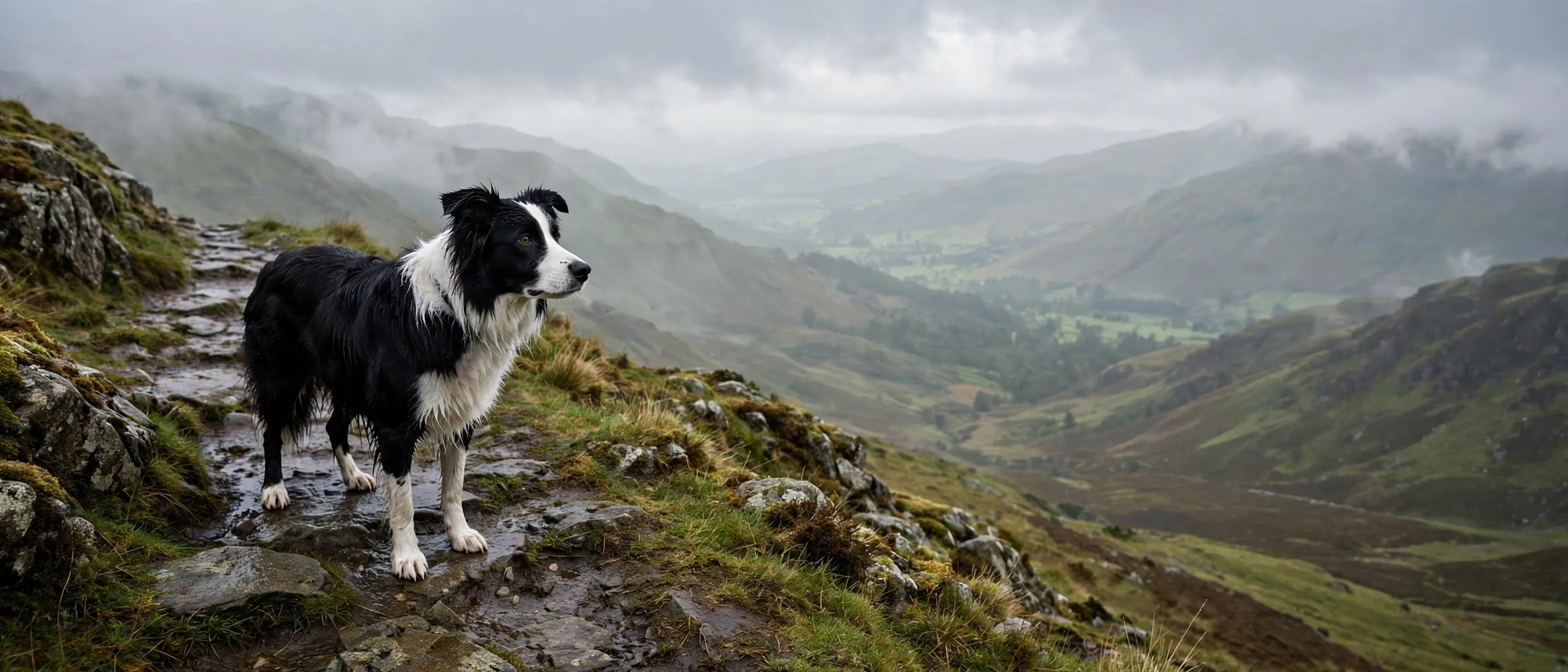
Winter in the Dales can be beautiful, with frost on the limestone and snow on the fells, but it is also the season when walking needs the most care. Paths can be icy, especially in shaded gullies and on limestone pavements, and the wind on the higher fells can be bitter. Dogs need a coat in cold, wet weather, especially short-coated breeds, older dogs and puppies. Check paws for ice and salt after a walk, and dry the dog thoroughly before they settle indoors. If you are walking in snow, keep your dog on a lead near frozen water, because ice on a tarn or a river can be thin and a dog that falls through can be in serious danger. In all seasons, the rule is the same: check the forecast, tell someone where you are going, carry a phone, water, food and a first-aid kit, and be ready to turn back if the weather changes.
Limestone safety deserves a paragraph of its own. Limestone pavement, with its deep grykes, can trap a dog's leg, and limestone cliffs and scars have loose rock and hidden drops. Keep your dog on a lead near any cliff edge, and do not let them climb on loose scree or run ahead on a narrow path. Caves, shake holes and sinkholes are also hazards: a dog that falls into a shake hole can be injured and difficult to rescue, so keep the dog on the path in cave country. If your dog does fall or become stuck, do not put yourself at risk trying to rescue them: call for help, keep the dog calm if you can, and contact the local mountain rescue team or the emergency services. Prevention, by keeping the dog on a lead in risky places, is far better than rescue.
A relaxed two-day plan
Day one is for settling in. Arrive in the morning, park near the centre, and take a short riverside walk towards Giggleswick to let the dog toilet, sniff and stretch. Return to the Market Place for a coffee and a look around the shops, then walk up to Castleberg Crag in the afternoon if the weather is fine and your dog is fit. Keep the climb slow, take water, and enjoy the view from the top. In the evening, eat in a dog-friendly pub, with the dog settled on a mat under the table, and take a short last walk along the river before bed. This is a gentle day that gives the dog a sense of the town without tiring them out.
Day two is for the limestone. Drive or take the train to Malham in the morning, arriving early to avoid the crowds. Walk from the village to Malham Cove, climb the steps to the limestone pavement, and enjoy the view. If your dog is confident on rock, continue to Gordale Scar or Janet's Foss; if not, return to the village for lunch and a shorter walk along the beck. In the afternoon, drive back towards Settle by way of the Ribble valley, stopping at Stainforth for a look at the Force and a riverside paddle. End the day with a quiet evening at your accommodation, drying the dog, checking paws and planning the next day.
If you have a third day, use it for a longer walk or a railway trip. A walk from Settle to Attermire Scar, a train ride to Ribblehead for the viaduct, or a drive to Ingleton for the Falls Trail each make a good third day, and each gives a different kind of Dales walking. Alternatively, spend the third day slowly: a morning in the village, a long lunch, and an afternoon riverside walk with no agenda. Dogs, like people, need a rest day on a busy trip, and a slow day in Settle is not a wasted day. It is a chance for the dog to recover, for you to enjoy the town, and for the break to feel like a holiday rather than a route march.
Packing for Settle is straightforward if you plan for Dales weather. Bring a lead and a long line, a harness that fits well, poo bags, a collapsible water bowl and a bottle of water, a towel and a drying coat, a dog coat for cold or wet weather, a first-aid kit including a tick remover, and a mat for pubs and cafes. Bring a map and a compass or a charged phone with an offline map, because phone signal is patchy on the fells. Bring food and treats, and a chew or a Kong for quiet evenings. If your dog takes medication, bring a spare supply. If your dog is anxious in new places, bring their bed and a familiar blanket, because a familiar smell helps a dog settle in a new cottage. The list is not long, but each item earns its place on a Dales break.
Practical questions
Before you go
Can dogs walk off lead around Settle?
In many open areas, yes, if your dog has reliable recall and you keep it under close control, but use a lead on roads, in the town centre, near livestock, near cliffs and limestone edges, and wherever a sign asks for one. Lambing season and ground-nesting birds make a lead the safer choice in spring and early summer.
Is Castleberg Crag suitable for dogs?
The short climb from the town is manageable for many fit dogs, but the path is steep in places and the summit is exposed with drops nearby, so keep your dog on a lead, take water, and avoid the edge in wet or windy weather. Check the official guidance before you travel if your dog is older, very small, or unsteady on steep ground.
Can dogs go into the caves near Settle?
Most show caves and organised cave visits do not admit pet dogs, and wild caves are not safe places for dogs. Enjoy the cave country from the surface paths around Attermire Scar, Malham and Ingleton instead, and check the official guidance before you travel for the rules at each site.
Where can I park in Settle with a dog?
Settle has public car parks close to the Market Place and the station, plus on-street parking in places. Arrive early on market days and in school holidays, check the signs for charges and time limits, and plan a short walk from the car so your dog can toilet and settle before you explore the town.
Are pubs and cafes in Settle dog-friendly?
Many pubs and cafes in and around Settle welcome dogs, often in a bar area or outside, but policies change and some places allow dogs only in certain rooms. Ask before you sit down, keep your dog on a lead and under the table, and carry a mat and water bowl so the visit is easy for staff and other guests.
What is the best easy walk from Settle with a dog?
For an easy start, follow the riverside paths along the River Ribble towards Giggleswick and Stainforth, or take the short climb to Castleberg Crag for a view over the town. Both are close to the centre, easy to shorten, and good for checking how your dog copes with Dales terrain before a longer walk.