This guide is independent and contains no paid placement. If affiliate links are added later, they will be clearly marked and will not change our editorial checks.
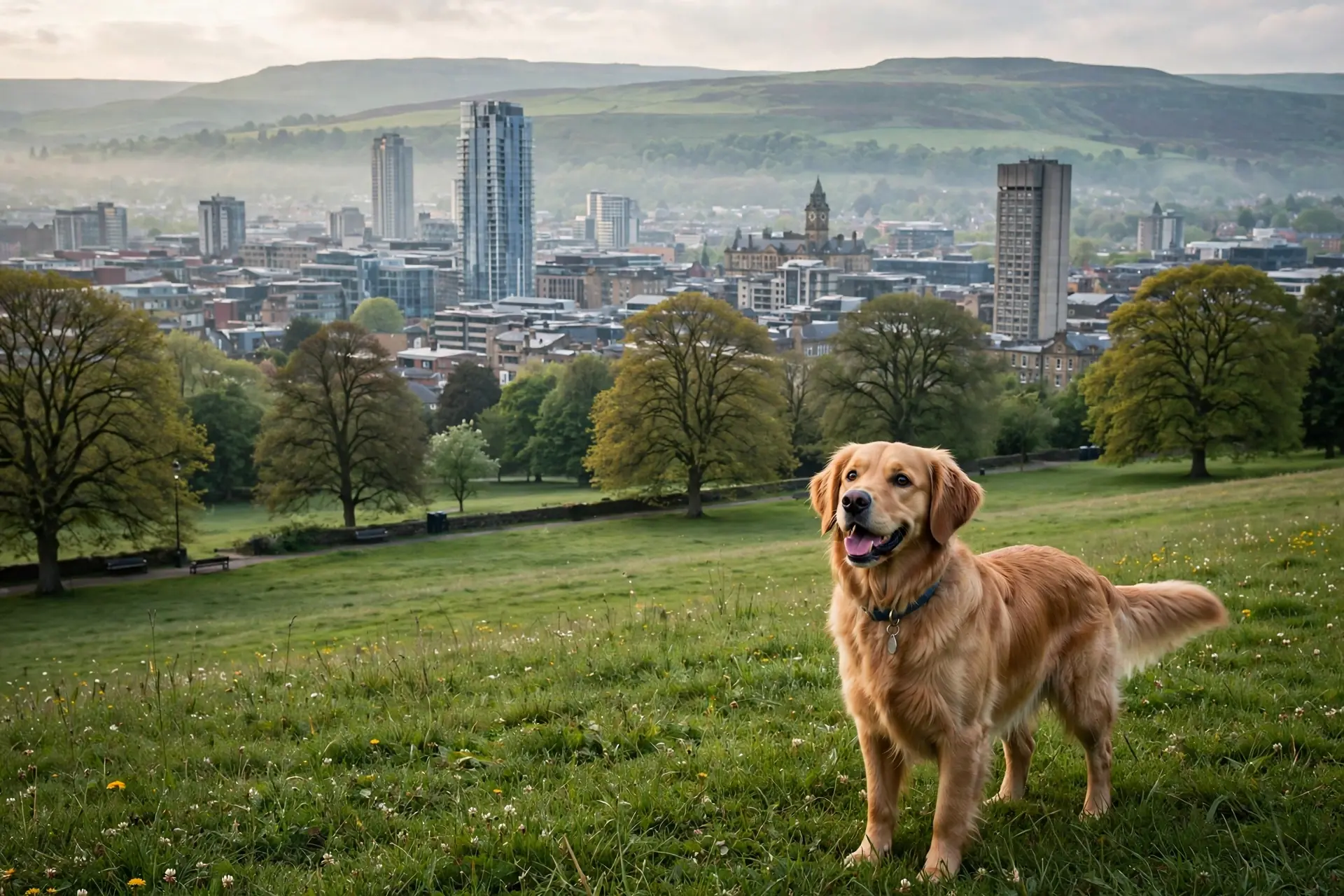
Sheffield works for dogs because green space is never far away: the city has more than 250 parks and woodlands, and the Peak District National Park starts just a few miles west of the centre. Plan around the hills, keep your dog on a lead near livestock, and use the parks as the backbone of every day.
Why Sheffield suits dogs so well
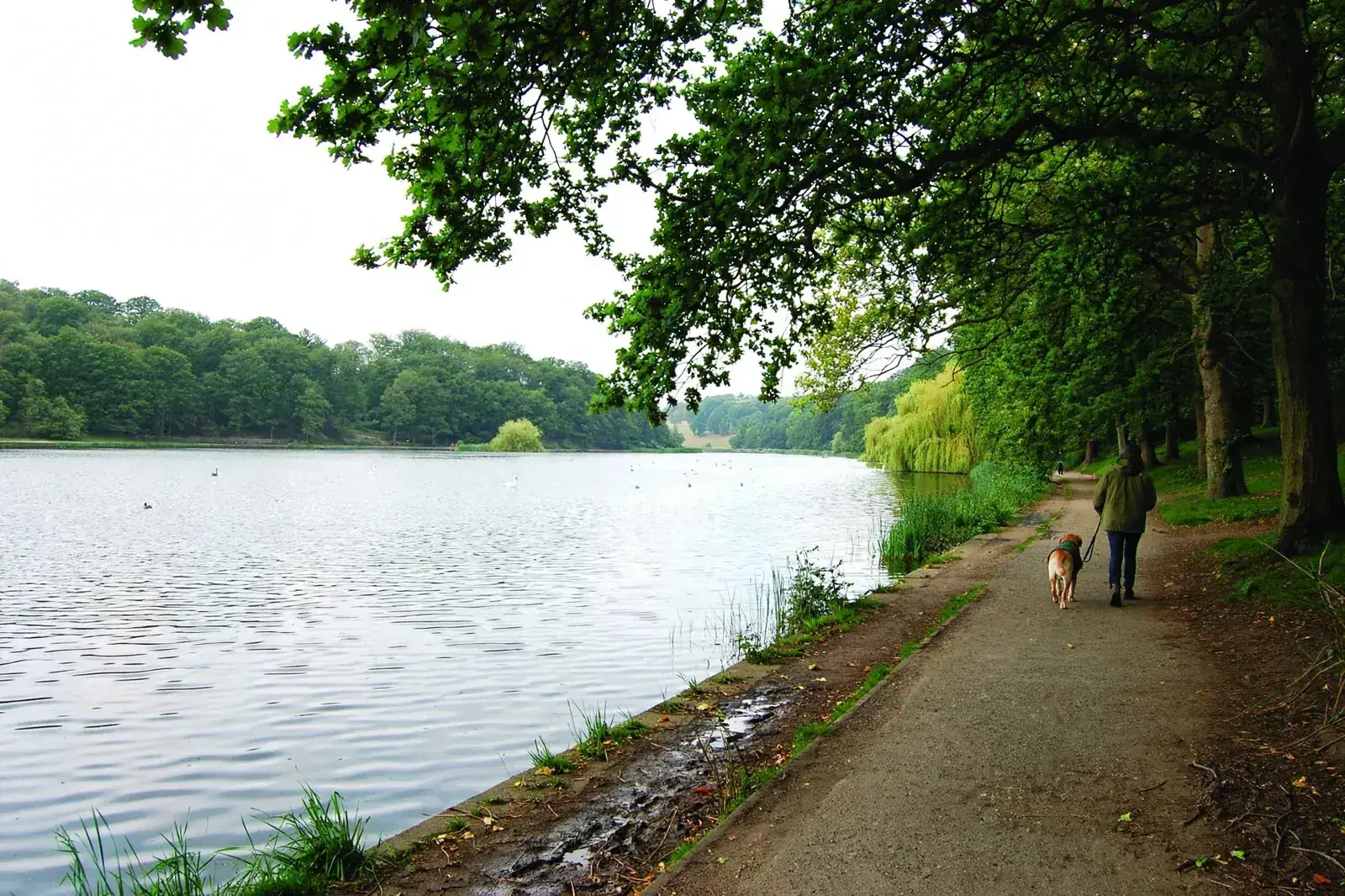
Sheffield is often described as one of the greenest cities in England, and for a dog owner the claim is easy to feel rather than measure. The city is built on seven hills and threaded by five rivers — the Don, the Sheaf, the Porter, the Rivelin and the Loxley — and the valleys between those hills hold a chain of parks, woods and old millponds that most visitors never see. More than 250 parks, gardens and woodlands sit inside the city boundary, and around a third of the city is covered by green space. That matters for a dog trip in a very practical way: you are rarely more than a ten-minute walk from somewhere your dog can sniff, stretch and settle.
The second reason Sheffield works is the edge of the city. The Peak District National Park boundary lies roughly four miles west of the city centre, which means a morning can start with a city park coffee and end with a moorland edge walk without a long drive. Few British cities offer that switch so easily. From the western suburbs — Fulwood, Lodge Moor, Ringinglow — open moorland is a short walk away, and buses run from the city centre out towards the Peak District villages. For dogs, the contrast is ideal: gentle, flat park walks in the city when you want an easy morning, and bigger, wilder ground when you want a proper outing.
The third reason is the city itself. Sheffield's centre is compact and walkable, with a pedestrianised heart around Fargate, the Peace Gardens and the Winter Garden. The Winter Garden is one of the largest urban glasshouses in Europe, and while dogs are not allowed inside it, the surrounding streets and the Peace Gardens give you a pleasant, traffic-light route through the middle of town. The city has a relaxed, unhurried character that suits dogs: pavement cafes spill onto quiet streets, many pubs welcome dogs as a matter of course, and nobody expects you to hurry.
None of this means Sheffield is effortless. The seven hills are real, and a walk that looks short on the map can involve a stiff climb. The city's weather changes fast, with rain sweeping in from the Peak District, and the moorland edge brings livestock, adders and ground-nesting birds that need respect. This guide works through all of that in order: the parks first, then the Peak District edge, then the practical rules for getting around, eating, staying and keeping a dog safe and comfortable.
A first day that works
Arrive with a plan for the first two hours, and the rest of the trip follows more easily. If you are driving in, park once and walk: the city centre car parks are convenient, but a dog that has just spent an hour in the car needs grass and a toilet break before anything else. The Peace Gardens and the area around Sheffield Hallam University give you a quick, central green stop, but a better first stop is Endcliffe Park or the Porter Valley, a short drive or bus ride south-west of the centre, where a dog can walk along the Porter Brook, sniff properly and burn off the journey.
After that first walk, head into the centre on foot or by tram for a slow look around. The route from the station up through the Peace Gardens to the Winter Garden and the Cathedral is short and mostly flat, and it gives a dog a good mix of smells, people and street life without any steep climbs. Keep this first city walk to thirty or forty minutes. A dog that has already had a proper park walk will cope with the centre calmly; a dog taken straight into town from the car will not.
Plan lunch around the dog, not around a restaurant list. Sheffield has plenty of pubs and cafes that welcome dogs, especially in the Kelham Island and Devonshire Quarter areas, but the details change — a pub that welcomed dogs last year may have changed its policy, and a cafe may only allow dogs in one area. Check the official guidance before you travel, or phone ahead. A safer pattern for the first day is to choose a pub with a beer garden or a large ground-floor room, arrive before the lunch rush, and sit somewhere your dog can settle under a table out of the walkway.
Finish the first day with a second, quieter walk. Weston Park and Crookes Valley Park, close to the University of Sheffield, are good evening choices: level paths, plenty of dogs, and a duck pond that keeps most dogs interested. If your dog is still full of energy, the climb up to Meersbrook Park rewards you with one of the best views over the city, but save it for a morning when the dog is fresh. The pattern that works in Sheffield is simple: a proper walk first, the city in the middle, and a calm park to close the day.
The parks: where to go and what to expect
Sheffield's parks are not interchangeable. Each one has a different character, a different surface underfoot and a different set of rules, and choosing the right one for your dog matters more than ticking off a list. Here is how the main ones work in practice.
Endcliffe Park and the Porter Valley. This is the park most Sheffield dog owners would name first. It follows the Porter Brook south-west from the city towards the Peak District, with a cafe, a playground, open lawns and a chain of wooded paths along the water. Dogs can run off lead on the open grass, but should be kept on a lead near the brook in places, around the playground and on the busier paths. The valley continues into Bingham Park and Whiteley Woods, so a short walk can stretch into a two-hour riverside route without ever touching a main road. Parking is on street nearby and fills early on sunny weekends.
Weston Park and Crookes Valley Park. Two parks that sit side by side near the university, and together they make one of the best easy circuits in the city. Weston Park has lawns, a bandstand and the museum at its edge; Crookes Valley Park has the large pond, known locally as the dam, with ducks, swans and plenty of dogs. The paths are level and mostly surfaced, which suits older dogs and puppies. Dogs are expected on lead around the pond edge and the playground, and off lead on the open lawns where local rules allow. This is the best choice for a first morning in the city, or for a dog that needs a gentle, predictable walk.
Graves Park. The largest park in Sheffield, at around 87 hectares, and the most varied. It has open meadows, woodland, a farm with animals, sports pitches and a cafe, and it sits on the southern edge of the city near Norton. The size is the point: you can walk for an hour without repeating a path, and there is room for a dog to run properly. Keep dogs on a lead near the farm animals and the sports pitches, and be aware that the park is popular with families and organised sports at weekends. Car parks sit off Hemsworth Road and Cobnar Road, and the park rewards an early start.
Meersbrook Park. A smaller, hillier park in the south of the city, and the one with the best view. The climb to the top is steep but short, and on a clear day you can see right across Sheffield to the Peak District edge. The park has a walled garden, a bowling green and a cafe in the old hall, and it is quieter than Endcliffe or Graves. It suits a fit dog and an owner who wants a view as part of the walk, but it is not the right choice for a dog that struggles with slopes.
Norfolk Heritage Park. On the eastern side of the city, this is one of Sheffield's oldest public parks, laid out in the 1840s, with formal gardens, a bandstand and wide, level paths. It is a good on-lead stroll rather than a run-around park, and it works well combined with a walk through the nearby Manor area. Dogs should stay on lead in the formal gardens.
Hillsborough Park and the Walled Garden. In the north-west of the city, Hillsborough Park has open lawns, a large pond, sports facilities and a popular cafe. The park is flat and easy to walk, and it is a good choice if you are staying on the north side of the city. As with the other large parks, keep dogs on a lead around the pond, the playground and the sports areas.
Sheffield Botanical Gardens. A beautiful, calm garden in the south-west of the city, with glass pavilions, themed gardens and wide paths. Dogs are welcome on a lead in the gardens themselves, but not inside the pavilions or the indoor cafe areas. This is a short, gentle walk rather than a dog's main exercise, and it is best visited early on a weekday when it is quiet. The gardens close at dusk, so check opening times before you go.
Ecclesall Woods. One of the largest areas of ancient woodland inside a British city, covering around 140 hectares between Ecclesall and Dore. The woods have waymarked trails, a discovery centre and a cafe, and they feel a world away from the city even though houses are minutes away. Dogs love the woodland paths, but keep them close: the woods are busy with walkers, cyclists and other dogs, and the paths can be muddy after rain. This is a good wet-weather choice, because the tree canopy keeps the worst of the rain off.
A note on the rules: Sheffield City Council can set Public Spaces Protection Orders that require dogs to be on leads in specified areas, and individual parks have their own signs. Read the signs at each entrance rather than assuming the rule from the last park you visited. Off-lead freedom in one park does not guarantee it in the next, and the areas around playgrounds, sports pitches and formal gardens are the most likely to be lead-only. If in doubt, keep the lead on.
The Peak District edge
The Peak District National Park begins only a few miles west of Sheffield city centre, and the eastern edge of the park — the gritstone edges, the moorland and the wooded valleys — is some of the most dog-friendly walking country in England. You do not need to drive deep into the park to reach it. From the city centre, the villages of Ringinglow, Hathersage and Grindleford are a 20- to 30-minute drive, and buses run from the city to several of the main starting points. Here are the walks that work best with a dog.
Longshaw Estate. A National Trust estate of moorland, woodland and farmland on the edge of the Peak District, and the easiest first taste of the park from Sheffield. The estate has a cafe, waymarked trails of different lengths, and open moorland with views across the Derwent Valley. Dogs are welcome on the estate and on the trails, but must be on a lead around sheep and cattle, and during the ground-nesting bird season. The car park fills quickly on fine weekends, so arrive before 10am or go on a weekday. The short lake loop is a good first walk; the longer moorland circuits suit fit dogs.
Stanage Edge and Burbage Moor. The great gritstone edge that runs south from Sheffield is one of the most famous walking landscapes in Britain, and it is a superb dog walk when conditions are right. The paths along the top of Stanage Edge are wide and open, with views across the Hope Valley, and dogs can run off lead on the open moor where rules allow — but keep them on a lead near the edge itself, because the drop is sheer in places and the wind can be strong. Burbage Moor, just to the south, has a car park and gentler, flatter paths that suit older dogs. Both areas are exposed, so check the weather and bring water: there is no shade and no shop once you are up on the edge.
Wyming Brook and the Rivelin Valley. Closer to the city, the Rivelin Valley is a wooded river valley that runs west from Hillsborough towards the Peak District, with a chain of old millponds, weirs and packhorse bridges. Wyming Brook, a tributary, has a nature reserve with a steep, rocky stream and a car park at the top of the valley. The valley paths are surfaced in places and muddy in others, and the whole route is shaded, which makes it a good choice on a hot day. Dogs should be on a lead near the water in the narrowest sections and around the livestock that graze the valley fields.
Padley Gorge and Grindleford. A short drive further south, Padley Gorge is a steep, wooded gorge with a tumbling stream, ancient oak trees and a famous stepping-stone crossing. Dogs love the water, but the gorge is rocky and the stones can be slippery, so this is a walk for a sure-footed dog rather than a puppy or an older dog. The village of Grindleford has a station on the Hope Valley line, which makes it one of the few Peak District walks you can reach by train from Sheffield with a dog. Check the official guidance before you travel for current train and access information.
Livestock, birds and the lead rule. The single most important rule on the Peak District edge is the lead around livestock. Sheep graze the moorland and the edges year-round, and cattle are common in the valley fields. A dog that chases sheep can cause serious harm, and farmers are legally entitled to protect their animals. Keep your dog on a lead whenever livestock are in sight, and on a short lead when you pass through a field. Between March and July, ground-nesting birds such as curlew and lapwing nest on the open moor, and dogs should be kept on a lead on the moorland during this season to avoid disturbing nests. The rule is simple: if you can see sheep, cattle or open moor in nesting season, the lead goes on.
Weather on the edge. The moorland edge is noticeably colder and windier than the city, and the weather can change in minutes. A sunny morning in Sheffield can turn into driving rain on Stanage Edge by lunchtime. Check the forecast for the moorland, not just the city, carry water for the dog, and have a plan for getting back to the car quickly if the weather turns. In summer, the open moor offers no shade, so walk early or late and watch for overheating, especially in thick-coated or brachycephalic breeds.
City rules: leads, trams and buses
Sheffield is easy to navigate with a dog once you know the rules, and most of them are common sense. Dogs must be kept under control in public places at all times, and owners are responsible for clearing up after their dogs. Sheffield City Council provides dog waste bins in most parks, and bag dispensers in some, but carry your own bags as a matter of course — bins are sometimes full or out of reach on a long walk.
Trams. Sheffield's Supertram network runs across the city, from Meadowhall in the east to Middlewood and Malin Bridge in the west, and from Halfway in the south-east to the city centre. Dogs are generally allowed on trams, at the discretion of the driver and conductor, provided the dog is well behaved and kept under control. Small dogs travel best in a carrier or on a short lead at your feet; larger dogs should sit or lie on the floor rather than on a seat. Avoid the busiest commuter services if you can, and be ready to wait for the next tram if the first one is crowded. Assistance dogs travel without restriction. Check the official guidance before you travel, as transport rules can change.
Buses. Dogs are also generally allowed on Sheffield's buses, again at the driver's discretion. The same practical rules apply: keep the dog on a short lead, keep it off the seats, and avoid peak-hour services when the bus is full. If your dog is nervous or reactive, the bus is a harder environment than the tram, because the space is smaller and passengers sit closer together. A short practice ride on a quiet service is a kinder introduction than a full cross-city journey on a Saturday afternoon.
Trains. Sheffield station is on the main line to London, Leeds and Manchester, and dogs travel free on most UK train services, with a limit of two dogs per passenger. Dogs should be kept on a lead and off the seats. If you are planning a day trip to the Peak District by train, the Hope Valley line from Sheffield to Grindleford, Hathersage and Edale is one of the best dog-friendly train journeys in the country, and it avoids the car parks entirely. Check the official guidance before you travel for current rules and any engineering works.
Parking. If you are driving, the most useful parking is the kind that puts you straight onto a walk. The city centre has several large car parks, but the better choice for a dog trip is to park at the edge of a park or valley: on-street parking near Endcliffe Park, the car parks at Graves Park, or the National Trust and council car parks at Longshaw and Burbage on the Peak District edge. All of the popular car parks fill early on fine weekends, so arrive before 10am or plan a weekday visit. Never leave a dog in a parked car on a warm day, even with the windows open — cars heat up far faster than most people expect.
Lead rules in the city. Beyond the parks, dogs should be on a lead on pavements, in the city centre and near roads, and in any area where a sign requires it. Sheffield City Council can make Public Spaces Protection Orders covering specific places, and these are signposted on site. The practical approach is to keep the lead on until you are inside a park or on open ground where off-lead walking is clearly allowed, and to put it back on well before you reach the exit.
Eating and drinking with your dog
Sheffield has a strong pub culture, and dogs are part of it. Many of the city's pubs welcome dogs as a matter of course, especially the traditional pubs in the west of the city and the newer bars and breweries around Kelham Island. The pattern is familiar from other British cities: a dog is welcome in the bar and the beer garden, sometimes in the dining area, and almost never in a formal restaurant. The details change often, so check before you travel or phone ahead — a pub that welcomed dogs last year may have changed hands or changed its policy.
Kelham Island. This former industrial quarter, a short walk north-west of the city centre, is now the heart of Sheffield's craft beer scene, with several breweries, bars and cafes in converted industrial buildings. The area is compact, flat and easy to walk with a dog, and most of the bars welcome dogs inside. It is a good choice for a relaxed afternoon: walk along the canal, stop for a drink, and let the dog settle. The area gets busy on Friday and Saturday evenings, so go earlier in the day if your dog dislikes crowds.
The Devonshire Quarter and the city centre. The streets around Devonshire Green and Division Street have cafes, bars and independent shops, and many of the pavement cafes welcome dogs. The Peace Gardens and the Winter Garden area are good for a sit-down break, with benches and open space where a dog can rest. In the city centre, the rule is the same as anywhere: ask before you sit down with a dog inside, and be ready to sit outside if the answer is no.
Pubs on the Peak District edge. Some of the best dog-friendly pubs in the area are the village pubs on the edge of the Peak District — in Hathersage, Grindleford, Ringinglow and Dore. These are the natural end to a moorland walk: a fire in winter, a garden in summer, and a dog asleep under the table. They are popular with walkers, so they expect dogs and usually have water bowls and treats. Arrive muddy and you will fit right in, but bring a towel and a drying coat so the dog does not soak the floor.
Cafes and tea rooms. Sheffield has plenty of cafes that welcome dogs, particularly the park cafes at Endcliffe, Graves and Hillsborough, where a dog can sit outside with you after a walk. The park cafes are the easiest option: nobody minds a muddy dog, there is outdoor seating, and the dog can have a drink of water while you have a coffee. Independent cafes in the suburbs are often dog-friendly too, but policies vary, so ask first.
Good manners at the table. A few habits make a dog welcome in any pub or cafe. Bring a mat or blanket for the dog to lie on, so it has a clear place to settle. Order water for the dog as well as for yourself, and ask before giving the dog anything from the kitchen. Keep the lead short and the dog out of the walkway, and take the dog outside for a toilet break before you sit down. If your dog barks, paces or begs, it is kinder to everyone — including the dog — to take the meal outside or to cut it short.
Where to stay with a dog
Sheffield has a good range of dog-friendly places to stay, from city centre hotels to cottages and farm stays on the Peak District edge. The choice depends on the kind of trip you want: a city base with a park on the doorstep, or a rural base with moorland walks from the front door. Both work well, and many visitors split the difference by staying in the western suburbs, where the city and the Peak District are both close.
City centre hotels and apartments. Several hotels in the city centre accept dogs, usually for a small charge per night and with a limit of one or two dogs per room. The advantage is location: you can walk to the station, the Peace Gardens and the tram network without a car. The disadvantage is that the dog will need a proper park walk morning and evening, because the centre itself has little green space. When you book, ask three questions: is there a charge per dog per night, is there a size or breed restriction, and is there somewhere sensible for a last toilet walk at night? A hotel near a park or a quiet street is worth more than a hotel with a nicer lobby.
Western suburbs and the Peak District edge. The suburbs of Fulwood, Lodge Moor and Dore sit between the city and the moorland, and they have cottages, guest houses and self-catering stays that welcome dogs. This is the best base for a walking holiday: you can step out of the front door onto a valley path or drive ten minutes to a moorland car park. Self-catering cottages usually offer the most freedom, with enclosed gardens, a washing machine for muddy towels and no time limit on the dog's walks. Ask about the garden boundary before you book, especially for small or determined dogs, and confirm whether the dog can be left alone in the property for a short time.
What to ask before you book. Wherever you stay, the questions are the same. Is there a pet fee, and is it per night or per stay? How many dogs are allowed, and is there a size or breed condition? Can the dog be left alone in the room or cottage, and for how long? Is there an enclosed garden or a nearby toilet area? Is there a charge for damage or extra cleaning, and what happens if the dog barks? Get the answers in writing with your booking confirmation. A stay that is genuinely dog-friendly will answer these questions clearly; a stay that is merely dog-tolerant will be vague.
Packing for the stay. Bring the dog's own bed, food and water bowls, a familiar blanket, and enough food for the trip plus a day spare. Pack two towels and a drying coat, because a Sheffield dog will get wet. Bring a torch for the last walk of the day, and a long line for the garden if the boundary is uncertain. If your dog is on medication, bring the prescription and the vet's phone number. A little preparation at home saves a lot of improvisation on arrival.
If you are planning a longer Yorkshire trip, our guide to Leeds with a dog covers Roundhay Park and the Leeds-Liverpool Canal, and our guide to York with a dog covers the city walls, riverside walks and dog-friendly pubs — both cities are an easy train ride from Sheffield and pair well with a Steel City break.
Rain, mud and winter
Sheffield is a wet city, and the rain usually arrives from the west, over the Peak District. A dog trip here needs a rain plan, not just a raincoat. The good news is that the city is well set up for wet weather: the wooded valleys — the Porter Valley, the Rivelin Valley and Ecclesall Woods — have tree cover that keeps the worst of the rain off, and the surfaced paths in Weston Park, Graves Park and the Botanical Gardens stay walkable when the moorland paths turn to mud.
Mud. The Peak District edge is gritstone and peat, and after rain the paths can be deep in mud and standing water. The valley paths are clay in places and slippery when wet. A dog that runs on these paths will come back filthy, so pack accordingly: a drying coat, two towels, a waterproof car seat cover or a boot liner, and a spare set of clothes for yourself. The park cafes and the pubs on the edge expect muddy dogs, but they also expect the owner to have a towel. A portable paw washer — a small tub with a brush lid — is worth its weight on a wet weekend.
Winter. Sheffield winters are cold and damp rather than snowy, but snow does fall on the higher ground, and the moorland edge can be icy when the city is merely wet. Short-coated dogs, puppies and older dogs may need a coat on a winter moorland walk, and all dogs need their paws checked for ice, salt and grit after a walk on treated paths. The days are short, so plan the main walk for the middle of the day and carry a torch for the evening toilet walk. The city centre is at its best in winter, when the Christmas market and the lights draw people out, but the crowds can be too much for a nervous dog — go early or stick to the parks.
Summer heat. Sheffield summers are usually mild, but hot spells do happen, and the city centre's stone and tarmac hold the heat. On a hot day, walk early in the morning or late in the evening, stick to the shaded valleys and the woods, and avoid the open moorland at midday. The Porter Valley and Ecclesall Woods are the best hot-day choices, because the tree cover and the water keep the temperature down. Carry water for the dog, never leave a dog in a parked car, and watch for signs of overheating: heavy panting, drooling, wobbliness or a dog that refuses to walk. If in doubt, stop, find shade and cool the dog with water on the belly and paws.
The kit list. For a Sheffield trip in any season, pack a lead and a long line, a harness, a drying coat, two towels, poo bags, a water bottle and a collapsible bowl, a torch, a paw washer, and a basic first-aid kit with a tick remover, saline solution and a bandage. In winter, add a dog coat and a reflective lead or collar. In summer, add extra water and a cooling mat for the car. This is not over-packing: it is the difference between a trip that carries on through the rain and one that ends early.
Vets, safety and seasonal hazards
Before you travel, save the number of a vet near where you are staying, and note the nearest out-of-hours emergency vet. Sheffield has several veterinary practices across the city, and there are emergency services that operate outside normal hours, but the details change and the nearest practice depends on where you are based. Check the official guidance before you travel and save the number in your phone before you arrive, not after something goes wrong.
Adders. Adders are present on the Peak District moorland and heathland, and they are most active on warm, sunny days from spring to autumn. They are shy and will usually move away, but a curious dog can be bitten on the nose or paw. Keep your dog on a lead on sunny moorland paths, keep them out of bracken and long grass where adders bask, and know the signs of a bite: sudden yelping, swelling, limping or collapse. If you suspect a bite, keep the dog calm and still and get to a vet immediately — do not try to treat it yourself.
Ticks. Ticks are common in the woodland and moorland around Sheffield, especially in the warmer months. Check your dog after every walk, paying attention to the ears, the armpits, the groin and between the toes. Remove a tick with a tick remover, twisting gently, and check that the head has come out. Make sure your dog's tick prevention is up to date before you travel, and ask your vet if you are unsure which product to use.
Livestock and horses. Sheep and cattle graze the moorland and the valley fields, and horses are ridden on many of the bridleways around the city. Keep your dog on a lead near livestock and horses, and give horses a wide berth on narrow paths — a dog that rushes a horse can cause a serious accident. If you meet cattle on a path, keep the dog close, walk calmly through the field and do not run. If cattle become aggressive, let the dog off the lead so it can run clear, and move away yourself.
Water. The rivers and streams around Sheffield — the Porter, the Rivelin, the Don — are generally safe for dogs to paddle in, but be cautious after heavy rain, when the current is strong and the water is deep. Blue-green algae can appear in still water, including park ponds and reservoirs, in warm weather. If the water looks green, blue-green or scummy, keep the dog out of it and do not let them drink from it. If a dog drinks or swims in suspect water, contact a vet promptly.
Ground-nesting birds. Between March and July, ground-nesting birds such as curlew, lapwing and skylark nest on the open moorland. Dogs running free can destroy nests and disturb chicks without the owner noticing. Keep dogs on a lead on the moorland during this season, and stick to the paths. The same applies to the heathland and the edges of the reservoirs.
Lost dogs. The moorland edge is big country, and a dog that runs off after a deer or a sheep can cover a long distance quickly. Make sure your dog's microchip details are up to date before you travel, and that the dog wears a collar with your phone number on it. If your dog goes missing, contact the local dog warden and the nearby vets, and check with the National Trust rangers at Longshaw and the Peak District rangers, who are often the first to hear about a lost dog on the moor.
Two easy itineraries
These two plans are starting points, not schedules. Adjust them to your dog's energy, the weather and the time of year, and always leave room for a shorter walk if the dog is tired.
One day in Sheffield. Start at Endcliffe Park, with a walk along the Porter Brook and a coffee at the park cafe. From there, take the bus or tram into the city centre and walk through the Peace Gardens to the Cathedral, keeping the city walk to about forty minutes. Have lunch in a dog-friendly pub in the Devonshire Quarter or on Kelham Island. In the afternoon, drive or take the bus out to Longshaw for a short moorland loop, or stay in the city and walk Weston Park and Crookes Valley Park. Finish with a quiet evening walk in your local park and an early night — a dog that has had a city morning and a moorland afternoon will sleep well.
A weekend in Sheffield. On the first day, follow the one-day plan above, but keep the afternoon shorter and spend the evening in the western suburbs. On the second day, head for the Peak District edge properly: park at Burbage Bridge or the Longshaw car park, walk a longer moorland circuit in the morning, and have lunch in a village pub in Hathersage or Grindleford. In the afternoon, take the train from Grindleford back towards Sheffield or drive to the Rivelin Valley for a shaded woodland walk. If you have a third morning, use it for Ecclesall Woods or Graves Park — the two places most visitors miss — before you leave. A weekend like this gives a dog the full range of Sheffield: city parks, wooded valleys and open moorland, without ever driving more than half an hour.
When to visit. Spring and autumn are the best seasons for a dog trip to Sheffield. In spring, the woods are full of bluebells and wild garlic, the moorland is quiet, and the weather is usually mild. In autumn, the colours in Ecclesall Woods and the Porter Valley are superb, and the parks are at their emptiest. Summer is good too, provided you walk early and stick to the shade, and winter has its own appeal — the city centre at Christmas, the pubs with fires, and the moorland under frost. The only season to approach with care is the ground-nesting bird season, from March to July, when dogs should be kept on a lead on the open moor.
Practical questions
Before you go
Can dogs go off lead in Sheffield's parks?
In many of Sheffield's larger parks, yes, where local rules allow it and your dog has reliable recall. Dogs must be on a lead in some areas, including around playgrounds, sports pitches and formal gardens, and seasonal restrictions can apply. Look for the signs at each park entrance and keep a lead in your hand even when your dog is running free.
Are dogs allowed on Sheffield's trams and buses?
Dogs are generally allowed on Sheffield's buses and the Supertram network, usually at the driver's discretion and provided the dog is well behaved and kept under control. Assistance dogs travel free and without restriction. Check the official guidance before you travel, as rules can change and busy services may be refused.
Is the Peak District edge easy to reach from Sheffield with a dog?
Yes. The Peak District National Park boundary is only a few miles from the city centre, and places such as Longshaw, Wyming Brook and the Rivelin Valley can be reached in about 20 to 30 minutes by car or bus. Keep dogs on a lead around sheep and cattle, and during the ground-nesting bird season from March to July.
Are dogs allowed in Sheffield Botanical Gardens?
Dogs are welcome in the Botanical Gardens on a lead, but they are not allowed inside the glass pavilions or the cafe seating areas indoors. The gardens are a good choice for a calm, on-lead stroll, and they are busiest on sunny weekends, so go early if your dog dislikes crowds.
Where is the best place to park for a dog walk in Sheffield?
Park-and-walk options work well: Endcliffe Park and the Porter Valley have on-street parking nearby, Graves Park has car parks off Hemsworth Road, and the Peak District edge has National Trust and council car parks at Longshaw and Burbage. Arrive early on weekends, as the popular car parks fill quickly.