This guide is independent and contains no paid placement. If affiliate links are added later, they will be clearly marked and will not change our editorial checks.
On a snow day, halve the usual walk, stay close to warmth and shelter, protect the paws from snowballs, ice and grit, and finish with a paw wash, a dry coat and indoor enrichment. The best snow day is a short, happy outing followed by a warm rest, not a long walk that leaves a cold, sore-footed dog.
The first paw in the snow
Watch the first few steps. A dog stepping out of a warm hallway onto fresh snow meets a surface that is cold, wet, uneven and completely different from the pavement it walked yesterday. Some dogs bound forward, bite at snowflakes and try to run as if nothing has changed. Others stop dead, lift one paw, stare at it, lift another, and look back at the door as if asking what has happened to the ground. Both reactions are useful information, and neither should be ignored. The enthusiastic dog still has paws that can chill, pack with snow and meet grit, while the hesitant dog is already telling you that the conditions are uncomfortable. Snow days reward owners who read the dog in front of them instead of following a fixed distance on a map.
The first paw also reveals what kind of snow you are dealing with, which matters more than the depth. Powdery snow on a cold, still morning is often the easiest kind: it brushes off, it does not clump as fast, and it gives some grip. Wet snow near freezing point is the troublesome kind. It sticks to leg fur, packs into hard balls between the toes, soaks through coats and turns paths into slush. Refrozen snow is harder still. A crust that breaks underfoot can cut pads, while a smooth sheet of ice under a thin layer of snow is a fall waiting to happen for both dog and owner. Before committing to a route, walk a short test loop near home. Check how your dog moves, how quickly snow builds up on the legs, and whether you can keep your own footing. If the test loop is already awkward, the longer route will only get worse.
Temperature alone does not tell the whole story either. A dry, still day at minus two degrees can feel easier than a windy, wet day at plus two degrees, because wind strips heat and wet fur loses insulation. A dog that is moving steadily generates warmth, but a dog that stops to sniff, wait at a gate or pose for a photograph cools quickly, especially a small or lean dog with little body fat. That is why snow walks work best as loops rather than out-and-back routes to a distant point: a loop keeps you moving, keeps options to cut short, and never leaves you further from warmth than you need to be. Choose a loop that passes the car or the house halfway round if you can, so turning back is a decision, not a retreat.
Finally, remember that snow hides the normal landscape. Potholes fill with slush, kerbs disappear, frozen puddles look like solid ground, dog waste and litter are buried, and a familiar field can hide a ditch or a frozen stream. Keep the first snow walk of the season deliberately boring: a known, level route, on a lead where the ground is uncertain, with no new off-lead area, no frozen water and no steep bank to test. Excitement is not the problem on a snow day; the problem is excitement combined with hidden hazards and a dog that cannot tell you its feet hurt until it is already limping.
Before you leave the house
A good snow day starts indoors, ten minutes before the lead comes off its hook. Check the forecast properly, not just the snow symbol. Look for the temperature, the wind chill, whether rain is expected to turn the snow to slush, and whether a thaw and refreeze overnight has left ice. Check local travel information too: if roads are closed, car parks are ungritted or a footpath is likely to be untreated, pick a closer walk. Conditions can change sharply across a single county in Britain, with snow lying on high ground while valley roads are merely wet, so a forecast for the nearest town may not match the hill you planned to climb. When in doubt, check the official guidance before you travel, and choose the lower, nearer option.
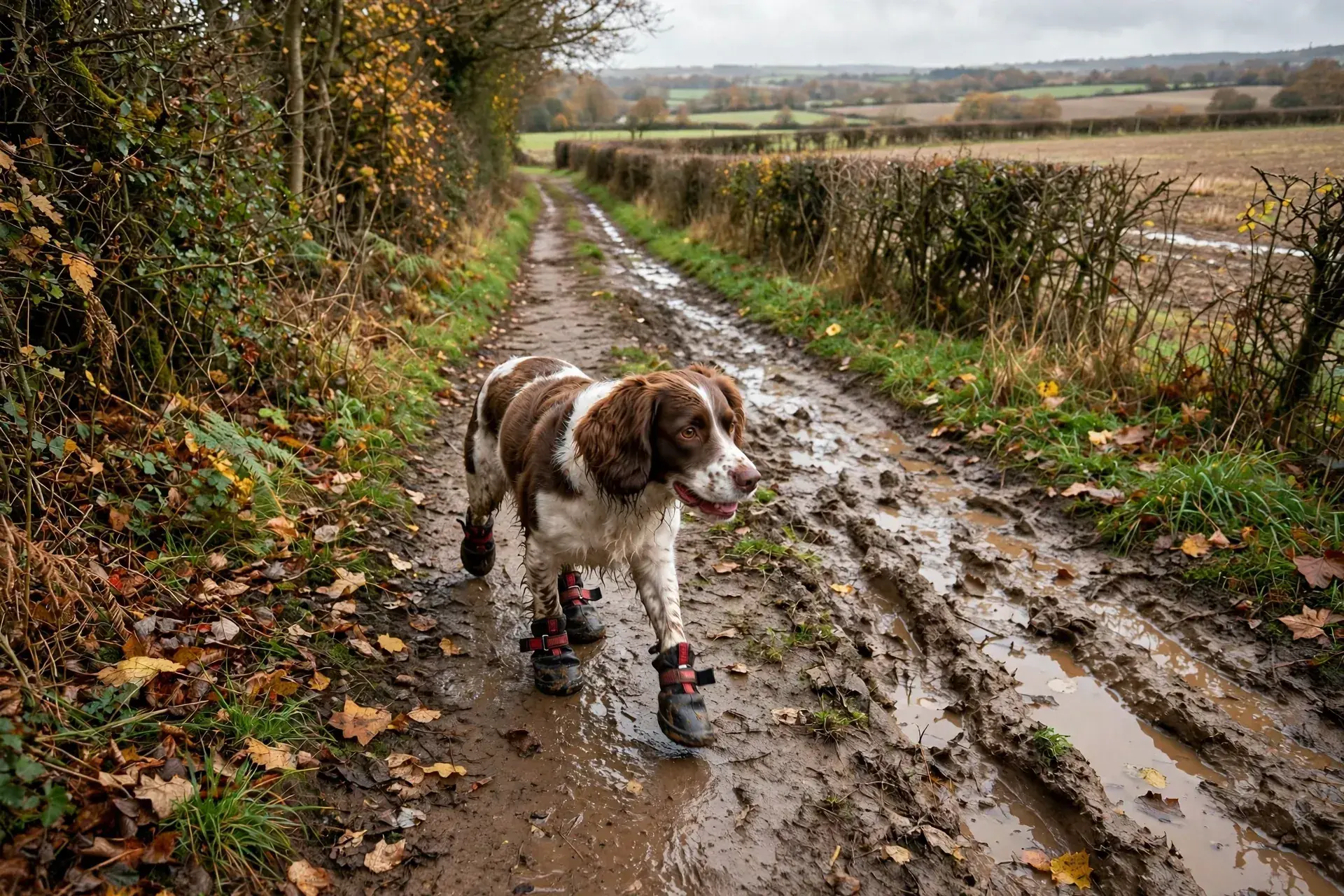
Prepare the dog before the door opens. If your dog has long hair between the toes, trim it carefully in advance, not in a rush on a snowy doorstep. A small amount of paw balm or a dog-safe barrier product can reduce snow sticking and give some protection against grit, but it is not a substitute for checking paws during the walk. Fit a coat at home if your dog wears one, and check that it covers the chest and belly without restricting leg movement or rubbing at the armpits. If you use boots, put them on indoors first and let the dog walk around the house for a few minutes. A dog that has never worn boots will walk like a startled foal for the first minute, and it is far better to laugh about that in the kitchen than to discover it on an icy pavement. Our guide to dog boots for muddy walks covers measuring, fit and getting a reluctant dog used to boots, and much of that advice applies directly to snow.
Pack for a shorter walk that might still go wrong. The snow-day bag is small but specific: a towel, a spare lead, poo bags, a small bottle of lukewarm water and a cloth for paw washing, a torch or reflective gear if daylight is short, your phone charged and protected from cold, and a warm layer for yourself. Cold drains phone batteries faster, so keep the phone in an inside pocket rather than an outside one. Take fresh water for the dog as well. Dogs should not be encouraged to eat snow for hydration, partly because snow can hide grit, salt and other contaminants, and partly because eating large amounts of cold snow can chill a small dog and upset its stomach. A collapsible bowl and a bottle of water weigh almost nothing and remove the temptation.
Think about the destination in the same practical way. A surfaced, level path through a park, a forestry track or a quiet housing-estate loop is usually a better snow-day choice than an exposed hilltop, a riverside path that may be flooded under the snow, or a beach where wind and wet sand combine with snow to chill a dog fast. Avoid frozen lakes, ponds, canals and reservoirs completely. Ice that looks thick from the bank may be thin in the middle, and a dog that runs onto it can break through far from help. The same caution applies to frozen streams hidden under snow. If you would not walk on it yourself, do not let a dog run on it either. Tell someone where you are going on a remote walk, and keep the walk within easy reach of a road in case you need to get home quickly.
Keeping your dog warm without overheating
Dogs vary enormously in how well they cope with cold, and the differences are not just about size. A thick-coated collie, husky type or mountain breed may be perfectly comfortable in falling snow and actively prefer it to a warm house. A short-coated whippet, greyhound, Staffy or French bulldog can start shivering within minutes. Age matters as well: puppies lose heat quickly because they are small and still developing temperature control, while older dogs with arthritis often stiffen in the cold and need a shorter, gentler outing. Lean dogs with little fat insulation, dogs recovering from illness, and dogs that are wet from a previous walk are all at higher risk. The coat on the dog is only one part of the picture; body condition, fitness, wind and wetness complete it.
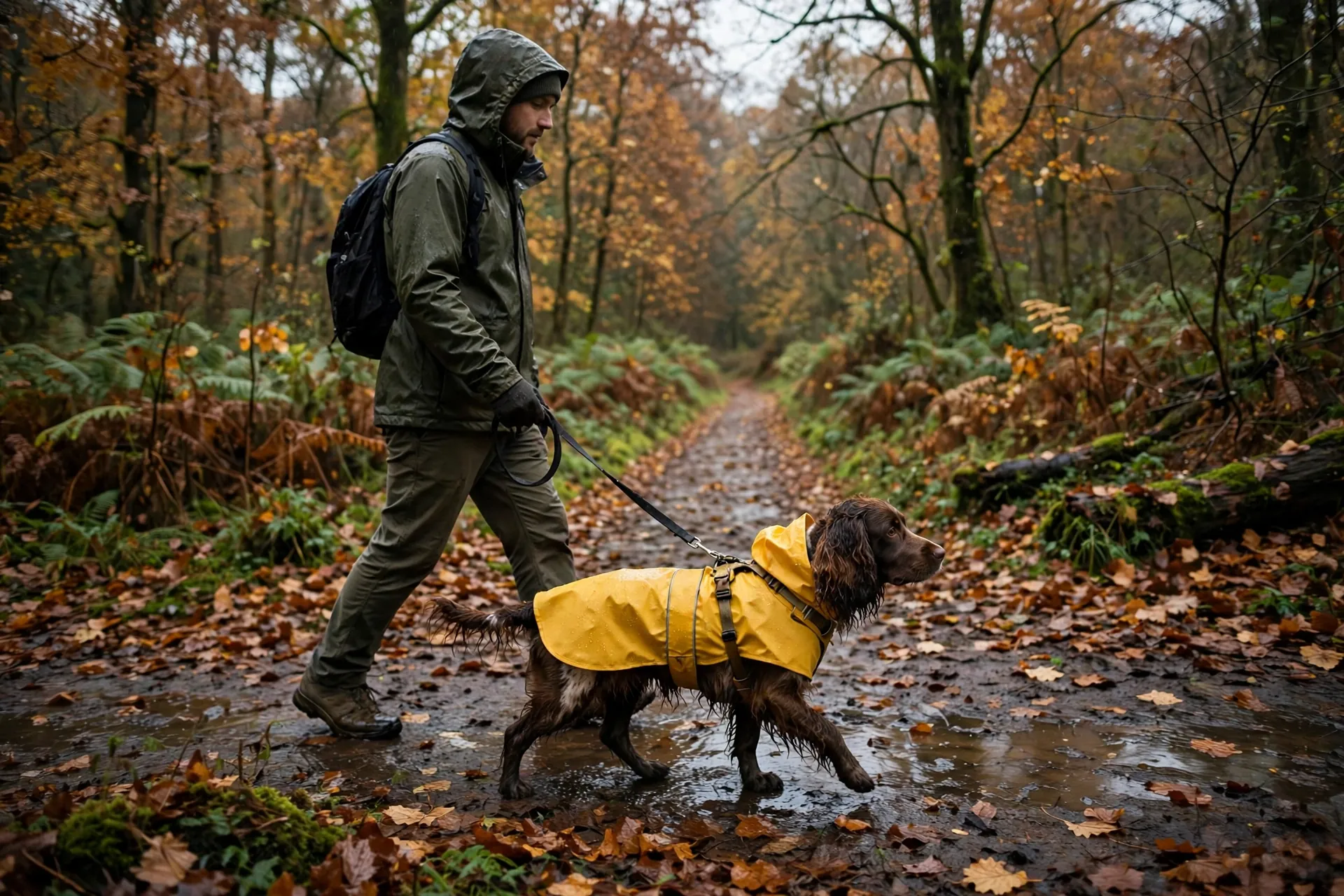
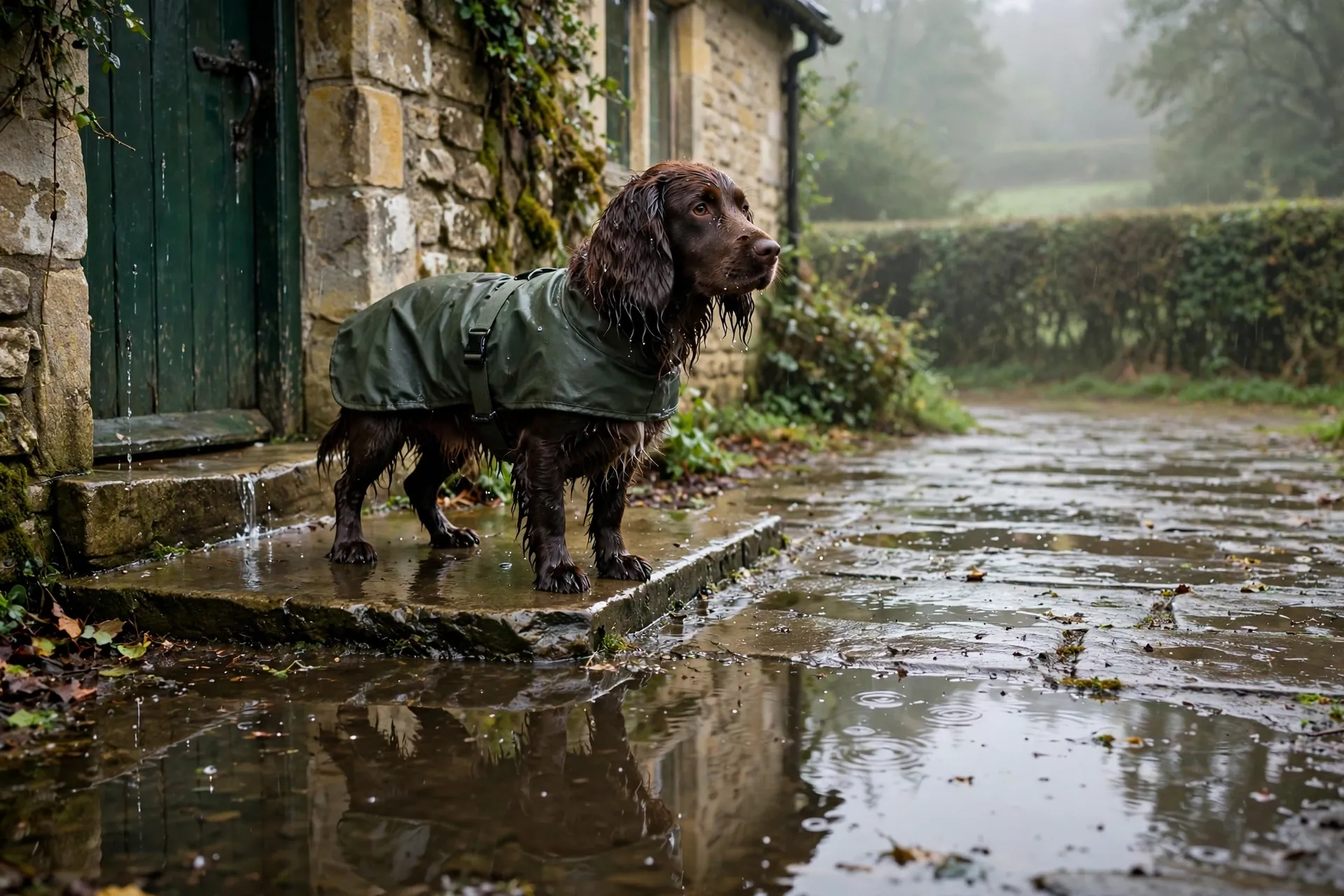
A coat is worth considering for any dog that shivers, holds its tail tucked, hunches, slows down or seeks shelter in cold weather, and for short-coated or lean dogs as a matter of routine in snow. Choose a coat that is waterproof or at least water-resistant on the outside, covers the chest and belly, and fastens securely without flapping. A coat that soaks through and then freezes against the fur is worse than no coat at all, because wet insulation draws heat away. For long-coated dogs, a lighter waterproof layer may be enough, or no coat at all, provided the dog stays dry and moving. Check under the coat when you get home: damp fur, rubbing at the shoulders or a soggy belly mean the fit or the fabric needs changing. Never leave a wet coat on a resting dog indoors; take it off, dry the dog, and let body heat do the rest.
Movement is the other half of warmth. A dog that trots steadily, sniffs briefly and keeps moving will stay warmer than a dog that stands still for long periods, and this has practical consequences for how you structure the walk. Keep stops short on a cold day, avoid long waits while you chat or take photographs, and do not let an off-lead dog stand in a cold wind while you watch from a sheltered spot. If you need to stop, tuck into shelter, shorten the lead, and keep the stop brief. On the other hand, do not try to keep a dog warm by making it run hard. Sprinting on icy ground risks pulled muscles and falls, and a dog that overheats and then stops will chill rapidly as sweat and melted snow cool on its coat. Steady movement, not frantic exercise, is the goal.
Watch for the early signs of cold stress rather than waiting for obvious distress. Shivering is the most visible sign, but slowing down, lifting paws repeatedly, whining, seeking shelter, tucking the tail, hunching the back and reluctance to continue are all earlier warnings. Puppies and small dogs may simply go quiet, which is easy to miss if you are enjoying the scenery. If you see any of these signs, the walk is over. Head for warmth, dry the dog, and offer a warm resting place away from draughts. Do not warm a very cold dog too quickly with a hot bath or a direct blast from a heater; lukewarm drying, a towel, a blanket and a normal warm room are safer. If a dog is weak, unresponsive, very cold to the touch or unable to walk normally, keep it warm, handle it gently and contact a vet promptly, because severe cold exposure is a veterinary emergency, not a wait-and-see situation.
Paws, snowballs and ice between the toes
Snowballs between the toes are the classic snow-day problem, and they are painful in a way that is easy to underestimate. Wet snow packs into the fur between the toes, then freezes into hard lumps that press on the skin, spread the toes apart and change the way the dog walks. The dog may start to limp, chew at its feet, sit down repeatedly or refuse to move. Long-haired breeds such as spaniels, poodles, old English sheepdogs and many mixed breeds with feathered feet are most prone to this, but any dog can suffer in wet, clumping snow. The build-up can happen surprisingly fast: a dog that was fine at the start of a walk can be hobbling within ten minutes if the snow is at exactly the wrong temperature.
Prevention starts before winter and continues on every walk. Trimming the hair between the toes, so that there is less fur for snow to cling to, is the single most effective step, and it should be done carefully with blunt-tipped scissors or by a groomer if you are unsure. A thin layer of paw balm helps snow slide off rather than packing, and boots prevent the problem almost entirely, although they bring their own fit and acceptance issues. During the walk, check the paws every few minutes in clumping conditions. It is quicker to clear a small amount of snow early than to deal with a frozen lump later. Choose routes that avoid the worst snow where possible: trampled paths, grass rather than deep drifted snow, and shorter grass rather than long, wet vegetation that holds snow against the legs.
When snowballs do form, stop and deal with them calmly. Hold the paw gently, warm the lump with your hands or with lukewarm water, and let it melt or crumble away. Do not pull hard, twist the toes or try to break a frozen lump off with force, because the skin between the toes is thin and easily damaged. Carry a small bottle of lukewarm water in an inside pocket so it does not freeze, or simply use warm hands and patience. Once the paw is clear, dry it as well as you can before continuing, and consider shortening the walk. If the same paw keeps packing, that is a sign to go home, not to keep clearing it every few minutes. Repeated packing and clearing irritates the skin and can lead to soreness that lasts after the snow has gone.
Ice brings a related set of risks. Sharp ice and frozen crusts can cut pads, especially on dogs that run hard on frozen ground. Check pads after every snowy walk for cuts, cracks, redness or swelling, and look for blood in the snow if a dog suddenly limps. Minor pad grazes often heal with rest, cleaning and protection, but deep cuts, flaps of pad tissue, persistent bleeding or a dog that will not put weight on the foot need veterinary advice. Between the toes, look for redness, cracking and signs of irritation from salt or grit as well as from snow. A dog that keeps licking its paws after a walk is not just grooming; it is often telling you that something hurts, itches or tastes unpleasant, and it needs a closer look.
Grit, rock salt and de-icer
Grit is the hidden hazard of a British snow day. Roads and pavements are treated with rock salt, usually sodium chloride, sometimes mixed with other de-icing chemicals, and the residue stays on the ground long after the snow has melted. For paws, salt is drying and irritating: it can crack pads, sting small cuts and cause soreness that makes a dog limp even when there is no obvious injury. For stomachs, it is worse. A dog that licks salt off its paws, eats snow from a gritted area or laps at salty slush can develop vomiting, diarrhoea, excessive thirst, drooling and, in larger amounts, more serious salt poisoning. Some de-icing products also contain chemicals that are more toxic than plain salt, and products used on private drives and car parks are not always labelled in a way that a passer-by can check. The safe assumption is that any treated surface should be treated as contaminated for dogs.
Route choice is the first line of defence. Where you have a choice, prefer untreated grass, woodland paths and park trails over freshly gritted pavements and roads, especially in the first hours after gritting when salt is most concentrated. This is not always possible in towns, where pavements are the only walking option, so plan town walks to minimise time on treated surfaces: cross gritted roads rather than walking along them, use grass verges where it is safe and legal to do so, and keep the walk short. Boots are particularly valuable here, because they put a physical barrier between pad and salt, but they are not foolproof: salt can still get inside a loose boot, and a dog will still lick salt from its legs and belly after walking through slush. Wash paws after every walk, whatever the route, and do not skip this step because the walk was short.
The paw wash itself deserves care. Lukewarm water is best: hot water on cold paws is uncomfortable, and cold water does not dissolve salt well. Wash each paw, including between the toes, then dry thoroughly. A bucket by the back door, a jug and a towel, or a dedicated paw washer all work, provided the water is clean and lukewarm and the drying is complete. Damp paws left to air-dry in a cold hallway can chill a dog and encourage skin irritation between the toes, especially in breeds prone to interdigital problems. While you wash, check for grit lodged between the toes, small stones, ice fragments and any sign of a cut. Remove debris gently, and if a paw is cracked or sore, apply a dog-safe paw balm after drying and keep the next walk shorter and on softer ground.
Also watch what the dog eats and drinks on the walk. Discourage eating snow, especially yellow snow, snow from roadsides, snow near car parks and snow that has clearly been gritted or treated. Discourage drinking from puddles and slush, which can contain salt, oil, antifreeze and other road contaminants. Antifreeze is a particular winter danger: it tastes sweet to dogs, it is highly toxic in small amounts, and it can pool in puddles near parked cars. If you suspect a dog has licked antifreeze, contact a vet immediately, even if the dog seems well, because early treatment matters and symptoms can be delayed. More generally, if your dog eats a large amount of salt or de-icer, or shows vomiting, drooling, trembling, weakness, excessive thirst or unsteadiness after a walk, contact a vet promptly and, if possible, note what product or surface was involved. If you are unsure about a product used on your own drive or path, check the official guidance before you travel, and consider a pet-safe de-icer for areas your dog walks on at home.
Slippery ground, leads and control
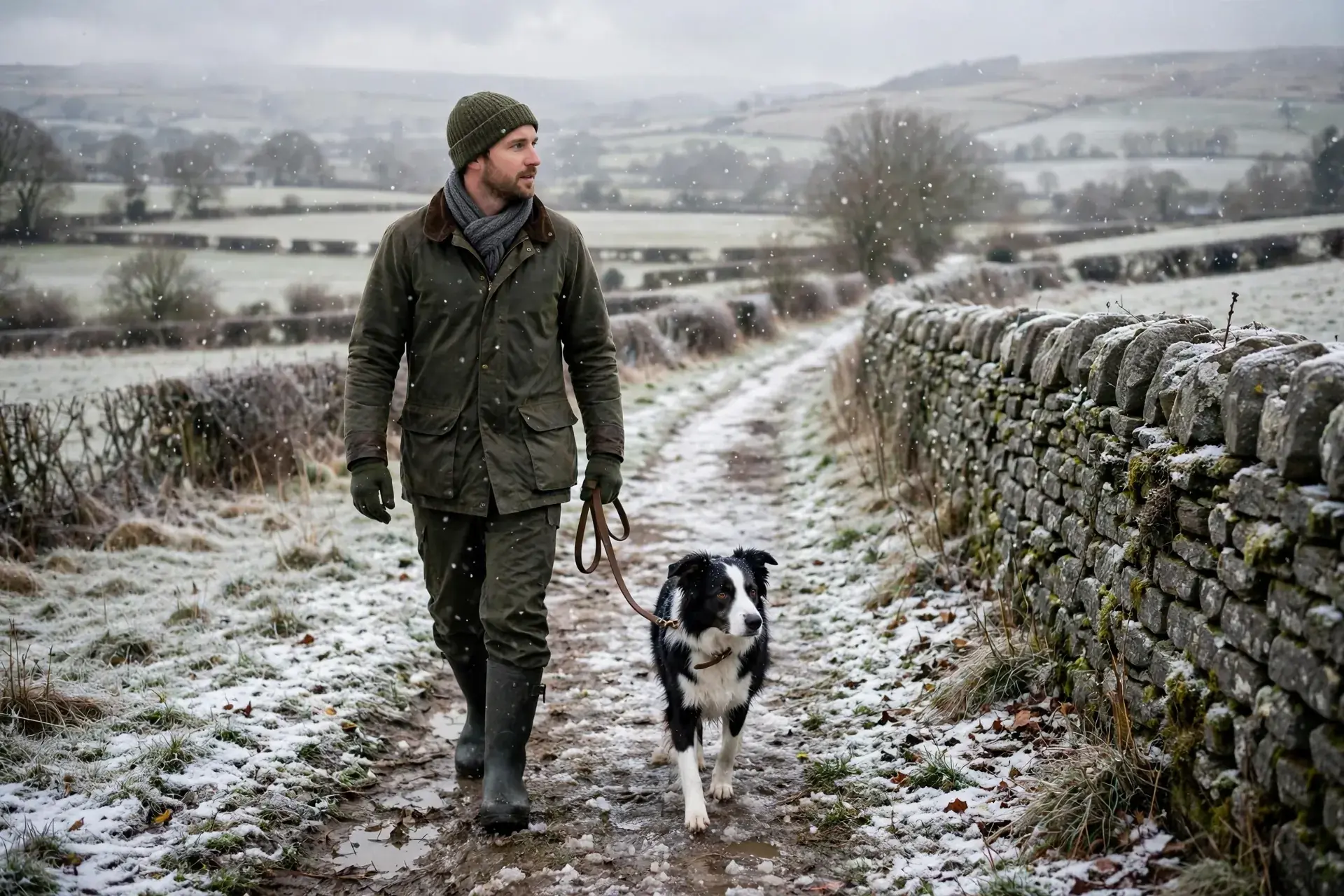
Ice is dangerous for owners first and dogs second, because an owner who falls cannot help a dog. Wear footwear with genuine grip, not fashion boots with smooth soles, and consider ice grips or walking poles on untreated paths. Shorten your stride, keep your weight over your feet, and avoid rushing. A lead attached to a strong dog on ice turns a slip into a fall: the dog lunges, you slide, and both of you end up on the ground. On icy sections, shorten the lead, keep the dog close, walk slowly, and choose the gritted or trampled line rather than the picturesque untouched sheet. If you cannot keep your footing, the route is not suitable that day, however keen the dog is.
Lead choice matters in snow. A standard short lead gives the most control on icy pavements, near roads and on narrow paths. A long line is useful on open, safe ground where a dog can sniff and move without dragging you across ice, but it can tangle around legs in deep snow and it gives less control if the dog slips or bolts towards a frozen pond. Retractable leads are a poor choice in snow: the thin cord can cut, the mechanism can freeze, and the lack of control is a problem near traffic and ice. Whichever lead you use, wear gloves that still let you hold it securely. Cold, wet hands lose grip, and a dropped lead on a road or near water is a serious incident, not an embarrassment. A waist-attached lead can help on level ground, but only if you are confident on your feet and the dog does not pull strongly.
Off-lead decisions need extra caution in snow. Snow muffles sound, reduces visibility in falling snow, and hides boundaries, ditches and frozen water. A dog that normally has reliable recall may be distracted by the novelty of snow, by scents buried under it, or by other dogs playing in it. Keep the first snow walk of the season on lead, even for a dog with excellent recall, until you have seen how it behaves in these conditions. On later walks, use off-lead time only in enclosed, level, familiar areas with no frozen water, no nearby road and no steep icy slope. Recall in snow is worth practising in a garden or enclosed field first, with high-value rewards, before testing it on a public path. If visibility drops, if the dog is out of sight in falling snow, or if you are near a road, put the lead back on without debate.
Other dogs, children and sledges add to the mix. Snow brings people out to play, and a dog that is normally calm may react differently to children throwing snowballs, sledges sliding past, or other dogs racing around. Keep greetings brief and controlled, and give excited dogs space. If your dog is nervous, choose quieter times and routes, and do not feel obliged to let every approaching dog say hello. A snow day should be enjoyable for the dog, not a test of its tolerance for chaos. Similarly, be considerate to other path users: a dog racing across a sledge run or a ski track, where such tracks exist, is a hazard to others as well as itself. Keep dogs under control around winter sports areas, and check local rules before you travel, because some managed winter sites restrict dogs or require leads at all times.
How to shorten a walk without frustrating your dog
Shortening a walk sounds simple, but for a high-energy dog it can feel like a broken promise. The trick is to replace distance with interest. A twenty-minute sniff walk, where the dog is allowed to stop, investigate, follow scent trails and explore at its own pace, is often more tiring than a forty-minute march along a straight path. Let the dog sniff. Sniffing is cognitive work: the dog processes a huge amount of information from scent, and a walk rich in smells leaves a dog more settled than a walk that merely covers ground. On a snow day, this works in your favour, because snow preserves and carries scent in interesting ways, and a slow, sniffy loop near home can satisfy a dog that would otherwise demand miles.
Structure the short walk deliberately. Start with a few minutes of calm walking to warm up, then allow free sniffing on a long line or in a safe area, then add a few minutes of gentle training or play, then walk home calmly. Scatter feeding, hiding a few treats in the snow for the dog to find, or asking for simple known cues such as sit, touch and wait, all add mental effort without adding distance or risk. Avoid high-impact play on ice: no ball throwing on frozen ground, no tug games that involve sudden twisting, and no jumping over snow-covered obstacles that might hide a hard edge. Gentle play on soft, level snow is fine for a fit dog, but stop before the dog gets overtired, because tired dogs slip more and cool faster.
Adjust expectations by dog, not by calendar. A young, fit, thick-coated dog may manage a normal-length walk on a cold, dry, powdery day, while the same dog may need half that on a wet, windy, slushy day. An older dog may need two very short toilet walks and a longer indoor session instead of one medium walk. A puppy needs frequent, very short outings with plenty of rest, and should never be pushed to keep up with an adult dog in snow. Watch the dog, not the clock: if it is still keen, moving freely and showing no signs of cold or sore paws, a few extra minutes are fine; if it is slowing, lifting paws or seeking shelter, go home even if you have only been out for ten minutes. There is no prize for completing a planned route, and there is a real cost to pushing a cold dog.
Frequency can help as well. Two short outings, one in the morning and one in the afternoon, often suit a snow day better than one long outing, because each outing is followed by warmth, drying and rest. This also gives you two chances to check paws and condition, and it spreads toilet opportunities across the day. If you are away from home, for example on a winter holiday, plan the day around the same pattern: a short morning walk, indoor rest and enrichment, a short afternoon walk, then a warm evening. Our autumn dog holiday checklist covers many of the same packing and routine principles for darker, wetter days, and it is a useful companion when a snow day falls during a break away from home.
Indoor alternatives that actually tire a dog out
The most important snow-day skill is not walking in snow at all; it is knowing how to tire a dog out indoors so that a short walk is enough. Mental enrichment, done well, can leave a dog as settled as a long walk, without cold paws or icy falls. Start with food-based enrichment, because it is easy and most dogs love it. Scatter part of the daily food ration around a room for the dog to find, use a snuffle mat, stuff a Kong or similar toy with wet food and freeze it overnight, or hide treats in cardboard boxes and towels for the dog to nose out. Always supervise new enrichment, remove small pieces that could be swallowed, and adjust the rest of the daily food so the dog is not overfed. For dogs on a special diet, check with your vet before introducing new treats or chews.
Training is the second indoor tool, and it does not need to be formal. Ten minutes of practising known cues, teaching a new trick such as a chin rest, a spin or a tidy-up, or playing a simple search game where the dog finds a hidden toy, all use concentration and self-control. Keep sessions short, fun and rewarded, and end before the dog gets frustrated. Nose work is particularly effective: hide a scented toy or a few treats in one room, let the dog search, and gradually make the hides harder. Dogs bred for scent work will love this, but most pet dogs enjoy it too, and it mimics the sniffing they would do outdoors. Puzzle feeders and slow feeders add variety, but rotate them so the dog does not get bored with the same puzzle every day.
Gentle physical play indoors also helps, provided the space is safe. Tug with rules, where the dog drops on cue and the game stops if teeth touch skin, is good for many dogs. A flirt pole in a large room or garden, used carefully and without encouraging jumping on slippery floors, can burn energy in short bursts. Avoid chasing games on hard floors, where dogs can slip and injure joints, and put down rugs or mats on slippery surfaces. Chewing is another legitimate outlet: a safe, size-appropriate chew, given under supervision, can settle a dog for a long time, especially after a short walk. Choose chews suited to the dog's size and chewing style, and remove them if they splinter or become small enough to swallow.
Rest is part of enrichment, not the opposite of it. A dog that has had a short walk, a training session and a food puzzle needs a warm, quiet place to sleep, and many dogs will sleep for hours after a well-structured indoor session. Do not feel guilty about a snow day spent largely indoors. A dog that is warm, dry, mentally stimulated and rested is having a better day than a dog dragged around icy paths for hours to satisfy an owner's idea of exercise. If you are staying somewhere new, set up the dog's bed, blanket and water in a consistent spot, keep the routine similar to home, and give the dog time to settle. A calm indoor day is a successful snow day.
Driving, parking and cold cars
Driving to a snow walk needs the same caution as the walk itself. Check road conditions before leaving, allow extra time, and do not attempt a remote walk if the return journey depends on a single untreated road. Keep the car fuelled, carry a charged phone, a torch, water, a blanket and a shovel if you are heading to a rural area, and tell someone your destination and expected return time. Drive slowly on untreated roads, increase following distances, and avoid sudden braking or steering. If conditions deteriorate while you are out, abandon the walk and head home early; a walk is never worth a risky drive.
At the destination, park thoughtfully. Choose a level, well-used car park rather than a verge that may hide a ditch under snow, and avoid parking where you will need to reverse onto an icy road. Keep the dog on lead from the car to the path, because car parks in snow are busy, slippery and full of grit and salt. Do not leave a dog alone in a cold car for a long period, even in winter. A car cools quickly when the engine is off, and a wet dog in a cold car will chill fast. If you must leave the dog briefly, keep the stop very short, leave a blanket, and return promptly. On a snow day, it is better to take the dog with you or to leave it at home in warmth than to leave it waiting in a freezing car.
Loading a wet, snowy dog into a car also needs a plan. A towel, an old blanket or a boot liner protects the car and gives the dog something dry to stand on. Wipe paws before the dog gets in, not after it has spread slush across the seats. If the dog wears a coat, remove a soaking coat before the journey home and replace it with a dry towel or drying coat for the drive. Keep the car warm but not hot, and avoid blasting hot air directly at a cold, wet dog. Once home, the routine in the next section matters more than the drive itself: a dog that is dried, checked and settled promptly after a snowy car journey will recover far better than one left damp in a cold hallway.
Breakdowns and delays deserve a mention, because they turn a short walk into a long cold wait. If your car breaks down in snow with a dog on board, keep the dog with you, keep it warm and dry, and call for assistance promptly. Do not let a dog roam around a broken-down car on a busy road, and do not leave it in a cold vehicle while you walk for help unless there is no alternative. A small emergency kit for the dog, kept in the car through winter, is worth its weight: a spare lead, a towel, a blanket, a bottle of water, a collapsible bowl and a few treats. It costs almost nothing to carry and it transforms a miserable wait into a manageable one.
Coming home: the ten-minute routine
The ten minutes after a snowy walk matter as much as the walk itself. Do not let a wet, cold dog rush straight to a warm radiator and then to bed without a check. Start at the door: wipe or wash all four paws in lukewarm water, dry them fully, including between the toes, and check for snow, ice, grit, stones, cuts, cracks and redness. If you use a paw washer, use clean lukewarm water and dry afterwards; if you use a towel alone, make sure it actually removes salt, because rubbing a dry towel over salty paws can leave residue behind. Look at the legs and belly too, where slush and salt splash up, and wipe or rinse those areas if they are wet or gritty.
Next, dry the rest of the dog. A dog drying coat is genuinely useful here, because it draws moisture out of the coat while the dog rests, but two towels used properly work as well. Pay attention to the ears, which can stay damp and cold, and to feathered leg fur, which holds snow long after the walk ends. Remove any wet coat, harness or boots, and put them somewhere they can dry before the next outing. A harness that is put back on while still wet will chill the dog on the next walk, and boots left damp inside can irritate paws. Check the coat and harness for damage from ice or salt while you are at it, and rinse them if they are salty.
Then settle the dog somewhere warm and draught-free, with fresh water available. Offer water, not food immediately if the dog is very cold or excited, and let it drink at its own pace. Watch for limping, licking, swelling or reluctance to put weight on a foot over the next few hours, because some paw problems only become obvious once the dog has warmed up and tried to walk around the house. If a paw is sore, keep the next walk very short and on soft, clean ground, apply a dog-safe balm after drying, and consider boots for the next outing. If soreness persists, worsens or involves bleeding, swelling or a deep cut, seek veterinary advice rather than hoping it will resolve.
Finally, reset for the next outing. Put clean, dry towels by the door, refill the lukewarm water bottle, check that boots and coat are dry, and note anything that went wrong: a route that was too icy, a paw that packed repeatedly, a coat that soaked through. Snow days are rarely one-offs in a British winter, and a short note to yourself turns the first difficult walk into an easier second one. Keep the routine consistent, even when you are tired or in a hurry, because the routine is what prevents a minor snow-day irritation from becoming a sore paw, a stomach upset or a miserable night for the dog.
Warning signs: when to stop and when to call a vet
Most snow days end happily with a dry dog asleep by the fire, but it helps to know the signs that mean stop now and the signs that mean call a vet. Stop the walk immediately if the dog is shivering persistently, lifting paws and unable to continue, limping, crying, seeking shelter, very slow or reluctant to move, or showing signs of a cut or injury. Head for warmth, dry the dog, check the paws and legs, and do not try to push on to complete the route. A dog that has stopped is not being stubborn; it is communicating that something is wrong, and the kindest response is to listen.
Call a vet promptly if the dog has eaten a large amount of salt, de-icer or antifreeze, or if it shows vomiting, diarrhoea, drooling, excessive thirst, trembling, weakness, unsteadiness, collapse, difficulty breathing, or a wound that is bleeding heavily or will not stop. The same applies if a dog is very cold, weak, unresponsive or unable to walk after coming indoors, or if paw soreness, swelling or limping persists beyond a day or worsens. Do not wait to see if antifreeze ingestion resolves on its own, because it does not, and do not induce vomiting unless a vet tells you to. Keep the vet's number saved in your phone before winter, along with the number for an out-of-hours service, because snow-day problems rarely happen during office hours.
Some dogs need extra caution throughout winter, and a snow day is not the time to test their limits. Puppies, older dogs, dogs with arthritis, heart conditions, diabetes or other long-term illnesses, and brachycephalic breeds with breathing difficulties, all chill faster and recover more slowly. If your dog has a known condition, ask your vet for winter-specific advice before the first snow, and follow it even if other dogs are happily playing. Similarly, if your dog is on medication, check whether cold, wet conditions or reduced exercise affect its management. When in doubt, a shorter walk, a warmer coat and a longer indoor session are always the safer choice. If you are unsure about any winter advice in this guide as it applies to your own dog, check the official guidance before you travel and ask your vet for advice tailored to your dog.
A snow day, done well, is a small pleasure, not a big expedition. The dog gets fresh air, new smells and a change of scene; you get a quieter, happier dog for the rest of the day; and both of you get home warm, dry and ready for the next one. Keep the walk short, keep the paws clean, keep the dog warm, and keep the best part of the day indoors. That is the whole secret, and it works in a city park, a village lane or a cottage garden, wherever the snow happens to fall.
Practical questions
Before you go
Can dogs walk in snow in the UK?
Most healthy adult dogs can enjoy short walks in snow, but the walk should be shorter, slower and closer to home than a normal walk. Watch for lifting paws, shivering, reluctance to move or snow packed between the toes, and head home before your dog gets cold or tired. Puppies, older dogs, lean dogs and short-coated breeds usually need a coat and a much shorter outing.
How do I stop snowballs forming between my dog's paws?
Trim the long hair between the toes before winter, use a thin layer of paw balm or a dog-safe barrier product, and check the paws every few minutes in wet, clumping snow. If snowballs form, stop, hold the paw gently and melt the clumps with warm hands or lukewarm water rather than pulling them off, then dry the paw before walking on.
Is grit and rock salt dangerous for dogs?
Yes, it can be. Rock salt and many de-icing products can irritate paws, crack pads and upset the stomach if a dog licks them off its feet. Keep dogs off freshly gritted roads and pavements where possible, wash or wipe paws after every walk, and stop your dog from eating snow from gritted areas. If your dog eats a large amount of salt or de-icer, or shows vomiting, drooling, trembling or weakness, contact a vet promptly.
Do dogs need boots or a coat in snow?
Not every dog needs them, but both help in the right conditions. A coat helps lean, short-coated, older and small dogs stay warm, especially in wind and wet snow. Boots help on gritted pavements, sharp ice and long snowy walks, and they reduce snowball build-up. Introduce boots indoors first, check the fit carefully, and remove them at home so the paws can dry.
How long should a dog walk in snow?
There is no single safe time, because breed, coat, age, fitness, wind and snow type all matter. As a starting point, halve a normal walk on a first snowy day, stay near shelter and a warm car or home, and let your dog set the pace. If your dog starts lifting paws, slowing down, shivering or seeking shelter, the walk is over, however short it has been.
What should I do after a snowy walk?
Check all four paws for snow, ice, grit, cracks and cuts, then wash them in lukewarm water and dry them fully, including between the toes. Towel or dry the belly, legs and ears, offer water and a warm resting place, and watch for limping, licking or swelling over the next few hours. Put wet leads, coats and boots somewhere they can dry before the next outing.