This guide is independent and contains no paid placement. Seasonal opening hours, events and services change, so check the official latest guidance before you travel.
Book the main stay early, then plan the six weeks around heat: walks early and late, shade and water everywhere, and no dog in a hot car, ever. Blunt peak prices with shoulder weeks, weekday travel and shorter split stays, and spread the budget across the whole season instead of spending it all in week one.
Six weeks is a season, not a holiday
Open a calendar and look at the summer holidays the way a dog experiences them: not as a fortnight circled in red, but as roughly forty-two consecutive days in which normal routines dissolve. School runs vanish, work patterns shift, houses fill with visitors and children at home all day, and the dog's walks, meals and quiet hours all move at once. Some dogs thrive on the company and the extra walks. Others — older dogs, anxious dogs, dogs whose peace depends on a predictable house — find six weeks of festival quietly exhausting. The planning task is to build a season that contains both the holiday highlights and enough ordinary texture that the dog's life still makes sense inside it. Half-term weeks are the shorter, sharper version of this — see half term dog holidays for how far ahead to book and which break is cheapest.
Start by marking the fixed points, in pencil order of immovability: the main break away, if you are taking one; any weeks of holiday clubs, family visits or work patterns that change who is home; and the dates by which bookings for popular stays, kennels for any dog-free commitments and ferry or ticketed events must be made. Then look honestly at the gaps. The unplanned weeks are where summer goes wrong for dogs — improvised days out in heatwaves, last-minute invitations that assume the dog can just come along, long car journeys invented at breakfast. A rough shape for every week, even if the shape is simply home-based with two planned outings, protects the dog from other people's spontaneity.
Decide, too, what this summer is not. Not every attraction admits dogs, not every relative's house suits one, and not every scorcher of a Saturday needs filling. Naming the exclusions in advance — the theme park day when the dog has a booked sitter, the city trip done by train without the dog, the beach at noon on the hottest day of the year, which nobody attends — turns refusals from disappointments into decisions already made. Our guide to bank holiday weekends with dogs applies the same logic in miniature to August's busiest weekend, and its crowd and traffic advice slots neatly into a six-week plan.
Heat rules the timetable
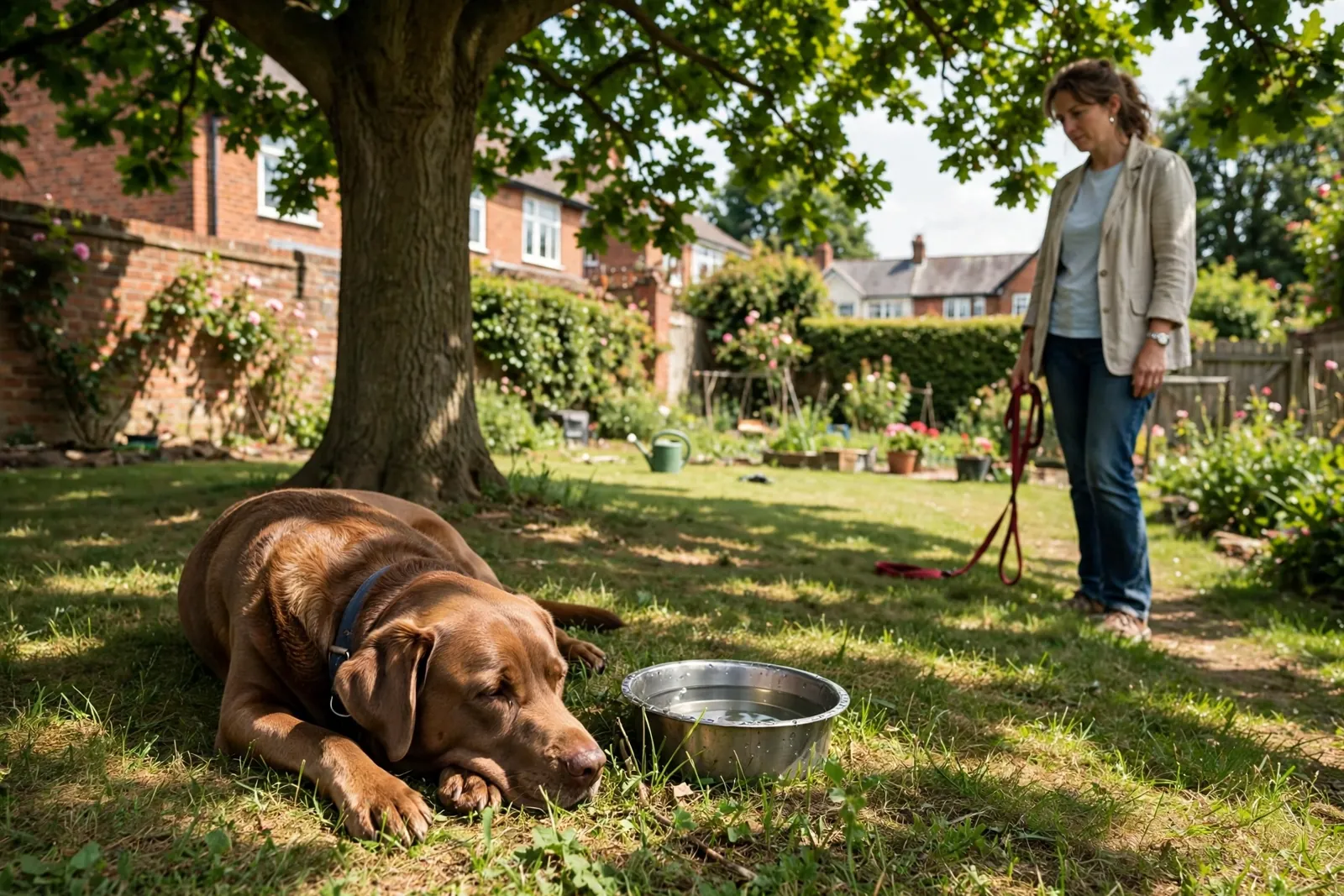
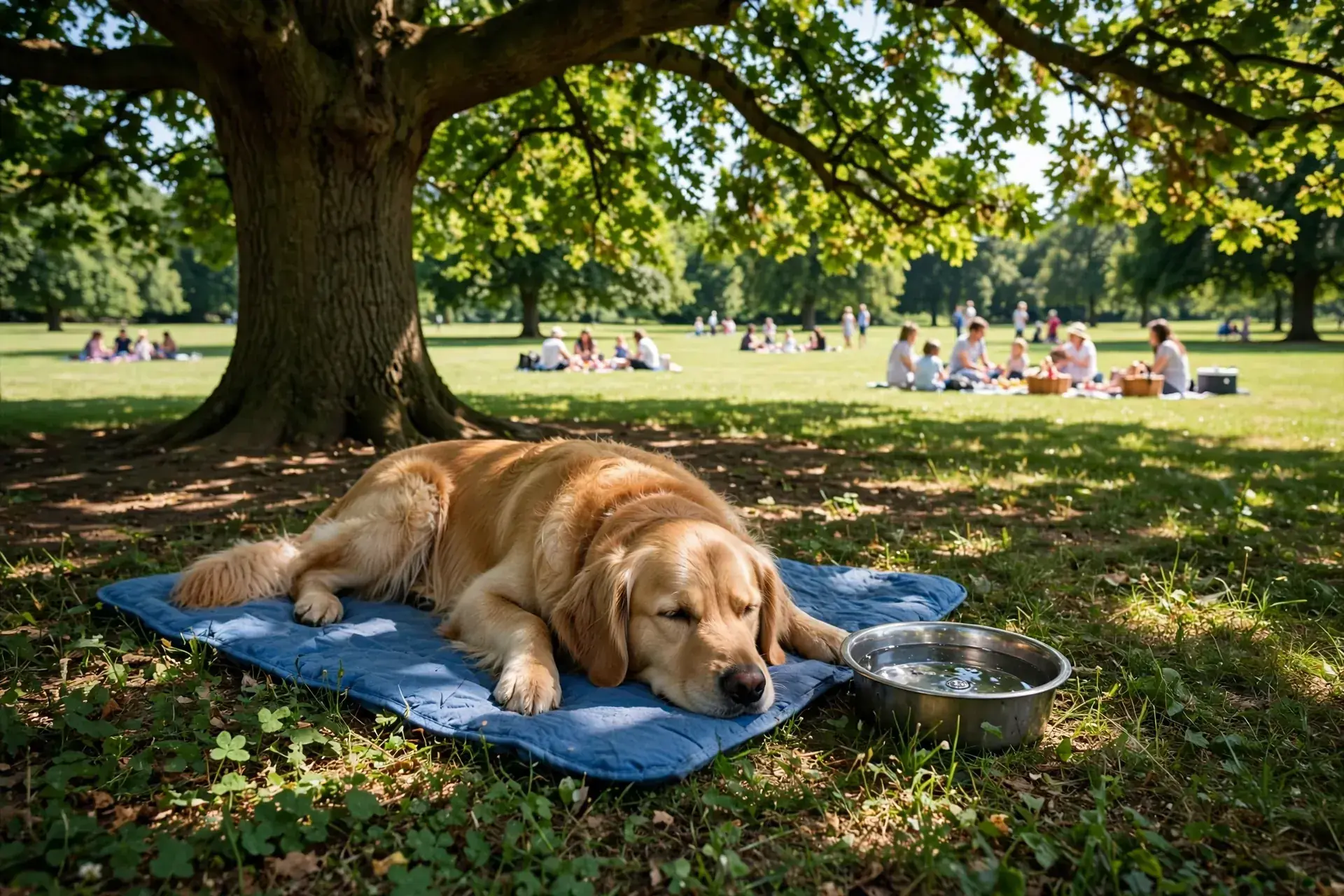
Everything in a British summer with a dog is subordinate to temperature, and the season should be planned as if at least one serious hot spell is guaranteed — because planning for it and not needing the plan costs nothing, while the reverse costs a great deal. The core rules are simple and absolute. Walk early and walk late: the main exercise before the day heats up, ideally finished by mid-morning, and a second outing in the evening once pavements have cooled. Test tarmac with the back of your hand; if it is too hot to hold comfortably, it is too hot for paws, and the walk waits or moves to grass and shade. Midday belongs indoors, in shade, with water down and air moving.
Never leave a dog in a parked car in summer, not for five minutes, not with the windows cracked, not in the shade you found — shade moves and cars heat faster than intuition suggests, and heatstroke can become an emergency with frightening speed. Our dedicated guide to travelling with a dog in hot weather covers heatstroke signs, car rules and walk timing in the detail every owner should read once before the season starts, and our dog car safety guide explains restraint and travel arrangements for the journeys you do make. Learn the early signs of overheating — heavy panting that does not settle, drooling, wobbliness, a dog that seeks shade and stops cooperating — and the correct first response: stop, move to shade, offer water, cool gradually with water and air movement, and phone a vet promptly if you are worried, because with heatstroke the early call is the one that matters.
Certain dogs need the rules tightened rather than merely followed: flat-faced breeds, elderly dogs, puppies, overweight dogs, thick-coated breeds and any dog with heart or breathing conditions can struggle in weather their housemates find merely warm. For them, the hot-day plan is garden shade and indoor games, not a shortened version of a normal walk. And build the whole family's expectations accordingly: children who understand in June that a heatwave day means a paddling-pool day at home, not a beach expedition with the dog, will not experience the change of plan as a broken promise in August.
Peak pricing, and how to blunt it without spoiling the summer
Summer is when the British holiday market charges what the calendar allows, and a dog adds its own line items: pet fees per stay, sometimes per night; higher prices on the routes and regions every other family also wants; and the quiet premium on availability itself, because the cottage with the enclosed garden and the ground-floor bedroom is booked by somebody in February. The honest response is not resentment but arithmetic. Cost the whole six weeks as one budget — main break, days out, sitters, extra food and travel — rather than discovering the total in September, and spread it deliberately: one or two anchor experiences done properly, surrounded by the cheap and free pleasures that dogs actually rate highest, which are walks in new places, water to splash in and their people unhurried.
The calendar offers real discounts to those who can use them. The first and last weeks of the holidays are often priced below the middle peak, and Scotland's earlier school holidays mean a late-June or early-July break north of the border can precede the English peak entirely — dates differ by nation and council, so check the official term dates for both ends of any such plan. Weekday starts, Sunday travel and stays of four or five nights instead of seven all soften prices, and shoulder-season September, for families whose children are not yet at school or whose plans allow it, delivers summer's weather at autumn's rates. Our guide to dog travel costs in the UK breaks down where the money actually goes on a break with a dog, which makes the savings hunt considerably more targeted.
Cut the right costs and protect the wrong ones. Skimp on distance — a nearer break saves fuel, tolls, stops and tempers — and on eating out at peak attractions, where a picnic in shade suits the dog better anyway. Do not skimp on the stay's dog essentials: the enclosed garden, the ground-floor access, the second bedroom that lets a hot dog sleep somewhere cool. A cheap stay the dog cannot settle in costs more, in every currency that matters, than the dearer one that works.
Booking lead times that actually matter
Different parts of the summer run on different clocks, and much disappointment is simply a clock misread. The main stay in a popular area with genuine dog facilities is the longest clock: for the best choice in peak weeks, experienced families book in the first months of the year, and some book the following summer before the current one ends. That is not a sales technique; it is the arithmetic of a small stock of truly suitable properties meeting a fixed six-week window. If you are reading this in spring with nothing booked, do not despair — cancellations, less obvious areas and weekday or split stays keep appearing — but do start this week, and be ready to decide quickly when the right place surfaces.
The middle clocks run at weeks rather than months. Dog sitters and home boarders for any dog-free days fill their summer diaries early, because their capacity is a handful of dogs and their regulars book first; a new client arriving in July is asking for a favour, not making a booking. Ticketed dog-welcoming events, popular campsites and holiday parks, ferry crossings on busy routes and dog places on any special service all reward six-to-ten-week horizons. Groomers, if a summer clip is part of the plan, join the same list, as does the vet for any pre-holiday health check, medication supply or parasite treatment schedule that needs to land before you travel.
The short clocks are measured in days: the weather forecast that decides which day gets the beach trip, the tide times that decide when, and the early start that decides whether the car park has space and the sand has shade. Build the week's outings around those short clocks once you are inside the season, holding plans loosely enough to swap Tuesday's expedition to Thursday when the forecast demands it. A summer plan with fixed anchors and flexible middles bends in a heatwave; a summer plan built as a rigid daily itinerary simply breaks.
One long stay or several bases?
If the main break runs beyond a week, the shape of it deserves a decision rather than a default. One base for the whole stay suits dogs deeply: one garden to learn, one sleeping place, one set of walks that become familiar, and no repeated travel days. It suits owners logistically too — one unpack, one shop, one departure clean. Its limits are range and repetition: a fortnight's radius around a single cottage exhausts its new walks, and a poor choice of base is a poor choice you live with for fourteen nights. Choose one-base stays for proven areas or for dogs who settle slowly, and research the walking from the door with particular care, because that is the product you are actually buying.
Splitting the break into two or more bases buys variety — coast then hills, one county then another — at the cost of travel days, repeated settling and the small but real stress some dogs feel in each new place. The split works best in long blocks: five nights here and five there reads as two holidays; two nights anywhere reads as a corridor with beds. Protect arrival evenings in each new base — short local walk, ordinary dinner, early night — and keep one constant through every move: the dog's own bedding, unwashed for the duration if you can bear it, because the smell of the last place is the fastest way to make the next place feel inhabited.
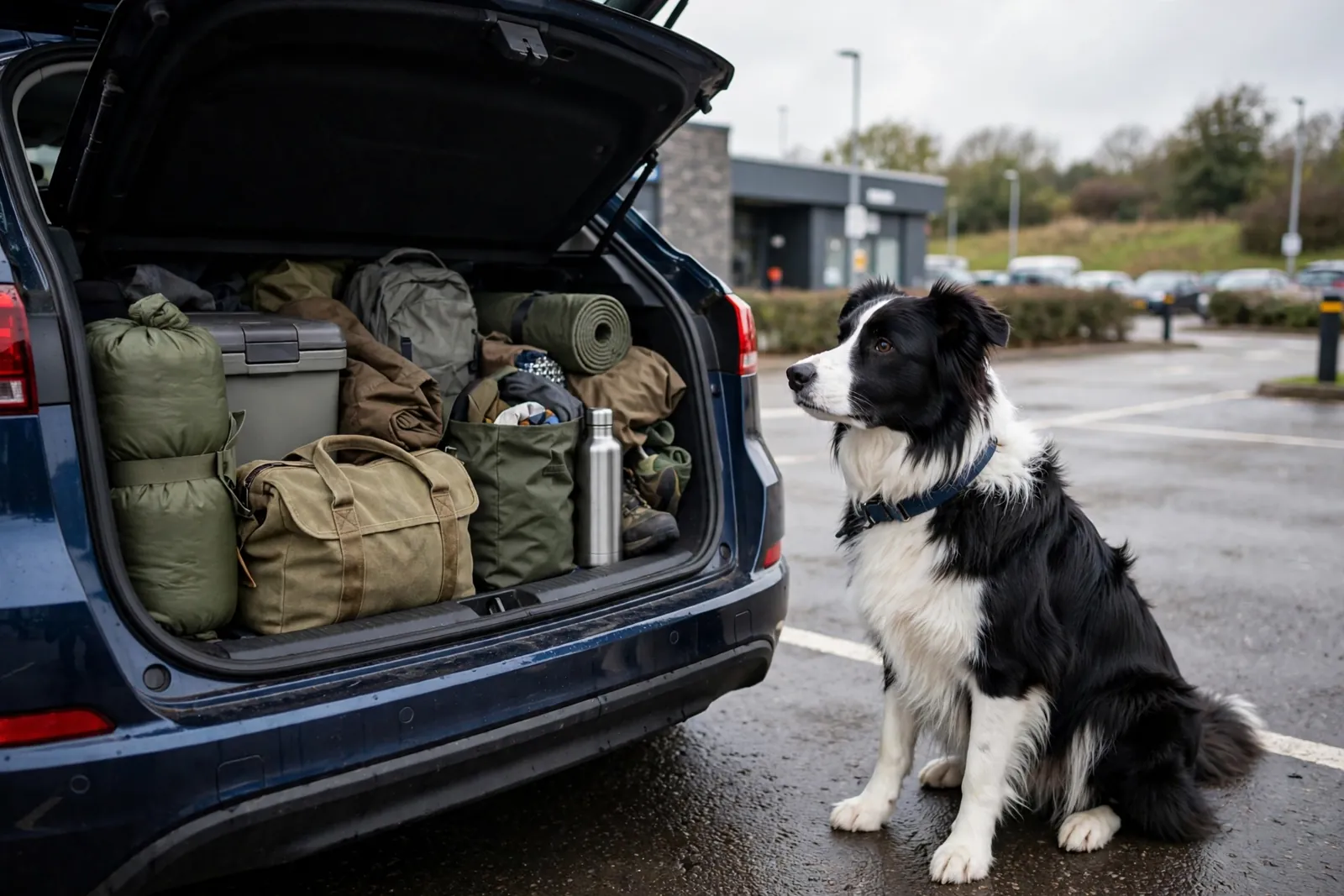
A hybrid deserves mention because families rarely consider it: one main base for the longest block, plus a single night or two somewhere contrasting on the way home, treated as a bonus rather than a second expedition. However you shape it, count the driving with the dog in mind. Long summer journeys need early starts, planned stops in shade with water and a stretch, and a car loaded so the dog's space stays ventilated and unrestrained luggage cannot slide. A travel day is a rest day for walking purposes; arrive, settle, and let the exploring start tomorrow.
Avoiding school-holiday crowds with a dog
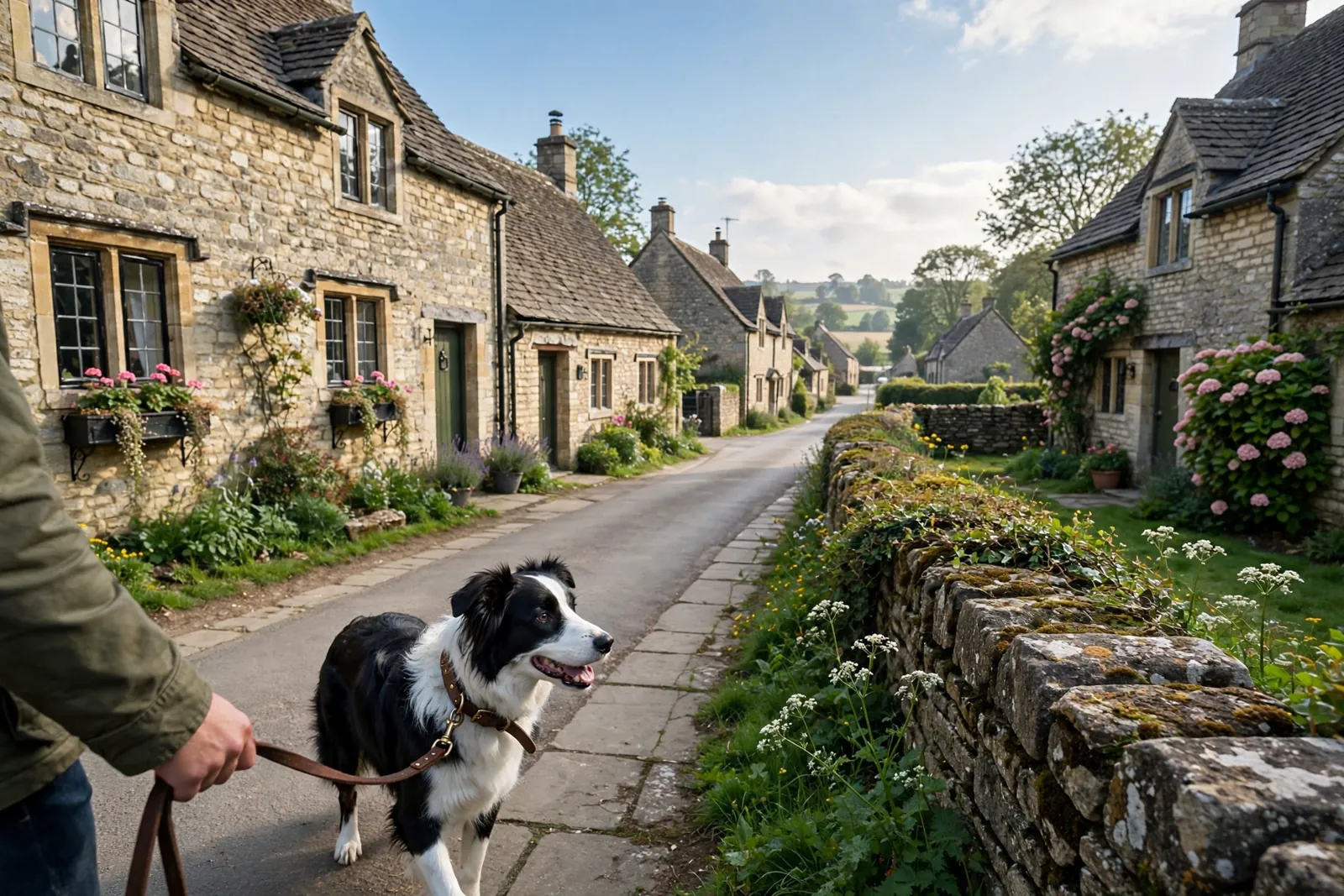
Peak-season Britain concentrates: the famous beaches, honeypot villages and headline attractions fill with the entire country's families at once, and a dog experiences that concentration as noise, heat radiating off crowds and pavements, dropped food at nose height and a hundred strangers' dogs on retractable leads. The counter-strategy is not secrecy — there are no secret places left — but timing and substitution. Timing: arrive at popular places before ten or after four, when car parks breathe, sand empties and light improves; walk the celebrated route early and spend the middle of the day somewhere nobody photographs. Substitution: the second beach along the coast, the next valley, the woodland behind the famous viewpoint usually deliver eighty percent of the experience at twenty percent of the crowd, and dogs, who do not read guidebooks, score them purely on smells and space, where they frequently win.
Beach discipline matters most of all, because summer is when dog restrictions bite. Many popular beaches limit or exclude dogs from the main sections during the season, with rules set locally and varying beach by beach; the dog areas may be a defined stretch, a lead-only zone or a walk from the main car park. Check the specific beach's current rules before setting out — signage and council pages are the authority, and our destination guides flag the pattern — and treat a long walk to the dog section as part of the day's exercise rather than an imposition. On any beach, give seal pups, nesting birds and other wildlife a wide, lead-controlled berth, and carry water for the dog because a day of salt and sun makes dogs thirstier than their owners expect.
Crowds also change the etiquette maths for cafes, pubs and attractions. A dog that is welcome in a quiet Tuesday garden may be a problem in a Saturday crush simply through the space it occupies and the leads it tangles. Choose the garden over the terrace, the early lunch over the one o'clock scrum, and be ready to be the party that takes drinks to the far bench. Other holidaymakers are at their most forgiving when they can see an owner actively making room, and at their least when a dog is standing in a queue's only gap, shaking seawater over the sandwiches.
Ordinary days and days at home count too
A six-week plan made only of outings collapses by week three, financially and emotionally. The season's backbone is ordinary days handled well: the local walk done at a cool hour and varied by route, scent games and training in the garden, a paddling pool or hose game for dogs who enjoy water, frozen treats and lick mats for the hot middle of the day, and evenings on grass somewhere with the whole family doing very little. Dogs do not score days by novelty; a dog measures summer in company, walks and meals, and a well-run ordinary day delivers all three. Children, given a pool, a den and a dog to organise, generally agree more often than adults predict.
Use the home weeks to do the season's maintenance. Wash the bedding and the car blankets. Restock the first-aid basics, check medication supplies and parasite cover, and repair the lead with the fraying stitch before it chooses its own moment. Book the things the autumn will need. And notice your dog across the season: appetite, weight, sleep, enthusiasm for the usual walk. Six weeks of observation, written down nowhere but remembered, is how owners spot the small changes — a stiffness after long days, a new reluctance in heat — that are worth a vet conversation in September rather than a worry in December.
Finally, leave the season with slack at the end. The last few days before term restarts are better spent at home, restoring routines — school-night bedtimes, morning timings, the dog's alone-time rebuilt gradually if the summer has been one long companionship — than on one final expedition. Dogs who have been with their people constantly for six weeks can find the sudden September silence genuinely difficult; reintroducing short, boring absences in the final fortnight, paired with the return of ordinary routine, is the kindest piece of planning in this entire guide.
The six-week checklist
Early in the year: main stay booked, sitter or boarder secured for dog-free commitments, work and holiday-club dates mapped, budget for the whole season sketched rather than guessed. By late spring: tickets, crossings and campsite pitches booked, vet visit done if due, medication and parasite cover arranged to span the season, hot-weather kit assembled — shade, cool mat, spare bowls, a towel that lives in the car. Before each outing inside the season: forecast checked, tides checked where relevant, beach or venue dog rules confirmed from a current source, water packed for the dog before the humans' drinks, and an early start chosen without negotiation.
Through the season, hold three reviews. After the first hot spell: did the walk timings work, does any dog in the house need the rules tightened, is the car plan realistic? Mid-season: is the budget tracking, is the dog thriving or accumulating tiredness, do the remaining plans still fit the dog you are observing? In the final fortnight: rebuild routine, reintroduce alone-time gradually, and book nothing new that cannot survive a tired family. Six weeks will never run exactly to a document, and it does not need to. A season with anchors, heat rules and honest money gives a dog a summer that feels — from four feet lower down — like one long, well-run yes.
Practical questions
Before you go
When should I book a dog friendly summer holiday in the UK?
For the best choice in peak weeks, book the main stay in the first months of the year — the stock of genuinely suitable properties with enclosed gardens is small and the window is fixed. Sitters, boarders, ferries and popular campsites reward booking six to ten weeks ahead. Cancellations and split or weekday stays still appear later, so start whenever you are ready.
What time should I walk my dog in the summer holidays?
Walk early, finishing the main outing by mid-morning, and again in the evening once pavements have cooled. Test tarmac with the back of your hand — too hot to hold means too hot for paws. Keep midday for shade, water and indoor rest, and never leave a dog in a parked car in summer.
How can I keep summer holiday costs down with a dog?
Budget the whole six weeks together, use the cheaper first and last weeks or weekday and shorter stays, travel shorter distances, and lean on free walks and picnics instead of peak attraction catering. Do not cut costs on the stay's dog essentials — an enclosed garden and a room the dog can settle in are worth paying for.
Is it better to stay in one place or split a long break?
One base suits most dogs best: one garden, one sleeping place and walks that become familiar. Splitting into two bases buys variety but costs travel days and repeated settling, so keep blocks long — five nights or more. Either way, treat travel days as rest days and keep the dog's own bedding constant throughout.
Are dogs allowed on UK beaches in the summer holidays?
Many popular beaches restrict or exclude dogs from main sections during the season, with local rules that vary beach by beach. Check the specific beach's current rules before setting out, expect a defined dog area or a walk from the main car park, and carry water for your dog. Check the official latest guidance before you travel.