This guide is independent and contains no paid placement. If affiliate links are added later, they will be clearly marked and will not change our editorial checks.
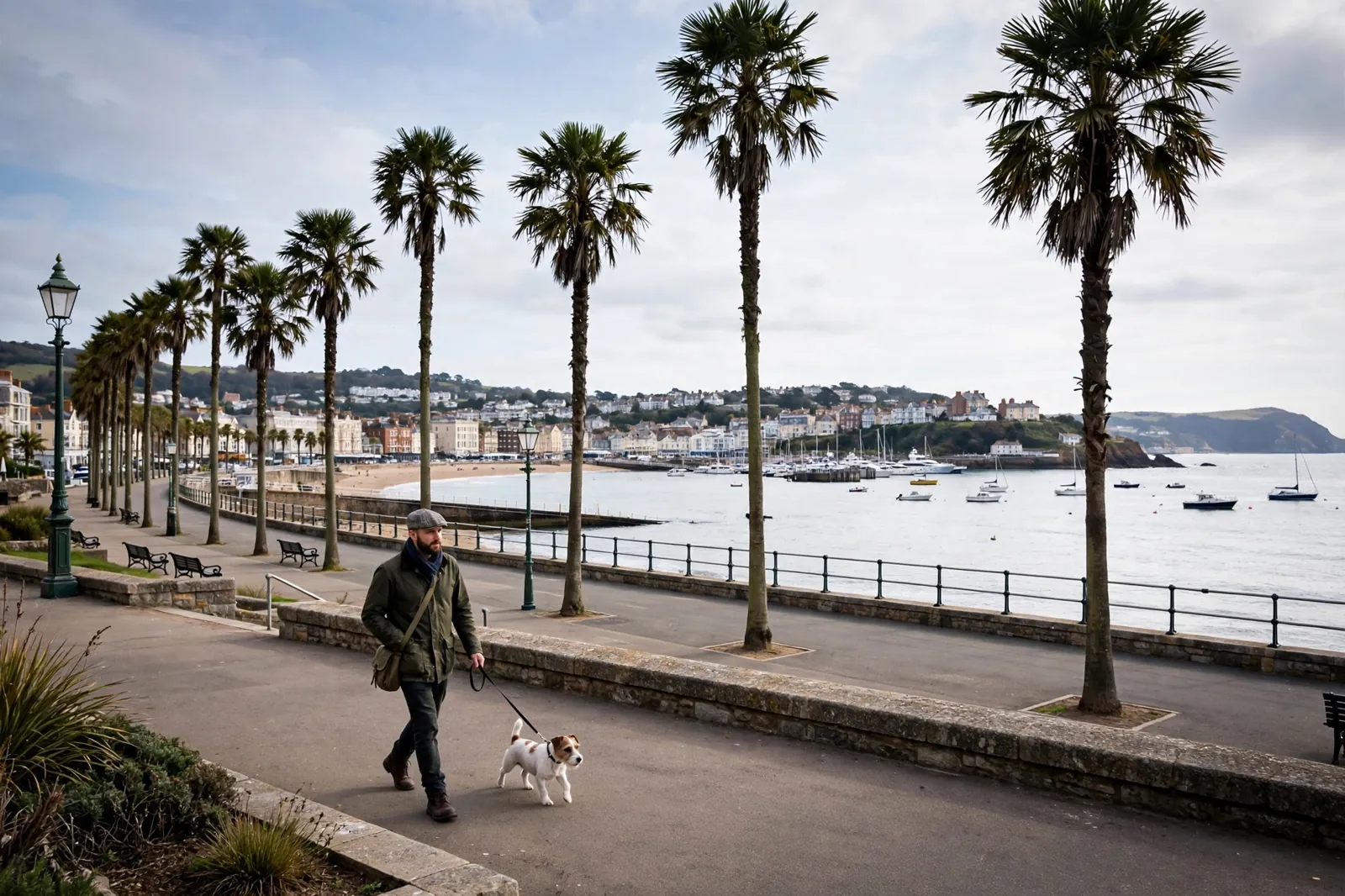
Teignmouth gives a dog two different kinds of day in one small town: the flat seafront and pier on the sea side, and the sheltered, year-round Back Beach on the estuary side. The main beach bans dogs from 1 April to 30 September, so in summer head for the Back Beach, cross on the dog-friendly ferry to Shaldon, or walk the coast path towards Holcombe.
Why Teignmouth works with a dog
Teignmouth sits where the River Teign reaches the sea, and that single fact shapes almost everything about a visit with a dog. The town has two waterfronts within a few minutes of each other: the open sea beach with its promenade and pier on one side, and the quieter estuary shore, harbour and Back Beach on the other. When the sea side is busy, windy or closed to dogs for the summer, the estuary side is usually calmer, and when the tide is out the river shore opens into wide flats that dogs love. Few South Devon towns pack that much variety into such a short, flat walk.
The town itself is compact and level, which matters more than it sounds. From the railway station you can reach the seafront, the Den, the harbour and the ferry landing without a steep climb, and the promenade runs in a straight, easy line along the beach. That makes Teignmouth a good choice for older dogs, for puppies on their first seaside trip, and for anyone travelling with a dog that tires quickly or struggles with steps. The serious climbing in this area starts once you leave town on the coast path, so you can choose your effort for the day instead of having it forced on you by the town layout.
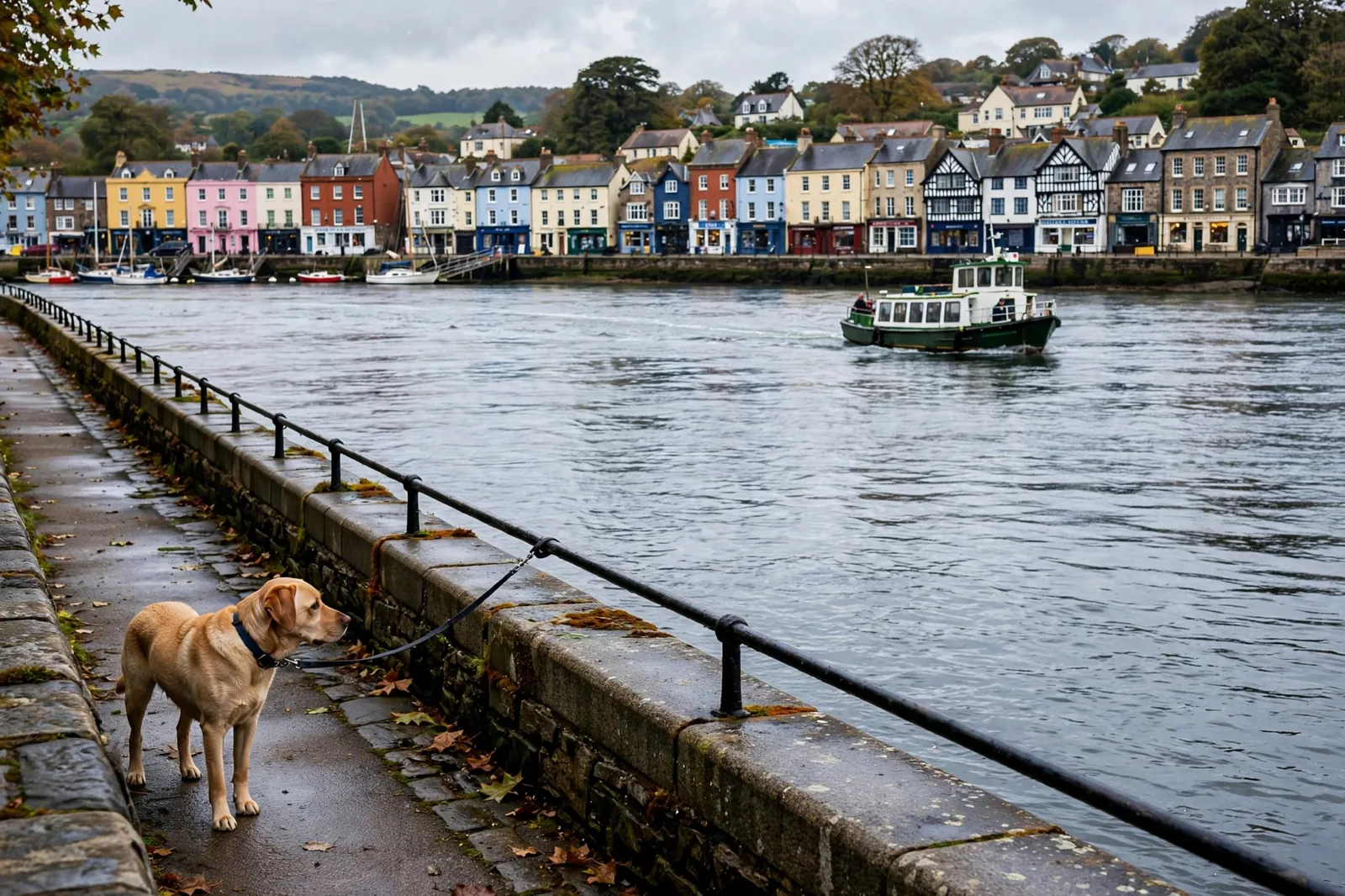
Teignmouth is also a working town rather than a resort built only for visitors. Fishing boats still work from the harbour, the river carries pleasure craft and small commercial traffic, and the streets behind the seafront hold ordinary shops, bakers and cafes rather than a single strip of arcades. That gives a dog trip here a different rhythm from a purpose-built holiday town: a morning walk, a slow wander through the town centre, a long lunch somewhere the dog can settle, and an evening loop when the day visitors have gone. Dogs that find big resort crowds stressful often do better here, because the busiest ground is concentrated on the Den and the central beach while the Back Beach, the harbour and the eastern end of the promenade stay quieter.
The other thing that sets Teignmouth apart is the ferry. A short, open crossing carries foot passengers, dogs, bicycles and pushchairs between Teignmouth Back Beach and Shaldon beach, and it turns a single-town stay into a two-village trip without a car. Shaldon is a different place altogether: a small village of narrow lanes, a botanical garden, a zoo and a sheltered cove, reached in a couple of minutes across water that would take a long drive to go around. For a dog, the ferry is part of the entertainment rather than a chore, and it opens up walks that would otherwise need planning, parking and a road route. Plan your days around the two sides of the river and you will get far more out of Teignmouth than a single beach visit ever could.
Beach rules, month by month
The one rule to learn before you arrive is the summer exclusion on the main town beach. Dogs are not permitted on the stretch of Teignmouth Town Beach between the slipway at Eastcliff and the Lighthouse at the Point from 1 April to 30 September. Teignbridge starts its season a month earlier than most Devon councils, so an Easter break already falls inside the restricted period, and the dates catch out visitors who are used to a 1 May start elsewhere. The exclusion is defined by landmarks rather than by the whole beach, which is why it is worth reading the signs at each access point instead of guessing from a map.
Outside those dates, from 1 October to 31 March, dogs are welcome on the main beach, and winter is when Teignmouth becomes a proper dog beach. The long stretch of sand from the river mouth towards Dawlish fills with local dog walkers, the light is low and golden, and the crowds are gone. Winter walking here is straightforward, but the sea is cold, the wind comes straight off the water, and the beach shelves, so keep an eye on a dog that likes to charge into the waves. A drying coat and a towel in the car make the difference between a good winter walk and a cold, shivering drive home.
Two lead rules apply all year and are easy to miss. Dogs must be kept on a lead on the Den and on the Promenade, and the same applies when you cross Shaldon beach from the ferry to the road. The Den is a busy green with a play area, crazy golf and a skate park, so the lead rule is really about keeping dogs out of the path of children, scooters and picnics. On the promenade the rule keeps dogs clear of cyclists, runners and the crowds that build up around the pier entrance in summer. Treat the promenade as a transit route on a short lead and save the off-lead time for the sand itself.
The exclusion zone has a clear boundary, and knowing it saves a lot of second-guessing. East of the Eastcliff slipway, towards Holcombe, dogs are allowed all year, so in summer you can walk out of the restricted stretch and onto open sand without getting in the car. West of the Lighthouse at the Point, around the river side, the Back Beach is also open to dogs all year. The practical mistake is to assume the whole seafront is either open or closed. It is neither: it is a patchwork of named stretches, and the two year-round stretches sit at either end of the restricted middle. If you are unsure where you are standing, look for the signs at the slipway and at the Point, and check the official guidance before you travel, because the council can change the order and the signs on the ground are the ones that count.
Enforcement is real, and it is worth taking seriously. The council can issue a fixed penalty for dogs on the excluded stretch in season, reported at 100 pounds with a higher fine if the matter goes to court, so do not treat the ban as advisory. The more useful point is that there is no need to test it: the Back Beach is a short walk away, the eastern shore is open, and the ferry gives you a whole second village to explore. A dog that spends its summer days on the Back Beach and the Holcombe shore will not feel short-changed, and you will not spend the trip watching for enforcement officers.
The Back Beach: dogs all year
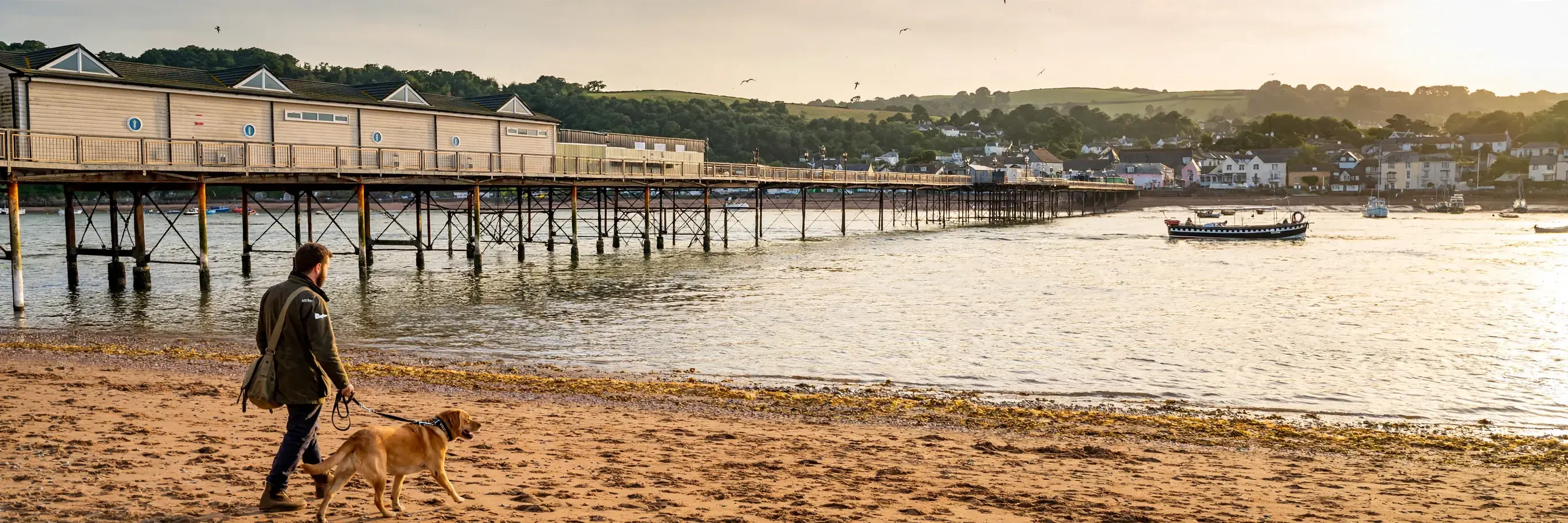
The Back Beach, also called the River Beach, is the part of Teignmouth that regular dog owners use most, and it is the first place to head for if you arrive in summer. It runs along the estuary side of the town, from the Lighthouse at the Point round to the harbour, and dogs are welcome here all year round with no seasonal ban. The sand here is flatter and more sheltered than the open beach, the water is calmer on a rising tide, and the outlook is across the river to Shaldon rather than out to the open sea. It feels like a different beach from the town beach, even though the walk between them takes only a few minutes.
Access is part of the charm and part of the planning. The Back Beach sits behind the harbour area, close to the lifeboat station and the ferry landing, and you reach it through the town rather than down the main promenade. At low tide the shore opens out into broad flats, and at high tide the water comes right up to the sea wall, so the amount of sand available changes a lot through the day. Check the tide times before you go, and time your visit for a falling or low tide if your dog wants a proper run. A dog that arrives at high tide to find only a narrow strip of shingle will be disappointed, and so will you.
The Back Beach is also where the town's working life is most visible. Fishing boats are hauled out and mended here, nets are worked on, and small craft come and go with the tide. That makes it an interesting walk for people, but it means a dog needs closer supervision than on an empty stretch of sand. Keep your dog away from fishing gear, bait, hooks and lines, and do not let them scavenge around the boats. The smell of fish will draw most dogs like a magnet, so a reliable recall or a long line is worth more here than on the open beach. Pick up after your dog as well: this is a beach the town uses every day, not a remote cove, and the local walkers who keep it welcoming will notice.
For many dogs the Back Beach is also the best swimming spot in Teignmouth, with one important limit. The sheltered water near the shore is fine for a paddle and a splash on a calm day, but the main estuary channel carries a strong tidal current, and the guidance is clear that you should not swim in the estuary itself. Keep your dog in the shallows near the beach, well away from the channel, the ferry landing and moored boats, and call them back if they start to drift towards faster water. After any swim, rinse your dog with fresh water if you can, because estuary water leaves sand and salt in the coat, and check paws for sharp shells and debris on the walk back.
If the Back Beach is busy, the eastern shore is your second year-round option. From the Eastcliff slipway the beach continues towards Holcombe, and dogs are allowed there all year. The walk out that way follows the sea wall and then the coast path, and the beach becomes quieter the further you go from the pier. It is a good choice for a dog that needs space from other dogs, because the crowds thin out quickly once you pass the main beach. Combine the two year-round stretches across a stay and you can give a dog a different beach every day without ever breaking the summer rules.
Grand Pier, promenade and the Den
The Grand Pier is the landmark you will photograph first, and it is also one of the easiest dog walks in town. Built between 1865 and 1867, the pier stretches over 210 metres into the sea from the middle of the seafront, and entry to the pier itself is free. Dogs on leads are welcome on the pier, so you can walk out to the end with your dog, look back at the town and the cliffs, and watch the beach and the river mouth from the water side. The pier was badly damaged in the storms of 2014 and has been restored since, and it still carries the traditional mix of amusements and entertainment that makes a British pier what it is.
Take the pier at the right time and it is a pleasure; take it at the wrong time and it is a test of your dog's nerve. Midday in August brings crowds, music, flashing machines and the smell of hot food, which is a lot of stimulation for a nervous or reactive dog. Go early in the morning or in the evening instead, when the pier is quieter and the light is better, and keep your dog on a short lead through the amusement area. The deck is flat and the walk is short, so even an older dog can manage it, but the boards and the open sides can worry dogs that are unsure of heights or of walking over water. If your dog hesitates at the entrance, do not force it: the promenade below gives you the same view with solid ground underfoot.
The promenade runs the length of the seafront and is the town's main flat walk. It is wide, level and lined with seats, cafes and shelters, and it connects the Den at one end to the Eastcliff end of the beach at the other. Dogs must be on a lead here, and the rule makes sense once you have walked it on a busy day: cyclists, runners, children on scooters and people carrying ice creams all share the same space. Walk it early for a calm loop, or use it as the link between the beach, the pier and the town centre rather than as the walk itself. The seats along the promenade are a good place to stop and let a tired dog rest while you watch the sea, and the shelters give you somewhere to wait out a sharp shower.
Behind the promenade sits the Den, the big open green that acts as Teignmouth's front garden. It holds a children's play area, adventure golf, a skate park and open grass, and it is where the town gathers on a sunny day. Dogs must be on a lead on the Den, and it is not really a dog exercise area: it is a people space that dogs cross rather than a place to let them run. That said, it is useful as a meeting point, a picnic spot and a place to sit while the dog watches the world go by, and the grass is a welcome change from sand if your dog has had enough of the beach. Keep your dog clear of the play equipment and the golf course, pick up promptly, and move on to the beach or the estuary side when your dog needs to move properly.
The seafront as a whole rewards a slow pace. Teignmouth's beach is long, sandy and backed by the railway line and the cliffs towards Dawlish, and the red colour of the sand is one of the first things visitors notice. Lifeguards patrol in summer, and the beach is popular for swimming, paddleboarding and sandcastle building, so in season the dog-free middle stretch is genuinely a family beach. That is the trade-off the town has made, and it works because the dog beaches sit at either end. Learn the layout once, on your first morning, and the rest of the stay runs itself.
The ferry to Shaldon
The passenger ferry between Teignmouth and Shaldon is the single best dog-friendly experience in the area, and it costs the dog nothing. Dogs are welcome on board and travel free, along with bicycles and pushchairs, and the crossing is short enough that even a dog that dislikes boats will usually cope. The ferry is often described as Britain's oldest passenger ferry, with a crossing recorded as far back as 1296, and the black-and-white boat that works the route today is a familiar sight on the river. It runs between Teignmouth Back Beach, near the lifeboat station, and Shaldon beach, and it leaves on demand roughly every ten to fifteen minutes in busy periods.
Boarding is from the beach at both ends, which is the one practical detail to plan for. There is no pier or pontoon: you walk across the sand to the boat, and the crew will help where they can. That means wet feet at some states of the tide, sand on paws, and a short scramble for anyone with limited mobility. For a dog it is usually the easiest part of the day, but a dog that is nervous on moving boats, or one that has never been on water, deserves a calm introduction. Let the dog watch a crossing first, board when the boat is quiet rather than full, and keep the lead short and the dog close to you rather than at the edge. The crew are used to dogs and will tell you where to stand.
Hours change with the season, and this is where you should check the official guidance before you travel rather than trusting a timetable you read months ago. In summer the service generally runs from around 8am until 6pm or dusk, seven days a week, with later running in July and August. In winter the service is shorter, running five days a week, and the operator publishes the current winter hours on its own page and social media. The ferry runs all year except Christmas Day and New Year's Day, but it can stop at any time for bad weather or awkward tides, and the operator will post updates online when that happens. Always confirm the last boat of the day before you cross, because the walk back via the road bridge is long and not the way you want to end an evening with a tired dog.
There is no need to book. You pay on the day, the fare is modest, and the crossing takes only a couple of minutes, so the ferry works as a spontaneous decision rather than a planned event. That is the right way to use it: cross when the mood takes you, spend an hour or two in Shaldon, and come back when you are ready. If the boat is busy, wait for the next one rather than squeezing a nervous dog onto a crowded deck. The crossing itself is the attraction, with views back to Teignmouth, the pier and the cliffs, and the river traffic passing close by. Keep your dog seated or standing still, keep the lead clear of other passengers' feet, and enjoy the shortest ferry ride in England as a proper part of the day rather than a way of getting somewhere.
One more thing to know before you board: the rules change again the moment you land. Shaldon beach has its own seasonal dog ban, from 1 April to 30 September, on the stretch between Clipper Quay and the steps about 410 metres south-east of it, and dogs may cross the beach to the road on a lead from the ferry. That sounds complicated, but in practice it means you step off the boat, keep the dog on a lead, and walk straight up to the village. The beach itself is not the destination on the Shaldon side in summer; the village, the gardens and the cove are. In winter the whole beach opens up again, and the ferry becomes a quick way to a second dog beach as well as a second village.
Across the water: Shaldon and Ness Cove
Shaldon is a village rather than a town, and the change of scale is immediate. Narrow lanes, thatched cottages, a small green and a sheltered beach replace Teignmouth's wide promenade, and the pace drops a notch. The village is built on the hillside above the beach, so the walk up from the ferry is short but steep in places, and dogs that struggle with hills will feel it. Take it slowly, stop at the top for the view back across the estuary, and let the dog catch its breath before you carry on. The reward is a village that is easy to explore on foot in an hour or two, with the sea always close by.
The beach at Shaldon is small and sheltered, and in summer the dog rules matter here just as they do in Teignmouth. Dogs are excluded from the main stretch between Clipper Quay and the steps about 410 metres south-east of it from 1 April to 30 September, and allowed east of the steps. Outside the season the beach is open, and it makes a pleasant change from Teignmouth's long sands: smaller, calmer, and backed by the village rather than by a road. The water here is sheltered by the headland, but the same estuary warnings apply, so keep dogs out of the main channel and away from moored boats.
Ness Cove is the hidden beach on the Shaldon side, and it is the one that adventurous dog owners ask about most. It sits below the headland south of Shaldon, reached on foot via the coast path and the Smugglers Tunnel, a passage cut through the rock that connects the village to the cove. Dogs are allowed on Ness Cove all year, and the cove itself is a small, sandy, sheltered spot that feels a long way from the crowds. The catch is the access: the route involves steep steps and a tunnel, and it is not suitable for every dog. Check the official guidance before you travel, and think honestly about your dog before you set off. A fit, agile dog will love it; an older dog, a very small dog, or a dog that panics in enclosed spaces will not, and there is no easy way back once you are halfway down.
Shaldon also gives you the things Teignmouth does not: a zoo, botanical gardens and a network of village lanes that are pleasant for a slow wander. The zoo is a small, well-kept place, and dogs are not allowed inside, so plan for one person to stay with the dog outside or skip it on a dog day. The gardens are a better bet for a dog walk, with paths, planting and views over the estuary, though you should check the current dog policy before you go, as garden rules change. The village pubs and cafes are small and friendly, and several welcome dogs, but they fill quickly in summer, so arrive early or be ready to sit outside. A morning in Shaldon, with the ferry both ways, is a complete half-day on its own, and it is the part of a Teignmouth trip that most visitors remember best.
If you would rather walk than sail, Shaldon is also reachable on foot from Teignmouth via the road bridge, but it is a long way round and the route follows the main road, which is not a pleasant dog walk. The ferry exists precisely because the road route is awkward, and it is almost always the better choice. Walk to the Back Beach, cross on the ferry, explore Shaldon, and cross back: the whole loop takes a morning, costs very little, and gives your dog two villages, two beaches and a boat ride in a single outing.
Coast path walks from town
Teignmouth sits on the South West Coast Path, and the path gives you three very different walks without ever needing the car. The first is the flat sea-wall walk towards Dawlish, which follows the railway line along the shore and is one of the most famous stretches of coast path in England. The second is the cliff walk east towards Holcombe, which climbs out of town and rewards you with views and quiet coves. The third is the estuary-side route, which uses the ferry and the Shaldon shore to complete a loop of the river mouth. Choose between them according to your dog's fitness, the weather and the time you have, and do not try to do all three in one day.
The Dawlish walk is the easiest and the most exposed. From the eastern end of Teignmouth beach the path follows the sea wall beside the railway, with the sea on one side and the cliffs on the other, all the way to Dawlish. It is flat, surfaced and straightforward, and it suits almost any dog, but it is also completely open to the weather. In a south-westerly gale the spray comes over the wall, and in summer the sun beats down on it with no shade at all. Take water, keep your dog on a lead near the railway, and be ready to turn back if the wind picks up. Dawlish itself has its own beach rules, with dogs excluded from part of the beach in summer, so check the signs when you arrive rather than assuming the Teignmouth rules carry over. The walk is about three miles each way, and the train back from Dawlish to Teignmouth is a useful escape route if your dog runs out of energy: dogs travel on the train, and the journey takes only a few minutes.
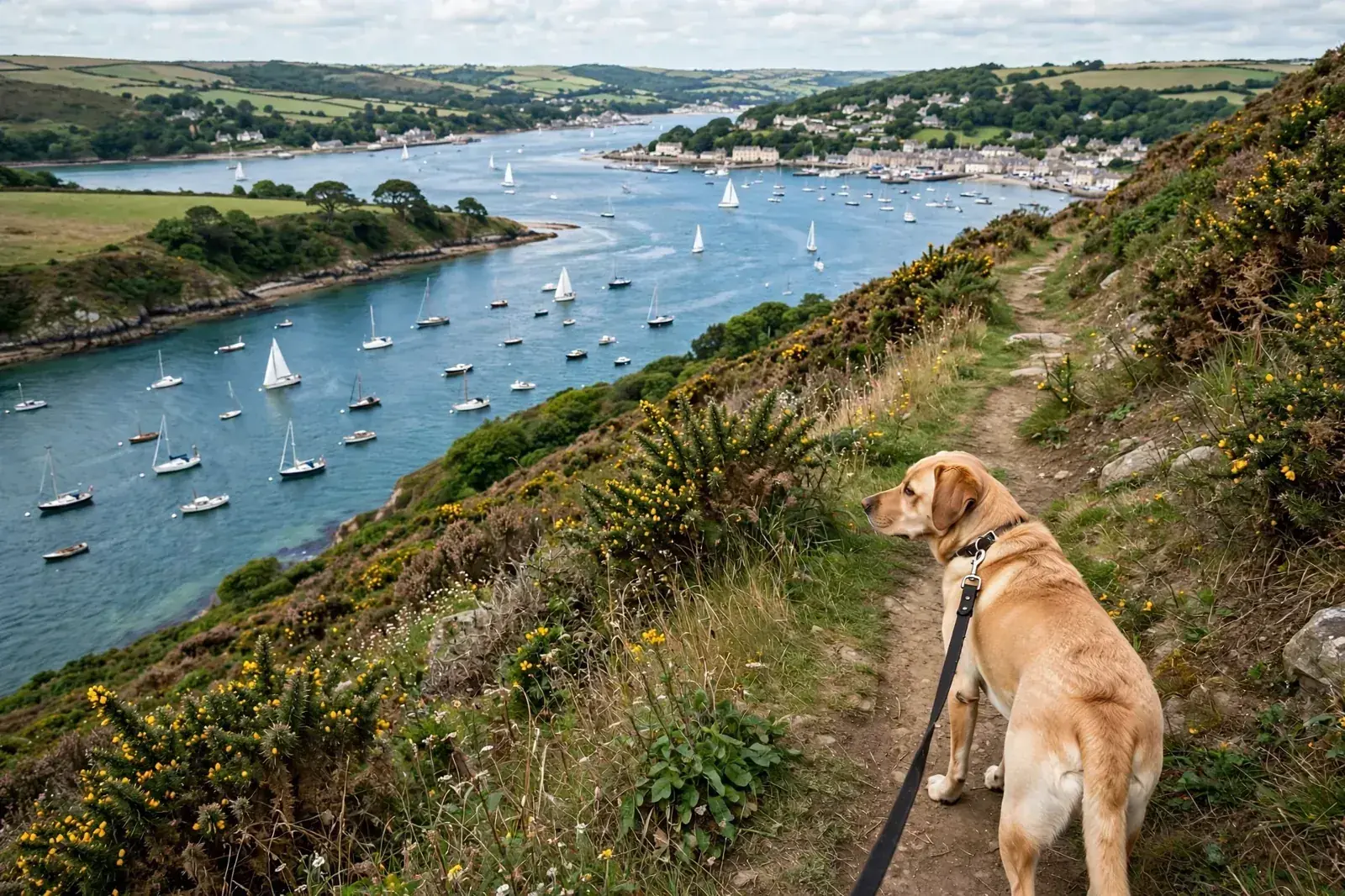
The Holcombe walk is the wilder of the two sea-side routes. From the Eastcliff slipway the coast path climbs onto the cliffs and runs east above the shore, with steps, uneven ground and drops that need a lead and a steady dog. Holcombe beach itself welcomes dogs all year, and the walk out there takes around forty-five minutes, covering roughly two miles from the town centre. The beach is sandy, quiet and backed by cliffs, and it is a good destination for a dog that needs space. The return is the same way, so allow time for the climb back, and carry water: there are no facilities at Holcombe, and the path is exposed to the sun in summer. Dogs that are unfit, very young or unsteady on steps should stick to the Dawlish sea-wall walk instead, and everyone should check the official guidance before you travel if the weather has been wet, because cliff paths can be slippery after rain.
The estuary loop is the most varied walk of the three, and the one that makes best use of the ferry. Cross to Shaldon, walk the village lanes and the shore, climb to Ness Cove if your dog is up to the steps, and then either ferry back or continue along the coast path. The Shaldon side of the path climbs quickly and gives you the classic view back across the river to Teignmouth, with the pier and the town spread out below. The ground is a mix of lanes, steps and cliff path, so it suits a fit dog and a walker who is happy with height. Keep your dog on a lead near the cliff edges and near livestock, and remember that the ferry is the way home: check the last boat before you set off, and leave enough time to get back to Shaldon beach without rushing a tired dog along a cliff path.
Whichever walk you choose, the same coast path habits apply. Carry more water than you think you need, because there is little shade and few taps on the cliff sections. Keep your dog on a lead near drops, livestock and the railway, and use a long line rather than a flexi lead on narrow paths, where a sudden lunge can pull both of you off balance. Check the weather before you set out: the coast path here is beautiful in sunshine and unforgiving in a gale, and the sea-wall section can be closed in severe weather. And remember that the path is a national trail, not a dog park, so pick up after your dog, keep them under control around other walkers, and give way on narrow stretches. The path rewards good manners with miles of open coast, and it is the reason many dog owners come back to Teignmouth year after year.
Eating and drinking with a dog
Teignmouth eats well for a town of its size, and dogs are part of the picture rather than an afterthought, provided you choose the right places. The seafront cafes and the harbour-side pubs are the natural first stop: they are used to walkers coming in off the beach with sandy dogs, and many have outdoor seating where a dog can settle under the table. The town centre behind the seafront holds more cafes, bakers and takeaways, and the streets around the harbour have pubs that welcome dogs in the bar area. The pattern is the usual one for a Devon seaside town: outside seating is almost always fine, bar areas are often dog-friendly, and restaurant dining rooms are more restricted, so ask before you sit down rather than after.
The practical approach is to plan lunch around the dog, not the other way round. A dog that has just had a long beach run will settle happily under a pub table, but the same dog, taken straight from the car into a busy dining room at midday, will not. Give the dog a proper walk first, let them drink and cool down, and then choose somewhere with space to lie down and a bowl of water on offer. Bring a mat or a blanket for the dog to lie on, because pub floors are often tiled or wooden and a tired dog will slide and fidget. If your dog is reactive or nervous around strangers, pick a table at the edge of the room or outside, away from the main route to the bar, and keep the lead short enough that the dog cannot greet every passing table.
In summer, timing matters as much as the venue. The seafront cafes fill up from late morning, and a dog-friendly table outside can be hard to find at midday on a sunny Saturday. Eat early or late, or take a takeaway down to the Back Beach or the Den and eat it there, where the dog has space and you have the view. Fish and chips eaten on the harbour wall, with the dog at your feet and the boats in front of you, is a better meal than a stressed lunch in a crowded cafe, and it is the way most local dog owners do it. Just keep the dog away from hot fat, bones and dropped food, and take your rubbish with you.
Across the river, Shaldon's cafes and pubs are smaller and fill faster, so the same advice applies with more force. Arrive before the lunch rush, or be ready to sit outside, and do not expect a large dog-friendly dining room in a village pub. The ferry makes it easy to eat in Teignmouth and walk in Shaldon, or the other way round, so you are never stuck with one side's options. Wherever you eat, the rule is the same: confirm the dog policy when you arrive, because policies change with the season and with the management, and a place that welcomed dogs last year may have changed its mind. Check the official guidance before you travel if a particular meal matters to your plans, and have a backup in mind so a closed door does not spoil the day.
Where to stay with a dog
Teignmouth has the usual South Devon mix of places to stay, and dogs are welcome in many of them, but the details vary enough that you should never assume. Self-catering cottages and apartments are the most flexible choice for a dog trip, because they give you a kitchen, a door you can come and go through, and a place to dry a wet dog without worrying about a hotel carpet. Look for ground-floor properties with a garden or a yard, and ask specifically about the garden boundary: a low wall or an open gate is no use for a dog that will wander. Check the pet fee, the number of dogs allowed, and whether the charge is per dog or per stay, and get the total in writing before you pay.
Guest houses and small hotels in Teignmouth often accept dogs, but usually only in selected rooms and often only downstairs, so book early and say you have a dog at the time of booking rather than on arrival. Ask where the dog can go in the building: some places welcome dogs in the bar but not in the breakfast room, and some expect the dog to be left in the room only if it is settled and quiet. If your dog cannot be left alone, that matters, because it decides whether you can eat breakfast in the dining room or need to take it in your room. A dog that barks when left alone is a poor fit for a small guest house, however friendly the owners are, so be honest about it when you book.
Holiday parks and larger sites around the estuary, including the park above Shaldon, accept dogs in designated accommodation, and they suit families who want facilities as well as a bed. The trade-off is the same as anywhere: the dog-friendly units may be fewer, further from the facilities, and booked out earlier, so ask for the specific unit type and location rather than a general promise. Check the rules for dogs on the site itself, including lead rules, exercise areas and whether dogs are allowed in the restaurant or only on the terrace. A park that suits a calm older dog with a short level walk to the toilet area is a poor fit for a young dog that needs an hour of running, and no booking filter knows the difference.
Wherever you stay, the first hour matters. Walk the boundary of the garden before you let the dog off the lead, check gates and fences for gaps, and move anything chewable or dangerous out of reach. Give the dog water, their own bed and a familiar-smelling blanket, and keep the first evening quiet: same feeding time, same last outing, same bed as at home. Teignmouth is a small town, so most accommodation is within a short walk of a beach or the estuary, and the after-dark toilet walk should be a known route rather than an exploration. If you are staying for a week, the Back Beach will probably become your dog's local, and the morning walk there will set the pattern for the whole stay.
Getting there, parking and the railway
Teignmouth is easy to reach by road and by rail, and the railway is part of the experience. The town sits on the A379 coast road between Exeter and Torquay, and on the main railway line from Exeter to Plymouth that runs along the sea wall. By car the approach is straightforward, but the town centre is small and the seafront roads fill quickly in summer, so plan to park once and walk rather than driving between the beach, the harbour and the town. By train you arrive right in the middle of things, with the seafront a short walk from the station, and the dog travels with you rather than waiting in a hot car.
Parking is concentrated in a few main car parks, and the seafront car park and the Eastcliffe car park are the ones most visitors use. Both are close to the beach and the promenade, and both charge, so check the signs for current prices and maximum stays before you leave the car. In summer the seafront car park fills early, and the streets behind it are residential, so do not rely on finding a space at midday on a sunny weekend. Arrive early, or park further out and walk in along the promenade. Never leave a dog in a parked car in warm weather, even for a few minutes: a car on the seafront heats up fast, and the shaded spot you parked in at 10am will be in full sun by noon.
The railway deserves a paragraph of its own, because it shapes how you use the town. Teignmouth station is on the sea-wall line, and the trains that pass through it run between Exeter, Dawlish, Teignmouth, Torquay and Plymouth. Dogs travel free on most trains in Britain and should be kept on a lead, and the short hop to Dawlish or to Newton Abbot is a useful way to extend a walk or to get home when a dog is tired. The line itself is a famous piece of engineering, built along the sea wall by Brunel, and the stretch between Teignmouth and Dawlish is the part where the railway runs closest to the water. Keep your dog on a lead on the platforms and at the station, and be ready for the noise and vibration when a train passes close by on the sea wall: some dogs take it in their stride, and some do not.
Once you are in town, the best transport is your own feet. Teignmouth is flat and compact, and the walk from the station to the pier, the Den, the harbour and the Back Beach takes minutes rather than miles. That is the town's great advantage for a dog trip: you can base yourself in one place, walk everywhere, and use the ferry and the train to reach the places that are not walkable. If you do need a bus, check the current routes before you travel, because coastal bus services change with the season, and not every service is equally easy with a large dog. For most visitors, though, the plan is simple: park or arrive by train, walk the town, cross on the ferry, and let the dog set the pace.
Estuary, tides and beach safety
The River Teign is beautiful and it is also powerful, and the safety advice for this town is mostly about water. The estuary channel carries a strong tidal current, the sandbanks shift with every tide, and the water that looks calm at slack tide can move fast an hour later. Do not swim in the estuary, and do not let your dog swim in it either. Keep dogs in the shallows near the beach, well away from the channel, the ferry landing and moored boats, and call them back the moment they start to drift. A dog that is a strong swimmer in a lake can still be caught out by a tidal current, and the river does not forgive overconfidence.
Tides change the beaches as well as the river. At low tide the Back Beach opens into wide flats that are perfect for a run, and at high tide the water reaches the sea wall and the sand disappears. Check the tide times every morning, and plan the day's beach time around them rather than around the clock. The sandbanks at the river mouth are especially changeable: they can look solid and inviting at low water, but the tide comes in around them fast, and the channels between them fill first. Do not let your dog run out onto the banks without knowing the tide, and do not follow them if they do. If your dog gets cut off, call for help rather than wading in after them.
On the open beach the hazards are different but just as real. The beach shelves, which means the water deepens quickly, and offshore winds can carry inflatables and weak swimmers out to sea, so the advice is not to use inflatables in offshore winds and to watch children and dogs closely near the water. Lifeguards patrol in summer, and their flags and signs mark the safest swimming area, but they are not there in winter, when the beach belongs to walkers and surfers. Jellyfish wash up after warm weather, and fishing lines, hooks and broken shells are common on the strandline, so check your dog's paws after a beach walk and rinse them in fresh water. The RNLI lifeboat station at the Back Beach is a reminder that this is a working coast, and the crew are the people to call if anything goes wrong.
Heat, cold and the railway complete the safety list. In summer the sand on the promenade and the pier deck can be hot enough to burn paws, so test it with your own hand and walk in the morning or evening if it is too hot. Carry water on every walk, because the cliff paths and the sea wall have no shade and no taps, and a dog that is panting hard needs water and rest, not another mile. In winter the wind off the sea is bitter, and a short-coated dog will need a coat for a long walk. And on every walk, keep your dog on a lead near the railway, the harbour and the cliff edges: the sea-wall line runs right behind the beach, the harbour has moving vehicles and boats, and the cliff path has drops that a chasing dog will not see in time. Teignmouth is a safe town for a careful dog owner, and most of its risks are the ordinary ones of any tidal coast, managed with a lead, a tide table and a bit of attention.
A two-day plan that fits a dog
Day one is the Teignmouth side. Start early on the Back Beach at low tide, when the flats are open and the dog can run before the town wakes up. Walk round to the harbour, then along the promenade to the pier, and out onto the Grand Pier while it is still quiet. Come back along the seafront, stop for breakfast or coffee at a seafront cafe, and let the dog rest while the day warms up. In the afternoon, walk east along the sea wall towards Holcombe, or take the train to Dawlish and walk back along the wall, depending on your dog's energy. Finish with a quiet evening loop on the Back Beach, when the light is low over the estuary and the fishing boats are coming in. That is a full day, and a dog that has done it will sleep well.
Day two is the Shaldon side. Cross on the ferry in the morning, when the boat is quiet and the light is good, and spend the morning in the village: the lanes, the gardens, the view back across the river, and a coffee somewhere the dog can settle. If your dog is fit and the steps suit them, walk down to Ness Cove through the Smugglers Tunnel; if not, enjoy the village and the sheltered beach instead. Take lunch in Shaldon or cross back to Teignmouth for it, and spend the afternoon on the year-round shore east of Eastcliff, where the dog can have a proper beach run away from the crowds. End the day with a slow walk along the promenade, a sit on one of the seats, and a last look at the pier before you go home.
If you have a third day, use it to go further afield rather than repeating the same walks. The coast path west towards Dawlish Warren, the estuary villages upstream, and the wider South Devon coast are all within a short drive or train ride, and each of them gives a dog a different kind of day. Our guides to Torquay with a dog and to Dartmouth with a dog cover two of the nearest larger towns, with their own beaches, ferries and coast path walks, and they pair well with a Teignmouth stay if you want a longer South Devon trip. But there is no need to rush: Teignmouth rewards a slow stay, and a dog that has had two unhurried days here, with a beach, a pier and a ferry in each of them, will have had a proper holiday.
Practical questions
Before you go
Can dogs go on Teignmouth beach in summer?
Not on the main town beach. Dogs are excluded from the stretch between the slipway at Eastcliff and the Lighthouse at the Point from 1 April to 30 September. The Back Beach on the estuary side welcomes dogs all year, and so does the shore east of Eastcliff towards Holcombe. Read the signs on the day, because the excluded stretch is defined by landmarks, not by the whole beach.
Are dogs allowed on the Teignmouth to Shaldon ferry?
Yes. Dogs are welcome on the passenger ferry and travel free. Boarding is from the beach at both ends, so expect sand underfoot and a short walk across the shore. The service runs all year except Christmas Day and New Year's Day, with shorter hours in winter, and it can stop in bad weather or at awkward tides, so check the official guidance before you travel.
Can dogs go on Teignmouth Grand Pier?
Yes, dogs on leads are welcome on the Grand Pier, and entry to the pier itself is free. The pier is over 210 metres long and was built between 1865 and 1867, so it is a short, flat walk with sea views on both sides. Keep your dog close around the amusements, where the noise and crowds can unsettle nervous dogs.
Where can my dog swim safely around Teignmouth?
The Back Beach is the usual choice for a paddle, because it is sheltered and dogs are allowed there all year. Do not let your dog swim in the main estuary channel, where the tidal current is strong, and keep dogs out of the water near boats and the ferry landing. On the open beach, watch for a shelving seabed and offshore winds, and rinse your dog with fresh water afterwards.
Is the South West Coast Path from Teignmouth suitable for dogs?
The promenade and the sea-wall walk towards Dawlish are flat and easy, and suit most dogs. The coast path east towards Holcombe climbs onto the cliffs, so it is better for fit dogs and needs a lead near drops and livestock. The path across to Shaldon involves the ferry or the road bridge, and the walk up to Ness Cove includes steep steps, so check the official guidance before you travel if your dog struggles with steps.
Do dogs have to be on a lead in Teignmouth?
Dogs must be kept on a lead on the Den and the Promenade, and on a lead when crossing Shaldon beach from the ferry to the road. Elsewhere, follow the signs for each stretch of beach and keep your dog under close control near the railway, the harbour, livestock and cliff edges. Off-lead time is best saved for the Back Beach and the open shore outside the summer exclusion zone.