This guide is independent and contains no paid placement. If affiliate links are added later, they will be clearly marked and will not change our editorial checks.
Walk Tetbury slowly: browse the High Street in short bursts with pavement pauses, drive the short distance to Westonbirt Arboretum for the main walk, and finish with a quiet lane stroll near Chavenage. Keep the lead short among fragile stock, ask at each shop door, and let the dog's settling ability, not your shopping list, set the pace.
A browsing day, not a route march
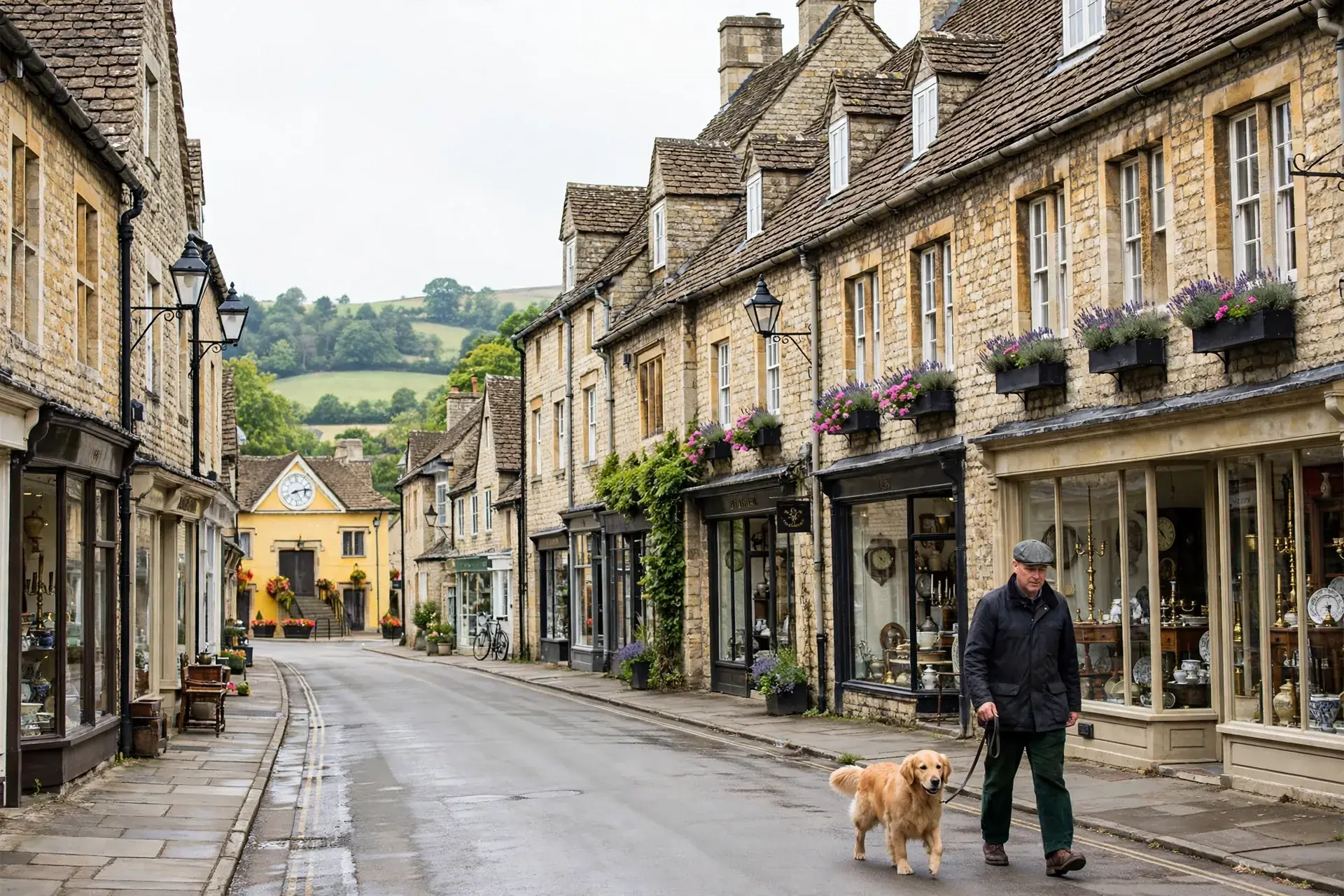
Tetbury is best understood as a town for looking, and dogs are surprisingly good at looking when the rhythm is right. The High Street runs downhill in a gentle sweep, lined with honey-stone buildings that house antique shops, interiors stores, cafes and small independent businesses. A dog walking this street gets a constant stream of new smells, people and doorways, which is stimulating in small doses and tiring in large ones. The trick is to treat browsing as a series of short visits separated by pavement pauses, rather than a single long trawl from one end of the street to the other.
Start by walking the street once without entering anywhere, just to let the dog take in the scale of the place. Note which shops look spacious, which have steps at the door, which are busy, and where you could step aside for a break. Then go back and visit the shops that interest you most, one at a time, with a short outdoor pause between each. A dog that has just had a sniffing break on a quiet side street will settle far better inside a shop than a dog that has been dragged from doorway to doorway without a pause. If the dog starts to pull, pant or lose interest, that is the signal to switch to a walk, not to push on to another shop.
The browsing rhythm also helps owners, because Tetbury's stock rewards attention. Antique furniture, ceramics, textiles, pictures and architectural pieces are displayed densely in many shops, and a hurried visit misses the detail that makes the town worth the trip. Slow down, look properly, talk to the dealers, and let the dog lie on its mat while you browse. A dog that learns that shops mean a mat, a treat and a quiet wait will enjoy Tetbury far more than a dog that learns that shops mean being pulled past interesting smells on a tight lead.
The High Street, shop by shop
The High Street is the spine of Tetbury, and it works well as a downhill walk followed by a gentler return. Begin at the higher end of the town and work down, so the return climb is taken slowly or replaced by a loop through quieter side streets. Pavements are generally workable for a dog on a short lead, but they narrow in places and are shared with shoppers, pushchairs and deliveries, so step aside for oncoming walkers and keep the lead clear of other people's feet. Shop windows at dog nose height are a hazard for enthusiastic sniffers, so guide the dog past glass with a steady lead rather than letting it press against every display.
Inside, the character of each shop differs, and so does the dog welcome. Larger showrooms with wide aisles suit dogs well, while small, densely stocked rooms suit only calm dogs that can walk close to their owner without sweeping a tail across a low table. Ask at the door if there is no sign, and accept a polite no without argument, because dealers are protecting stock that may be irreplaceable. If a shop welcomes dogs, keep the visit short on a first visit, watch the tail near ceramics and glass, and avoid letting the dog greet other customers' dogs in a confined space, however friendly the impulse.
Buying something with a dog in tow needs a little extra planning. A large piece of furniture cannot be carried while holding a lead, so arrange delivery or collection separately, and confirm the details before paying. Smaller purchases are easier, but still ask for wrapping that can be carried in one hand or placed in a bag that leaves a hand free for the lead. If you are travelling by car, think about where a purchase will ride home before you buy it, because a fragile parcel on the back seat next to a dog is a recipe for a broken treasure and a stressed animal.
Market House, church and town centre
Tetbury's Market House, a pillared building in the town centre, is a useful landmark and a natural meeting point for a dog walk. The open ground floor gives shade and a sense of shelter, and the surrounding streets offer a compact loop that can be walked in twenty minutes or stretched into a longer wander. Use the Market House area as an anchor: start there, branch out along the High Street, and return there for a pause, a drink or a decision about what to do next. Dogs benefit from anchors too, because a familiar spot to return to makes a new town feel less like an endless series of unfamiliar streets.
The parish church and its churchyard add a quieter counterpoint to the shopping streets. Churchyards suit dogs on leads for a short, calm walk, provided the dog is kept away from graves, flower arrangements and other visitors who may be there for quiet reasons. Keep the lead short, keep voices low, and move on if the dog becomes restless, because a churchyard is a place for a pause rather than a play session. The church itself may or may not welcome dogs inside, so check the notice or ask before entering, and never assume that a welcome in the churchyard extends to the interior.
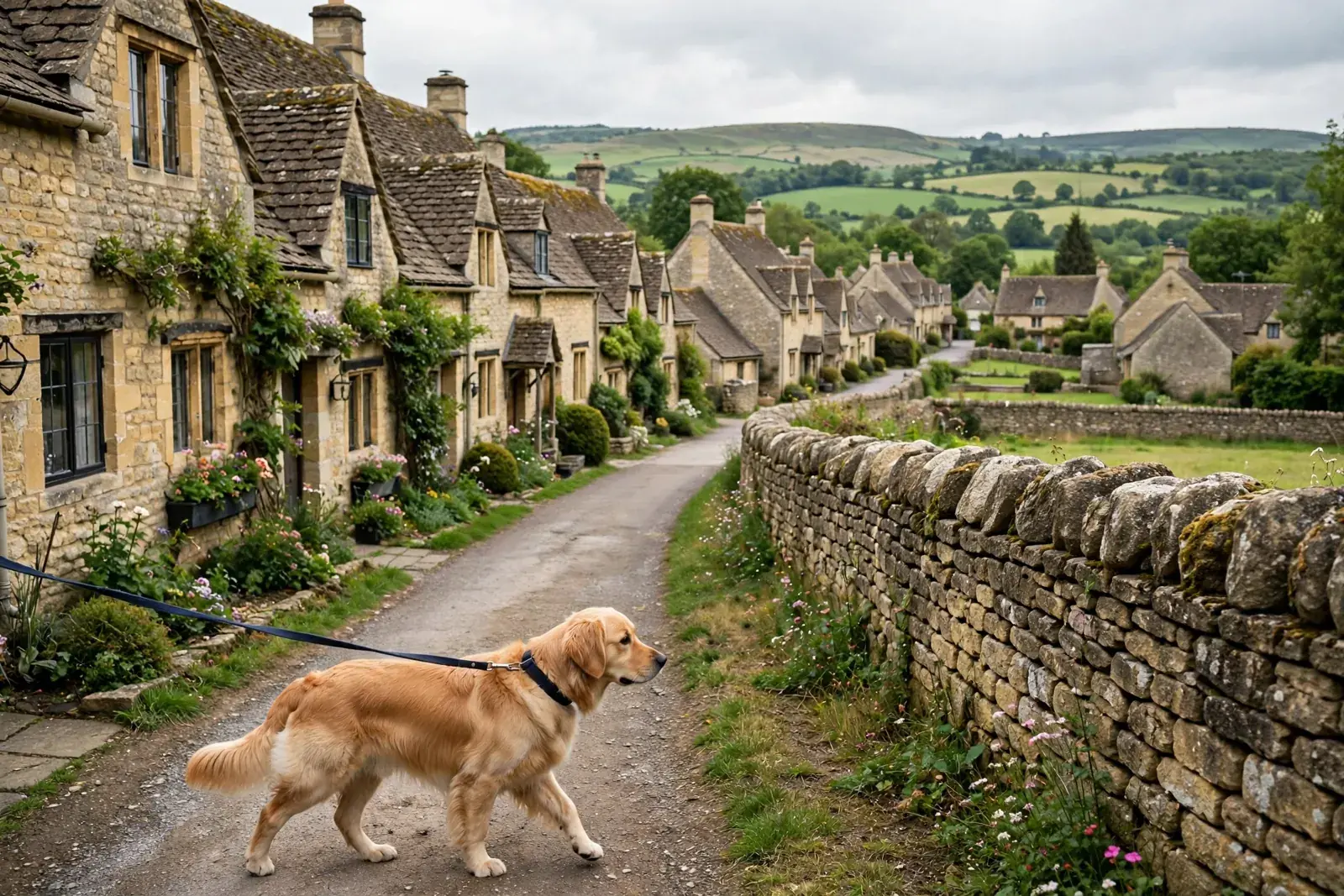
Side streets and back lanes around the centre offer a different kind of Tetbury walk, quieter and more residential, with stone walls, gardens and glimpses of the countryside beyond. These lanes are ideal for a toilet walk, a settling walk for a nervous dog, or a route back to the car park that avoids the busiest pavements. They also reveal the working side of the town, with workshops, yards and houses that remind visitors that Tetbury is a living community, not a museum set. Walk these lanes respectfully, keep the dog close to walls and gates, and do not let the dog investigate private gardens or open doorways.
Antique-shop etiquette with a dog
A dog in an antique shop is a guest in someone's stockroom, and the etiquette is mostly common sense applied carefully. Enter only if the dog is calm, keep the lead short and in one hand, and walk at the pace of the narrowest aisle, not at the pace of your enthusiasm. A wagging tail at the height of a low table is the classic accident, so position the dog on the side away from display tables when passing, and use your body as a gentle barrier between the dog and the most fragile stock. If the dog pulls toward an interesting smell, stop, settle, and only move on when the lead is slack again.
Wet or muddy dogs need special care in shops with rugs, upholstery and wooden floors. Dry paws before entering, carry a towel for a quick wipe, and skip shops with pale carpets if the dog is still muddy from a lane walk. The same applies after rain: a dog that has walked a wet pavement will bring water into a shop, so a short pause under a canopy to dry off is courteous and practical. Dealers remember considerate dog owners, and a reputation for care is what keeps towns like Tetbury welcoming to dogs in the long run.
Children, other dogs and shop dogs add another layer to antique-shop visits. A shop dog may greet your dog enthusiastically, but the greeting should be controlled and brief, and it should stop the moment either dog shows discomfort. If your dog is reactive, nervous or unwell, skip indoor shopping altogether and enjoy Tetbury from the pavements, cafes with outdoor seating and the arboretum instead. There is no obligation to take a dog into every shop, and a day that respects the dog's limits is a better day than one that forces the dog into situations it cannot handle.
Westonbirt Arboretum with a dog
Westonbirt Arboretum, a short drive from Tetbury, is where the Tetbury day becomes a proper walk. The arboretum holds a vast collection of trees from around the world, laid out in sweeping lawns, woodland paths and seasonal displays, and the scale of the place suits dogs that need space after the confines of shop interiors. Dogs on leads are welcome in much of the arboretum, though some areas and events may operate differently, so check the official guidance before you travel for current dog routes, admission and any seasonal restrictions. Treat the arboretum as the main walk of the day, not as a quick add-on after a morning of shopping.
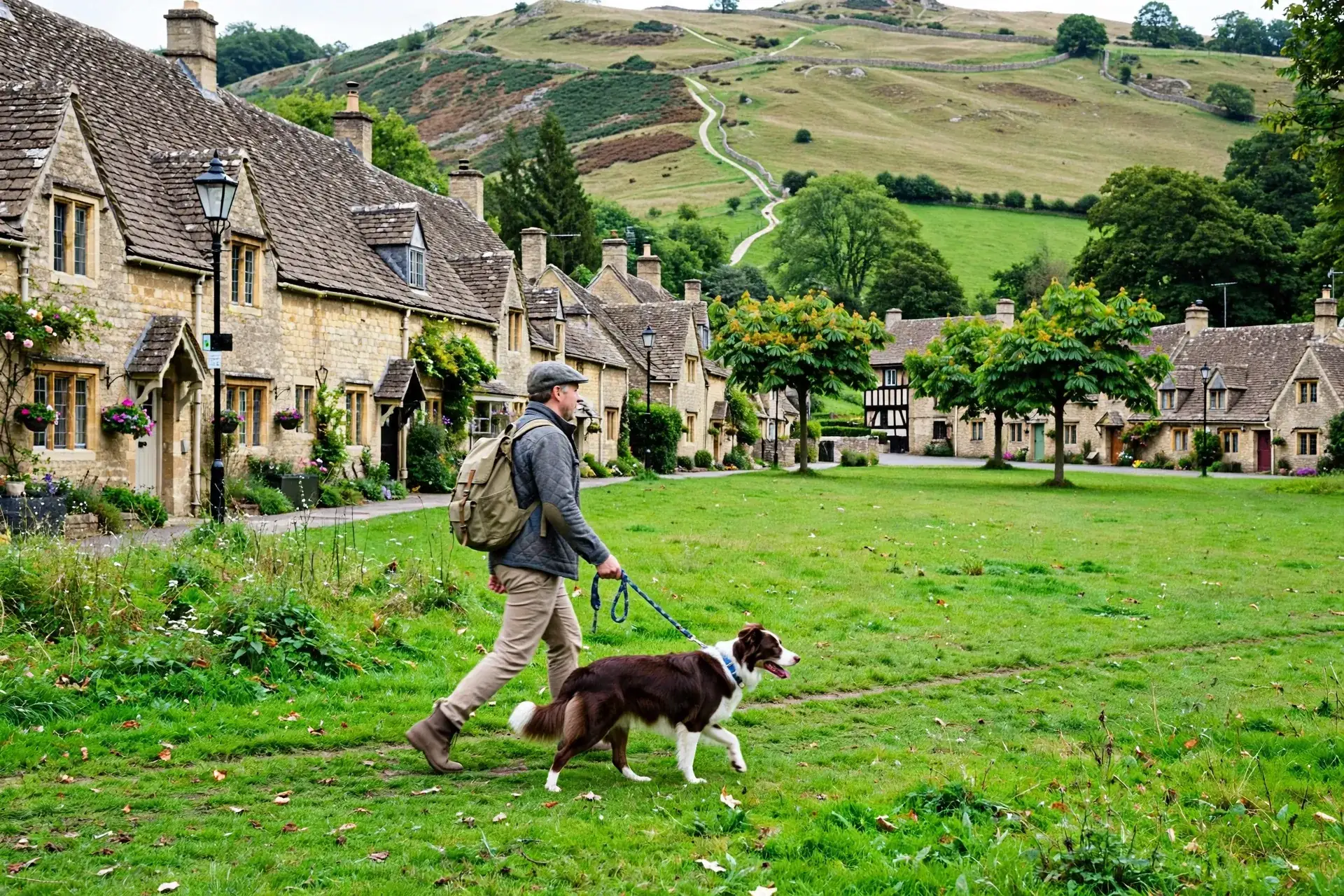
The paths at Westonbirt vary from broad, surfaced routes to narrower woodland trails, and the best plan is to choose a loop that matches the dog's stamina rather than trying to cover the whole site. The famous avenues and champion trees are worth seeking out, but so are the quieter corners where a dog can sniff at its own pace without meeting a stream of other visitors. In autumn, the colour is spectacular and the paths are busy, so arrive early, keep the lead short on the main avenues, and use side paths for breathing space. In spring and summer, shade and water matter more, and a portable bowl is essential on a long loop, because facilities are spread across a large site.
Facilities at Westonbirt are geared to a full day out, with cafes, toilets and picnic areas, but dog owners should still plan around the dog's needs rather than the site's timetable. Give the dog a toilet walk on arrival, carry bags even though bins are provided, and build in rest stops on benches or grassy areas where the dog can lie down. A dog that has walked the arboretum in the morning will often be happy with a quiet afternoon in Tetbury, while a dog that has shopped all morning and then faces a long arboretum loop may flag halfway round. Order the day to suit the dog: arboretum first for energetic dogs, town first for dogs that need a gentle start.
For a broader sense of how a Cotswold arboretum day compares with a village walk, our Cotswolds with a dog guide covers commons, livestock and parking in general, and it pairs well with a Westonbirt visit. The shared lesson is that large, managed landscapes are easiest when you pick a loop, carry water, and accept that seeing part of a place well beats rushing through all of it.
Chavenage lanes and the countryside edge
Chavenage House lies in the countryside near Tetbury, and even when the house itself is not open or does not suit your dog, the lanes around it offer a lovely quiet walk. The lanes are narrow, hedged and gently rolling, with fields, woodland edges and occasional views back toward the town. They suit dogs that prefer a calm country lane to a busy park, and they are a good choice for a late-afternoon walk when the town is busy or the arboretum has closed. Keep the dog on a lead where lanes are narrow and traffic, farm vehicles or horses may appear suddenly around a bend.
House opening days are limited, and the dog policy can differ between the house, gardens and grounds, so check the official guidance before you travel and do not build the whole day around a house visit that may not welcome your dog. If the house is open and dogs are welcome in the grounds, a short visit can be a delightful addition, with gardens and parkland to explore at a gentle pace. If not, the lanes still deliver the countryside feeling, and a walk that ends with a view of the house from a public path is a satisfying compromise that avoids disappointment at the gate.
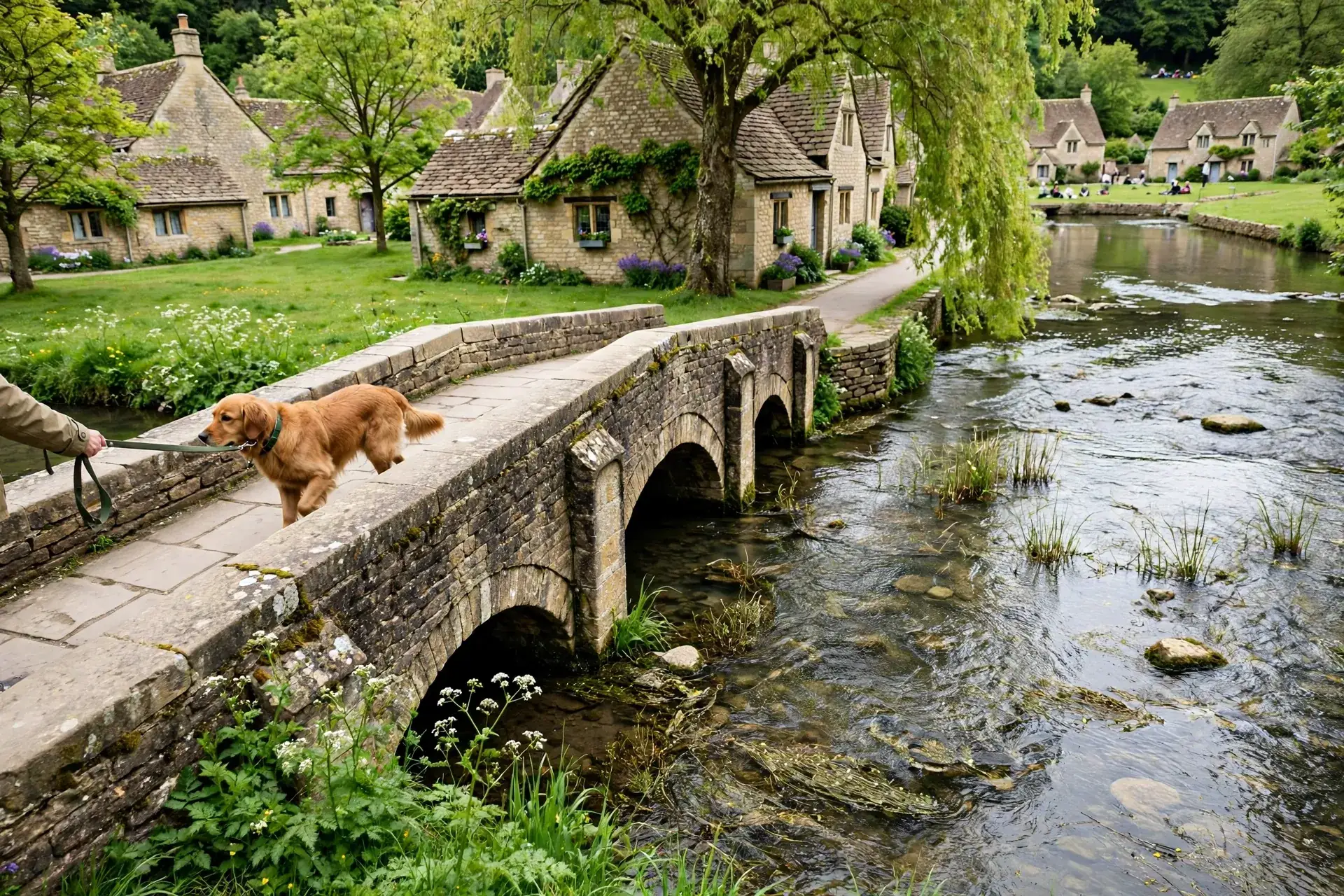
Country lanes around Tetbury change with the seasons in ways that matter for dogs. In spring, hedgerows are full of scent and nesting birds, so keep the dog close and on the path. In summer, lanes can be dusty and hot, with little shade, so walk early or late and carry water. In autumn, fallen leaves hide mud and puddles, and in winter, lanes can be icy in shaded hollows. A lane walk is also a good test of recall and lead manners, because the dog will meet horses, cyclists, farm traffic and other dogs, often in quick succession, and a calm, controlled response to each is worth more than a long distance covered.
Cafes, pubs and settling under a table
Tetbury's cafes and pubs are part of the browsing day, and a dog that can settle under a table will enjoy them as much as its owner. Look for venues with a garden, a terrace or a dog-friendly interior, and check the policy on arrival, because the same venue may welcome dogs in one area and not in another. A mat or blanket helps the dog understand where to lie, and a chew or a quiet toy can keep a settled dog occupied while you eat. Keep the lead looped where it cannot trip staff, and place the water bowl where it will not be kicked over by passing feet.
Timing matters for cafe visits with dogs. A quiet mid-morning coffee is easier than a packed lunchtime, and a late-afternoon tea after the main walk suits a tired dog that is ready to rest. If the dog is still full of energy after the arboretum, a short pavement walk before sitting down will help it settle, while a dog that is already tired may settle immediately. Watch for the signs of a dog that is not coping: whining, pacing, staring at other tables or pulling toward the door are all reasons to cut the visit short and take a walk instead of persisting in the hope that the dog will eventually calm down.
Food for the dog should be planned, not improvised. Bring the dog's own treats and, if you are staying for lunch, a small portion of its usual food, rather than feeding titbits from your plate. Pub and cafe food is often rich, salty or seasoned in ways that upset a dog's stomach, and a dog that is fed from the table in one venue will expect the same in the next. A settled dog that has its own mat, its own water and its own treats is a welcome guest in any Tetbury venue, and it will be welcomed back on the next visit.
Parking and the first calm ten minutes
Tetbury's car parks are within a short walk of the centre, and the simplest plan is to park once and walk everywhere in town, driving only for the arboretum. Arrive early on Saturdays, market days and event days, when the town is at its busiest and parking fills quickly. Note the parking terms and charges on arrival, keep the ticket or payment record with you, and choose a space that gives you a straightforward walk to the centre without crossing busy roads with an excited dog. Shade matters on warm days, so favour a shaded bay if one is available, and never leave a dog alone in a car in warm weather.
The first ten minutes after parking should be deliberately boring. Let the dog toilet, drink, sniff around the car park edges and decompress from the journey before you head for the High Street. Check the lead, bags, water, mat and any purchases bag, and agree a rough plan for the morning: which end of the street to start at, how many shops to visit before a walk break, and where to meet for lunch if you split up. A dog that starts the day calm will browse calmly, while a dog that starts the day in a rush will pull for the rest of the morning.
The return to the car deserves the same care as the arrival. Give the dog a final toilet walk and a drink, wipe muddy paws, and load any purchases so they cannot slide onto the dog during the drive home. A tired dog may fall asleep quickly in the car, so keep the journey calm, with ventilation and a comfortable space, and stop for a break on a long drive home rather than pushing through. The drive home is part of the day for the dog, not just a gap between the outing and home.
Seasons, markets and event days
Tetbury changes with the seasons, and the dog plan should change with it. Spring brings blossom, longer days and busy garden centres, but also lambing fields and nesting birds on country lanes, so leads stay on and paths stay followed. Summer brings the fullest High Street, the busiest arboretum and the warmest pavements, so early starts, shade and water are the priorities. Autumn brings arboretum colour at its peak, quieter town streets and cooler walking, but also wet leaves and muddy lanes, so footwear and towels matter. Winter brings frost, clear light and empty streets, but short days and cold pavements, so plan shorter walks and warmer layers for short-coated dogs.
Markets and events add colour and crowds in equal measure. A market day in Tetbury offers food, crafts and a lively atmosphere, but it also means busier pavements, more dogs, more children and more distractions for a dog that is already stimulated by shopping streets. If your dog copes well with crowds, a market day can be enjoyable, with a short lead, frequent pauses and an early exit if the dog tires. If your dog is nervous, reactive or young, choose a quiet weekday instead, and treat market days as something to watch from a quiet side street rather than something to plunge into.
Special events, such as the Woolsack Races traditionally associated with Tetbury, transform the town for a day, with races, crowds and a festive atmosphere that some dogs love and others find overwhelming. Check the official guidance before you travel for event dates and arrangements, and decide in advance whether your dog will enjoy the event or would prefer a quiet lane walk while the town celebrates. There is no prize for taking a stressed dog to a loud event, and a dog that stays calm at home or on a quiet walk will enjoy the next Tetbury visit far more than a dog that associates the town with noise and crowds.
Two routes: short town or full day
The short Tetbury route suits a morning visit, a young dog, an older dog or a day when the weather is uncertain. Park, walk the High Street slowly, pause at the Market House, loop through quiet side streets, and finish with a cafe stop. Allow two to three hours, including pauses, and do not feel that you have missed something by skipping the arboretum. A short route done well, with a settled dog and a relaxed lunch, is a complete Tetbury experience, and it leaves the arboretum as a reason to return rather than a box to tick.
The full-day route suits a fit dog and a clear day. Start at Westonbirt Arboretum in the morning, when the dog is fresh and the paths are quiet, then drive into Tetbury for lunch and an afternoon of browsing. Alternatively, browse in the morning and walk the arboretum in the afternoon, if your dog settles better after a gentle start. Either way, build in a car break between the two halves, with water, a toilet walk and a rest, so the dog does not go straight from a long walk to a busy shopping street without decompressing. End the day with a quiet lane walk near Chavenage if time and energy allow, or simply head home while the dog is still happy.
Choosing between the routes is a question of honesty about the dog in front of you, not about ambition. A collie that needs two hours of walking will be frustrated by a short town route alone, while a dachshund with short legs will be exhausted by a full arboretum loop after a morning of shopping. Match the route to the dog, check the weather, and be ready to switch routes mid-day if the dog's energy or the weather changes. For another Cotswold town that pairs a high street with a hill walk, see our Broadway with a dog guide, which uses a green and tower walk in a similar two-part pattern.
Practical questions
Before you go
Are dogs welcome inside Tetbury antique shops?
Many Tetbury antique dealers welcome well-behaved dogs, but policies vary shop by shop and can change with the stock on display. Look for a sign, ask at the door, and keep the dog on a short lead away from low tables and fragile items. If a shop prefers dogs to wait outside, take turns rather than tying the lead to a street fixture.
Are dogs allowed at Westonbirt Arboretum?
Dogs on leads are welcome in much of Westonbirt Arboretum, with some areas and events operating differently. Check the official guidance before you travel for current dog routes, seasonal restrictions and admission details, and carry water, because the arboretum covers a large area with long paths between facilities.
How far is Westonbirt Arboretum from Tetbury town centre?
Westonbirt Arboretum sits a short drive south-west of Tetbury, only a few miles from the town centre, so most visitors drive between the two rather than walking. Plan the town and the arboretum as two halves of one day, with a car move and a toilet break in between, rather than a single continuous walk.
Can I visit Chavenage House with a dog?
Chavenage House opens on selected days and its dog policy can differ between the house, gardens and grounds. Check the official guidance before you travel for opening days and current dog rules, and treat the lanes around Chavenage as the reliable dog walk even if the house visit itself does not suit your dog.
Where is the best place to park for a Tetbury dog walk?
Use one of the town car parks and walk into the centre, rather than circling narrow streets for a kerbside space. Arrive early on market and event days, note the parking terms on arrival, and give the dog a toilet walk and a drink before you start browsing, so the first shop visit begins calmly.