This guide is independent and contains no paid placement. Beach rules, ferry times and garden dog policies can change, so check the official guidance before you travel.
Do Cornwall in this order: Day 1 south-coast harbours, Day 2 north-coast beaches and cliffs, Day 3 inland gardens and creeks. Check the tide times the night before, put the beach walk in the low-tide window, and keep one wet-day swap ready for each day.
The timing problem: Cornwall rewards order, not just places
Most Cornwall itineraries fail for the same quiet reason. They list wonderful places in the wrong order, on the wrong tide, on the wrong coast for that day's wind. A family arrives at a celebrated beach at high tide and finds a thin strip of shingle, a dog with nowhere to run, and a car park already full. The same beach three hours later, on a falling tide, would have offered a wide sweep of sand, room to play, and space to breathe. Nothing about the place changed. Only the timing did.
Cornwall is a peninsula with two very different coasts, and that geography is the whole puzzle. The south coast, facing the English Channel, is generally more sheltered, with wooded creeks, estuary towns and harbours tucked behind headlands. The north coast, facing the Atlantic, is wilder and more exposed, with long surf beaches, towering cliffs and wind that can turn a pleasant cliff walk into a wrestling match with a lead. Driving between the two coasts is not a quick hop. The roads narrow, the lanes twist, and a journey that looks short on a map can take far longer once tractors, holiday traffic and a dog that needs a toilet stop are added to the calculation.
The result is that a dog trip to Cornwall is really three separate decisions made at once. The first is which coast suits today's weather and wind direction. The second is when the tide opens up the beach you want, and when it closes it again. The third is how much driving, walking and waiting your particular dog can enjoy before the day stops being fun. Get any one of those wrong and the day feels rushed, even if every place on the list was excellent in isolation.
This itinerary therefore treats sequence as the main attraction. It groups each day tightly by geography, so you are not criss-crossing the county. It puts the sheltered south coast first, when you are still finding your feet, the exposed north coast second, when you are settled and can judge the weather properly, and the gentle inland gardens and creeks last, when energy is lower and the drive home is waiting. It also builds every beach walk around a tide window, not around a clock time copied from another trip, because tide times shift by roughly an hour each day and a plan that ignores that shift will be wrong by the second morning.
The plan also assumes a realistic dog, not an ideal one. Dogs need shade, water, toilet breaks and rest, especially after a long car journey and a day of new smells. Older dogs need shorter, flatter routes and more frequent stops. Young, energetic dogs need a proper run, not just a pavement walk between cafes. Nervous dogs need quieter beaches, wider paths and an escape route that does not involve a crowded ferry queue. Where this guide offers a choice, it says who that choice suits, so you can bend the plan without breaking its logic.
Finally, this is a three-day slice of Cornwall, not a survey of the whole county. It deliberately leaves out large areas that deserve their own trips, including the far west around Land's End and the Lizard, much of the north coast beyond the chosen stretch, and the whole of the Cornish interior beyond the gardens and creeks of the final day. That restraint is intentional. A short break that gives a dog time to sniff, swim, rest and settle is worth far more than a frantic tour that ticks off ten places and enjoys none of them.
How the tide logic works: check, sequence, swap
Use the same three-step routine each evening, and the whole trip becomes easier. First, check the tide times for tomorrow's coast, not for Cornwall in general, because high and low water arrive at different times around the peninsula. Note the low-tide time, then work backwards: allow time to park, walk to the beach, and let the dog settle before the best sand appears. A beach is usually at its widest for a couple of hours either side of low water, and that is your main window for a proper run.
Second, sequence the day around that window. Put the beach walk inside it, and put harbour wandering, lunch, a garden or a creek walk outside it. If low tide falls early, go to the beach first and save the town for later. If low tide falls in the afternoon, start with the harbour, have a slow lunch, and arrive at the beach as the tide drops. The common mistake is to fix lunch at noon and the beach at two o'clock regardless of the tide, then wonder why the sand has disappeared.
Third, keep a swap ready before you leave the accommodation. A swap is not a vague idea about doing something else if it rains. It is a named alternative for that specific day, with parking and a dog policy you have already checked. This guide gives one for each day, and the wet-day section at the end collects them together so you can decide in the morning without a phone search in a car park.
Seasonal beach rules sit on top of the tide logic. Many Cornish beaches restrict dogs during the summer season, often from around Easter to the end of September, while others welcome dogs all year round. The rules vary beach by beach, and the details can change, so check the official guidance before you travel and read the signs at each beach entrance on the day. Do not assume that a beach which welcomed dogs in October will do the same in July, and do not assume that a ban on one beach applies to the next cove along the coast.
Wind matters almost as much as tide on the north coast. A westerly wind that is merely fresh on the south coast can be strong and sand-blasting on an exposed Atlantic beach, which is miserable for small dogs and for dogs with sensitive eyes. Check the wind direction as well as the rain forecast. If the north coast is forecast to be windy and the south coast calm, consider swapping Day 1 and Day 2, keeping the inland day last. The order of the coasts matters less than matching each coast to the right conditions.
Driving deserves the same discipline. Choose a base that keeps Day 1 and Day 3 short, ideally somewhere on or near the south coast with easy access inland. Truro, Falmouth and the Fal estuary area all work well for this plan, because they sit between the south-coast harbours and the inland gardens, with a manageable drive to the north coast on Day 2. If you base yourself far to the west or far to the east, every day starts with a long drive and the geography of the plan stops working. A central base also makes it easier to return to the accommodation for a midday rest, which many dogs need far more than a second beach.
Before you travel, confirm three practical details for each day: where you will park and whether that car park has height or size limits, whether dogs are allowed on the specific beach or path at that time of year, and where the nearest fresh water and shade will be. Those three checks prevent most of the small crises that spoil dog trips, from a hot car park with no shade to a long walk with no water for the dog. Pack the car the night before so that a low tide in the morning does not turn into a frantic search for leads, towels and a water bowl.
Day 1: South coast harbours, in harbour order
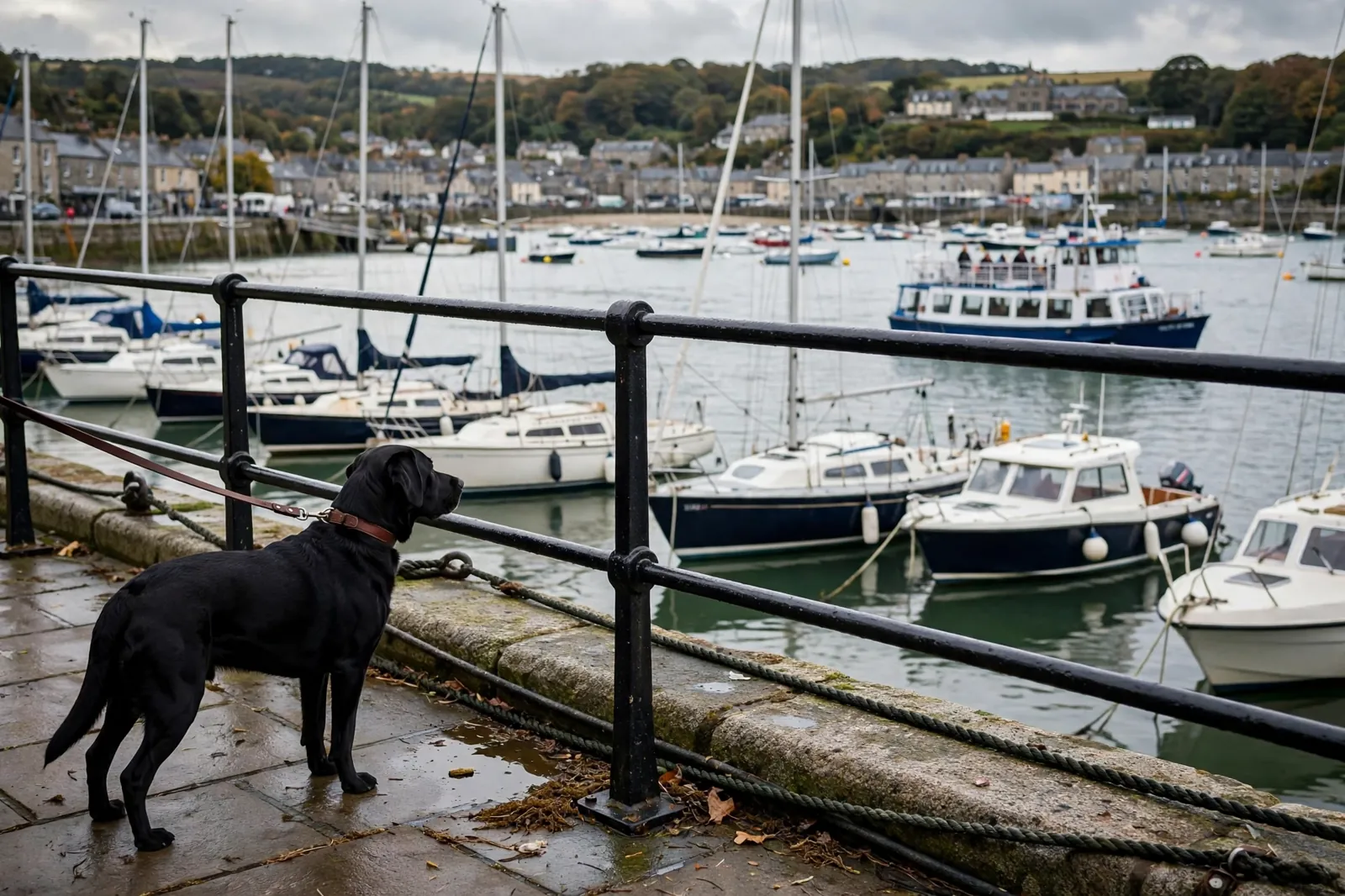
Day 1 stays on the sheltered south coast on purpose. After a journey into Cornwall, your dog needs a day that is interesting without being exhausting: short walks, plenty of sniffing, water to watch, and a bed to return to at a sensible hour. Harbours suit that brief perfectly. They offer flat, lead-friendly wandering, boats and smells to investigate, cafes with outdoor seating, and a clear route back to the car. They also work in most weather, which matters when arrival day and Cornish rain so often coincide.
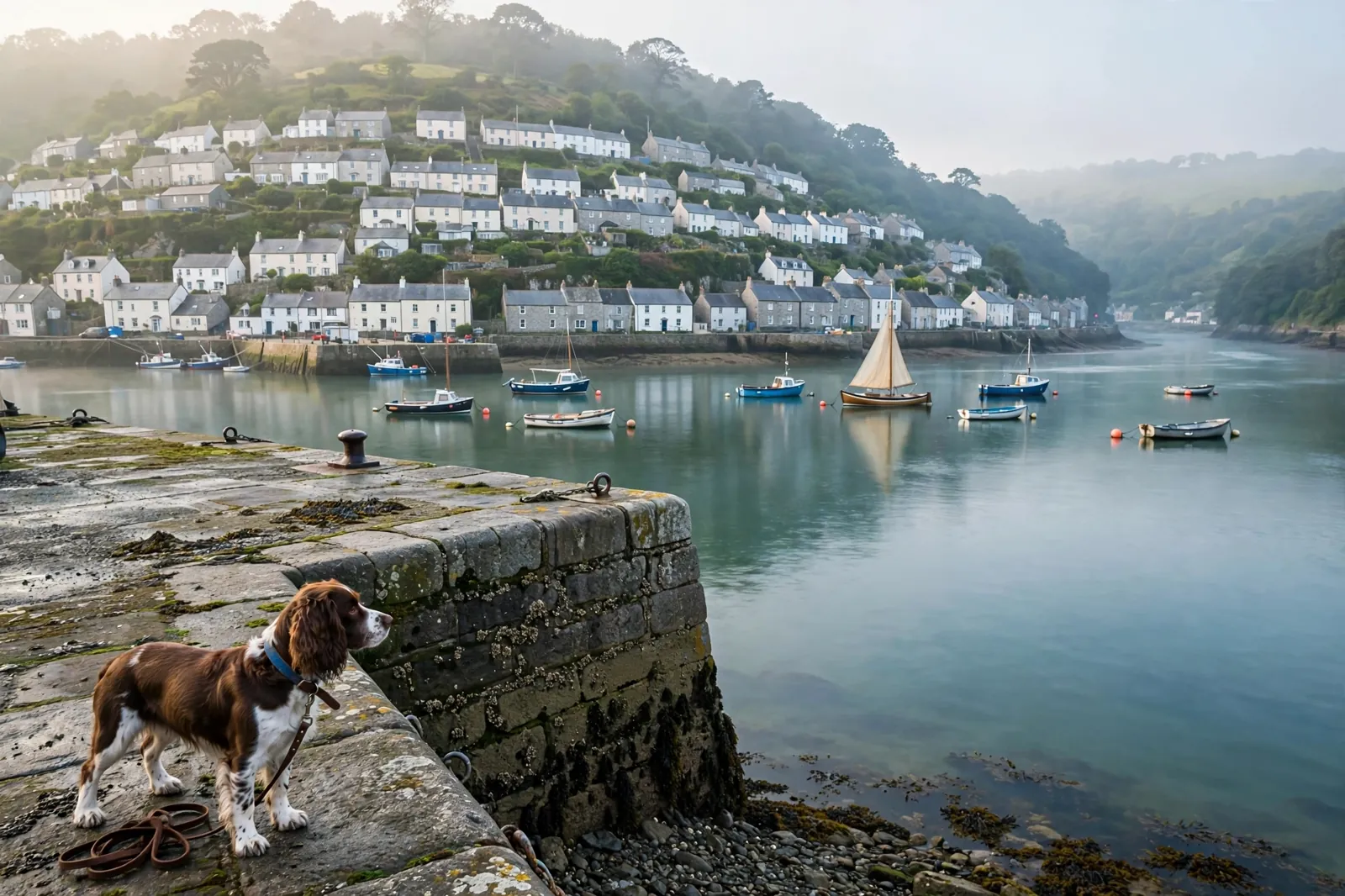
Start late enough to be human. Aim to arrive at your first harbour by about 10am, after breakfast and a proper toilet walk near your accommodation. A rushed 8am start after a long drive the day before helps nobody, and the harbours are quieter once the early dog walkers have finished. Begin in Falmouth, the largest and most forgiving harbour town on this route. The harbour front, the Prince of Wales Pier area and the walk towards the maritime quarter give a dog a long, level sniff along the water without committing to a cliff path or a steep hill. If your dog enjoys ferries, the short crossing to St Mawes is a classic south-coast experience, but only take it if your dog is comfortable on boats, the weather is calm, and you have checked the current dog policy for the ferry, because policies can change, so check the official guidance before you travel. For a deeper Falmouth plan, see our Falmouth with a dog guide, which covers harbour walks, the St Mawes ferry, seasonal beach rules and places to eat with a dog.
From Falmouth, drive east along the coast rather than inland, keeping the day's geography tight. The next natural stop is the Helford River area or, if time and energy allow, the stretch towards Fowey. Do not try to visit every harbour in one day. Choose two harbours and enjoy them properly, rather than collecting four in a blur of car parks. Fowey is an excellent second harbour because it is compact, beautiful and clearly different from Falmouth: a steep, narrow town above a working river estuary, with a quay to wander, small boats to watch, and the Bodinnick ferry crossing the water. Our Fowey with a dog guide explains the quay walk, the Hall Walk option for fitter dogs, Readymoney Cove and the lead rules that matter in a busy little town.
Time the day like this. Morning: harbour walk and coffee in Falmouth, with the dog on a lead and plenty of stops. Late morning: a short drive and a second harbour walk, ideally timed so the dog gets a proper stretch rather than a pavement shuffle. Lunchtime: a dog-friendly pub or cafe with outdoor seating, where the dog can lie down rather than wait in a car. Early afternoon: a gentle beach or cove near the harbour, chosen for that day's tide, rather than a long coastal hike. Late afternoon: back to base in daylight, a familiar toilet walk, dinner, and an early night. That rhythm gives a new place time to become familiar, which is exactly what a dog needs on arrival day.
For fitter dogs, the Hall Walk from Fowey is the obvious extension, but treat it as an optional extra, not a requirement. It is a longer, hillier route with ferry crossings, and it suits a dog that has already settled into the trip, not a tired dog on its first afternoon. A better first-day test is simpler: does your dog settle in a cafe, walk calmly past other dogs on a narrow quay, and recover quickly after a short drive? If the answer is yes, the rest of the trip will be much easier. If the answer is no, you have learned something valuable while still close to base, and you can choose quieter routes for the next two days.
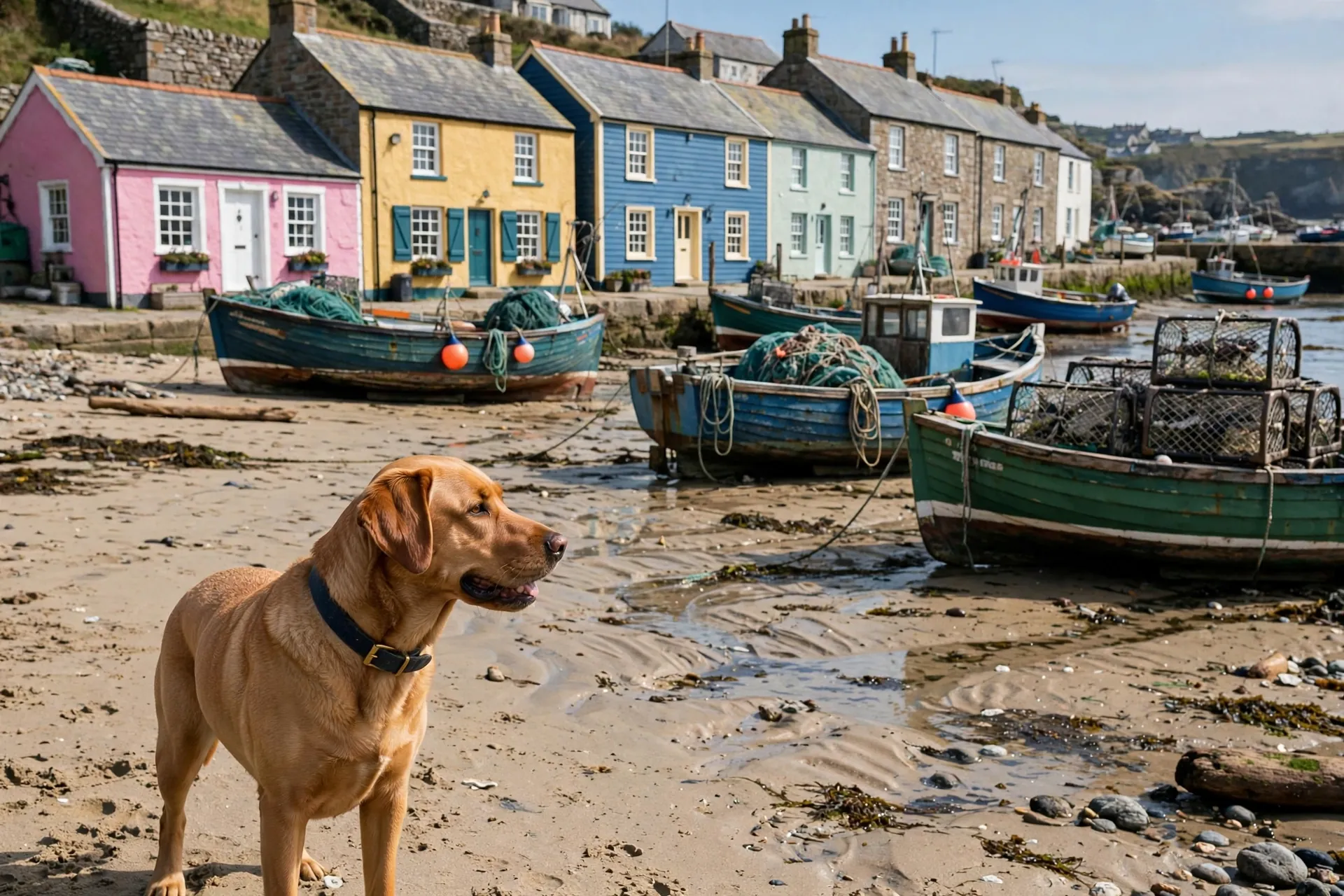
Beach time on Day 1 should be short and chosen for the tide. Look for a small cove or a beach near your second harbour where dogs are welcome at that time of year, and go as the tide falls rather than at high water. Keep the dog on a lead near the harbour walls and boat slipways, where ropes, fish boxes and traffic create hazards that a beach does not. Carry fresh water even on a cool day, because salt water drinking is a common cause of upset stomachs, and rinse sandy paws before the drive home to protect both the dog and the car.
Day 1 wet-day swap: if rain arrives, stay with the harbours but change the balance. Spend longer under cover in Falmouth, use covered markets and dog-friendly indoor spaces where they are available, and shorten the outdoor walk to a harbour loop rather than a beach. Harbours are far more forgiving in rain than cliffs, because there is always a cafe, a shop doorway or a car nearby. Do not turn a wet arrival day into a forced march in the hope that the weather will improve. It usually does not, and a soggy, tired dog will be harder to settle for the rest of the trip.
Day 2: North coast beaches and cliffs, timed to low tide
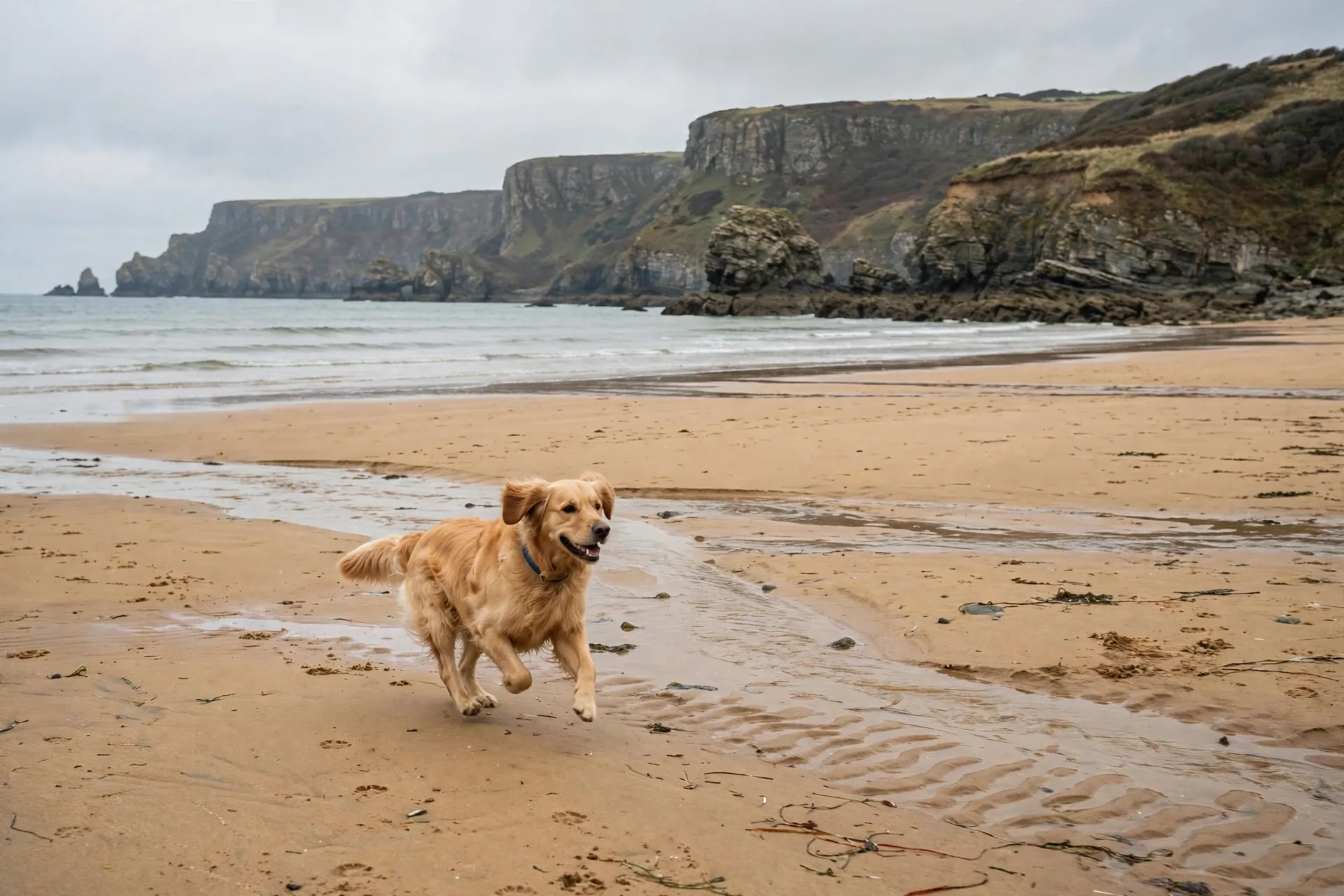
Day 2 is the big day, and it earns that title by being the only day that crosses to the north coast. This is the day for wide sand, a proper run, sea air and, if your dog is fit and the conditions are right, a stretch of the South West Coast Path along the cliffs. It is also the day where tide timing matters most, because north-coast beaches change dramatically between high and low water. A beach that is a vast playground at low tide can be reduced to rocks and a narrow strip at high tide, and some coves are cut off entirely as the tide rises.
Start earlier than Day 1, and let the tide set the start time. If low tide falls in the morning, leave early enough to arrive as the sand opens up, even if that means a 9am departure and breakfast on the move. If low tide falls in the afternoon, use the morning for the drive, a slow coffee in a north-coast town, and a short cliff-top viewpoint, then go to the beach as the tide drops. Either way, the beach walk itself should sit inside the low-tide window, with at least an hour of wide sand, not a rushed fifteen minutes before the water returns.
Choose one main beach and one cliff walk, not three beaches and two cliff walks. The north coast rewards depth: a dog that can run, dig, paddle and sniff on one great beach will be happier than a dog that is repeatedly loaded into a car for another car park. Popular choices on this stretch include the wide sands around the Newquay area and the quieter coves further along the coast, but the right choice depends on the season, the dog rules for that beach, and the wind. Check the official guidance before you travel for the specific beach you plan to use, because seasonal restrictions are common and the signs at the entrance are the final word on the day. For the rules that sit behind those signs, our guide to dog-friendly beach rules in the UK explains seasonal bans, lead requirements and how to read beach signage.
Sequence the day in three blocks. First block: arrival and beach, with the dog off the lead only where it is allowed and safe, and with a long line as a sensible compromise for dogs whose recall is uncertain near cliffs, other dogs or the water. Second block: lunch and rest, ideally somewhere the dog can lie in shade with water, after a rinse if the beach has a tap or a dog wash. Dogs that go straight from a beach run to a long cliff walk without rest often fade halfway, which is a poor place to discover tiredness. Third block: a cliff-top walk, shorter than you think, on a clear path with the dog on a lead near edges. Cliff paths in Cornwall are spectacular and genuinely dangerous for dogs that chase birds, rabbits or other dogs, so keep the lead on near drops, even for a normally reliable dog.
Safety on Day 2 deserves a paragraph of its own. Never let a dog swim in rough surf, strong currents or near rocks, and never assume that a dog that swims well in a lake will cope with Atlantic waves. Watch for the dog drinking too much sea water, for cut paws on sharp rocks and barnacles, and for heat on a sunny day, when sand can burn paws and a dark-coated dog can overheat quickly. Carry more water than you think you need, plus a towel, a spare lead and a basic first-aid kit. If your dog is older, arthritic or recovering from an injury, swap the cliff walk for a second, flatter beach walk or a dune walk, and keep the total walking time to what that dog enjoys on a normal day at home, not what the guidebook suggests.
Parking and crowds need a plan on Day 2 more than on any other day. Popular north-coast car parks fill early in summer and on sunny weekends, and a full car park can undo a perfectly timed tide window. Arrive early or choose a quieter beach, and have a second beach in mind before you set off. If your first choice is full, go to the backup rather than circling, because circling wastes the tide window and frays everyone's temper. Leave the beach in good time too: aim to be off the sand before the tide turns the beach narrow, and before the dog is too tired to walk back to the car without a carry.
Day 2 wet-day swap: if the north coast is wet and windy, do not force the cliff walk. Move the day to the south coast or inland, and save the north coast for a calmer day if your trip allows, or accept a shorter, sheltered beach walk followed by a long, dog-friendly lunch and an afternoon garden or creek walk. Wind is the deciding factor here, not just rain. A dog can enjoy a beach in drizzle, but few dogs enjoy being sand-blasted on an exposed cliff in a gale. The plan survives a swap; a dog that has had a miserable day on a cliff does not recover as quickly.
Day 3: Inland gardens, creeks and the journey home
Day 3 is deliberately the gentlest day, and that gentleness is a feature, not a failure of ambition. By the third morning, most dogs have had two full days of new places, and many owners are already thinking about the drive home. A day of inland gardens, wooded creeks and slow water gives the dog a different kind of enrichment: shade, birdsong, leaves to sniff, and paths that are kinder on paws than sand and rock. It also keeps you close to your base and to the main road home, so the final departure is calm rather than frantic.
Start with a garden, not a beach. Cornwall has several large gardens that welcome dogs, often on leads, with waymarked walks, lakes, woodland and cafes. Gardens suit a third day because they are contained, predictable and easy to leave when the dog has had enough. Check the specific garden's dog policy before you go, including whether dogs are allowed in the cafe, the shop and all parts of the garden, because policies differ and some areas may be restricted. Arrive at opening time if you can: gardens are quieter, cooler and easier for a nervous dog in the first hour, and you will have the paths largely to yourselves.
Sequence the garden walk slowly. Let the dog sniff the first section properly rather than marching to the far end. Woodland and lakeside paths offer shade and water, which matter on a warm day, and they give older dogs a flat, forgiving surface. Bring a long line if the garden allows it, because it gives a sniffy dog freedom without the risk of a dash into a flower bed or a lake. Keep to the marked dog routes, clean up promptly, and remember that gardens are working places with staff, other visitors and sometimes livestock nearby, so a calm, lead-aware dog is a welcome guest and a loose, chasing dog is not.
After lunch, move to a creek or a riverside walk for the afternoon. The Fal estuary, the Helford River and the smaller creeks of south Cornwall all offer the same essential pleasure: flat water, muddy banks, boats at anchor, and a path that follows the water without demanding a climb. Creeks are also a good place for a dog that loves to paddle in calm, shallow water, provided the water is clean, the current is gentle, and the dog is supervised. Avoid fast-flowing water, weirs and areas with obvious pollution or algae, and if in doubt about water quality, check the official guidance before you travel and keep the dog out of the water.
Use the afternoon to prepare for the journey home while the dog is still enjoying the walk. That sounds dull, but it is what makes the evening work. Pack the car gradually, lay out the dog's bed, water bowl and lead for the journey, and plan a toilet and leg-stretch stop about halfway home, ideally somewhere with grass, shade and a short walk rather than a motorway service area with only concrete. Dogs travel better after a proper walk and a toilet break, and a calm departure is far easier than a rushed one where the dog is loaded into a hot car while bags are still being fetched.
Leave in the late afternoon if you can, rather than at the last possible moment. A late-afternoon departure gives you daylight for the first part of the drive, a chance to stop without pressure, and a dog that is tired in a good way rather than overtired and restless. If you must leave in the morning, swap the order: do a short creek walk first, then depart, and save the garden for a future trip. The principle remains the same: the final day should end with a dog that is content and a car that is already packed, not with a sprint to the motorway.
Day 3 wet-day swap: gardens and creeks actually handle rain better than beaches and cliffs, because trees provide shelter and hard paths stay usable. If rain is heavy, choose a garden with a covered cafe and hard-surfaced paths, shorten the walk, and spend longer indoors with the dog settled beside you. If the rain is persistent and the dog is already tired from two big days, a shorter local walk near your accommodation followed by an early, relaxed departure is a perfectly good final day. Three days do not need a grand finale. They need a dog that arrives home happy.
Wet-day swaps, day by day, at a glance
It helps to write the swaps down before you travel, because decisions made in a rainy car park are rarely good ones. For Day 1, the swap is to stay on the south coast but shorten the outdoor walking and lengthen the harbour and cafe time. Falmouth and Fowey both work in rain, because you can move between shelter, shops and cafes without a long exposed walk. Keep the dog dry with a drying coat, towel the dog down before getting back in the car, and accept that a wet harbour day can still be a very good dog day.
For Day 2, the swap is to abandon the exposed cliff walk first, then the beach if the wind is strong. A sheltered south-coast beach, a creek walk or a garden makes a better wet Day 2 than a forced north-coast march. If you have flexibility, move the north-coast day to a calmer day and bring the inland day forward. If you do not have flexibility, choose the quieter beach, keep the walk short, and give the dog a longer rest and a better lunch. The dog will not remember that you missed a cliff; it will remember whether the day felt safe and fun.
For Day 3, the swap is the easiest, because gardens and creeks are already the wet-weather option. Choose hard paths, covered cafes and shorter loops, and be ready to leave earlier if the dog is tired. In all three cases, the same kit makes the swap work: a drying coat or two towels, a waterproof dog bed or blanket for the car, fresh water, a spare lead, and a change of clothes for the humans. Wet-weather failure is usually a kit failure, not a weather failure.
There is one more swap worth planning, and it is the swap for the dog, not the weather. If your dog is lame, unwell, anxious or simply exhausted, cancel the day's main walk and replace it with a short, familiar walk near the accommodation, plenty of rest, and a vet check if anything worries you. Dogs hide pain well, and a limp, a refusal to walk, vomiting, diarrhoea or unusual lethargy should be taken seriously. Know the location of the nearest vet before you need it, and do not push on in the hope that a dog will walk off a problem. A lost day is cheap; an injured dog is not.
Packing, safety and driving: the details that hold the plan together
Pack for tides, not just for weather. That means a towel and a drying coat even on a sunny forecast, because a dog that paddles at low tide will be wet regardless of the sky. It means a long line for beaches and gardens where recall is uncertain, a short lead for harbours and towns, fresh water and a bowl for every walk, and poo bags in every pocket, not just in one bag that stays in the car. It also means sun protection in the form of shade and water rather than products, because dogs overheat through exertion and heat, not just through sunshine.
Driving in Cornwall needs patience and a dog that is safe in the car. Use a proper restraint, whether a harness, a crate or a guard, and never let a dog travel loose in the boot with luggage piled around it. Plan stops every two hours at most, and more often for puppies, older dogs and dogs that get car sick. Narrow Cornish lanes reward slow driving, early indicating and a willingness to reverse into a passing place. If you meet a tractor, a horse or a herd, stop, wait and let the other road user pass. The dog will cope with a delay far better than with a near miss.
Accommodation choice shapes the whole itinerary. A base with an enclosed garden, a nearby toilet walk and a drying area will make every evening easier than a prettier base without those things. If you are still choosing where to stay, our guide to dog-friendly holiday parks in Cornwall explains the questions to ask about boundaries, fees and nearby walks, and our Cornwall dog holiday cost guide helps you budget for a week, including pet fees, parking and food, so a three-day trip can be costed from the same ranges. Book early for school holidays and summer weekends, when dog-friendly places fill first.
Finally, keep a simple daily routine even on holiday. Feed at roughly the usual times, walk before breakfast and after dinner, and give the dog a quiet hour in the accommodation each day. Routine is reassuring for dogs in a new place, and it prevents the common holiday pattern of a huge morning walk, a long car journey, a huge afternoon walk and a dog that is too tired to sleep. The best Cornwall dog trips feel unhurried, even when they cover a lot of ground, because the order was decided the night before and the dog was never asked to do two big things at once.
If you take one idea from this guide, let it be this: check the tide, choose the coast that suits the wind, and let the day follow that decision. Harbours first, beaches at low tide, gardens last, with a swap ready for every day. Do that, and three days in Cornwall will feel spacious, even with a dog, even in changeable weather, and even on roads that were never designed for hurrying.
Practical questions
Before you go
Should I plan a Cornwall dog trip around the tides or around the places I want to see?
Plan around the tides first, then fit places into the windows the tides create. A beach that is superb at low tide can be a narrow strip of shingle at high tide, and a harbour walk that is easy in the morning can be crowded or cut off later. Check tide times for each coast before you fix your driving order, and keep one swap ready for every day.
Which coast should I visit on which day?
This itinerary puts the sheltered south coast first, the exposed north coast second and inland gardens and creeks third. That order groups places by geography, keeps the longest cliff walking for the middle day when you are settled, and leaves a gentler final day for the journey home. If the forecast flips, move the north-coast day rather than forcing it in bad weather.
Do Cornwall beach dog rules change by season?
Yes, many beaches restrict dogs during the summer season, often from around Easter to the end of September, while other beaches welcome dogs all year. Rules vary beach by beach and can change, so check the official guidance before you travel and check the signs at each beach entrance on the day.
What should I do if the weather turns on a beach day?
Swap to the wet-day alternative for that day rather than abandoning the whole plan. South-coast harbours, covered markets, dog-friendly cafes and gardens with hard paths usually hold up better than exposed cliffs. Keep the dog dry, shorten the walk, and save the exposed route for a calmer day if you can.
How much driving does this three-day plan involve?
Each day is built around one area, so most driving is a single move in the morning and a short hop between nearby stops, not a tour of the whole county. A central base on or near the south coast keeps Day 1 and Day 3 short, while Day 2 is the longest drive. Check parking in advance, because popular beach car parks fill early in summer.
Is three days enough for Cornwall with a dog?
Three days is enough for a well-chosen slice of Cornwall, not for the whole county. This plan deliberately skips large areas so that each day has time for sniffing, resting and a proper lunch stop. If you want both coasts in full, add days rather than compressing this plan into faster driving.