This guide is independent and contains no paid placement. If affiliate links are added later, they will be clearly marked and will not change our editorial checks.
A Vizsla holiday is built around closeness and movement. Take the dog everywhere you can, run or walk it hard enough to satisfy a genuine athlete, protect a thin coat from British cold and rain, and never leave it alone for long. Do that, and the breed's devotion, stamina and enthusiasm will carry the whole trip.
The Velcro dog: closeness as a feature
Vizslas are often called Velcro dogs, and the nickname is accurate in a way that shapes every travel decision. This is a breed that wants to be in the same room as its person, preferably touching them, and that follows its owner from room to room at home. On holiday, that closeness is mostly a gift: a Vizsla will settle happily in a pub, a cafe or a hotel room as long as its person is there, and it will stay close on a walk without the constant checking that some independent breeds require. The dog's desire to be near you makes training, recall and everyday management easier, because the dog is already motivated to stay connected. Owners who travel with a Vizsla often find that the dog is the least of their worries in public places, precisely because it is so focused on its own people.
The same trait becomes a problem the moment the dog is left alone. A Vizsla that is separated from its owner in an unfamiliar cottage can become distressed quickly, barking, pacing, scratching at doors and, in some cases, injuring itself trying to follow. This is not a training failure in the simple sense, and it is not solved by scolding. It is solved by planning: choose accommodation and activities where the dog can come along, build up alone time gradually at home long before the trip, and keep any necessary absences short and well-prepared, with a tired dog, a familiar bed and a food toy. If your holiday plans involve long days away from the dog, a Vizsla is the wrong breed for that trip, and it is kinder to recognise that before booking than to discover it on the first evening. The breed's closeness is not a flaw to be trained out. It is the central fact of travelling with a Vizsla, and the trip should be designed around it.
An athlete's body, honestly assessed
A Vizsla is a lean, muscular, medium-sized dog built for sustained running over open ground, and that build dictates both what the dog can do and what it cannot. The dog can cover long distances at a steady pace, recover quickly, and repeat the effort day after day, which makes it an outstanding partner for runners, cyclists and long-distance walkers. The same leanness means there is very little body fat to insulate against cold, and very little margin for weight loss: a Vizsla that looks thin may simply be a fit Vizsla, but a Vizsla that loses condition on a hard holiday week needs its food increased promptly. Learn what your dog looks like at a healthy weight before the trip, with ribs that can be felt but not seen prominently, and check condition every couple of days on a long, active break.
The athletic build also brings specific vulnerabilities that are worth knowing before you travel. Vizslas can be prone to skin irritation and allergies, which may flare up with new environments, new bedding or new foods, so keep the dog's usual bedding and food, and watch for scratching, redness or ear irritation in the first days of a trip. Their ears, though not as heavy as a spaniel's, still need checking after wet walks and swimming, and their lean legs and feet take a pounding on hard or rocky ground, so check paws after long runs and consider the surface as carefully as the distance. Young Vizslas grow quickly and should not be subjected to long, repetitive running on hard ground while their joints are still developing; build distance gradually and favour soft, varied terrain for dogs under eighteen months. An honest assessment of the athlete in front of you, rather than the breed's reputation, is what keeps a Vizsla holiday healthy.
Running together without breaking the dog
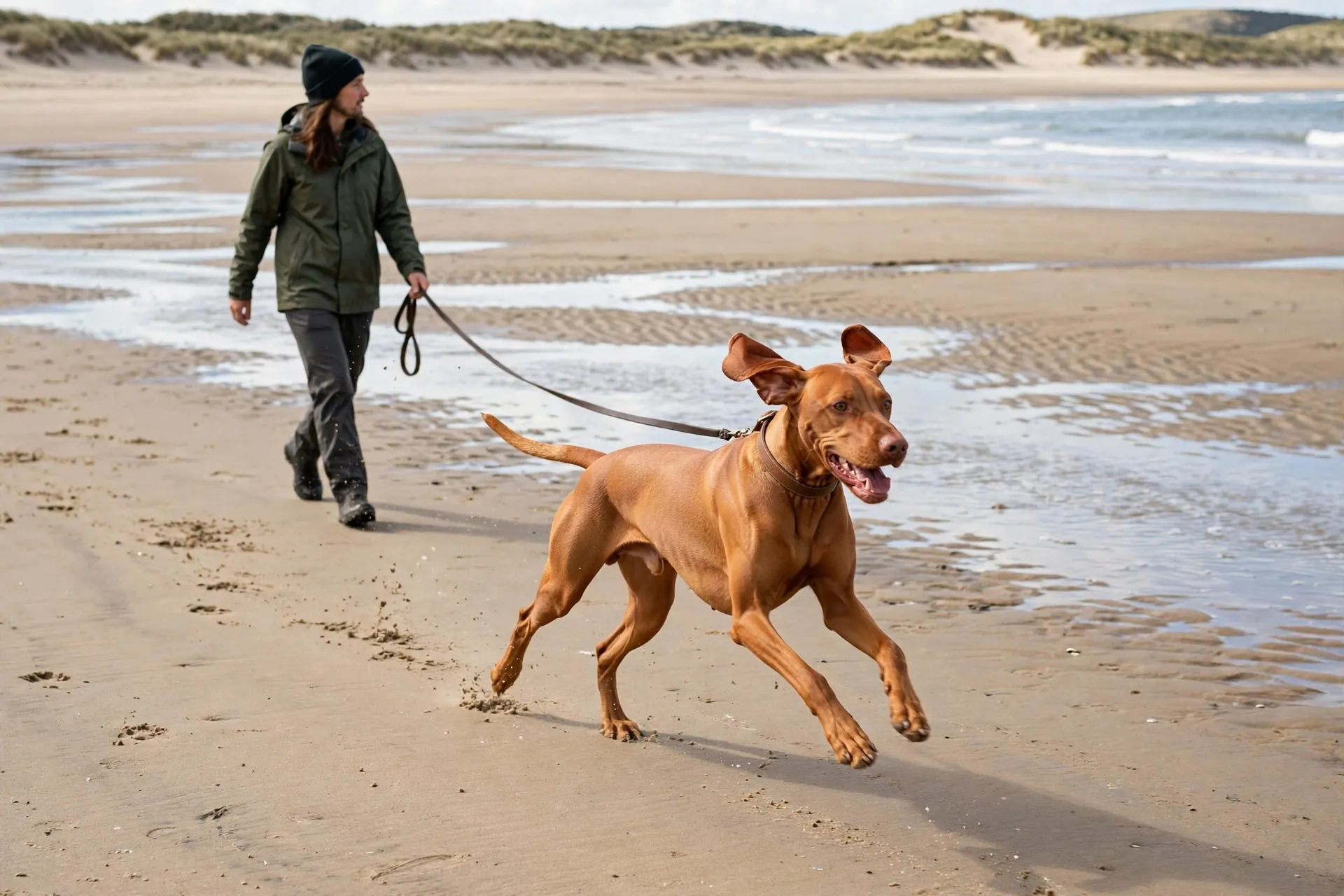
Running with a Vizsla is one of the great pleasures of owning the breed, and Britain offers superb running ground, from forest trails and canal towpaths to beaches at low tide and moorland tracks. The key to doing it well on holiday is to build the week's running like a training plan rather than a series of maximum efforts. Start with a moderate run on the first day, increase gradually, include a rest day or a gentle walking day after the longest run, and watch for stiffness the morning after a hard effort, which is the dog's equivalent of telling you it needs an easier day. Use a hands-free running lead with a harness, not a collar, so the dog's neck and throat are protected if it lunges, and keep the dog on a lead on any route with roads, livestock, other dogs or cliffs, no matter how reliable the recall feels.
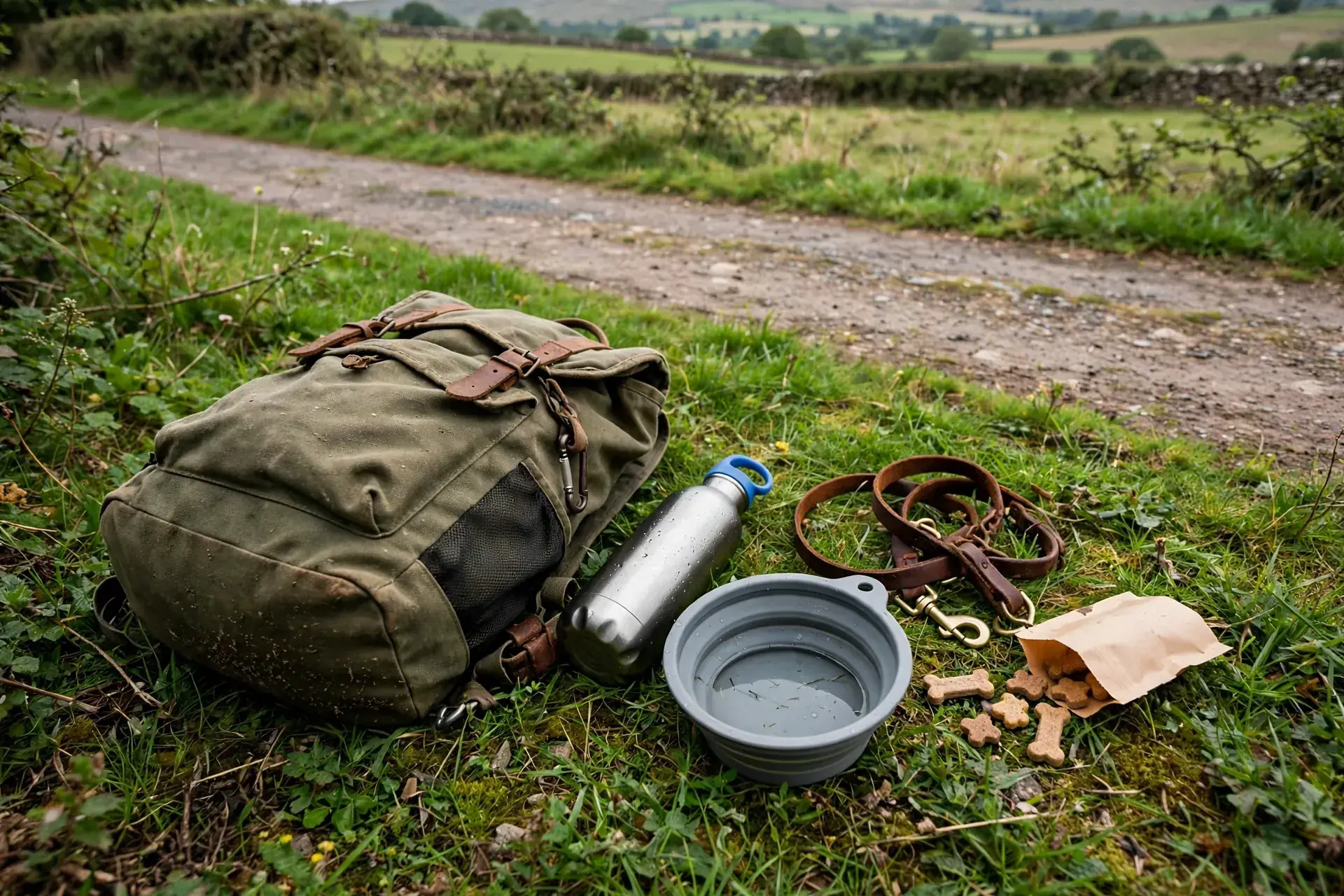
Surfaces matter as much as distance. Soft trails, grass, sand and forest floor are kind to a running dog's joints and paws, while long stretches of tarmac, concrete and rocky ground are punishing, especially on a multi-day trip. Plan routes that mix surfaces, and check paws after every run for cuts, blisters or mud packed between the toes. In warm weather, run early or late, carry water for the dog, and stop at the first sign of heavy panting that does not ease, drooling or slowing down, because a dog that is determined to keep up with its owner will run itself into heat exhaustion rather than quit. Our dog day trip packing list covers the water, first aid and kit that a running pair needs on a long outing. A Vizsla that is run well on holiday comes home fitter, calmer and more bonded to its owner than it left, which is exactly the point.
Cold, rain and the thin coat
If there is one piece of kit that defines Vizsla travel in Britain, it is the dog coat. The breed's short, dense but thin coat offers little insulation, and a Vizsla that is wet and standing still in a cold wind will chill quickly, shivering visibly and losing enthusiasm for the walk. Pack a waterproof coat for rain, a warm fleece or insulated coat for winter, and a drying coat for after wet walks and swimming. Put the coat on before the dog gets cold, not after it starts shivering, and keep it on during rest stops, cafe breaks and car journeys after a wet walk, when the dog is no longer generating heat by moving. In the accommodation, give the dog a warm, draught-free bed, ideally raised off a cold floor, and dry the coat thoroughly after every wet outing.
The cold-weather routine extends to the details. A Vizsla's belly and legs are close to wet grass and cold water, so a coat that covers the belly is more useful than a short back cover. In winter, check paws for ice balls and salt irritation after urban walks, and rinse paws after walks on gritted pavements. In summer, the same thin coat offers little protection from the sun, so a pale-coated Vizsla can sunburn on the nose and ears on a bright day, and shade and water matter as much as they do for any dog. The general principle is that a Vizsla's coat is designed for a Hungarian summer, not a British winter, and the owner has to supply the insulation that the breed does not. Once that is understood, British weather is not a barrier to a Vizsla holiday: it is simply a condition to dress for.
Recall, scent and the pull of prey
Vizslas are pointing dogs with a strong scent drive, and that drive is the main threat to recall on a British walk. A Vizsla that catches the scent of a rabbit, a pheasant or a deer can go from a relaxed trot to a full-speed chase in a second, and the dog's focus on scent can make it temporarily deaf to its owner's voice. Train recall with scent as the distraction, starting in low-scent environments and building up to fields and woodland, and use a whistle, which carries further than a voice and becomes a distinct cue that the dog learns to associate with high-value rewards. Even with a strong recall, keep the dog on a lead or a long line in places where a chase would be dangerous: near roads, cliffs, livestock, and ground-nesting birds during the spring breeding season, when a chasing dog can destroy a nest in seconds.
The pointing instinct itself is worth understanding, because it explains a lot of Vizsla behaviour on walks. A Vizsla that suddenly freezes, one leg raised, nose pointing at a hedge, is not being disobedient: it is pointing at game, and the correct response is to praise the stillness, walk up calmly, and then call the dog on, rather than dragging it away or letting it flush the bird. Learning to read the point, and to reward the dog for holding it, turns a frustrating walk into a partnership, and it is one of the most rewarding aspects of travelling with a pointing breed. At the same time, be realistic about the limits: no amount of training makes a Vizsla safe off the lead among sheep or deer, and the responsible choice in those places is a lead, a long line or a different route. Recall is a safety net, not a guarantee, and the best recall is the one you never have to test in a dangerous place.
Water: joy, risk and warming up
Many Vizslas love water, and a British beach, river or lake can be the highlight of their holiday, but water needs the same careful assessment as any other part of the trip. Before swimming, check the tide, the current and the water quality, and look for hazards such as steep banks, strong currents, fishing lines and blue-green algae, which can be toxic to dogs and is a particular risk in still, warm water in summer. Keep the dog on a long line in unfamiliar water, and never let it swim in a fast river, a tidal estuary or a reservoir with steep, slippery banks. After swimming, dry the dog thoroughly and put on a drying coat or a warm coat, because a lean, short-coated dog that has been swimming in cold water will chill rapidly once it stops moving, and shivering after a swim is a sign that the dog needs warming, not another throw of the ball.
Beaches deserve special attention, because they combine water, space and other dogs in a way that can overwhelm even a well-trained Vizsla. Check whether the beach allows dogs on your dates, because many popular beaches restrict dogs in summer, and choose a quieter stretch where the dog can run without chasing every other dog on the sand. Watch for the dog drinking seawater, which causes vomiting and diarrhoea, and carry fresh water and a bowl so the dog does not need to drink from the sea. After a beach walk, rinse sand from the coat and paws, and check for cuts from shells or sharp stones. Our guide to UK beach rules, bans and fines explains how to check a beach before you go, including seasonal restrictions and the fines that apply in some areas. A Vizsla that swims safely and warms up properly will remember the beach as the best part of the trip, and so will you.
Alone time and separation on trips
Separation is the hardest part of travelling with a Vizsla, and it deserves honest planning rather than wishful thinking. If your dog has never been left alone for more than an hour at home, it will not suddenly manage three hours in a strange cottage, and the attempt will be distressing for the dog and damaging for the rental. Build alone time gradually at home, starting with minutes and increasing slowly, always leaving the dog tired, with a food toy and a familiar bed, and always returning before the dog becomes distressed. On the trip, keep absences as short as possible, build them up over the days, and never leave a dog that is already anxious on the first day: the first day sets the pattern for the week, and a calm first day is worth more than any training technique.
Practically, this means choosing a trip shape that includes the dog. Book restaurants and pubs that welcome dogs, choose attractions with dog-friendly policies, and plan shopping and sightseeing in shifts if you are travelling as a couple, so the dog is never left for long. If you must leave the dog, use a crate only if the dog is already crate-trained and finds the crate calming, and never use a crate as a punishment for distress. Leave a worn item of clothing with your scent, put on background noise such as talk radio, and keep the departure and return low-key, without long, emotional goodbyes that signal to the dog that something unusual is happening. If separation distress is severe, talk to your vet or a qualified behaviourist before the trip rather than hoping it will resolve itself on holiday, because it rarely does, and a professional plan made in advance is far more effective than improvisation in a rental.
Feeding an athlete on the move
Feeding a Vizsla on an active holiday is a balancing act between fuelling hard work and avoiding stomach problems. The foundation is the dog's usual food, brought from home in measured portions, because a sudden change of brand or a diet of rich treats will upset a sensitive stomach faster than any amount of exercise. On the hardest days, increase the portion slightly rather than adding rich extras, and split the daily amount into two or three meals if the dog is working hard, so the stomach is never overloaded at once. Avoid feeding a large meal immediately before hard exercise, and wait at least an hour after a run before feeding, because exercising on a full stomach increases the risk of stomach problems, including bloat, which is a serious emergency in deep-chested breeds.
Treats need the same discipline. A Vizsla that is given a treat by every person it meets on a walk, plus a chew at lunch, plus a dental stick at bedtime, is eating far more than its daily allowance, and the result is usually an upset stomach or weight gain over a week. Budget treats into the daily food allowance, keep them small and familiar, and ask fellow travellers to check before feeding the dog. Carry a day's food in the day bag as well as in the main luggage, so a delayed journey or a closed shop does not force a sudden diet change, and keep a note of what the dog ate if anything goes wrong, because a vet will ask. If the dog has a known sensitivity, carry a short written summary for any vet you might visit, and check the official guidance before you travel if you are unsure about any new food or supplement. A well-fed Vizsla is a dog with steady energy, a settled stomach and the condition to enjoy the next day's run.
Sleep, recovery and rest days
Vizslas sleep deeply and for long periods when they are tired, and that sleep is when the body recovers from hard exercise, so protect it. Give the dog a quiet, warm, draught-free sleeping place, away from the main thoroughfare of the accommodation, and avoid waking the dog for evening activities after a hard day. Puppies and young dogs need even more sleep, up to eighteen hours a day, and a holiday that keeps a young dog awake and active all day will produce an overtired, hyperactive dog, not a well-exercised one. Build rest days into the week deliberately: a gentle village walk, a cafe morning and a short afternoon sniff, rather than another long run, will do more for the dog's condition than a seventh consecutive hard day.
Watch for the signs that recovery is not keeping up with exercise. Stiffness in the morning that takes a long time to ease, reluctance to start a walk, limping, loss of appetite and a dull coat are all signals to ease off, not to push on, and a dog that shows them should have a rest day and, if the signs persist, a vet check. Keep a simple log of the week's exercise, noting distance, surface and the dog's response the next morning, because patterns become clear over a week in a way that a single day's impression does not. The goal is a dog that finishes the holiday fitter and happier than it started, not a dog that finishes it exhausted, and the owners who achieve that are usually the ones who treated rest as part of the training plan rather than as a concession.
Routes and bases for a Vizsla week
The best Vizsla bases in Britain offer a mix of running ground, water and dog-welcome hospitality, with a secure garden for the evenings. Norfolk is a superb choice: flat, open beaches at low tide, long, straight trails, and villages with dog-friendly pubs, though the flatness means the dog will run further than you expect, so plan distances accordingly. The South West Coast Path offers dramatic running, but the hills and cliffs demand a lead in many places, and the dog's stamina will be tested by the elevation as much as by the distance. The forests of Northumberland, the trails of the New Forest, with its free-roaming ponies to avoid, and the canal towpaths of the Midlands all offer long, flat, interesting running without the hazards of cliffs or livestock, and they are often the best choice for a first Vizsla trip.
When you plan the week, think in terms of the dog's rhythm rather than a list of attractions. A typical good day might start with a morning run, include a midday rest and a cafe stop where the dog can lie beside you, and end with a short, sniffy evening walk and a settled night in the cottage. Book accommodation first, then build routes around it, checking that each route has a short version and a wet-weather alternative, because British weather will eventually force a change. Keep the nearest vet's number saved, and note the nearest late-night toilet area for the first night. A Vizsla week done this way feels like a partnership rather than a compromise: the dog runs, swims, sniffs and sleeps beside its person, and the person gets to see Britain through the eyes of a dog that is doing exactly what it was bred to do. Our guide to dog car safety covers the harness and crate choices that keep a lean, athletic dog safe on the journey to and from that base.
Practical questions
Before you go
Can a Vizsla be left alone in a holiday cottage?
Only for short periods, and only if the dog has been trained for it. Vizslas are famously attached to their owners and can become distressed when left alone, so build up absences gradually at home, tire the dog first, and plan to take the dog with you most of the time.
How much running can a Vizsla do on holiday?
Healthy adults can run long distances, often ten kilometres or more, once they are fit, but build up gradually and mix running with rest days. Puppies and young dogs should not run long distances on hard ground while they are still growing. Watch for stiffness, limping or reluctance to continue.
Do Vizslas need a coat in British weather?
Yes, more than most breeds. The short, thin coat offers little protection from cold, wind or rain, so pack a waterproof coat and a warm fleece for winter walks, and dry the dog promptly after wet or cold outings. A coat is practical kit for this breed, not a fashion choice.
Are Vizslas good swimmers on UK beaches?
Many love water, but enthusiasm is not the same as safety. Check currents, tides and water quality before swimming, keep the dog on a long line in unfamiliar water, and dry and warm the dog afterwards, because a lean, short-coated dog chills quickly.
What should I feed a Vizsla on an active holiday?
Feed the dog's usual food in measured portions, increasing the amount slightly on the hardest days rather than switching brands. Carry food from home, keep treats modest, and avoid feeding a large meal immediately before hard exercise, which can cause stomach problems.