This guide is independent and contains no paid placement. If affiliate links are added later, they will be clearly marked and will not change our editorial checks.
West Burton is a waterfall village, not a waterfall car park: the falls, the green and the beck are all within a few minutes of each other, so walk the falls first, let the dog settle on the green, then choose between a short beck loop or a longer valley walk to Aysgarth. Keep the dog on a lead in the village and away from the falling water itself.
Start at the waterfall
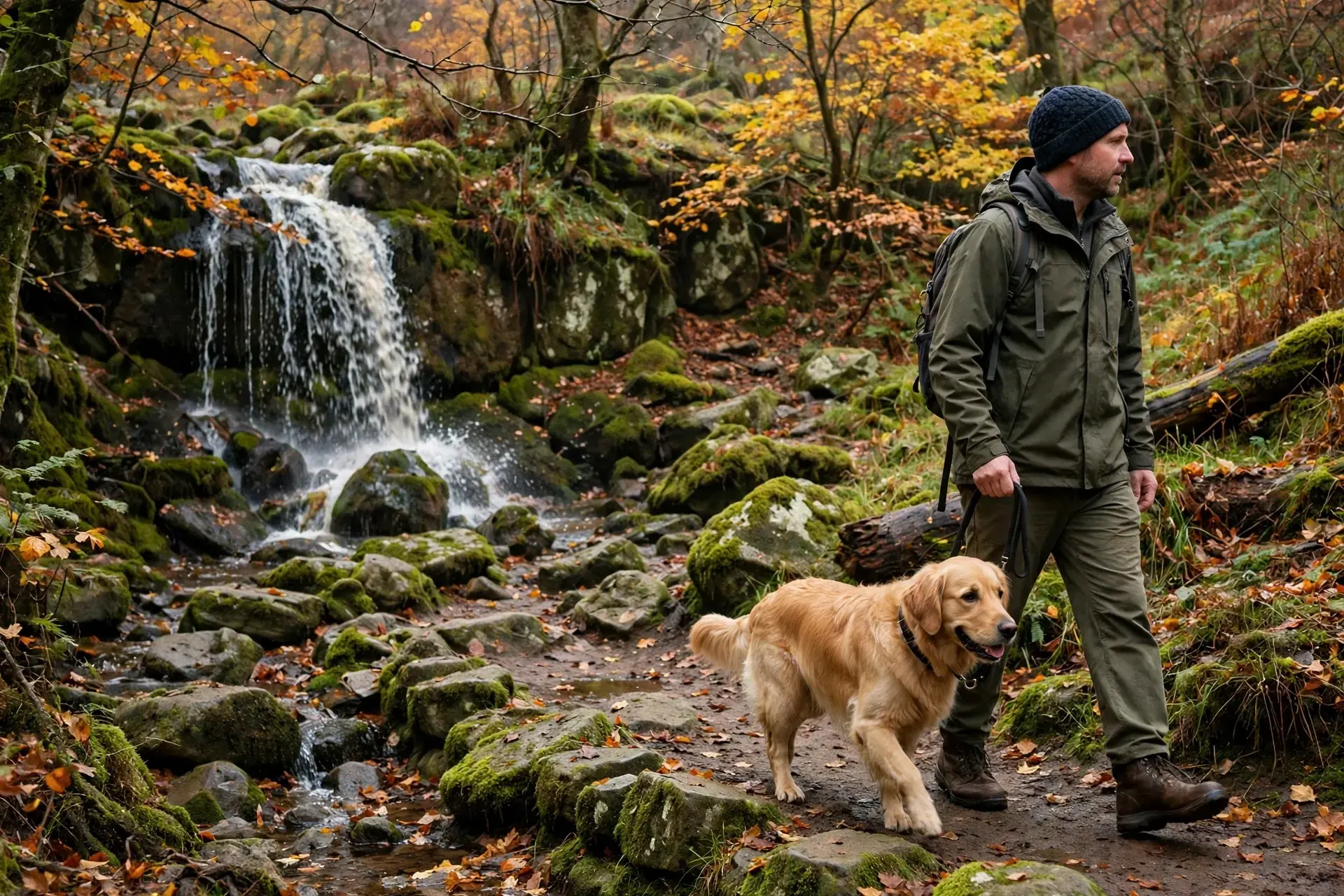
Most Dales villages make you work for their waterfall. West Burton does the opposite. Cauldron Falls, also known locally as West Burton Falls, drops down Walden Beck at the edge of the village, close enough that the sound of falling water is part of everyday life here rather than a destination in itself. That closeness shapes the whole visit: you do not drive to a viewpoint, queue for a ticket and march back to the car. You park, you walk a few minutes along a lane, and the falls are simply there, framed by trees and stone, with the beck running on through the village below.
The falls themselves are a series of short limestone drops rather than one sheer plunge, which is exactly why they photograph so well and why dogs find them so interesting. The water steps down over rock shelves into a plunge pool, then narrows into the beck that threads past the cottages and across the green. In normal conditions the flow is lively but not violent; after heavy rain it turns brown, fast and loud, and the whole character of the place changes in an hour. That is the first thing to understand about walking here with a dog: the falls are the same place in two very different moods, and the safe way to enjoy them depends entirely on which mood you have arrived in.
Approach the falls on the lead, and keep the dog on the lead for the whole visit to the viewing area. The ground near the water is uneven, the rocks are wet even in dry weather, and the banks drop steeply in places. A dog that pulls towards the water can be over a slippery edge before you have time to react, and a dog that scrambles down to the pool may not find an easy way back up. Stand back, let the dog watch and sniff from a safe distance, and take your photographs from the bank rather than from the rocks. The best views are from the side and slightly above the pool, where the whole stepped fall is visible at once and the dog can sit safely beside you on grass.
Give the falls unhurried time rather than treating them as a five-minute stop. The light changes as the sun moves across the valley, and the water sounds different from every angle. Dogs that are allowed a calm ten minutes of watching, sniffing and listening settle far better for the rest of the walk than dogs that are hurried past the one thing they most want to investigate. Bring water for the dog even though there is water everywhere: beck water after rain can carry field run-off, and a dog that has just drunk from the falls will not thank you for it later. Carry a towel too, because a dog that has paddled at the edges will want to shake itself dry against your legs on the way back to the car.
One practical point is worth settling before you go: conditions at the falls change with the weather in the hills above the village, not just with the rain falling on West Burton itself. A dry morning in the village can still follow a wet night on the fells, and the beck can be running high while the lanes look perfectly ordinary. Check the forecast for the wider dale, look at the water level when you arrive, and be ready to enjoy the falls from the bank rather than from the water's edge. Check the official guidance before you travel if you want the latest information on access and conditions.
The green and the beck
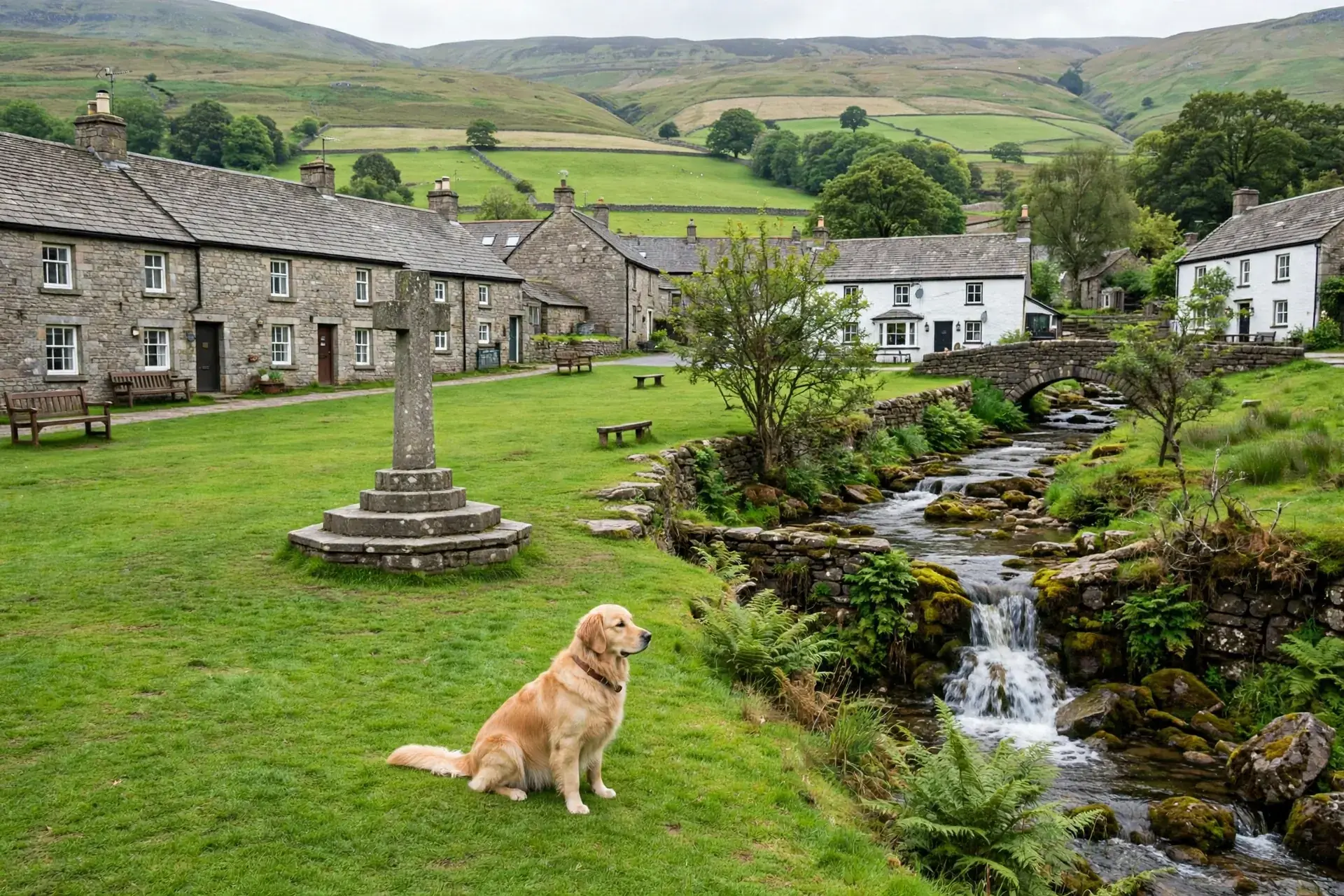
Walk back from the falls and you reach the heart of the village: a broad green with Walden Beck running through it, stone cottages around the edges and the kind of open space that dogs read as an invitation. The green is what makes West Burton feel different from other Dales villages, where the centre is usually a road junction or a market cross. Here the centre is grass and water, and the village seems to have arranged itself around the beck rather than the other way round.
The beck is shallow as it crosses the green, running clear over stone in normal conditions, and it is the first place most dogs head for. Let the dog paddle, but do it on your terms. Choose a shallow, gently sloping entry point rather than letting the dog launch itself off a bank, keep the lead on, and watch for the deeper pools that form where the beck bends. The water is cold even in summer, and a small or older dog can chill quickly after a long paddle. A few minutes of splashing is a treat; twenty minutes of standing in cold water is a recipe for a shivering dog on the drive home.
The green itself is a shared space, not a dog exercise field. Residents walk across it, children play on it, and other dogs pass through it on their own daily rounds. Keep your dog on a lead, keep them close when other dogs approach, and pick up after them without exception — in a village this small, a single missed mess is noticed and remembered. If your dog is reactive or nervous around other dogs, cross to the quieter side of the green and keep moving rather than stopping to chat in the middle of the busiest stretch. The green is at its calmest early in the morning and late in the afternoon, when the day visitors have gone and the village belongs to its residents again.
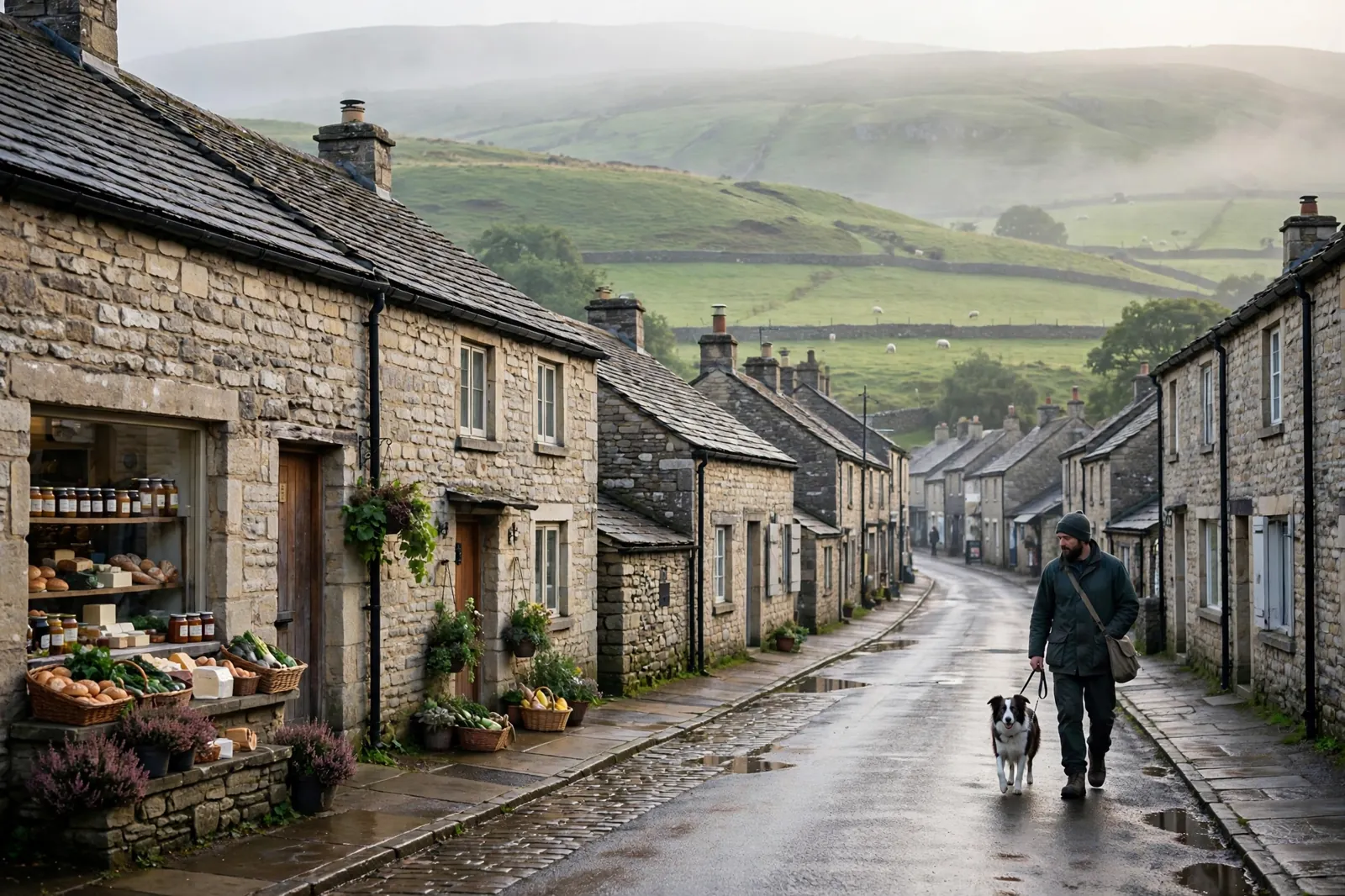
Take time to look at the village itself while the dog sniffs the green. West Burton is a classic Wensleydale settlement of stone cottages, many of them built from the same pale limestone as the falls, with small gardens, dry-stone walls and the occasional barn converted into a home. The cottages are people's homes, not a visitor attraction, so admire them from the lane and keep the dog out of front gardens and off low walls. The village has a church, a village hall and a pub, and its scale is the point: everything is within a few minutes' walk, and a dog that has done the falls and the green has effectively seen the village.
The beck and the green also make a useful settling-in space for a dog that has just arrived after a long drive. Before you set off on a longer walk, give the dog ten minutes on the green to stretch, sniff, drink and empty itself. A dog that has had that decompression time walks more calmly on the lanes and settles more quickly on the valley paths. It also gives you a chance to check the basics — paws, lead, water bottle, waste bags — before you are a mile from the car with no shop in sight.
Short beck-side walks
Not every dog needs a five-mile hike, and West Burton is kind to dogs that prefer a shorter outing. The beck-side paths around the village offer a series of short loops that can be mixed and matched according to the dog's energy, the weather and the time you have. The simplest is the green-to-falls loop: from the green, follow the beck upstream to the falls, cross at the safe point, and return along the opposite bank. It takes well under an hour at a dog's pace, with plenty of sniffing stops, and it gives a young, older or less fit dog a complete outing without ever leaving the village behind.
A slightly longer option follows the beck downstream from the village, where the water leaves the green and runs through pasture towards the River Ure. This is open farmland walking, so the rules change: keep the dog on a lead or under very close control, watch for sheep and cattle, and close every gate behind you. The path is level and easy underfoot in dry weather, but the riverside fields can be soft and muddy after rain, and the beck banks are steeper here than they are on the green. Walk it in the morning if you can, when the light is low across the valley and the fields are quiet.
For a dog that needs more sniffing than mileage, the lanes around the village work well as a slow circuit. The narrow lanes that climb gently out of the village in either direction give views back across the rooftops to the fells, and the verges are full of the smells that keep a dog busy for an hour without covering much ground. Keep the dog on the lead on the lanes: they are single-track in places, farm vehicles use them, and there is often no verge to step onto. Walk on the right-hand side facing oncoming traffic where there is no pavement, and keep the dog on the inside, away from the road.
Short walks still need the same preparation as long ones. Carry water and a collapsible bowl, because beck water is not a reliable drinking supply and the village has no shop guaranteed to be open. Carry waste bags and a spare lead. Check paws after any walk that includes wet limestone or muddy banks, and dry the dog's legs before getting back in the car. These small habits matter more on short walks, because it is exactly the easy, familiar outing where people forget the water bottle and the towel.
One more short-walk option suits dogs that arrive tired or are staying nearby: the evening loop. An hour before dusk, when the day visitors have left and the light turns gold on the stone cottages, walk the green, the beck and the lane to the falls and back. It is quiet, the dogs of the village are out on their own evening rounds, and the falls sound louder as the rest of the village goes still. Keep the lead on, carry a light if you will be out after sunset, and remember that the paths by the water have no lighting at all.
Longer Wensleydale loops
West Burton makes a good base for longer valley walking because it sits between some of the best-known places in Wensleydale without being as busy as any of them. The classic longer walk heads east along the valley towards Aysgarth Falls, following the River Ure through woodland and riverside pasture. The route is well walked and easy to follow, and it gives a fit dog a proper half-day outing: open fields, riverside shade, the sound of the Ure, and the stepped falls at Aysgarth as a turning point. Our guide to Leyburn with a dog covers the market town a little further east, which pairs well with this walk if you want to finish with a pub lunch and a browse around the town.
The Aysgarth loop deserves a whole morning rather than a rushed hour. The riverside path runs through woodland where the ground stays damp and the roots are slippery after rain, then opens into pasture where sheep graze close to the path. Keep the dog on a lead through the fields and on the woodland stretches where the bank drops to the river. At Aysgarth Falls themselves, the viewing platforms are fenced and stepped, and the river below is fast and powerful: this is a place to look and listen, not a place to let the dog paddle. The falls at Aysgarth are wider and more dramatic than the falls at West Burton, and the contrast between the two is one of the pleasures of walking between them.
Westward, the valley opens towards Askrigg and Hawes, and the walking becomes longer and more open. The road west from West Burton climbs gently along the valley floor, with the fells rising on both sides and the River Ure running below the road. This is big-sky walking, and it suits dogs that like open ground and long sightlines. The route to Hawes is a serious undertaking on foot — a full day for most walkers — so most visitors drive to Hawes and walk from there instead. Our guide to Hawes with a dog covers the market town, its waterfalls and its cheese-town streets in detail, and it is the natural next stop for a dog that has enjoyed West Burton and wants more.
South of the village, the land rises towards the fells above Walden Beck, and the paths become steeper, rougher and quieter. These are proper hill walks rather than valley strolls, and they suit fit dogs with experienced owners who are comfortable reading a map and judging the weather. The rewards are solitude and views across the whole dale, but the costs are real: exposed ground, no shelter, boggy patches after rain, and sheep everywhere. Do not take a dog onto the open fell in poor visibility or high wind, and always carry a map, water and a charged phone. If the forecast is uncertain, stay in the valley.
Whatever loop you choose, plan the return before you set out. Valley walks that follow the river out and a lane back are satisfying because the scenery changes, but they can also be longer than they look on the map. Check the distance, add time for a dog's pace — sniffing, paddling, resting — and work out where the last safe water and the last easy exit are. Tell someone your route if you are walking alone, and keep the dog's lead accessible even on stretches where you let them run free: a sheep appearing over a rise changes the rules instantly.
Waterfall safety for dogs
Water is the reason to visit West Burton, and it is also the main risk, so it deserves its own section. The dangers are not dramatic: they are the ordinary, quiet hazards of cold water, slippery rock and strong currents that catch out dogs every year in the Dales. A dog that swims confidently in a lake can still struggle in a beck, because moving water behaves differently. It pulls at the legs, it hides the depth, and it carries a dog downstream faster than the dog can swim back.
The first rule is simple: never let a dog swim in or directly below a waterfall. The plunge pool at the foot of Cauldron Falls looks inviting on a warm day, but the water is deep in places, the rocks under the surface are sharp and uneven, and the current near the falling water is strong enough to hold a dog under. The same applies at Aysgarth Falls and anywhere else the river drops over rock. Paddling at the shallow edges, where the dog can stand and you can reach them, is a different matter and is usually fine in normal conditions. The line between paddling and swimming is the line between a treat and a risk, and you should be the one who decides where it sits.
The second rule is about the rock. Limestone is slippery when wet, and the rocks around a waterfall are wet even in dry weather, coated in algae and spray. A dog scrambling on wet limestone can slip and fall further than you expect, and a cut paw on sharp rock can end the walk entirely. Keep the dog off the rocks around the falls, carry them over short slippery stretches if they are small enough, and check paws carefully after any walk that includes the beck. A dog that is limping after a scramble needs the walk to end, not a further mile of rocky path.
The third rule is about the water itself. After heavy rain, the beck rises quickly and turns brown with field run-off. Do not let the dog drink from it or paddle in it in these conditions, and do not let them swim in the River Ure after rain either. Fast, dirty water carries bacteria and debris, and a dog that drinks from it can develop stomach trouble within a day. Blue-green algae is a risk in slow, warm, still water in summer rather than in a fast beck, but any water that looks scummy or smells odd should be avoided. Carry drinking water for the dog and offer it regularly, so the dog is never thirsty enough to drink from the first puddle it finds.
The fourth rule is about cold. Dales water is cold all year, and a dog that swims or paddles for too long can become chilled, especially a small, thin-coated or older dog. Watch for shivering, reluctance to move, or a tucked tail, and get the dog out, towelled dry and moving again. A drying coat is one of the most useful things you can pack for a Dales walk, and it earns its space in the car on every trip, not just the wet ones.
Finally, know what to do if something goes wrong. If a dog is swept downstream, do not jump in after them: moving water is dangerous for people too, and a rescuer in trouble helps nobody. Shout, keep the dog in sight, and call for help. Most dogs that get into trouble in a beck scramble out at the next shallow bank if they are given the chance, and a calm owner on the bank is worth more than a panicked owner in the water. This sounds obvious, but it is worth saying plainly before the day, because in the moment the instinct to jump in is very strong.
Seasons and weather
West Burton rewards visitors in every season, but the village and the falls change character through the year, and the best way to walk them changes too. Spring is the kindest season for most dogs. The beck runs clear and lively after winter rain, the fields are green, the lambs are in the pastures, and the days are long enough for a proper walk without rushing. Lambing season, roughly from late March into May, is the time for the strictest lead discipline: ewes with lambs are easily stressed, and a loose dog in a lambing field can cause real harm. Keep the dog on a short lead through all farmland in spring, and check the official guidance before you travel for any local lambing notices.
Summer brings the village at its busiest and the falls at their gentlest. On a dry summer week the beck drops low, the plunge pool clears, and the falls become a quiet trickle rather than a roar. This is the best season for paddling, for the green, and for dogs that dislike wet, cold water. It is also the season when parking is hardest, the village is fullest, and the sun is strongest: bring shade and water for the dog, avoid the midday heat on open fell paths, and watch for warm tarmac on the lanes. A dog that has paddled in the beck and then walked a hot lane needs its paws checked, because wet paws on warm stone blister more easily than dry ones.
Autumn is, for many regulars, the best season of all. The crowds thin, the light turns low and gold, the trees along the beck colour, and the rain returns to put some life back into the falls. A wet October week can make Cauldron Falls look entirely different from the same falls in August, and the valley walks are at their most atmospheric in low cloud and drizzle. Pack waterproofs for yourself and a drying coat for the dog, and expect mud on the riverside paths. Autumn is also the season when the days shorten quickly, so start walks earlier than you think you need to, and carry a light for the walk back.
Winter in the Dales is beautiful and serious in equal measure. Frost on the green, snow on the fells and a thin skin of ice on the beck make West Burton look like a postcard, but the paths by the water are treacherous when iced, and the wind on the open fell is bitter. Short walks in winter are often better than long ones: the falls, the green and a sheltered lane, then a warm pub and an early finish. Check the forecast, avoid the fell tops in snow or high wind, and remember that a wet dog in a cold car needs drying before the drive home, not after.
Whatever the season, the Dales weather rule applies: the forecast for the valley floor is not the forecast for the fells, and conditions can change within an hour. Pack a waterproof even when the morning looks fine, carry more water than you think the dog will need, and be ready to shorten the walk if the weather turns. The falls will still be there tomorrow, and a dog that comes home dry, warm and happy is a better outcome than a heroic walk in a storm.
Eating and staying
West Burton is a small village, so plan eating and staying with the wider dale in mind rather than expecting a high street. The village pub has traditionally been the social centre of the village and has welcomed walkers and their dogs, usually in the bar area. Pub policies change with management, so check the official guidance before you travel and ask on arrival where dogs are welcome. A dog that has walked the falls and the green will usually settle happily under a pub table, especially if you bring a mat or blanket for them to lie on and a chew to keep them occupied.
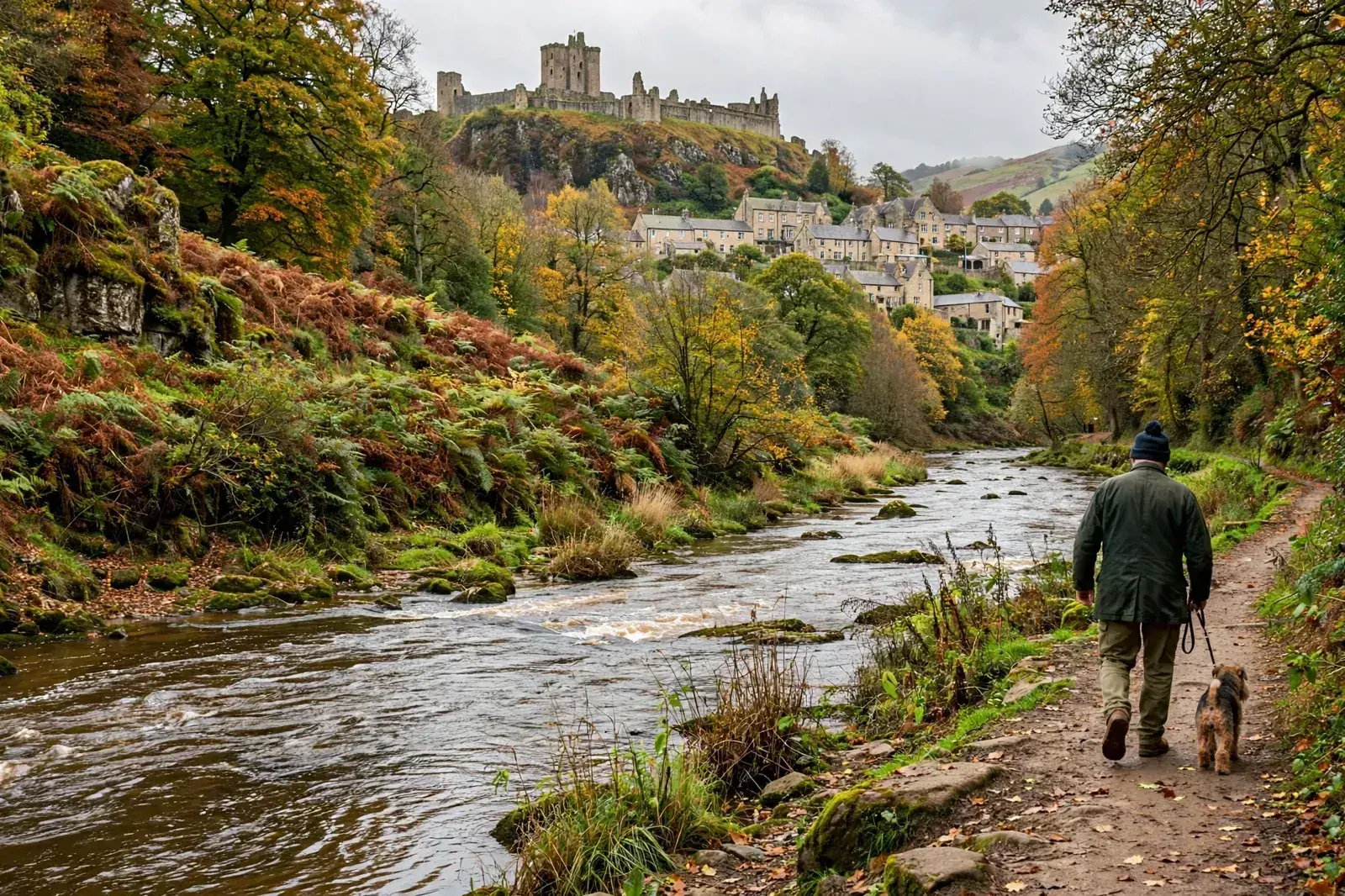
If the village pub is full or closed, the neighbouring towns are a short drive away and offer more choice. Aysgarth has pubs and a cafe, Leyburn has a market-town range of pubs, cafes and tea rooms, and Hawes has the same. Our guide to Richmond Yorkshire with a dog covers another market town a little further north, with its castle, river walks and dog-friendly places to eat, if your trip extends beyond Wensleydale. Wherever you eat, the same courtesies apply: keep the dog on a lead, keep them under the table and out of the way of staff, and ask before letting them approach other people's tables.
Picnics work well in West Burton, and the green is a natural place for one, provided you keep the dog under control and leave no litter. A picnic also solves the problem of a dog that does not settle in pubs: buy food in Leyburn or Hawes, eat it on the green or at a riverside spot on the longer walk, and let the dog have its own lunch from its own bowl. Take all rubbish with you, including food waste, because a village green scattered with sandwich wrappers is nobody's idea of a good day out.
Staying overnight near West Burton means choosing between village cottages, farm stays and the wider range of accommodation in the market towns. Self-catering cottages that accept dogs are the most flexible option for a dog that needs its own space, a garden and a familiar bed. Book well ahead for school holidays and summer weekends, and confirm the dog policy in writing: the number of dogs allowed, any pet fee, whether the garden is enclosed, and where the dog can be left if you go out. A cottage with an enclosed garden beside the beck is worth more than a prettier cottage with an open front onto a lane.
For a shorter stay, consider basing yourself in Leyburn or Hawes and driving to West Burton for the day. Both towns have more accommodation, more places to eat, and more to do on a wet afternoon, and the drive to West Burton is short and scenic. The trade-off is that you lose the early morning and late evening in the village itself, when the green is quietest and the falls are at their best. If West Burton itself is the point of the trip, stay as close as you can; if the wider dale is the point, a market-town base is the more practical choice.
Wherever you stay, leave the place as you found it. Bring the dog's own bed and bowls, keep the dog off furniture unless the host has said it is allowed, and check the garden boundary before letting the dog off the lead. A dog that has had a good walk at the falls and a settle on the green will sleep well anywhere; a dog that has been cooped up in the car all day will not, whatever the accommodation.
Getting there and parking
West Burton sits in Wensleydale in the Yorkshire Dales National Park, reached by the B6160 valley road that runs along the dale between Leyburn and Hawes. The drive itself is part of the experience: the road follows the River Ure through Aysgarth and the valley narrows and opens in turn, with the fells rising on both sides. Drivers should expect a rural road with single-track stretches, passing places, farm traffic and the occasional sheep on the tarmac. Take it slowly, especially in the dark or in wet weather, and give walkers and dogs on the verges a wide berth.
Public transport to the village is limited, so most visitors arrive by car. Bus services in the Dales are infrequent and their dog policies vary, so check the official guidance before you travel if you are planning to arrive without a car. Cyclists will find the valley road scenic but busy with traffic in summer, and the lanes around the village are steep in places. Whatever your mode of travel, plan the journey with the dog in mind: a car sick dog needs stops, a nervous dog needs a calm arrival, and any dog needs water after a long journey.
Parking in West Burton is the one practical problem that catches people out. The village is small and there is no large car park, so visitors rely on a small amount of roadside parking in and around the village. On a fine weekend or in the school holidays it fills early, and a late arrival can mean circling the village or parking further away and walking in. Arrive before ten in the morning if you can, park considerately without blocking gateways, driveways, passing places or the green itself, and be prepared to change your plan: parking in Aysgarth or Leyburn and walking in along the valley is a better day than a frustrating half hour circling a full village.
On arrival, give the dog the settling routine that makes the rest of the day work. A short walk on the green, a drink, a toilet stop and a few minutes of sniffing will do more for the dog's behaviour than any amount of instruction. Check the lead, the water bottle and the waste bags before you set off, and agree the route with your walking companions before anyone is a mile from the car. If you are walking with children, agree the rules now: who holds the lead near the water, who carries the water, and what to do if the dog pulls towards the beck.
Facilities in the village are limited, so bring what you need. There is no guarantee of a shop being open, and the nearest supermarkets are in Leyburn. Pack water, food, waste bags, a towel, a first-aid kit for the dog, and a charged phone. Save the number of the nearest vet before you need it — the nearest practices are in the market towns — and know where the nearest petrol station is before the fuel light comes on in the middle of the dale.
A sample day with your dog
A good day in West Burton does not need to be complicated. Arrive early, walk the falls while the village is still quiet, and let the dog have the green and the beck before the day visitors arrive. A morning loop from the green to the falls and back takes under an hour and leaves the dog exercised, watered and settled. Follow it with a slow wander around the village lanes, a coffee or a picnic on the green, and a rest: dogs that are given a proper pause in the middle of the day walk far better in the afternoon than dogs that are marched from one attraction to the next.
After lunch, choose the afternoon walk by the dog's energy and the weather. A fit dog on a dry day can take the valley walk towards Aysgarth Falls and back, which fills an afternoon and earns its supper. A tired dog, a young dog or a wet day calls for something shorter: the beck downstream, the lanes above the village, or simply a second visit to the falls in different light. The point is not to fill the day with miles but to match the walking to the dog in front of you, and West Burton's short loops make that easy.
Finish the day the way you started it: quietly. An evening loop on the green and the beck, a last look at the falls as the light goes, and a settled dog in the car or the cottage. If you are staying nearby, the evening is the best time in the village, when the day visitors have gone and the falls sound louder in the still air. If you are driving home, leave before dark if you can: the valley road is harder after sunset, and a tired dog in a dark car is not a happy passenger.
That is the shape of the day, but the details are yours to arrange. Some dogs will want to paddle for an hour and walk for twenty minutes; others will want to walk for three hours and barely glance at the water. Watch the dog, not the plan, and be ready to change the route, shorten the walk or stop for a rest. West Burton is a village that rewards going slowly: the falls, the green and the beck are all within a few minutes of each other, and the best moments here are the unplanned ones — a dog discovering the beck, a heron lifting off the river, the light changing on the cottages as the evening comes on.
Practical questions
Before you go
Can dogs swim at Cauldron Falls in West Burton?
Dogs often paddle in the shallow water at the foot of the falls, but swimming is not something to assume is safe. The plunge pool is deep in places, the rocks are slippery, and the current strengthens quickly after rain. Let your dog paddle at the edges on a long line, keep them away from the falling water itself, and skip the water entirely after heavy rain. Check the official guidance before you travel if you are unsure about current conditions.
Do dogs need to be on a lead in West Burton village?
Yes, keep your dog on a lead through the village. The green, the beck and the lanes are shared with residents, children, other dogs and occasional farm traffic, and livestock graze in the fields around the village. A lead also stops a dog from jumping into the beck at a steep bank or chasing a cat across a cottage garden. Off-lead time belongs on the open fell paths beyond the village, and only where you can see clearly and recall is reliable.
Is there parking in West Burton for a dog walk?
There is a small amount of roadside parking in and around the village, and it fills quickly on fine weekends and school holidays. Arrive early, park considerately without blocking gateways, driveways or passing places, and never park on the village green. If the village is full, consider parking in nearby Aysgarth or Leyburn and walking in instead. Check the official guidance before you travel for the latest parking information.
Are dogs allowed at Aysgarth Falls from West Burton?
Dogs on leads are welcome on the riverside paths at Aysgarth Falls, which is a short walk or drive from West Burton. The falls themselves are viewed from fenced platforms and stepped paths, so keep your dog close and do not let them scramble down the banks to the River Ure. The woodland and riverside trails make a good longer loop back to West Burton for fit dogs.
Where can I eat with my dog near West Burton?
The village pub has traditionally welcomed dogs, and pubs and cafes in nearby Aysgarth, Leyburn and Hawes also cater to walkers with dogs, usually in the bar area or on a terrace. Policies change, so check the official guidance before you travel, and always ask on arrival where dogs are welcome rather than assuming the whole room is open to them.
What is the best walk from West Burton with a dog?
For most dogs the best first walk is the short loop from the village green to Cauldron Falls and back along the beck, which takes well under an hour and suits almost every fitness level. For a longer day, the valley walk towards Aysgarth Falls and back along the River Ure gives a proper half-day outing with woodland, riverside and open pasture. Fit dogs and experienced walkers can extend further up the dale towards Hawes, but plan the return route before you set off.