This guide is independent and contains no paid placement. If affiliate links are added later, they will be clearly marked and will not change our editorial checks.
Bala works for dogs because everything is close to the water. Walk the foreshore at the Bala end of Llyn Tegid, ride the narrow-gauge railway down the southern shore to Llanuwchllyn, and use the small High Street for food, supplies and shelter. Keep dogs on a lead near sheep and livestock, check water conditions before swimming, and check the official guidance before you travel for railway times, dog fares and parking charges.
A lake town first
Bala is a small market town in Gwynedd, on the north-eastern edge of Eryri (Snowdonia), and it is defined by the water at its door. Llyn Tegid, known in English as Bala Lake, is the largest natural lake in Wales: roughly four miles long and about a mile wide at its broadest point, sitting in a wide valley between the Aran mountains to the south and the Berwyn range to the east. The town stands at the northern end of the lake, where the River Dee flows out, and the lake shapes almost every decision a dog owner makes here — where to walk first thing, where to cool off on a warm day, where to shelter when the wind comes across the water, and where to simply sit and let a tired dog watch the ducks.
That matters because Bala is not a big place, and that is exactly its strength as a dog break. There is no long drive between the places that matter. The lakeside car park, the foreshore, the start of the shore paths and the High Street are all within a short walk of each other, so a morning can be a proper lakeside walk, a coffee in town and a rest back at your accommodation without the dog spending half the day in the car. Dogs that find busy resort towns overwhelming often do much better here: the pace is slow, the open space is generous, and the main attraction is a stretch of water rather than a crowd.
The town itself is a working Welsh market town rather than a polished holiday resort. The High Street has independent shops, cafes, pubs and the everyday services a dog owner needs — a place to buy forgotten treats, a butcher and small supermarkets for supplies, and outdoor seating where a dog can settle under a table. Welsh is widely spoken here, and you will see bilingual signs everywhere; the lake's Welsh name, Llyn Tegid, is the one locals use, and the railway, the sailing club and the walking routes all take their character from it.
Plan your Bala break around the lake rather than around a list of attractions. The best days here follow a simple rhythm: an early walk on the shore before the wind picks up, a slow middle of the day in town or on the railway, and a second, shorter walk as the light drops over the water. If you try to treat Bala like a town with a checklist of sights, you will miss what it is good at. If you treat it as a base beside a big, beautiful lake with a little railway running down one shore, it makes sense immediately — and so does the dog, who will have had a swim, a sniff and a sleep by lunchtime.
One more thing to settle before you go: Bala sits on the edge of the national park, and the hills around it are working farmland as well as walking country. Sheep graze the open ground, livestock moves between fields, and the Countryside Code applies on every path you take. That is not a reason to stay away; it is a reason to bring a lead you trust, to read the signs at field gates, and to choose your routes by your dog's recall rather than by your ambitions. The rest of this guide is organised the same way: water first, then the railway, then the town, then the hills — because that is the order in which Bala itself is built.
Walking the shore of Llyn Tegid
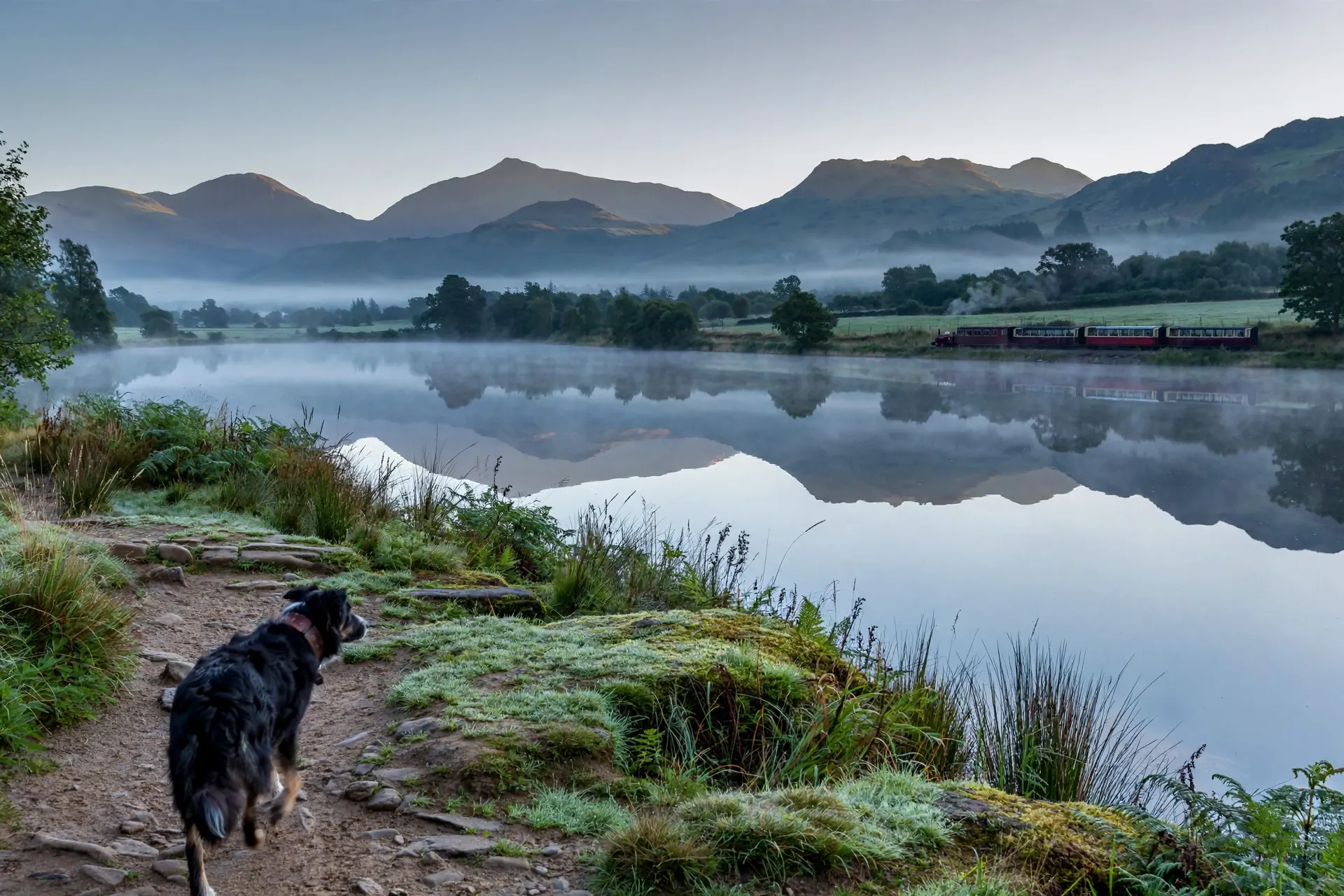
The first walk to do in Bala is the one at the Bala end of the lake. The foreshore at the northern tip is a broad, open stretch of grass and shingle with picnic tables, a car park close by and a clear view down the full length of the water to the mountains at the far end. It is the easiest place in town to give a dog a proper morning: flat ground, room to move, water to paddle in, and other dogs to greet at a sensible distance. On a still morning the lake is glassy and the Aran ridge is reflected in it; on a windy day the same spot is bracing and the dog comes back with wet legs and a clear head. Start here on your first morning and you will immediately understand the shape of the town.
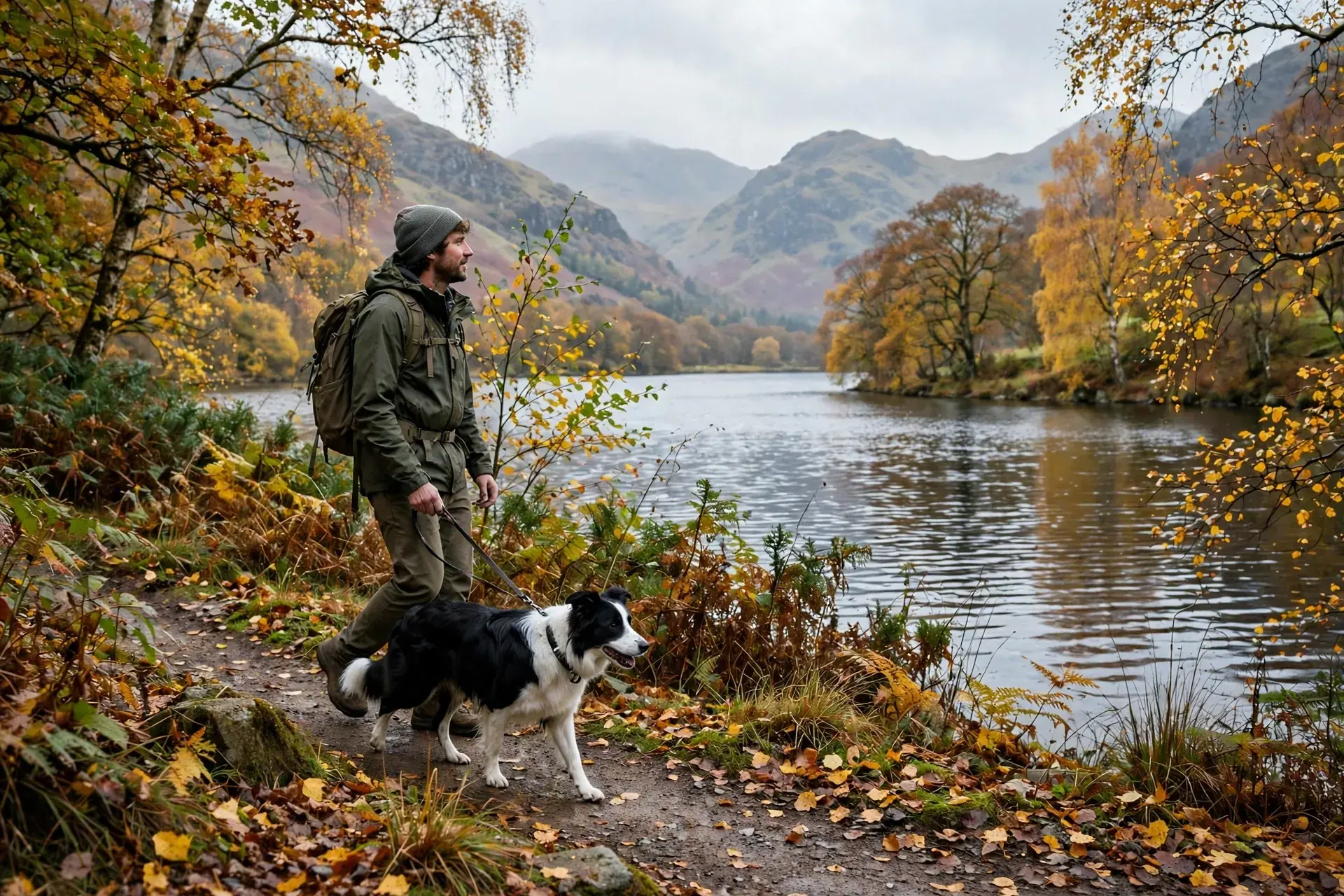
From the foreshore, the shore path runs south along the eastern side of the lake. This is the walk most dog owners use most often, because it is a straightforward out-and-back route: you walk as far as suits your dog, then turn around and come back the same way. The surface is a mix of firm track, grass and lakeside path, and the water is never far from your left hand as you head south. In spring the banks are bright with wildflowers; in autumn the trees along the shore turn and the light goes low and gold across the water. Keep your dog on a lead or a long line near the road crossings and the railway line, which runs along the southern shore, and let them off only where you can see clearly ahead and there is no livestock.
There is one honest limitation to understand before you plan a long day: there is no single continuous public path all the way around Llyn Tegid. The lake is about four miles long, and while the Bala end and the Llanuwchllyn end both have good public access, some stretches of shore are private land, farmland or reed beds with no right of way. Treat the lake as a set of shore walks rather than one circular trail. That is not a disappointment — it is how most people actually enjoy it. Walk out from Bala in the morning, take the railway down the shore, walk back from Llanuwchllyn, or drive to the far end and walk the other direction. The railway exists precisely because the shore is long and lovely, and combining the two is the classic Bala dog day.
For a longer shore walk, the Llanuwchllyn end rewards the effort. Llanuwchllyn is the small village at the southern tip of the lake, and the railway terminus there makes a natural turning point: ride down, walk back along the shore as far as you like, or walk one way and ride the other. The ground at this end is quieter than at Bala, with fewer people and more open views back up the lake towards the town. It is also where you are most likely to meet grazing animals, so keep the lead on through the fields and gates, close every gate behind you, and give livestock a wide berth. If your dog is a chaser, this is a lead-on stretch for the whole walk, however empty the path looks.
Shorter options matter just as much, especially for older dogs, puppies and dogs that are new to walking holidays. A twenty-minute loop from the foreshore, a gentle out-and-back of a mile along the shore path, and a slow wander through the town's quieter streets are all real walks — they count, and they are often what a dog needs after a long drive. Build up over the first day rather than starting with the longest route. Watch for tiredness on the way back: a dog that walked out eagerly along a flat lakeside path still has to walk the same distance home, and the wind that was behind you on the way out will be in your face on the way back. Carry water even on cool days, because lakeside walking is thirsty work and the lake water is not a safe substitute — see the section on water safety below.
Finally, respect the lake's wildlife. Llyn Tegid is a Site of Special Scientific Interest and home to the gwyniad, a rare fish found naturally in this lake alone, and the reed beds and shallows support birds through the year. Keep dogs out of the reed beds, do not let them chase waterfowl, and pick up after them on the foreshore — the shore is shared with swimmers, sailors, anglers and families, and the dog-friendly reputation of the place depends on owners behaving as though they will be back next year.
A day on the Bala Lake Railway
The Bala Lake Railway is the second half of the classic Bala dog day, and it is worth planning properly rather than treating it as an afterthought. It is a narrow-gauge heritage railway that runs for about four and a half miles along the southern shore of Llyn Tegid, between Bala (Penybont) station and Llanuwchllyn. The line follows the trackbed of part of the old Ruabon to Barmouth line, which closed in the 1960s, and the railway's small steam and diesel locomotives have been carrying passengers along the lakeside since the early 1970s. The journey is unhurried — roughly twenty-five minutes each way — and the views from the carriages are the lake itself, the reeds, the far shore and the mountains beyond.
For a dog owner, the railway solves the practical problem of the lake's length. You can ride one way and walk back, walk one way and ride back, or simply ride both ways with a walk at the far end. The most dog-friendly pattern is this: park at the Bala end, walk the foreshore in the morning, ride down to Llanuwchllyn, walk the quieter southern shore for an hour, and ride back to Bala for lunch. Dogs that tire easily get the scenery without the miles; dogs that need a long walk get the railway as a rest between two shore stretches; and the whole day stays beside the water, which is the point of coming to Bala at all.
Before you go, check the official guidance before you travel for the current timetable, fares, any dog fare and the rules for dogs in carriages. Heritage railways run seasonal timetables, and services are less frequent outside the summer peak — some days have only a handful of departures, and the last train back matters if you have walked to the far end. Dogs are generally welcome on the railway, but carriage arrangements, the treatment of larger dogs and any charge can change between seasons, so confirm the details rather than assuming. Book ahead on summer weekends and school holidays, when the small trains fill quickly and a dog without a reserved place may have to wait for the next service.
On the day itself, a little preparation makes the journey comfortable. Keep your dog on a lead on the platforms, where the edge and the track are close and other passengers are moving with luggage and children. Bring a blanket or mat for the carriage floor so your dog has a defined place to settle — heritage carriages have hard floors and narrow seats, and a dog that knows where to lie down will relax much faster. If your dog is nervous about steam, whistles or crowds, choose a quieter midweek service, sit near a door, and let the dog watch the train from the platform for a few minutes before boarding. A chew or a stuffed Kong for the journey helps a young dog that finds sitting still difficult.
There is also a longer story to the railway that is worth knowing. The railway's supporters have long planned an extension of the line into Bala town centre itself, bringing the terminus closer to the town and the lake's northern shore. The project has moved in stages over the years, and its current status changes as funding and permissions progress — check the official guidance before you travel for the latest position. Whatever the state of the extension when you visit, the existing line is the thing to enjoy: a slow train, a big lake, and a dog asleep on a blanket as the mountains slide past the window.
Bala town on foot
Bala's High Street is short, and that is part of its charm for a dog walk. You can stroll the length of the town in a few minutes, which means a town walk here is a gentle wander rather than a march: browse the shop windows, stop for a coffee, let the dog sniff the corners, and be back at the lake before the dog has had time to get bored. The street has the usual pieces of a Welsh market town — independent shops, a couple of pubs, cafes, takeaways and small supermarkets — and because it is a working town rather than a tourist set, the shops sell things you actually need on a dog holiday: extra treats, a spare lead, towels, sun cream and waterproofs.
Walk the town slowly and you will notice its history. Bala was a centre for the woollen industry and for religious and educational life in the nineteenth century, and the town's chapels and older buildings still set the tone of the High Street. At the southern end of the town, near the lake, the church of St Mary and the quieter residential streets give a calmer circuit for a dog that finds the main street too busy. The war memorial and the small green spaces along the way make natural pausing points. Dogs should stay on a lead through the town — the High Street carries through-traffic on the A494, and the pavements are narrow in places, so a loose dog and a passing lorry are a combination to avoid.
For a dog owner, the town's real job is as a base: somewhere to eat, to buy supplies, to dry off and to wait out a shower. The cafes and pubs are used to walkers, and several welcome dogs, particularly in outdoor seating areas and bar areas — see the eating section below. The small supermarkets on and near the High Street are useful for the unglamorous essentials of a dog break: poo bags, dog food if you run short, bottled water for the car, and the towels you will need after a lakeside walk. If you are staying in a cottage or a holiday park nearby, a ten-minute shop in Bala at the start of the trip saves a much longer drive later.
The town also has the services that matter when something goes wrong. There is a medical practice and a pharmacy in town, and veterinary practices serve the area from Bala and the surrounding towns — save the number of the nearest vet into your phone when you arrive rather than searching for it in a hurry. Mobile signal around the lake and in the hills can be patchy, so download offline maps before you set off on a longer walk. And if you are here on a market or event day, expect the High Street to be busier than usual: keep the lead short, give other dogs space, and use the lakeside paths as the quiet alternative when the town is full.
One walk that combines town and lake is the short loop from the High Street down to the foreshore and back along the shore path. It takes under an hour at a dog's pace and it shows you Bala in miniature: shops, then grass, then water, then the mountains across the lake. Do it on your first evening, when the day-trippers have gone and the light is dropping, and it is the best introduction to the place you will get — no map, no timetable, just a small town and a big lake and a dog that already knows the way.
Beyond the lake: hills and day trips
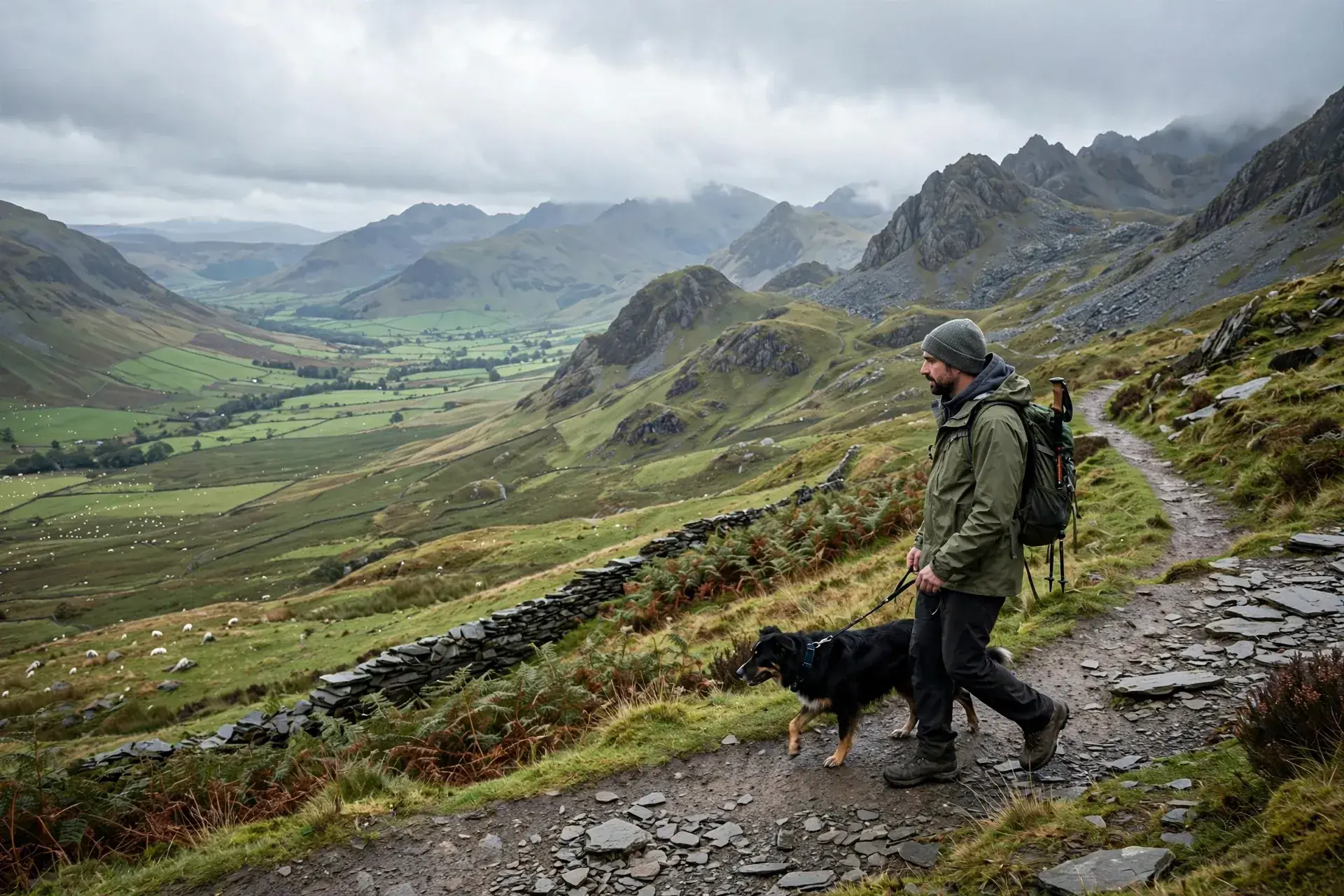
Bala is a good base for bigger walking precisely because the lake gives you an easy day between harder ones. The Aran ridge rises to the south of the lake, with Aran Fawddwy at around 905 metres — a serious mountain walk that should only be attempted by fit dogs and owners who are comfortable with navigation, steep ground and rapidly changing weather. The lower foothills and the forest tracks below the ridge offer a gentler version of the same landscape: open moorland, sheep, wide views back over the lake, and paths that are honest about their difficulty. Do not attempt the high Aran ridge with a dog that has never done a mountain day, and never attempt it in poor visibility or high wind. The lake will still be there tomorrow.
To the south-west, Cader Idris is about twenty miles away and makes a full day out. It is one of the great Welsh mountain walks, but it is a hard, steep and exposed day that suits only fit, experienced dogs — and even then, only in good weather with a realistic turnaround time. If Cader Idris is too much for your dog, the lower slopes and the lakes at its foot, such as Llyn Cau and Llyn y Gadair, give you the drama without the summit. The same principle applies across Eryri: choose the walk your dog can actually do, not the walk you wish they could do, and remember that a mountain dog needs water, food and rest on the way down as well as on the way up. Our wider guide to Snowdonia with a dog covers Yr Wyddfa rules, sheep and lead discipline, easier mountain walks and choosing a base, and it is worth reading before you plan any high day from Bala.
For a gentler day trip, Betws-y-Coed is about an hour's drive to the north-west and offers forest walks, waterfalls and a village that is very used to dogs. Our guide to Betws-y-Coed with a dog covers Swallow Falls, Fairy Glen, Gwydir Forest and the village stops, and it pairs well with a Bala stay if you want one busier, livelier day among several quiet lakeside ones. The drive itself is part of the pleasure: the A5 through the Conwy valley is one of the prettiest roads in Wales, and there are lay-bys and short stops all along it where a dog can stretch its legs.
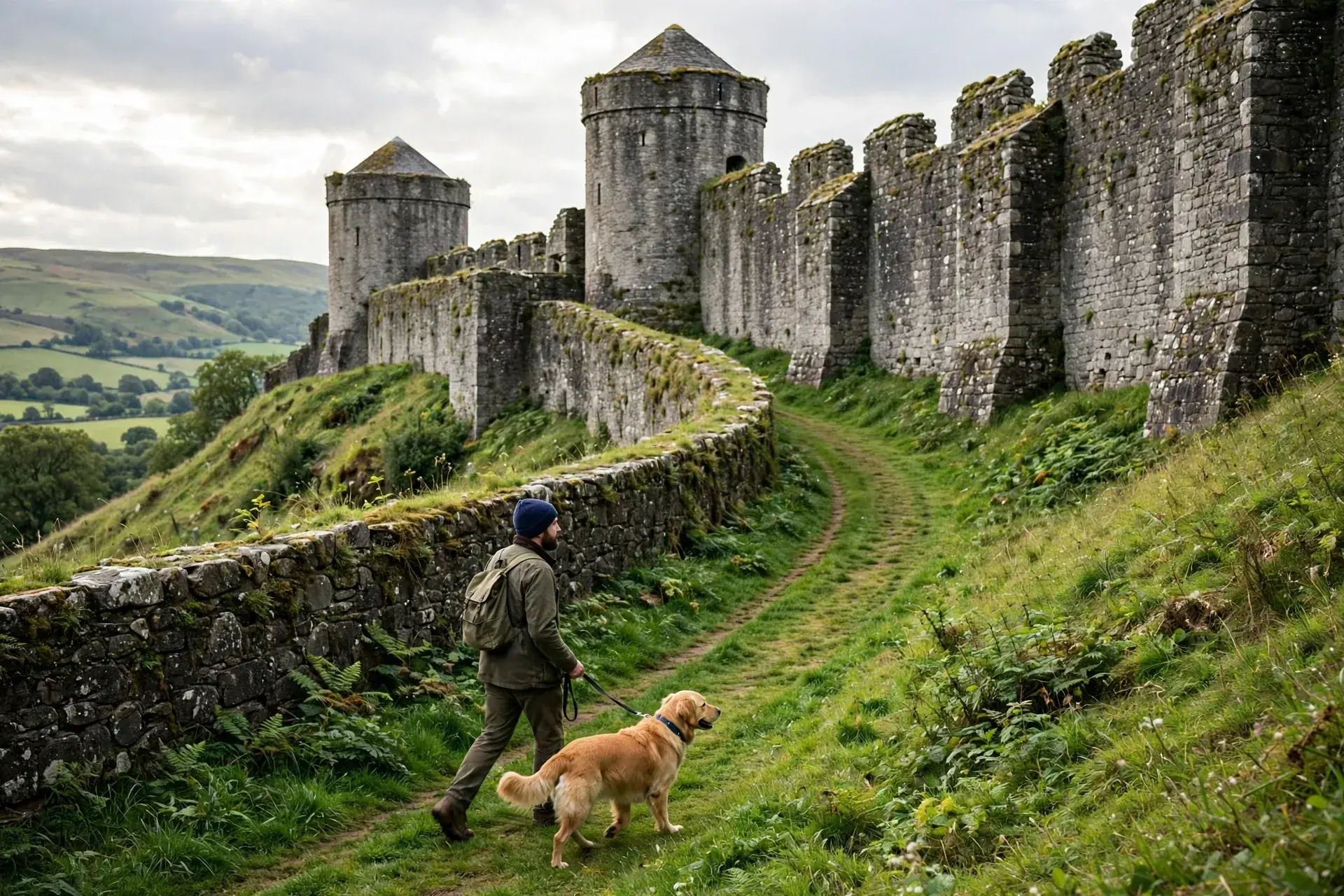
Castle lovers have options too. Harlech, with its great castle above the sea, and the castles of the north Wales coast are within a comfortable drive from Bala, and many Welsh castles welcome dogs in their grounds even where the interiors are restricted. Our guide to dog-friendly castles in Wales explains which sites welcome dogs, where leads are required and how castle zones differ, so you can plan a castle day that your dog actually enjoys rather than one spent waiting in the car park. Check the official guidance before you travel for the current dog rules at any individual castle, because they change between seasons and between different parts of each site.
Closer to home, the River Tryweryn runs out of the lake at Bala and flows south towards the National White Water Centre near the village of Fron-goch. The centre itself is for paddlers, but the riverside paths and the quieter lanes around it make a pleasant short walk for a dog that has had enough of the lake for one day. Keep dogs on a lead near the river, where the current is fast and the banks can be steep, and remember that white-water days bring extra traffic and noise that a nervous dog may not enjoy. On a calm weekday, though, it is one of the prettiest short walks near Bala — and it is a reminder that the water here is not only the lake: it is the whole valley, from the mountains to the Dee.
Swimming, boats and water safety
Dogs love Bala Lake, and with a little care it is one of the friendlier places in Wales for a dog to swim. The foreshore at the Bala end has gently shelving entry points where a dog can paddle in without a sudden drop, and on a warm day you will see dogs of all shapes splashing at the water's edge. But a lake is not a swimming pool, and the first swim of a trip deserves more caution than the tenth. Keep your dog on a long line the first time, walk into the water with them, and watch how they handle the depth, the temperature and the current near the outflow. Some dogs are natural swimmers; others paddle happily in the shallows and have no interest in going further, and both are fine.
Water temperature is the thing most owners underestimate. Llyn Tegid is a deep lake fed by mountain streams, and it stays cold well into summer — cold enough that a small or older dog can tire quickly, and cold enough that a long swim followed by a walk in the wind can leave a dog shivering. Keep early swims short, towel the dog dry afterwards, and bring a drying coat for cooler days. If your dog swims a long way out, call them back early rather than waiting until they are tired; a tired dog in cold water is a dog in trouble, and the shore is further away than it looks from the middle of a swim.
In warm weather, check the official guidance before you travel for any algae warnings. Like many British lakes, Llyn Tegid can develop blue-green algae in hot, still conditions, and the toxins it produces can make dogs seriously ill. If the water looks green, scummy or unusually still, or if you see warning signs at the foreshore, keep your dog out of the water entirely — no paddling, no drinking, no fetching sticks from the shallows. The same caution applies after heavy rain, when run-off can change water quality quickly. When in doubt, walk instead of swim: the shore path is just as enjoyable and carries no risk.
Boats and water sports are a big part of life on the lake. The Bala Sailing Club and other water sports operate from the lake, and on a breezy summer weekend you will see dinghies, kayaks, paddleboards and windsurfers out on the water. Dogs should not swim through sailing areas, and they should be kept on a lead on the slipways and jetties, where boats are being launched and recovered. If you want to take your dog on the water, check the official guidance before you travel for the rules of the hire or club you plan to use — some allow dogs on kayaks and paddleboards, many do not, and a dog that has never been on a boat should be introduced to it on dry land first, with a properly fitted buoyancy aid.
Fishing is also popular on the lake, and anglers have the right to fish quietly without a dog splashing through their swim. Keep your dog away from occupied fishing spots, do not let them steal bait or tackle, and watch for discarded hooks and line on the shore — both are hazards for paws and mouths. The gwyniad, the lake's rare fish, is protected, and the lake's status as a Site of Special Scientific Interest means the wildlife and the water quality are taken seriously. A dog that swims respectfully, stays out of the reed beds and leaves the birds alone is a welcome part of the lakeside; a dog that chases everything that moves is not, and it only takes one bad afternoon to spoil a place for every dog that comes after.
Eating and drinking with a dog
Bala's eating scene is small and straightforward, which suits a dog owner. The High Street and the lakeside have cafes and pubs that serve walkers, and several welcome dogs — particularly in outdoor seating areas, in bar areas and on terraces with a view of the water. Policies vary by venue and by season, and a pub that welcomes dogs in the bar in winter may restrict them to the garden in a busy summer, so ask at the door rather than assuming. The town is small enough that if one place is full or does not take dogs, another is usually a two-minute walk away.
The best approach is to make the dog's comfort part of the plan. Bring a mat or a blanket so your dog has a place to settle rather than lying on a cold floor; bring a chew or a stuffed Kong to keep a young dog occupied while you eat; and keep the lead short in busy rooms so the dog is not tripping staff or greeting every passing plate. Order simply and eat at a relaxed pace — a dog that has had a long morning walk will usually settle quickly, but a dog that has been in the car all morning will not, so time your meals for after a walk rather than before one.
Lakeside eating deserves a mention of its own. On a fine day, a takeaway eaten on the foreshore with the dog beside you is often better than any restaurant: the dog can paddle, you can watch the light on the water, and nobody is worrying about muddy paws on a carpet. Buy sandwiches, pasties or fish and chips in town, carry them down to the lake, and eat on the grass. Take all litter home with you, keep food away from other dogs, and do not feed your dog scraps that are high in salt or fat — a holiday stomach upset is the fastest way to ruin a walking break.
For self-catering stays, Bala's shops cover the essentials, and the town's butchers and small supermarkets are useful for buying proper dog food if you run short. If your dog is on a special diet, bring enough food for the whole trip rather than relying on finding a particular brand in a small town — Bala has the basics, but it does not have the range of a city supermarket. The same applies to medication: bring more than you need, keep it in its original packaging, and carry the vet's number with it. A small town is a wonderful place to be with a healthy dog and a miserable place to be without a prescription you forgot.
Evenings in Bala are quiet, and that is worth knowing before you book. The pubs are friendly and low-key, but this is not a town with a late-night scene, and most visitors are back at their accommodation by mid-evening with a tired dog. Plan for that: eat a little earlier than you would at home, enjoy a last short walk by the lake as the light goes, and let the dog sleep. If you want a livelier evening, it is a drive away — and a tired dog in a car at night is rarely worth it. Bala's evenings belong to the lake, the stars and an early night.
Getting there and parking
Bala has no railway station of its own — the main line closed in the 1960s, and the Bala Lake Railway is a heritage line rather than a public transport link — so almost every visitor arrives by car or by bus. By car, Bala sits on the A494, with the A4212 running south from the town towards the Aran mountains and the A5 within a reasonable drive to the north. The approach from the east, through Corwen and along the Dee valley, is the most common route, and it is a pretty drive that slows down in summer, so allow extra time on weekends and in school holidays. The approach from the south, over the hills from Dolgellau, is more dramatic and narrower in places, and it is worth taking slowly with a dog in the car.
Parking is straightforward once you know the pattern. The most useful car park for dog owners is the lakeside car park at the Bala end of Llyn Tegid, which puts you directly onto the foreshore and the shore paths. There are also town car parks just off the High Street, which are more convenient for shopping and eating. Charges and time limits change, so check the signs on arrival and check the official guidance before you travel for current prices. Arrive early on summer weekends and bank holidays, when the lakeside spaces fill first and late arrivals end up walking further than they planned — which is not a disaster, but it is a longer walk with a dog that has already been in the car.
By bus, the TrawsCymru T3 service runs through Bala between Wrexham and Barmouth, connecting the town with the wider region. Bus timetables in rural Wales change seasonally, and services can be infrequent, so check the official guidance before you travel and plan your day around the timetable rather than hoping for a bus that may not come. Dogs are generally allowed on buses at the driver's discretion, usually on a lead and on the floor rather than on a seat — keep the dog close, bring a mat for the floor, and be ready to wait for the next bus if the first one is full. For most visitors with a dog, a car is the practical choice: it carries the towels, the water, the spare clothes and the tired dog at the end of the day.
The drive itself deserves a word of preparation. The roads around Bala are good but rural: single-carriageway A roads, narrow lanes with passing places, sheep on the open moorland, and tractors that appear without warning. Dogs that get car sick will feel it more on the winding roads over the hills than on a motorway, so feed lightly before a long drive, stop regularly, and keep the car cool and ventilated. Never leave a dog in a parked car in warm weather, even with the windows open — a lakeside car park in summer sun heats up fast, and a dog waiting in a car while you queue for ice cream is a dog in danger. Take the dog with you, or leave the car and the queue for another day.
When you arrive, give the dog ten minutes before you do anything else. A short walk on the foreshore, a drink of water and a chance to toilet will settle a dog that has been travelling far better than unloading the car first. Find your accommodation, walk the immediate area so the dog knows where the door and the toilet spot are, and save the numbers that matter — the nearest vet, your accommodation host and the railway timetable — into your phone. The first hour of a Bala break should be boring: water, a walk and a rest. The lake will still be there after lunch.
The wet-weather plan
It rains in Bala. It rains on the lake, on the mountains, on the High Street and on the railway, and a dog holiday here needs a rain plan that is not simply "stay inside and hope". The good news is that Bala is one of the easier Welsh towns to enjoy in the rain: the walks are short, the town is close, the railway has covered carriages, and a wet dog is a normal sight rather than a problem. The trick is to treat rain as a change of plan rather than a cancelled day.
Start with the walks that hold up in the wet. The lakeside paths at the Bala end are the best rainy-day walk in town: they are flat, they drain reasonably well, and they are short enough that you can be back at the car in twenty minutes if the weather turns. The town's quieter streets make a second option, and the forest tracks to the south of the lake stay usable when the open shore is windswept. Avoid the open hill paths in heavy rain and high wind — the ground becomes slippery, the visibility drops, and a wet dog on a cold, exposed ridge is a welfare issue, not an adventure. Save the mountains for a dry day.
The railway is the classic Bala wet-weather activity, and it earns its place here. The carriages are covered, the journey is short, and the lake looks dramatic in the rain — mist on the water, the mountains appearing and disappearing, the reeds bending in the wind. Ride down to Llanuwchllyn, have a look around the terminus, and ride back: you have had a proper outing, the dog has had a change of scene, and nobody has had to walk for an hour in a downpour. Check the timetable first, because heritage railways reduce services in poor weather and on quiet weekdays — check the official guidance before you travel.
Drying is the practical heart of a wet Bala break. Bring two towels per dog as a minimum, plus a drying coat if your dog will wear one, and a waterproof mat for the car boot and the floor by the door. If you are staying in a cottage, check where the dog can be dried: a porch, a utility room or a tiled hallway is worth more than any view. Ventilate the room after drying a wet dog, because a damp cottage with the windows shut will smell of wet dog by the evening and nobody will enjoy it. Pack spare bedding for the dog, and a spare lead — wet leather leads stretch and wet fabric leads stay damp for a day.
Finally, use the rain. A rainy morning is a good time to drive to a nearby town, visit a dog-friendly shop or cafe, or simply sit in a pub with a book while the dog sleeps under the table. Bala's rain is usually showers rather than all-day downpours, and a morning of rain is often followed by a bright afternoon when the lake looks its best and the paths are quiet. Watch the sky, wait for the gap, and then go out — the dog will not mind the wait if the walk that follows is a good one.
When to go
Bala changes with the seasons more than most Welsh towns, because the lake is the main attraction and the lake behaves differently in every month. Spring is the gentlest season to bring a dog: the days lengthen, the shore paths dry out, the wildflowers come up along the banks, and the summer crowds have not yet arrived. The water is still cold, so keep swims short, but the walking is at its best and the railway is running a fuller timetable. Lambing season runs through spring, so keep dogs on a lead near sheep and lambs at all times — this is the season when livestock rules matter most.
Summer is Bala at its busiest and its most joyful. The lake is warm enough for proper swims, the sailing and water sports are in full swing, the railway runs its fullest timetable, and the town is at its liveliest. It is also the season that needs the most planning: arrive early for parking, book the railway ahead, carry extra water, and watch for blue-green algae in hot, still weather. Dogs that struggle in the heat should walk early and late, rest in the shade at midday, and never be left in a car. Summer weekends bring day-trippers to the foreshore, so if your dog is nervous around crowds, use the quieter southern shore and the early morning.
Autumn is, for many dog owners, the best season of all. The crowds thin, the light goes low and gold across the lake, the trees along the shore turn, and the walking is cool and comfortable. The railway often runs a reduced but still useful timetable into the autumn, and the town is quiet enough that a dog can settle in a pub without competing for space. Rain becomes more frequent, so the wet-weather plan in this guide earns its keep — but the reward is a lake that feels like it belongs to you and the dog, with the mountains across the water and nobody else on the path.
Winter in Bala is quiet, cold and beautiful, and it suits a particular kind of dog break. The lake is at its most dramatic in winter light, the mountains carry snow, and the town is very peaceful. But services reduce: the railway runs a limited winter timetable or closes for a period, some cafes and attractions cut their hours, and the days are short. Check the official guidance before you travel for winter opening times, and plan short walks with a warm, dry base to come back to. A dog that is older, arthritic or short-coated will feel the cold on a winter lakeside walk, so bring a coat, keep walks shorter, and dry the dog thoroughly afterwards. Done right, a winter Bala break is a restful, uncrowded few days — but it is not a season to improvise in.
Packing for a lake town
A Bala packing list is different from a mountain packing list, because the lake is the centre of the trip. The essentials are: a lead you trust and a long line for the shore, a towel for every swim and a spare for the car, a drying coat if your dog will wear one, drinking water and a collapsible bowl, poo bags, and a mat or blanket for cafes, pubs and railway carriages. Add a buoyancy aid if your dog will be on a boat or is a weak swimmer, and a first-aid kit with tick removers — the lakeside grass and the woodland edges carry ticks from spring to autumn, so check your dog after every walk.
Clothing matters for the humans too. The lake creates its own weather: a calm morning in town can be a windy, cold afternoon on the shore, and the wind across the water cuts through a thin jacket. Pack a waterproof jacket and waterproof trousers even when the forecast is good, and bring layers you can add or remove as the day changes. Footwear should handle wet grass, muddy shore paths and the occasional puddle that is deeper than it looks — walking boots or sturdy waterproof shoes are better than trainers, especially after rain.
For the car, pack as though the dog will be wet at the end of every walk, because they probably will be. A waterproof boot liner, a spare towel and a change of clothes for the driver turn a wet return into a minor inconvenience rather than a miserable drive. Keep a bottle of fresh water in the car at all times, and a spare lead in the glove box — leads get dropped in lakes, chewed through on railway platforms and left behind in cafes, and a spare costs almost nothing to carry.
Finally, pack for the dog's routine as well as for the walks. Bring the dog's usual food, enough for the trip plus a day extra, and any medication in its original packaging with the vet's number saved in your phone. Bring the dog's bed or a familiar blanket so they have a place that smells of home in unfamiliar accommodation. And bring something to do on a rainy evening — a chew, a puzzle feeder or a familiar toy — because a bored dog in a small cottage is a dog that will find its own entertainment, usually involving something you would rather it left alone. Bala rewards the prepared: pack for the lake, the rain and the railway, and the town will do the rest.
Practical questions
Before you go
Can dogs swim in Bala Lake (Llyn Tegid)?
Dogs do paddle and swim at the public foreshore at the Bala end of the lake, but there is no single official dog-swimming area, and conditions change with the seasons. The shore shelves gently in places and steeply in others, so keep your dog on a long line the first time and watch the entry point. In warm weather, check the official guidance before you travel for any algae warnings, and keep your dog out of the water if the surface looks green, scummy or unusually still.
Are dogs allowed on the Bala Lake Railway?
The Bala Lake Railway is a small heritage line that welcomes dogs in principle, but carriage rules, any dog fare and the arrangements for larger dogs can change between seasons, so check the official guidance before you travel. Book ahead on busy days, keep your dog on a lead on the platforms, and bring a blanket or mat for the carriage floor. If your dog is nervous around steam, whistles or crowds, sit near a door and choose a quieter midweek service.
Is there a lakeside path I can walk with a dog all the way around Llyn Tegid?
There is no single continuous public path around the whole lake. The best dog walking is concentrated at the Bala end, where the foreshore and the shore path give you easy out-and-back routes, and at the Llanuwchllyn end, where the railway terminus makes a natural turning point. Treat the lake as a series of shore walks linked by the railway and the road, rather than one circular trail, and use a map to check which stretches are public rights of way before you set off.
Where can I park in Bala with a dog?
The most useful parking for dog owners is the lakeside car park at the Bala end of Llyn Tegid, which puts you straight onto the foreshore and the shore paths, and the town car parks just off the High Street. Charges and time limits change, so check the signs on arrival and check the official guidance before you travel for current prices. Arrive early on summer weekends, when the lakeside spaces fill first, and always leave the car shaded and ventilated if your dog waits in it, even briefly.
Are dogs welcome in Bala's cafes and pubs?
Several cafes and pubs in Bala welcome dogs, particularly in outside seating areas and in bar areas, but policies vary by venue and by season, so ask at the door rather than assuming. Bring a mat and a chew so your dog can settle, keep the lead short in busy rooms, and have a takeaway backup plan for days when the dog-friendly tables are full. The town is small enough that a short walk usually finds an alternative.
What should I do if my dog meets sheep on the walks around Bala?
Put your dog on a short lead well before you reach the sheep, keep to the marked path, and walk calmly past without letting the dog fixate, lunge or chase. Sheep graze the open hills and lakeshore fields around Bala, and the law allows farmers to protect their livestock, so a dog that worries sheep can be in serious trouble. If your dog has a strong chase instinct, choose the lakeside and town routes instead of the open hill paths, and work on recall and lead manners before you attempt the Aran foothills.