This guide is independent and contains no paid placement. If affiliate links are added later, they will be clearly marked and will not change our editorial checks.
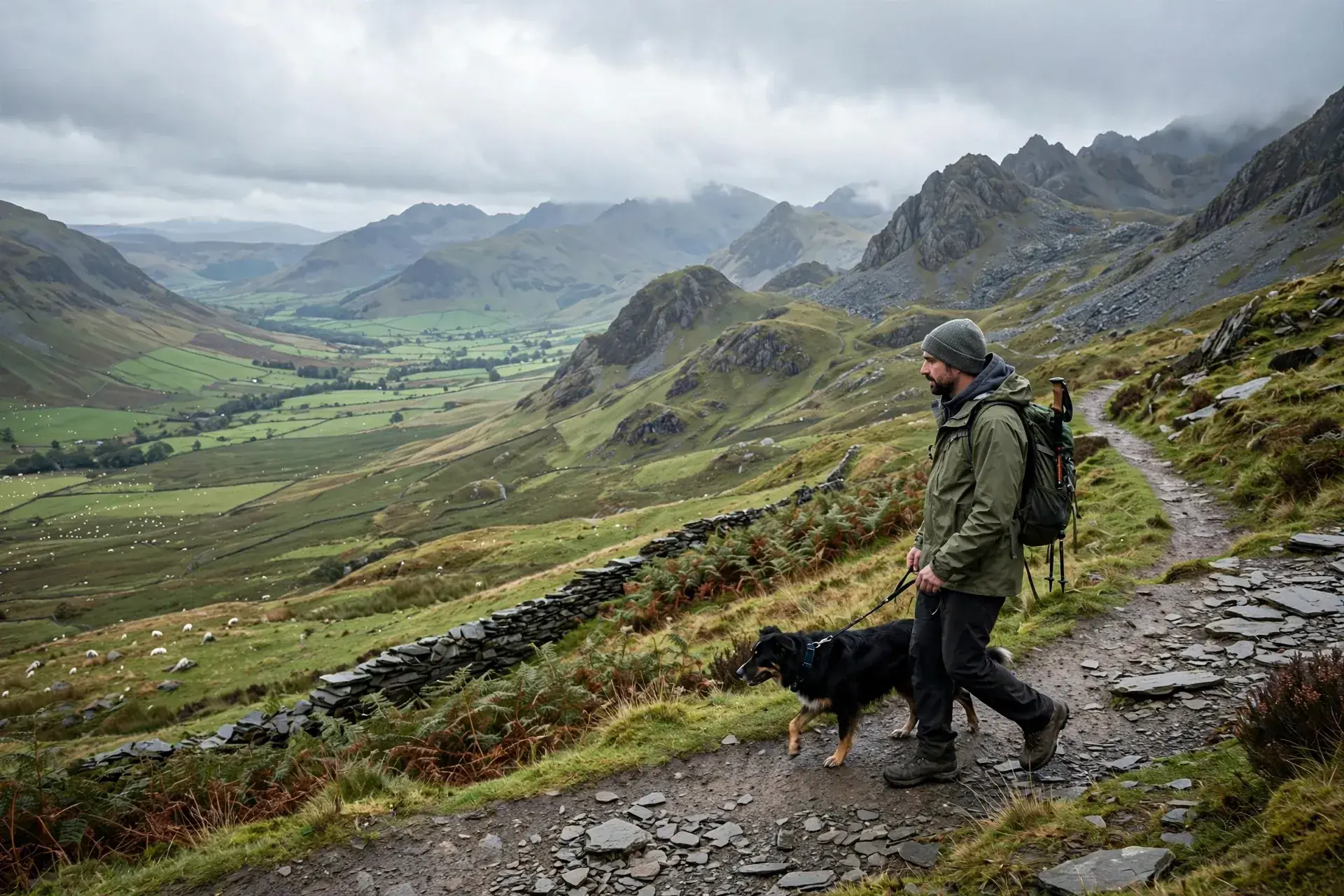
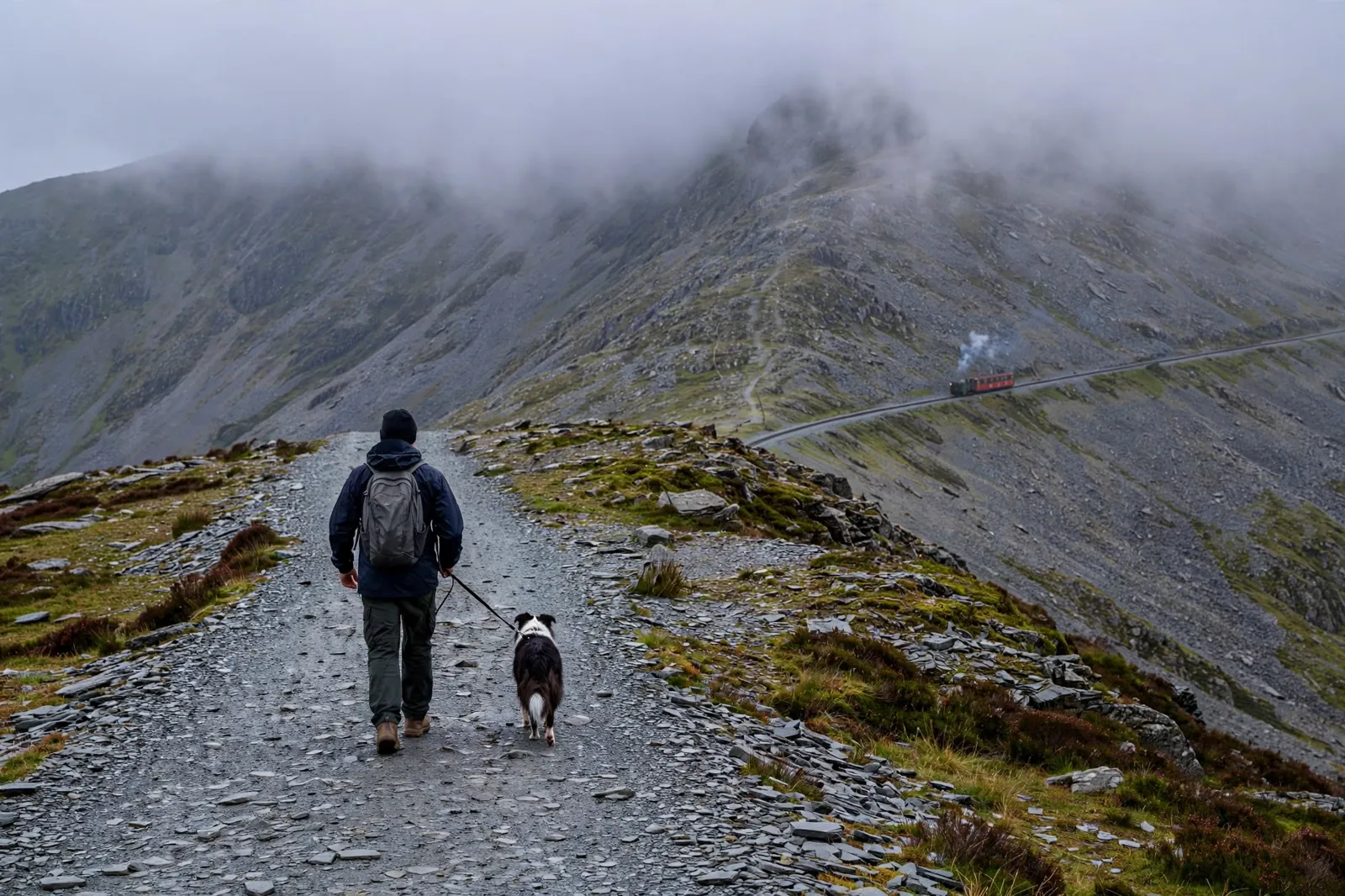
Betws-y-Coed with a dog works best as a pick-and-mix village base in Eryri, also known as Snowdonia. On a dry day with a fit dog, climb towards Llyn Elsi or take a longer Gwydir Forest loop. In rain or with a senior dog, stay low: river paths, Swallow Falls viewpoints and village stops. Dogs need a short lead at falls, gorges, bridges and near livestock, entry charges apply at some viewpoints, and parking fills early — always check current charges, closures and river conditions before you travel. For a very different day out, note that Portmeirion does not admit pet dogs at all — see our guide to Portmeirion with a dog before combining the two.
Pick first: match the walk to your dog and the weather
Use this decision flow before you look at any map. First question: how does your dog actually cope today, not on their best day last summer? A fit adult dog with sound joints, reliable recall under control and experience on wet rock can consider Llyn Elsi or a half-day forest loop. A puppy, a senior dog, a dog recovering from injury, a short-nosed breed in warm weather, or any dog that pulls hard on steps should stay on lower, shorter ground. Betws-y-Coed makes that choice easy, because a satisfying day here does not require a summit or a mileage target.
Second question: what has the weather done in the last twenty-four hours, not just what is it doing now? Rivers around the village respond quickly to rain falling on high ground you may not be able to see. After heavy rain, waterfalls are spectacular and paths beside them are at their most slippery and dangerous, so viewpoint walks need extra care and river-edge wandering should shrink. In a dry spell, forest tracks are firmer, rocks are less treacherous and longer routes become reasonable. In strong wind, choose sheltered Gwydir woodland over exposed lake shores. In heat, reverse the usual plan: walk early, stay in shade, carry more water than feels necessary and treat any river dip as a risk assessment, not a reward.
Third question: how much parking and crowd tolerance do you both have? On a bright Saturday, the village centre, the falls and the best-known car parks fill early, pavements narrow and café queues grow. A dog that dislikes close passing, scooters, prams and other dogs nose-to-nose will have a calmer day starting from a forest car park or walking earlier or later. A sociable dog that settles under a table may genuinely enjoy the village rhythm, with short walks broken by long, watching-the-world stops. Neither dog is wrong; the plan simply needs to admit which one you brought.
Turn the answers into one of three shapes. Shape one, low and lovely: a village river stroll, a viewpoint visit to Swallow Falls, lunch where dogs are welcome, and a gentle afternoon amble. Shape two, forest half-day: a waymarked Gwydir route with a picnic, a village ice-cream or tea stop, and no second climb. Shape three, full hill day: Llyn Elsi or a longer forest circuit, started early, with water, food, a weather check and a clear turnaround time. If you are combining this base with bigger Eryri ambitions, read our Snowdonia with a dog guide for the wider picture, and keep Betws days as the lower, greener counterbalance to mountain days.
Swallow Falls and Fairy Glen: small charges, big water
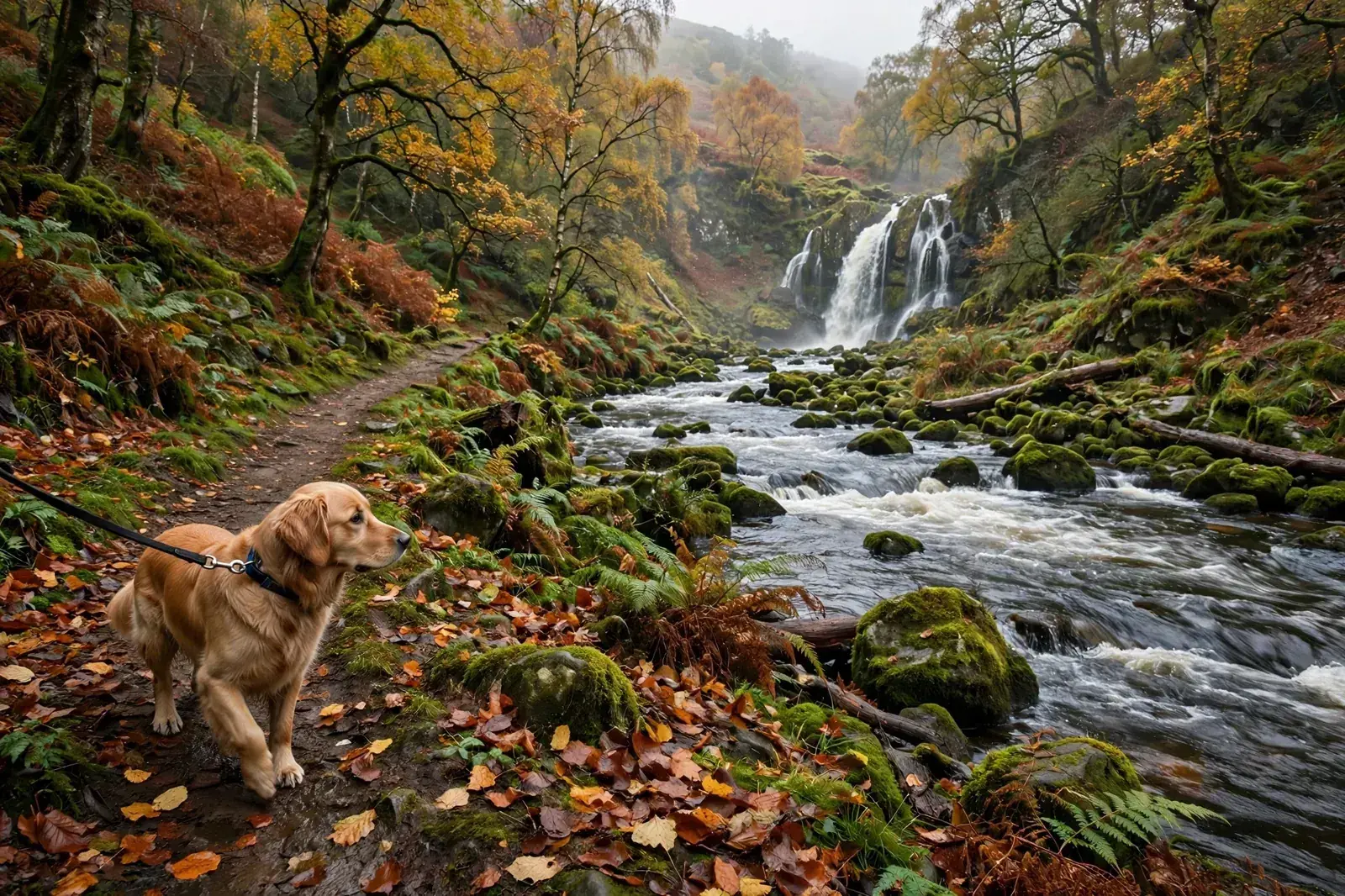
Swallow Falls, Rhaeadr Ewynnol in Welsh, is where the Afon Llugwy forces itself through a narrow, wooded gorge west of the village, dropping in a noisy series of cascades that can be watched from stepped paths and viewing platforms. It is the classic Betws sight, and for a dog it is a viewpoint visit rather than a walk: short, stepped, often damp underfoot and concentrated with other visitors. Keep your dog on a short lead throughout, hold the lead rather than looping it loosely around a wrist on steps, and let faster visitors pass at platforms instead of trying to maintain a walking pace that the layout does not allow.
Entry arrangements at Swallow Falls have long involved a small charge per person, historically collected at a turnstile, and dogs on leads have generally been welcome, but neither the price, the payment method nor dog access should be treated as permanent facts. Charges, opening arrangements and turnstile operation can change, and a turnstile that suits a person may need care with a large or anxious dog. Check the latest official information before you travel, carry both coins and a card, and follow signs on the day. If a turnstile looks stressful for your dog, ask staff if there is an alternative gate rather than forcing the issue; a viewpoint is never worth a panic.
Fairy Glen, Ffos Anoddun, is a different kind of water place: a secluded, mossy gorge on the Afon Conwy just south of the village, reached by a short path across fields and then down uneven, often slippery steps to a swirling pool between sculpted rocks. A small entry or honesty-box style charge has historically applied here too, sometimes differing between sources and seasons, so again verify the current charge and access arrangements before you travel and carry cash as a backup. Dogs have generally been taken in on leads, but the glen itself is no place for a dog to roam, drink from fast water or scramble on wet stone. View it, photograph it if conditions allow, and leave before paws or people start sliding.
At both places the safety rule is simple and absolute: admiration from the path, never entry into the water. These are not swimming spots. Currents accelerate through constrictions, rocks are polished and footholds vanish under brown water after rain. A dog that slips here cannot simply climb out. Add the other courtesies — no barking standoffs on narrow steps, no extending leads across the path, waste bagged and carried back to a bin — and your visit stays the way these small, charged viewpoints need it to be: brief, careful and memorable for the water rather than for an incident.
Gwydir Forest: shade, waymarks and room to breathe
The Gwydir Forest spreads across the hills on both sides of the village, a working upland forest of conifer blocks, native woodland, old mine remains, lakes and long views that suddenly open between trees. For dog walkers it is the area's great pressure valve. When the village pavements are busy and the falls are queueing, the forest usually still has a route where you can walk at your own pace, hear birdsong between passing showers and let your dog investigate a rich sequence of smells without a crowd at your elbow.
Choose routes by waymark and honesty rather than by name alone. Shorter marked trails from forest car parks suit a first visit, an older dog or a wet afternoon when you want shelter without a big climb. Longer circuits link forest roads, narrower paths, viewpoints and sometimes the shores of upland lakes known locally as the Gwydir lakes, and they demand a map, daylight and fitness in reserve. Surfaces vary from firm forest road to rooty, muddy and occasionally steep path, and forestry work can close or divert sections at short notice. Check current route information and closure notices before you travel, follow diversions on the ground even when they add distance, and never climb over fencing around work sites because a shortcut looks obvious.
Forest etiquette with a dog has its own details. Keep dogs under close control and on a lead where signs ask, around livestock at forest edges, near ground-nesting birds in season and whenever you cannot see what is around the next bend. Mountain bikes can appear quickly and quietly on shared routes, horses use some tracks, and a dog appearing suddenly from behind a rhododendron thicket can startle all parties. Shorten the lead, step to the side and let others pass with space. At lake edges, resist automatic swimming: check depth, entry and exit points, algae signs and currents at inflows, and keep dogs out entirely if the water looks stagnant, discoloured or difficult to leave.
Carry what the forest does not reliably provide. Drinking water for the dog, because upland streams are not a guaranteed or safe supply; a towel, because Gwydir mud has a distinctive and persistent quality; a lead you trust on wet paths; and a downloaded or paper map, because signal can fade under trees and in hollows. Done well, a Gwydir day is the most repeatable pleasure in a Betws stay: different car park, different loop, different light, same contented and pleasantly tired dog asleep while you plan dinner.
Llyn Elsi: the viewpoint loop above the village
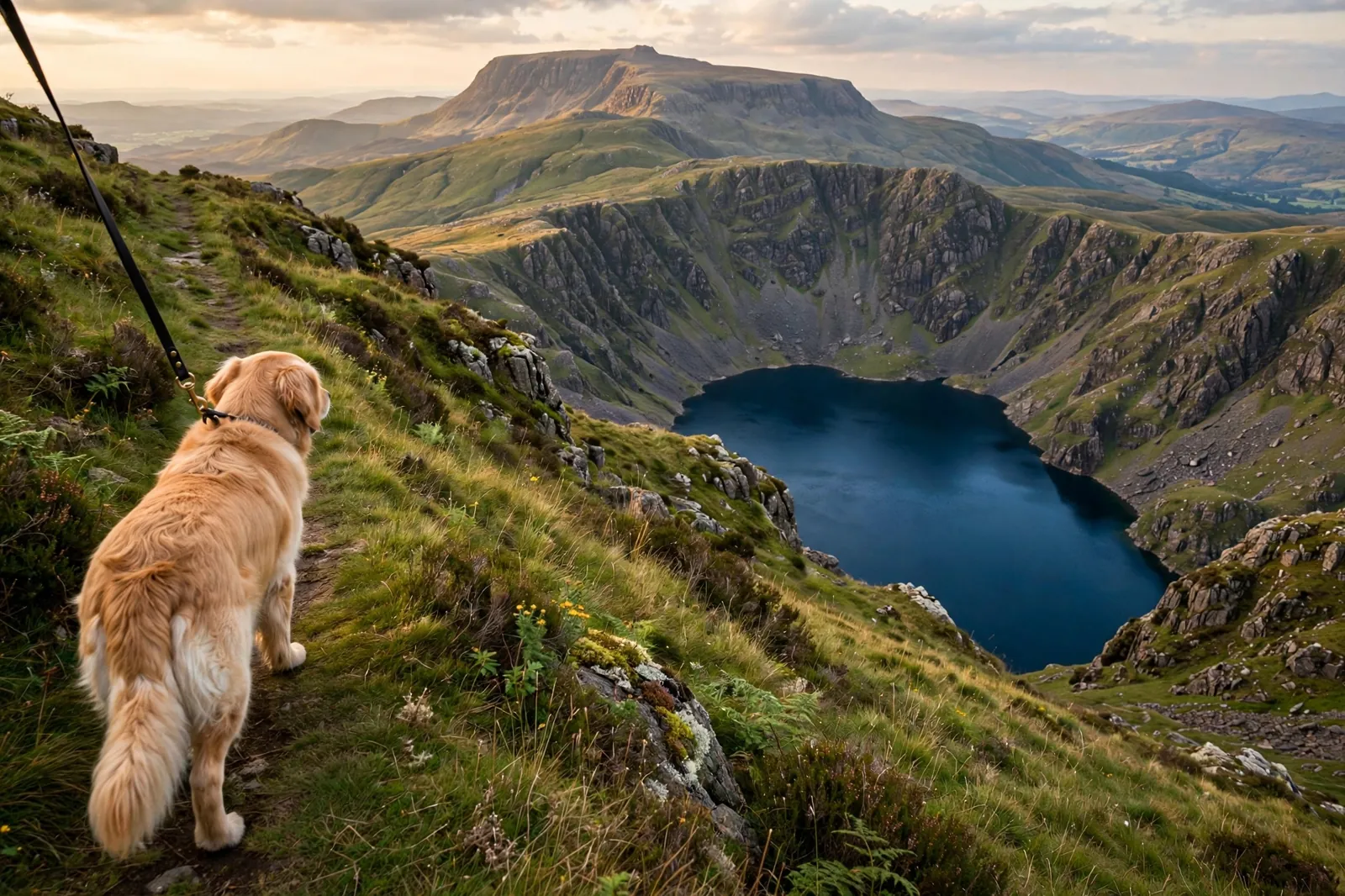
Llyn Elsi sits in the forest above Betws-y-Coed, a peaceful upland lake reached by a clear climb from the village, famously watched over by a monument to Lord Ancaster and offering views back across the valley that make the uphill feel fairly traded. As a dog walk it occupies a useful middle ground: more of an expedition than a village stroll, far less committing than a mountain summit, and varied enough — woodland, open shore, viewpoint pauses — to feel like a proper expedition for a medium-fitness dog.
Manage the climb as a series of efforts rather than a single push. The paths from the village rise steadily and can be muddy, stony or slippery depending on recent weather, so footwear with grip matters for the human half of the team and pace discipline matters for both. Let the dog set a sustainable speed on the way up, pause at natural viewpoints instead of only at the top, and save water for the lake circuit and the descent. Dogs that charge uphill often have little judgement left for the way down, when tired legs on both species meet loose stone at exactly the wrong angle.
At the lake, keep expectations gentle. The shore is a place for a picnic, a paddle assessment and a long sit, not an automatic swim session. Check the edge for a shallow, clear entry and an easy exit if you are considering any water contact in settled weather, keep a lead or long line on, and call time quickly if the water is cold, peaty inflows are running strongly or other visitors and wildlife need space. Anglers, walkers and birds share this shore; a dog that settles on a mat between swims that may not happen at all is practising the most useful hill skill of all, which is doing nothing beautifully.
The descent deserves its own plan. Return by the route you know if light, weather or energy are fading, rather than improvising a loop from a half-remembered map line. If you do loop through forest paths, confirm waymarks at each junction before committing, because several Gwydir trails cross and a wrong turn here adds climb as well as distance. Back in the village, a dog that has done Llyn Elsi has earned a proper meal, a dry bed and an evening of minimal ambition — and so, usually, has its owner. Walkers building towards a bigger Eryri day can treat this loop as a rehearsal before reading our Yr Wyddfa walk with a dog guide and judging that mountain on its own, sterner terms.
River walks: Llugwy, Conwy and Machno without the scramble
Three rivers shape Betws-y-Coed. The Llugwy runs through the heart of the village under its stone bridges, the Conwy passes close by on its way from higher moorland to the coast, and the Machno joins near the village after falling through its own gorge and the well-known Conwy Falls area further south. Together they give the village its sound, its bridges and its easiest walking, because a river path lets a dog travel through dramatic scenery at valley pace, with cafés and car parks never far away when energy or weather changes its mind.
The simplest river day stays close to the village: bridges, riverside paths, the green spaces around the station area and short out-and-back stretches where the dog can watch water, meet other walkers and practise calm lead manners around distractions. These are ideal first-evening walks after a journey, last-morning walks before a drive home, and main walks for dogs whose best distance is measured in pleasant half-hours. They are not, however, off-lead free-for-alls. Roads, anglers, swans and other dogs are all close, banks can be undercut, and a lead near any fast or deep section is basic respect for physics.
Longer river options head out along valley paths towards neighbouring villages and viewpoints, linking sections of bank, woodland and quieter lanes. Plan them as linear thinking even when you walk out and back: note where you can safely leave the river for a road or village if a path is flooded, a stile defeats an older dog or a fallen tree blocks the way. After prolonged rain, assume some riverside ground will be saturated or impassable and be willing to turn a river walk into a forest walk instead. Flexibility is not a failed plan in Eryri; it is the local skill.
Water contact needs the same discipline here as at the falls, with one addition: fishing. Rivers around Betws are valued for angling, and hooks, lines and private fishing rights are part of the landscape. Keep dogs out of fishing beats where signs indicate, never let a dog splash through a pool someone is fishing, and check current access and any local restrictions before you travel. A calm, shallow edge away from anglers, currents and deep channels, in settled weather, with an easy exit and a lead or long line still attached, is the only version of a river paddle this guide is willing to describe — and even then, a drink from your bottle and wet paws at the very edge may be the wiser celebration.
Parking pressure and village stops: making Betws work in practice
Betws-y-Coed is small, famous and set where valleys meet, which means parking pressure is not a flaw in your plan but a feature of the place to plan around. Village car parks near the station and main street suit short walks, shopping and café stops; overflow and forest car parks suit longer days; and on sunny weekends, bank holidays and peak holiday weeks, all of them can fill by mid-morning. Arrive early for a full walking day, arrive later for an evening stroll, pay for more time than your optimistic route suggests and keep payment methods varied, as machines, apps and signals differ between car parks. Check current charges and any restrictions before you travel.
Never let parking improvisation create the day's incident. Verges, gateways, private lanes and narrow forest entrances are not spare capacity, and a badly parked car can block farm, forestry and emergency access as well as earning a penalty. If your chosen car park is full, move to the next planned option rather than circling the village with a restless dog and rising temperature. In warm weather, that temperature point is literal: a dog should never be left in a car while you scout a route, queue for tickets or hope a space appears. Either the dog comes with you, on a lead, or the plan changes.
The village itself is one of the great dog-friendly assets of the area, provided you verify welcome rather than assuming it. Betws has a long tradition of outdoor shops, cafés, pubs and places to stay that understand muddy walkers, and many welcome dogs in some areas, sometimes with limits on numbers, wet dogs or busy periods. Ask the practical questions at the door or when booking: dogs inside or only outside, any size or number limits, water bowls, and where a dog can settle without blocking a thoroughfare. Current opening hours and dog policies change, so check before you travel rather than relying on a listing or a memory.
Build village stops into the walk instead of treating them as an afterthought. A morning coffee after a river stroll teaches a young dog café manners in short doses. A gear shop visit can solve a forgotten lead, boot or dog coat before it becomes a ruined day — Betws is unusually well supplied for outdoor kit for its size. A pub lunch after Llyn Elsi, with the dog dried, watered and lying on its own mat, is often the memory owners keep longest. Keep those stops courteous: shake off mud outside, keep leads short under tables, do not let dogs beg from neighbouring tables, and leave floors as clean as a wet Welsh day reasonably allows.
Where to stay and when to come: seasons and wet-weather plans
Staying in Betws-y-Coed itself suits walkers who want to park once and walk from the door, eat without driving and give the dog an easy evening routine of familiar streets and river smells. Hotels, inns, guest houses, self-catering properties and nearby campsites and holiday parks all feature in the area's mix, with dog acceptance varying from genuinely enthusiastic to a limited number of designated rooms or pitches. Confirm, for your exact dates and your exact dog, the charge, the maximum size or number, whether dogs may stay alone, what enclosed outdoor space exists and whether a ground-floor room or direct outdoor access is possible. Those details matter more at midnight in the rain than any welcome basket does at check-in.
Staying just outside the village, in the Conwy valley or towards Llanrwst, Capel Curig or Dolwyddelan, trades evening choice for space, quiet and sometimes a larger enclosed garden. That can be the better bargain for a reactive dog, a multi-dog household or anyone whose idea of a holiday evening is silence and stars rather than a pub supper. The cost is driving for dinner and supplies, so stock up thoughtfully, keep a torch for lane walks after dark and remember that a beautiful rural cottage still needs a safe first-morning routine while the dog learns its new boundaries.
Season by season, the village changes its offer without ever becoming a bad idea. Spring brings full rivers, lambs in surrounding fields and the strictest lead discipline of the year. Summer brings the longest light for Llyn Elsi and forest circuits, balanced by the busiest car parks and the need for heat care. Autumn may be the connoisseur's choice: colour in the Gwydir woods, waterfalls restored by rain, quieter midweek streets and dogs visibly approving of cooler air. Winter offers dramatic water, empty paths on settled days and very short daylight, so routes must shrink, torches must be packed and a warm, dog-welcoming evening base stops being a luxury and becomes the plan itself.
Finally, keep a wet-weather plan that is a plan, not an apology. A short falls viewpoint when conditions allow, a forest route chosen for shelter, a long village lunch where dogs are welcome, outdoor shops to browse with a patient dog, and a return to your base for drying, feeding and rest can make a rainy Betws day feel complete. What it should not include is forcing a gorge, a flooded river path or an exposed lake loop because it was written in an itinerary weeks earlier under a different sky. Betws-y-Coed has been welcoming walkers through Welsh weather for generations. Match your dog, check the charges and conditions, choose the shape of day the weather is offering, and the village will usually meet you more than halfway.
Practical questions
Before you go
Are dogs allowed at Swallow Falls and Fairy Glen in Betws-y-Coed?
Dogs on a short lead have generally been welcome at both viewpoints, but arrangements, turnstiles and access can change, so check the latest official information before you travel and follow signs on the day. Keep dogs away from fast water, off slippery rocks and close to you on steps, bridges and viewing platforms.
How much does it cost to visit Swallow Falls and Fairy Glen with a dog?
Both sites have historically made a small entry charge per person, sometimes payable by cash or at a turnstile, and charges change over time. Do not rely on an old price seen in a blog post. Check current charges before you travel, carry coins and a card, and confirm whether there is any separate charge or restriction for dogs on the day.
What is the best Gwydir Forest walk for a dog in Betws-y-Coed?
For most dogs, start with a shorter waymarked forest route from a Gwydir car park and build up to a longer loop only when paws, weather and daylight allow. The forest suits dogs that enjoy shade and scent, but routes include climbs, forest roads, cyclists and occasional livestock at edges, so keep a lead handy and follow current waymarks and closures.
Can dogs swim in the rivers and lakes around Betws-y-Coed?
Be very selective. The Llugwy, Conwy and Machno run fast, rise quickly after rain and hide slippery, uneven rock, so swimming near falls, gorges and in spate is unsafe. Choose only calm, shallow edges in settled conditions, keep a lead or long line on, check for algae and currents, and never let a dog enter water below Swallow Falls or in Fairy Glen.
Where is the best place to park in Betws-y-Coed with a dog?
There is no single best car park, only the one that fits your walk. Village car parks suit shops and short river walks, station parking suits arrivals by train, and Gwydir Forest car parks suit longer trails. On sunny weekends and holidays arrive early or later in the day, pay for longer than you think you need, and never park on verges or block gates and lanes.