This guide is independent and contains no paid placement. Route conditions, access rules and transport timetables change, so check the latest official guidance before you travel.
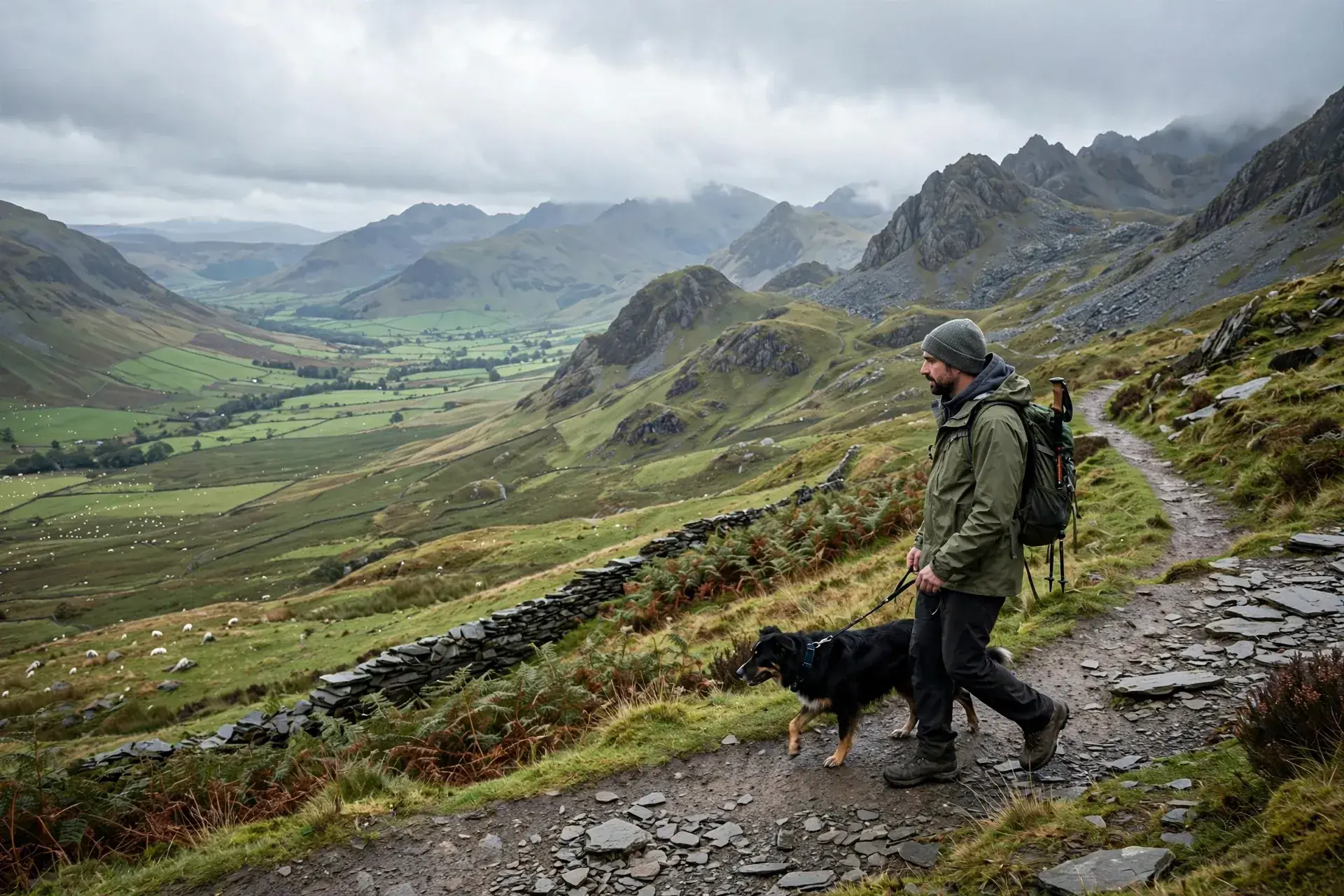
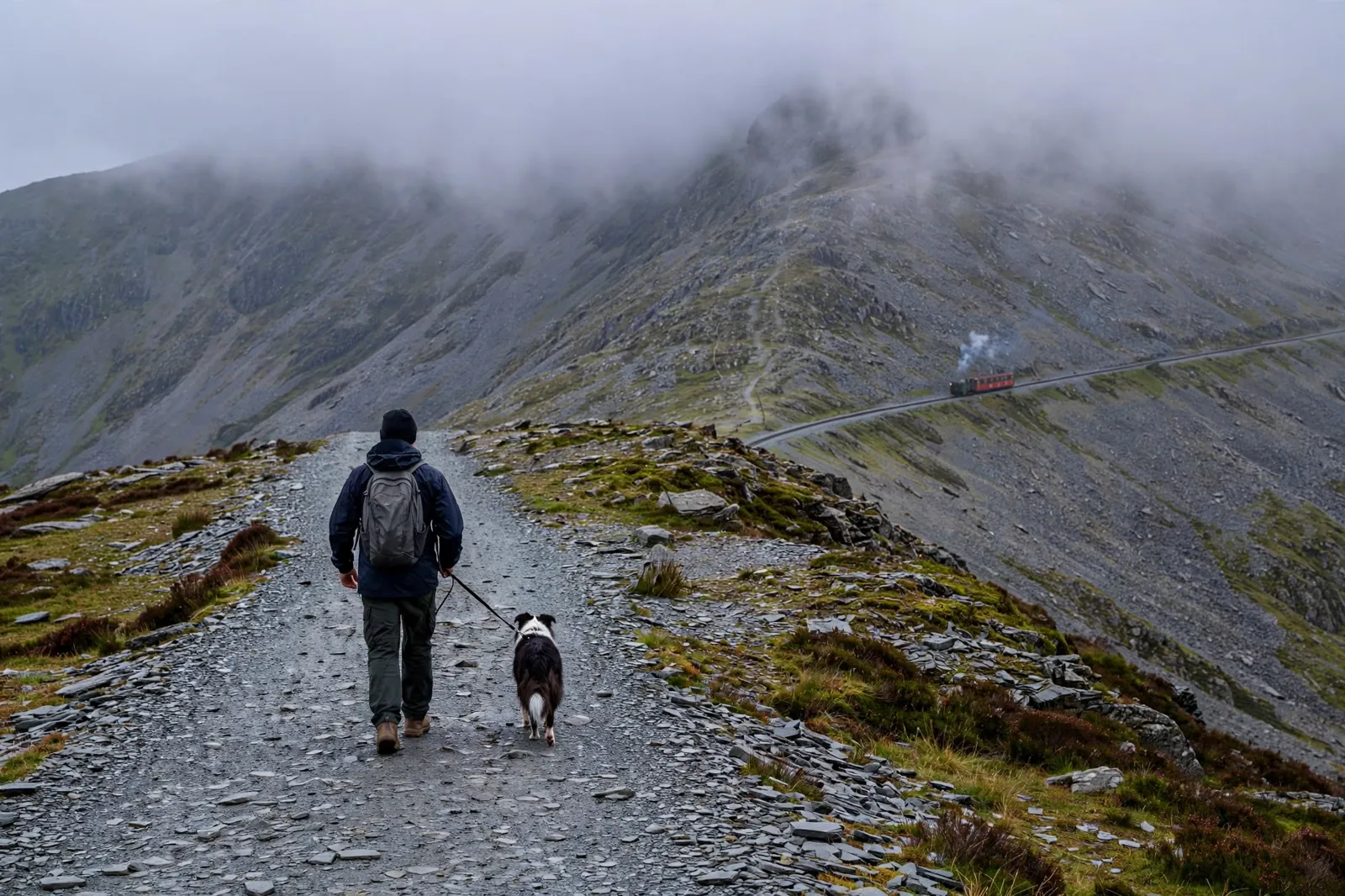
Cader Idris, at 893 metres, is a full mountain day for a dog, and the route choice shapes everything. The Minffordd Path is the most scenic and the steepest, climbing through woodland to Llyn Cau before a hard pull to the summit. The Pony Path from the north is the most gradual and usually the kindest option for dogs. The Fox's Path is the shortest and steepest of all, with a loose scree section that many dogs dislike. Sheep graze throughout, so the lead stays on.
Three paths up one mountain: an owner's comparison
Cader Idris dominates the southern edge of Eryri National Park, a long multi-summited ridge above the Mawddach estuary and the town of Dolgellau. Welsh tradition names it Cadair Idris — the chair of Idris, a giant of legend — and local spelling varies between Cader and Cadair on signs and maps, which is worth knowing so the two versions do not confuse your route research. For a dog owner, the mountain offers three established paths, and they differ more sharply in character than the three main routes up many better-known peaks.
The Minffordd Path, from the car park near Talyllyn at the southern foot, is the connoisseur's route. It climbs through ancient oak woodland beside a gorge, emerges at Llyn Cau — a jewel of a lake cupped in a dramatic cwm — and then tackles a steep, rocky pull to the summit ridge and the trig point on Penygadair. The full round trip is roughly six miles with around 900 metres of ascent, and the middle section is genuinely steep: fit dogs handle it well, but it asks real questions of older joints, and the descent of the steep section is slow work with a dog on a lead.
The Pony Path, from Ty Nant on the northern side near Dolgellau, is the historic route — once used by ponies carrying Victorian tourists — and it remains the most gradual way up. It is longer on the ground, around six and a half miles return, but the gradient is kinder throughout, the path is broad in its lower and middle sections, and there is no single passage where a dog must be coaxed or lifted. For a first ascent of Cader Idris with a dog, and for any dog whose fitness is promising rather than proven, the Pony Path is the sensible default this guide recommends.
The Fox's Path, the summit ridge and honest exclusions
The Fox's Path from the north-east is the shortest route, and shortness is its only kindness. It climbs steeply, and its upper section crosses a notorious scree slope — loose, shifting rock that many dogs find frightening and that cuts unconditioned pads. A dog that panics mid-scree, planting itself or lunging downhill, creates a handling problem on the mountain's least forgiving ground. Experienced hill dogs with hard pads do complete it, but as a planned choice for a typical family dog it fails the test this site applies everywhere: could you descend this safely, in worsening weather, with a tired dog? For the Fox's Path scree, most honest answers are no.
The summit itself, Penygadair, is a broad, rocky top with a trig point and a small stone shelter, and it is a wonderful place to arrive with a dog that has earned it. The ridge either side, however, includes narrow and exposed sections, most notably along towards Mynydd Moel and over Craig Cwm Amarch on the Minffordd side, where the path runs close to steep drops into the cwm. Keep the dog on a short lead on all high ground, position yourself between the dog and any edge when you stop, and never let the dog range ahead along the ridge: sheep appear on the summit slopes themselves, and a chase here would be catastrophic.
An older legend claims that whoever sleeps alone on Cader Idris wakes mad or a poet. Dogs, sensibly, have no use for either outcome, and wild camping on the summit with a dog is not something this guide encourages: there is no water, no shelter worth the name, and the mountain's weather is at its least forgiving overnight. Enjoy the summit in daylight, descend to a proper bed, and let the legend keep its mystery. The mountain is also a National Nature Reserve on its upper slopes, which is another reason to keep to the paths and keep dogs close — the rare plants and ground-nesting birds of the reserve are part of what you came to see.
Llyn Cau: the lake at the heart of the Minffordd day
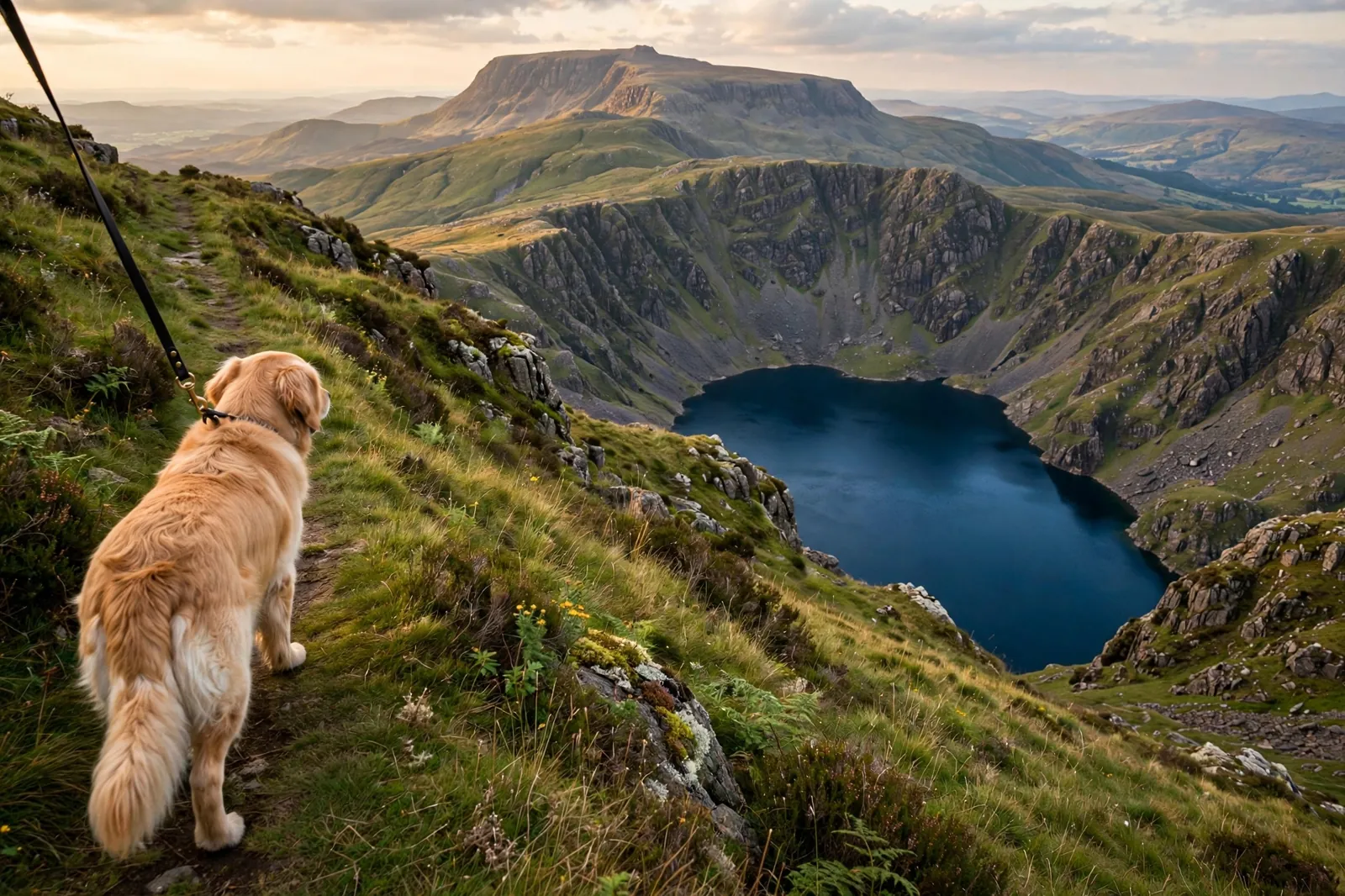
Whatever route you choose, if you come up the Minffordd Path the dog's day will be defined by Llyn Cau. This deep, dark lake sits in a cwm gouged by ice, ringed by cliffs, and it stops almost every walker who reaches it. Dogs love it for the obvious reason: mountain water on a climbing day. Controlled paddling and swimming at the lake's edge is one of the joys of this route, and on a warm day it doubles as the dog's cooling system before the hard pull to the summit. Choose an entry point on the established shore, keep the lead or a long line on if there is any chance of the dog ranging after birds, and keep swims short in cold water — mountain lakes are cold in every month.
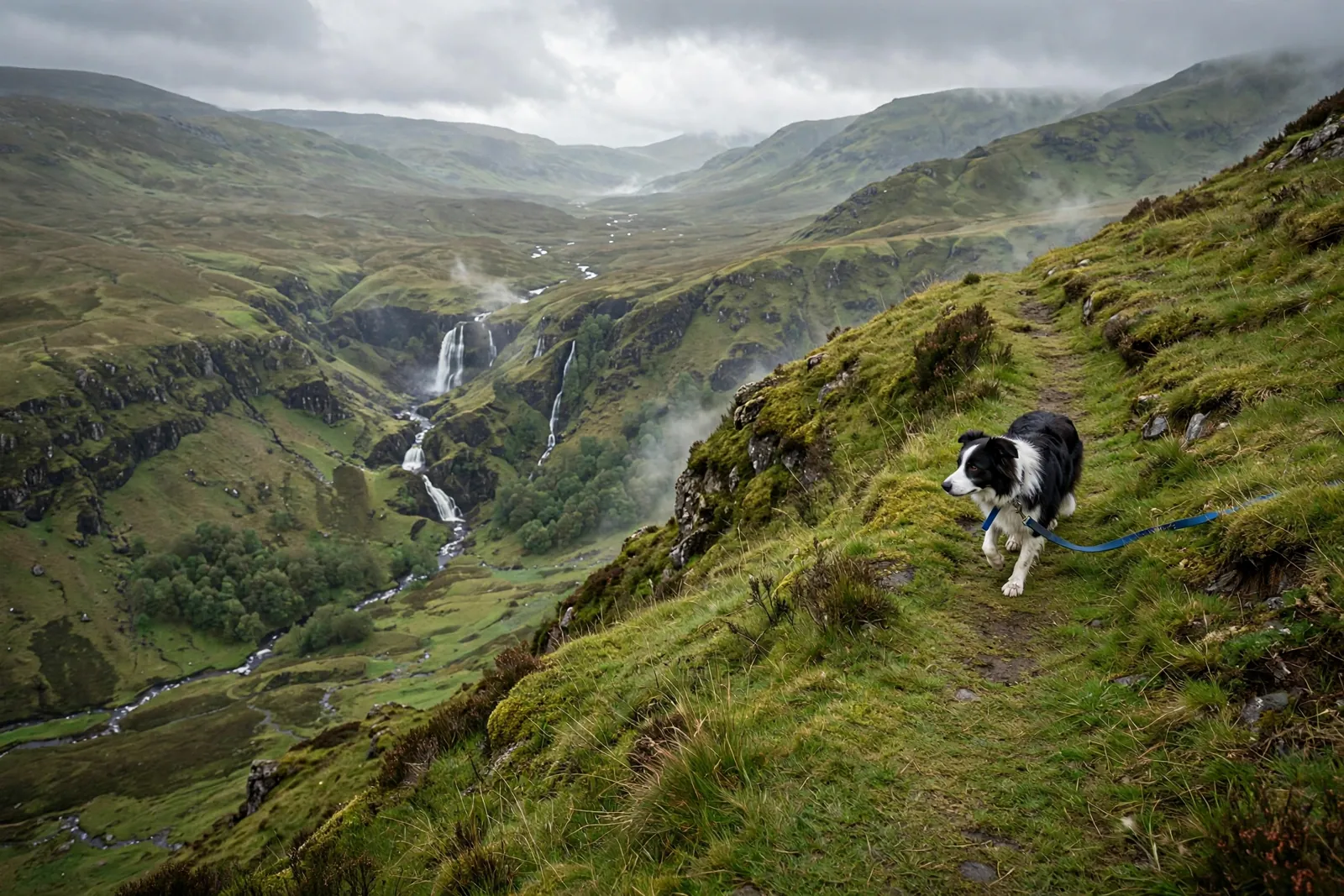
The woodland climb below the lake deserves its own mention, because it is the section younger and older dogs often enjoy most. The path rises through oakwoods beside the Nant Cadair stream and its falls, in dappled shade that contrasts completely with the exposed upper mountain. In wet weather this section is slippery — roots, wet rock steps and mud in combination — and it is the part of the Minffordd route where most minor slips happen. Take it at the dog's pace, let the dog pick its footing on the rock steps rather than hauling on the lead, and save your hurry for the open ground above.
Owners walking the Pony Path miss Llyn Cau on the ascent, and should not feel short-changed: a popular and sensible variation adds the lake as a separate, lower excursion on another day, walking the Minffordd woodland to the lake shore and back without continuing to the summit. That out-and-back makes a superb half-day for dogs not ready for the full mountain — roughly three miles with a swim in the middle — and it rehearses exactly the terrain, lead work and stream discipline the summit attempt will demand. Building a dog's mountain career in stages like this is a theme across our Snowdonia guide, and Cader Idris offers the clearest staircase of them all.
Sheep country discipline on a working Welsh mountain
Cader Idris is not a sanitised visitor attraction; it is a working mountain, farmed by the surrounding communities for centuries, and sheep graze from the valley fences to the summit ridge. The legal and practical position is the same as on every Welsh hill: dogs on open access land must be on a short lead near livestock and during the spring-to-summer season, and a dog worrying sheep can lawfully be shot. The full picture, including owner liability, is set out in our livestock worrying law guide. On Cader Idris the honest working rule is that the lead does not come off above the valley floor at all.
The subtler risk on this mountain is not the open hillside but the path architecture. Stiles, kissing gates and narrow fenced sections concentrate meetings between dogs and sheep, and between dogs and other dogs, in places where nobody can step aside. Approach each barrier slowly, let the group ahead clear it completely, and keep your dog close and calm while you work the gate mechanism one-handed. Dogs that squeeze under gates or jump stiles need particular management here — walk them to the barrier on a shortened lead rather than discovering their technique with sheep on the other side.
Below the mountain, the same discipline extends to the lanes and farm approaches around Talyllyn and Dolgellau, where dogs may meet yard dogs, livestock being moved on the road and horses. None of this diminishes the walk; it is simply the texture of a living landscape, and a dog that learns Cader Idris manners — steady on the lead, indifferent to sheep at distance, polite at gates — has learned manners that transfer to every hill in Britain. Reward that steadiness generously and often. On a long summit day, the treats in your pocket are training equipment, not indulgence.
Fitness, pacing and the shape of a six-hour dog day
Budget five to six hours for a summit round trip with a dog on either main path, and plan the day backwards from that figure rather than forwards from enthusiasm. Start early enough that the descent is finished with daylight in hand in every season; in winter, that means the Pony Path at first light or not at all. Break the climb into the natural stages the mountain provides — woodland, lake, upper pull on the Minffordd side; lower track, open slope, summit ridge on the Pony Path — and rest briefly at each stage boundary, offering water and checking the dog's demeanour before continuing. A dog that recovers its breath and its bounce within a couple of minutes at each stop is coping; a dog that does not is telling you the day's ceiling.
Food and water quantities follow the pattern used on all the big days in this series. Carry at least a litre of water for a medium dog, more in summer, because the summit has no supply and the reliable streams are all low on the mountain — the Nant Cadair on the Minffordd side and lower falls on the Pony Path are the last dependable points. Feed a normal meal well before setting off, carry substantial treats and a small extra portion for the summit, and give the main post-walk meal once you are down and the dog has cooled and settled. Deep-chested breeds should not be fed a large meal immediately before or after hard climbing.
Age and condition gates apply here exactly as on Yr Wyddfa, one mountain north. Puppies and adolescents with developing joints should be doing the Llyn Cau rehearsal, not the summit. Senior dogs with a mountain history may manage the Pony Path beautifully with an earlier start and longer rests — our senior dog travel guide covers adapting days like this — while dogs with any heart, breathing or joint diagnosis need a vet's view before a 900-metre day, not after it. Cader Idris has stood for a very long time; there is no deadline on your dog being ready for it.
Basing the trip: Dolgellau, Talyllyn and the Mawddach
Where you sleep changes how the mountain feels. Dolgellau, the sturdy stone town at the northern foot, is the natural base for the Pony Path and the Fox's Path and offers the fullest range of dog-welcoming places to stay and eat. The Talyllyn side, quieter and more rural, suits the Minffordd Path and puts you on the mountain early without a morning drive; the lake of Talyllyn itself, with its railway and level shoreside walking, makes an ideal rest-day companion to summit day. When booking anywhere in the area, ask the enclosed-garden and dog-in-room questions set out in our Welsh holiday parks guide — after this climb, a secure garden for the last outing is worth having.
The Mawddach estuary, a short drive west, is the region's second act for dogs. The Mawddach Trail runs along the old railway line between Dolgellau and Barmouth, flat, scenic and largely traffic-free, and it is the perfect active-recovery walk for the day after the summit: an hour or two of level sniffing with huge estuary views, a swim opportunity where conditions allow, and cafés at the Barmouth end. Building a trip as summit day, estuary day, lake day — rather than three consecutive climbs — is how a dog finishes a Cader Idris holiday fresher than it started, and how owners discover that southern Eryri repays a week, not a weekend dash.
Getting there is straightforward but not instant, and journey planning is part of dog welfare on a trip like this. The drives from the Midlands and the North West involve long stretches of winding Welsh A-roads; build in a proper leg-stretch stop every two hours, never leave the dog in a sun-warmed car at a viewpoint while you scout ahead, and keep the car kit — water, bowl, towel, spare lead — as organised as the walking kit. Check the latest official guidance before you travel for anything seasonal, from trailhead parking arrangements to local events that close lanes around Dolgellau on market and festival days.
Descending well and the two-day recovery test
Ask experienced Cader Idris walkers where the day is won and most will point downhill. The Minffordd descent retraces those steep steps above Llyn Cau, now with gravity as an opponent and a tired dog inclined to rush; the Pony Path descent is gentler but long, and its very kindness tempts owners to stride out at a pace that quietly cooks a dog's shoulders and pads. Walk the descent at the dog's chosen speed, stop at the same stage boundaries as the climb, and re-offer water at each one even if it was refused at the last. Dogs frequently drink most on the way down, when the excitement of ascent has worn off.
Pad care after this particular mountain matters, because the upper paths mix sharp grit with long grassed sections that hide wear until you look. Rinse, dry and inspect at the car; re-inspect that evening; and apply the two-day test this site uses for every big dog day: a dog that is bright tomorrow and fully itself the day after has been asked a fair question. A dog that is still stiff, pad-sore or unusually quiet at forty-eight hours has been asked too much, and the honest response is a smaller next mountain, not a quicker return to this one. Keep a simple note of the day — route, time, weather, how the dog recovered — because that notebook becomes your dog's personal grading system for every hill that follows.
Cader Idris earns its place in a dog's walking life slowly, and that is its charm. Rehearse at Llyn Cau, graduate by the Pony Path, savour the Minffordd route when the dog is proven, and leave the Fox's Path scree to the guidebooks' footnotes. Do it that way and the giant's chair becomes what it should be: not a dare, but a mountain your dog knows, in a corner of Wales you will keep returning to long after the summit photograph has faded from your phone's front screen.
Practical questions
Before you go
Which Cader Idris path is best for a dog?
The Pony Path from Ty Nant is usually the best choice for a dog: it is the longest-feeling but most gradual route, with a broad path and no section where a dog needs lifting or coaxing. The Minffordd Path is more scenic and suits fit, proven hill dogs. The Fox's Path is steep with a loose scree section that many dogs dislike, so it is the poorest of the three for most dogs.
Can my dog swim in Llyn Cau?
Yes, controlled paddling and short swims at the established shoreline are a normal part of a Minffordd Path day, and the lake is excellent for cooling a dog before the summit pull. Keep a lead or long line on if your dog might chase birds, keep swims brief because the water is cold year-round, and follow any local guidance on the day — check the latest official guidance before you travel.
How long does Cader Idris take with a dog?
Plan five to six hours for a summit round trip with a dog on either the Pony Path or the Minffordd Path, including rests and water stops. The Minffordd route is around six miles with roughly 900 metres of ascent; the Pony Path is slightly longer but more gradual. Always finish with daylight in hand, which in winter means a first-light start or a shorter objective.
Do dogs have to be on a lead on Cader Idris?
In practice, yes. Sheep graze from the valley to the summit ridge, and dogs on open access land must be kept on a short lead near livestock and throughout the spring and early summer season. A loose dog chasing sheep can lawfully be shot and the owner prosecuted. Keep a short fixed lead on for the whole mountain day.
Is Cader Idris suitable for a puppy or an older dog?
The summit is not a puppy objective: young dogs with developing joints should build up on the Llyn Cau out-and-back from Minffordd instead. Older dogs with a hill-walking history often manage the Pony Path well with an early start and generous rests, but any dog with a joint, heart or breathing condition should have a vet's opinion before a 900-metre day.
Where is the best place to stay for Cader Idris with a dog?
Dolgellau is the most practical base, with the widest choice of dog-welcoming stays and easy access to the Pony Path. The Talyllyn side is quieter and best for the Minffordd Path, with lakeside walking for rest days. Wherever you book, confirm that the specific room or unit accepts dogs and ask about an enclosed outdoor space for late-night outings.